
Sign up to save your podcasts
Or



Based on Podcast App listening data
Can we explain our rich experience of life only by studying the molecules that compose us? How is the color of your passport related to your chances of presenting with schizophrenia? Males are more predisposed to commit crime, so why don’t all males commit crime? And what does any of this have to do with traffic jams, why Seinfeld is funny, and how we’re ever going to come to know ourselves from studying biology? Join Eagleman to talk about levels of understanding, what a meaningful explanation would look like, and the possibility that we are not near the conclusion of science's journey, but instead near the beginning.
Did Joan of Arc turn the tide of the 100 Years War as the result of a brain disorder? Would you appreciate Taylor Swift if you only had an internal camera to watch her vocal chords? What do almost all drugs of abuse have in common? How can the tiny molecules of rabies virus control your behavior? Join Eagleman on a two-part deep dive into the fundamental question of how biological insights can shed light on the ancient question of who we are.
Are there really dozens of words for snow in northern cultures? What did the movie Arrival have to do with language and cognition? Why are Russians better than Americans at distinguishing certain shades of blue? And what does any of this have to do with space, time, gender, and how your language influences your thought? Join Eagleman and his guest, cognitive scientist Lera Boroditsky, as they take a deep dive into the intersection of words and understanding.
Can your thoughts be read with neurotechnology? When is measuring the brain like reading the mind? How close or far are we from being able to know if you're thinking about some particular thing you did or intend to do? What's hype and what's real? Join Eagleman for a deep dive into mind reading: what it means, where we are now, and whether your thoughts could ever be readable with new technologies.
We all know people who hate the word "moist". But why are they fine with synonyms such as "damp" or "wet"? What’s going on in their brains, and what does this have to do with synesthesia, autism, shapes, slacks, and sound probabilities? Join this week's episode as Eagleman leads us into the new and wild world of word aversion.
Why are we humans so easily deceived? What are the tricks of the trade, and how can we train ourselves to be more aware of them? What does all this have to do with Theranos, forged letters, and the shell game? Although you presumably wouldn't cheat a stranger out of all her money, there are people who would -- so how can we beef up our immunity against deception? Join Eagleman with guests Christopher Chabris and Dan Simons to discuss their new book, Nobody's Fool.
Why do you still feel the waves after getting off a boat? Why does the wall seem to come at you faster after you step off the treadmill? Why do the rocks seem to move upward after you stare at a waterfall? Why did people in the 1980s think their book pages had some red color in them… but no one thought that before or after the 80s? And what does any of this have to do with drugs, heartbreak, yellow sunglasses, or Aristotle watching a horse stuck in a river? Join Eagleman to understand how the brain constantly readjusts its circuitry to best read the world, and what it means for our (sometimes strange) perceptions of what's out there.
If we meet extraterrestrials someday, how will we figure out what they're saying? We currently face this problem right here at home: we have 2 million species of animals on our planet... and we have no Google Translate for any of them. We’re not having conversations with (or listening to podcasts by) anyone but ourselves. Join Eagleman and his guest Aza Raskin to see the glimmer of a pathway that might get us to animal translation, and relatively soon.
Why do briefly glimpsed people appear to be more attractive? Why did portrait photographers put Vaseline on their lenses, and what does that have to do with Instagram filters? Why are thirsty people more likely to perceive something as transparent? And what does any of that have to do with mating, optimal decision making, puberty, frogs, and movie stars? In this episode, Eagleman gets us to view the familiar as strange as we examine beauty, instincts, and what drives us.
Would you torture someone if you were commanded by an authority figure? To what degree are your decisions contextual, and what does this have to do with matching the length of a line, the Iroquois Native Americans, the banality of evil, soldiers posing with dead bodies of their enemies, propaganda, giving shocks to a stranger, or how we should educate our children? Join Eagleman for part 2 of the exploration into brains, dehumanization, and what we can do to improve our possible future.
From the publisher's feed
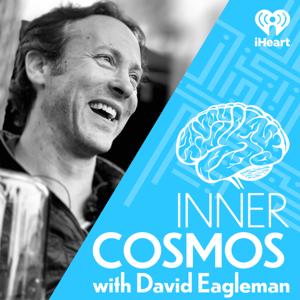
Neuroscientist and author David Eagleman discusses how our brain interprets the world and what that means for us. Through storytelling, research, interviews, and experiments, David Eagleman tackles…
Ranked by our users in the last 21 days

21,780 Listeners

78,291 Listeners

31,916 Listeners

43,352 Listeners

14,356 Listeners
5,658 Listeners

26,240 Listeners

939 Listeners

6,429 Listeners

4,659 Listeners
924 Listeners

11,943 Listeners

244 Listeners

4,172 Listeners

2,360 Listeners
8 Listeners

8 Listeners

352 Listeners

63 Listeners

250 Listeners

2,011 Listeners

142 Listeners

237 Listeners

1,551 Listeners

839 Listeners

63 Listeners

277 Listeners

159 Listeners

1,036 Listeners

18 Listeners

192 Listeners

1,622 Listeners

59 Listeners

34 Listeners

26 Listeners