
Sign up to save your podcasts
Or



Based on Podcast App listening data
Is it always harder to teach an old dog new tricks? Why is an older person slower to learn a new language but able to learn new faces easily? Why does Arnold Schwartzenegger have an accent but Mila Kunis doesn’t, even though neither spoke English as a child? Why is there a correlation between how tall a person is and how much salary they're likely to earn? What would it mean to say that you are born as many people but die as a single one? This week's episode dives into surprises about brain plasticity and why your flexibility changes throughout your lifetime.
What does the insanity defense mean in a court of law? And is there such a thing as temporary insanity? Is the twinkie defense a real thing? Can someone use premenstrual syndrome as a defense? And what does the legal wrestling around insanity tell us about the differences between brains: yours and other people’s, or even yours one day and yours the next day? How does law comport with science, and how are they sometimes like two people with quite different ways of looking at the world? Join to find out what happened to Andrea Yates, how the legal system deals with mental illness, and so much more.
What is the insanity defense? Are some people’s brains so different that it makes sense to use a different legal category? How does a legal system decide where the dividing line is? How are science and law strange bedfellows? Join us for the first of two episodes about the insanity defense: where it comes from, where it's going, and why it is so difficult to decide where to draw our societal lines.
f you look at a brain, how can you immediately tell if it belongs to a piano player or a violinist? How can a dog learn how to walk on its rear legs? And what does this have to do with expertise, or the good news about the brains of digital natives, or how governments respond to change just like brains do? While we all like to talk about brain plasticity, the truth is that most of what happens in your life makes no meaningful change to your brain. So what’s the difference between the stuff that sticks and the stuff that doesn’t?
What would it be like to have a much lower or higher IQ than you currently have -- for example, to be a squirrel or an advanced space alien? This week's episode is about intelligence. What is it and what is its history and future? Join Eagleman on a whistle-stop tour of several schools of thought about what intelligence might mean in the brain.
Why do they use a gun at the Olympics? And why can you get off the blocks after the bang but still be disqualified for jumping the gun? Few things are as bizarre as our time perception. From sprinters to basketball players, from Kubla Khan to Oppenheimer, from television broadcasting to hallucinations, Eagleman unmasks illusions of time that surround us. Why does the brain work so hard to pull off editing tricks? And what does this tell us about our perception of reality?
Does life end inevitably or instead only because we don’t understand biology well enough yet? Today’s episode is about understanding what happens when your molecular cycles grind to a halt... and whether there's anything we can do to hit control-Z. Join Eagleman and his guest Dr. Zvonimir Vrselja to dive into the weird possibility of understanding cells well enough to reverse death.
Why can you hear some sounds two different ways, depending on which word you’re looking at? Why do electrical outlets sometimes look like a face? How can you have rich visual experience with your eyes closed? Are some crosswalk buttons fake? Why are some pictures interpretable only once you’ve been told what to look for? And although brains are often celebrated for their parallel processing, what should they really be celebrated for? Tune in to learn what happens when the raw facts of the world collide with your expectations.
From the publisher's feed
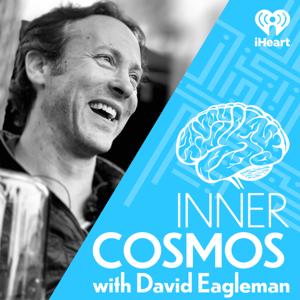
Neuroscientist and author David Eagleman discusses how our brain interprets the world and what that means for us. Through storytelling, research, interviews, and experiments, David Eagleman tackles…
Ranked by our users in the last 21 days

21,780 Listeners

78,291 Listeners

31,916 Listeners

43,352 Listeners

14,356 Listeners
5,658 Listeners

26,240 Listeners

939 Listeners

6,429 Listeners

4,659 Listeners
924 Listeners

11,943 Listeners

244 Listeners

4,172 Listeners

2,360 Listeners
8 Listeners

8 Listeners

352 Listeners

63 Listeners

250 Listeners

2,011 Listeners

142 Listeners

237 Listeners

1,551 Listeners

839 Listeners

63 Listeners

277 Listeners

159 Listeners

1,036 Listeners

18 Listeners

192 Listeners

1,622 Listeners

59 Listeners

34 Listeners

26 Listeners