
Sign up to save your podcasts
Or



Based on Podcast App listening data
Can we measure a lie from a blood pressure test, or pedophilia from a brain scan? And how should a judge decide whether the technology is good enough? What does this have to do with Ronald Reagan, or antisocial personality disorder, or how the television show CSI has impacted courtrooms? Today’s episode lives at the intersection of brains and the legal system. When are new neuroscience techniques allowed in courts, and when should they be?
David is taking his birthday week off and wanted to re-share this episode due to it's ongoing relevance.
Modern AI is blowing everyone’s mind. But is it intelligent like humans, or is it just playing impressive statistical games? Could AI reach or exceed our level of intelligence, and how would we know when it gets there? Traditional tests for intelligence (Turing test, Lovelace test, etc) have long been surpassed, so Eagleman proposes a new kind of test.
Why does a cold pool feel warmer the second time you dip your toes in? Why does a safecracker run his fingers over sandpaper? Why do Mediterranean cultures touch each other more than Scandinavian cultures? Would it be great -- or not so great -- if you were unable to feel physical pain? Why does stubbing your toe have different sensations through time? And what does any of this have to do with cuddle puddles, NBA players bumping chests, or puppies sleeping in dog piles? Today’s episode is a love story about our sense of touch: what it is, how it works, and why it plays such a critical role in our lives.
Could you instantaneously learn to fly a helicopter -- not by practicing, but instead by uploading instructions directly to your brain? What would society do if children no longer had to go to school? And what does any of this have to do with suntan booths, nanorobots, or what a cowboy on a hill is not able to see? Join Eagleman to learn about the possibility of modifying the microscopic structure of your brain and leapfrogging education. What are the possibilities, the caveats, and the unexpected complexities?
From the brain’s point of view, what is the self? How do 30 trillion cells come to feel like a single entity? Does the "self" of a blind person include the tip of her walking stick? How flexible is our sense of self? And what does any of this have to do with psychedelics, trauma, synchronized swimmers, religious rituals, cheerleaders, or why soldiers across time and place love to march in lockstep? Join Eagleman for this week's episode of surprises about how the brain computes the self.
Presumably we're not going to solve the problem of conflict between groups of people -- but what would better conflict look like? And what does that have to do with brains, the spread of homo sapiens, social media recommender algorithms, tribalism, intellectual humility, or the Iroquois Native Americans? Join this week's episode with guest Jonathan Stray -- a conflict researcher -- for an episode about brain science, war, empathy, outgroups, and how we might do better.
Can you become conscious inside a dream? Can a researcher convey information to a dreamer, and can the dreamer find some way to answer back? Does 10 seconds inside a dream equal 10 seconds in real life? Could taking a drug inside a dream give you a placebo effect? Can you prompt your brain like a large language model? And if so, what would you pose to your unconscious brain? Join David Eagleman and guest Jonathan Berent to discover the what, why, and how of lucid dreaming.
Why do brains dream, and why are dreams so bizarre? Why doesn't your clock work in your dreams? And even though you spend much of your working day looking at your cell phone and computer – why do they almost never make appearances in your dream content? Is dream content the same across cultures and across time? Are dreams experienced in black & white, or in color? Are dreams the strange love child of brain plasticity and the rotation of the planet? What is the relationship between schizophrenia and dreaming? In the future, will we be able to read out the content of somebody's dream? Join Eagleman this week to learn why and how we spend a fraction of our sleep time locked in different realities, swimming in plots which aren't real but which compel us entirely nonetheless.
Why do we spend 1/3 of our lives in the strange doppelganger state of sleep? Can we die from a lack of sleep? How long is it possible to keep yourself awake (and why does the Guinness Book of World Records no longer track that)? Why are some people night owls and some morning larks? What does any of this have to do with lightless underground caves, or with the length of a day on Mars? Join this week's episode to learn everything you've ever wanted to know about sleep and what your brain is actually doing during this time. This is the first of a 3-parter: next week we'll dive into dreams, and the week after that into lucid dreams.
Could you get convicted of a crime based on your brain activity? Are brain scan lie detectors accepted in court, or would that count as illegal search and seizure? And what does this have to do with your mouth getting dry, the orbits under your eyes getting hot, and your voice constricting when you deceive? Join Eagleman to dive into the fascinating topic of whether societies can use technology to figure out whether a person is telling the truth -- and under what circumstances we would even want to go there.
From the publisher's feed
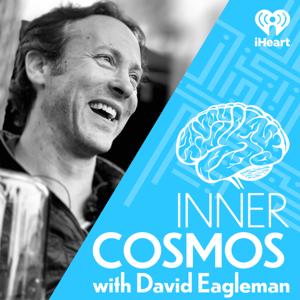
Neuroscientist and author David Eagleman discusses how our brain interprets the world and what that means for us. Through storytelling, research, interviews, and experiments, David Eagleman tackles…
Ranked by our users in the last 21 days

21,780 Listeners

78,291 Listeners

31,916 Listeners

43,352 Listeners

14,356 Listeners
5,658 Listeners

26,240 Listeners

939 Listeners

6,429 Listeners

4,659 Listeners
924 Listeners

11,943 Listeners

244 Listeners

4,172 Listeners

2,360 Listeners

8 Listeners

8 Listeners

352 Listeners

63 Listeners

250 Listeners

2,011 Listeners

142 Listeners

237 Listeners

1,551 Listeners

839 Listeners

63 Listeners

277 Listeners

159 Listeners

1,036 Listeners

18 Listeners

192 Listeners

1,622 Listeners

59 Listeners

34 Listeners

26 Listeners