
Sign up to save your podcasts
Or



Based on Podcast App listening data
What is depression? Why are brains able to slip into it? Is depression detectable in animals? Do animals have options beyond fight or flight? And what does any of this have to do with measuring depression medications in city water supplies, reward pathways in the brain, the prevalence of tuberculosis, and zapping the head with magnetic stimulation? Join today's episode with David Eagleman and his guest -- psychiatrist Jonathan Downar -- for a deep dive into the brain science behind depression and what new solutions are on the horizon.
Do our visual systems see in frames like a movie camera or instead analyze the world continuously? Why do you see multiple hands when you clap under yellow street lamps? How did Hollywood launch from the question of whether all four legs of a galloping horse come off the ground at once? And what is the very surprising thing that happens if you stare at your ceiling fan for a long time while it turns? This week’s episode is about visual perception -- and a series of eye-opening revelations about how the brain takes in information from the world.
Can a person be declared legally dead even though he is very much alive? In December of 2010, why did a number of families choose to pull their loved ones off life support just before the new year? How do doctors decide when you've died, and how is it different from how lawyers decide? How is death a process rather than an event? What does any of this have to do with getting buried alive, your family's religious beliefs, or whether a head stays alive after the guillotine? Join Eagleman and guest Jacob Appel, an emergency room psychiatrist and head of ethics, for an episode about the science and the questions about death -- including who's domain it is to call it, and where this is all heading.
Who is the most disappointed medalist at the Olympics? How do brains simulate what might have been? How can you get your kid to wear a jacket in the cold? What if you had to face more successful versions of yourself? And what does any of this have to do with why menus should be shorter, why empires divide, and why you should always put yourself in the shoes of future people? Join Eagleman to learn the capstone secrets of mental time travel, and what these have to do with the emotions of regret and relief.
Why are people who can't remember their past also unable to picture their future? Why do we get so anxious about the world changing around us? What should you advise the president if we find ourselves at war with extraterrestrials? And what does this have to do with Wayne Gretzky, or the Greek goddess of memory, or hitting a bottle to get ketchup onto your French fries? Join this week's episode to find out about one of the most important things brains do: simulations of possible futures.
How do billions of neurons store your home address, your ability to ride a bike, and the history of your life? How does memory work in the brain, and how is it different from the way a computer stores information? And what does any of this have to do with the Happy Birthday song, squirrels hiding acorns, bards memorizing epics, or people who cannot forget any of the events of their life? Join Eagleman to learn how and why your brain continually time travels to previous moments.
What role will AI play in the future of fake news and misinformation? What does this have to do with our brains’ internal models, with voice passwords, and with what Eagleman calls "the tall intelligence problem"? And why does he believe that these earliest days of AI are its golden age, and we are quickly heading for a balkanization? Join for today's episode about truth, misinformation, and artificial intelligence.
What is the future of misinformation on the internet? Is it possible that the invention of the internet has improved access to truth? What does any of this have to do with the Oxford English Dictionary, Soviet agriculture, liberation technology, Kenyan elections, Barbra Streisand's house, and Twitter revolutions? Join Eagleman for a surprising foray into the thorny forest of truth in the age of the internet.
We all worry about fake news. But is misinformation and disinformation really new? Join Eagleman for a deep dive into the past, present, and future of truth. Why do cameras not tell us what we think they do? What should we not forget about pamphleteering? And what does this have to do with agriculture in the USSR, or book banning in America, or dog whistles, or apps that only tell facts? And why is it so hard to understand the viewpoints of millions of brains at once? This week's episode is the first of a three-parter -- and today we tackle truth in the media.
Why are our brains so wired for love? Could you fall head over heels for a bot? Might your romantic partner be more satisfied with a 5% better version of you? How does an AI bot plug right into your deep neural circuitry, and what are the pros and cons? And what will it mean when humans you love don’t have to die, but can live on in your phone forever? Join Eagleman for a deep dive into relationships, their AI future, and what it all means for our species.
From the publisher's feed
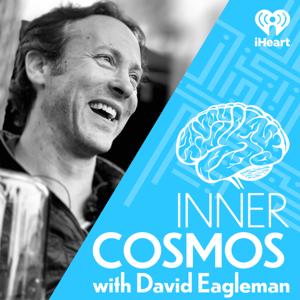
Neuroscientist and author David Eagleman discusses how our brain interprets the world and what that means for us. Through storytelling, research, interviews, and experiments, David Eagleman tackles…
Ranked by our users in the last 21 days

21,780 Listeners

78,291 Listeners

31,916 Listeners

43,352 Listeners

14,356 Listeners
5,658 Listeners

26,240 Listeners

939 Listeners

6,429 Listeners

4,659 Listeners
924 Listeners

11,943 Listeners

244 Listeners

4,172 Listeners

2,360 Listeners
8 Listeners

8 Listeners

352 Listeners

63 Listeners

250 Listeners

2,011 Listeners

142 Listeners

237 Listeners

1,551 Listeners

839 Listeners

63 Listeners

277 Listeners

159 Listeners

1,036 Listeners

18 Listeners

192 Listeners

1,622 Listeners

59 Listeners

34 Listeners

26 Listeners