
Sign up to save your podcasts
Or



Based on Podcast App listening data
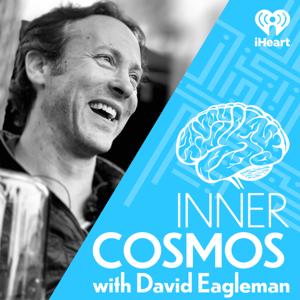
Brains bear thoughts like a peach tree bears peaches. Even for meditators it's almost impossible to stop the firehose of words and images and ideas. But what in the world is a thought, physically? How can you hear a voice in your head when there's no one speaking in the outside world? And what does any of this have to do with a small marine animal who eats its own brain? Join Eagleman for this week's deep dive into our inner life.
Is your brain a one-person show or an ensemble cast of rivaling neural networks? How do we manage the conflict between different drives, and what does this have to do with literature, deities, maturation, and what Nietzsche meant when he said “every drive wants to be master, and it attempts to philosophize in that spirit”? Join Eagleman this week with Jordan Peterson as we examine the way lives are built on conflicting wants.
Is it possible to become happier? How much of your happiness has to do with genetics, social connection, comparison to other people, your balance of optimism vs pessimism, and whether it would be useful to keep a journal of your life? Join Eagleman this week with Bruce Hood, experimental psychologist and author of “The Science of Happiness”.
How do brains slip so easily from the real world into made up worlds? What do authors of great literature have in common with stage magicians and comedians? What does any of this have to do with cognitive shortcuts, prediction machines, Marcel Proust, Toni Morrison, Jane Austen, or why jokes are always structured in threes? Join Eagleman this week for a conversation with his Stanford colleague Joshua Landy as they discuss brains on story.
Why do movies work so well? What does film reveal about the way the brain processes reality? What does any of this have to do with omniscience, simulation, jumping around in time, or why dogs don’t do story? Join Eagleman with guest Jeffrey Zacks, cognitive scientist at Wash U, as we dive into the peculiar magic that happens when the lights go down, the screen glows to life, and we find ourselves pulled into the world of a film.
Is AI an intelligent agent, or is there a different way we should be thinking about it? Is it more like a piece of cultural technology? What in the world is a piece of cultural technology -- and how would re-thinking this change our next steps? What does any of this have to do with the myth of the Golem, printing presses, Socrates, Martin Luther, or the story of stone soup? Join Eagleman this week with cognitive scientist Alison Gopnik for a new take on a new tech.
If you had to give a detailed description of what flits through your mind, how good would you be at it? Might you be surprised at how many of your thoughts don't involve language? Are your thoughts changed by paying attention to them? What does this have to do with getting surprised by a random beep and immediately writing down what you’re thinking? Join Eagleman this week in conversation with Russell Hurlburt, a clinical psychologist who developed a new method to probe inner life.
What would it take to get inside someone else's head, and could new brain technologies ever help us get there? Will there be dream celebrities, in which uploads go viral? What does consciousness feel like from the inside, and why do movies always get this wrong? Why don't you see your own blinks? What would it be like if exactly 1/2 of your brain was numbed to sleep? And what would it be like to become a horse?
What does it mean to stand in another’s shoes—and when are the gaps between us too wide to cross? This week, Eagleman explores bats, kicked robots, Helen Keller, empathy, storytelling, and the phrase “I know exactly how you feel.” We'll weave through neuroscience, philosophy, literature, and technology to ask: Can we ever truly understand another’s inner world?
What enables some people to keep going when everything falls apart? We all know someone who’s been through hell and comes out standing. This episode is about resilience. Join Eagleman with guest Dr. Jonathan Downar to discover what happens in the brain when we face adversity. Is resilience something you’re born with, or is it something your brain can develop? What does any of this have to do with The Diving Bell and the Butterfly, using magnetic fields to zap the brain, the less famous partner to the reward system, or what seemingly unrelated disorders in psychiatry all have in common?
From the publisher's feed
Neuroscientist and author David Eagleman discusses how our brain interprets the world and what that means for us. Through storytelling, research, interviews, and experiments, David Eagleman tackles…
Ranked by our users in the last 21 days

21,780 Listeners

78,291 Listeners

31,916 Listeners

43,352 Listeners

14,356 Listeners
5,658 Listeners

26,240 Listeners

939 Listeners

6,429 Listeners

4,659 Listeners
924 Listeners

11,943 Listeners

244 Listeners

4,172 Listeners

2,360 Listeners

8 Listeners

8 Listeners

352 Listeners

63 Listeners

250 Listeners

2,011 Listeners

142 Listeners

237 Listeners

1,551 Listeners

839 Listeners

63 Listeners

277 Listeners

159 Listeners

1,036 Listeners

18 Listeners

192 Listeners

1,622 Listeners

59 Listeners

34 Listeners

26 Listeners