
Sign up to save your podcasts
Or

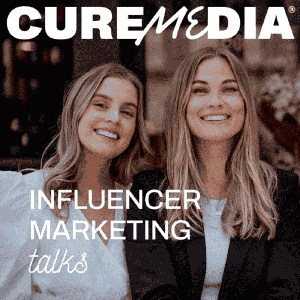


Since the dawn of time (for influencer marketing, that is) discount codes have been seen as a must-have. But in today’s competitive landscape, that’s simply not the case anymore.
In today’s episode, we are going to take a cold, hard look at the use of discount codes in influencer marketing. Lending his significant experience and expertise in the field, we’ll be joined by one of the co-founders of Cure Media and our CEO, Sam Foroozesh. And where should they put their focus instead?
In under 15 minutes, we’ll be taking a look at:
In a marketplace this competitive, everyone will be telling you to do data-driven influencer marketing if you want to succeed - us included!
But we’re going to pause and take a step back a second, because in this episode of Influencer Marketing Talks we’re going back to basics and answering one foundational question first: what even is data-driven influencer marketing.
Answering in under 15 minutes, we’ll be taking a look at:
If you hear ‘influencer marketing’, your mind probably jumps to the big, celebrity creators. But times have changed and flying the flag for micro-influencers; they’re big news, whether brands like it or not.
In fact, in 2021 micro-influencers accounted for 91% of the channel. Which means that if you’re only focusing on mega-influencers and above, you’re missing out on the vast majority of the channel, and with it a lot of potential engagement.
But where did these so-called micro influencers pop up from? We’ve done some digging to track the emergence and evolution of the micro-influencer and it took us all the way back to 1765. So buckle up, listeners, because in this week’s episode of Influencer Marketing Talks we’re taking you on a bit of a history lesson.
With new motivations and behaviours driving their purchasing decisions (and a lucrative price tag on their head), marketers are obviously keen to get Gen Z on board. But how can they hope to do that when nearly 60% say they’re not confident they even understand them?
As uncertainty grows, myths begin to circulate and they’re steering marketers in the wrong direction.
Joined by Cat Agostinho and Jay Richards, co-founders of Imagen Insights, one of the biggest agencies in Gen Z intelligence, we’re busting five of the most pervasive myths surrounding this new audience.
Tune in to learn:
Whether you’re already clocked off for the summer, or you’re enjoying a sunny commute to the office - we’re glad to have you here and you’re in for a great episode, because today’s edition of Influencer Marketing Talks is hot off the press!
This week, we are joined by Lucy MacGuire, Trends Editor at Vogue Business. With several fingers on the pulse of the biggest drops in fashion plus bylines that span a wide range of the Vogue empire, from Britain to Italy, and Paris to Russia, Lucy has about as comprehensive an overview of fashion and consumer trends as anyone can have.
We'll be discussing:
In 2019, 19-year-old influencer Matilda Djerf launched the Scandinavian styled, non-seasonal, ready-to-wear fashion brand ‘Djerf Avenue’ together with her partner and co-founder Rasmus Johansson. Only three years in, Djerf Avenue has become globally recognised, reporting $8 million in sales in 2021.
That’s not all. At the same time, Matilda gained global recognition for her iconic hair and Scandinavian style, quickly propelling her Instagram account up to 2,3M followers - and counting.
This week, we'll be joined by Rasmus Johansson, CEO and co-founder of Djerf Avenue, as well as Matilda Djerf herself, the creator behind the eponymous brand whose two million plus Instagram followers have become willing devotees of her sustainable, all-season fashion line.
We'll be discussing:
Gen Z and millennial audiences have new expectations when it comes to influencer marketing - and marketers aren’t always keeping up.
Whether it’s the content formats they most enjoy or the platforms they’re most active on, staying on top of (let alone ahead of) the latest movements in consumer preferences can be challenging, particularly in a marketplace as fast-moving as retail.
We’re looking back over our research of 1,0008 consumers to pinpoint what it is exactly marketers need to be aware of when constructing their influencer marketing strategy.
We’re talking:
Plus more! So tune in to listen and make sure your influencer marketing is the kind audiences want to see in their feed.
Creating engaging social media content comes down to more than just viral dance trends or repurposing popular memes. Instead you need to strike a tricky balance between the content different platforms’ algorithms are prioritising, the messages you need to communicate, and the material your audience actually wants to see.
And just when you think you’ve got it sussed, it can all change on a dime.
So we’re taking a look at the lay of the land in 2022 to try to help brands work out what different content will help them shine on different platforms, and how they can make that work for them.
We’re covering:
In a marketplace as crowded as the fashion sector, you need every campaign to land. So while catchy copy and compelling graphics might be the things that your audience remembers, it should be data that tells you what copy will work, which graphics will fit, and even who your audience will be.
And influencer marketing should be no exception. Data-driven influencer marketing can make sure your activations get seen in the right place and by the right people; it can redirect your campaigns to maximise your results; and it can take your strategy to the next level.
To hear how influencer marketing, machine learning and AI can be the perfect match, we invited our in-house Data Scientist Bernard Rosencrantz to the podcast studio.
Tune in to find out:
L’Oreal is on a mission to ‘create the beauty that moves the world’.
With 36 global brands and four different divisions, most, if not all of us, will have enjoyed a L’Oreal product at some point. From high street beauty faves to luxury fragrances and salon-level hair products, the L’Oreal family encompasses a staggeringly wide range of products with something to suit everyone. And it's this inclusiveness that drives their wider marketing and business goals.
As inclusivity and diversity become critical purchasing motivators for consumers as well as ethical musts for brands, we turned to L’Oreal to discover how a world-leading beauty brand is incorporating these values into their strategy.
To hear how L’Oreal has reinterpreted the traditionally exclusionary beauty industry into something broader (and more beautiful for it), we spoke to Erica Culpepper, General Manager for Multi-Cultural Beauty at L’Oréal. All together, Erica has an impressive 20 years of experience in the beauty industry, experience that has taken her to some of the biggest and most iconic brands in the industry. In this episode, you’ll learn from Erica how beauty and fashion brands can build a more inclusive future - and why they must.
Tune in to find out:
From the publisher's feed
Inside the Creator Economy is a business podcast exploring how creator-led marketing is reshaping modern brand building.
Hosted by Sanna Ödmark and Frida Ekholm from Cure Media, the show brings you inside the conversations shaping the future of the creator economy - from CMOs and founders to creators, platforms and growth leaders across Europe.
This isn’t about one-off campaigns. It’s about what happens when brands move creators from the margins to the core of their strategy.
Each week, we unpack the real questions marketing teams are facing:
Produced by Cure Media, one of the leading creator marketing agencies in Northern Europe, this podcast is for marketers and business leaders who want to understand where growth is heading next.

2,617 Listeners
10 Listeners
1,447 Listeners
11 Listeners
610 Listeners
32 Listeners
2,030 Listeners

59 Listeners

2,607 Listeners

28 Listeners

153 Listeners

4 Listeners
12 Listeners

2 Listeners

703 Listeners