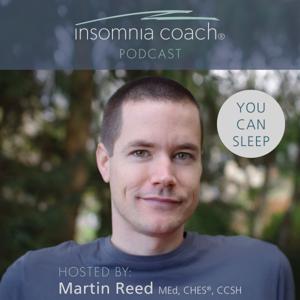
Insomnia Coach® Podcast

Insomnia Coach® Podcast

Download on the App Store
  • Favorites

    50

    Followers

  • Typical duration

    57 min

    per episode

Based on Podcast App listening data

Insomnia Coach® Podcast episodes

  • How Dulce gained freedom from insomnia by giving up her attempts to control sleep and reducing her resistance to the difficult thoughts and feelings that came with it (#63)
    Neseret's experience with insomnia began when she tried tapering off an antidepressant she had been taking for 13 years. Every time she tried to get off the medication she found herself unable to sleep.
    Although a move from shift work to regular daytime hours and being more active during the day helped to improve Neseret's energy levels, she still couldn't make the final leap to being medication free because she was petrified of going without sleep.
    Finding Insomnia Coach and the stories shared on the podcast gave Neseret a newfound confidence that she could taper off the medication. She had hope.
    Neseret began a supervised medical taper while practicing new skills and habits that helped her move away from struggling with sleep and all the difficult thoughts and feelings that often come with insomnia.
    She stopped putting pressure on herself to generate a certain amount of sleep. Whenever she found herself struggling during the night, she would engage in another activity so she had an alternative to struggle. She stopped trying to control sleep.
    Neseret's journey was not easy. There were ups and downs. There were setbacks. And yet, today, she is off the medication and sleep is no longer a problem or an obstacle to her ability to live the life she wants to live.
    1 hr 4 min
  • How Neseret ended her dependence on medication and transformed her life through education, committed action, and self-compassion (#62)
    Neseret's experience with insomnia began when she tried tapering off an antidepressant she had been taking for 13 years. Every time she tried to get off the medication she found herself unable to sleep.
    Although a move from shift work to regular daytime hours and being more active during the day helped to improve Neseret's energy levels, she still couldn't make the final leap to being medication free because she was petrified of going without sleep.
    Finding Insomnia Coach and the stories shared on the podcast gave Neseret a newfound confidence that she could taper off the medication. She had hope.
    Neseret began a supervised medical taper while practicing new skills and habits that helped her move away from struggling with sleep and all the difficult thoughts and feelings that often come with insomnia.
    She stopped putting pressure on herself to generate a certain amount of sleep. Whenever she found herself struggling during the night, she would engage in another activity so she had an alternative to struggle. She stopped trying to control sleep.
    Neseret's journey was not easy. There were ups and downs. There were setbacks. And yet, today, she is off the medication and sleep is no longer a problem or an obstacle to her ability to live the life she wants to live.
    1 hr 5 min
  • How Bryan recovered from insomnia by putting less effort into sleep and more effort into living his life (#61)
    When Bryan got sick he experienced an entire night of no sleep for the first time in his life. He didn't sleep the next night, either. When his sleep didn't get back on track, Bryan started to believe that he had lost the ability to sleep and that belief generated a lot of anxiety.
    As sleep consumed more and more of his energy and attention, Bryan started to withdraw from life. His relationships suffered as sleep became the center of his universe.
    Bryan found that the more he tried to make sleep happen, the more difficult sleep became, the more anxiety he experienced, the more likely he was to engage in actions that didn't reflect who he was or who he wanted to be, and the more difficult everything became.
    And yet, as a driven problem-solver, he continued to try.
    Things began to change for Bryan when he accidentally fell asleep. When he fell asleep even though he didn't do anything to make sleep happen. There was no trying. No effort. No rules. No rituals. No medication. No supplements.
    Bryan realized that he hadn't lost the ability to sleep after all — and that he didn't need to do anything to make sleep happen.
    This insight didn't get rid of Bryan's struggles overnight but it prompted him to change his approach.
    He started acting in ways that served him and the life he wanted to live, rather than sleep. When difficult nights showed up, he would remind himself of the better nights (and how they required no effort or intervention). Then, he would refocus his attention on what he could control by doing things that mattered to him — actions that kept him moving toward the life he wanted to live, independently of sleep.
    With this approach, sleep started to lose the power and influence it once had over his life. In Bryan's own words, as he started getting his life back to normal, his sleep started getting back to normal, too.

    1 hr 1 min
  • How Emily transformed her sleep by accepting insomnia and committing to meaningful daily actions (#60)
    Emily's insomnia struggle began around four months after the birth of her baby. Even though her daughter was sleeping well, Emily was finding it really difficult to fall asleep. She started to get nervous and anxious as her level of exhaustion intensified.
    When the medication prescribed by her doctor didn't work, Emily started to get really concerned. She started researching solutions but found that the more she tried to fix her sleep, the more difficult it became and the more stressful things got.
    Emily's anxiety intensified to the point where the arrival of bedtime would lead to a racing heart and a sense of panic. It felt like her body was preparing for a marathon while she wanted to get a good night of sleep so she could be the mother she wanted to be for her daughter.
    Emily's transformation began when she changed her approach to sleep and her response to insomnia.
    She reduced the amount of time she allotted for sleep to more closely match the amount of sleep she was getting on an average night. She started to do something more pleasant whenever she found herself struggling with being awake at night.
    She stopped calculating the amount of sleep she was getting each night and she began to look at sleep with less judgement and more neutrality.
    Instead of trying to fight or avoid her racing heart and the anxiety, she surrendered to them — she acknowledged their presence and allowed them to exist.
    And, she committed to doing things that mattered, even after difficult nights and even when she felt exhausted.
    Emily surrendered to whatever might happen each night — and this freed her from the pressure she was putting on herself to generate a certain amount or type of sleep and allowed her to move away from the struggle that came from trying to control her thoughts and feelings.
    Today, Emily goes to bed sometime around 11 at night and wakes naturally around seven in the morning. Sleep is no longer a concern or a focus. Her focus now is on living the life she wants to live.
    1 hr 10 min
  • How Kirstin rediscovered her natural ability to sleep after feeling completely dependent on sleeping pills (#59)
    Kirstin began using medication every now and then to help her sleep on Sunday nights. When she faced a big personal challenge that made sleep more difficult, she started to use it more often. The plan was to take a small dose to get her through that difficult period and then stop the medication because she didn't want to be reliant on something to help her fall asleep.
    Unfortunately Kirstin found that when she tried to stop taking the medication, sleep didn't happen. She went without sleep for three or four days straight before reaching for the medication in a desperate attempt to make sleep happen. Kirstin developed the belief that she couldn't sleep without medication and this created a lot of panic, distress, and confusion.
    Kirstin became obsessed with sleep. All she could think about was insomnia. Her days were filled with researching sleep remedies and experimenting with sleep-related rules and rituals. Nothing worked.
    Kirstin tried to stop herself from thinking about insomnia. That didn't work either. As nighttime approached she would get extremely nervous, scared, and upset. People tried to be supportive but nobody understood what she was going through.
    Things changed when Kirstin came across the Insomnia Coach podcast and realized that she wasn't alone. As she listened to the stories of others, insomnia started to feel less mysterious.
    At this point, Kirstin started to reclaim her life from insomnia. She made and followed through on daytime plans, regardless of how she slept. She prepared for difficult nights in advance so she had alternatives to struggling and battling all night long. She abandoned all her sleep efforts, rules, and rituals. She allowed all the difficult thoughts and feelings she was experiencing to exist — she acknowledged them and allowed them to come and go as they pleased. She practiced being kinder to herself.
    Kirstin's journey was not easy. She experienced ups and downs. When things felt difficult she made the conscious effort to focus on actions that would keep her moving toward the life she wanted to live and the relationship with sleep she wanted to have.
    Kirstin is also applying many of the skills she gained from her experience with insomnia to other parts of her life. And, she is sleeping without medication.
    1 hr 11 min
  • How Summer let go of trying to control her sleep, her thoughts, and her feelings — and regained control over her life (#58)
    When Summer experienced consecutive nights of insomnia, sleep started to consume her life. She started taking time off work and she began endlessly researching sleep. Summer felt that if she could get rid of anxiety and stress things would improve — but this led to even more of a struggle as Summer went to war with her mind.
    Sleep became an obsession. It was all she could think about. Summer felt as though she was losing control. She felt helpless. She started to blame herself. It was becoming increasingly difficult for her to live the life she wanted to live.
    The more Summer tried to fix her sleep, the more she seemed to struggle. Sleep-related rules and rituals didn't work. Changing her diet didn't work. Changing the temperature in her room didn't work. Trying to eliminate blue light didn't work.
    Ultimately, what worked for Summer was not trying. She realized that she couldn't control sleep. And, by no longer trying to make sleep happen, she started to struggle less with sleep and she had more energy to live the life she wanted to live.
    Summer also started to be kinder to herself. She stopped trying to fight or avoid the thoughts her mind would generate as it did its job of looking out for her. She acknowledged her thoughts and feelings and allowed them to come and go. She expanded the focus of her attention. She spent more time with friends. She lived by her values.
    Summer stopped trying to control sleep and she stopped trying to control her thoughts and feelings. As a result, sleep no longer controls Summer's life. Thoughts and feelings no longer control Summer's life. Summer controls her own life.
    1 hr 9 min
  • How Nina overcame insomnia by embracing wakefulness and dropping the struggle (#57)
    Nina typically dealt with occasional periods of sleep disruption by taking some form of over-the-counter medication. When she fell pregnant this was no longer an option. Work stress seemed to make sleep more difficult and so Nina stopped taking on work. Her sleep would improve but every time she started working again, she struggled with sleep all over again.
    At this point, Nina thought her ongoing struggle with sleep might be down to pregnancy hormones and yet, after giving birth, her sleep seemed to get even worse. Nina tried to make sleep happen by consuming alcohol, taking supplements, and meditating. She tried hypnosis. Her doctor prescribed her medication but the side-effects were awful. Nothing worked and Nina felt stuck, she felt scared, and she didn't know what to do.
    Then, Nina found the Insomnia Coach podcast. She realized she wasn't alone. That there was hope. When we started working together, Nina started to make changes. She started to do things that mattered each day, even after difficult nights and even when that felt really difficult. Instead of struggling with being awake during the night, she planned and engaged in activities that would help make being awake feel a bit more productive or a bit more pleasant.
    Nina gave herself permission to be awake. She was kinder to herself when things felt difficult. She stopped trying to get a certain amount or type of sleep. She focused on actions that would help her get her life back from insomnia rather than continuing to battle with insomnia.
    Nina's journey was not easy. There were setbacks. She went back to sleeping pills from time to time. Today, Nina is back at work. She enjoys her bed again. She is being the mother she wants to be. She has her life back from insomnia.
    1 hr 4 min
  • How Kreuza dealt with insomnia and somniphobia by practicing more acceptance and less resistance (#56)
    Kreuza shares her journey through the challenging landscape of insomnia and somniphobia, a fear of sleep. Initially, she found Cognitive Behavioral Therapy for Insomnia (CBT-I) techniques helpful. However, when sleep problems returned as somniphobia, the same techniques faltered. Feeling isolated in her struggle, Kreuza realized that implementing rules around sleep were not helping her.
    A turning point came when she embraced a more flexible, compassionate approach to sleep. She began to practice accepting her thoughts and feelings without resistance. She practiced being kind to herself when things felt really difficult. And she engaged in activities that mattered to her, even after difficult nights.
    Kreuza’s story is a testament to the possibility and power of patient and kind practice of acceptance as a way to deal with deep-seated fears. It also highlights that moving past sleep struggles is often a journey of ongoing action and practice — and setbacks — rather than quick fixes.
    1 hr 8 min
  • How Rachel got out of the insomnia struggle by being more flexible, more accepting, and more present (#55)
    Rachel's battle with insomnia began in grad school. Sleep aids and strict routines failed to improve her sleep.
    Real change came when she moved away from trying to create the perfect conditions for sleep and stopped trying to get rid of certain thoughts and feelings.
    Rachel's new approach involved being more flexible. She abandoned sleep-related rules and rituals. She practiced building skill in self-kindness and being more present. She opened up and made space for difficult thoughts and feelings to exist.
    This new approach not only improved her sleep, it also improved her overall quality of life.
    Listen to this episode
    54 min
  • How Jessica broke free from insomnia by letting go and accepting it without judgement (#54)
    Jessica's struggle with insomnia began on a family trip, and it worsened each time she traveled until it stuck around, even at home. No matter what she tried, her nights were filled with anxiety and struggle.
    Jessica found that her resistance to insomnia and the difficult thoughts and feelings that often come with it were making things even more difficult. So, she changed her approach. She practiced accepting insomnia and anxiety. She learned to be kinder to herself.
    With ongoing practice, Jessica freed herself from an ongoing struggle and reclaimed her life from insomnia.
    1 hr 3 min

About Insomnia Coach® Podcast

From the publisher's feed

Insomnia help and real success stories from people who got their lives back from insomnia

More shows like Insomnia Coach® Podcast

This American Life by This American Life

This American Life

91,018 Listeners

The Martin Lewis Podcast by BBC Radio 5 Live

The Martin Lewis Podcast

91 Listeners

Insight Hour with Joseph Goldstein by Be Here Now Network

Insight Hour with Joseph Goldstein

944 Listeners

Thanks For Asking by Feelings & Co.

Thanks For Asking

13,241 Listeners

The Diary Of A CEO with Steven Bartlett by DOAC

The Diary Of A CEO with Steven Bartlett

8,527 Listeners

Happy Place by Fearne Cotton

Happy Place

915 Listeners

The Sleep Coach School Podcast by Daniel Erichsen

The Sleep Coach School Podcast

60 Listeners

Huberman Lab by Scicomm Media

Huberman Lab

29,207 Listeners

The Way Out Is In by Plum Village

The Way Out Is In

1,375 Listeners

The Rest Is Politics by Goalhanger

The Rest Is Politics

3,010 Listeners

The Mel Robbins Podcast by Mel Robbins

The Mel Robbins Podcast

19,273 Listeners

Sleep Magic: Sleep Hypnosis & Meditation for Sleep Podcast by Sleepiest: Hypnosis for Sleep Podcast

Sleep Magic: Sleep Hypnosis & Meditation for Sleep Podcast

1,613 Listeners

Disordered: Anxiety Help by Josh Fletcher and Drew Linsalata

Disordered: Anxiety Help

429 Listeners

ADHD Chatter by Alex Partridge

ADHD Chatter

285 Listeners

The Rest Is Politics: US by Goalhanger

The Rest Is Politics: US

2,265 Listeners