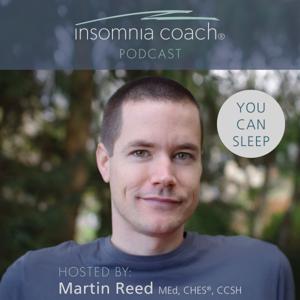
Insomnia Coach® Podcast

Insomnia Coach® Podcast

Download on the App Store
  • Favorites

    50

    Followers

  • Typical duration

    57 min

    per episode

Based on Podcast App listening data

Insomnia Coach® Podcast episodes

  • Busting sleep and insomnia myths with clinical psychologist and behavioral sleep medicine specialist Dr. Jade Wu (#13)
    Dr. Jade Wu is a clinical psychologist and behavioral sleep medicine specialist at Duke University School of Medicine.
    In this episode, Jade and I discuss a number of concerns that are common among people with chronic insomnia — we talk about how much sleep we need, whether we can lose our ability to sleep, whether insomnia is caused by a chemical imbalance in the body, whether chronic insomnia causes any serious health problems, and whether we have any control over the negative impact insomnia can have on our lives.
    My aim with this episode is to help change the way you think about sleep and insomnia. I hope this will help reduce the intensity of any worry or anxiety that might be making it more difficult for you to improve your sleep and encourage you to pursue CBT-I so you can enjoy better sleep for the rest of your life.
    Watch/listen to this episode
    1 hr 4 min
  • How working with a sleep coach helped Jeff get rid of sleep-related worry and anxiety and sleep well without sleeping pills (#12)
    After trying to implement cognitive behavioral therapy for insomnia (CBT-I) techniques with the help of a book, Jeff continued to struggle — until he started implementing CBT-I techniques with the ongoing support and guidance of a sleep coach (me!).
    In this episode, Jeff shares the specific CBT-I techniques he found most helpful and why working with a coach proved to be the most effective way to recover sleep confidence, get rid of sleep-related worry and anxiety, and enjoy better sleep.
    Watch/listen to this episode
    1 hr 2 min
  • How Eileen used CBT-I techniques to improve her sleep after taking sleeping pills almost every day for 15 years (#11)
    Eileen is a registered nurse of almost 30 years. She was always a light sleeper who felt that she needed perfect conditions for sleep to happen. After becoming a parent she started to get less sleep and this triggered more sleep-related stress and worry that made sleep even more difficult.
    Before long, Eileen became totally focussed on sleep and soon developed the mistaken belief that she just couldn't sleep. After seeking help from her physician, Eileen ended up on Ambien — a drug she took almost every day for 15 years.
    In this episode, Eileen describes how insomnia became part of her identity and how she went from constantly worrying about sleep and struggling with sleep to someone who now sleeps very well without sleeping pills.
    Listen to this episode
    45 min
  • A conversation about the challenges of CBT-I (and how to get through them) with clinical psychologist Steve Orma (#10)
    Dr. Steve Orma is a clinical psychologist and specialist in the treatment of insomnia and anxiety. He is the author of the book Stop Worrying and Go To Sleep: How to Put Insomnia to Bed for Good, and he provides online treatment for insomnia and anxiety.
    In this episode, we talk about how Steve got through his own insomnia using cognitive behavioral therapy for insomnia (CBT-I) techniques and the common challenges people face when implementing CBT-I techniques.
    The fact of the matter is that, in the short term, CBT-I techniques can be hard to implement — but if you are committed and consistent, your sleep will improve.
    Watch/listen to this episode
    1 hr 9 min
  • How Sara got rid of her insomnia, got off sleeping pills, and now averages seven hours of sleep each night (#9)


    Listen to the podcast episode (audio only)


    Sara lived with insomnia for a year and resorted to sleeping pills because she didn't know how to improve her sleep. Luckily, Sara did discover cognitive behavioral therapy for insomnia — and after just eight weeks of implementing CBT-I techniques, she went from averaging four hours of sleep each night to six hours of sleep each night. One year later, Sara now averages seven hours of sleep and no longer takes sleeping pills. In this episode, we'll learn more about how Sara got her sleep back on track and how she regained confidence in her ability to sleep.

    Click here for a full transcript of this episode.

    Transcript

    Martin Reed: Welcome to The Insomnia Coach Podcast. My name is Martin Reed. I believe that nobody needs to live with chronic insomnia and that cognitive behavioral therapy for insomnia (CBT-I) techniques can help you enjoy better sleep for the rest of your life.

    Martin Reed: Thank you so much, Sara, for coming onto The Insomnia Coach Podcast today.

    Sara Flaherty: It's okay. No problem.

    Martin Reed: Can you start off by just telling us when your sleep problems first began?

    Sara Flaherty: It was the summer of 2017. I've suffered from health anxiety for a long time, but it was particularly significant then. And from having been a person to have perfect sleep and could sleep anywhere at any time, I suddenly started waking up in the night with these health worries and then just got a massive fear that I couldn't go back to sleep. And it sort of escalated from that summer.

    Martin Reed: Yeah. So was your main difficulty just falling asleep at the start of the night, or was it more to do with you'd just find yourself waking during the night and then just finding it really hard to fall back to sleep? Or maybe both?

    Sara Flaherty: It was a little bit of both, but more when I woke up in the night. Sometimes, though, I couldn't go off to sleep initially, and then even waking in the night, I still couldn't go back to sleep. But mostly it was waking in the night and then not being able to go back at all.

    Martin Reed: Do you think that you had difficulty falling back to sleep or just falling asleep at the start of the night because you were worried about health issues, or was it specifically you were worried about sleep? Or maybe it started off as one and progressed into the other?

    Sara Flaherty: It started off as one. It started off with waking because I was worried about certain things, but then it got to the point where that was sort of at the back of my mind more and the fact that I couldn't sleep was the big fear. I'd wake up and I'd think, "Oh my God. I can't go back to sleep. I've got to function tomorrow. I've got to go to work. What am I going to do?" And then I just couldn't go back to sleep.

    Martin Reed: Yeah. How long was this going on for before you... For people that don't know that you enrolled in my online coaching course, how long were you experiencing these issues with sleep before you found out about cognitive behavioral therapy for insomnia techniques?

    Sara Flaherty: It was about a year I had poor sleep, and it got to the point where it was affecting my life so badly I just knew I had to do something. So I Googled and tried to get some research on techniques to help me, but I felt I needed more than that. Where I live, there's not a lot of support for anything psychologically as a problem. So I just had to find some help. So that's what I did.

    Martin Reed: Before you found me, before you found out about CBT-I,
    1 hr 4 min
  • How David overcame three years of insomnia by addressing his obsession with sleep using CBT-I, acceptance, and mindfulness techniques (#8)


    Like many people, David struggled with the odd night of poor sleep every now and again — but three years ago a night of absolutely no sleep led to sleep-related worry and the fear that he had lost the ability to sleep. This led to more nights of bad sleep (and many nights of no sleep whatsoever) and this compounded the problem. Eventually, David discovered that it was his worry and obsession with sleep that was perpetuating his insomnia. His recognition of this, along with the implementation of cognitive behavioral therapy for insomnia (CBT-I), acceptance, and mindfulness techniques helped him get his sleep back on track.

    David runs two websites: Letting Focus and Tenant's Guide to Successful Renting and is the author of Successful Property Letting – How to Make Money in Buy to Let.

    Click here for a full transcript of this episode.

    Transcript

    Martin Reed: Welcome to The Insomnia Coach Podcast. My name is Martin Reed. I believe that nobody needs to live with chronic insomnia and that cognitive behavioral therapy for insomnia (CBT-I) techniques can help you enjoy better sleep for the rest of your life.

    Martin Reed: So, first of all, David, thank you for joining us today on the podcast.

    David Lawrenson: Okay, thank you.

    Martin Reed: So, let's start right at the beginning. Tell us a bit about when sleep became a problem for you. Are you able to recall what initially triggered your insomnia? And how long ago did this all begin for you?

    David Lawrenson: Well, in a major way, it started about three years ago actually, around now. Yes, 2 years 11 months, 3 years ago. I had occasional problems with not being able to sleep very well, before that, on the odd evening, odd night. But the first time was about a half a year before it started in a big way. I went through a whole night without any sleep. But there have been a few times, as I was growing up, when I couldn't sleep for a long time.

    David Lawrenson: And the funny thing was, my dad was suffering from insomnia. I think I heard him talk about it when I was young, little from the age of eight. And I think that was in the back of my mind. But the thing that really started it in the modern time, so this was three years ago, was I had this asthma develop. So, I hadn't had asthma before, and it was just crazy. I thought, "Well, what is this?" I go and play football, because I play football a couple of times a week, and I would really struggle to be breathing after it.

    David Lawrenson: This went on for quite a while. And then, it got really bad, and finally, I couldn't sleep through the night. I was also quite worried about it. It took a bit longer than it should to sort of figure out what it was. But I was a little bit shocked to have asthma anyway. Never had it before. So, I had my first proper, I had another night with no sleep at all. And there were a couple of these. I got the asthma sorted out, but the sleep problem remained. And I have the occasional nights where, well sometimes a bit more than occasional, where I have a whole night where I didn't sleep at all. I'm beginning to think I've lost the ability to sleep.

    David Lawrenson: Anyway, that was the start of it, and that was about three years ago now that it started. And it started with asthma, although I had the occasional night of non sleep before that, but not very many. That was when it started. And it started getting quite bad then.

    Martin Reed: Yeah. It's quite a typical pattern.
    51 min
  • A conversation about insomnia and anxiety with clinical psychologist Nick Wignall (#7)


    Listen to the podcast episode (audio only)


    Nick Wignall is a clinical psychologist who specializes in cognitive behavioral therapy for anxiety disorders and insomnia. He's also a writer interested in how we can use the tools and insights of behavioral science to better achieve our personal growth and development goals.

    In this episode, we talk about insomnia as an anxiety disorder rather than as a sleep disorder, the pros and cons of acceptance and commitment therapy for insomnia, why sleep hygiene is rarely helpful, and why CBT-I is typically the best option for people with chronic insomnia.

    Click here for a full transcript of this episode.

    Transcript

    Martin Reed: Welcome to The Insomnia Coach Podcast. My name is Martin Reed. I believe that nobody needs to live with chronic insomnia and that cognitive behavioral therapy for insomnia (CBT-I) techniques can help you enjoy better sleep for the rest of your life.

    Martin Reed: I want to say thanks for being on with us today, Nick.

    Nick Wignall: Sure, thanks for having me.

    Martin Reed: So, just to get the ball rolling then, tell us how you got interested in the field of sleep, and insomnia in particular.

    Nick Wignall: Mm-hmm (affirmative). I didn't study it at all in grad school, which is strange it didn't come up at all. But then, right as I was starting my first postdoc, I was asked to do a review of a book by a couple psychologists named, Colleen Carney and Rachel Manber who are big in the CBT-I world. I just thought it was ... I didn't know anything about sleep, but I was asked to do this review. So I thought, "Sure." And I reviewed this book and I was just blown away by this whole world of CBT-I, cognitive behavioral therapy for insomnia. I was a trained cognitive-behavioral therapist, but I had never heard of CBT-I before.

    Nick Wignall: Everything I read was like, "Wow, this makes so much sense." It was almost too good to be true. It all made a ton of sense. So, when I started working I took on some insomnia clients, and thought, "Well, hey. Does this actually work? Let's see." So, that was kind of the start, and then I started going to conferences, and reading more, and taking on more insomnia clients. And of course, I learned a lot more. But it was that initial thing of reading that book which, kind of did it for me.

    Martin Reed: So when you decided to try this out in the real world, how did it work? Was it straight away you were just thinking, "Wow! This really is getting results straight away"? Or was it more a case of trial and error as you were actually implementing it in the real world?

    Nick Wignall: I think I lucked out, in that my first couple cases of insomnia were pretty ... They weren't super severe, and they were pretty straightforward, they didn't have a lot of complicating factors along with them. So they went, frankly, just a pretty good dose of sleep restriction, and some stimulus control really just did the trick for these people.

    Nick Wignall: And they got a lot of benefit really quickly. But then as I went on, I started getting more complex clients, with some stickier situations, which I learned a ton from, and eventually were successful with. But, it did take some time with some of those more complicated ones.

    Martin Reed: So, go back to what you were saying earlier, about your initial training in your area of interest was CBT, Cognitive Behavioral Therapy.

    Nick Wignall: Mm-hmm (affirmative).

    50 min
  • How Rose battled with insomnia as a teenager but now looks forward to going to bed at night (#6)


    Listen to the podcast episode (audio only)


    Rose started struggling with sleep at the age of just 12 years old. One bad night of sleep triggered a vicious cycle of ever-increasing sleep-related worry and anxiety, and ever-worsening sleep.

    At the age of 18, the added stress of exams led to panic attacks and as little as two to three hours of fragmented sleep each night. In this episode, Rose shares how she addressed her sleep issues so that she now feels far more energetic during the day, sees sleep in a far more positive light, and actually looks forward to sleep at night.

    Since recording this podcast episode, I'm happy to report that Rose did great on her A level exams, earning two As and a B. This means she formally received a job offer from the company she wanted to work for.

    Click here for a full transcript of this episode.

    Transcript

    Martin Reed: Welcome to The Insomnia Coach Podcast. My name is Martin Reed. I believe that nobody needs to live with chronic insomnia and that cognitive behavioral therapy for insomnia (CBT-I) techniques can help you enjoy better sleep for the rest of your life.

    Martin Reed: All right. So thanks for being with us today, Rose.

    Rose Fullerton: Thank you very much for having me.

    Martin Reed: So can you tell us a little bit about when you started finding that sleep was becoming a problem for you?

    Rose Fullerton: Yeah, so I would pinpoint it back to about July, 2013. I was around 12. And up until then I absolutely loved residential sleepovers, all that kind of stuff. So I was away family friends. On the second last night, I just couldn't fall asleep for whatever reason. But it sort of manifested itself into this anxiety that when I went to bed I would never be able to fall asleep. And it's something that I've dealt with every single day up until about May of this year. When I would go to bed, I would just get so frustrated, I would be tossing and turning. I just would never be able to fully relax.

    Rose Fullerton: And then my exams hit, my A-level exams, which are for uni, and the stress just made everything explode in May and I was having panic attacks, I couldn't eat. It was just awful. And I was getting two to three hours of sleep per night, which were really light sleep and they were disturbed and interrupted and yeah, I had just tried to put it into a box and just not really deal with it. And I think that sort of came back to bite me this year when everything met head on.

    Martin Reed: Mm-hmm (affirmative). So you mentioned that you had a lot of worries going on, like when you got into bed. Were they specifically sleep-related worries right from the start or was it something else going on in your life that kept you awake and then it kind of turned into sleep related worries?

    Rose Fullerton: Yeah, I think that when I got into bed I just over-thought the entire sleep process and that sparked that anxiety. And then because my adrenaline would start to run, then I'd be like, oh my word, now I'm so much more awake, I'm never going to be able to fall asleep. And it just turned into this complete vicious cycle and I had the wrong mentality of, I refuse to get out of bed if I felt like that, even though, because I had so much adrenaline, I was buzzing, I was banging off the walls, I refused to get out of bed and I just had to stay there because I was like, if I got up out of bed, I'm going to wake up even more and I'm not going to be staying in the place where I will fall asleep. And it just, I think that, first of all, the fact I'm never going to be able to fall asleep then because I was never able to relax and then the thoughts of what was going to happen the next day, I didn't get a good night's sleep.
    33 min
  • A conversation about CBT-I with sleep physician Daniel Erichsen (#5)


    Listen to the podcast episode (audio only)


    Daniel Erichsen is a sleep physician of eight years and is currently practicing in Eugene, Oregon. He is also the man behind BedTyme, a CBT-I based iPhone app, host of the Insomnia Insight YouTube channel and podcast, and author of two books; Sleep 101 and Why We Don’t Sleep.

    In this episode, Daniel explains why he is such a believer in CBT-I and why eight hours of sleep is not an appropriate goal to aim for. We also discuss the barriers that make it harder for people with insomnia to improve their sleep, how to cope with setbacks when implementing CBT-I techniques, and the problem with melatonin and other supplements for insomnia.

    Click here for a full transcript of this episode.

    Transcript

    Martin Reed: Welcome to The Insomnia Coach Podcast. My name is Martin Reed. I believe that nobody needs to live with chronic insomnia and that cognitive behavioral therapy for insomnia (CBT-I) techniques can help you enjoy better sleep for the rest of your life.

    Martin Reed: All right, so Daniel, thank you for being here with me today.

    Daniel Erichsen: Thank you, I'm just so excited to be here, really.

    Martin Reed: It's great to have you. So first of all, can you tell us a bit more about how you got into sleep, and a bit more about your day-to-day work with your sleep patients?

    Daniel Erichsen: Absolutely, so I'll start quickly from way in the beginning, my dad's a doctor, my mom's a nurse, so I just kind of fall in that medical footsteps, and eventually found myself doing pediatrics actually, in the Bronx, New York. I was doing well, but I knew I wanted to do some kind of sub-specialty, some kind of fellowship, and I didn't really know what to do. I initially thought I was going to do something really intense, like pediatric-intensive care, but I realized that was not for me. And it was really a friend of mine just said, "Oh Daniel, do you know that there's a fellowship in sleep medicine?" That made me really curious, because I always liked higher functions, like what it... I was really curious about like, what is the purpose of sleep, why do we sleep? And so that's how I applied and got into sleep fellowship.

    Daniel Erichsen: And what happened was, I was really fortunate because my fellowship director was, he taught us CBT, very basic, but they taught us CBT. So I thought it was interesting, started practicing, and then I realized that A, it works, it helps people, but B, it's like, nobody's heard about it. And then I got more and more interested in really working with insomnia, but that's how I got into sleep and insomnia.

    Martin Reed: Mm-hmm (affirmative). And so CBT, which we know is cognitive-behavioral therapy, and it's slightly modified for insomnia, like specifically for people with insomnia. Do you practice CBT-I techniques like, on a daily basis with people that you see in-clinic?

    Daniel Erichsen: Yeah, it's rarely that a day goes by without me doing some CBT. I work in a sleep clinic, a pretty typical sleep clinic, meaning the bulk of what we see is sleep apnea, I would say, probably 70 to 80% of patients are referred to us because they have sleep apnea. That said, there's a good... The other 30%, a lot of people are insomnia, but out of those people that were referred because they have sleep apnea, when we get a history, a lot of them really have insomnia. So I say definitely between one to four patients a day is like,

    59 min
  • How Scott overcame sleep-related worry and anxiety and got rid of insomnia (#4)


    Listen to the podcast episode (audio only)


    Scott slept well his entire life until he listened to a podcast that led him to worry about how much sleep he was getting and the health consequences of insufficient sleep. That night, Scott had a terrible night of sleep and this triggered a vicious cycle of ever-increasing worry about sleep and increasingly worse sleep that lasted for ten months.

    In this episode, we'll discover how Scott managed to get his sleep back on track, how well he sleeps now, and what life is like now he no longer worries about sleep.

    Click here for a full transcript of this episode.

    Transcript

    Martin Reed: Welcome to The Insomnia Coach Podcast. My name is Martin Reed. I believe that nobody needs to live with chronic insomnia and that cognitive behavioral therapy for insomnia (CBT-I) techniques can help you enjoy better sleep for the rest of your life.

    Martin Reed: Scott slept well his entire life until he listened to a podcast that led him to worry about how much sleep he was getting and the health consequences of insufficient sleep. That night, Scott had a terrible night of sleep and this triggered a vicious cycle of ever-increasing worry about sleep and increasingly worse sleep that lasted for ten months.

    Martin Reed: In this episode, we'll discover how Scott managed to get his sleep back on track, how well he sleeps now, and what life is like now he no longer worries about sleep.

    Martin Reed: A full transcript of this podcast, and an accompanying video, can be found at insomniacoach.com/podcast

    Martin Reed: Alright, Scott. Thank you so much for being on with us today.

    Scott Johnson: Yeah, it's a pleasure. Thanks for having me.

    Martin Reed: Can you tell us a little bit more about your insomnia? When did it begin and how did sleep become a problem for you?

    Scott Johnson: Yeah, that was a question that went through my mind for weeks after the insomnia set in. I just couldn't figure it out, and then one day I was discussing my insomnia problem with a friend of mine and I really was able to pinpoint the exact time and date that it had occurred.

    Scott Johnson: I'm an avid podcast listener, especially when it's a health-related issues, and I remember that day that insomnia occurred that a friend of mine sent me a link to a very popular podcast featuring, I believe his name is Dr. Matt Walker.

    Scott Johnson: As I was driving home listening to the podcast, even though I didn't have insomnia or sleep issues at the time, I started thinking and evaluating my own sleep patterns. "Well, am I getting the desired amount of sleep that he's recommending, and if I don't, then all of these health-related issues are going to start setting in. I'm going to start having cancers, heart disease is going to go up, my mortality rate is, I'm going to live shorter."

    Scott Johnson: My anxiety started building as I was driving to the house and then I started having a conversation with my wife and explaining to her the podcast, and then again continuing to evaluate my own sleep pattern, even though I didn't even have a problem. Then as bedtime started settling in a little bit, anticipatory anxiety just really kicked in. My mind started racing wondering if I was going to be able to sleep tonight.

    Scott Johnson: That's the night that I got zero hours of sleep, and then of course you get into this vicious cycle. The next day you start again analyzing why I didn't sleep, and at the time I didn't know it was because of the podcast. That was the only thing at the time that I could pinpoint back, but this was months later after thinking about, "How did this all start? Why did it occur?
    40 min

About Insomnia Coach® Podcast

From the publisher's feed

Insomnia help and real success stories from people who got their lives back from insomnia

More shows like Insomnia Coach® Podcast

This American Life by This American Life

This American Life

91,018 Listeners

The Martin Lewis Podcast by BBC Radio 5 Live

The Martin Lewis Podcast

91 Listeners

Insight Hour with Joseph Goldstein by Be Here Now Network

Insight Hour with Joseph Goldstein

944 Listeners

Thanks For Asking by Feelings & Co.

Thanks For Asking

13,241 Listeners

The Diary Of A CEO with Steven Bartlett by DOAC

The Diary Of A CEO with Steven Bartlett

8,527 Listeners

Happy Place by Fearne Cotton

Happy Place

915 Listeners

The Sleep Coach School Podcast by Daniel Erichsen

The Sleep Coach School Podcast

60 Listeners

Huberman Lab by Scicomm Media

Huberman Lab

29,207 Listeners

The Way Out Is In by Plum Village

The Way Out Is In

1,375 Listeners

The Rest Is Politics by Goalhanger

The Rest Is Politics

3,010 Listeners

The Mel Robbins Podcast by Mel Robbins

The Mel Robbins Podcast

19,273 Listeners

Sleep Magic: Sleep Hypnosis & Meditation for Sleep Podcast by Sleepiest: Hypnosis for Sleep Podcast

Sleep Magic: Sleep Hypnosis & Meditation for Sleep Podcast

1,613 Listeners

Disordered: Anxiety Help by Josh Fletcher and Drew Linsalata

Disordered: Anxiety Help

429 Listeners

ADHD Chatter by Alex Partridge

ADHD Chatter

285 Listeners

The Rest Is Politics: US by Goalhanger

The Rest Is Politics: US

2,265 Listeners