
Sign up to save your podcasts
Or



Based on Podcast App listening data
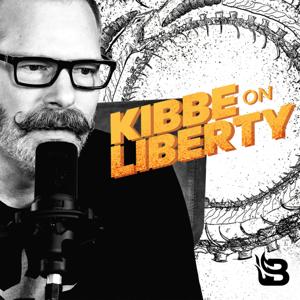
Matt Kibbe talks to Rep. Thomas Massie (R-KY) about the recent fight over the Speaker of the House election. One of the concessions Kevin McCarthy offered in order to secure the position was the formation of the Select Subcommittee on the Weaponization of the Federal Government, which is being likened to the Frank Church Committee, designed to investigate the CIA in the 1970s. This new committee will be focused on identifying ways in which the federal government is violating the civil liberties of American citizens, and putting a stop to it.
Matt Kibbe is joined by Justin Hart, author of “Gone Viral: How COVID Drove the World Insane,” to talk about the wide range of irrational behavior we saw during the pandemic, from shutting down the economy and quarantining the healthy rather than the sick to blindly trusting models that turned out to be grossly wrong and demonizing anyone who didn’t agree with the official narrative. The last three years have not only been a blow to our freedoms, but to our mental and physical health, and yet these problems continue to be ignored by the very people who were supposed to be looking out for us. The question of how so many smart people got this issue so wrong is one we have to keep asking if we want to prevent it from happening again in the future.
Gone Viral: How COVID Drove the World Insane: https://www.amazon.com/dp/B0B2SB1WZ8/
Matt Kibbe gives his analysis of the current election for Speaker of the House taking place in the U.S. Capitol, then is joined by Rep. Chip Roy (R-TX) for an inside look at the proceedings. For the first time in a hundred years, Congress has been unable to decide on a Speaker after multiple ballots. While insiders assumed that Rep. Kevin McCarthy would be the obvious choice for Speaker, he is having trouble securing the votes for the job, with members of the House Freedom Caucus demanding concessions in exchange for their support. There’s a lot at stake here, including how Congress goes about budgeting and spending taxpayer funding, transparency, and the ability of all Members to make their voices heard.
Matt Kibbe is joined by Sienna Mae Heath, host of “Leaving the Left for Liberty,” to talk about their different strategies for communicating ideas of liberty to the public and whether we should focus on a fact-based analysis or a more emotional approach that appeals to people’s intuitions about how the world works. On a practical level, both communication styles are necessary — both separately and together — with the heart and mind united in a single, perfect sphere. As a woman of Iranian descent, Sienna also reflects on the “Woman, Life, Freedom” movement currently threatening to topple Iran’s authoritarian theocratic regime.
Leaving the Left for Liberty: https://anchor.fm/leaving-left-for-liberty
Matt Kibbe is joined by Hannah Frankman, founder of Rebel Educator, to discuss the country's growing move toward education alternatives. Following massive school closures during the pandemic, many parents have discovered the failures of the government school system. Zoom classes exposed both what children were learning and how they were learning it, and neither turned out to very sensible in a world of increasing access to education resources. Frankman talks about her experience as a lifelong homeschooler and an education entrepreneur working with families seeking a new way to think about schooling. She argues that as bad as the COVID lockdowns were, they accelerated the move away from government schools by more than a decade, as many of the fears and misconceptions surrounding child-led education begin to fall away.
Matt Kibbe talks to Jennifer Sey, former brand president of Levi’s, about how she was pushed out of the company over her views on COVID lockdowns. In this off-the-cuff conversation, Sey is bursting at the seams to explain how she legged it from the jeans giant rather than button her lip, as it became increasingly clear that some political leaders were in the pocket of Big Pharma, telling pants-on-fire lies to the public, and implementing policies that were apparently made up on the fly. Not wanting to feel hemmed in, she buckled down and wrote a book, “Levi’s Unbuttoned,” about her experiences, in which she stitches up those who wanted to silence her and others like her.
Matt Kibbe is joined by the R Street Institute’s Adam Thierer and Wayne Brough to discuss the state of free speech on the internet. With Elon Musk’s purchase of Twitter, we are in the middle of a national debate about the tension between censorship and free expression online. On the Right, many people are calling for government to rein in what they perceive as the excesses of Big Tech companies, while the Left wants the government to crack down on speech they deem dangerous. Both approaches make the same mistake of giving politicians authority over what we are allowed to say and hear. And with recent revelations about government agents leaning on social media companies to censor speech, it’s clear that when it comes to the online conversation, there’s no such thing as a purely private company.
Matt Kibbe is joined by Jack Hunter, co-founder of Based Politics, to discuss the results of the midterm elections, what we can learn from a lukewarm performance from Republicans, and the state of conservatism in the United States. One clear takeaway is that those Republicans who took a clear stand on liberty issues did better than their less principled counterparts. Thomas Massie, Rand Paul, Mike Lee, and Ron DeSantis won their races because voters recognized leaders who are willing to stand up against the tide of authoritarianism coming from Washington. In other cases, generic Republican candidates simply failed to capitalize on Americans’ widespread feelings of dissatisfaction, with a lack of inspiring candidates or a convincing case for how they would govern more responsibly.
Matt Kibbe is joined by Rep. Thomas Massie (R-Ky.) to discuss the results of the recent midterm election. Many people were expecting Democrats to take a beating after COVID lockdowns, a weak economy, and record inflation, but for the most part, this didn’t happen. There are several explanations for this, including a number of lackluster Republican candidates and failure to sufficiently convince voters that Republicans would govern more responsibly. After all, many of the problems Americans now face started under a Republican president. If Republicans want to win in the future, they need to stand for something tangible. This is why Ron DeSantis had a good night, while moderate Republicans like Dr. Oz and Herschel Walker struggled. There’s also a conversation to be had about the role of Donald Trump in the GOP’s future, after many of his endorsements appeared to do more harm than good.
Matt Kibbe talks with economist Per Bylund about his new book, “How to Think About the Economy: A Primer.” Bylund explains what the economy actually is and how it works in terms that are easy for anyone to understand. Economics is not, as many believe, the study of money or finance, but a way of understanding human decision-making given the constraints of scarce resources. Per also explains the basics of the Austrian School of Economics, which differs in several important ways from the Chicago School and the Keynesian School, which are generally more popular with politicians and policymakers.
How to Think About the Economy: A Primer: https://www.amazon.com/dp/1610167554/
From the publisher's feed
Ranked by our users in the last 21 days
227,532 Listeners
26,010 Listeners
37,295 Listeners
465 Listeners

21,057 Listeners
10,434 Listeners

890 Listeners
4,773 Listeners
8,196 Listeners
21,175 Listeners

5,847 Listeners

24,778 Listeners

79 Listeners
212 Listeners
46,045 Listeners
604 Listeners
50 Listeners

332 Listeners

403 Listeners

72 Listeners
440 Listeners