
Sign up to save your podcasts
Or



Based on Podcast App listening data
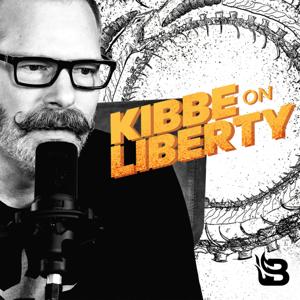
Matt Kibbe sits down with Will Ruger, president of the American Institute for Economic Research, to discuss the theory of foreign policy realism and how we can apply it to international conflicts like the war in Ukraine. Contrary to what critics claim, realists are not isolationists. They recognize a role for the American military on the world stage. But at the same time, they think that involvement should be restrained and always focused on America’s clear national security interests. By contrast, the neoconservative approach imagines that the United States has a duty to order the world as the U.S. government sees fit, engaging in nation-building and taking sides in every conflict around the globe.
Matt Kibbe is joined by comedic magician Doc Dixon to talk about what it was like being an entertainer during the years when live performances were mostly prohibited. As a libertarian, Dixon saw the dangers of lockdowns earlier than most — dangers not only to his ability to earn a living but to the mental health of a nation deprived of human interaction. From there, the discussion swings through a variety of topics, including the business of magic, the healing power of comedy, drug legalization, and the Ron Paul revolution.
Matt Kibbe is joined by Marian Tupy, senior fellow at the Cato Institute and author of “Superabundance,” to talk about the ways in which the standard of living has dramatically increased over the years. It has become fashionable to assert that things are getting worse, wages have stagnated, and prosperity is a thing of the past, but in reality the opposite is true. If you look at the numbers, as Tupy does in his book, it’s indisputable that we’ve made amazing progress as a species, and yet many refuse to recognize it. The reason is that utopian thinking leads to comparing the present not to the past, but to an unrealizable ideal that exists only in the imagination. When you make this comparison, you are bound to be disappointed. A more realistic approach shows that this resentment is misplaced and that in fact we should be grateful for all the wealth and prosperity we now enjoy.
Matt Kibbe is joined by Robert Alt, CEO of the Buckeye Institute, and Eric Flannery, owner of the Big Board, to celebrate the filing of their constitutional challenge against the District of Columbia. After Eric announced that his restaurant would not discriminate against the unvaccinated, the city pulled his liquor license and ultimately shut him down completely. Nine months later, after Eric was forced to burn through his life savings, the Big Board is open and the outstanding fines have been dismissed. But Eric and Robert are fighting on in defense of the fundamentally American principles at stake. Their new legal challenge argues that the D.C. government did not have the authority to issue a string of emergency orders that resulted in the Big Board’s shutdown and that these actions, by seeking to evade congressional review and judicial scrutiny, violated the U.S. Constitution and the Home Rule Act of 1973.
Watch Free the People's documentary coverage of this story:
Shut Down Indefinitely | Part 1: https://youtu.be/hA-iPTXJfQE
Shut Down Indefinitely | Part 2: https://youtu.be/OWAa7P8DmBI
Matt Kibbe sits down with Corey DeAngelis, senior fellow at the American Federation for Children, to discuss the bottom-up revolution sweeping the States, driven by fed-up parents demanding better choices and accountability from failing government schools. While Arizona’s reforms are the new gold standard, and West Virginia is making progress in offering school choice to more students, parents should demand more, especially from Republicans. With students still recovering from COVID lockdowns and long-term school closures, the last thing children need is politics getting in the way of parental rights and much needed reforms.
Matt Kibbe sits down with Carol Roth, author of “The War on Small Business,” to discuss the many ways in which government policy favors huge corporations and makes life hard for the independent business owner. For all the talk about small business being the backbone of the American economy, it would be hard to design a set of policies more hostile to small businesses. Considering everything from COVID lockdowns, to Wall Street bailouts, to Obamacare, to the monetary policy of the Federal Reserve, it’s clear that the rich and powerful have a seat at the table that is denied to the rest of us, and that translates into a playing field that is anything but level.
The War on Small Business: https://www.amazon.com/dp/0063081415
Matt Kibbe is joined by Stanford University epidemiologists Jay Bhattacharya and John Ioannidis to discuss the interaction between science and health policy. The COVID-19 response was one-sided and dictated from the top down, which not only led to many disastrous policies, but also undermined the public trust in science and medicine as institutions. In the future, what is needed is a more humble approach to policymaking that admits its own ignorance and allows the public more opportunities to participate in the decision-making process.
Matt Kibbe talks with Gene Epstein, director of the Soho Forum, about the economy, inflation, and whether or not the United States is set to experience a severe recession. Kibbe argues that between lockdowns, rampant spending, and an unwillingness of the Biden administration to take its foot off the gas, we could be in the midst of a perfect storm for economic downturn. Epstein, on the other hand, thinks that the economy is more resilient than that — based on the rapid recovery we saw after lockdowns were lifted. While we can certainly expect some degree of economic hardship in the near future, how severe it will be is still very much an open question.
Matt Kibbe sits down with Jenin Younes, litigation counsel for the New Civil Liberties Alliance, to discuss the lawsuit filed by two attorneys general against the federal government over online censorship. There is a mounting body of evidence that the Biden administration pressured social media companies into removing certain content, and the suit alleges that this is a clear violation of the First Amendment. If major platforms like Twitter and Facebook are acting as an arm of the federal government under threat of punishment if they disobey, the basic principle of freedom of speech and of the press is severely compromised, replaced by a regime of aggressive censorship and propaganda.
Matt Kibbe is joined by Lou Perez, comedian and author of “That Joke Isn’t Funny Anymore,” to talk about the future of comedy in a world where taking offense has risen to the level of a competitive sport. As comedians abandon college campuses and risk having their social media presence destroyed by saying something controversial, comedy has become the vanguard for free expression and the war against censorship. Without jesters to poke fun at the powerful and cloak important truths in humor, society becomes a stagnant, humorless morass that tends ever closer towards authoritarianism.
That Joke Isn’t Funny Anymore: https://www.amazon.com/dp/1637582455
From the publisher's feed
Ranked by our users in the last 21 days
227,532 Listeners
26,010 Listeners
37,295 Listeners
465 Listeners
21,057 Listeners
10,434 Listeners

890 Listeners
4,773 Listeners
8,196 Listeners
21,175 Listeners

5,847 Listeners

24,778 Listeners
79 Listeners
212 Listeners
46,045 Listeners
604 Listeners
50 Listeners

332 Listeners

403 Listeners

72 Listeners

440 Listeners