
Sign up to save your podcasts
Or



Based on Podcast App listening data
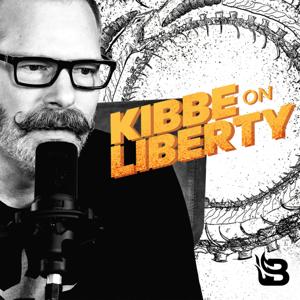
Matt Kibbe sits down with Leopold Ajami, founder of Novel Philosophy Academy, to talk about the philosophy of Ayn Rand and how it can be applied to improve people’s lives in a tangible way. Rand gets a bad rap for her defense of terms like “selfishness,” but in essence her philosophy is all about self-respect and the pursuit of happiness. In an era when young people are surrounded by prosperity and yet feel miserable and oppressed, Rand’s ideas can perhaps provide an antidote to the pessimism and fatalism that are dominating the culture experienced by America’s youth.
Matt Kibbe is joined by Jesse Ramos, community engagement director for AFP-Montana, to talk about the ways in which individuals can make a difference in local politics. So often, our conversations revolve around national institutions like the White House, Congress, and the Supreme Court, but it’s really at the local level where we can best hope to effect real change. Issues like education, property taxes, and the lockdown policies implemented by local health departments can have a dramatic impact on people’s lives, but we can improve those outcomes simply by showing up to city council meetings and getting involved.
Matt Kibbe is joined by Republican congressional candidate Lily Tang Williams to talk about her experiences growing up under Chinese communism and the ways in which the United States is starting to be influenced by the same kinds of authoritarian policies. Mao Zedong’s socialist experiment resulted in 45 million deaths, but young people today have barely even heard of the Great Leap Forward and the Cultural Revolution. The lockdown policy during the coronavirus pandemic originated in China, and now the American government is openly pondering a system of vaccine passports that looks a lot like the Chinese social credit system. This is a totalitarian policy that gives the government total control over the degree to which citizens are allowed to participate in their own society.
Matt Kibbe sits down with conservatarian journalist and commentator Olivia Rondeau to talk about the Biden administration’s obsession with fighting alleged disinformation. While lies and propaganda have always been part of public discourse, the sudden focus on policing speech might have more to do with plummeting poll numbers, skyrocketing inflation, the devastation of COVID lockdown policies, shortages, unemployment, and all the other consequences of a backward policy agenda that has left voters high and dry. As a young black conservative woman, Rondeau is in a position to see through all the nonsense of identity politics and game playing leading up to the midterm elections.
Matt Kibbe is joined by Sen. Mike Lee (R-Utah) to discuss the causes and solutions to the current shortage of baby formula in the United States. It’s mainly the result of an absurd regulatory regime that hinders competition and prevents producers and distributors from meeting the needs of consumers. But rather than dismantling or scaling back those regulations, the administration is engaging in cheap political stunts — including the use of military planes to air drop baby formula from Europe into swing states. The whole incident is a perfect illustration of the inability of a central government to effectively distribute goods in the same way that a free market is capable of doing. The senator also discusses his new book, “Saving Nine,” about the Democratic effort to pack the Supreme Court.
Matt Kibbe is joined by Tony Woodlief, author of "I, Citizen," to talk about how Americans can address political polarization and the increasingly fragmented communities that leave us at each other’s throats. If you only view the country through the lens of social media, you could be forgiven for thinking that the country is on the brink of a civil war. The reality is that we are less divided than we seem. The tendency to break everything down into Left and Right doesn’t actually reflect people’s real attitudes. In reality, most people fall somewhere in the middle, or else have a complex blend of views from both sides of the aisle. The kind of Manichean thinking that reduces everything to red versus blue is what’s dividing us more than our actual views.
I, Citizen: https://www.amazon.com/dp/1641772107/
While visiting Prague to attend the New Intellectuals Conference, hosted by the Ayn Rand Center Europe and LibertyCon 2022, Matt Kibbe ran into several young persons from Ukraine who were eager to tell the world about what is going on in their country. It’s shocking to hear about the devastation and ruined cities brought about by the Russian forces. Yet, contrary to all expectations, Vladimir Putin is encountering massive resistance not only from the Ukrainian military, but from the ordinary citizens of the country as well. It’s inspiring to hear these students describe their experiences in occupied Ukraine and proclaim their determination to keep their country free and democratic. As they say, freedom is in Ukrainians’ blood.
Matt Kibbe talks with Tom Palmer, executive vice president for international programs at Atlas Network, along with co-conspirators Andreas Jürgens and Tomek Kolodziejczuk about their efforts to transport badly needed supplies into Ukraine during the Russian invasion. Unwilling to wait for governments to act, Tom, Andreas, and Tomek decided to take matters into their own hands, organizing a network of individuals willing to risk their own safety to bring food, transportation, and body armor to the Ukrainian people. Their actions are a testament to the power of voluntary cooperation and personal responsibility at a time when most of the world is looking for someone else to solve their problems for them.
Matt Kibbe is joined by Deirdre McCloskey, distinguished professor emeritus of economics and of history at the University of Illinois in Chicago, to talk about the language we use as advocates of free market economics. McCloskey points out that economics is essentially a series of metaphors, and that we can best explain its concepts through stories rather than the dry language of academia. Meanwhile, certain jargon or stigmatized terms like “capitalism” are doing more harm than good when it comes to helping people understand why the freedom to innovate makes life better for everyone.
Matt Kibbe is joined by Glenn Beck, author of "The Great Reset: Joe Biden and the Rise of 21st-Century Fascism." They talk about the gatekeepers of the internet who suppress ideas, news, and stories that do not fit the mainstream narrative. Glaring similarities can be seen to China’s model of a social credit system—both in free speech online and the pandemic lockdowns, when so many of our freedoms were stolen in the name of safety.
From the publisher's feed
Ranked by our users in the last 21 days

227,532 Listeners
26,010 Listeners
37,295 Listeners
465 Listeners
21,057 Listeners
10,434 Listeners

890 Listeners
4,773 Listeners
8,196 Listeners
21,175 Listeners

5,847 Listeners

24,778 Listeners
79 Listeners
212 Listeners
46,045 Listeners
604 Listeners
50 Listeners

332 Listeners

403 Listeners

72 Listeners

440 Listeners