
Sign up to save your podcasts
Or



Based on Podcast App listening data
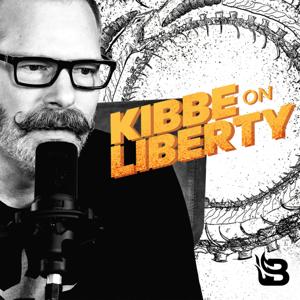
Matt Kibbe sits down with Heather Wilson and Jacob Wells, co-founders of GiveSendGo, a crowdfunding website that doesn’t discriminate based on differences in ideology. After several high-profile cases where crowdfunders have blocked campaigns for the Canadian truckers or businesses refusing to comply with vaccine mandates, people are looking for an alternative solution to support companies that are willing to stand up for their values. As cancel culture and deplatforming are interfering even with people’s ability to make charitable contributions to support freedom, competition and entrepreneurship are more important than ever in providing an escape from the woke mob.
Matt Kibbe sits down with economist David Friedman, one of the original advocates for a stateless society, where all services are provided by markets rather than government. He called this system anarcho-capitalism, and in the nearly fifty years since the publication of his seminal book “The Machinery of Freedom,” his ideas have become extremely influential among the libertarian movement. Friedman discusses his philosophy of a free society and the ways in which he tries to persuade skeptics that his system would be preferable to the one we have now, or to similarly revolutionary proposals by socialists.
Matt Kibbe is joined by Kyle Mann, editor in chief of the Babylon Bee, to talk about the ways in which laughter can cut through the constant anxiety that news outlets and political partisans demand we feel at all times. The evidence that this works comes from the overt hostility displayed to the Babylon Bee’s innocent satire by fact-checkers and social media platforms. The mere act of bringing people together through humor has become a threat to the endless divisions that keep us fighting among ourselves.
Matt Kibbe is joined by Dr. Jay Bhattacharya, professor of health policy at Stanford University, to talk about the continued hesitancy of the mainstream media and government scientists to acknowledge the immense harm caused by COVID lockdowns. As one of the authors of the “Great Barrington Declaration,” Dr. Bhattacharya has been subjected to a relentless smear campaign designed to discredit him, yet the evidence is clear to anyone willing to look: Not only did lockdowns throw millions into poverty, but they were made possible by the extremely dangerous gain-of-function research that allowed the virus to spread in the first place. The hostility toward lockdown skeptics is largely an attempt by those responsible for COVID to cover their tracks and shift the blame to others.
Matt Kibbe sits down with three members of the New Hampshire Libertarian Party to talk about the Free State Project and the pro-liberty trend in New Hampshire politics. As members of the Mises Caucus, which recently took over the Party's leadership, they are adamantly opposed to lockdowns, vaccine mandates, and other authoritarian responses to the pandemic. They attribute their success not only to the power of their message, but to the strong community bonds that characterize the libertarian movement in New Hampshire.
Matt Kibbe sits down with Jordan and Daniel Harmon, co-founders of Angel Studios, to talk about their new model for financing and distributing movies and television shows. The Hollywood machine has become so expensive and so difficult to break into that it has become all but impossible for independent filmmakers to find an outlet for their creativity. The problem is compounded when you want to make films with different values from those of the studio elites. Angel Studios is solving this problem through crowdfunding and has already demonstrated success with its popular shows “The Chosen” and “The Tuttle Twins,” based on the successful book series.
Matt Kibbe is joined by Adam Andrzejewski, CEO of Openthebooks.com, to discuss the complex web of payola that exists between major pharmaceutical companies and scientists at the NIH. Many of these government bureaucrats, including Dr. Anthony Fauci, receive royalty payments for products they work on. Now that they are in a position to regulate, and even mandate, the use of certain treatments, this creates a major conflict of interest. We can’t trust those in the government to pick winners and losers in the marketplace when doing so allows them to enrich themselves at the expense of the American taxpayer and even at the cost of public health.
Matt Kibbe sits down with Clint Russell, host of “Liberty Lockdown,” to talk about how the lockdown policies of the last two years have created the infrastructure to implement a nightmarish regime of social control to rival China’s social credit system. Under the guise of promoting environmental protection, social justice, and good governance, those who control the nation’s financial systems will be able to aggressively police individual behavior. Anyone who doesn’t behave “correctly” will find their access to society cut off, including the loss of their bank accounts. And the scariest thing is that it’s not just the government implementing these policies, but nominally private businesses acting on the government’s behalf.
Matt Kibbe sits down with Magno Karl, executive director of Livres, to discuss the recent political changes in Brazil, the country's liberty movement, and the prospects for a freer, more open Brazil in the near future. Karl explains the difference between Brazil's multi-party system and America's two-party one, warns against the dangers of electing a populist strongman, and urges libertarians from all countries to stop bickering with each other in order to more effectively unite in creating a better world free of power-hungry dictators.
Matt Kibbe is joined by Rachel Ferguson and Marcus Witcher, authors of “Black Liberation Through the Marketplace,” to discuss the ways in which free markets and free people have done more for racial justice and equality than any top-down government program. While acknowledging that minorities still face real problems with structural racism in the United States, Ferguson and Witcher point out that in most cases these structures are imposed by the government rather than eliminated by them, and the largest reductions in racist policies have come during periods of deregulation. While the social justice crowds tend to demand more and more intervention by the state, they ignore the fact that slavery, segregation, eugenics, and all of the other racially motivated programs were products of a large central government, not of ordinary people.
Black Liberation Through the Marketplace: https://www.amazon.com/dp/1637583443
From the publisher's feed
Ranked by our users in the last 21 days
227,532 Listeners
26,010 Listeners
37,295 Listeners
465 Listeners
21,057 Listeners
10,434 Listeners

890 Listeners
4,773 Listeners
8,196 Listeners
21,175 Listeners

5,847 Listeners

24,778 Listeners
79 Listeners

212 Listeners
46,045 Listeners
604 Listeners
50 Listeners

332 Listeners

403 Listeners

72 Listeners
440 Listeners