
Sign up to save your podcasts
Or

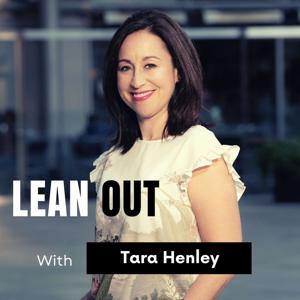


“Be it resolved, liberalism gets the big questions right.” That was the motion posed at Friday’s Munk Debate in Toronto, to a group of public intellectuals from across the globe.
The starting point for the debate was that liberalism is in crisis. That tensions have reached a boiling point. That its critics believe “liberalism has become an impediment to the goal of progress” — and that “humanity urgently needs a new animating ideology.” My guest on today’s program was at that debate, and he’s here to give us some analysis.
Harrison Lowman is a current affairs journalist in Toronto, and the producer of this podcast.
You can find Tara Henley on Twitter at @TaraRHenley, and on Substack at tarahenley.substack.com
For some time now, there have been calls for Canada to launch an independent public inquiry into its handling of the Covid pandemic — including from the British Medical Journal. But this past week, as reported by Blacklock’s Reporter, Liberal MPs rejected an inquiry, opting for a closed-door review by advisors to the Minister of Health. My guest on today’s program says that it is essential that Canadians examine the mistakes that were made during the pandemic, and learn from them.
Joanna Baron is the executive director of the Canadian Constitution Foundation and the co-author, with Christine Van Geyn, of the new book, Pandemic Panic: How Canadian Government Responses to Covid-19 Changed Civil Liberties Forever.
You can find Tara Henley on Twitter at @TaraRHenley, and on Substack at tarahenley.substack.com
There are still people who believe that cancel culture does not exist. But it’s about to get a whole lot harder to make that argument publicly. Our guest on today’s program has a new book out that provides irrefutable evidence that cancel culture is a serious phenomenon — that it is now a common tactic on the right and the left, that it is a threat to individuals and institutions, and that it is ultimately undermining trust. But, our guest today says, there is a solution.
Greg Lukianoff is the president and CEO of the Foundation for Individual Rights and Expression. He’s also the co-author of The Canceling of the American Mind.
You can find Tara Henley on Twitter at @TaraRHenley, and on Substack at tarahenley.substack.com
Crime in Canada is on the rise. According to recent Statistics Canada data, violent crime is at its most severe since 2007, and the murder rate is the highest it’s been since 1992. My guest on today’s program says our criminal justice system is not working - that it is expensive and ineffective and inhumane, and that the time has come to transform it.
Benjamin Perrin is a professor at the Peter A. Allard School of Law at the University of British Columbia, and the former lead policy advisor on criminal justice and public safety for Prime Minister Stephen Harper. His new book is Indictment: The Criminal Justice System on Trial.
You can find Tara Henley on Twitter at @TaraRHenley, and on Substack at tarahenley.substack.com
Earlier this month, a prominent Canadian academic made headlines when he announced his departure from the University of London. “Progressive conformity and cancel culture are distorting the teaching and research mission of universities,” he wrote on Twitter. “Between the extremely controversial and the progressive-controlled monoculture of academia is a vast and growing zone of unspoken truth.”
Eric Kaufmann is an author and a professor of politics at the University of Buckingham, where he is set to establish the Centre for Heterodox Social Science. In January, he’ll launch a new, low-cost online public course titled “Woke: the Origins, Dynamics and Implications of an Elite Ideology.”
You can find Tara Henley on Twitter at @TaraRHenley, and on Substack at tarahenley.substack.com
Is cancel culture controlled by women? It’s a question that my guest on today’s program has been asking for some time. Her conclusion is that, yes, the phenomenon is driven by women — and only women can stop it. She’s founded a community that, online and in person, has begun actively pushing back.
Meghan Daum is the author of six books, including The Problem With Everything: My Journey Through the New Culture Wars. She’s the host of The Unspeakable Podcast, and co-host of the podcast A Special Place in Hell. She’s also the founder of The Unspeakeasy, a community for free-thinking women.
You can find Tara Henley on Twitter at @TaraRHenley, and on Substack at tarahenley.substack.com
In 2019, in the magazine Current Affairs, a former McKinsey consultant wrote, “There is no secret society shaping every major decision and determining the direction of human history. There is, however, McKinsey & Company.” My guest on the program today has spent years doing a deep-dive into the prestigious consulting company — and he’s here to talk about what he’s learned about its influence around the world, including here in Canada.
Michael Forsythe is an investigative reporter for The New York Times, and co-author of When McKinsey Comes to Town: The Hidden Influence of the World’s Most Powerful Consulting Firm, which is out in paperback next week.
You can read McKinsey & Company’s response to the book here.
You can find Tara Henley on Twitter at @TaraRHenley, and on Substack at tarahenley.substack.com
Schools across the country are back in session — and this fall, the spotlight is on trans issues in the classroom. Saskatchewan and New Brunswick have come out with new policies for parental consent on student pronoun changes, and the Canadian Civil Liberties Association has launched a lawsuit, saying this violates the Charter and human rights. Add to that, today, some parents will be marching in a cross-Canada protest against what they call gender ideology.
Our guest on the podcast today has been reporting on these issues for years, and she has thoughts on how we might inject some nuance into this polarized conversation.
Katie Herzog is an American journalist and host of the Blocked and Reported podcast.
You can find Tara Henley on Twitter at @TaraRHenley, and on Substack at tarahenley.substack.com
Between the years of 2010 and 2020, a new way of thinking about identity travelled from elite universities, to Internet subcultures, to social media, and to mainstream media, finally landing at many of our most important social, cultural, and governmental institutions, transforming longstanding rules and norms.
Our guest on the 100th episode of Lean Out is among the first to take a comprehensive look at the roots of this ascendent ideology and how it became so influential — and today we’ll hear why he believes it is ultimately a trap.
Yascha Mounk is a professor at Johns Hopkins University, a senior fellow at the Council on Foreign Relations, and the founder of Persuasion. His new book is The Identity Trap: A Story of Ideas and Power in Our Time.
This episode is produced by Harrison Lowman.
You can find Tara Henley on Twitter at @TaraRHenley, and on Substack at tarahenley.substack.com
For the past few months on Lean Out, we’ve been doing a deep-dive into the crisis in Canadian media, speaking to critics of the status quo — and asking what’s gone wrong and where we go from here. Tara's guest on today’s program, the last episode in our summer media series, has a unique perspective on our media’s collapse. And he says government and Big Tech subsidies are compromising the vitality and validity of a free and independent press in Canada.
Rudyard Griffiths is the executive director of The Hub, and the co-founder and chair of the Munk Debates.
You can find Tara Henley on Twitter at @TaraRHenley, and on Substack at tarahenley.substack.com
From the publisher's feed
2,277 Listeners
2,889 Listeners

902 Listeners
796 Listeners

36 Listeners
617 Listeners

3,837 Listeners

181 Listeners
804 Listeners

816 Listeners

18 Listeners

8,430 Listeners
12 Listeners

32 Listeners
60 Listeners