
Sign up to save your podcasts
Or

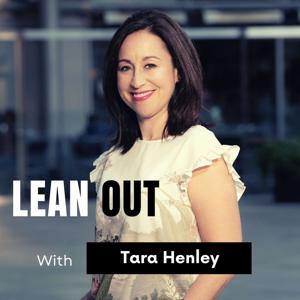


If you listen to this podcast, you know that the Canadian media is in serious trouble. But in recent weeks, that crisis has intensified, with wave after wave of bad news for the industry. Bell Canada laid off 1300 staff. And, when this was episode was recorded, merger talks between the two biggest newspaper publishers were ongoing — negotiations have since broken down.
Add to that, in the wake of controversial new legislation, Bill C-18, Google and Facebook announced they would remove links to Canadian journalism from the platforms. (Though, just as this episode closed, Heritage Minister Pablo Rodriguez announced that the government was drafting regulations that would set a cap on what Google and Facebook would be required to pay to our news industry).
So today, given all that’s going on, we have a special, hour-long episode of Lean Out. And my guest is here to help me unpack these developments — and to think through the state of our press, from lost public trust and pandemic mistakes, to the rise of independent outlets and and the future of the CBC.
Jen Gerson is a Calgary journalist, a contributing columnist at The Globe and Mail, and co-founder of the Canadian outlet The Line. She’s currently writing a book about moral panics.
Jen Gerson is my guest, today on Lean Out. Transcript to come for paid subscribers.
You can find Tara Henley on Twitter at @TaraRHenley, and on Substack at tarahenley.substack.com
Earlier this spring, student protesters at the University of Cambridge successfully cancelled an event on campus, a screening of a documentary on fertility. Students accused the film of being misogynistic, despite the fact that, as student event organizer Charlie Bentley-Astor put it in The Critic magazine, this was a film “made primarily by women, with women, for women.” And, as you’ll hear on today’s episode, the film — which screened at the Chelsea Film Festival — features a remarkable degree of empathy from the sole male on the project.
A Cambridge administrator has stressed that “the decision about the room booking was based solely on our commitment to prioritising an environment conducive to studying during the University examination period,” and that the event could be rescheduled (which it ultimately was). You can read that statement from the university here. You can also read some of the students’ concerns here. One unnamed protest organizer told the student newspaper, Varsity: “I think a lot of students are understandably quite hurt that an institution as respected as Cambridge seems to promote bigotry to its students … an academic institution should have better standards than to promote events about ‘the pitfalls of Feminism’.”
Stephen J. Shaw is a data scientist and filmmaker based in Tokyo. He is the writer, director and producer of Birthgap — Childless World, the first part of which is available on YouTube now.
You can find Tara Henley on Twitter at @TaraRHenley, and on Substack at tarahenley.substack.com
This week Lean Out is back from our annual summer hiatus, and we are recharged and ready to get back to tackling the big issues of the day. One of the things that Tara did while she was away was attend Plebity’s inaugural virtual conference, Free Speech and the Left, a timely and important gathering that brought together many prominent writers and thinkers on the left. Tara was honoured to moderate a panel for that conference — which she enjoyed so much that we're bringing it to you today in podcast form, featuring two former Lean Out guests. Amna Khalid and Jeff Snyder are history professors at Carleton College. The title of our recent Plebity panel discussion is “Personal Experiences and Thoughts on Identity Politics, Cancel Culture and Free Speech.” You can find the entire conference archived online at plebity.org.
You can find Tara Henley on Twitter at @TaraRHenley, and on Substack at tarahenley.substack.com
In recent years, we have seen the diversity, equity, and inclusion industry explode in popularity and prevalence. But Tara's guest today says that at its worst, DEI runs from useless to counterproductive. And he thinks companies would be better off giving the lavish DEI consulting fees directly to the poor. Conor Friedersdorf is a staff writer at The Atlantic, and the founding editor of The Best of Journalism, a Substack newsletter that highlights exceptional non-fiction writing. Last week, he published a piece at The Atlantic titled “The DEI Industry Needs to Check Its Privilege.”
Lean Out will be off on our annual summer hiatus for the next few weeks, but we'll be back at the end of June with more conversations with heterodox writers and thinkers from around the world.
You can find Tara Henley on Twitter at @TaraRHenley, and on Substack at tarahenley.substack.com
“What do falling fertility in the United States, a plague of loneliness and lack of friendship, bitter conflicts over racial and gender identity, and a politics of culture wars and moral panics have to do with one another?” The answer to that question, according to a compelling new book, is too many bad, low-wage jobs. Michael Lind is a bestselling author, a columnist at Tablet Magazine, and a co-founder and fellow at the New America think tank. His latest book is Hell to Pay: How the Suppression of Wages Is Destroying America.
You can find Tara Henley on Twitter at @TaraRHenley, and on Substack at tarahenley.substack.com
People on the left have been reaching out to Tara for years, saying that they feel like the mainstream media has become politicized, is biased in favour of the left — and they no longer trust it to report the news fairly. Now, a group of international scholars has published an interesting research paper that addresses this dynamic. It finds that when people perceive institutions to be politicized, they lose trust. Even if they happen agree with its politics. Azim Shariff is a professor and Canada 150 Research Chair of moral psychology at the University of British Columbia. The pre-print paper discussed today is titled “Even When Ideologies Align, People Distrust Politicized Institutions.”
You can find Tara Henley on Twitter at @TaraRHenley, and on Substack at tarahenley.substack.com
Life in North America is becoming increasingly lonely — and this trend is impacting all areas of our lives, including our physical health. So much so, in fact, that the United States Surgeon General recently issued an advisory on loneliness, characterizing it as a critical public health concern. But Tara's guest today says that that report fails to grapple with the drivers of our loneliness epidemic, including economics. Brendan Case is the associate director for research at the Human Flourishing Program at Harvard University. His response to the Surgeon General’s report appears at Compact Magazine this week.
You can find Tara Henley on Twitter at @TaraRHenley, and on Substack at tarahenley.substack.com
One of the questions of this podcast has been: How do we begin to rethink feminism — given the fact that, in the current era, so many women are so unhappy? A group of powerhouse writers and thinkers gathered at Harvard last month to contemplate that very question. Tara's guest on the podcast today moderated that panel, which, one could argue, marked a major turning point in feminist thought. Erika Bachiochi is an American legal scholar and author, and a fellow at the Ethics and Public Policy Center. She’s also the founder and director of the Wollstonecraft Project at the Abigail Adams Institute, which publishes a new online journal, Fairer Disputations. Her latest book is The Rights of Women: Reclaiming a Lost Vision.
You can find Tara Henley on Twitter at @TaraRHenley, and on Substack at tarahenley.substack.com
Since the pandemic, we’ve been hearing more and more about the mental health crisis impacting teenaged girls. Tara's guest on the program today is a journalist with a special interest in the well-being of young women. In her own adolescence, she was hospitalized nine times for anorexia — which she’s written about in a new book — and in recent years, she has dug into the issue of gender dysphoria, trying to understand the surge of cases among teen girls. It was coverage of gender issues that ultimately led her to part ways with The Guardian, after 22 years with the paper. Hadley Freeman is a columnist and features writer for the The Sunday Times in London, and a bestselling author. Her latest book is Good Girls: A Story and Study of Anorexia.
You can find Tara Henley on Twitter at @TaraRHenley, and on Substack at tarahenley.substack.com
With the rising tensions in our society has come increased conflict, including generational conflict. There are now lots of stereotypes being thrown around about existing generations, from Boomers to Millennials. But our guest on today’s program prefers to deal in facts. Her latest book analyses data from 39 million people, debunking dominant ideas about generational cohorts — and, in a departure from the consensus within her field, points to technology rather than major current events as the main driver of generational differences. Jean Twenge is a professor of psychology at San Diego State University. Her new book is Generations: The Real Differences Between Gen Z, Millennials, Gen X, Boomers, and Silents — and What They Mean for America’s Future.
You can find Tara Henley on Twitter at @TaraRHenley, and on Substack at tarahenley.substack.com
From the publisher's feed
2,277 Listeners
2,889 Listeners

902 Listeners
796 Listeners

36 Listeners
617 Listeners

3,837 Listeners

181 Listeners

804 Listeners

816 Listeners

18 Listeners
8,430 Listeners
12 Listeners

32 Listeners

60 Listeners