
Sign up to save your podcasts
Or

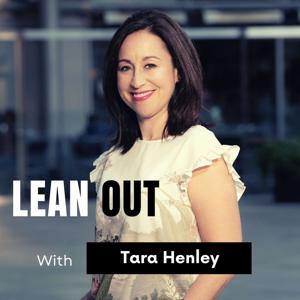


In recent weeks, on the Lean Out podcast, we’ve been exploring the issue of declining fertility in rich countries. And Canada is not exempt from this trend. Canada’s fertility rate has been dropping for years, and is now at 1.4 births per woman — well below population replacement levels. Tara's guest on the program today argues that these statistics represent a world of hidden personal pain. The think tank she’s a fellow at recently conducted research that found that “nearly half of Canadian women at the end of their reproductive years have had fewer children than they wanted.” Andrea Mrozek is a senior fellow with Cardus Family.
You can find Tara Henley on Twitter at @TaraRHenley, and on Substack at tarahenley.substack.com
Liberal feminism is predicated on the idea that more is always better. More freedom, more technology, more autonomy. But Tara's guest today says this ethos is dissolving the bonds between men and women, between women and children, and between women and their bodies. And she argues that it’s time to rethink feminism. Mary Harrington is a columnist and contributing editor at UnHerd, and a fellow Substacker. Her new book is Feminism Against Progress.
You can find Tara Henley on Twitter at @TaraRHenley, and on Substack at tarahenley.substack.com
On the Lean Out podcast, we delve into the subjects that don’t get talked about enough in society. And one of the topics that’s still considered third rail is women’s fertility — even as the birth rate in Canada has dropped to a record low. My guest on the podcast today writes a lot about this issue, and she recently published a fascinating piece on South Korea, which has the lowest fertility rate in the world. Anna Louie Sussman is an award-winning journalist who reports on gender, economics, reproduction, and health. Her recent piece for The Atlantic is titled, “The Real Reason South Koreans Aren’t Having Babies.”
You can find Tara Henley on Twitter at @TaraRHenley, and on Substack at tarahenley.substack.com
One of the goals of the Lean Out podcast is to complicate the dominant narratives. And Tara's guest on today’s episode does this all the time in his work. He’s an independent thinker, a prolific essayist — and, as we’ll hear, his conclusions are often surprising, rarely conforming to the orthodoxies on either the left or the right. Wilfred Reilly is a political science professor at Kentucky State University. His latest book is Taboo: 10 Facts You Can’t Talk About.
You can find Tara Henley on Twitter at @TaraRHenley, and on Substack at tarahenley.substack.com
Earlier this month, a federal court judge went to speak to students at Stanford Law School. Judge Kyle Duncan has referred to the explosive protest that ensued as a “struggle session,” while student hecklers have defended their actions as counter-speech. Tara's guest on today’s program has some thoughts on this free speech controversy — and where the university should go from here. Alex Morey is a First Amendment attorney and the director of campus rights advocacy at the Foundation for Individual Rights and Expression.
You can find Tara Henley on Twitter at @TaraRHenley, and on Substack at tarahenley.substack.com
If you’re a regular listener of the Lean Out podcast, you know that it has not been a good couple of years for the media. From the lab leak theory to the Hunter Biden laptop, we in the press have gotten a lot of big stories wrong. Tara's guest on the program today is a media veteran, and he has some insights on how this all has happened — and where we go from here. Steve Krakauer is a journalist, media critic and author. He’s executive producer of The Megyn Kelly Show and host of The Fourth Watch podcast. His new book is Uncovered: How the Media Got Cozy with Power, Abandoned Its Principles, and Lost the People.
You can find Tara Henley on Twitter at @TaraRHenley, and on Substack at tarahenley.substack.com
One of the themes of the Lean Out podcast is open inquiry. And Tara's guest on the program today has some thoughts on this. He’s concerned about the suppression of discussion and debate and viewpoint diversity in the field of addiction — and he points to specific actions from the B.C. government and the B.C. Centre on Substance Use. But, as we’ll learn at the end of today’s episode, both view the issue quite differently. (See below for statements.) Julian Somers is a clinical psychologist, a distinguished professor at Simon Fraser University, and the director of its Centre for Applied Research in Mental Health and Addiction.
STATEMENT FROM BRITISH COLUMBIA CENTRE ON SUBSTANCE USE:
Presentations at conferences that influence public policy and clinical practice should be evidence-based and peer-reviewed. Concerns were raised with the subject of this particular conference presentation, which was based on a self-published rapid review of safer supply that was not peer-reviewed and, using a well-established measurement tool to assess the methodological quality of such reviews, was rated as being of “critically low-quality.” Among the primary issues with the review is a flawed search strategy that resulted in a number of studies unrelated to safer supply being included, and a number of important and highly relevant studies being excluded. Beyond these methodological concerns, other issues are evident with this review, including the misrepresentation of study authors’ expertise, a lack of a public health perspective, and the failure to acknowledge the current state of safer supply research and other publicly available data.
BCCSU LETTER ON THE RAPID REVIEW OF SAFER SUPPLY
STATEMENT FROM B.C.’S MINISTRY OF PUBLIC SAFETY AND SOLICITOR GENERAL:
This province strongly believes in the value of integrated data and academic research. The motivation to create a new Data Innovation Program (DIP) and transition the data previously stored within the Inter-Ministry Evaluation Database (IMED), to which Dr. Somers had exclusive access, was to establish a program that enables all academics in the province access to integrated data to conduct projects for public benefit.
The IMED steering committee began discussions about transitioning to the DIP in the fall of 2020. At that time, the chair of the committee spoke by telephone with Dr Somers and socialized the idea of this transition, including the rationales of allowing more academics in the province to access integrated data and supporting increased data collection from across various sectors of government.
The DIP brings together all the data from the previous IMED and more, and has enabled important research into homelessness, basic income policies, mental health and other social factors. Unlike the IMED, the DIP allows for equitable access to data for all academics who submit a research proposal, which BC Corrections has encouraged Dr. Somers to do, so that he may continue his important work.
You can find Tara Henley on Twitter at @TaraRHenley, and on Substack at tarahenley.substack.com
After much anticipation, Justice Paul Rouleau has released his final report for the Public Order Emergency Commission, finding that the Canadian government’s use of the Emergencies Act against the trucker convoy was appropriate, but noting that he came to this conclusion reluctantly. Tara's guest on the program today had a front row seat — both for the convoy protests in Ottawa and the Commission — and he joins us today to talk about what this report means for Canada going forward. Paul Wells is an award-winning Canadian journalist, the author of a popular Substack, and the host of the Paul Wells Show podcast. His latest book is An Emergency in Ottawa: The Story of the Convoy Commission, and it’s out early next month.
You can find Tara Henley on Twitter at @TaraRHenley, and on Substack at tarahenley.substack.com
Who am I? What am I here for? These are fundamental questions in life — and throughout human history, they’ve often been answered through relationships to kin. But with the collapse of the family unit and the atomization of individuals, Tara's guest on today’s program argues, we have become unmoored. And we are now experiencing a crisis in identity, “a psychic howl” that’s shaping our culture and politics in profound ways. Mary Eberstadt is an American essayist, novelist, and cultural critic. Her latest book is Adam and Eve After the Pill, Revisited. But today we’re going to talk about her previous title, Primal Screams: How the Sexual Revolution Created Identity Politics.
You can find Tara Henley on Twitter at @TaraRHenley, and on Substack at tarahenley.substack.com
In July of 2020, in The New Statesman, Tara's guest on today’s program wrote, “I fear that history will judge lockdown as a monumental mistake on a truly global scale.” At that time, there was surprisingly little debate over an unprecedented public health intervention. But that dialogue is starting to happen now, and Tara's guest’s recent book is one reason why. Mark Woolhouse is a professor of infectious disease epidemiology at the University of Edinburgh. He’s also the author of The Year the World Went Mad: A Scientific Memoir.
You can find Tara Henley on Twitter at @TaraRHenley, and on Substack at tarahenley.substack.com
From the publisher's feed
2,277 Listeners

2,889 Listeners

902 Listeners
796 Listeners

36 Listeners
617 Listeners

3,837 Listeners
181 Listeners
804 Listeners
816 Listeners

18 Listeners
8,430 Listeners
12 Listeners

32 Listeners

60 Listeners