
Sign up to save your podcasts
Or

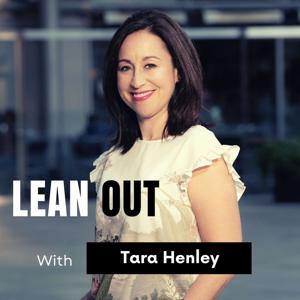


In the wake of the murder of George Floyd, America’s streets filled with protesters — in some of the largest demonstrations in the country’s history. But three years later, very little concrete change has been achieved. Tara's guest on the podcast today asks: What happened? Why did this mass movement achieve so little?
Freddie deBoer is an American journalist. His new book is How Elites Ate the Social Justice Movement.
You can find Tara Henley on Twitter at @TaraRHenley, and on Substack at tarahenley.substack.com
One of the most important tasks for a seasoned journalist is to pass on what you know. Journalism is something that’s learned by doing, usually alongside someone who’s done it longer. Tara enjoyed this process while at CBC, and is pleased to now be at a point with Lean Out that she can expand the operation to include working with up-and-coming journalists. Late last year, she had the pleasure of appearing on fellow Substacker Aaron Pete’s show, the Bigger Than Me podcast, and was impressed by his curiosity, perceptive questions, and thoughtful interviewing style. So she invited him to work together this summer to create an episode of Lean Out. We're thrilled to have Aaron Pete guest host the show today.
One of the ongoing themes of the Lean Out podcast is the importance of viewpoint diversity — particularly on controversial issues. This topic was in the news again this month, with a lawsuit filed by the Foundation for Individual Rights and Expression, against California Community Colleges state and district officials on recent diversity, equity, and inclusion (DEI) regulations.
Daniel Ortner is a lawyer for the Foundation for Individual Rights and Expression.
Lean Out reached out to Chancellor Sonya Christian and California Community Colleges for comment. They referred us to a recent motion, filed in response to a July lawsuit that also names the Chancellor as a defendant, and is similar to the one filed in August against the Chancellor and Board of Governors. The motion reads, in part:
“[The] Plaintiff has not — and cannot — present evidence to show that the regulations in any way impose an immediate threat of harm to him, or have directly impaired his ability to express himself freely. Nor is there any showing that Defendant Sonya Christian, the California Community Colleges Chancellor, has the authority to undertake any action to restrain Plaintiff’s First Amendment rights. And Plaintiff’s motion fails to present any argument or evidence that justifies the extraordinary remedy of finding state regulations duly promulgated to promote Fourteenth Amendment concepts of equity and inclusion for the benefit of the nearly two million students of California’s community colleges to be unconstitutional.”
You can find Tara Henley on Twitter at @TaraRHenley, and on Substack at tarahenley.substack.com
This week, the friends and family of a school principal in Toronto gathered to celebrate his life. Richard Bilkszto, sadly, took his life last month, at the age of 60, and much of the reporting on his death has focused on a DEI training and the lawsuit that he launched about it.
A reminder to listeners that the claims you will hear have not been proven in court.
Our guest today is a reporter whose story on Richard Bilkszto has gained international attention — and our conversation grapples with a number of difficult issues, including suicide and how it’s covered in the media.
Rupa Subramanya is a staff writer at The Free Press.
Lean Out reached out to Kike Ojo-Thompson to request comment, and to invite her on the program. We have not yet heard back. But Kike Ojo-Thompson did release a statement to the media, which reads, in part: “The death of Richard Bilkszto is a tragedy and all of us at KOJO Institute offer our condolences to his loved ones.” It adds: “The allegations made against me and KOJO Institute within Mr. Bilkszto’s lawsuit against the Toronto District School Board are false, and we are not a party to the lawsuit.” You can read KOJO’s full statement here.
We also reached out to Education Minister Stephen Lecce and his office for comment, but did not hear back. In addition, we contacted the Toronto District School Board for comment. It referred us to its two previous press statements, the first of which reads, in part: “The Board would like to extend our deepest sympathies to the family, friends, and colleagues of Richard Bilkszto. Richard was a strong advocate for students, particularly for those in adult and alternative education. Throughout his over 24 years in education, he worked hard to create an environment that fostered student success for students of all ages.” The second statement reads, in part: “Toronto District School Board (TDSB) has launched an investigation into the circumstances surrounding the tragic passing of Richard Bilkszto, retaining King International Advisory Group, an experienced and well-respected investigative firm with multi-disciplinary expertise in conducting thorough investigations. Our intention is for this investigation to be conducted in a professional, sensitive and respectful manner.” You can read those statements in full here and here.
You can find Tara Henley on Twitter at @TaraRHenley, and on Substack at tarahenley.substack.com
This summer at Lean Out, we’ve been doing a deep dive into the collapse of the Canadian media — and the role that new legislation, Bill C-18, has played in exacerbating the crisis. Tara's guest on the program today is someone who has thought a lot about the media and digital policy and public broadcasting, and she has a lot to say about where our media is at, and where we go from here.
Sue Gardner is a digital policy analyst, and the former executive director of the Wikimedia Foundation. She’s also the former head of cbc.ca. (Tara and Sue's paths did not cross there.)
You can find Tara Henley on Twitter at @TaraRHenley, and on Substack at tarahenley.substack.com
In the past few decades, something has gone wrong in American life, leaving its citizens subject to increasing levels of coercion. That’s the thesis of a new book, and its author, Tara's guest on the program today, argues that what’s gone wrong is a form of private tyranny, with corporations exercising more and more control over ordinary people’s lives — eroding our freedoms and generating uncertainty, stress, and economic precarity. Sohrab Ahmari is a founder and editor at Compact Magazine. His new book is Tyranny, Inc. — How Private Power Crushed American Liberty — and What to Do About It.
You can find Tara Henley on Twitter at @TaraRHenley, and on Substack at tarahenley.substack.com
What does it mean to be a heretic? Why is dissent from the dominant orthodoxies of our age so important? It’s a topic Tara's guest today has thought a lot about, as a progressive who frequently questions the thinking on his side of the aisle. And he says that, in fact, we owe much of human progress to the heretics throughout history who have dared to dissent.
Brendan O’Neill is the chief political writer for Spiked, and the host of The Brendan O’Neill Show. His new book is A Heretic’s Manifesto: Essays on the Unsayable.
You can find Tara Henley on Twitter at @TaraRHenley, and on Substack at tarahenley.substack.com
This week, in the wake of controversial new legislation, Bill C-18, Meta has announced that it will be ending news sharing on its platforms in Canada. So, for a special bonus episode of the podcast, we reached out to a Canadian academic who’s been following this story closely, to get his reaction to the development — and to hear his analysis on what it might mean for our news sector going forward. (This conversation is part of Lean Out’s summer media series. Please also check out our interviews with Jen Gerson, Peter Menzies, Marc Edge, and Holly Doan.)
Michael Geist a professor and the Canada Research Chair in Internet and E-Commerce Law at the University of Ottawa. He’s also the host of the Law Bytes podcast.
You can find Tara Henley on Twitter at @TaraRHenley, and on Substack at tarahenley.substack.com
“Once you question the food, you question everything.” That’s a quote from Rory Feek, a farmer and filmmaker in the growing homesteading movement, which is seeing numbers of Americans turn away from processed foods and rediscover how to grow what’s on their plates, sustaining their communities in the process. Feek made this comment at the inaugural Modern Homesteading Conference in Idaho — and my guest today was there to take it all in.
Olivia Reingold is an American journalist, and a staff writer at The Free Press. Her latest story is “Home Is Where the Revolution Is.”
You can find Tara Henley on Twitter at @TaraRHenley, and on Substack at tarahenley.substack.com
In 2019, a white woman in Austin, Texas signed up for a diversity training seminar, in the hopes of better understanding growing polarization in America. But that workshop, in her view, was itself divisive. She went on to publish an essay about it, ending with a call for others to reach out to her with their own experiences — and soon got a letter from a Black man across the country that resulted in a years-long conversation on race.
Jennifer Richmond is a China scholar and international relations specialist. Winkfield Twyman Jr. is a writer and former law professor. Their new book is Letters in Black and White: A New Correspondence on Race in America.
You can find Tara Henley on Twitter at @TaraRHenley, and on Substack at tarahenley.substack.com
Last week on Lean Out, we heard from Canadian journalist Jen Gerson. The response from listeners was overwhelming. You asked for more coverage of the collapse of our media, including, of course, controversial new legislation. Bill C-18 aims to save journalism in this country — but Tara's guest this week argues that it has instead “accidentally pushed the news industry into the abyss.” Peter Menzies is a former newspaper executive and a former vice chair of the CRTC, the Canadian Radio-television and Telecommunications Commission. He’s now a senior fellow at the Macdonald-Laurier Institute and a frequent commentator on the Canadian media.
You can find Tara Henley on Twitter at @TaraRHenley, and on Substack at tarahenley.substack.com
From the publisher's feed
2,277 Listeners
2,889 Listeners
902 Listeners
796 Listeners

36 Listeners
617 Listeners

3,837 Listeners
181 Listeners
804 Listeners
816 Listeners

18 Listeners
8,430 Listeners
12 Listeners

32 Listeners

60 Listeners