
Sign up to save your podcasts
Or

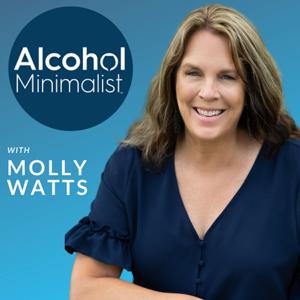

Alcohol consumption in the United States is declining. Gallup reports that only 54% of Americans now drink — the lowest level recorded in decades — and nearly half of Americans say they are actively trying to drink less.
On the surface, this sounds like clear progress.
But in this episode, Molly explores an important question raised by Dr. Adi Jaffe in a recent article: Are we truly becoming more emotionally resilient… or are we simply swapping one escape route for another?
As cannabis use rises alongside declining alcohol consumption, it’s worth examining whether substitution equals transformation — or whether real change requires something deeper.
This episode unpacks the cultural shift away from alcohol, the rise in cannabis use, and the critical distinction between behavioral change and emotional growth.
In This Episode, You’ll Learn:
Key Statistics Discussed
The Core Question
Reducing alcohol is meaningful.
But emotional resilience is something deeper.
This episode challenges you to consider:
True transformation happens when you dismantle the belief that you need something outside of yourself to manage your internal state.
Resources Mentioned
Low risk drinking guidelines from the NIAAA:
Healthy men under 65:
No more than 4 drinks in one day and no more than 14 drinks per week.
Healthy women (all ages) and healthy men 65 and older:
No more than 3 drinks in one day and no more than 7 drinks per week.
One drink is defined as 12 ounces of beer, 5 ounces of wine, or 1.5 ounces of 80-proof liquor. So remember that a mixed drink or full glass of wine are probably more than one drink.
Abstinence from alcohol
Abstinence from alcohol is the best choice for people who take medication(s) that interact with alcohol, have health conditions that could be exacerbated by alcohol (e.g. liver disease), are pregnant or may become pregnant or have had a problem with alcohol or another substance in the past.
Benefits of “low-risk” drinking
Following these guidelines reduces the risk of health problems such as cancer, liver disease, reduced immunity, ulcers, sleep problems, complications of existing conditions, and more. It also reduces the risk of depression, social problems, and difficulties at school or work.
 View all episodes
 By Molly Watts, Mindful Drinking & Behavior Change Coach

4.8
156156 ratings
Alcohol consumption in the United States is declining. Gallup reports that only 54% of Americans now drink — the lowest level recorded in decades — and nearly half of Americans say they are actively trying to drink less.
On the surface, this sounds like clear progress.
But in this episode, Molly explores an important question raised by Dr. Adi Jaffe in a recent article: Are we truly becoming more emotionally resilient… or are we simply swapping one escape route for another?
As cannabis use rises alongside declining alcohol consumption, it’s worth examining whether substitution equals transformation — or whether real change requires something deeper.
This episode unpacks the cultural shift away from alcohol, the rise in cannabis use, and the critical distinction between behavioral change and emotional growth.
In This Episode, You’ll Learn:
Key Statistics Discussed
The Core Question
Reducing alcohol is meaningful.
But emotional resilience is something deeper.
This episode challenges you to consider:
True transformation happens when you dismantle the belief that you need something outside of yourself to manage your internal state.
Resources Mentioned
Low risk drinking guidelines from the NIAAA:
Healthy men under 65:
No more than 4 drinks in one day and no more than 14 drinks per week.
Healthy women (all ages) and healthy men 65 and older:
No more than 3 drinks in one day and no more than 7 drinks per week.
One drink is defined as 12 ounces of beer, 5 ounces of wine, or 1.5 ounces of 80-proof liquor. So remember that a mixed drink or full glass of wine are probably more than one drink.
Abstinence from alcohol
Abstinence from alcohol is the best choice for people who take medication(s) that interact with alcohol, have health conditions that could be exacerbated by alcohol (e.g. liver disease), are pregnant or may become pregnant or have had a problem with alcohol or another substance in the past.
Benefits of “low-risk” drinking
Following these guidelines reduces the risk of health problems such as cancer, liver disease, reduced immunity, ulcers, sleep problems, complications of existing conditions, and more. It also reduces the risk of depression, social problems, and difficulties at school or work.
1,713 Listeners
1,082 Listeners

2,558 Listeners

27,775 Listeners

142 Listeners
1,372 Listeners
719 Listeners
1,245 Listeners
187 Listeners

563 Listeners
1,087 Listeners

19,524 Listeners

1,794 Listeners
472 Listeners
1,211 Listeners