
Sign up to save your podcasts
Or

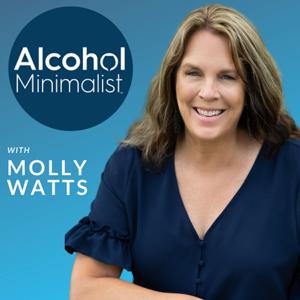

In this March kickoff episode, Molly introduces a month-long basketball theme inspired by her childhood love of the game and the five life lessons she previously shared with her community. Drawing from her experience playing basketball she explores how the structure and strategy of the game mirror the patterned nature of drinking habits.
The central message: before you can change your drinking, you have to understand your playbook.
Molly explains how drinking often feels spontaneous and emotional, but when slowed down, reveals predictable thought patterns. Using personal examples from her own decades-long 6 p.m. “unwind play,” along with a client story about belonging and connection, she illustrates how automatic behaviors are not inevitable—they are practiced.
The episode also dives into the neuroscience behind habit formation through the Behavior Map–Results Cycle (Thought → Feeling → Action → Result) and how Alcohol Core Beliefs reinforce repeated patterns. For listeners who grew up with alcohol in the home, Molly discusses how early modeling can shape unconscious associations without conscious awareness.
The episode concludes with a guided “game film” exercise to help listeners identify the thoughts that precede their drinking urges and begin building awareness—the first and most essential skill for change.
This is where agency begins.
Key Concepts
Low risk drinking guidelines from the NIAAA:
Healthy men under 65:
No more than 4 drinks in one day and no more than 14 drinks per week.
Healthy women (all ages) and healthy men 65 and older:
No more than 3 drinks in one day and no more than 7 drinks per week.
One drink is defined as 12 ounces of beer, 5 ounces of wine, or 1.5 ounces of 80-proof liquor. So remember that a mixed drink or full glass of wine are probably more than one drink.
Abstinence from alcohol
Abstinence from alcohol is the best choice for people who take medication(s) that interact with alcohol, have health conditions that could be exacerbated by alcohol (e.g. liver disease), are pregnant or may become pregnant or have had a problem with alcohol or another substance in the past.
Benefits of “low-risk” drinking
Following these guidelines reduces the risk of health problems such as cancer, liver disease, reduced immunity, ulcers, sleep problems, complications of existing conditions, and more. It also reduces the risk of depression, social problems, and difficulties at school or work.
 View all episodes
 By Molly Watts, Mindful Drinking & Behavior Change Coach

4.8
156156 ratings
In this March kickoff episode, Molly introduces a month-long basketball theme inspired by her childhood love of the game and the five life lessons she previously shared with her community. Drawing from her experience playing basketball she explores how the structure and strategy of the game mirror the patterned nature of drinking habits.
The central message: before you can change your drinking, you have to understand your playbook.
Molly explains how drinking often feels spontaneous and emotional, but when slowed down, reveals predictable thought patterns. Using personal examples from her own decades-long 6 p.m. “unwind play,” along with a client story about belonging and connection, she illustrates how automatic behaviors are not inevitable—they are practiced.
The episode also dives into the neuroscience behind habit formation through the Behavior Map–Results Cycle (Thought → Feeling → Action → Result) and how Alcohol Core Beliefs reinforce repeated patterns. For listeners who grew up with alcohol in the home, Molly discusses how early modeling can shape unconscious associations without conscious awareness.
The episode concludes with a guided “game film” exercise to help listeners identify the thoughts that precede their drinking urges and begin building awareness—the first and most essential skill for change.
This is where agency begins.
Key Concepts
Low risk drinking guidelines from the NIAAA:
Healthy men under 65:
No more than 4 drinks in one day and no more than 14 drinks per week.
Healthy women (all ages) and healthy men 65 and older:
No more than 3 drinks in one day and no more than 7 drinks per week.
One drink is defined as 12 ounces of beer, 5 ounces of wine, or 1.5 ounces of 80-proof liquor. So remember that a mixed drink or full glass of wine are probably more than one drink.
Abstinence from alcohol
Abstinence from alcohol is the best choice for people who take medication(s) that interact with alcohol, have health conditions that could be exacerbated by alcohol (e.g. liver disease), are pregnant or may become pregnant or have had a problem with alcohol or another substance in the past.
Benefits of “low-risk” drinking
Following these guidelines reduces the risk of health problems such as cancer, liver disease, reduced immunity, ulcers, sleep problems, complications of existing conditions, and more. It also reduces the risk of depression, social problems, and difficulties at school or work.
1,713 Listeners
1,082 Listeners

2,558 Listeners
27,775 Listeners

142 Listeners
1,372 Listeners
719 Listeners
1,245 Listeners
187 Listeners

563 Listeners
1,087 Listeners

19,524 Listeners

1,794 Listeners
472 Listeners
1,211 Listeners