
Sign up to save your podcasts
Or

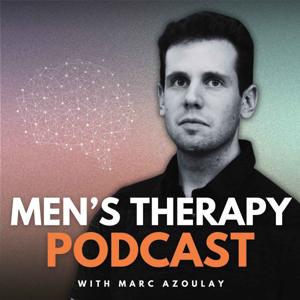


In 2025, Americans legally wagered more than $165 billion on sports, money moving through an industry that, outside of Nevada, didn't legally exist until 2018. Somewhere inside that number is a much harder one to see: how much of it isn't entertainment at all, but sports betting addiction quietly working its way through a generation of men who never thought they had a gambling problem. That's where this episode of the Men's Therapy Podcast begins.
Marc Azoulay sits down with Dr. Michael Zhang. He is a psychologist who spent years treating gambling-related harm clinically before founding Incumental, a digital recovery support app built specifically for people in the thick of a gambling problem. The conversation moves fast, because the landscape it's describing is moving fast. Since the Supreme Court overturned the federal ban on sports betting in 2018, the activity has expanded from a Nevada-only market capped at roughly $5 billion a year to nationwide legal wagering near $167 billion last year alone about $150 billion of which gets paid back out, leaving roughly $17 billion in industry revenue, on top of another $18 billion or so collected annually in state gambling taxes.
This isn't just casinos and sportsbooks anymore, either. Dr. Zhang walks through how the same psychological mechanics now show up in prediction markets, cryptocurrency and CFD trading, and loot boxes built into video games aimed at kids, an entire ecosystem, as he puts it, that increasingly looks "set up to turn most people into gamblers."
The episode works through some of the key realities he's seen firsthand:
An estimated one in three men under 30 bet on sports, and roughly one in three of those men show signs of a real problem with it.
The actual test for a problem isn't whether someone wins or loses on a given night. It's whether, tracked over time, they're net negative, chasing those losses, and unable to stop even when they want to.
Across the hundreds of clients Dr. Zhang has treated, average lifetime gambling losses run well over $100,000, with some in the hundreds of thousands and a few in the millions.
Most of those clients also carried a comorbid depression or anxiety diagnosis that was largely driven by the gambling itself. When the gambling resolved, so did much of the mental health burden.
At its root, problem gambling is rarely about the money. It's about self-worth. Gambling supplies a fast, fake "boost," when what a person actually needs is steady, internal "worth."
There's a saying that's common in recovery communities that Marc brings up midway through the conversation: addiction is sexy, and recovery is ugly. The gambling industry has spent a decade building frictionless, personalized, endlessly accessible products. Recovery support, by comparison, has often been clunky, stigmatized, and reactive, something you find only after you've already hit bottom, then found a lower bottom underneath that. Dr. Zhang's bet with Incumental is that recovery has to borrow the same tech-forward playbook the betting industry uses, just pointed in the opposite direction: short, guided audio sessions built to interrupt an urge in the moment it's happening, and an anonymous peer community partly staffed by people with lived experience who want to give back.
This episode isn't about shaming men who place a bet on a Sunday afternoon. It's about naming what happens when an entire industry is built on the premise that a casual bettor becomes a lifelong customer and giving men a real, accessible off-ramp before the losses end up defining the next decade of their lives.
For more podcasts, blogs, and to get involved in the Men's Therapy Online Community, visit www.menstherapy.online.
Follow us on social media: https://mtr.bio/mens-therapy-online.
The numbers are hard to sit with. In the most recent year for which data were available, 53% of men who died in the United States did so before the age of 75. Not in a developing country. Not a century ago. Right now, in one of the wealthiest nations on earth, the majority of men are dying before they should. And a significant portion of those deaths are preventable.
That is where this episode of the Men's Therapy Podcast begins. Marc Azoulay sits down with Peter Fisher and Brian P. Heilman. They are researchers and co-authors of Movember's landmark report, The Real Face of Men's Health. It is the most comprehensive examination of men's health in the United States in recent memory. The report draws on national health data, a survey of over 4,000 men about their primary care experiences, and a separate survey of informal caregivers, spouses, family members, and close friends, who quietly manage the health of the men in their lives. What it uncovers is a picture that is equal parts alarming and clarifying.
The male loneliness epidemic is not just a talking point. It is a measurable health crisis. The number of men who report having even one close friend has fallen so sharply over the past two decades that today, only one in eight men would say they have a close friend at all. Not many friends. Any close friend. And that isolation does not stay emotional. It gets physical. It becomes fatal.
The episode works through the key findings from the report:
Suicide ranks fourth as a cause of premature death for men in the US, with men dying by suicide four times more often than women.
White men show a uniquely persistent suicide risk that does not decline with age the way it does for every other racial and ethnic group
Accidental deaths, substance use, and risky behavior connect directly back to masculine norms that discourage men from seeking help before they hit a wall.
Black men face a disproportionately higher lifetime risk of prostate cancer, with community-level outreach still failing to reach them early enough.
But the conversation does not stop at what is going wrong. It also challenges a framing that has dominated the field for years.
The phrase "toxic masculinity" was meant to open a door. For a lot of men, it shut one. When 80% of the research tools used to study masculinity measure it as a deficit, where scoring higher means worse health outcomes, it creates a research environment, and eventually a cultural one, where being a man is framed almost entirely as a problem to manage. Men feel lectured, not engaged. They disengage from care rather than move toward it.
Peter and Brian are working to change that. Their team at Movember is currently developing the Healthy Manhood Index. It is a new measurement tool built around strength-based, aspirational ideas of what it means to be a man, not just a catalogue of behaviors to avoid. The goal is simple but significant: higher scores should mean better health. Masculinity should point toward something worth becoming, not just something to dismantle.
The episode closes with concrete, actionable steps — for men themselves, for the people who love them, and for anyone paying attention to what is quietly happening at the community and policy level. The ALEC method. The 988 crisis line. The Men and Mind clinical training program launching in California. The Men Sheds model. State-level task forces in Florida, Utah, and Tennessee doing real work that national conversation has not yet caught up to.
This episode is not about shaming men for being men. It is about taking seriously what it costs when men's health is treated as an afterthought. And what becomes possible when we finally stop accepting early death as inevitable.
For more podcasts, blogs, and to get involved in the Men's Therapy Online Community, visit www.menstherapy.online.
Follow us on social media: https://mtr.bio/mens-therapy-online.
Something is off for Gen Z men right now. It can look like confidence on the surface, online presence, gym routines, and a few matches on the apps. But underneath all of that, there is often a young man who does not know who he is, who feels invisible in his own friendships, and who is watching his dating life go nowhere without understanding why.
If you have a question for Marc you can email us at [email protected] and we'll include it in a future episode.
That is where this conversation goes.
In this episode of Men's Therapy Online, Marc Azoulay answers real questions from gen z men about the things therapists rarely address directly: what kind of therapy actually works for a man who already overthinks everything, why dating apps are engineered to keep you failing, how to stop doom scrolling and start building something real, and what it actually takes to go deeper in male friendships without it feeling forced.
The episode makes one thing clear quickly: Gen Z men are not struggling because they are weak or broken. They are struggling because they are being pulled in too many directions at once. They are being told to be emotionally aware but not soft, vulnerable but not needy, a leader but never dominant. And most of the answers being served to them online are either designed to monetize their pain or to sell them an identity that was never theirs to begin with.
It shows up when a man:
Spends hours online every day but feels more isolated every week
Gets matches and responses on the apps, but keeps getting ghosted before anything real develops
Wants closer friendships but cannot figure out how to move past jokes, memes, and sports talk
Tries to figure out what kind of man he wants to be and ends up more confused than when he started
Not because he is doing something wrong, but because he has been trying to build himself from the outside in, following the loudest voices instead of the quietest, most honest one he has.
That is the deeper problem here. When your sense of self is built on what you consume instead of what you do, when your relationships mostly live in comment sections and DMs, and when the friction and difficulty that actually build character have been engineered out of your daily life, you end up feeling empty without being able to name exactly why.
Marc walks through what it looks like to start changing that. He covers how to find the right type of therapy for a mind that already knows everything but still cannot change, the mechanics behind dating app design and why it is built to keep you swiping, what actually creates attraction versus what kills it, the evolutionary reason men need to do things together before they can go deep emotionally, and what gen z men specifically need to start doing to build a life they are proud of.
For more podcasts, blogs, and to get involved in the Men's Therapy Online Community, visit www.menstherapy.online.
Follow us on social media: https://mtr.bio/mens-therapy-online.
Anger. Rage. Aggression. Modern psychology has spent decades telling men these are problems to fix. That is exactly where this conversation pushes back.
In this episode of the Men's Therapy Podcast, Marc Azoulay sits down with Mike LeBlanc. He is a Marine veteran, Harvard graduate, founder of a humanoid robotics company, and author of What If Anger Is the Answer. He challenges the cultural narrative that has pathologized male anger and makes the case that suppressing it is not the solution. It is the source of the problem.
The episode makes one thing clear early on. Anger is not the same as violence. A man who feels rage is not dangerous by default. And a culture that conditions men to swallow every difficult emotion is not producing calmer, healthier men. It is producing depressed ones.
What LeBlanc describes draws directly from the ancient Greeks. Unlike modern psychology, which splits the human soul into two parts: the rational and the impulsive, the Greeks identified a third. They called it thymos. It is the seat of drive, ambition, and command. It is where masculine purpose actually lives. And stripping it out does not make a man more civilized. It makes him directionless.
This shows up when a man in your life, or when you yourself:
Feels constantly told to calm down, breathe through it, or take a bubble bath
Has been dismissed the moment emotion showed up, even when the emotion was justified
Drifts into cynicism, isolation, or numbness and cannot identify why
Senses something is being wasted but cannot name what it is
Has never had a mentor, a rite of passage, or a moment that moved him from boy to man
This is not a character flaw. This is a generation of men handed a framework that was never built for them.
Marc and LeBlanc trace the full arc, from the Marine Corps training that transforms raw anger into leadership, to the entrepreneurial initiation that demands the same reckoning, to the practical discipline of consistency that LeBlanc argues is the only thing that actually changes a life. They also go deep on parenting, on what healthy discipline looks like when chronic resentment is the far more dangerous alternative, and on why getting angry, truly, honestly angry, may be the first real step out of depression that many men have never been permitted to take.
For more podcasts, blogs, and to get involved in the Men's Therapy Online Community, visit www.menstherapy.online.
Follow us on social media: https://mtr.bio/mens-therapy-online.
Narcissist. Psychopath. Sociopath. These words are everywhere right now, and most of the time, they are being used incorrectly. That is where this conversation starts.
In this episode of the Men's Therapy Podcast, Marc Azoulay sits down with Dr. Peter Salerno. He is a clinical expert and author of The Nature and Nurture of Narcissism. He cuts through the noise of social media diagnosis culture and gets to what these personality disorders actually look like. He highlights how they operate and why they are so hard to identify and treat.
The episode makes one thing clear early on. A narcissist is not just someone with a big ego. A sociopath is not just someone cold or distant. And a psychopath is not a movie villain. These are real clinical conditions with distinct traits, and conflating them does real damage to the people trying to make sense of what they experienced.
What Dr. Salerno describes is something more unsettling than most people expect. Many of these individuals are not suffering in the way we assume. They possess superiority and victim mentality. Some of them genuinely like who they are. The manipulation is not a coping mechanism. For many, it is a strategy, and it is working. That realization changes everything about how you understand narcissistic abuse.
It shows up when someone in your life:
Makes you question what you saw, heard, or felt
Shows you with affection early on, then slowly pulls it away
Presents as charming to everyone else while making you feel like you are losing your mind
Reacts with rage or cold contempt the moment you push back
They consistently position themselves as the victim while causing harm
This is not emotional immaturity. This is a pattern. And according to Dr. Salerno, that pattern has biological and genetic roots that traditional talk therapy was never designed to reach.
Marc and Dr. Salerno explore the future of the field, the limits of current treatment, and why integrating brain-based research with the traditional trauma model may be the only way forward for clinicians who are tired of referring these patients out and calling it a day.
For more podcasts, blogs, and to get involved in the Men's Therapy Online Community, visit www.menstherapy.online.
Follow us on social media: https://mtr.bio/mens-therapy-online.
Masculine energy in relationships is something most men have never been properly taught. They’ve been handed two versions, one that’s domineering and one that’s completely hollowed out. Neither works. The first drives his partner away. The second bores her. What actually works is something most men have never been taught: how to embody masculine energy in a way that is grounded, leading, and genuinely connective.
That's what this episode is about.
In this episode of the Men's Therapy Podcast, Marc Azoulay talks with GS Youngblood, men's coach, relationship expert, and author of The Masculine in Relationship, about what positive masculinity looks like inside a real partnership and why so many men are getting it wrong without realizing it.
GS built his Masculine Blueprint after his own marriage fell apart. What he found was that the failure wasn’t about being a bad person. It was about not being grounded, not leading, and not knowing how to build real emotional connection with his partner. His framework is the answer he wishes he had then.
The blueprint has three pillars:
• Respond vs react: Stay grounded when she is emotional. Stop being reactive.
• Provide structure: Lead in the relationship. Know your needs and act on them.
• Create safety: Build emotional connection and emotional safety so she can actually relax into the relationship.
GS and Marc also get into nice guy syndrome, polarity in relationships, nervous system regulation, sexual leadership, and what emotional leadership actually looks like the morning after a fight. This isn’t theory. It’s a practical, honest conversation about what it takes to be the man a relationship needs.
For more podcasts, blogs, and to get involved in the Men's Therapy Online Community, visit www.menstherapy.online.
Follow us on social media: https://mtr.bio/mens-therapy-online.
Most men don't struggle in relationships because they don't care. They struggle because nobody ever taught them how relationships actually work, at a neurological, psychological, and structural level. And by the time most couples realize something is badly wrong, the damage’s been quietly building for years.
In this episode of the Men's Therapy Podcast, Marc Azoulay sits down with Dr. Stan Tatkin, clinical psychologist, researcher, developer of the psychobiological approach to couple's therapy (PACT), and author of the bestselling book Wired for Love — for a frank, science-backed conversation about what it really takes to build a healthy relationship. Dr. Tatkin doesn't deal in platitudes. He brings evolutionary biology, hard neuroscience, and some uncomfortable truths about what human beings are actually like, and what genuine relationship advice looks like when it takes all of that seriously.
Marc draws on what he hears from the men he works with, men who feel reduced to a paycheck, disconnected from their partners, unsure how to fix a relationship that has slowly hollowed out, and asks Dr. Tatkin directly what to do about it. The answers are practical, grounded, and unlike anything most couples counseling has ever told them.
The episode covers:
Emotional safety; what it actually is and how to build it by design, not by luck
Why love and chemistry are not enough to sustain a relationship, and what actually is
The neuroscience of the male brain vs female brain and why it matters during conflict
How to govern a relationship like a team, and why that's the most practical relationship advice you'll ever get
Why physical intimacy alone, including sex, is not a reliable foundation for a lasting relationship
"We see couple work as more like training for a sport, a two-person system, a team that has to work under increasing stress while remaining collaborative and cooperative."
If that framing sounds unfamiliar, that's the point. Healthy relationships, in Dr. Tatkin's view, aren’t the result of compatibility or chemistry. They’re built, deliberately, by two people who decide to design something together and hold each other to it. For men who want to know how to be a better partner but aren't sure where to start, this episode gives you the framework.
For more podcasts, blogs, and to get involved in the Men's Therapy Online Community, visit www.menstherapy.online.
Follow us on social media: https://mtr.bio/mens-therapy-online.
The male loneliness epidemic is not just a trending phrase. It’s a quiet crisis playing out in the lives of millions of men, showing up in emergency rooms, in divorce statistics, and in therapy offices where men are finally starting to talk about what they’ve long kept buried.
That’s exactly where this conversation begins.
In this episode of the Men’s Therapy Podcast, Marc Azoulay sits down with returning guest Dr. Ryan McKelley, a research psychologist and expert in masculinity and men’s mental health, to unpack why so many men are experiencing deep social isolation, and what that isolation is actually doing to them.
The episode opens with a striking statistic: a 2018 study found that one in three men reported having no one to call in a physical emergency, not a mental health crisis, but a car accident or a heart attack. That number sets the tone for everything that follows.
Dr. McKelley and Marc cover the difference between loneliness and solitude, the hidden face of male depression symptoms, the link between depression and anger, and why men’s therapy and men’s groups offer something most men have never had access to before.
For more podcasts, blogs, and to get involved in the Men's Therapy Online Community, visit www.menstherapy.online.
Follow us on social media: https://mtr.bio/mens-therapy-online.
Modern masculinity has a missing piece, and most men feel it without being able to name it. They pay the bills, hold down big jobs, do everything they’re supposed to do as adults. But when they look in the mirror, they don’t see a man. They see a boy in a man’s costume.
In this solo episode of the Men’s Therapy Podcast, host and therapist Marc Azoulay is making the case that what most men are missing is initiation. For hundreds of thousands of years, cultures marked the transition from boyhood to manhood through structured trials led by older men. That tradition stopped about 50 years ago, and nothing’s replaced it.
Without genuine challenge, the nervous system starts treating ordinary social pressures like survival threats. Marc’s arguing that life has become too easy from a survival standpoint, not painless, but too comfortable to trigger real growth. The result’s a generation of men who’re anxious, isolated, and quietly waiting for permission to feel like they’ve arrived.
This episode covers how to identify the one core insecurity driving that imposter feeling, how to design the right level of challenge for self-improvement for men, what the fairytale Iron John reveals about masculine identity and breaking free from comfort, and why men bond through doing rather than talking. It’s a direct and practical look at how to build mental toughness and what becoming a man actually requires in the modern world.
For more podcasts, blogs, and to get involved in the Men's Therapy Online Community, visit www.menstherapy.online.
Follow us on social media: https://mtr.bio/mens-therapy-online.
Addiction is one of the most misunderstood forces in men's lives. It doesn’t always look like rock bottom. It can look like a high-functioning executive who has a spotless professional record. It can look like the life of the party who stays for the after-party when everyone else goes home. It can look like a college student pulling straight A's while quietly unraveling in private.
That’s exactly what this conversation is about.
In this April Roundtable episode of the Men's Therapy Podcast, host Marc Azoulay, himself in recovery from polysubstance use, sits down with three therapists who specialize in addiction recovery: Jack Lambert, a New York-based therapist trained at the Addiction Institute; Dr. Michael Zang, a gambling psychologist and founder of Incumental, a gambling recovery support platform; and Tim Mullins, a substance abuse therapist who entered the field after his own long recovery journey and 11 years in Adult Children of Alcoholics and Dysfunctional Families (ACA).
Together, they cover the full landscape: what the signs of addiction actually look like, how isolation and deceit function as warning signals, what role shame vs. guilt plays in the recovery process, how spirituality in addiction recovery fits in (even for men who resist it), and what sobriety really feels like in those early, unvarnished months.
This isn’t a polished, clinical overview. It’s a candid, experienced, and sometimes raw conversation from people who’ve seen addiction from both the inside and the outside. And it’s a conversation that could genuinely change the way a man looks at his own relationship with substances, gambling, gaming, porn, social media, or any pattern he’s been quietly defending.
For more podcasts, blogs, and to get involved in the Men's Therapy Online Community, visit www.menstherapy.online.
Follow us on social media: https://mtr.bio/mens-therapy-online.
Individual Therapy: https://menstherapy.online/
Men’s group
https://menstherapy.online/mens-groups/
MTO Slack
https://menstherapy.online/slack/
From the publisher's feed

227,520 Listeners

190 Listeners

31 Listeners

280 Listeners
12,108 Listeners
97 Listeners
573 Listeners
1,652 Listeners

111,841 Listeners
37 Listeners
1,349 Listeners

111 Listeners
67 Listeners

27,962 Listeners

71 Listeners

46,083 Listeners

10,141 Listeners

29 Listeners

7,541 Listeners

15,905 Listeners

41,371 Listeners
2,009 Listeners

656 Listeners
389 Listeners