
Sign up to save your podcasts
Or

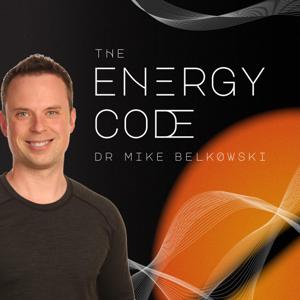

In this Energy Code Deep Dive, Dr. Mike breaks down a preclinical paper testing methylene blue in a classic ovalbumin (OVA)–induced allergic asthma mouse model. The core question: if allergic asthma is driven by a self-reinforcing loop of TH2 cytokines (IL-4, IL-13), IgE signaling, eosinophilic airway infiltration, and oxidative stress, can a redox-active compound interrupt the cycle? The study reports dose-dependent improvements across airway inflammation (BALF immune cells), immune programming (IL-4/IL-13 + OVA-specific IgE), oxidative damage (MDA), antioxidant defenses (GSH/GPx), and lung histology — while emphasizing the key caveat: this is not human clinical asthma, and safety/translation questions remain open.
(Educational content only, not medical advice.)
-
Article Discussed in Episode:
Methylene blue attenuates ovalbumin-induced airway inflammation and oxidative stress in mouse model of asthma
-
Key Quotes From Dr. Mike:
“Oxidative stress is not a side issue in asthma, it is part of the disease mechanism.”
“Eosinophilia is one of the hallmarks of allergic asthma.”
“Methylene blue significantly reduced those IgE levels… in a dose-dependent manner.”
“Both cytokines were significantly elevated… and methylene blue… significantly lowered both of them.”
“This is a proof of concept study, and as a proof of concept, it is strong.”
-
Key Points
Model: OVA + alum sensitization, then inhaled OVA challenge (TH2-driven allergic asthma in mice).
Intervention: methylene blue 10 vs 20 mg/kg.
Inflammation: reduced BALF leukocytes, especially eosinophils (dose-dependent).
Immune signaling: lowered IL-4 and IL-13 (TH2 axis), dose-dependent.
Allergy amplifier: lowered OVA-specific IgE (dose-dependent).
Oxidative stress: decreased MDA (lipid peroxidation marker).
Antioxidant defenses: increased GSH and GPx.
Tissue-level confirmation: histology showed less peribronchial/perivascular inflammatory infiltration.
Translation caution: murine acute allergic model ≠ clinical asthma outcomes (AHR, symptoms, remodeling).
Safety realism: methylene blue has side effects + drug interactions that matter in humans.
-
Episode timeline
0:34 — Paper setup: asthma + oxidative stress + why methylene blue is interesting
1:49 — Model overview: OVA-induced allergic asthma (TH2 inflammation)
2:13 — Study design: 10 vs 20 mg/kg MB + endpoints (BALF, cytokines, oxidative markers, histology, IgE)
3:14 — Why MB could matter: redox, anti-inflammatory, mitochondria-adjacent logic
4:14 — TH2 biology refresher: IL-4 → IgE; IL-13 → mucus/remodeling/hyperreactivity
5:17 — BALF results: reduced leukocytes/eosinophils/lymphocytes/neutrophils (dose response)
7:06 — IgE results: OVA-specific IgE drops with MB (dose response)
8:01 — Cytokines: IL-4 and IL-13 reduced (dose response)
9:19 — Oxidative stress panel: MDA down; GSH + GPx up
11:53 — Histology: less inflammatory infiltration; scores improve (dose response)
13:15 — Translation + safety cautions: mouse model, not clinical asthma; side effects/interactions
14:22 — Broader synthesis: asthma as an inflammation–redox loop; MB as a “clue” for redox therapies
15:35 — Closing summary + take-home message
Dr. Mike's #1 recommendations:
Deuterium depleted water: Litewater (code: DRMIKE)
-
Stay up-to-date on social media:
Dr. Mike Belkowski:
BioLight:
Website
YouTube
 View all episodes
 By Dr. Mike Belkowski

4.8
124124 ratings
In this Energy Code Deep Dive, Dr. Mike breaks down a preclinical paper testing methylene blue in a classic ovalbumin (OVA)–induced allergic asthma mouse model. The core question: if allergic asthma is driven by a self-reinforcing loop of TH2 cytokines (IL-4, IL-13), IgE signaling, eosinophilic airway infiltration, and oxidative stress, can a redox-active compound interrupt the cycle? The study reports dose-dependent improvements across airway inflammation (BALF immune cells), immune programming (IL-4/IL-13 + OVA-specific IgE), oxidative damage (MDA), antioxidant defenses (GSH/GPx), and lung histology — while emphasizing the key caveat: this is not human clinical asthma, and safety/translation questions remain open.
(Educational content only, not medical advice.)
-
Article Discussed in Episode:
Methylene blue attenuates ovalbumin-induced airway inflammation and oxidative stress in mouse model of asthma
-
Key Quotes From Dr. Mike:
“Oxidative stress is not a side issue in asthma, it is part of the disease mechanism.”
“Eosinophilia is one of the hallmarks of allergic asthma.”
“Methylene blue significantly reduced those IgE levels… in a dose-dependent manner.”
“Both cytokines were significantly elevated… and methylene blue… significantly lowered both of them.”
“This is a proof of concept study, and as a proof of concept, it is strong.”
-
Key Points
Model: OVA + alum sensitization, then inhaled OVA challenge (TH2-driven allergic asthma in mice).
Intervention: methylene blue 10 vs 20 mg/kg.
Inflammation: reduced BALF leukocytes, especially eosinophils (dose-dependent).
Immune signaling: lowered IL-4 and IL-13 (TH2 axis), dose-dependent.
Allergy amplifier: lowered OVA-specific IgE (dose-dependent).
Oxidative stress: decreased MDA (lipid peroxidation marker).
Antioxidant defenses: increased GSH and GPx.
Tissue-level confirmation: histology showed less peribronchial/perivascular inflammatory infiltration.
Translation caution: murine acute allergic model ≠ clinical asthma outcomes (AHR, symptoms, remodeling).
Safety realism: methylene blue has side effects + drug interactions that matter in humans.
-
Episode timeline
0:34 — Paper setup: asthma + oxidative stress + why methylene blue is interesting
1:49 — Model overview: OVA-induced allergic asthma (TH2 inflammation)
2:13 — Study design: 10 vs 20 mg/kg MB + endpoints (BALF, cytokines, oxidative markers, histology, IgE)
3:14 — Why MB could matter: redox, anti-inflammatory, mitochondria-adjacent logic
4:14 — TH2 biology refresher: IL-4 → IgE; IL-13 → mucus/remodeling/hyperreactivity
5:17 — BALF results: reduced leukocytes/eosinophils/lymphocytes/neutrophils (dose response)
7:06 — IgE results: OVA-specific IgE drops with MB (dose response)
8:01 — Cytokines: IL-4 and IL-13 reduced (dose response)
9:19 — Oxidative stress panel: MDA down; GSH + GPx up
11:53 — Histology: less inflammatory infiltration; scores improve (dose response)
13:15 — Translation + safety cautions: mouse model, not clinical asthma; side effects/interactions
14:22 — Broader synthesis: asthma as an inflammation–redox loop; MB as a “clue” for redox therapies
15:35 — Closing summary + take-home message
Dr. Mike's #1 recommendations:
Deuterium depleted water: Litewater (code: DRMIKE)
-
Stay up-to-date on social media:
Dr. Mike Belkowski:
BioLight:
Website
YouTube

785 Listeners
365 Listeners
7,213 Listeners

4,999 Listeners
722 Listeners

1,723 Listeners

4,900 Listeners

3,466 Listeners

9,254 Listeners

169 Listeners
1,091 Listeners
1,777 Listeners

842 Listeners
525 Listeners

305 Listeners