
Sign up to save your podcasts
Or

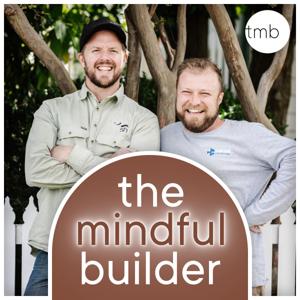


You might remember today’s guest from all the way back in episode eight! Brad McEwan is a passionate builder, and a good friend who joins us now as a regular guest on the show.
We began our conversation by touching on a pervasive issue in the construction sector: project delays. Brad shares his experience of waiting eight months for a project start, illustrating the unpredictable nature of building work. Despite these challenges, Brad remains optimistic and committed to his projects
For Brad, it’s all about quality over quantity. He prefers working on one project at a time, pouring his heart and soul into every detail. Unlike the typical hustle and bustle most builders embrace, Brad keeps his overheads low, allowing him the freedom to focus more on the quality of his work and less on quantity.
Brad credits much of his business ability to effective networking and a versatile skill set. His resourceful nature allows him to fill gaps in projects with varied and exciting jobs, from refurbishing race car trailers to retrofitting custom interiors. Keeping overheads low eliminates stress, allowing him to focus on projects that truly inspire him.
Like they often do, our conversation drifted towards sustainable building practices. Brad shared insights from his experience at the Build Show Live, where the focus was on real-world testing and improving building processes. We discussed the importance of practical testing and adaptation, emphasising that while not all materials can be entirely sustainable, small changes can lead to big improvements over time.
This led to a discussion on the importance of passion and whether or not it can be taught. Brad says no, and it can’t be bought either. He believes passion comes from within and is cultivated through experiences that resonate personally. No matter where it comes from, we’re determined to sustain passion in the building industry.
So, if you’re struggling to feel the love for your work reflect on what drew you to it in the first place. Foster this enthusiasm by seeking projects that challenge and inspire you, even on a small scale.
Finally, Brad highlighted the power of networking and having a broad skill set. His resourceful nature allows him to fill gaps in projects with varied and exciting jobs, from refurbishing race car trailers to retrofitting custom interiors. Keeping overheads low eliminates stress, allowing him to focus on projects that truly inspire him.
Thank you for joining us and until next time, stay curious, stay passionate, and keep building the future!
LINKS:
Connect with us on Instagram: @themindfulbuilderpod
Connect with Hamish:
Instagram: @sanctumhomes
Website: www.yoursanctum.com.au/
Connect with Matt:
Instagram: @carlandconstructions
Website: www.carlandconstructions.com/
What is a Ventilated Cavity?
In simple terms, a ventilated cavity is an air space between the cladding of a building and its structure. This space allows the building to "breathe," circulating air and carrying moisture away. This is crucial to avoid issues like mould, rot, and other moisture-related problems.
It’s a technical topic which is why we’re once again joined by Dr Cameron Munroe, who breaks down the nitty gritty of ventilated cavities.
Cam explained that inheating-dependant climates like Melbourne or Canberra, building materials need to allow water vapour to escape. Unfortunately, traditional methods sometimes trap this vapour. A ventilated cavity helps in solving this by moving vapour out through a well-ventilated air space.
We've noticed and discussed how modern weatherboards differ from older ones. The primary reason? Changes in building techniques and materials. Old hardwoods have been replaced with softwoods, which absorb more moisture and have less tolerance. With improved insulation, drying potential decreases, making material choice vital for moisture management.
Different cladding types may require varied cavity depths for effective drainage and ventilation. It's essential to consider both ventilation (for air/moisture) and drainage (for liquid water). Thickness of battens used in cavities needs attention, as they play a role in air circulation and moisture drainage.
Cameron suggests that while small gaps can handle drainage, air circulation requires larger cavities. Achieving the right balance between these is key in construction.
So how do you choose the right cladding material for your climate? Well, buildings in colder regions require more consideration in cladding and batten selection to prevent moisture issues. We can model these factors to make informed decisions about batten thickness and design.
1. Cavity Depths: Consider a standardised cavity size, like a 70mm, which can work across various applications and climates.
2. Drainage vs Ventilation: Focus on creating effective drainage and ventilation solutions. Think about using metal mesh for venting and drainage to prevent clogging while allowing air to flow freely.
3. Durability of Materials: Choose materials designed to withstand climate changes and prevent long-term degradation.
It’s also important to remember that your roof is essentially a wall at an angle. So, similar principles of ventilation and drainage apply. Make sure your roofing system is designed to handle moisture effectively. Avoid using products like Anticon under roof sheets as they can degrade over time and block airflow.
So make sure you’re considering the climate and how it'll impact moisture and heat within your building's interior. Ensure you have the right ventilation and drainage strategy to manage moisture efficiently!
LINKS:
Connect with us on Instagram: @themindfulbuilderpod
Connect with Hamish:
Instagram: @sanctumhomes
Website: www.yoursanctum.com.au/
Connect with Matt:
Instagram: @carlandconstructions
Website: www.carlandconstructions.com/
Can you believe it’s almost the end of the year? It feels like January was just yesterday, but also like it was years ago.
So much has happened in the world this year, both the good and the bad.This whirlwind was especially strong in the construction industry, so we want to recap 2024 in this episode as well as look forward to what 2025 will hold.
So, the construction landscape has been tough on everyone, but we’re proud of how we’ve managed to keep moving forward. For those of you who’ve navigated this year alongside us, whether you’re still standing tall in your business or have made the hard decision to step back, remember you’ve made it through and that’s worthy of a pat on the back.
2024 has been another reminder of how important connection is. Whether it’s out group chat with fellow builders or the support from family and friends, our connections are what kept us going when things got tough. Sharing experiences, challenges, and success stories has fostered a community that’s both supportive and insightful. If there’s one piece of advice we’d pass on, it’s to never underestimate the power of a solid support system.
So, what does 2025 hold? We’re feeling optimistic.
Regulatory changes and financial challenges are on the horizon, but we’re viewing these as opportunities for growth and innovation. Our industry is poised for a transformation, and we’re ready to pivot to meet these advancements head-on.
For us, thriving in business isn’t our only goal. In 2025 we’ll keep striving to champion mental health, community building, and innovation. For this podcast, we have exciting plans for more engaging content that platforms diverse stories in the industry. So stay tuned for that!
Perhaps the biggest lesson from 2024 is that with every challenge comes the chance to emerge stronger. So take care of yourself over the holiday period and we can’t wait to be back with you next year!
Cheers,
Hamish & Matt
LINKS:
Connect with us on Instagram: @themindfulbuilderpod
Connect with Hamish:
Instagram: @sanctumhomes
Website: www.yoursanctum.com.au/
Connect with Matt:
Instagram: @carlandconstructions
Website: www.carlandconstructions.com/
Merry Christmas and Happy Holidays to you all!
We hope you’re having a wonderful break from work, but if you’re not, you’re not alone.
Financial stress, family tensions, grief, and countless other factors can make it a difficult time for some. That’s why we’ve invited our friend and mental health expert Julie back on the podcast.
Isolation might not be the cause of people’s holiday blues, but it will always make it worse, so it’s important to keep an eye on the people in your life. Just reaching out to check on someone can make a world of difference. If you think someone’s having a rough time, then reach out to them - nothing beats a text or a call to make someone feel supported!
But, while you’re looking out for others, don’t forget to look after yourself too. Hydrate, get enough sleep, and make time for activities that fill your cup. Julie shared how engaging in nature, exercise, and social connections greatly benefits one's mental health. For us, hitting the mountain bike trails is a brilliant way to energise both body and mind.
As builders, we often feel the pressure to complete projects by Christmas. But let’s rethink this. It’s an arbitrary date, and rushing can lead to stress and mistakes. At our company, we take a firm stance by telling clients upfront: “You will not be in by Christmas.” It’s about managing expectations and emphasising the importance of a mental break for us all.
We then discussed alcohol which is something many people struggle with at this time of year. Excessive consumption can worsen anxiety and mood swings. We're not suggesting you forgo drinks altogether, just to recognise how it affects your overall well-being. Matt, for instance, found taking a break from alcohol a personal revelation, and Hamish shared how understanding his own reactions helped him enjoy the holidays better.
Finally, let’s not forget about the diversity within our industry. Not everyone celebrates Christmas, and that’s okay. Wishing colleagues a good holiday, rather than 'Merry Christmas', can be more inclusive. It's a small gesture to acknowledge and respect the different cultures we work with every day.
We hope you find these insights helpful as you step into this holiday period, and we’re wishing a restful and joyous time, however you choose to spend it!
Cheers, Matt and Hamish.
LINKS:
Connect with us on Instagram: @themindfulbuilderpod
Connect with Hamish:
Instagram: @sanctumhomes
Website: www.yoursanctum.com.au/
Connect with Matt:
Instagram: @carlandconstructions
Website: www.carlandconstructions.com/
One of our biggest goals for this podcast is to push the boundaries of conventional industry practices and challenge people (including us) to look outside their bubble. That’s why we were so excited to sit down with Jasmine and Logan from the Go Company this week.
The Go Company started with a simple but brilliant idea: providing portable hygiene packs for women in trade. These packs ensure that no female tradesperson has to endure the embarrassment or inconvenience of lacking essential sanitary products during work hours.
The packs, whether it's the elegant Luxury Box or the practical Go Bag, hold essentials like tampons, pads, and hand sanitisers, all packed discreetly into a small, first-aid sized kit. Affordably priced, these packs are built to be easily accessible while promoting a supportive working environment for women.
Menstruation doesn’t get discussed in male dominated fields like construction because of discomfort or ignorance, or both. This means women are often left without the facilities they need for their period and can be forced into very uncomfotable situations. Even the two of us were shocked by some of the personal stories Logan and Jazz share in this episode.
Thankfully though, the Go Company is working hard to equip women with these basic necessities and to defeat the taboo that surrounds them. Beyond their products, Go Company also facilitates discussions between employers and their employees, to make things easier on all sides.
While the Go Company initially targeted the construction industry, the vision extends much further. There’s potential and need for their products in schools, sports events, front-line worker environments, and even the army. It’s an ongoing mission to normalise and expand the availability of sanitary resources, and every workplace could benefit from joining this movement.
So if you’re a business owner or someone in a position to influence workplace norms, don’t let this conversation end here. Equip your facilities with Go Packs, discuss openly, and help create spaces where everyone is supported and respected.
LINKS:
Website: www.thegocompany.com.au
Instagram: @girlsonlycompany
Connect with us on Instagram: @themindfulbuilderpod
Connect with Hamish:
Instagram: @sanctumhomes
Website: www.yoursanctum.com.au/
Connect with Matt:
Instagram: @carlandconstructions
Website: www.carlandconstructions.com/
LINKS:
Connect with us on Instagram: @themindfulbuilderpod
Connect with Hamish:
Instagram: @sanctumhomes
Website: www.yoursanctum.com.au/
Connect with Matt:
Instagram: @carlandconstructions
Website: www.carlandconstructions.com/
Is the Building Industry Broken?
Well, it's not entirely shattered, but there are definitely some big considerable cracks that need to be repaired.
Today’s guest, Scott Burchell from Comb Construction, breaks down the big issues (like rising project costs, evolving regulations, and a labour shortage) that are making it difficult to remain profitable. He shared stories from both residential and multi-residential sectors, putting a spotlight on how challenging it can be for developers to justify starting new projects when the numbers don't stack up.
One of the biggest headaches? Town planning issues and rising costs have thrown a spanner in the works. Developers are scratching their heads, wondering if their returns would be better off sitting in a savings account, especially with skyrocketing post-COVID prices. But we can’t just point the finger at developers. They need to make money, and let's face it, we need places to live. It’s a two-way street, really.
Residential or otherwise, solutions to our housing hiccups won't be found by building further out into the suburbs alone. Models like Melbourne's Nightingale are fantastic—the concept solves many problems, but it remains a niche solution. We can't ignore how councils seem to hold back innovative designs, yet still hand out awards when these projects finally come to life.
Despite various efforts to streamline processes, it often feels like dealing with councils and developers requires an unreasonable amount of 'common sense'. Decisions get stuck in a loop, cities miss out on optimal layouts, and before you know it, common sense is out the window. Still, sometimes when the dust settles after these projects, people realise things aren't as bad as they feared.
Working in construction or development can feel like walking a tightrope. There's a constant risk of tipping over budget or time, thanks to complex regulations and contracts that seem to put builders in a bind more than anyone else. Scott shared some hard truths from his years in the industry, like seeing firms go bust from one bad project to another.
Something we've noticed is a need for better relationships between architects, builders, and developers. We chatted about how the 'us vs. them' mentality is holding us all back, when what we truly need is collaboration and understanding on both sides. A successful project should have the client living in a wonderful home, the architect’s vision beautifully realised, and yes—the builder making money, too!
While it might seem idealistic to think we can solve all these problems overnight, there's definitely hope if we start working together more transparently. Little adjustments can make a big difference, like if we could tweak some contract agreements to share the risk more fairly or make payment structures more manageable for builders.
The future may be uncertain, but here's hoping the construction industry finds its balance. Let's all aim to build better together, one brick at a time.
LINKS:
Connect with Scott Burchell
Instagram: www.instagram.com/combconstruction/
Website: www.combconstruction.com.au
Connect with us on Instagram: @themindfulbuilderpod
Connect with Hamish:
Instagram: @sanctumhomes
Website: www.yoursanctum.com.au/
Connect with Matt:
Instagram: @carlandconstructions
Website: www.carlandconstructions.com/
Safety. It’s a word that brings to mind tedious rules or intrusive safety officers, and to many in the building industry it’s seen as a chore not a choice.
But safety can be the thin line between life and death, so maybe it’s time we get more engaged.
In this episode, we’re joined by Tom Huber, a safety advocate and operational excellence expert, who’s on a mission to redefine how safety is perceived.
The first step in this is rebranding safety as operational excellence. He doesn’t want to be seen as the “safety police” or a roadblock, but instead as a facilitator, who helps workers to perform at their best and ensures they return home in the same condition they left.
In our conversation, Matt shared some sobering examples from his family's history, driving home the real-world consequences of safety failures. It's stories like these that bring the abstract concept of "risk" into stark reality. The narrative of Matt's uncle, tragically killed in a workplace accident, and his father's own narrow escape paints a vivid picture of why getting safety right is about protecting lives, not just livelihoods.
Safety, just like any other aspect of our work, demands accountability. But who exactly is responsible? Well, we all are. Employers have the power but also the duty to create a safe workspace by providing the necessary resources and conducting ongoing risk assessments. Meanwhile, employees must adhere to these standards and engage in open dialogues about the risks they face. This two-way street nurtures an environment where safety becomes a shared, organisational commitment rather than merely top-down enforcement.
That’s why its important safety is integrated into the culture of our workplace. Tom shared operational excellence principles that encourage thorough risk assessment conversations. The aim is to identify successful processes rather than just failures, shifting the focus from blame to constructive learning. Leaders must lead by example, encouraging an open and honest dialogue about risks and how to address them effectively.
We also discussed how rapidly advancing AI-technology could transform how we approach safety in building. Imagine AI tools that pick out discrepancies across process documents, flagging potential 'error traps' before they ensnare workers—like an extra layer of foresight. While technology can’t replace human intuition, it’s an ally that can help keep us safer and more efficient than ever.
So yes, safety can seem mundane but if you look below the surface – it’s ripe for innovation. It might not ever become the most glamourous part of our industry, but with the right mindset and a consistent conversation, we can take pride in our commitment to excellence.
Cheers,
Hamish & Matt
LINKS:
Connect with us on Instagram: @themindfulbuilderpod
Connect with Hamish:
Instagram: @sanctumhomes
Website: www.yoursanctum.com.au/
Connect with Matt:
Instagram: @carlandconstructions
Website: www.carlandconstructions.com/
Last week we shared the first half of our conversation with Sven Maxa about how we can build for a better future. It means getting the industry to prioritise healthy responsibly built homes that stand the test of both time and climate. This week’s episode is the second half of that conversation and we’re discussing how passive house standards and strong community bonds can help us achieve those goals.
We resume the conversation by tackling the question of why people should build Passive Houses. But to us, it's not a question of why, but why not? Passive house is a philosophy rooted in precision, quality, and exceptional performance so we believe it should be the minimum expectation in modern construction.
So how important is certification when building a Passive House?
Well, while the Passive House Institute says that certification isn’t a necessity to use the term, it’s a useful tool for preventing mistakes or misunderstandings about terminology. Certification serves as an important benchmark, especially for those new to Passive House building, that ensures all projects reach the gold standard.
Having said that, we also appreciate those who strive for high performance without certification. Some projects (like retrofitting or lots with significant limitations), simply can’t meet Passive House criteria. In these cases, we can still use Passive House principles as a guide to create a house far-ahead of the standard. True high performance comes from early and frequent modelling, meticulous design planning, and rigorous testing, whether you have certification or not.
We also talk about the competitive nature of the building industry, and how easy it is to isolate yourself from other builders. We’ve all been there but thankfully, through this podcast and our work, we’ve built a strong network of bonds with people in the industry. Our shared passion for quality construction and innovation no longer drives us apart but now brings us together and we’ve realised that collaboration ensures better outcomes for everyone.
Sven shares his experience building community, during Melbourne’s difficult lockdowns by organising challenges and events for the local community. The connection he created fostered a resilience that was crucial during this difficult time, and it’s the same for the building industry. If we can have each other’s backs when things get tough, we’re all stronger for it.
The future is not a far-off destination, it's being constructed right here, right now. Every step we take, no matter how big or how small, can echo into big changes for the future. But it’s important to remember that change is a collaborative effort. So, if you believe in a more sustainable future, get out there, get involved, and make your voice heard!
Cheers,
Hamish & Matt
LINKS:
Connect with us on Instagram: @themindfulbuilderpod
Connect with Hamish:
Instagram: @sanctumhomes
Website: www.yoursanctum.com.au/
Connect with Matt:
Instagram: @carlandconstructions
Website: www.carlandconstructions.com/
The world is changing, and the way we build our homes should change too. People are increasingly passionate about their health, comfort and the environment – which is where Passive Houses come in.
In this episode we sit down with Sven Maxa, a building designer and Passive House advocate, to discuss how we can build for a better future. Sven shared so much good stuff in our conversation that we had to break it in half, so make sure you tune in next week for part 2. But for now, enjoy!
Many people think Passive Houses are just about saving energy, but Sven explains that this isn't the whole story. Even more important is how these homes make us feel. They improve air quality, reduce illnesses, and create a more comfortable environment. Sven shares the real health benefits his clients have seen, like one person who they got fewer colds in winter after moving into their new home.
To achieve this goal we need careful planning, which sometimes means going against what’s popular. For example, huge rooms aren't always better. The focus should be on using space wisely and making every part of a home functional and enjoyable.
And remember, “being green” isn’t enough on its own – we need to be using good building science. Homes should work as a whole system, and saving energy is just one part of that. When updating older homes, making informed choices is crucial to avoid problems. We need to communicate in simple terms, focusing on the obvious benefits like better air quality and comfort.
Sven also talks honestly about the challenges of using more environmentally friendly materials like a special type of low impact concrete he’s recently worked with. It’s an advanced product, devoid of conventional cement, that significantly reduces carbon emissions. These kinds of innovations help reduce environmental effects but can cost a lot more more. In the end, Sven believes finding the balance between strength and being eco-friendly is key.
Hearing from passionate professionals like Sven gives us so much hope for the future and we hope it does for you too. Remember to tune in next week for the second half of this conversation.
Cheers,
Hamish & Matt
LINKS:
Connect with us on Instagram: @themindfulbuilderpod
Connect with Hamish:
Instagram: @sanctumhomes
Website: www.yoursanctum.com.au/
Connect with Matt:
Instagram: @carlandconstructions
Website: www.carlandconstructions.com/
From the publisher's feed
22 Listeners

48 Listeners

73 Listeners
386 Listeners
343 Listeners

4 Listeners
2 Listeners
0 Listeners

4 Listeners

23 Listeners

27 Listeners
0 Listeners
0 Listeners

0 Listeners
9 Listeners