
Sign up to save your podcasts
Or

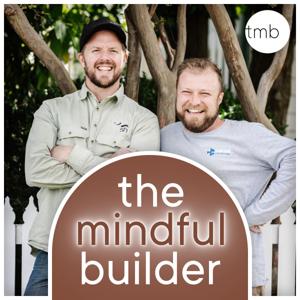


Today we’re joined by good friend and psychologist, Julie Mounter to discuss a topic that’s often misunderstood but incredibly powerful: mindfulness. If you’ve ever dismissed mindfulness as "woo woo" nonsense, stick around—this conversation will change your mind.
Julie kicked things off by explaining that mindfulness is essentially cultivating a practice of awareness—becoming aware of your thoughts and feelings from a distance rather than getting entangled in them. Julie also assured us that, despite some common misconceptions, mindfulness is firmly grounded in scientific research.
Numerous studies illustrate its benefits, including increased grey matter in the brain, which is linked to memory, empathy, and stress regulation. It also decreases activity in the amygdala, the brain's stress-response centre.
Mindfulness-Based Stress Reduction (MBSR) courses have become a popular way to learn and practice mindfulness. Julie highly recommends these structured programs for those looking to dive deeper.
Real-Life Applications of Mindfulness
Mindfulness doesn’t look the same for everyone so we went through some of the different ways it can be practiced. Julie highlighted breathing exercises and mindful eating as simple starting points. By focusing on the taste, texture, and sensation of what we're eating, we can become more grounded and move away from racing thoughts. Whatever you’re doing, the key is to engage fully with the present moment, paying attention to the sensations of the activity.
Hamish shared that gardening and exercise are activities that he finds incredibly grounding, and Julie confirmed that these can be mindful activities if approached correctly. By focusing on the sensations—be it the bend in your knee while walking or the texture of the soil in your garden—you can shift your attention from racing thoughts to your physical experience.
Julie even took us through a simple mindfulness exercise involving our five senses. It’s something anyone can do, even while driving or working on-site. Here’s a quick rundown:
Sight: Identify five things you can see.
Sound: Listen for four distinct sounds.
Smell: Notice three different smells.
Taste: Recognise two tastes in your mouth.
Touch: Feel the texture of one object nearby as if it’s your first time touching it.
This practice helps ground you in the present moment, making it an excellent tool for quick mental resets during a busy day.
The Big Question: Does Mindfulness Work for Everyone?
While not everyone may find traditional mindfulness practices easy, Julie believes most people can benefit from some form of mindful activity. The key is to find what works for you and make it a consistent practice. An easy way to do this is to attach your mindfulness to a daily task. For example, practising mindfulness after turning off your alarm in the morning or during your commute to work. Setting reminders can also serve as a helpful nudge.
We hope this episode helps to demystify mindfulness and encourage more people to give it a try. Whether it’s through a structured course or simply appreciating a coffee mug’s warmth, the benefits are there for anyone willing to take that first step.
LINKS:
Connect with our Guest:
Website: https://www.allmindspsychology.com.au/
Connect with us on Instagram: @themindfulbuilderpod
Connect with Hamish:
Instagram: @sanctumhomes
Website: www.yoursanctum.com.au/
Connect with Matt:
Instagram: @carlandconstructions
Website: www.carlandconstructions.com/
What if I told you that a home could be energy-efficient, comfortable year-round, and environmentally sound—all without breaking the bank?
Well if you’ve been listening to the podcast for a while, you already know the answer is passive houses. We’re both really passionate about passive house building, but we know there is a lot of misinformation out there, so we sat down with building physics expert Dr Cameron Munroe to clear things up.
First things first, what exactly is a Passive House? Many people think building a Passive House is about slapping on some extra insulation and calling it a day, but there’s way more to it. The fundamentals include five key principles: superior insulation, high-performance windows, airtightness, thermal bridge-free construction, and consistent ventilation with heat recovery.
These aren’t new concepts; they've been around for decades. What makes Passive House unique is its systematic approach to integrating these elements to ensure the building performs exceptionally well.
One major misconception is that Passive Houses are prohibitively expensive. Let's debunk that right now. Building in 2024 is expensive, full stop. But when you compare a custom-built, high-performance Passive House to a traditional custom home, the cost difference can be negligible. The crucial point here is that you're getting more bang for your buck. A better-performing building justifies the higher initial investment through long-term heating, cooling, and maintenance savings.
Another myth is that airtight buildings have poor air quality. This couldn't be further from the truth. Passive Houses employ Heat Recovery Ventilation (HRV) systems, which ensure a constant supply of fresh, filtered air. So even when outdoor conditions are far from ideal—like during a smoke-filled bushfire season—you’re breathing easy inside.
Some believe that opting for a Passive House means sealing yourself in an airtight box and never opening windows. In reality, Passive Houses give you the freedom of choice. You can open your windows whenever you like, but thanks to the HRV system, you won't need to for ventilation purposes. This way, during those beautiful spring days, you can still let in the fresh air and hear the birds sing without compromising the home's performance.
You might be wondering if all these efforts and investments are worth it without clear certification. According to Dr. Cameron Munroe and the Passive House Institute, certification is essential to ensure that all criteria have been met. Without it, calling your home a Passive House doesn't hold much water. Certification provides a seal of quality, confirming your home’s superior performance and airtight construction.
In our experience working with Passive Houses, we’ve found them to be the easiest and most rewarding projects. The goal is clear, the team is unified, and the end result is a home that offers unparalleled comfort, cost savings, and sustainability. If you’re thinking about building or renovating, consider making it a Passive House—it might just be the best decision you ever make for your home.
LINKS:
Connect with us on Instagram: @themindfulbuilderpod
Connect with Hamish:
Instagram: @sanctumhomes
Website: www.yoursanctum.com.au/
Connect with Matt:
Instagram: @carlandconstructions
Website: www.carlandconstructions.com/
Homes in Australia aren’t being built to a high enough standard.
The building industry prioritises quantity over quality so there’s no time for care or craftsmanship. That’s why we sat down with Brian and Simon from the Sustainable Builders Alliance, an organisation dedicated to promoting high-performing, sustainable construction practices. We discuss the challenges of building a sustainable future for the building industry, and how to overcome them.
Our conversation began with Brian sharing two ideas that are at the core of the SBA’s work. That no one in the industry should see each other as competitors but rather as collaborators, and that sharing knowledge is crucial for building a better industry.
Discussing the poor quality rampant in our industry, Brian pointed the blame at society’s throwaway culture. There are still builders who take pride in their craft, there always will be, but it’s difficult for them to fight against a stagnant system. Thankfully, younger people are more aware of the deficiencies in Australian housing standards and are actively seeking ways to incorporate sustainable practices.
So how do we support this shift? According to Simon and Brian, it's all about education and making resources more accessible. The Sustainable Builders Alliance is doing it by creating courses like the five-step system for carbon-neutral homes, but this is just a starting point. For a big impact we need government funding and improved educational systems. This involves integrating sustainability into trade schools to nurture a new generation of builders who prioritise sustainable practices.
The strength and success of the SBA underscore the power of community within the construction industry. By working together and sharing knowledge, we can accomplish much more than we can alone. If you want to learn more about their initiatives or get involved, visit their website at www.thesba.com.au
Here's to building better, together!
LINKS:
Connect with our Guest:
Website:https://www.thesba.com.au/
Instagram: @sustainablebuildersalliance
Connect with us on Instagram: @themindfulbuilderpod
Connect with Hamish:
Instagram: @sanctumhomes
Website: www.yoursanctum.com.au/
Connect with Matt:
Instagram: @carlandconstructions
Website: www.carlandconstructions.com/
Ever walked into a home and instantly felt as if everything just clicked into place?
Chances are you have an interior designer to thank! This week we sat down with Erin Fairmaid, to talk about the real magic behind well-designed spaces and why interior designers are invaluable.
Because the industry isn’t regulated, the term “interior designer” can be thrown around by people without knowledge and experience. This dilutes the profession's value and leads to the myth that interior designers just pick paint colours and buy furniture. Erin makes it clear that this is just scratching the surface. Her work involves technical skills, spatial planning, and understanding clients' lifestyles down to the tiniest details – pets, family routines, you name it. She also works closely with architects and builders to design a space that isn’t just beautiful but highly functional.
Erin points out that it’s important to get your interior designer involved early in the pre-construction process. Simple tweaks to a floor plan can significantly improve the functionality of a home, and the sooner you make them the less impact they’ll have on the timeline and budget.
During our conversation, Erin tackles some of the biggest misconceptions surrounding Interior Designers:
1. Interior designers are only for wealthy people: Erin argues that her work isn’t a luxury, but a necessity. A well-thought-out design can streamline a build, saving money and resources.
2. Anyone can be an interior designer: While technically true due to the unregulated nature of the industry, great designers have a mix of innate talent and continuous learning. Erin urges homeowners to look for a designer with demonstrated experience.
3. Interior designers just follow trends: Some might, but not Erin. When a client asks for something that’s trending, she challenges this by asking clients about their real preferences—leading to more personalised and timeless designs.
Interior Designers bring so much value to building projects, but are they appreciated for it? Well, it’s a mixed bag. The lack of regulation in the industry leads to confusion and undervaluation of skilled professionals like Erin. On the other hand, anyone who’s seen her work knows it’s value. Whether it’s ensuring functional layouts or sourcing materials that fit the budget without compromising on style, Erin’s contributions are irreplicable.
So, if you're planning a home renovation or building anew, don’t underestimate the role of a talented interior designer. They bring a lot more to the table than just aesthetic value. They can make your home not just a place to live, but a place to thrive.
LINKS:
Connect with our Guest:
Website: www.hehedesign.com.au
Connect with us on Instagram: @themindfulbuilderpod
Connect with Hamish:
Instagram: @sanctumhomes
Website: www.yoursanctum.com.au/
Connect with Matt:
Instagram: @carlandconstructions
Website: www.carlandconstructions.com/
Welcome back to another episode of the Mindful Builder podcast! Today we’re joined again by our friend and expert psychologist, Julie Mounter, for a conversation about mental health and depression. Whether you’re struggling right now, or worried about someone else, we want to give you the tools you need to face it head-on.
Julie starts the episode by outlining what exactly depression is. While everyone experiences low moments in their life, clinical depression includes prolonged sadness and lack of joy, lasting for more than two weeks and impacting day-to-day functioning. She then highlights some key symptoms to watch out for in yourself or others:
The conversation then shifts to why men, in particular, find it difficult to open up about mental health issues. Stereotypes and societal pressures often equate emotional vulnerability with weakness, so a lot of men end up suppressing negative emotions rather than seeking the help they need. However, acknowledging and addressing mental health challenges is a sign of strength, not weakness.
Julie shares that creating a support network and maintaining social connections can be a significant protective factor against mental health issues. For men, especially, fostering these connections can be life-changing. Hamish backs this up with a recent experience reaching out to his workout group during a low period. With a simple message, he received a flood of support and concern.
The Role of Medication
Medication for mental health carries a stigma with it that prevents a lot of people from getting the help they need. When we bring this up to Julie she explains that medications for mental health should be thought of in the same way as medication for any physical illnesses. It isn’t a “cop-out” or cheating; it is a legitimate and often necessary form of treatment.
The Influence of Social Media
We also touch on the impact of social media on mental health. Julie explained how the intermittent rewards from likes and comments can make social media addictive, much like gambling. This constant need for validation can exacerbate feelings of inadequacy and depression.
Adding a light-hearted note, Hamish shared how accidentally mowing over his phone led to a surprisingly peaceful weekend without the constant ping of notifications. Disconnecting from social media, even for a little while, can be great for your mental health.
One of the most valuable parts of our discussion was about how to talk to someone we're worried about. Julie provided excellent advice– be genuine, be patient, and listen. Avoid giving advice immediately; instead, be a supportive listener. Reassure them that they are not alone, and that help is available.
We hope this episode provides insight and support to anyone navigating their mental health journey or supporting someone else through theirs. Remember that it’s okay to feel sad, and it’s okay to seek help. You are not alone in this journey.
LINKS:
Connect with us on Instagram: @themindfulbuilderpod
Connect with Hamish:
Instagram: @sanctumhomes
Website: www.yoursanctum.com.au/
Connect with Matt:
Instagram: @carlandconstructions
Website: www.carlandconstructions.com/
Welcome back to another episode of The Mindful Builder podcast. We’re back with the second half of our conversation with the incredible Airboss Dan. If you haven’t listened to it yet, make sure you go back to episode 19 where we discuss Dan’s path to becoming a carpenter in Germany and how it differs from what we see in Australia.
We restart the conversation talking about the unique challenges of building in Australia. Dan points out that many of the challenges are caused by Australia’s diverse climate. In Germany, the climate is pretty much the same across the whole country, but in Australia, it varies widely from city to city, especially the humidity levels. Because it can’t be standardised, many builders aren’t taught how to account for this, leading to long-term problems like condensation and mould.
Our conversation then pivots to the need for better training in Australia. Dan shares that building physics, which is an important part of his apprenticeship in Germany, isn’t widely taught or well understood in Australia. It’s a gap that needs to be bridged urgently, and the first step is to address the shortcomings in our education system.
An alarming number of schools aren’t focused on educating capable builders, instead they want to tick boxes to earn their funding. Because of this, many builders are left to learn through trial and error, often jeopardising the integrity of their projects. This isn't a slight on the dedicated teachers within the system—they’re fighting an uphill battle against outdated curricula and an administration resistant to change.
While the current state of construction in Australia can seem disheartening, the future is hopeful! We see a future where all builders are educated and confident about building physics. We see a future where knowledge flows freely and quality work is the standard. And most importantly, we see a future where taking pride in one’s work is the norm, not the exception.
LINKS:
Connect with us on Instagram: @themindfulbuilderpod
Connect with Hamish:
Instagram: @sanctumhomes
Website: www.yoursanctum.com.au/
Connect with Matt:
Instagram: @carlandconstructions
Website: www.carlandconstructions.com/
This week, we had an incredible guest on our podcast, Airboss Dan, famous on Instagram for taping houses and currently working with Proclima on the technical side of things. Our chat is pretty long so we’ve split it into two episodes. In this first part, Dan shares his path to become a carpenter in his home country of Germany, and why he cares so deeply about quality craftsmanship.
Hamish and I often discuss the need to change the narrative around trades in Australia. Here They can be seen as a cop-out career, or just for people who can’t go to uni, but this isn’t the case in Germany. There, trades are a well-respected path for skilled, passionate craftsmen who take pride in their work.
The first year of apprenticeship involves full-time schooling, where apprentices learn the theory and basics of working with timber, mathematics, and building physics. In the second year, apprentices spend around 60 percent of their time working in their companies, gaining real-life experience. By the third year, they're balancing practical and theoretical lessons, further honing their skills.
Now Dan didn't always want to be a carpenter. His first dream was to become a pilot, but educational requirements shifted his career path, and eventually fell into carpentry. Despite his initial lack of enthusiasm, he found a love for the craft in Germany’s rigorous training system and became a passionate perfectionist.
It’s disheartening to realise that many people lack this passion in Australia. We hear so much about the need for more tradespeople, but in our current industry, we’re often sacrificing quality for quantity. Imagine if every tradesperson in Australia went through similar training – the quality of our buildings would be phenomenal!
Dan’s drive, passion, and commitment to excellence are genuinely inspiring. If you enjoyed listening to this conversation as much as we enjoyed recording it, make sure you tune in for the second part!
Until then, happy building!
LINKS:
Connect with us on Instagram: @themindfulbuilderpod
Connect with Hamish:
Instagram: @sanctumhomes
Website: www.yoursanctum.com.au/
Connect with Matt:
Instagram: @carlandconstructions
Website: www.carlandconstructions.com/
Ever wake up in the morning feeling stuffy even though you left a window cracked open all night? Or maybe you’ve noticed your heating bill skyrocketing every winter, and you just can’t seem to figure out why.
We recently had a great chat with Dr. Cameron Munroe, who uncovered some remarkable, and somewhat shocking truths about why our homes might need a serious upgrade in the ventilation department.
Cameron explained that the need for buildings to be airtight boils down to two main reasons: energy efficiency and building durability. Simply put, an airtight home helps conserve energy by retaining conditioned air inside.
Where Does Air Leak In?
Australian homes are notoriously leaky. From windows and doors to skirting boards and plumbing penetrations, unwanted air leaks can occur almost anywhere. However, it’s not the air itself that is the villain here but rather the water vapour it carries. When this vapour condenses, it can lead to mould and rot, making airtightness crucial for maintaining the durability and health of your home.
The Great Ventilation Debate
While some might argue that buildings need to "breathe," Cameron set the record straight: it’s the occupants who need to breathe, not the inanimate structures. It’s important here to make a distinction between airtightness and ventilation.
Mechanical Ventilation: The Game Changer
Cameron introduced us to the concept of mechanical ventilation, explaining it is key to ensuring a healthy indoor environment. Mechanical ventilation systems provide a consistent supply of fresh, filtered air regardless of external conditions. This is crucial because relying on natural ventilation (like opening windows) can be unpredictable and inefficient, impacting both air quality and energy consumption.
These systems—often HRVs (Heat Recovery Ventilators) or ERVs (Enthalpy Recovery Ventilators)—ensure that the air coming into your home is not only fresh but also filtered to remove pollutants. This is a balanced approach where the same amount of air is extracted as is supplied, ensuring both energy efficiency and indoor air quality.
Cameron highlighted the importance of real data and not just assumptions. By using sensors to monitor things like CO2 levels, you can get a clear picture of your indoor air quality. This data-driven approach can convince even the sceptics of the necessity for mechanical ventilation.
Costs and Benefits: Is It Worth It?
We tackled the elephant in the room—cost. Many homeowners might balk at the thought of adding $15,000 to $25,000 to their building costs for a mechanical ventilation system. However, Cameron argued that this is a worthy investment for ensuring both energy efficiency and the health of the occupants. Plus, once you start monitoring your home’s air quality, the benefits become evident.
Cameron’s ability to break down complex topics into easily digestible points has certainly convinced us of the immense value mechanical ventilation brings to our homes. If you’re still on the fence, consider monitoring your indoor air quality—it might just change your mind.
LINKS:
Connect with us on Instagram: @themindfulbuilderpod
Connect with Hamish:
Instagram: @sanctumhomes
Website: www.yoursanctum.com.au/
Connect with Matt:
Instagram: @carlandconstructions
Website: www.carlandconstructions.com/
Today’s topic is one we’re really passionate about: high-performance homes. This term gets thrown around a lot these days, and while it’s a fantastic concept. there needs to be some context around what actually makes a home high-performance. And no, just wrapping a building doesn’t cut it. So, let's break it down.
Here are some of the most important things for what we consider a high-performance home:
1. Thermal Modelling: High-performance homes start with rigorous thermal modelling. This isn't about eliminating bits and pieces to get a budget-friendly build; it’s about making intelligent decisions based on data. Whether it’s opting for double or triple glazing, every choice has a calculated basis.
2. Passive Solar Design: Architects and designers must incorporate passive solar design, utilising the sun’s heat in winter and proper shading in summer.
3. Water Management: Water is a building’s worst enemy. We ensure complete water-tightness by wrapping the roof, walls, and subfloors. Air brings moisture so we also need to ensure the house is airtight.
4. Mechanical Ventilation: With an airtight home, you need mechanical ventilation to manage air quality. Expecting windows to suffice for natural ventilation is impractical – who opens windows on cold mornings while running the heater?
5. Quality Materials: High-performance homes don’t cut corners on materials. Quality windows, doors, and insulation are non-negotiable if we are to deliver on our promises of energy efficiency and durability.
6. All-Electric Homes: A true high-performance home cannot rely on fossil fuels like gas. All-electric homes, ideally with solar panels, are the way forward.
7. Testing, Testing, Testing: How can you claim a house is airtight without testing it? We use blower door tests and thermal imaging to confirm the performance. This step is non-negotiable for us. This is a huge shortfall in the broader building industry where many claim to build high-performance homes but skip the key step of verification.
You might wonder why we go to such lengths. Simply put, we want to provide homes that are not only energy-efficient but also comfortable, healthy, and durable. We're talking about homes with low energy bills that stand the test of time without requiring frequent renovations.
No high-performance home can be built without collaboration. It requires everyone to be involved and on the same page from the very start to the final touches. And yes, that includes clients, which is why we vet our clients carefully. We always advise our clients to be actively involved in the process, even if they’re overseas or interstate. Their involvement ensures that we align on expectations and deliver the promised performance.
Here in Australia, the standard for building isn’t as high as it should be. Too much focus is placed on keeping things cheap, and we end up with homes that need constant renovations or that aren’t suited for their environment. So, while our standards for high-performance homes might seem strict we firmly believe that the long-term benefits in comfort, energy savings, and durability are well worth it.
Thanks for tuning in!
Have you ever wondered why some homes seem to age gracefully while others fall apart?
Well, it's often the unseen details that make or break a house.
In this episode of the Mindful Builder Podcast, we sit down with Myles Clark, a fellow podcaster, builder, and building inspector. Listen in as we explain how home inspections can save you from future headaches and ensure your home remains a haven.
Residential vs. Commercial Construction
While Myles works in the residential field now, he began his career in the commercial industry. That’s not something we have a lot of experience in, so we begin the conversation by diving into the differences between these two sectors.
Myles explains that the commercial industry is highly structured and transactional with little emotional involvement. In contrast, the residential sector is more emotionally charged, dealing with homeowners' personal investments and family spaces. Myles elaborates on how bringing commercial management systems into residential construction can streamline processes and mitigate issues.
Building Inspections: Ensuring Quality and Compliance
Myles sheds light on the less talked about but equally critical side of construction – building inspections. He explains the difference between building surveyors who ensure compliance with building permits, and building inspectors, who can be hired privately to conduct detailed inspections.
So, when should you get an inspector involved in a typical building project? Myles says the pre-plaster and waterproofing stages are particularly important. An inspection here can give you peace of mind that all materials and methods used are compliant and effective. A project completion inspection is also essential to catch any issues before the final handover.
Myles then shares real-life examples from his work as an inspector that showcase how crucial pre-purchase inspections can be. In one particularly bad case, he describes a house with severe mold issues in the subfloor. Not only is this a structural risk but it’s also a significant health hazard.
The Future of Home Inspections
Towards the end of the conversation, Myles shares his excitement about his new venture—Oz Property Report. This platform aims to provide a comprehensive directory of building inspectors and reports, making it easier for people to find and engage inspection services. It will also provide a marketplace where people can purchase existing inspection reports, saving both time and money.
We hope this episode has shed some light on why home inspections are indispensable in today's construction landscape. They aren’t just about checking boxes. They’re an important step in building safer, healthier, and more reliable homes, and that’s what we’re all about.
So remember, a little due diligence today can prevent a world of problems tomorrow, and until next time, happy building!
LINKS:
Connect with us on Instagram: @themindfulbuilderpod
Connect with our Guest:
Instagram: @itsmylesclark
Connect with Hamish:
Instagram: @sanctumhomes
Website: www.yoursanctum.com.au/
Connect with Matt:
Instagram: @carlandconstructions
Website: www.carlandconstructions.com/
From the publisher's feed
22 Listeners

48 Listeners

73 Listeners

386 Listeners

343 Listeners

4 Listeners
2 Listeners
0 Listeners

4 Listeners

23 Listeners

27 Listeners
0 Listeners
0 Listeners

0 Listeners

9 Listeners