
Sign up to save your podcasts
Or

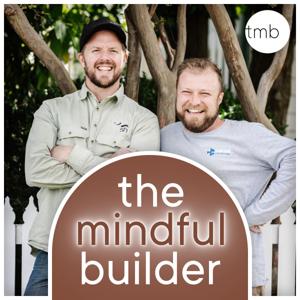


When toughness and resilience are often equated with success, it's not easy to open up and be honest about what we’re struggling with. The construction industry is demanding and high stress, which makes it a breeding ground for mental health challenges that all too often get swept under the rug.
Today we are talking about our experience with mental health struggles and how we manage it in our work. Hamish especially has a history of battling anxiety, including a difficult time earlier this year.
Identifying Triggers: Hamish shares the things that trigger his anxiety to get worse, like money stress or juggling too many projects at once. These stressors can send him into a spiral of negative thought patterns that will get worse and worse if not addressed. He shares what he does when he notices things are getting bad. His number one tip is to have an open conversation about how you’re feeling. This can be with a mental health professional, but it could also be with your mates!
The Power of Acceptance: Through the episode, we touch on some of the pivotal moments in Hamish’s life, including his decision to seek professional help and the realisation that managing mental health is an ongoing process rather than a one-time fix. Accepting these struggles as something he needs to manage has made it easier to keep them in check. It gave him permission to prioritise self-care and attend therapy regularly.
Busting Stigmas: In “blokey” industries like construction, mental health has often been ignored or even mocked. People were often told to suck it up or act like a man and weren’t given the support they needed. Thankfully, things are improving; and while there’s still a long way to go there is a lot more support these days. Each of us can contribute to building a better environment for mental health by being honest about our own experiences.
Mental health awareness is so important, and it’s one of the main reasons we started this podcast. We hope this episode will encourage you to pay more attention to your mental well-being and reach out for help if you need it.
Until next time take care and remember, true strength comes from being vulnerable!
LINKS:
Connect with Us:
Sanctum Homes: www.yoursanctum.com.au/
Carland Constructions: www.carlandconstructions.com/
In a world increasingly aware of the environmental impact of human activity, sustainable living has taken center stage. In today’s episode, we’re joined by Anna Cummins, the editor-in-chief of Sanctuary Magazine, to discuss the importance and evolution of sustainable design.
Sanctuary is a magazine dedicated to sustainable house design, produced by the not-for-profit Renew. Anna began working there in a volunteer position, but her role grew over the years until she reached her current position at the head of the ship. Under her guidance, Sanctuary Magazine has become an incredibly valuable resource for anyone looking to build or renovate sustainably.
Anna starts off by outlining what exactly a sustainable home is. There is no universal standard, so things can get murky but she share’s the key factors she looks for:
1. Size: A sustainable home is built big enough to suit your needs but not bigger. So not building additional rooms for resale value later on. Every extra room in your house will add to your building costs but also costs down the line like heating/cooling, cleaning, and maintenance.
2. Adaptability: Rooms are built to be multi-purpose. So, a room could be designed to function as a study, a guest room, or a media room depending on your needs at any moment. This is much more sustainable (and cost-effective) than building separate rooms that are only occasionally in use.
3. Accessibility: Incorporating accessibility into a house's design from the beginning is easier and cheaper than trying to do so when the need arises. Many people are of the mindset that they will never need an accessible home but even temporary injuries like a broken leg can make it necessary.
4. Sustainable Materials: This one is a bit trickier than the other factors. There is no perfect material and you’re often having to make trade-offs for what’s most important to you. Whenever possible, reusing and recycling is typically the most sustainable choice.
The Evolution of Sustainable Construction
There’s a growing shift towards more informed clients and builders who prioritise sustainability not just as a badge of honour but as a fundamental aspect of construction. Passive solar designs and Passive House standards are becoming more mainstream, reflecting a broader awareness and integration of sustainable practices in the built environment.
It’s a hard thing to keep track of, but Anna shares an example from her work that highlights the impressive pace of change. When she began at Sanctuary magazine, they constantly had people asking for advice to find sustainable builders because they were few and far between. That’s not the case anymore, there are loads of builders advertising this work!
We hope this conversation offers you a look into the world of sustainable design and construction, and a vision of its future. Sustainable living is no longer a niche. It’s in the mainstream, and in demand. This is why we need platforms like Sanctuary Magazine more then ever. So, they can inspire and inform a wider audience about the benefits and beauty of sustainable design.
LINKS:
Connect with Anna
Website: https://renew.org.au/sanctuary-magazine/
Instagram: @marniehawson
Connect with Us:
Sanctum Homes: www.yoursanctum.com.au/
Carland Constructions: www.carlandconstructions.com/
Today we’re joined by our very first guest, Marnie Hawson. She’s an entrepreneur, a building photographer, and a good friend to both of us. Our conversation explores Marnie’s career path and how she has integrated her passion for nature into her business. We hope this episode shows the huge difference we can make as business owners when we prioritise positive change.
From Environmental Scientist to Visionary Photographer
Like both of us, Marnie’s career has taken a winding path. She worked in environmental science for some years before transitioning to photography. This move wasn’t about leaving science, or even pursuing a creative field, rather Marnie wanted to work in the world of business. She leverages her business as a tool to advocate for environmental awareness and changes to sustainability.
Sustainability in Practice
A significant part of our conversation is around B Corps - businesses that meet stringent standards of social and environmental performance. Marnie was able to get her business certified B-Corp and she walks us through that rigorous process. She also talks about why it was important to her to focus on making a meaningful impact over just profitability.
Becoming a B Corp isn’t the only way to be sustainable in business. So, we discuss other ways businesses, regardless of size, can prioritise sustainability and make a meaningful impact. Marnie suggests practical steps like evaluating your supply chain and giving back to the community.
Marnie then shares some of the projects her business has worked on, like their efforts to create a threatened species sanctuary. Currently, she has partnered with Odonata for a project aimed at integrating biodiversity projects with business operating models. Marnie isn’t all talk, she’s leveraging her business to make a real difference in the world, which is something we should all be aiming for.
We hope this episode will inspire you to think about what you can do differently in your business. Striving for sustainability is hard work. You need commitment, collaboration, and a willingness to learn, but it’s so so important. No one is going to be perfect, but if we all do our part we can make a better future, one photograph or one building at a time.
LINKS:
Connect with Marnie:
Website: www.marniehawson.com.au
Instagram: @marniehawson
Connect with Us:
Sanctum Homes: www.yoursanctum.com.au/
Carland Constructions: www.carlandconstructions.com/
Mistakes happen. We can’t stop them; we can only choose how we feel about them.
In today's episode, we’ll explore the power of embracing mistakes as opportunities for growth. We’ll share the lessons we’ve learned from our own mistakes, as well as our insights on creating an environment that empowers our team to take risks and learn from their experiences.
Empowering Our Team: Leaders play a pivotal role in shaping the culture of a team, and they must create an environment where mistakes are allowed. When team members feel they have the freedom to make mistakes, they tend to think more critically and take ownership of their actions. It also leads to fewer interruptions and more efficient problem-solving.
The Importance of Team Dynamics: It’s also crucial to build a supportive and trusting team. Toxic team members can disrupt the learning and growth process by blaming others for mistakes and avoiding accountability. On the other hand, a team in harmony will feel comfortable admitting their mistakes and will collaboratively work towards a solution.
Creating a Low-Risk Environment: While you should allow mistakes, you also need to create a low-risk environment for that to happen. Matt suggests setting clear boundaries based on the level of experience and the potential impact of the mistake. For instance, a first-year apprentice should not be expected to perform tasks beyond their skill set, while a site lead may have more autonomy. By defining these parameters, leaders can empower their teams without compromising quality or client satisfaction.
Learning from Mistakes with Client Relationships
We also touch on the challenges of managing client relationships in the construction industry. We’ve both made mistakes in this area and learned some hard lessons. Matt emphasises the importance of maintaining control and managing client expectations. Hamish highlights the significance of fostering open communication and trust.
Remember: making mistakes is not only acceptable but also necessary for personal and professional growth. We hope this conversation provides some insight on how to create an environment where your team can grow and thrive.
LINKS:
Sanctum Homes: www.yoursanctum.com.au/
Carland Constructions: www.carlandconstructions.com/
Welcome to the first full episode of Mindful Builder, we are so excited to kick off this journey with you! We’ve got a lot of guests lined up for future episodes, but we wanted to start things off simple with just the two of us. The two of us sit down to chat about who we are, how we entered the construction industry, and what led us to start this podcast.
Our paths are quite similar. We both pursued different careers before discovering our love for construction. A big part of both of our journeys has been the shift toward sustainability in our businesses. Although it isn’t the focus of this podcast, it is the perspective we come from in these discussions, so we want to tell you what it means to us.
We also talk about the uncertainty we had transitioning into this industry. We made lots of mistakes but ultimately, we’re better for them. By reflecting on mistakes and staying open to new ideas we’ve become more competent and confident builders.
Continuous learning is so important to both of us, and that’s why we created Mindful Builder. We want this to be a space that builds community and allows people to learn from other professionals. Like any community, we can’t do it alone. We’d love to hear from you on what you’d like to hear and who you might like to hear from.
LINKS:
Sanctum Homes: www.yoursanctum.com.au/
Carland Constructions: www.carlandconstructions.com/
Welcome to the Mindful Builder podcast. We’re both builders who have taken a winding path to get where we are. Matt tried his hand at science before becoming a carpenter and eventually diving into the world of passive houses, where he is now the director of Carland Constructions. Hamish had a similar start in a field that wasn’t for him before shifting to the building industry, finding a passion for sustainable building, and becoming the director of Sanctum Homes.
In this episode, we share some of the challenges we’ve faced along our journeys and what that’s taught us. Most importantly, we want to let you all know that you’re not alone in this industry and the specific challenges we face. By being vulnerable and leaning on each other we all get stronger. That’s what Mindful Builder is about.
We’ll be talking to experts from all parts of the industry to share their knowledge and insights, but we also want to create a platform for meaningful conversations about mental health challenges and the power of community. We know there can be a lot of negativity in the industry, which is why we want this podcast to be a force for positivity.
Thanks for joining us on this ride, we are so happy you’ve joined us.
From the publisher's feed
22 Listeners

48 Listeners

73 Listeners

386 Listeners

343 Listeners

4 Listeners
2 Listeners
0 Listeners

4 Listeners

23 Listeners

27 Listeners
0 Listeners
0 Listeners

0 Listeners
9 Listeners