
Sign up to save your podcasts
Or



Based on Podcast App listening data
KC Davis is a therapist and author known for her practical, empathetic advice on dealing with clutter, even when you are feeling like too much of a mess yourself to take care of the mess in your home. Her TikTok videos on the subject have been viewed millions of times. But lately, Davis has been talking and writing about our relationships not just to the objects in our lives, but to the people, too.
In her new book, “Who Deserves Your Love: How to Create Boundaries to Start, Strengthen, or End Any Relationship,” Davis tries to disentangle the popular understanding of boundaries, saying the concept is widely misunderstood. She offers a guide to forming and keeping boundaries that help readers better navigate their conflicts with other people.
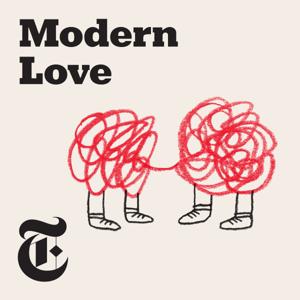
On this episode of “Modern Love," Davis tells us what she thinks we get wrong about boundaries and how we should be thinking about them instead. She reads the Modern Love essay “Is My Husband a Doormat?” about a sudden argument between a couple 20 years into their relationship and talks about how boundaries can help defuse such situations. Davis also tells us how boundaries helped heal her own relationship with her father.
The author of today’s featured essay, Lidija Hilje, has a new novel coming out in July called “Slanting Towards the Sea.“
For an upcoming episode about location sharing, the Modern Love team wants to hear your location-sharing story. Did something happen that made you regret sharing your location with someone? Was there a moment when you were thankful that you had? Where were you? What happened? How did your relationship change as a result? The deadline is May 1. Submission instructions are here.
Here’s how to submit a Modern Love essay to The New York Times
Here’s how to submit a Tiny Love Story
Unlock full access to New York Times podcasts and explore everything from politics to pop culture. Subscribe today at nytimes.com/podcasts or on Apple Podcasts and Spotify.
Mireille Silcoff recently wrote an article for The New York Times Magazine titled “Why Gen X Women Are Having the Best Sex.” At a time of life when many women describe feeling less visible and less desirable, Silcoff said, her life instead “exploded in a detonation of sex confetti.”
On today’s episode, Silcoff shares the juicy back story to her popular article, from her coming of age in Montreal to the surprising sexual resurgence she experienced after her divorce. Silcoff reflects on what it feels like to be a highly sexual person in her early 50s and tells us how being part of Gen X is central to her newfound freedom.
For an upcoming episode about location sharing, the Modern Love team wants to hear your location-sharing story. Did something happen that made you regret sharing your location with someone? Was there a moment when you were thankful that you had? Where were you? What happened? How did your relationship change as a result? The deadline is May 1. Submission instructions are here.
Here’s how to submit a Modern Love essay to The New York Times.
Here’s how to submit a Tiny Love Story.
Unlock full access to New York Times podcasts and explore everything from politics to pop culture. Subscribe today at nytimes.com/podcasts or on Apple Podcasts and Spotify.
As U.S. poet laureate, Ada Limón has had a far-reaching impact. She has visited readers and writers across the country, installed poems at majestic sites in national parks, and she even wrote a poem that’s engraved inside a NASA spacecraft on its way to Jupiter.
Today on the show, though, our host Anna Martin talks with Limón about something more personal and intimate: What happens when writers fall hopelessly in love. She reads a Modern Love essay about a novelist whose debilitating crush on a poet gives her a bad case of writer’s block (before leaving her with a badly broken heart). Limón also tells Anna why feeling anger and grief when we’re despairing can be the path to feeling more alive, and she explains why a pair of old sweatpants belong in a love poem as much as bees and flowers do.
Ada Limón’s recent book, “You Are Here: Poetry in the Natural World” can be found here.
Lily King’s Modern Love essay, “An Empty Heart Is One That Can Be Filled” can be found here.
Unlock full access to New York Times podcasts and explore everything from politics to pop culture. Subscribe today at nytimes.com/podcasts or on Apple Podcasts and Spotify.
Growing up, Jamie Shandro was interested in science, while her younger brother, Tim, liked art. When they were in their twenties, they both landed in Seattle: Jamie for medical school and Tim for art school. They were closer than ever. But as Jamie was finishing up a rotation in psychiatry, Tim started behaving strangely.
In this episode of Modern Love, Jamie tells the story of the frightening onset of her little brother’s mental illness and the parts of his personality and creativity that remain. Plus, she talks about how helping Tim has shaped her, as a person, and a doctor.
This episode is adapted from Jamie Shandro’s 2025 essay My Brother Has Schizophrenia. This Is How I Love Him.
Here’s how to submit a Modern Love essay to The New York Times
Here’s how to submit a Tiny Love Story
Unlock full access to New York Times podcasts and explore everything from politics to pop culture. Subscribe today at nytimes.com/podcasts or on Apple Podcasts and Spotify.
If you know one thing about Orville Peck, it’s probably that he wears a mask. The country musician has long kept himself shrouded in mystery, shielding his face from the public and revealing few details about his past. His music, however, is full of emotional honesty and vulnerability — he told the Modern Love podcast that most of his lyrics are about his life — and his songs are imbued with a deep sense of longing.
In this episode, Peck talks about why country music uniquely captures our complicated feelings about love, and why love and pain are so often intertwined. He reads a Modern Love essay, “Strung Out on Love and Checked In for Treatment” by Rachel Yoder, about love addiction, and discusses what it takes to pull yourself from its distressing grip.
Here’s how to submit a Modern Love essay to The New York Times
Here’s how to submit a Tiny Love Story
Unlock full access to New York Times podcasts and explore everything from politics to pop culture. Subscribe today at nytimes.com/podcasts or on Apple Podcasts and Spotify.
Natasha Rothwell plays characters who are constantly trying to improve and to better understand their desires. This season on “The White Lotus,” Rothwell, an Emmy-nominated actress, is back playing Belinda, a striving spa manager with dreams of becoming her own boss. Ambitions like these are relatable to Rothwell, who created and starred in her own show, “How to Die Alone.” But as she and her characters have learned, going after what you want often means changing your priorities and steering away from certain types of people.
Today on the show, Rothwell reads Jasmine Browley’s Modern Love essay, “I Decentered Men. Decentering Desire for Men Is Harder,” about the challenges and joys of putting your own needs first. And Rothwell tells Anna Martin how vision boarding has helped her center herself.
Here’s how to submit a Modern Love essay to The New York Times.
Here’s how to submit a Tiny Love Story.
Unlock full access to New York Times podcasts and explore everything from politics to pop culture. Subscribe today at nytimes.com/podcasts or on Apple Podcasts and Spotify.
On her fourth solo album, “Forever Is a Feeling” (out March 28), Lucy Dacus contemplates the fears and delights that go along with falling hard for someone. The song “Best Guess” celebrates the leap of faith involved in committing to a partner with the knowledge that both of you will change over time. And in another track called “Talk,” a couple realizes they’ve grown apart because they have nothing more to say to each other.
In this episode, Dacus reads Molly Pascal’s Modern Love essay, “How the ‘Dining Dead’ Got Talking Again,” about a husband and wife who set out to bring conversation back into their marriage. And Dacus tells Anna Martin why she’s not afraid to put in the work for long-term love.
Molly Pascal’s essay can be found here.
Here’s how to submit a Modern Love essay to The New York Times.
Here’s how to submit a Tiny Love Story.
Unlock full access to New York Times podcasts and explore everything from politics to pop culture. Subscribe today at nytimes.com/podcasts or on Apple Podcasts and Spotify.
When Samaiya Mushtaq was growing up, she imagined marrying a kind Muslim man, and at 21, she did. But while studying to become a psychiatrist in medical school, she realized her husband couldn’t meet her emotional needs — something she deeply craved. Despite the shame she felt, she got a divorce.
In this episode, Mushtaq shares the twists and turns of her unexpected second chance at love, where service is at the center. From working in health care during the pandemic to building a family to undertaking harrowing service trips to Gaza, she found what she truly needed in a marriage — only after letting go of what she thought she wanted.
Samaiya Mushtaq’s memoir will be published by Daybreak Press next winter.
This episode was inspired by her 2023 essay, “Must We Feel Shame Over Divorce?”
Here’s how to submit a Modern Love essay to The New York Times
Here’s how to submit a Tiny Love Story
Unlock full access to New York Times podcasts and explore everything from politics to pop culture. Subscribe today at nytimes.com/podcasts or on Apple Podcasts and Spotify.
In the movie “His Three Daughters,” Carrie Coon’s character, Katie, has rigid ideas about who her sisters are and what they’re capable of. When the women reunite to care for their dying father, those ideas become a barrier to true connection and care for each other.
In this episode, Coon reads the Modern Love essay “A Family Label, Ungarbled” by Harriet Brown. Growing up, the author was never sure she could feel real love. It took breaking out of her mother’s ideas of her, and the birth of her daughter, to learn what love meant. Coon relates the essay to her own experience, describing her early dating life as tumultuous and recalling relationships she continued out of pity rather than love. Until one day, Coon got a letter from her grandmother that changed everything.
Here’s how to submit a Modern Love essay to The New York Times
Here’s how to submit a Tiny Love Story
Unlock full access to New York Times podcasts and explore everything from politics to pop culture. Subscribe today at nytimes.com/podcasts or on Apple Podcasts and Spotify.
For Kelsey McKinney, the author of the new book, “You Didn’t Hear This From Me: (Mostly) True Notes on Gossip,” spreading a good story occupied a morally gray zone throughout her childhood.
McKinney, who is also the former host of the podcast, “Normal Gossip,” talks with Modern Love’s Anna Martin about navigating the ups and downs of gossiping in her own life.
McKinney also reads the Modern Love essay “We Were a Party of Two, but Never Quite Alone” by Linda Button, who tells the story of how gossiping with her rich suitor’s exes brought the euphoria of her relationship back down to earth. While reading Button’s essay, McKinney fields questions from Martin so they can do some gossiping of their own.
How to submit a Modern Love Essay to The New York Times.
How to submit a Tiny Love Story.
Unlock full access to New York Times podcasts and explore everything from politics to pop culture. Subscribe today at nytimes.com/podcasts or on Apple Podcasts and Spotify.
From the publisher's feed
Ranked by our users in the last 21 days

90,540 Listeners

37,759 Listeners

43,356 Listeners

26,796 Listeners

5,621 Listeners

3,929 Listeners

1,505 Listeners

7,654 Listeners
3,948 Listeners

2,064 Listeners

137 Listeners

112,256 Listeners

14,922 Listeners

9,376 Listeners
1,521 Listeners

1,322 Listeners
12,634 Listeners
309 Listeners

4,737 Listeners

466 Listeners

51 Listeners
2,347 Listeners

380 Listeners
6,684 Listeners

16,234 Listeners
1,500 Listeners

1,618 Listeners

13 Listeners

595 Listeners
27 Listeners
86 Listeners

0 Listeners