
Sign up to save your podcasts
Or

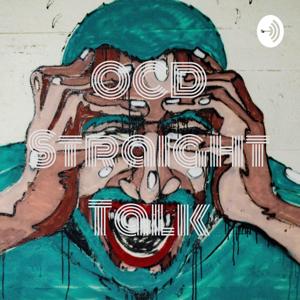


Chris discusses OCD 101, How do we tell the difference between OCD-components in order bring to a grinding halt our OCD-systems?
Feel free to reach out with questions to [email protected].
Chris Discusses attitude. It comes down to decision and follow through. Sure, it's a little more complex than that. Sometimes we're doing compulsions that we don't quite realize are compulsions. We see them as idiosyncrasies (just behavioral stuff that makes me, me). On the other hand, a lot of compulsions are simple choices that you and I willingly make.
Beating OCD is about digging in your heals and saying, "I'm done. Come what may. F*** it." No exceptions. No Excuses. And no more compulsions.
Let's spend the next 7 days really working hard to stop engaging compulsions. Let me know how you're doing.
Reach out with questions you've got. [email protected]
Chris discusses an oft-posed question in therapy, and gives an honest and empowering answer.
Thanks for tuning into the podcast. Feel free to reach out with any questions you might have. [email protected], or check out the practice at www.thetenthousandlakes.com.
Chris discusses yet another symptom dimension of OCD. The truth of the matter, though, is that there is no piece of information more important in this general context than the necessity of stopping compulsions. Sorry to sound like, as it were, a broken record; but that's the truth.
Feel free to reach out with questions to [email protected].
Chris responds to a listener's request for a discussion on OCD-subtypes. The topic of the next few episodes will be "kinds," or subtypes of OCD. Some subtypes will not get covered; others will be discussed, but only in some part. No subtype will receive exhaustive attention in this series. This episode is concerning so-called, POCD. Whether the specific content of this episode feels relevant to each and every listener, please bear in mind that it is identifying and stopping compulsions that is the "active ingredient" in evidence-based treatment.
Feel free to reach out to [email protected] with any questions you might have.
Chris responds to a listener's request to discuss OCD-subtypes. The topic of the next few episodes will be "kinds," or subtypes of OCD. Some subtypes will not get covered; others will be discussed, but only in some part.
This episode is concerning so-called Harm-OCD.
Reach out to [email protected] with any questions you might have.
Thanks for listening. Chris discusses the regrettable fact that many people struggle with OCD symptoms, and often get access to misleading, or even straight erroneous information. Chris also discusses Pure-O. The simple truth is that where there are intrusive thoughts heckling an individual in the foreground, there are compulsions happening in the background. The question is, "What" or "Where are they?"
Feel free to reach out with any questions you might have. [email protected]
Chris discusses a technique he encountered under the clinical supervision of Dr. Monnica Williams. The technique is aimed at dismissing intrusive thoughts. Exposure Statements are not "curative" in the sense that they have not been found to treat OCD. Neither do they directly reduce anxiety. Many individuals across the world, however, have stated that they are helpful for dismissing obsessions (i.e., intrusive thoughts).
Feel free to reach out with any questions you might have. [email protected].
Chris explains the nature of intrusive thoughts within OCD, and employs a technique that is used to begin to dismiss them, or let them go. This is not a technique for reducing anxiety - that technique is stopping compulsions. It's a logical strategy for "turning down the volume," if you will, on the thoughts. It's a technique for using the uncertainty of the future as a tool for letting go of thoughts in the present.
Reach out to [email protected] with questions or comments. CL
In this episode, Chris distinguishes intrusive thoughts (also called obsessions) from rumination (mental compulsions, DSM-5). They're both cognitive activities; so telling the difference is often easier said than done. He then explains a strategy that is often used to stop ruminating. Please remember that this podcast is only a podcast, though. It is not meant to be consumed in lieu of evidence-based psychotherapy.
Feel free to reach out with any questions you might have: [email protected].
From the publisher's feed
1,436 Listeners
830 Listeners
756 Listeners

28,012 Listeners

111,875 Listeners
5 Listeners

133 Listeners

82 Listeners
263 Listeners

144 Listeners

15,919 Listeners
68 Listeners

19,146 Listeners

10,654 Listeners
37 Listeners