
Sign up to save your podcasts
Or

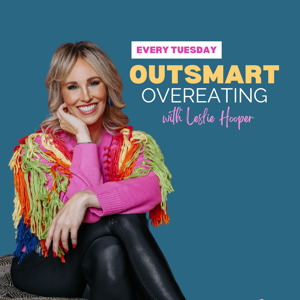


All overeating is completely predictable.
Dieters think they're powerless against food, but the truth is their thoughts are accurate predictors of what they'll do.
What do you think before you eat (when you're not hungry):
"I deserve this"
"I don't know when I'll be able to have this again"
"This time won't hurt"
Your thoughts make you feel obligated. It keeps you feeling encouraged.
Then you beat yourself up (habit).
Next thought:
Can you see how circular this cycle is? This is exactly why you cycle through dieting. It all comes down to your thoughts.
Think ahead. Plan your thoughts. What kind of experience do you want to have.
What do natural eaters think when they're not hungry but offered food?
Start observing some thoughts. Then borrow some from the natural eater. Practice new thoughts.
Do you know why your diet isn't working? Join co-coach, Eileen Trujillo, and me in this week's episode of the Fat Murder Podcast as we dive into the 6 reasons why diets don't work. Most people choose to follow meal plans and cookie cutter diets over a more mindful approach because the "rules" and boundaries have already been created for you. This helps you feel safe and confident in your decisions, but the truth is — diets never go as planned. If you don't take the time to understand the purpose behind what you're doing, you will be easily discouraged when times get tough. Diets won't teach you how to navigate off the beaten path, and that's where success is ultimately determined. sick days having a baby going through a divorce the loss of a loved one accepting a job offer in a different state If you want long-term sustainable weight loss, you must start educating yourself on how this process can be woven into the fabric of your every day life, not just for the next 12 weeks. Chances are meal plans and diets haven't worked for you in the past and it's highly unlikely anything will change that outcome in the future. What's one small action step you can take today to bring yourself closer to the new and improved 2.0 version of yourself? Give this episode a listen for multiple ideas on how to put this into practice.
Sure, reading is cool, and I've definitely learned a lot over the years by doing it, but it's not a substitute for taking action. Body transformations are a lot like dancing – you don't learn by watching, you have to get on the floor and learn the steps. Sadly, the action step is where most get stuck and ultimately fail. That's why, today, co-coach, Eileen Trujillo, and I want to talk to you about how to combat laziness and follow through. I used to be a massive procrastinator and called myself lazy. As it turns out, I just didn't have any strategies in place to set myself up for success. It was going to take more than installing a productivity app on my phone if I wanted to finish the things I started. Today, on the Fat Murder Podcast, we talk about the three strategies that helped me stop dragging my feet and take action on the things I truly wanted in life. What's a goal in your life that you've been struggling to achieve? flossing your teeth? waking up 20 minutes earlier? completing 3 workouts a week? The solution to your problem is in this episode. Give it a listen. I know it will help you!
In last week's episode, I interviewed client, Jessie Fink, on how she was able to transition from a food-obsessed chronic dieter to someone who feels completely in control in any dining scenario while effortlessly maintaining her weight through the power of habit. This week, I'm excited to share the interview of Friends With Benefits client, Lindsay Grange, on her unique experience in my group coaching program. As you know, no two dieters are the same and we all have different challenges, backgrounds, habits, lifestyles, and emotional eating struggles. Lindsay was kind enough to open up and share some of hers. Topics discussed: Why Lindsay decided to join the program and how it turned out to be exactly what she needed to stop bouncing around from diet to diet and commit to unraveling her emotional ties to food. Lindsay shares some of her biggest challenges in the program and how the introduction to "trigger foods" was the breakthrough she didn't know she needed. At what point in the process Lindsay witnessed her relationship with food beginning to shift and how she's been able to overcome her self-limiting beliefs and history of self-sabotage. Lindsay also discusses why this process "worked" when others never did. Her best piece of advice for those who fear gaining weight if they stop macro/calorie counting, and why confronting this fear is essential for long-term success. Thanks again to Lindaay for being a guest and sharing her valuable insights. Be sure to give this episode a listen and let us know what topics you'd like us to cover in the future at [email protected]
In this episode, I had the pleasure of interviewing former Friends With Benefits (now rebranded as UNSTUFFED) client, Jessie Fink.
In the fall of 2019, Jessie was frustrated and fed up with dieting. As someone who experienced a classic history of yo-yoing with no long-term results to speak of, she reached out with the intention of getting off the maddening merry-go-round once and for all.
During our time together, Jessie, had the opportunity to work through three major obstacles:
1️⃣ she got engaged (YAY! 🎉)
2️⃣ she works in a restaurant (helloooo, food all day every day!)
3️⃣ she had to navigate life/eating during covid lockdown in NYC
In this episode Jessie shares the story behind her dieting checkered dieting history and how those struggles propelled her into a negative spiral of chronic dieting.
In this week's episode, we discuss:
▪️The biggest challenges she faced when the program ended and how she's been able to execute the psychological tools she learned to remain consistent in her habits.
▪️Jessie shares why she decided to try hunger directed eating and how the program helped her identify herself as a struggling perfectionist
▪️Why having a more structured program was the game-changer she needed
▪️How COVID has impacted her relationship with food as she's navigated the food industry, a wedding, and numerous lockdowns (hint: nothing changed)
▪️What physical changes she's seeing 10 months post-program and the eye-opening revelations she's made while continuing to step further away from diet culture
▪️What holiday and social eating looks like for her now compared to years previous (hint: no more food anxiety or losing control)
▪️Jessie's BEST piece of advice for those who fear they'll gain weight if they stop calorie counting and focus on weight loss through behavior change.
For more conversations on topics like binge eating, emotional eating, the all-or-nothing mindset, and your inner critic, you can check out previously recorded episodes.
If there's a topic you'd like us to cover in an upcoming episode, let us know.
What if I told you that your body is a problem to be solved? I also don't believe your suffering is because you have failed. I believe your history of dieting is a rational response when trying to live in a culture that tells us that having the perfect body is a path to more worthiness. It makes sense. As humans, we want to feel accepted. If you find yourself in a challenging relationship with food and/or your body, it's likely your natural inclination to want to control it by going on a diet. Unfortunately, this complex problem is not as simple as eliminating sugar and eating more vegetables. This isn't about restriction at all. Join co-coach, Steph Miramontes, on this week's episode of the Fat Murder Podcast to hear our thoughts on how restriction has never healed disordered eating, healed a dieter's mind, or filled a lonely void. NEVER. We completely miss the target when we aim here. When you have a history of dieting, initially letting go of food rules frees your mind so you can start observing how you feel in your body — physically and emotionally. Unfortunately, there are many gurus in a perpetual quest to solve the problem of our bodies. They want an answer! They want to package and sell it to us. They want to tell you what is hard about your lives without listening to your lived experience. Their hope is that it will make sense, similar to an algebra equation. This is also what diet culture is after – a set of instructions that will lead to a fix: another detox diet, another fat burner pill, another liposuction treatment. This constant need to "fix" your body does nothing to address your mind. And that's where the real work needs to happen. You can't diet your way into a healthier relationship with food and your body. Don't buy it. Dig deeper.
Your biggest challenge when trying to drop weight isn't the food, it's your mind. More specifically, your all-or-nothing mindset. Does this sound like you? You don't want to diet You want to be able to eat what you want You want to be able to eat as much as you want You want to be able to eat anytime you want ...without gaining weight. You don't want to diet, but you also don't want to gain weight. You know diets don't work, because you haven't been able to execute them long-term and always regain the weight you lose. But you fear if you reject dieting then you'll lose control and eat everything — without any boundaries — never stop...and gain weight. And so you continue on the hamster wheel of dieting. Never any meaningful progress to show for it, but the act of doing *something* provides you with a false sense of control. Even when it's not producing results. This is your black-and-white thinking at play. Not EVERYTHING you've learned through your years of failed dieting is trash. In many respects, you HAVE developed some healthy habits that are beneficial moving forward. Just because you've decided to no longer follow a meal plan or count calories, that doesn't mean you lack common sense, does it? You still know what healthy portions look like You still know what foods upset your stomach You still know what quantity of food makes you feel uncomfortably full. Rejecting diets doesn't mean you eat until you're sick. It requires common sense and a mental shift. It's simply a different way to look at your eating. It's embracing the gray. No more black-and-white thinking created by food rules, diet books, and restrictive meal plans. It's carving out a pathway created by YOU and your body. Trust yourself. You don't need a diet to tell you what to eat and in what quantity; your own internal and external physical guidelines will show you the way. Eat when you're hungry Stop when you're physically satisfied Manage your mind so your emotions don't cause you to seek comfort in food. When there are no food rules to "break" there is no guilt to be had. Join co-coach Steph Miramontes and me on this week's episode of the Fat Murder Podcast as we help you navigate your way into a healthier relationship with mind, body, and soul.
On this week's episode of the Fat Murder Podcast, co-coach, Eileen Trujillo joins me to discuss how in order to permanently lose the weight, you have to lose the dieter's mindset. Most of the women I've had the pleasure of working with do what all the other dieters do — they practice being overweight and seeking a magical solution. Instead, you should be practicing what natural eaters do, NOT what overweight women do. I know this is surely not your intention. You want to lose the weight AND the whole problem. But if you are approaching it like a dieter, then you are creating more of what you don't want: The thoughts of overweight women The feelings of overweight women The actions of overweight women ….and you are stuck in the struggle. Of course you're not doing this on purpose. I know it's the opposite of what you want. If you want to eat and think like a natural eater then you need to stop doing what dieters do, and start doing what natural eaters do. Join us for the conversation. I'd love to hear your thoughts on how you think a 'natural eater' interacts with the world compared to a dieter? Think of a child or "naturally thin' friend, colleague or family member. How do they eat? What habits have you observed?
If you've ever tried to lose weight for a special occasion, you are not alone. The question is: is this a good idea? Or not? This is the topic co-coach, Eileen Trujillo, and I dive into this week on the Fat Murder Podcast. Think of all the things you've done in the past that may have made you think you needed to lose weight for: Your wedding or a friend's wedding Having a special outfit you wanted to fit into A class reunion A big business meeting or presentation A vacation And let's not forget: wearing a bathing suit! You think of these occasions, and you think about how you want to look, right? You want others to admire you. Or find you 'acceptable.' You want to seem like you've got it all together. That you are successful. That you don't struggle. And you think your weight is a barometer of how well you are doing in your life. So, you search for a diet. Something fast. And probably, something unrealistic. You might lose some weight. And you might not. But is this actually a good idea? What's been your experience with dieting for special occasions? We're you able to lose the weight? Did you regain it afterward? I'd love to hear your stories. Check out this week's episode and let me know if anything resonated with you.
On this week's episode of the Fat Murder Podcast, co-coach, Steph Miramontes joins me to discuss how NOT to turn Hunger Directed Eating into another weight-focused diet.
As I tell my clients, these are not rules. This is how you take care of yourself in a loving way. They are "If love could speak to you about food" guidelines. They are designed to teach you how to love yourself with food. As dieters, you have learned how to use food as a way to force, shame, and guilt yourself. In the podcast, we discuss:
From the publisher's feed
12,110 Listeners
2,608 Listeners

7,231 Listeners

3,455 Listeners
706 Listeners
7,481 Listeners

3,388 Listeners

3,608 Listeners

3,133 Listeners

7,929 Listeners

27,844 Listeners

28,981 Listeners

18,838 Listeners

3,908 Listeners

63 Listeners