
Sign up to save your podcasts
Or

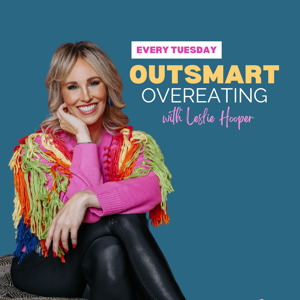


This week I'm super excited to share another client interview with Abi Smith in the UK. In this episode, Abi shares her experience within the program a lifelong dieter who struggled with labeling foods "bad" and chronic yo-yo dieting. After decades of traveling down dead-end roads that left her more frustrated than before, she joined my coaching program not only lose weight but to learn how to drop the food obsession and eat like a "naturally thin" person. Topics discussed: ▪️What it's like to go from an "all-or-nothing" mindset to someone who effortlessly keeps treats in the home without feeling out of control. ▪️Abi shares some of her biggest challenges within the program and how it helped her in other areas of her life. ▪️After years of wasting money on unsuccessful weight loss attempts, most people will be skeptical of a psychology-based program like FWB...but Abi wasn't. Why? ▪️Abi opens up about why she had the courage to join and how focusing on her relationship with food instead of scale weight was the change she didn't know she needed. ▪️At what point in the program the habits began to *click* for her and physical changes became more apparent. ▪️What Abi wishes she had known at the beginning of the program and her best piece of advice for those who are afraid to stop calorie counting and practice mindful eating. Please give this week's episode a listen! Abi was an excellent guest who provided a ton of valuable insights that you can benefit from. For other topics, like motivation, binge eating, procrastination, and self-sabotage, check out previous episodes.
This week's episode of the Fat Murder Podcast is all about optimizing your success through being coachable.
A person who is coachable is not only receptive to receiving feedback, but they actually go the extra mile to seek out constructive criticism in an effort to improve their performance. The world's most successful people view the input of others as a valuable tool in their arsenal and thrive off of new insights and perspectives. However, in the world of dieting, people are as married to their weight loss strategies as they are to their political or religious beliefs -- which can make it difficult to coach these individuals into a new way of thinking, and ultimately, being. In this week's episode you'll learn:
On today's episode of the Fat Murder Podcast, Rog Law, joins me as we discuss: Are you focusing on what's going well or what's going wrong?
As humans, we're guilty of focusing on what's wrong in our lives. It's natural. You can blame this nifty little habit on your reptilian brain whose sole purpose is to protect you and help you survive.
Naturally, this reptilian brain it's going to bring to your attention anything that is potentially "threatening" to your survival. But since this is the safest time there has ever been to be alive, our reptilian brains are getting a little bored, feeling a little useless, and having to look for problems elsewhere.
And that is why we are always so focused on the negative (even if life is actually pretty good)!
Clearly, this habit of constantly noticing what's going wrong is not serving anyone because whatever we focus on expands. So it's time to overcome this bad habit and experience a more beneficial perspective about our lives. Which will lead us to better, more badass, more abundant lives!
In this episode, you'll learn:
Focusing on what's going well will help you achieve your goals because there's plenty of evidence that happier people get more done (and are also likely to live longer).
So focus on what's going right because it will make you happier, and being happy will make you healthier and more productive. Or just do it because it will make you happier. Isn't that reason enough?
Dr Spencer Nadolsky (obesity specialist) in a recent instagram post:
"Saying the BMI is a useless indicator of health is like saying cholesterol or most other markers we measure are useless indicators of health. We must still evaluate the Whole individual and look at it all in context."
"Body Mass Index" is NOT a worthless measure. It's a quick screening tool that should be used correctly and assessed on an individual level before diagnosing overweight/obesity vs. muscular athletes vs. non athletes or elderly with sarcopenia)"
"A lean young male with a BMI of 27 is very different from an abdominally obese post-menopausal female with the same BMI. BMI doesn't take many things into account, such as muscle mass. If everyone could get their body fat measurements taken via DEXA, doctors would just use that, but that isn't always feasible."
What has been your experience with having your BMI measured at the doctor's office? I'd love to hear your story and how this practice was harmful or helpful to you. What are your thoughts on BMI for determining one's health?
The problem with labeling foods "good" or "bad" is now they've been given life. It stops being a neutral food choice and starts having a moral implication.
In other words, as soon as a food is labeled "bad," we begin to feel bad for making the decision to eat it. And often that guilt spirals into eating MORE food to self-soothe or numb the emotional response. Join co-coach, Steph Miramontes, and me as we discuss why it's so hard to drop the food labels when they feel true. Other topics covered in today's episode:But, I'm encouraging you to develop more awareness around the labels that you put around foods. Notice how your thoughts and interactions with the food changes as you rewrite the narrative and drop the food guilt.
Sometimes I ask clients to write down a list of foods they consider to be 'good' or 'bad'. Then, see if you can come up with other words to describe them that have nothing to do with their moral value.
Focus instead on how the various foods make you feel. From there, see if you can try such foods with a different, non-judgment label. How does the experience change?
This week on the Fat Murder Podcast, co-coachi, Eileen Trujillo is back to talk about how to create a life you love, right now. NOT 10 pounds from now, but TODAY.
In this episode we discuss why innate talent, intelligence, and external circumstances only accounts for 25% of our success while the other remaining 75% comes from just a few things. Tune in to hear us talk about:Everyone in your life wins when you bring your best to everyone you interact with. It's not selfish to prioritize your wants and needs. It's attractive. And you'll definitely be someone everyone wants to be around.
This week, I invited co-coach, Eileen Trujillo to join me as we discuss the differences between emotional eating, binge eating, and habitual overeating.
There seems to be a lot of confusion between the three types of eaters, so in this episode we want to provide some clarity to ensure you're following the right plan of action to achieve a specific solution.
If you don't understand the problem, then you may end up spinning your wheels trying to use the wrong tool to "fix" it. So before you can "fix" it, you first have to identify it.
In this episode, you'll learn:
When it comes to lifelong sustainable weight loss, one of the most powerful tools in your arsenal is being present with your food.
Unfortunately, with the advent of the internet and our addiction to being 'busy,' most people eat their meals like they're running the 100 yard dash, and as a result, the only rapid thing that happens, is the expansion of their waistline.
Join Rog Law and me for this week's Fat Murder Podcast episode as we talk about the ultimate weight loss 'hack' -- slowing down. Topics discussed:From the publisher's feed
12,110 Listeners
2,608 Listeners

7,231 Listeners

3,455 Listeners
706 Listeners
7,481 Listeners

3,388 Listeners

3,608 Listeners
3,133 Listeners

7,929 Listeners

27,844 Listeners

28,981 Listeners

18,838 Listeners

3,908 Listeners

63 Listeners