
Sign up to save your podcasts
Or

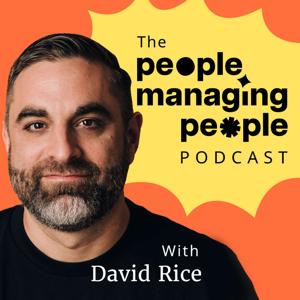
By David Rice
The People Managing People podcast equips forward-thinking leaders to thrive in the AI era—reshaping teams, systems, and strategy without losing what makes work human. Hosted by David Rice, each ep
... more
5
1313 ratings


The podcast currently has 212 episodes available.
The most played episodes among Podcast App listeners.
When people stay quiet at work, organizations lose more than participation. They lose ideas, warnings, customer insight, process improvements, and market intelligence that never make it into the room. Seema Bhansali calls this the silence tax—the hidden cost companies pay when their environments make self-censorship the safer option. In this episode, Seema joins David Rice to unpack why “speak up” advice misses the real problem. Employee voice isn’t simply a confidence issue; it’s shaped by systems, social risk, management behavior, and the environments leaders create. They also explore why this matters even more as companies adopt AI, and why communication needs to be treated less like a soft skill and more like an operational capability tied to performance. Related Links:Join the People Managing People CommunitySubscribe to the newsletter to get our latest articles and podcastsCheck out this episode’s sponsor: TeamPulseConnect with Seema on LinkedInCheck out evolvEQ StrategiesSupport the show

AI transformation has a funny way of becoming an organizational X-ray. The companies getting real value from it aren’t necessarily the ones buying the most tools or burning the most tokens. They’re the ones that understand what they’re trying to accomplish, what excellence looks like, and which problems are actually worth solving. In this episode of People Managing People, David Rice speaks with Zapier’s Chief People and AI Transformation Officer, Brandon Sammut, about why AI ROI starts with organizational clarity, how to build experimentation that survives contact with actual workloads, and why adoption eventually needs to give way to impact. They also explore AI coaching, the growing value of judgment and wisdom, and why the best employers may increasingly be defined by how much more capable people become while working there. Related Links:Join the People Managing People CommunitySubscribe to the newsletter to get our latest articles and podcastsConnect with Brandon on LinkedInCheck out ZapierSupport the show
HR has been told for years to “speak the language of the business,” usually as code for proving it deserves to be in the room. But Dr. Shindale Seale makes a stronger case: this isn’t about self-defense. It’s about leadership. If disengagement, poor management, weak culture, and badly handled transformation all carry measurable financial costs, HR needs to connect the human consequences to the numbers executives use to make decisions. In this episode, host David Rice and Dr. Seale unpack the “disengagement tax,” why engagement metrics without business impact can become little more than dashboard theater, and what it actually means for HR to become bilingual. They also explore the impossible job organizations have created for managers, why AI tends to amplify the culture it lands in, and whether the CHRO role is big enough for the human side of the transformation ahead. Related Links:Join the People Managing People CommunitySubscribe to the newsletter to get our latest articles and podcastsConnect with Dr. Shindale on LinkedInCheck out SEADE Coaching & ConsultingSupport the show
There are two ways the AI transformation of work can go. We can hand the keys to the efficiency obsessives and spend the next decade trying to engineer the humanity out of organizations. Or HR can recognize that understanding motivation, organizational design, and how people actually experience work is suddenly a strategic advantage—and start acting like it. Jessica Zwaan, VP of People Strategy and Operations at Leapsome and author of Built For People and Purpose In Work, joins David Rice to talk about why HR has the raw materials to lead this moment, but also some baggage to lose. They get into purpose washing, why not everyone needs a calling disguised as a job, what AI means for early-career development, and why designing better work requires considerably more than putting a mission statement on the wall and hoping everyone believes it. Related Links:Join the People Managing People CommunitySubscribe to the newsletter to get our latest articles and podcastsConnect with Jessica on LinkedInVisit LeapsomeSupport the show
Nobody sets out to build a workforce surveillance system. It usually arrives dressed up as optimization, productivity, wellness, or efficiency. But as AI makes it possible to monitor everything from keystrokes and mouse movements to emotions and physical behavior, the line between legitimate measurement and invasive surveillance gets harder to ignore. In this episode, I speak with Lynn Parramore, Director of Special Projects at the Institute for New Economic Thinking, about what gets lost when leaders assume everything valuable at work can be measured. We dig into why constant monitoring erodes trust, how algorithms strip context from human behavior, why younger workers have good reason to be skeptical of AI, and why leaders need to get philosophical—not just practical—about where this technology belongs. Related Links:Join the People Managing People CommunitySubscribe to the newsletter to get our latest articles and podcastsConnect with Lynn on LinkedInCheck out Lynn’s book — Reading the Sphinx: Ancient Egypt in Nineteenth-Century Literary CultureSupport the show
The podcast currently has 212 episodes available.

43,424 Listeners
1,333 Listeners
142 Listeners

10,790 Listeners
8,583 Listeners
9,051 Listeners
127 Listeners

46,920 Listeners

2,219 Listeners

1,125 Listeners

41,411 Listeners

3,447 Listeners

19,244 Listeners
153 Listeners
376 Listeners