
Sign up to save your podcasts
Or



Based on Podcast App listening data
In a world where AI is eating the routine work and career ladders look more like Escher paintings, what does leadership agility really mean? In this episode, I sit down with David Jones, CEO and Partner at Mercer Assessments, to explore how leaders can ground themselves in productivity, positivity, people, and purpose while rethinking the broken systems we’ve inherited.
We dig into why organizations don’t actually have a leadership shortage—they have a followership problem. From the dark matter of astronomy to the dark matter of organizational life, David makes the case that 93% of performance depends on the people who don’t sit in the spotlight. We also examine how AI is reshaping careers, why assessments should be GPS systems for skills, and why employers may need to stop outsourcing education to institutions that are years behind reality.
Related Links:
Support the show
We’ve all heard the pitch: “Hybrid work is the future.” But dig beneath the slogans and you’ll find wildly different realities—some thriving, others quietly imploding. In this episode, I sit down with Lynette Caruso, a PhD candidate at Australian National University, to unpack her field research across public and private sectors on what makes hybrid work succeed—or fail.
From the power of casual coffee chats to the pitfalls of hot desking, Lynette shows how flexible policies often collapse under rigid cultures. If you’ve ever wondered why your “flexible” workplace feels anything but, or why your team can’t seem to find its rhythm under hybrid rules, this conversation will help you cut through the noise.
Related Links:
Support the show
We’ve spent the last few years talking about mental health at work like it’s always a crisis—trauma, burnout, damage done. Bryan Power, Head of People at Nextdoor, thinks that framing actually makes the conversation harder. Instead, what if we positioned mental health as something everyone can access, not just people in distress? In this episode, we cut through the jargon and look at resilience, performance, and the everyday practices that actually help people do their best work.
Bryan and I also dig into the cultural pendulum swing from “bring your whole self to work” to “respect my boundaries,” the generational divides shaping expectations around connection, and how AI is reshaping not just jobs, but how leaders set boundaries, communicate, and build culture. Spoiler: the hot takes on AI are everywhere, but the real opportunity isn’t doing more with less—it’s doing more with the same.
Related Links:
Support the show
What happens when an executive quietly outsources performance reviews to ChatGPT? Or when your C-suite is loudly preaching about AI adoption while refusing to touch the tools themselves? In this episode, I sit down with Talk HR to Me columnist and Head of People at Quantum Metric, Alana Fallis, to tackle real listener questions in a live advice-column format.
We dig into the messy realities of AI in the workplace—from misplaced trust in automated reviews, to the awkward theater of “innovation” at the executive level, to the human side of employee fears around automation. And yes, we even unpack the HR dilemma of whether an employee in recovery should be allowed to stock the breakroom fridge with non-alcoholic beer.
Related Links:
Support the show
Layoffs are often treated like a dirty secret—a rushed, impersonal process designed to move people out the door with as little friction as possible. But the way you offboard employees says just as much about your company culture as the way you welcome them in. In this episode, I sit down with Jena Dunay, founder of Recruit the Employer and host of Culture Uncovered, to talk about how organizations can approach layoffs, exits, and alumni relations with dignity—and why that matters more than ever.
We dig into the bad habits that keep companies scrambling at the eleventh hour, the power of communication over cash, and why alumni networks and boomerang employees should be a core part of your talent strategy. Offboarding isn’t just the end of the employee lifecycle—it’s the part that makes the circle whole.
Related Links:
Support the show
If you’ve ever sat through a personality test during hiring and thought, “This feels a bit like corporate astrology”—you’re not wrong. In this episode, I talk with Jason Hreha, Founder & CEO of Persona, about why so many workplace assessments are built on outdated theories and questionable science, and how to separate the gimmicks from the tools that actually help you hire better. We dig into what reliability and predictive validity really mean, why they’re non-negotiables for any credible test, and where most HR teams go wrong in applying behavioral science to talent decisions.
Jason also shares his work on a new leadership-focused assessment that aims to measure two very different—but equally valuable—leadership archetypes: transformational and operational. From structuring interviews to making personality data a meaningful (but not overblown) part of your hiring process, this conversation is a crash course in evidence-based talent evaluation.
Related Links:
Support the show
The word “engagement” gets thrown around a lot—but what does it really mean in today’s workplace? In this candid, first-half conversation with Kamaria Scott, industrial-organizational psychologist and founder of Enetic, we take a hard look at how the definition of engagement has drifted, how the psychological contract between employees and employers has frayed, and why trust is harder to come by in the aftermath of layoffs, AI hype, and corporate euphemisms.
Kamaria brings the receipts. From the history of engagement theory to the real human consequences of gig work and bad layoffs, she unpacks what it means to create work that actually matters—and why loyalty isn’t what it used to be. This episode sets the stage for a broader dialogue about how we redefine value, trust, and meaning in a world of accelerating automation and shrinking safety nets.
Related Links:
Support the show
Most leaders assume that transparency around pay and finances will sow discord or fuel envy. Mel Price is living proof that the opposite is possible. As co-founder and CEO of Work Program Architects, she’s spent the last 15 years running a firm with full salary and financial transparency—by design, not by accident. The result? A company where people understand how money moves, why decisions are made, and how their own work ladders up to business outcomes.
In this episode, we talk about what it really takes to implement radical transparency—from open books and compensation committees to staff-run hiring and contract signing. Mel shares what she's learned from building a distributed leadership model where every employee is given the tools and data to think (and act) like an owner.
Related Links:
Support the show
HR leaders say they want a seat at the table—but too often, they show up without speaking the language. In this episode, David talks with Julie Mahfouz Rezvani, Managing Director of The Orion Group, about the critical gap between HR's people expertise and the commercial acumen needed to drive real business impact. Julie brings clarity to the misunderstood concept of "HR as a cost center," unpacking the ways HR can become indispensable by translating people insights into financial impact.
They dig into the basics: How does your company make money? What's your revenue per employee? And if you can't answer that, why should your CFO listen to you? It's a candid conversation that calls HR professionals to step up, understand the business model, and learn to speak the language of the C-suite—not by mimicking it, but by reframing people problems in business terms.
Related Links:
Support the show
What happens when your mission statement no longer fits the company you're building? For Chase Warrington, Head of Operations at Doist, that question wasn’t rhetorical—it was a radical prompt that reshaped their culture. In this candid, live conversation recorded from the lawn of a remote work conference in Austin, Chase and David Rice unpack how purpose gets defined, tested, and redefined in remote-first companies—and why so many organizations still get it wrong.
We dig into why aligning your purpose with actual customer needs isn’t just a branding exercise—it’s a cultural imperative. Chase shares how Doist uses radical candor, documented values, and consistent reinforcement to build a culture where purpose isn't wallpaper. It’s a mirror. Whether you’re trying to refresh your mission statement or just make it mean something again, this episode offers a grounded look at how to move from performance to authenticity.
Related Links:
Support the show
From the publisher's feed
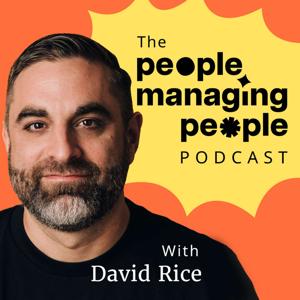
The People Managing People podcast equips forward-thinking leaders to thrive in the AI era—reshaping teams, systems, and strategy without losing what makes work human. Hosted by David Rice, each…

43,356 Listeners
1,338 Listeners

147 Listeners

10,651 Listeners

8,307 Listeners

9,065 Listeners
124 Listeners

46,902 Listeners

2,236 Listeners

1,126 Listeners

41,371 Listeners

3,455 Listeners

19,071 Listeners

154 Listeners
377 Listeners