
Sign up to save your podcasts
Or



What is the importance of philosophy in the 21st century as we enter a post-truth world? How can we reintroduce meaning and uphold moral principles in our world shaken by crises? And what does philosophy teach us about living in harmony with the natural world?
Robert Pippin is the Evelyn Stefansson Nef Distinguished Service Professor at the University of Chicago where he teaches in the College, Committee on Social Thought, and Department of Philosophy. Pippin is widely acclaimed for his scholarship in German idealism as well as later German philosophy, including publications such as Modernism as a Philosophical Problem, and Hegel’s Idealism. In keeping with his interdisciplinary interests, Pippin’s book Henry James and Modern Moral Life explores the intersections between philosophy and literature. Pippin’s most recent published book is The Culmination: Heidegger, German Idealism, and the Fate of Philosophy.
“The Greek Enlightenment introduced the idea of centrality and the priority of rationality in understanding ourselves and our relation to the world. Heidegger wants to move us away from what he thinks has culminated in a kind of dead end. We appear in this world without any instruction manual, we have these finite, corporeal lives that begin in ways- we have no control over and end in ways we often have no control over. The classical conception was that the cosmos was good, because it was open to human interrogation. It allowed itself to be interrogated, so the thing that mattered most of all was knowing, because knowing was the way in which we became at home in the world. Heidegger thought we had prioritized the question of knowledge to such a degree as the primordial relationship to all of reality. He connected this to the kind of predatory stance of contemporary technology, which is essentially destroying the world because it considers the world as just material stuff, which we can understand and manipulate for our own ends. He thinks there's a huge influence in the original understanding of being as intelligibility that eventually has cut us off from all sources of meaning in a possible life other than this successful control of the environment for our own satisfaction.”
https://socialsciences.uchicago.edu/directory/Robert-Pippin
https://press.uchicago.edu/ucp/books/book/chicago/C/bo208042246.html
www.creativeprocess.info
www.oneplanetpodcast.org
IG www.instagram.com/creativeprocesspodcast
“We've got four billion years of biological accidents that created all of the intricate aspects of everything about life, including consciousness. And it's about what's going on in each of those cells at the time that allows it to be connected to everything else and for the information to be understood as it's being exchanged between those things with their multifaceted, deep, complex processing.”
Joseph LeDoux is a Professor of Neural Science at New York University at NYU and was Director of the Emotional Brain Institute. His research primarily focuses on survival circuits, including their impacts on emotions, such as fear and anxiety. He has written a number of books in this field, including The Four Realms of Existence: A New Theory of Being Human, The Emotional Brain, Synaptic Self, Anxious, and The Deep History of Ourselves. LeDoux is also the lead singer and songwriter of the band The Amygdaloids.
www.joseph-ledoux.com
www.cns.nyu.edu/ebi
https://amygdaloids.net
www.hup.harvard.edu/books/9780674261259
www.creativeprocess.info
www.oneplanetpodcast.org
IG www.instagram.com/creativeprocesspodcast
How does the brain process emotions? How are emotional memories formed and stored in the brain, and how do they influence behavior, perception, and decision-making? How does music help us understand our emotions, memories, and the nature of consciousness?
Joseph LeDoux is a Professor of Neural Science at New York University at NYU and was Director of the Emotional Brain Institute. His research primarily focuses on survival circuits, including their impacts on emotions, such as fear and anxiety. He has written a number of books in this field, including The Four Realms of Existence: A New Theory of Being Human, The Emotional Brain, Synaptic Self, Anxious, and The Deep History of Ourselves. LeDoux is also the lead singer and songwriter of the band The Amygdaloids.
“We've got four billion years of biological accidents that created all of the intricate aspects of everything about life, including consciousness. And it's about what's going on in each of those cells at the time that allows it to be connected to everything else and for the information to be understood as it's being exchanged between those things with their multifaceted, deep, complex processing.”
www.joseph-ledoux.com
www.cns.nyu.edu/ebi
https://amygdaloids.net
www.hup.harvard.edu/books/9780674261259
www.creativeprocess.info
www.oneplanetpodcast.org
IG www.instagram.com/creativeprocesspodcast
Music courtesy of Joseph LeDoux
It is said that people never die until the last person says their name. In memory of the writer and director Paul Auster, who passed away this week, we're sharing this conversation we had back in 2017 after the publication of his novel 4 3 2 1. Auster reflects on his body of work, life, and creative process.
Paul Auster was the bestselling author of Winter Journal, Sunset Park, Invisible, The Book of Illusions, and The New York Trilogy, among many other works. He has been awarded the Prince of Asturias Award for Literature, the Prix Médicis étranger, an Independent Spirit Award, and the Premio Napoli. He is a member of the American Academy of Arts and Letters, the American Academy of Arts and Sciences, and is a Commandeur de l'Ordre des Arts et des Lettres. He has also penned several screenplays for films such as Smoke (1995), as well as Lulu on the Bridge (1998) and The Inner Life of Martin Frost (2007), which he also directed.
“But what happens is a space is created. And maybe it’s the only space of its kind in the world in which two absolute strangers can meet each other on terms of absolute intimacy. I think this is what is at the heart of the experience and why once you become a reader that you want to repeat that experience, that very deep total communication with that invisible stranger who has written the book that you’re holding in your hands. And that’s why I think, in spite of everything, novels are not going to stop being written, no matter what the circumstances. We need stories. We’re all human beings, and it’s stories from the moment we’re able to talk.”
We apologize for the quality of the recording since it was not originally meant to be aired as a podcast. Portrait of Paul Auster by Mia Funk, inspired by his novel 4 3 2 1.
www.penguinrandomhouse.com/authors/1045/paul-auster
www.creativeprocess.info
www.oneplanetpodcast.org
IG www.instagram.com/creativeprocesspodcast
“If you look at meditation, and you strip away the belief system, you find that essentially every meditation is attention training. It might be bringing your mind back to a mantra; some sound, or to your breath, or to a particular attentional stance. I like mindfulness of breathing, where you pay full attention to your in-breath, and to your out-breath, and then the next breath, the in-breath, and the out-breath. At some point, your mind is going to wander off. That's the way our minds are wired. But here's the key: When you notice your mind has wandered and you bring it back to the point of focus—to the next breath, for example—that's the moment of mindfulness. Attention training of this kind is really a beautiful avenue into the optimal state, where you're fully focused on what you're doing. And in this state, which is one of high creativity, people experience themselves as part of a web of connection. The connection may be to the artists who have gone before you, whose work you imbibe and build on, or the writers whose thoughts you're building on, or the people who are doing this with you, in whatever context that might be. Thich Nhat Hanh calls this interbeing; being fully connected and interdependent. I remember a dialogue from years ago, in the 80s, with the Dalai Lama and a group of psychologists, where he said: In my languages, Tibetan and Sanskrit, the word for compassion implies for yourself as well as for others. In English, it only focuses on others. He said, you need a new word in the English language—self compassion. Today, there's a rather robust field of research on that, but the Dalai Lama saw that gap way before, because he realized that our view of compassion didn't include first taking care of ourselves.”
Daniel Goleman is an American psychologist, author, and science journalist. Before becoming an author, Goleman was a science reporter for the New York Times for 12 years, covering psychology and the human brain. In 1995, Goleman published Emotional Intelligence, a New York Times bestseller. In his newly published book Optimal, Daniel Goleman discusses how people can enter an optimal state of high performance without facing symptoms of burnout in the workplace.
www.danielgoleman.info
www.harpercollins.com/products/optimal-daniel-golemancary-cherniss?variant=41046795288610
www.penguinrandomhouse.com/books/69105/emotional-intelligence-by-daniel-goleman/
www.creativeprocess.info
www.oneplanetpodcast.org
IG www.instagram.com/creativeprocesspodcast
How can we enhance our emotional intelligence and avoid burnout in a changing world? How can we regain focus and perform in an optimal state? What do we mean by ecological intelligence?
Daniel Goleman is an American psychologist, author, and science journalist. Before becoming an author, Goleman was a science reporter for the New York Times for 12 years, covering psychology and the human brain. In 1995, Goleman published Emotional Intelligence, a New York Times bestseller. In his newly published book Optimal, Daniel Goleman discusses how people can enter an optimal state of high performance without facing symptoms of burnout in the workplace.
“If you look at meditation, and you strip away the belief system, you find that essentially every meditation is attention training. It might be bringing your mind back to a mantra; some sound, or to your breath, or to a particular attentional stance. I like mindfulness of breathing, where you pay full attention to your in-breath, and to your out-breath, and then the next breath, the in-breath, and the out-breath. At some point, your mind is going to wander off. That's the way our minds are wired. But here's the key: When you notice your mind has wandered and you bring it back to the point of focus—to the next breath, for example—that's the moment of mindfulness. Attention training of this kind is really a beautiful avenue into the optimal state, where you're fully focused on what you're doing. And in this state, which is one of high creativity, people experience themselves as part of a web of connection. The connection may be to the artists who have gone before you, whose work you imbibe and build on, or the writers whose thoughts you're building on, or the people who are doing this with you, in whatever context that might be. Thich Nhat Hanh calls this interbeing; being fully connected and interdependent. I remember a dialogue from years ago, in the 80s, with the Dalai Lama and a group of psychologists, where he said: In my languages, Tibetan and Sanskrit, the word for compassion implies for yourself as well as for others. In English, it only focuses on others. He said, you need a new word in the English language—self compassion. Today, there's a rather robust field of research on that, but the Dalai Lama saw that gap way before, because he realized that our view of compassion didn't include first taking care of ourselves.”
www.danielgoleman.info
www.harpercollins.com/products/optimal-daniel-golemancary-cherniss?variant=41046795288610
www.penguinrandomhouse.com/books/69105/emotional-intelligence-by-daniel-goleman/
www.creativeprocess.info
www.oneplanetpodcast.org
IG www.instagram.com/creativeprocesspodcast
“It's important to imagine, to keep imagining, a world that is free from colonialism, from oppression, from exploitation, also expropriation of nature. And unfortunately this world is not sustainable—we are not living in that kind of world today. But if we want to see the world for our next generation for the future, we need to pass the torch and ask them to imagine, and then perhaps that way the struggle will continue.”
Intan Paramaditha is a writer and an academic. Her novel The Wandering (Harvill Secker/ Penguin Random House UK), translated from the Indonesian language by Stephen J. Epstein, was nominated for the Stella Prize in Australia and awarded the Tempo Best Literary Fiction in Indonesia, English PEN Translates Award, and PEN/ Heim Translation Fund Grant from PEN America. She is the author of the short story collection Apple and Knife, the editor of Deviant Disciples: Indonesian Women Poets, part of the Translating Feminisms series of Tilted Axis Press and the co-editor of The Routledge Companion to Asian Cinemas (forthcoming 2024). Her essay, “On the Complicated Questions Around Writing About Travel,” was selected for The Best American Travel Writing 2021. She holds a Ph.D. from New York University and teaches media and film studies at Macquarie University, Sydney.
https://intanparamaditha.com
www.penguinrandomhouse.ca/books/626055/the-wandering-by-intan-paramaditha/9781787301184
www.creativeprocess.info
www.oneplanetpodcast.org
IG www.instagram.com/creativeprocesspodcast
How are writing and travel vehicles for understanding? How can we expand the literary canon to include other voices, other cultures, other experiences of the world?
Intan Paramaditha is a writer and an academic. Her novel The Wandering (Harvill Secker/ Penguin Random House UK), translated from the Indonesian language by Stephen J. Epstein, was nominated for the Stella Prize in Australia and awarded the Tempo Best Literary Fiction in Indonesia, English PEN Translates Award, and PEN/ Heim Translation Fund Grant from PEN America. She is the author of the short story collection Apple and Knife, the editor of Deviant Disciples: Indonesian Women Poets, part of the Translating Feminisms series of Tilted Axis Press and the co-editor of The Routledge Companion to Asian Cinemas (forthcoming 2024). Her essay, “On the Complicated Questions Around Writing About Travel,” was selected for The Best American Travel Writing 2021. She holds a Ph.D. from New York University and teaches media and film studies at Macquarie University, Sydney.
“It's important to imagine, to keep imagining, a world that is free from colonialism, from oppression, from exploitation, also expropriation of nature. And unfortunately this world is not sustainable—we are not living in that kind of world today. But if we want to see the world for our next generation for the future, we need to pass the torch and ask them to imagine, and then perhaps that way the struggle will continue.”
https://intanparamaditha.com
www.penguinrandomhouse.ca/books/626055/the-wandering-by-intan-paramaditha/9781787301184
www.creativeprocess.info
www.oneplanetpodcast.org
IG www.instagram.com/creativeprocesspodcast
Environmentalists, writers, artists, activists, and public policy makers explore the interconnectedness of living beings and ecosystems. They highlight the importance of conservation, promote climate education, advocate for sustainable development, and underscore the vital role of creative and educational communities in driving positive change.
00:00 "The Conditional" by U.S. Poet Laureate Ada Limón
01:27 The Secret Language of Animals: Ingrid Newkirk, President of PETA
03:03 A Love Letter to the Living World: Carl Safina, Ecologist & Author
04:11 Exploring the Mysteries of Soil and Coral Reefs: Merlin Sheldrake, Biologist, Author of Entangled Life
04:47 Exploring Coral Reefs: Richard Vevers, Founder of The Ocean Agency
05:56 The Importance of Climate Education: Kathleen Rogers, President of EarthDay.org
07:02 The Timeless Wisdom of Turtles: Sy Montomery, Naturalist & Author
07:38 Optimism in the Face of Environmental Challenges: Richard Vevers
08:32 Urban Solutions for a Sustainable Future: Paula Pinho, Director, Just Transition, Consumers, Energy Efficiency & Innovation, European Commission
08:57 The Circular Economy: Walter Stahel, Founder & Director of the Product-Life Institute
09:39 The Power of Speaking Out for Sustainability: Paula Pinho
10:16 Empowering the Next Generation Through Education: Jeffrey Sachs, President of the UN Sustainable Development Solutions Network
www.creativeprocess.info
www.oneplanetpodcast.org
IG www.instagram.com/creativeprocesspodcast
www.maxrichtermusic.com
https://studiorichtermahr.com
Max Richter’s music featured in this episode are “On the Nature of Daylight” from The Blue Notebooks, “Path 19: Yet Frailest” from Sleep.
Music is courtesy of Max Richter, Universal Music Enterprises, and Mute Song.
“As technology becomes more dominant, the arts become ever more important for us to stay in touch the things that the sciences can't tackle. What it's actually like to be a person? What's actually important? We can have this endless progress inside this capitalist machine for greater wealth and longer life and more happiness, according to some metric. Or we can try and quantify society and push it forward. Ultimately, we all have to decide what's important to us as humans, and we need the arts to help with that. So, I think what's important really is just exposing ourselves to as many different ideas as we can, being open-minded, and trying to learn about all facets of life so that we can understand each other as well. And the arts is an essential part of that.”
How is being an artist different than a machine that is programmed to perform a set of actions? How can we stop thinking about artworks as objects, and start thinking about them as triggers for experiences? In this conversation with Max Cooper, we discuss the beauty and chaos of nature and the exploration of technology music and consciousness.
Max Cooper is a musician with a PhD in computational biology. He integrates electronic music with immersive video projections inspired by scientific exploration. His latest project, Seme, commissioned by the Salzburg Easter Festival, merges Italian musical heritage with contemporary techniques, was also performed at the Barbican in London.
He supplied music for a video narrated by Greta Thunberg and Pope Francis for COP26.
In 2016, Cooper founded Mesh, a platform to explore the intersection of music, science and art. His Observatory art-house installation is on display at Kings Cross until May 1st.
https://maxcooper.net
https://osterfestspiele.at/en/programme/2024/electro-2024
https://meshmeshmesh.net
www.kingscross.co.uk/event/the-observatory
The music featured on this episode was Palestrina Sicut, Cardano Circles, Fibonacci Sequence, Scarlatti K141. Music is from Seme and is courtesy of Max Cooper.
www.creativeprocess.info
www.oneplanetpodcast.org
IG www.instagram.com/creativeprocesspodcast
From the publisher's feed
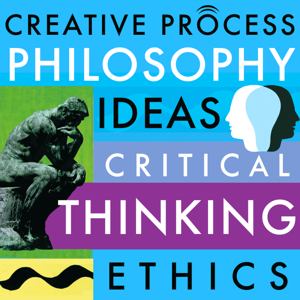
Philosophy episodes of the popular The Creative Process podcast. We speak to philosophers, writers, educators, spiritual leaders, environmentalists, bioethicists, artists & creative thinkers in other. disciplines To listen to ALL arts & education episodes of “The Creative Process · Arts, Culture & Society”, you’ll find our main podcast on Apple: tinyurl.com/thecreativepod, Spotify: tinyurl.com/thecreativespotify, or wherever you get your podcasts!
Exploring the fascinating minds of creative people. Conversations with writers, artists & creative thinkers across the Arts & STEM. We discuss their life, work & artistic practice. Winners of Oscar, Emmy, Tony, Pulitzer, leaders & public figures share real experiences & offer valuable insights. Notable guests and participating museums and organizations include: Academy of Motion Picture Arts & Sciences, Neil Patrick Harris, Smithsonian, Roxane Gay, Musée Picasso, EARTHDAY.ORG, Neil Gaiman, UNESCO, Joyce Carol Oates, Mark Seliger, Acropolis Museum, Hilary Mantel, Songwriters Hall of Fame, George Saunders, The New Museum, Lemony Snicket, Pritzker Architecture Prize, Hans-Ulrich Obrist, Serpentine Galleries, Joe Mantegna, PETA, Greenpeace, EPA, Morgan Library & Museum, and many others.
The interviews are hosted by founder and creative educator Mia Funk with the participation of students, universities, and collaborators from around the world. These conversations are also part of our traveling exhibition. www.creativeprocess.info
For The Creative Process podcasts from Seasons 1, 2, 3 visit: tinyurl.com/creativepod or creativeprocess.info/interviews-page-1, which has our complete directory of interviews, transcripts, artworks, and details about ways to get involved.
INSTAGRAM @creativeprocesspodcast

43,324 Listeners
11,559 Listeners
15,237 Listeners
10,718 Listeners
2,112 Listeners
204 Listeners
864 Listeners
297 Listeners
1,605 Listeners
1,538 Listeners
830 Listeners
314 Listeners
276 Listeners
456 Listeners

15,917 Listeners
150 Listeners
26 Listeners
55 Listeners
47 Listeners
35 Listeners

7 Listeners
89 Listeners
33 Listeners
13 Listeners
7 Listeners
18 Listeners
33 Listeners
40 Listeners
81 Listeners
11 Listeners
35 Listeners
2 Listeners
3 Listeners

440 Listeners