
Sign up to save your podcasts
Or



How can we make the radical social changes needed to address the climate crisis? What kind of large ecological disaster or mass mobilization in the streets needs to take place before we take meaningful climate action?
Dana R. Fisher is the Director of the Center for Environment, Community, & Equity and Professor in the School of International Service at American University. Fisher’s research focuses on questions related to democracy, civic engagement, activism, and climate politics. Current projects include studying political elites’ responses to climate change, and the ways federal service corps programs in the US are integrating climate into their work. She is a self-described climate-apocalyptic optimist and co-developed the framework of AnthroShift to explain how social actors are reconfigured in the aftermath of widespread perceptions and experiences of risk. Her seventh book is Saving Ourselves: From Climate Shocks to Climate Action.
“There's been some interesting research recently about the fact that we don't really know how many people are losing lives because of extreme heat, right? Extreme events are climate change-exacerbated events, which I call climate shocks in the book. We haven't been counting that. I think we will start counting it and we'll get a better sense of the trends, but there's no doubt that the numbers are going up, even though we aren't sure about the exact numbers globally. We need a lot more people pushing back against power, particularly given the way that fossil fuel interests are continuing to push greenwash to try to continue to affect decision-making. The Trump administration is trying very hard to attract funds from oil companies with the promise that all regulations will be gone. And fossil fuel interests are supporting elected officials and pushing for decision-making that reflects their interests, which is not in the interest of the planet and certainly not in the interest of the general public. I know at the most recent COP, OPEC had its own pavilion. You would have never seen that back in the 1990s, but nowadays, they are trying to present themselves as a pathway towards the other side of the climate crisis, which is just absolutely not true.”
https://danarfisher.com
https://cece.american.edu
www.acc.gov
www.creativeprocess.info
www.oneplanetpodcast.org
IG www.instagram.com/creativeprocesspodcast
Credit Sarah Fillman from FillmanFoto, 2023
“There’s a lot of greenwashing that's going on these days. It is great marketing. And that was really the reason why I wrote this book. I had started to see the patterns. You can start to tell them the companies that are genuinely doing it versus the companies that are just talking about it. So that was one indicator, you know, a company that would send out a press release about their goals and what they anticipated to do in the next 5 to 10 years was very different from companies who had said, you know what, this is what we've achieved. Regenerative started coming into the lexicon, the term in 2017, 2018. And regenerative means to regenerate, means to bring life into something. To sustain means to keep the status quo. And regenerative looks at things from a very holistic lens. You know, it's like if you're going to run a regenerative farm, it's all the different components of the farm and the ecosystem ideally come within the ecosystem.”
Esha Chhabra has written for national and international publications over the last 15 years, focusing on global development, the environment, and the intersection of business and impact. Her work has been featured in The New York Times, The Economist, The Guardian, and other publications. She is the author of Working to Restore: Harnessing the Power of Business to Heal the Earth.
www.eshachhabra.com
www.beacon.org/Working-to-Restore-P2081.aspx
www.creativeprocess.info
www.oneplanetpodcast.org
IG www.instagram.com/creativeprocesspodcast
What is regenerative business? How can we create a business mindset that addresses social, economic and environmental issues?
Esha Chhabra has written for national and international publications over the last 15 years, focusing on global development, the environment, and the intersection of business and impact. Her work has been featured in The New York Times, The Economist, The Guardian, and other publications. She is the author of Working to Restore: Harnessing the Power of Business to Heal the Earth.
“There’s a lot of greenwashing that's going on these days. It is great marketing. And that was really the reason why I wrote this book. I had started to see the patterns. You can start to tell them the companies that are genuinely doing it versus the companies that are just talking about it. So that was one indicator, you know, a company that would send out a press release about their goals and what they anticipated to do in the next 5 to 10 years was very different from companies who had said, you know what, this is what we've achieved. Regenerative started coming into the lexicon, the term in 2017, 2018. And regenerative means to regenerate, means to bring life into something. To sustain means to keep the status quo. And regenerative looks at things from a very holistic lens. You know, it's like if you're going to run a regenerative farm, it's all the different components of the farm and the ecosystem ideally come within the ecosystem.”
www.eshachhabra.com
www.beacon.org/Working-to-Restore-P2081.aspx
www.creativeprocess.info
www.oneplanetpodcast.org
IG www.instagram.com/creativeprocesspodcast
“One very interesting question is what might we learn from recent developments in AI about how humans learn and process language. The full story is a little bit more complicated because, of course, humans don't learn from the same kind of data as language models. Language models learn from this internet-scraped data that includes New York Times articles, blog posts, thousands of books, a bunch of programming code, and so on. That's very different from the kind of linguistic input that children learn from, which is child-directed speech from parents and relatives that’s much simpler linguistically. That said, there is a lot of interesting research trying to train smaller language models on data that is similar to the kind of input that a child might receive when they are learning language. You can, for example, strap a head mounted camera on a young child's head for a few hours every day and record whatever auditory information the child has access to, which would include any language spoken around or directed at the child. You can then transcribe that, and use that data set to train a language model on the child-directed speech that a real human would have received during their development. So some artificial models are learning from child-directed speech, and that might eventually go some way towards advancing debates about what scientists and philosophers call “nativism versus empiricism” with respect to language acquisition—the nature/nurture debate: Are we born with a universal innate grammar that enables us to learn the rules of language, as linguists like Noam Chomsky have argued, or can we learn language and its grammatical rules just from raw data, just from hearing and being exposed to language as children?If these language models that are trained from this kind of realistic datasets of child-directed speech manage to learn grammar, to learn how to use language in the way children do, then that might put some pressure on the nativist claim that there is this innate component to language learning that is part of our DNA, as opposed to just learning from exposure to language itself.”
Dr. Raphaël Millière is Assistant Professor in Philosophy of AI at Macquarie University in Sydney, Australia. His research primarily explores the theoretical foundations and inner workings of AI systems based on deep learning, such as large language models. He investigates whether these systems can exhibit human-like cognitive capacities, drawing on theories and methods from cognitive science. He is also interested in how insights from studying AI might shed new light on human cognition. Ultimately, his work aims to advance our understanding of both artificial and natural intelligence.
https://raphaelmilliere.com
https://researchers.mq.edu.au/en/persons/raphael-milliere
www.creativeprocess.info
www.oneplanetpodcast.org
IG www.instagram.com/creativeprocesspodcast
How can we ensure that AI is aligned with human values? What can AI teach us about human cognition and creativity?
Dr. Raphaël Millière is Assistant Professor in Philosophy of AI at Macquarie University in Sydney, Australia. His research primarily explores the theoretical foundations and inner workings of AI systems based on deep learning, such as large language models. He investigates whether these systems can exhibit human-like cognitive capacities, drawing on theories and methods from cognitive science. He is also interested in how insights from studying AI might shed new light on human cognition. Ultimately, his work aims to advance our understanding of both artificial and natural intelligence.
“One very interesting question is what might we learn from recent developments in AI about how humans learn and process language. The full story is a little bit more complicated because, of course, humans don't learn from the same kind of data as language models. Language models learn from this internet-scraped data that includes New York Times articles, blog posts, thousands of books, a bunch of programming code, and so on. That's very different from the kind of linguistic input that children learn from, which is child-directed speech from parents and relatives that’s much simpler linguistically. That said, there is a lot of interesting research trying to train smaller language models on data that is similar to the kind of input that a child might receive when they are learning language. You can, for example, strap a head mounted camera on a young child's head for a few hours every day and record whatever auditory information the child has access to, which would include any language spoken around or directed at the child. You can then transcribe that, and use that data set to train a language model on the child-directed speech that a real human would have received during their development. So some artificial models are learning from child-directed speech, and that might eventually go some way towards advancing debates about what scientists and philosophers call “nativism versus empiricism” with respect to language acquisition—the nature/nurture debate: Are we born with a universal innate grammar that enables us to learn the rules of language, as linguists like Noam Chomsky have argued, or can we learn language and its grammatical rules just from raw data, just from hearing and being exposed to language as children?If these language models that are trained from this kind of realistic datasets of child-directed speech manage to learn grammar, to learn how to use language in the way children do, then that might put some pressure on the nativist claim that there is this innate component to language learning that is part of our DNA, as opposed to just learning from exposure to language itself.”
https://raphaelmilliere.com
https://researchers.mq.edu.au/en/persons/raphael-milliere
www.creativeprocess.info
www.oneplanetpodcast.org
IG www.instagram.com/creativeprocesspodcast
“It gets back to this core question. I just wish I was a young scientist going into this because that's the question to answer: Why AI comes out with what it does. That's the burning question. It's like it's bigger than the origin of the universe to me as a scientist, and here's the reason why. The origin of the universe, it happened. That's why we're here. It's almost like a historical question asking why it happened. The AI future is not a historical question. It's a now and future question.
I'm a huge optimist for AI, actually. I see it as part of that process of climbing its own mountain. It could do wonders for so many areas of science, medicine. When the car came out, the car initially is a disaster. But you fast forward, and it was the key to so many advances in society. I think it's exactly the same as AI. The big challenge is to understand why it works. AI existed for years, but it was useless. Nothing useful, nothing useful, nothing useful. And then maybe last year or something, now it's really useful. There seemed to be some kind of jump in its ability, almost like a shock wave. We're trying to develop an understanding of how AI operates in terms of these shockwave jumps. Revealing how AI works will help society understand what it can and can't do and therefore remove some of this dark fear of being taken over. If you don't understand how AI works, how can you govern it? To get effective governance, you need to understand how AI works because otherwise you don't know what you're going to regulate.”
How can physics help solve messy, real world problems? How can we embrace the possibilities of AI while limiting existential risk and abuse by bad actors?
Neil Johnson is a physics professor at George Washington University. His new initiative in Complexity and Data Science at the Dynamic Online Networks Lab combines cross-disciplinary fundamental research with data science to attack complex real-world problems. His research interests lie in the broad area of Complex Systems and ‘many-body’ out-of-equilibrium systems of collections of objects, ranging from crowds of particles to crowds of people and from environments as distinct as quantum information processing in nanostructures to the online world of collective behavior on social media. https://physics.columbian.gwu.edu/neil-johnson https://donlab.columbian.gwu.edu
www.creativeprocess.infowww.oneplanetpodcast.org IG www.instagram.com/creativeprocesspodcast
How can physics help solve messy, real world problems? How can we embrace the possibilities of AI while limiting existential risk and abuse by bad actors?
Neil Johnson is a physics professor at George Washington University. His new initiative in Complexity and Data Science at the Dynamic Online Networks Lab combines cross-disciplinary fundamental research with data science to attack complex real-world problems. His research interests lie in the broad area of Complex Systems and ‘many-body’ out-of-equilibrium systems of collections of objects, ranging from crowds of particles to crowds of people and from environments as distinct as quantum information processing in nanostructures to the online world of collective behavior on social media.
“It gets back to this core question. I just wish I was a young scientist going into this because that's the question to answer: Why AI comes out with what it does. That's the burning question. It's like it's bigger than the origin of the universe to me as a scientist, and here's the reason why. The origin of the universe, it happened. That's why we're here. It's almost like a historical question asking why it happened. The AI future is not a historical question. It's a now and future question.
I'm a huge optimist for AI, actually. I see it as part of that process of climbing its own mountain. It could do wonders for so many areas of science, medicine. When the car came out, the car initially is a disaster. But you fast forward, and it was the key to so many advances in society. I think it's exactly the same as AI. The big challenge is to understand why it works. AI existed for years, but it was useless. Nothing useful, nothing useful, nothing useful. And then maybe last year or something, now it's really useful. There seemed to be some kind of jump in its ability, almost like a shock wave. We're trying to develop an understanding of how AI operates in terms of these shockwave jumps. Revealing how AI works will help society understand what it can and can't do and therefore remove some of this dark fear of being taken over. If you don't understand how AI works, how can you govern it? To get effective governance, you need to understand how AI works because otherwise you don't know what you're going to regulate.”
https://physics.columbian.gwu.edu/neil-johnsonhttps://donlab.columbian.gwu.edu
www.creativeprocess.infowww.oneplanetpodcast.org IG www.instagram.com/creativeprocesspodcast
“We actually do need these animals on the landscape, and we're going to protect them and restore them and help their populations increase. And so, to me, beavers are proof that what we're doing as conservationists is not futile, right? That there really is reason for hope and optimism, which beavers demonstrate. I think that's a really important lesson for young people to hear is that you're not just entering this world of eco-anxiety and climate change and depression. There are some really hopeful wildlife stories out there, and you can be part of that future.”
Ben Goldfarb is a conservation journalist. He is the author of Crossings: How Road Ecology Is Shaping The Future of Our Planet, named one of the best books of 2023 by the New York Times, and Eager: The Surprising, Secret Life of Beavers and Why They Matter, winner of the 2019 PEN/E.O. Wilson Literary Science Writing Award.
www.bengoldfarb.com
https://wwnorton.com/books/9781324005896
www.chelseagreen.com/product/eager-paperback
www.creativeprocess.info
www.oneplanetpodcast.org
IG www.instagram.com/creativeprocesspodcast
Every year, humanity's footprint casts a deadly shadow over our skies and landscapes, claiming the lives of billions of birds and other wildlife. What is road ecology? How are our roads driving certain species towards extinction? And what can we do about it?
Ben Goldfarb is a conservation journalist. He is the author of Crossings: How Road Ecology Is Shaping The Future of Our Planet, named one of the best books of 2023 by the New York Times, and Eager: The Surprising, Secret Life of Beavers and Why They Matter, winner of the 2019 PEN/E.O. Wilson Literary Science Writing Award.
“We actually do need these animals on the landscape, and we're going to protect them and restore them and help their populations increase. And so, to me, beavers are proof that what we're doing as conservationists is not futile, right? That there really is reason for hope and optimism, which beavers demonstrate. I think that's a really important lesson for young people to hear is that you're not just entering this world of eco-anxiety and climate change and depression. There are some really hopeful wildlife stories out there, and you can be part of that future.”
www.bengoldfarb.com
https://wwnorton.com/books/9781324005896
www.chelseagreen.com/product/eager-paperback
www.creativeprocess.info
www.oneplanetpodcast.org
IG www.instagram.com/creativeprocesspodcast
“The Greek Enlightenment introduced the idea of centrality and the priority of rationality in understanding ourselves and our relation to the world. Heidegger wants to move us away from what he thinks has culminated in a kind of dead end. We appear in this world without any instruction manual, we have these finite, corporeal lives that begin in ways- we have no control over and end in ways we often have no control over. The classical conception was that the cosmos was good, because it was open to human interrogation. It allowed itself to be interrogated, so the thing that mattered most of all was knowing, because knowing was the way in which we became at home in the world. Heidegger thought we had prioritized the question of knowledge to such a degree as the primordial relationship to all of reality. He connected this to the kind of predatory stance of contemporary technology, which is essentially destroying the world because it considers the world as just material stuff, which we can understand and manipulate for our own ends. He thinks there's a huge influence in the original understanding of being as intelligibility that eventually has cut us off from all sources of meaning in a possible life other than this successful control of the environment for our own satisfaction.”
What is the importance of philosophy in the 21st century as we enter a post-truth world? How can we reintroduce meaning and uphold moral principles in our world shaken by crises? And what does philosophy teach us about living in harmony with the natural world?
Robert Pippin is the Evelyn Stefansson Nef Distinguished Service Professor at the University of Chicago where he teaches in the College, Committee on Social Thought, and Department of Philosophy. Pippin is widely acclaimed for his scholarship in German idealism as well as later German philosophy, including publications such as Modernism as a Philosophical Problem, and Hegel’s Idealism. In keeping with his interdisciplinary interests, Pippin’s book Henry James and Modern Moral Life explores the intersections between philosophy and literature. Pippin’s most recent published book is The Culmination: Heidegger, German Idealism, and the Fate of Philosophy.
https://socialsciences.uchicago.edu/directory/Robert-Pippin
https://press.uchicago.edu/ucp/books/book/chicago/C/bo208042246.html
www.creativeprocess.info
www.oneplanetpodcast.org
IG www.instagram.com/creativeprocesspodcast
From the publisher's feed
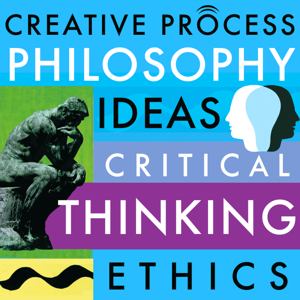
Philosophy episodes of the popular The Creative Process podcast. We speak to philosophers, writers, educators, spiritual leaders, environmentalists, bioethicists, artists & creative thinkers in other. disciplines To listen to ALL arts & education episodes of “The Creative Process · Arts, Culture & Society”, you’ll find our main podcast on Apple: tinyurl.com/thecreativepod, Spotify: tinyurl.com/thecreativespotify, or wherever you get your podcasts!
Exploring the fascinating minds of creative people. Conversations with writers, artists & creative thinkers across the Arts & STEM. We discuss their life, work & artistic practice. Winners of Oscar, Emmy, Tony, Pulitzer, leaders & public figures share real experiences & offer valuable insights. Notable guests and participating museums and organizations include: Academy of Motion Picture Arts & Sciences, Neil Patrick Harris, Smithsonian, Roxane Gay, Musée Picasso, EARTHDAY.ORG, Neil Gaiman, UNESCO, Joyce Carol Oates, Mark Seliger, Acropolis Museum, Hilary Mantel, Songwriters Hall of Fame, George Saunders, The New Museum, Lemony Snicket, Pritzker Architecture Prize, Hans-Ulrich Obrist, Serpentine Galleries, Joe Mantegna, PETA, Greenpeace, EPA, Morgan Library & Museum, and many others.
The interviews are hosted by founder and creative educator Mia Funk with the participation of students, universities, and collaborators from around the world. These conversations are also part of our traveling exhibition. www.creativeprocess.info
For The Creative Process podcasts from Seasons 1, 2, 3 visit: tinyurl.com/creativepod or creativeprocess.info/interviews-page-1, which has our complete directory of interviews, transcripts, artworks, and details about ways to get involved.
INSTAGRAM @creativeprocesspodcast

43,324 Listeners
11,559 Listeners

15,237 Listeners

10,718 Listeners
2,112 Listeners

204 Listeners
864 Listeners

297 Listeners

1,605 Listeners

1,538 Listeners

830 Listeners
314 Listeners
276 Listeners
456 Listeners

15,917 Listeners
150 Listeners
26 Listeners
55 Listeners
47 Listeners
35 Listeners

7 Listeners
89 Listeners
33 Listeners

13 Listeners
7 Listeners
18 Listeners

33 Listeners
40 Listeners

81 Listeners

11 Listeners
35 Listeners
2 Listeners
3 Listeners

440 Listeners