
Sign up to save your podcasts
Or


By Justin Stellman


4.7
546546 ratings


The podcast currently has 1,577 episodes available.
The most played episodes among Podcast App listeners.
[include file=get-in-itunes.html] Dr. Emil DeToffol joined us today in yet another fascinating show. Do you own a cell phone or mobile phone? Do you have a laptop computer or a tablet like an iPad or Kindle? Do you work on or around computer technology? Do you live near cell phone towers or antennas or use wireless routers? Do you ride in cars, trains or airplanes? Do you use a blender, a vacuum cleaner, a hairdryer or other electronic appliances around the house? If you’ve answered yes to any of these questions than you’re putting yourself at risk to EMF radiation. Today we had Dr. Emil DeToffol on from a great company called LessEMF.com to discuss how these frequencies are affecting our biology, physiology, our hormones and our overall health. You’d be suprised at how harmful these devices can be. The instances of autism, brain cancers and other blood disorders are on the rise and many top level people think it’s related if not caused by the used of these technological devices. Personally I don’t own a cell phone and never have actually. I don’t know how I’ve managed to get away with not owning one all of these years. With that said, I have no plans of getting one either. My mom, dad and brother have never even owned a cell phone and for some weird reason I take a lot of pride in that. But with that said I do work near computers all day long and so the idea of positive ionizing radiation is really an issue I have to learn more about and figure out some strategies for protection. We discuss square wave vs sign wave technology, cell towers, cell antennas and how they’re affecting our health and so much more. It’s really a fascinating show. I plan on buying some of the EMF meters below and start doing some testing around our place and especially in our studio and bedroom to see how much radiation we’re being exposed to. Once we determine what type of radiation we’re are being exposed to and where it’s coming from, we’ll put together a plan to significantly decrease our exposure. What I like about LessEMF is that not only do they have the meters so you can accurately test all 3 types of radiation (electric, magnetic and radio frequencies) but they also sell all kinds of products to shield yourself from these harmful frequencies. If you know of anybody that uses cell phones or electronic devices and you’re concerned about cancer, diabetes or other health issues for them (and for yourself!) please pass this show on to them so they can learn everything that T-Mobile, AT&T, Verizon and other companies are never going to tell you. This is a fascinating interview with Emil DeToffol. Please pass this show on to your friends via Facebook using the links above if you would. More people need to know this information because just about everybody on the planet is glued to their smartphones and other devices these days. Kate and I would be so grateful if you’d consider sharing this show with your friends! – Get Notified: [ois skin=”Show Page2″] – Please Subscribe: Subscribe To Our Radio Show For Updates! – Other Shows: [include file=show-links.html] | All Shows With This Guest – Show Date: Monday 11/11/2013 – Show Guest: Dr. Emil DeToffol – Guest Info: A native of New York State, Emil DeToffol earned a Bachelor of Science in Engineering Chemistry from SUNY at Stony Brook in 1979 and Doctorate of Dental Surgery from SUNY at Buffalo in 1983. Read More… After retiring from the practice of dentistry, and volunteering at the Option Institute in Sheffield MA (a resource for families with Autism), Dr. DeToffol created Less EMF Inc. in 1996 as way to apply his engineering and health science background to help the growing population of individuals concerned about the adverse effects of electromagnetic field radiation. Less EMF Inc. now offers over 300 EMF safety products from around the world including meters, shielding, and books on the topic. “In the last generation, man-made electromagnetic field pollution of our environment has escalated to the point where effects on our delicate biological systems are a certainty. This has been well documented in the scientific literature, but not well publicized,” says Dr. DeToffol. “Under some circumstances, a subset of the population can actually become sensitized to EMF exposure. Neurological symptoms, difficulty sleeping, heart palpitations, ringing in the ears, and skin rashes are the most common effects we hear about. For these individuals, living and working in a typical electromagnetically polluted space becomes difficult or impossible. There is almost no where left to hide.” Media appearances have included radio (Shadowlands with Art Bell), television (John Stossel special on 20/20), and print (Investor’s Business Daily). Dr. DeToffol currently lives in Albany NY with his wife and daughter. He enjoys woodworking, sailing, and traveling in his spare time. – Topic: Electromagnetic Field Radiation, cell phones, iPads, laptops, radiation – Guest Website(s): http://www.lessemf.com (Guest Social Links Below. Please Follow Them!) Facebook https://www.facebook.com/LessEMF Twitter https://twitter.com/LessEMF Youtube http://www.youtube.com/user/LessEMF – Guest Product(s): Click Below To Checkout The Products While Listening! 🙂 – Items Mentioned: – Connect: Discuss This Episode With Others – Donate: (Opens in a new window – Every bit helps us to keep delivering even better shows that help you heal & thrive!) – Support & Share 🙂 Copy and paste the following HTML code into any web page. Or you can grab a badge! Interview with Dr. Emil DeToffol – Video Version: Full Youtube Interview (Opens in a new window) Youtube Time – Follow Us!: Please consider ReTweeting the following update to share this episode… Is your cell phone, laptop or computer contributing to cancer & disease? Learn ways to protect yourself! http://t.co/fkvR96E7d2 — Extreme Health Radio (@ehrshow) November 15, 2013 – Watch a very helpful video [video_lightbox_youtube video_id=kNTs_YgKivw width=640 height=480 anchor=tutorial] for this page. – Subscribe to iTunes or Leave a Review Subscribe to iTunes podcast Click Here to Subscribe via RSS (non-iTunes feed) Leave a review Thank you so much for your support, and if you have yet to leave a rating or review, please leave me an honest one on iTunes by clicking here. It will help the show and its ranking in iTunes immensely! I appreciate it! – Podcast Transcript: Daniel: Hey, this is Daniel Vitalis from Surthrival.com and you are listening to Justin and Kate on Extreme Health Radio, and I’m just here to remind you to re-wild yourself. Welcome to Extreme Health Radio. Extreme Health Radio, where natural solutions to almost every health condition are out there. Join us on our journey to find them. Now here are your hosts, broadcasting from sunny Southern California, around the world, Justin and Kate Stellman. Justin: Actually, I have to correct the lady and say that it’s only me today. Kate is on a silent retreat, enjoying herself in the hills of California. She went on a three-day silent retreat. She told me she was going to be listening today, so hopefully she’s listening to this right now and enjoying herself. My name is Justin and this is ExtremeHealthRadio.com, Episode 176. So you can go to ExtremeHealthRadio.com/176 to check out the show notes and any reference materials that Emil DeToffol talks about during this show. This is going to be a really great show. We’re going to talk about electromagnetic fields and cell phones and cell towers and all of these things, and how they are affecting our health. So stay tuned and we’ll be introducing him in just a moment. And if you’d like to follow our shows and keep up to date with everything we’re doing, we do shows four days a week and we do shows live now four days a week. You can follow us on Facebook at ExtremeHealthRadio.com/Facebook and we post our previous shows on there along with upcoming future shows and guests and all kinds of great stuff on our Facebook site. So feel free to “like” that page and send it off to your friends to “like” it as well. For reference, today is Monday, November 11, 2013. There are a few ways to join the show if you’d like to do that. We’d love to have you do that. If you go to ExtremeHealthRadio.com/Live, you can ask your questions during the live broadcasts, which are 9:00 am Pacific Time, Monday, Wednesday, Thursday and soon to be Friday. So you can ask your questions live in the chat room. And you can also send an email to [email protected]. I’d love to have you email me your questions for our guests. Or if you go to our website, you’ll see a little voicemail tab on the right hand side and you can click that and send a pre-recorded voicemail from your computer, straight to us, and we’ll play it to our guest on the air, and that’s always a great way to join the show as well. Lots of different ways to interact with the show, so it’s a lot of fun doing that for you guys. And if you would like to support our work and keep the shows free for everybody and you do purchases on Amazon, that’s a great way to support us. If you go to ExtremeHealthRadio.com/Amazon and bookmark that page, you can purchase anything from Amazon you’d like—doesn’t have to be health-related—and you can support us that way. It’d be a great way to keep the show free for everybody and help us pay the bills. Today is just a beautiful day here in Southern California. Man oh man. I took Maggie for a walk this morning down by the beach, did my sauna, did my rebounding—just a beautiful, sunny day. So hopefully you’re having a great day wherever you are. Looking at our upcoming show schedule, we have lots of great guests, as we always tend to have. We have Daniel Vitalis coming up soon and he’s going to be talking about hormone health. We’ve had quite a few questions come in recently, people asking about their hormones, especially women going through menopause and men with their hormones, so it’s a big issue. We’ll be talking to Daniel Vitalis about that. And then we’ve got Dr. Morton Walker. I’m not sure if you’ve heard about him. He’s a prolific author and he’ll be talking to us about cancer—how to prevent cancer naturally, how to heal from cancer—lots of great stuff. He’s been around the health field and industry for so many years. Then we’ve got Vani Hari from FoodBabe.com. That should be a great show. We’ll be talking about different ingredients that people buy at the store and how that relates to our health and what the chemicals are and all that good stuff, so that’ll be a great show. And then today we’ve got Emil DeToffol from LessEMF.com. He is a native of New York state. He earned a Bachelor of Science in Engineering Chemistry from SUNY at Stoneybrook in 1979 and a Doctorate of Dental Surgery from SUNY at Buffalo in 1983. He’s joining us live today from Buffalo, New York. So thank you so much, Emil, for being on the show today. Emil: Hi, Justin. It’s great to be here. Justin: Excellent. So how’s the weather in New York today? Emil: We’re having a great day here. It might reach 50 and partly sunny. We’re happy about that for this time of year. Justin: So you went to dental school. Starting off you got your Bachelor of Science in Engineering Chemistry and then after that, you went to dental school and got your Doctorate doing dental surgery in ’83. Did you practice after that? Emil: Yes, I did. I practiced near Buffalo, New York for 11 years with my wife, actually, who is a dentist as well. And we enjoyed it very much. And then after that time, we moved to the Albany area, mainly to be closer to family and get a change of career. This is about as big of change of career as I could imagine. It’s very different, but it suits me well and I’m using both the Engineering part of my education and the medical part. So I really like working with EMF—electromagnetic field—issues, helping people diagnose their EMF issues and helping them sort through a variety of solutions that are available. Justin: Yeah, that’s quite a change. Can you speak up just a little bit? It’s a little bit low on our end here. Emil: I will try. Justin: Excellent. Thank you, Emil. So how did you make the transition? Did you guys both do that—your wife and yourself? Emil: No, my wife is not involved in the business. She is busy taking care of our now 13-year-old child and she’s got her hands full with that. But I made the transition at the time because I was interested in this field, even since childhood, I’d say. I can remember as a child asking my dad how the music got into the radio in the car as we were driving along and he was explaining about the waves in the air shaking the electrons in the antenna and amplifying it in the radio to make the sound come out. And it occurred to me, even at a young age, that if it’s doing that to the electrons in the antenna, it must be doing that to the electrons in our bodies. And ever since then, I’ve had sort of a fascination/concern about the effects of electromagnetic fields on our bodies and on our environment. So then in 1996, when I was trying to decide what I was going to do next, I thought I would go into this field and found that there really wasn’t much of anything available at that time—not in terms of information, not in terms of products. And so I decided I would make it available. And so we set about creating LessEMF to make information about EMFs, to make meters and other ways of measuring or detecting EMFs, and of course, to provide a variety of solutions for how to reduce, how to shield, how to eliminate EMF exposure in our environment, whether it’s at home or at work or school or in our cars and so on. So over the years—now we’re starting our 18th year here—we’ve increased our product line; there are probably over 300 different products we have, all related to EMF safety, and we’re constantly on the look-out for new things, new ways to do things. To be honest, our customers often give us great ideas on how to approach a problem and we love passing that information on to others as we go. Justin: Interesting. Yeah, I did a search before the show started on AntennaSearch.com. You probably know that website. Emil: I do. Justin: AntennaSearch.com. And I found that near us there are 31 towers and 192 antennas within four miles of where I am. Emil: It’s an amazing statistic, isn’t it? I would encourage your readers to go to that site. It’s fabulous. You type in your address and it will tell you exactly how many radiating sources, or at least registered radiating sources there are in your immediate community. It doesn’t tell you though that you might have Wi-Fi in your own home or a microwave oven or a cell phone or some other device in your own home or maybe even in your own hand that might be giving you as much or more radiation. But still, it will tell you about how many towers. And it’s easily in the dozens to hundreds in any urban or suburban area. We’ve checked in many different locations and it’s shocking. It’s shocking how we’ve electrified our environment. Justin: Yeah, it’s almost impossible to get away from these things entirely, isn’t it? Emil: Well, it is. There is a new ad out for… it might be for Verizon… where they’re bragging. They’re showing a map of the United States that’s almost fully covered with dots of their cell phone coverage and they’re mocking how their competitors have much less coverage. Justin: Isn’t that wild? Emil: Yeah. I mean of course people want coverage, you know? People are clamoring and complaining when they don’t get coverage, even in the most remote areas. But at the same time, we have to ask ourselves “Is that really what we want? Is that really what we need?” Justin: Right. I would like to live in a place where there is absolutely no coverage. I don’t have a cell phone, but where there is no cell reception at all—I’m sure that would be a little bit healthier, wouldn’t it? Emil: I’m sure it would. I’m sure it would. Justin: So how far do these cell towers broadcast? I have 192 of them within four miles of me. I mean how strong are they and how far does each one broadcast or does that change with each one? Emil: It certainly does. There’s not like one style or one type. Keep in mind a couple of factors. Number one is they may not all be pointing in your direction. They may be pointing completely in the other direction. Number two, if they are pointing in your direction, they may be pointing above your head, out toward the horizon, instead of down toward you, maybe. Justin: So that really makes a difference, the direction they’re pointing? Emil: Yes, absolutely. Most of the cell towers are highly directional. They have a view of maybe 100 degrees or so, and so they’ll radiate out in that pattern and usually they’ll radiate from the horizon downward, so if you imagine an antenna a hundred feet up off the ground—it’s pointing out toward the horizon and then down maybe 30 degrees or so. So you have this swath of radiation coming out from it in that direction. But that would be one carrier’s antenna. You may have multiple carriers on the same tower. They might have a ring of antennas. If you ever look at a water tower that has cell phone antennas on it, you’ll see that it’s practically ringed with them, as they’re radiating out in orbit different directions of the compass. And then if you multiply that by how many different carriers are using that tower, and then multiply that by how much power each one is putting out, how many calls are happening at that moment and so on, you can’t really know how much radiation you’re getting in the given location unless you measure. You can’t guess by “Well, I’m this far from the tower and there are this many towers.” You can’t know. You need to measure. Justin: Yeah, you really have to measure. We had a doctor on, Dr. Jack Kruse, on Episode 174 and he was talking about the Paleo diet and lifestyle and things, and he’s a neurosurgeon and he said that with diet and everything like that—nutrition—he puts that fourth on the list of things that are most important. And he went into a whole thing about the blue light that we’re being exposed to and the electromagnetic fields that we’re being exposed to and that was almost the bulk of the entire show that we did with him. This stuff is really… It’s a lot more damaging, I think, than people realize, isn’t it? Emil: I think you’re right. I think it’s very much like the story of the frog in the pot of water, that we’ve been slowly turning up the temperature, electromagnetically, and not really noticing the increments so much, until it gets to some critical boiling point where it may well be too late. There are, of course, those people who are more sensitive than others, like there are to anything, whether it be to chemicals or to pollen or poison ivy or peanuts or whatever it is. There is always that percentage of the population that’s especially sensitive. And those are the folks that are leading the charge, if you will. They are the ones that are bothered already. They can feel it. They are feeling ill. They are getting headaches. They’re getting sleepless. They can’t focus their minds. They are getting illnesses, irregular heartbeat and trouble with their sugar regulation, so on and so on—the list goes on. You can name just about any organ system. But these are the folks, of course, who we hear from day in and day out. They are out there. It’s not just one wild person out in the wilderness crying, “The sky is falling!” They’re out there and fortunately for them, there are some resources, but that number is growing, A, as our world becomes more electrified, as we add more electrical gadgets into our homes—microwave ovens and smart meters and electric blankets and so on and so on—and B, as the length of exposure increases. We’ve been doing this now as a society for 100 years, but as individuals, the amount of electrification has increased dramatically in the last 10-20 years. Justin: Do you think that next generations coming up are going to be even more sensitive than this generation now? Emil: It’s a really good question. I don’t think I or anyone understands genetics quite enough to know the answer to that. One thing I know for sure is that in utero they are getting a lot more exposure than my generation did back in the ‘50s or the generation ahead of me. So whether or not that in utero exposure and that early childhood exposure is going to lead to more sensitivity, I don’t know. But I have a very, very strong conviction that it’s going to lead to more illness. I make that distinction—I think it’s important—sensitivity and illness. Justin: Yeah, sensitivity could just be things as little as skin rashes or things? Emil: Skin rashes, a sense of burning on the skin, headache, pain or burning in the eyes. But illness then takes it quite a quantum leap further—of course cancer, of course reproductive issues, heart rate issues, blood sugar control issues, Alzheimer’s has been associated with it, kidney disease has been associated with it, effects on the blood-brain barrier, melatonin balance, and so on and so on. Justin: Now do we know to what extent it’s affecting the body? Like if these diseases are associated with EMFs, can we say yet if EMFs are causing these diseases or is there not enough scientific data for that? Emil: There is actually lots and lots and lots of data. The problem with the data is that some of it—like all data—some of it is better than others. And I say that cautiously because some of the data may be coming from sources that have a certain bias to prove and so it kind of dilutes the legitimacy of all the data if you don’t know which data is good and which data isn’t. Having said that, there are lots. There are not tens, not scores, but there are hundreds and hundreds of scientific studies from all over the world linking electromagnetic fields with A, biological effects and B, health effects, and electromagnetic fields associated with power lines and electricity, but also associated with the cell phones and Wi-Fi and all the wireless technologies. Justin: Do you know if there is an issue with people who have these electrical wires? Sometimes in older neighborhoods, especially where I live, you’ll see the wires. It’s not underground, so the wires will actually be connected to the roofs of people’s houses. Is this an issue? Emil: It is an issue. You will be getting electromagnetic fields, both electric fields and magnetic fields—low frequency fields—from power lines. Whether they are overhead or whether they are buried, you will be getting fields. The factors that influence how much depends on how much electric current is flowing in the wires and the configuration of the wires. There are some configurations that actually provide some degree of cancellation, so you get less emissions overall. The further apart the wires are, the less cancellation you get. So yes. And then of course your distance to the wires—the closer you are to them, the worse it is. If you have them right over your house or right near your house, you have more of a problem than someone who is further away. Justin: Yeah, I can imagine. In a lot of the newer developments I see, they are doing it underground. Is there really a difference? I mean sure, there is a difference in terms of where it is, but is there really a health difference if it’s under the ground? Emil: The ground doesn’t provide any sort of shielding or protection. Think about it this way. You have two factors going on. One is the distance. If you were standing right in the right of way—either right under or right over the power line—if it’s overhead, it might be 30 or 50 feet above your head; if it’s underground, it might only be three or four feet below your feet. So A, you’re much closer to it when it’s underground. Justin: I see. Emil: The other thing works in the other way. Above ground—the overhead power lines—tend to be more spread out. They might be separated by three or six feet of distance, so you get less cancellation. When they bury them, they’re all in a bundle, typically, and so you get more cancellation. So the two factors kind of work against each other. So you’re exposure may be close to the same either way. It’s not necessarily that one is better than the other. In terms of eyesore, of course, or hurricane issues, there is a big difference, but in terms of EMF exposure, not usually that much difference. Justin: Wow. Interesting stuff. We’re going to take a little break here, but after the break I’d like to discuss… I think there are three types of EMF and EMF isn’t just one thing—there is electromagnetic field, radio frequency, and magnetic fields that you guys help to mitigate and deal with for people. So I want to talk about those after the break. If you are interested in any of the products at LessEMF, we are connected up with Emil and his wonderful website with over 300 products he mentioned. So if you want to buy them through us, we’ll get a little commission and that will help support our work. You can go to ExtremeHealthRadio.com/LessEMF. This is going to be really, really fascinating information that we’re going to talk about in the rest of this show, so we’ll be right back with Emil, right after this break. [ADVERTISEMENT] Justin: I have to say I have been absolutely loving this product by Tristan Truscott and Peter Ragnar called Good Morning Good Evening Qigong. If you want to listen to the interview we did with Tristan, you can go to www.ExtremeHealthRadio.com/127. And Qigong is a great way to distress the body and as you know, there is a huge component to disease caused by stress and stress is a huge factor in how we live our lives and the amount of energy we have and the amount of vitality we have. And so Dr. Shade, what do you think about Qigong? Shade: People come to me and they’re really sick and they’ve got this blown-out neurological system and all this toxicity and I tell them “You need to do Qigong Tai Chi. You need to do these things that settle down and restore your neurology because it puts together all the parts. It puts you back into that state where you can start to detoxify. And so I highly, highly recommend all that. Justin: And what about you, Kit Campbell? What do you think about Qigong? Do you like it as well? Kit: Qigong is amazing and the reason that I believe it to be amazing is everything here is energy. That is a scientific fact if there ever is one. So when you’re practicing Qigong, you’re actually drawing energy into your body. Your intention—whatever your intention is behind any action—will determine the level of energy… type of energy… that you absorb into your body. So your intention behind you is very important, just like thought. So when you’re practicing Qigong, you’re actually bringing energy in and you’re bringing out the stuff that might be a bit stale. With Tai Chi it’s totally different. The energy runs underneath the skin because it’s more of a—this is a Chinese understanding, by the way—it’s more of a martial art. So Qigong is very, very good for bringing that energy into the body and just fantastic. Justin: If you’re interested in picking up this Qigong course by Tristan Truscott and Peter Ragnar, go to www.ExtremeHealthRadio.com/Qigong and you can learn more about it. There is a great video on that page and you can learn more about it on that page and I highly, highly recommend this product. I love it myself, so go ahead and check that out at www.ExtremeHealthRadio.com/Qigong. [ADVERTISEMENT] 100% listener supported. Extreme Health Radio, opening minds and transforming lives worldwide. Don’t forget to join our thriving community for health tips, inspiration and show updates at ExtremeHealthRadio.com/Facebook. Justin: All right. We’re having a great time here with Emil DeToffol from LessEMF.com and you can find a link to his website at ExtremeHealthRadio.com/LessEMF if you would like to support our work. This is really interesting information that we are getting into and I think that a lot of you guys would be served well to check into this because how many times are we using our cell phones and we’re using all of these devices that simply just are not natural to us. They’re not natural to our physiology. They’re not natural to our biology. They’re not natural to our mental and emotional states. They are just really wreaking havoc, I believe, on our biological health. So it would serve us well to learn how to protect ourselves from these electromagnetic frequencies. So Emil, before the break we kind of mentioned a little bit about there are really three different types of EMF. Is that correct? The electromagnetic, the RF, and the magnetic? I’m sorry. Emil, are you still there? Emil: Can you hear me? Justin: Yes. I’m sorry about that. Can you hear us? Emil: Yes, I can hear you very well. Justin: Oh, sorry about that. I think I may have had you muted. I apologize. There are the three different types of EMFs, aren’t there? Emil: Yes, there are. We think of them as the electric field… Justin: Uh-huh. Emil: …frequency field. In general, the electric and magnetic fields are what we would give names to the low frequency radiation that we get from power lines, for example—from electricity in the walls, or from anything that’s running on electricity in our homes—motors, lights, computers, and so on. The radio waves, or some people call them micro-waves, are the high frequency, and this of course comes out of our cell phones and our laptops and of course the cell phone towers, and of course the same micro-waves that are in our microwave ovens cooking our food. So we think of them in those three distinct categories because we would use three different kinds of meters to measure them and then of course three different approaches to fielding or reducing them, based on which category they’re in. Justin: So is it safe to say that most people just living in urban and suburban homes are exposed to all three? Even without testing, it’s probably safe to say that? Emil: It would be safe to say that. it would be a rare circumstance if you had no EMF in your urban or suburban, or even rural environment nowadays. Most devices emit more than one type of EMF. Wiring will emit both electric and magnetic fields, for example. And cell phone will emit magnetic and micro-waves. So you can have more than one type coming out of an individual source. And of course, in an average home, you’ve got multiple sources. Everything that is at all connected with electricity or communication is going to be emitting to some extent or another, including all the wiring and the breaker box and all that. Justin: And so does each one of those different types of electromagnetic radiation—the electromagnetic radio frequency and magnetic—do they all affect our physiology in different ways? Emil: Yes. That is exactly right. Comparing, for example, electric fields and magnetic fields, our skin is a pretty good shield for electric fields and so they tend not to penetrate very deeply; therefore, the effects that we see from electric field exposure tend to be on the surface, so a rash or a burning sensation on the skin or on the eyes is typical for an electric field reaction. Magnetic fields pass right through us, completely. Our body doesn’t offer any shielding effect for magnetic field, so the impact tends to be deeper, so neurologic—headaches and mental confusion, sleeplessness—cardiac issues—arrhythmias or fast heart beat—issues with the blood, the reproductive system, the other organ systems—liver, kidney, and so on, and in particular, the brain. So yes, they have very different abilities to penetrate and then within that, they interact with the matter in our bodies in different ways as well. Justin: If we’re exposed to all three and all three of them affect our physiology in a specific way, the fact that we’re being exposed to all three of them—does that do anything to create an almost fourth way that it’s affecting us, like the fact that these things are mixing together and we’re all being exposed to all three of them? Does that create an even greater danger, do you think? Emil: I understand what you’re saying. I think you’re right in this sense. There will be certain configurations of frequency and intensity that will resonate with a component of the body, just like there are certain resonant frequencies on the strings of a violin. Some frequencies will resonate better than others because of the length and the tension in the string. It’s the same way when electromagnetics interact with matter. Some frequencies cause the matter to shake much stronger than others, and so when you have a wide variety of frequencies present, you have a better chance of some of them hitting the right resonant frequency to affect the cells in the gallbladder, to affect the cells in the pineal gland, to affect the cells in the eye or the bones or so on. So it’s a matter of statistics, in a sense. If you get the right… maybe let’s call it the wrong frequency going, you can do the most damage, and so you have even better chances of getting that specific frequency or range of frequencies if you have a lot of different frequencies going. We’ve seen a number of studies where they’ve applied pure 60 hertz electromagnetic fields to living tissue and found that it has little or no untoward effect, and so they claim “Well, EMFs are safe.” Well, the problem is—and maybe it’s not a problem; maybe it’s a good thing—but at 60 hertz, which is the common frequency of power here in the United States, it’s true—it’s not a good resonant frequency for the cells of the body. And so most of that energy passes through unobstructed. However, in the real world, you almost never get a pure 60-hertz fenway. You will get other frequencies mixed in on your wiring and other wave forms—square waves or spikes or jagged waves—in there. And depending on what combination of those you get will affect how much biological impact you’ll have. So this is a real complication for doing research into the health effects of electromagnetic fields because A, how well are we qualifying what the electromagnetic field is that we’re being exposed to in the experiment? Has a scientist just said, “Well, it’s three milligaus of magnetic field”? Well, three milligaus of what? Pure 60 hertz, 60 hertz with a 180 hertz harmonic? Is it an electric field? Is it magnetic field? Are there micro-waves in the background of the laboratory that haven’t even been evaluated?” and so on and so on. Justin: Or is that 60-hertz spiking? Is that just an average? Emil: Correct. Justin: So why is 60 hertz…? That’s what we are in the US and I think Europe’s 50 hertz and we know that the Schumann Resonance of the Earth and the ionosphere is about 7.8 hertz. Is 60 hertz bad because it’s so high or why is 60 hertz harmful to us? Emil: Well, it’s harmful… Okay, 60 hertz is harmful. Other frequencies are harmful as well. I want to be clear about that. So 60 hertz is harmful because it’s energy that’s interacting with the molecules of our body. Our body’s reactions are chemical reactions, right? The way sugars are metabolized, the way DNA replicates, the way our food is digested—it’s all a chemical process. And chemical processes, fundamentally, are all electrical processes. They are all the exchange of electrons between various molecules. When you take that chemical reaction and you expose it to an electromagnetic field, you change the way those electrons are shaking around in that beaker, if you want to call it that. There is a whole science of micro-wave chemistry where chemists working in a laboratory will influence the way a reaction in a beaker occurs by exposing it to micro-waves of varying frequencies and varying intensities to get a specific result. So imagine in our bodies we are exposing ourselves to micro-waves and other electromagnetic fields willy-nilly—who knows what kind, what frequency, what intensity—and therefore, we’re forcing the reactions in a direction A, that we don’t even know what direction that is, but B, in directions that may not be what are most conducive to the health of our body. In the absence of these external fields, the body will regulate the reactions. We know the body stops digesting when the food is gone and we know that the heart stops racing when there is enough oxygen circulating and so on. But now you start to influence or push the reaction in one direction because you’ve introduced the energy of electromagnetic fields, and you throw the whole system out of balance. It’s as simple as it’s making the chemical reaction head off in a certain direction because the energy of the electromagnetic field is pushing it in that direction. Justin: That’s so interesting because recently, I’ve been learning about the HeartMath Institute. I think that’s out your way, somewhere on the East Coast. And they’ve been doing experiments with people where just the fact that they are thinking about certain things can affect the bacteria that are in yogurt, for example, in front of them. And they’ve done testing on that. And we really are electromagnetic, electric creatures, aren’t we? So our hearts and our glands and our organs are all going to be affected by these frequencies. Emil: Sure they will—without question. I mean just like the metal in the antenna is affected, so are the electrical components of every atom. The nucleus, which is positively charged, and the electrons, which are negatively charged are all influenced by electromagnetic fields. You make the electrons shake by exposing them to an electromagnetic field and that shaking may make them either more prone or less prone to the chemical reaction that they would have undergone without the electromagnetic field present. Justin: Wow. I often wonder how amazing the effect would be if we were able to allow the electromagnetic frequencies in our lives to be made known and to be able to be seen, similar to smoking. And if you could do that, I am sure that people would take notice a lot more, wouldn’t they? Emil: That’s a fascinating idea. If you could do that in a visual and a conceptual way, I think people would run from the room as if it was on fire. I think it would be a very noisy, very crowded, very foggy scenario. Justin: Do you think there are any issues with people, like now with flying and they are allowing internet access to be available on flights and people getting in trains or subways or buses or cars—in these little tin cans—using their phones… Does that make the frequencies unable to escape or does it have an effect in any way? Emil: Yeah, that’s a really good question. The answer is yes—it makes it worse. Justin: It does? Okay. Emil: You’re inside of a shielded compartment—maybe not 100% perfectly shielded, but well shielded because of the metal structure of the plane or the train. And so the radiation generated inside will bounce off the plane until it either escapes out the small windows or is absorbed by something. And since humans—big bags of saltwater—are pretty good absorbers of radiation, that’s pretty much where it all ends up. In addition, there are all the electronics of the plane itself for communications and so on. And plus, being at higher altitude, then you’ve got all of the solar radiation issues and atmospheric radiation issues. And add that to the TSA screening you just went through. Flying is a high radiation activity these days. Justin: And then on top of that, aren’t you blocking yourself from this human resonance that we need to be healthy? So you’re blocking the good and then you’re exposing yourself to all the other stuff as well. Emil: That’s an interesting question. I’m not seeing any data about how strong the human resonance is in a plane at 30,000 feet compared to how it is on the ground. I have no idea. That’s a really good question. Justin: Yeah, I’ve heard about how that becomes a factor at 30,000 feet, but in any event, I mean the radiation you’re being exposed to is so much higher. So if someone is going to be doing a lot of traveling like that, what would you suggest? What should they do? I guess it doesn’t matter if they’re going in cars or maybe even truck drivers, you know? They’re in tin cans too, you know? Emil: Well, you are. And in your car—we’ve tested a number of cars—the cars nowadays are coming out with so much electronics built into them that will park the car for you and make sure you don’t run yourself over and all these things. The cars now emit an enormous amount of micro-wave radiation. So the car itself is a huge transmitter—the latest model cars—and you can see that. If you had a meter you could take it out to your car and you can sweep around different areas of the car and see how strong the radiation is over here by the steering column, over here by the dash, over here by the seat and so on. Justin: Interesting. Emil: But to answer that, if you take out your cell phone inside the car—unless it’s a convertible with no top on it—if you make a call, you’re doing the same thing. The signal is reflecting off of the metal of the roof and the sides of the car, bouncing around until it either escapes out through the windows or it’s absorbed by the best absorber in the car, which is you and your children. Justin: Have you heard…? I’ve heard that—I’ve never tested this—but I’ve heard that the little Prius—the hybrids and things—I heard those are some of the worst. Emil: They will be high. The electrical cars—the all-electric and the hybrid cars—are generating a lot of electromagnetic fields. There is a lot of current flowing. There is a lot of energy there. So you can imaging—to move a car or to stop a car. So yes, you’re going to have high fields, not everywhere in the car—you’re typically going to have the high fields closest to the cables and the batteries. Often those are under the backseat, where your children might be sitting. Often they are under the floor of the driver’s area. So it’s well worth… If you’re shopping for a car, whether a new one or a used one, among other things, as you’re looking at the features of the car, when you take your test drive, take your Gauss Meter and make some simple measurements in the car. Have a helper do it for you when you’re driving and make some measurements in the different locations where the people are going to be. It doesn’t really matter if it’s real high out by the tailpipe. Nobody’s going to be sitting over there. Make the measurements where the people are likely to be, where their chest is going to be, where their head is going to be, where their pelvis is going to be, and see what kind of emission pattern there is in the model of car that you’re looking at. Justin: Yeah, it’s interesting because a lot of the people who are more environmentally concerned will want to get onto the Prius and the hybrids and things, but you realize too that there is still so much oil that’s being produced for the paints of the cars and the tires, so in terms of oil usage, it’s still going to be really, really high and then you’re adding to that the electromagnetic fields that are coming off more of those cars. Just interesting stuff. So we’re with Emil DeToffol from LessEMF.com and when we get back, I want to talk for a few minutes about grounding and some of these meters that he sells and maybe we can figure out which kinds of meters we should buy and then some ways to protect ourselves from these fields. So we’ll be right back with Emil, right after this break. [ADVERTISEMENT] Justin: Kate and I have had our sauna for about a year now, I’d say, when we first got it from Phil Wilson. It’s an incredible machine. We use ours about every single day. Kate sits in about 20 minutes and I sit in there for about a half hour, usually watch a documentary, and it’s extremely relaxing. It’s a really, really incredible machine. And if you go to ExtremeHealthRadio.com/Sauna, you can learn all about it. We did an entire hour interview with Phil Wilson. You can check that out. You can look at the pictures of us with it. Then you can watch videos on that page. It helps you to sleep really, really well. You can lose a lot of weight with it. You can burn, I think, around 600 calories in about 20 minutes or so. It improves your skin, increases circulation all over the body and circulation is critical for your health. You can prevent and reverse diseases with it. If you have a cold or a flu, it’s incredible; it heats you down to the core. It heats four to six inches inside your body, so it’s really incredible. A lot of people use it for cancer as well, so if you have any kind of “incurable” disease, you can use it for that. And Dr. Shade is the foremost authority on detoxification and listen to what he says about it. Shade: How do I detoxify from plastics? I mean you guys are using a sauna and what does a sauna do for us? A sauna is great. It’s moving a number of different toxins. Remember we talked about the mice that if you put PCBs in there, then that made the mercury all that much worse? And sweating moves out a lot of plastics, volatiles, fat-based toxins. It’s really good at moving those out, sweating those out. So that’s how you’re getting those out and those are contributing to this synergistic soup inside the body, and so that’s why they’re good is they’re taking out a bunch of the different things in the soup. Justin: And Daniel Vitalis, one of our favorite guests, what do you have to say about the sauna? Daniel: When you go into the sauna, like a far-infrared sauna like you discuss, your body goes into a deep relaxation mode and your sympathetic nervous system shuts down and your parasympathetic nervous system turns on. And when that’s active, that’s the nervous system—part of your nervous system—that’s active when you meditate. That becomes active and your detoxification pathways open up wide. Why is this important? It’s important because when you go running and you sweat, you’re not necessarily eliminating very much toxicity from your body. But when you sweat in the sauna, you eliminate a lot of toxicity from your body. So sweating in a relaxed state is how we eliminate. The other thing is that what’s wonderful about the sauna is that it puts you in a parasympathetic nervous system response as if you were meditating. So it’s almost a hack. It’s like a trick to get yourself into a meditative, relaxed state, to decompress stress, to reverse the effects of stress, and to get your body eliminating deep, deep toxicity that’s stored in your body fat because it can come out in the oils of your skin. So I think sauna is one of the most crucial detoxification… really health practices that we can take on, especially in this era of heavy toxicity, particularly fat-soluble toxins. Justin: This sauna is really, really great. They offer payment plans because if you buy it through PayPal, it’s 100% secure; you don’t even need a PayPal account. I think you can do a payment plan through PayPal. It’s got low EMF electromagnetic fields coming off it. It’s portable, so that means you don’t have to knock down a wall in your house. You can just move it from room to room. It sets up in about two to five minutes. It’s super easy to clean. All you’ve got to do is wipe it down when you’re done and wipe the neck down. It produces energy and heat inside, very, very evenly throughout the whole machine. All you have to do is sit in there for about 15 minutes a day. And the great thing I like about it too is it requires zero preheating. So you turn it on and you’re starting to get warm and you’re starting to detoxify with that far-infrared light almost immediately. So it’s really great. It comes with a one-year warranty. It’s about $990 plus $25 shipping and that’s really, really a good deal because if you look at most of the regular saunas out there, they are in the $2,000-4,000 range, so this is really, really a good deal so check it out at ExtremeHealthRadio.com/Sauna. [ADVERTISEMENT] All free shows, all the time, on Extreme Health Radio, opening minds and transforming lives worldwide. Join our community today. Sign up to our email list and instantly get our free gift to you, along with loads of inspirational content and cutting edge tips to help change your life at www.ExtremeHealthRadio.com/Subscribe. Justin: And as the lady said, don’t forget to follow us on Facebook and if you’d like to sign up to our newsletter list, we’d love to have you join that. We’ve got thousands of subscribers on there and we give away a really amazing e-book called Lessons From The Miracle Doctors—all for free—and it sells for $20 on Amazon. So if you want to sign up, we’ll send that over to you immediately. Right after you sign up, I’ll send it right over to you. So don’t forget to do that. So we’re just having some really good conversation here with Emil DeToffol from LessEMF.com and we are connected up with his website, so if you want to check out our store, we’ve got about eight videos on the store from his website, talking about EMF and sensitivities and showing how some of the products that he has work. So Emil, I wanted to ask you… I bet you, when you see mothers—pregnant mothers—or mothers giving their kids these cell phones, I am sure you just cringe, don’t you? Emil: I do cringe and I see it in advertising imagery all the time, and making the point that this is acceptable and safe to let your cell phone be your kids’ nanny. It’s such a bad idea because the children’s developing brains are much more sensitive to this. They’re smaller, so that the radiation penetrates deeper in. Their skulls are thinner, so that they provide less shielding, if you will. It’s overall a bad idea. Not to mention the normal place that someone holds a phone when they’re texting or a tablet when they’re working with it is typically right in front of their abdomen. So a pregnant mother who is doing that is providing the best radiation possible to her developing fetus. Justin: Isn’t that…? Yeah, and so it’s tough to see. You just kind of see it and you don’t want to say anything, but man is it everywhere in today’s culture, isn’t it? Emil: It’s tough to see and I have to admit that most people, if approached on the street uninvited, don’t want to hear it. Justin: No. Emil: I’ve been there. I’ve tried that. It doesn’t work. Justin: It does not work. So now with some of these things that people have, a lot of people these days have iPads and a lot of people… We just got a laptop for Kate, my wife, and she’s on the show. She’s not here today, but we got her a laptop to be able to do some work. And these things really do emit a lot, don’t they? Emil: They do. A laptop, of course, you have control over whether or not it’s going to be radiating. You can turn off the wireless component to it and connect the cable so that you’re connected to the internet via cable, and you’ve reduced your micro-wave radiation by 100%. You’re completely without radiation. The tablets, on the other hand, you don’t have that option of connecting with a cable, and so they’re radiating, believe it or not, even when they’re turned off. So they’re especially pernicious in that regard, that they radiate micro-waves, of course, very powerfully and even when they’re turned off. So it’s not something that should be stored in the bedroom when you’re sleeping and heaven forbid it’s not something that a child should be using. Justin: And a lot of times people don’t realize that a lot of their appliances, like their hairdryers and their Vitamix blenders and their Blend Tec blenders—all these blenders that we love as health people—these do emit frequencies as well, don’t they? Emil: They do. They use a lot of electrical current. Of course this is not micro-wave radiation now. We’re talking going back to now the electric and magnetic field. But they have motors in them that draw a lot of current. You can tell because they’re making a lot of noise. And yes, if you were to measure with a Gauss Meter, you would see a very high magnetic field. And just like the heat from a candle, these fields, whether it’s micro-wave or whether it’s magnetic fields, do decrease with distance from the source. So don’t ever let your kids watch the popcorn popping in the microwave oven and don’t stand next to your blender. Turn it on and take a couple of steps back. If you must use a cell phone, increase your distance. Hold it at arm’s length. Use the speakerphone. Do texting. If you need, you can use a headset. Don’t put the thing up to your head. Don’t store it in your breast or in your pants pocket. Don’t keep it next to your body and please, please do not use a Bluetooth device. You’re only adding a second source of radiation. Justin: Really? So Bluetooth is harmful? Emil: A Bluetooth device—a little radio device that you put in your ear—is communicating with your cell phone through a micro-wave signal. So now you have your cell phone communicating with the tower—with its micro-wave signal—and the second device—the Bluetooth device in your ear—adding its radiation. And I happen to notice that people, when using Bluetooth, tend to keep it in whether they are on a call or not, so they’re radiating much longer than they would just to make a short phone call. Justin: So there is a duration that’s happening that wouldn’t otherwise happen then too. Emil: Yes, exactly right. There is a source of radiation and then a duration of radiation that would not be there at all if you were using your cell phone in just a normal way. Justin: And another thing people need to be aware of are these dimmer switches that happen that are inside a lot of people’s houses. Those things are emit quite a bit of frequencies too, don’t they? Emil: They do and they emit in a noisy sort of fashion and what I mean by that is it’s a broad mixture of frequencies that they emit, higher frequencies usually—in the kilohertz range—what many people will call “dirty” electricity. And this is emitted directly from the switch, out into the air, in the vicinity of the switch, but it’s also injected back into the wiring and so it circulates throughout the house and is transmitted by the wiring throughout the house. Dimmer switches, halogen lights, fluorescent lights, and some electronic equipment like some stereo equipment and the little LED clock on the top of your stove—these are particularly offensive for injecting dirty electricity back into the wiring. And by “dirty electricity,” I mean that high frequency signal, that one that has the much more biological impact. Justin: Can dirty electricity be transmitted if people are living in condos, from one condo to another, where they have attached walls? Emil: Yes. In fact, it can be transmitted from one freestanding building to its neighbor, through the wiring, because wiring is all connected. At some point in our house, the wiring from our house is connected to wires that go through the power line, which is then connected in the same way to your neighbor’s house. So yes, you can be getting dirty electricity into your home from the power line, meaning from the contributions of your neighbors, traveling through the power line into your home. Justin: So if we have a meter—one of your meters that you sell—what would be the meter that they would get for that? Emil: Yeah, there is a specific meter for that. it’s called a Stetzerizer and it’s a meter specifically for measuring dirty electricity. It’s one of the most easiest to use meters there is. It’s a meter with a plug on it. The meter gives you a number—just a single number. So you go around and you plug this in to the various outlets in your home and you look to see… The number it gives you is how much dirty electricity you have in that circuit and you’d like that number to be low—typically below 50—but it can be all over the place. When we moved into our house here in Albany some years ago, of course we checked it for electromagnetic fields, and one of the things we found, it was very high for dirty electricity. We were having levels of about 1,500. So we immediately took some steps to remediate that, because you want to get it down below 50. Justin: So you want to get those below 50. And those are little things you can plug into the wall, into the plugs, and it will give you a reading right there? Emil: Correct. If you can’t eliminate the source—in other words, remove a dimmer switch, for example, put in a regular switch—you can use filters to bring this dirty electricity under control and they are as simple as plugging into an outlet. They just stay there sort of like a nightlight would. You just plug it in the outlet and you leave it. They’re quiet and they don’t wear out and they just drain that dirty electricity off harmlessly and you eliminate that problem very quickly and easily. Justin: Interesting. Do you yourself have one of those…? I saw on your website… Do you have one of those Faraday cages, those blankets or sheets that you lay over or your drape over the top of your bed? Do you use those? Emil: I don’t have one on my bed. Interestingly, the house that we have is an older home and it has aluminum siding on it, and the aluminum siding is a very effective shield for radio waves and micro-waves, and so where we are, we’re fortunate that inside the house the levels are low. We certainly checked for it and if there had been an issue, we would have done something about it, but we were fortunate that it was low. You step outside or you go out on our roof and you would see that the levels are much higher, which I did—I stepped out on the second floor roof there with my meter and… Justin: Wow. Emil: Picking up quite a bit of radiation. But yeah, you can use a canopy. If you are getting cell phone signals, Wi-Fi signals that you don’t want, you can put a canopy over your bed. It’s a special shielding fabric and it will reduce those. We have a shielded sleeping bag that you could sleep inside of. We have shielding fabrics that you can make drapes for your windows or even sheets or bedding. And many people will do that. We even have shielded paint, so you could paint your walls or your ceiling, if you want to keep those signals out. So there are all kinds of strategies. It always, always starts with getting a diagnosis though. Get your meter. Make some measurements. Find out “Do I have radiation? If I do, what kind is it? Is it electric field? Is it magnetic field? Is it radio wave?” And thirdly then, “Where is it coming from? Is it coming from something I control? Is it coming from the alarm clock by my bed? Is it coming from my Wi-Fi modem? Is it coming from my neighbor or that cell tower across the street?” Once you’ve identified what you’ve got and where it’s coming from, then we can begin to have a conversation about the options for doing something about it. And there’s always more than one option. There is increasing distance. There is turning things off. There is replacing things with lower emission alternatives. And of course, there is shielding. So there are always choices to be made. Now you may not like all the choices, but there are always choices to be made. Justin: Yeah, and I’m sure within each of those choices, there are degrees within each one of those where you could find something that works for you. Emil: Yeah, absolutely. Some will be easier than others. Some will be more costly than others. Some will be more dramatic than others. And some will be just simply impractical. So there is always some conversation to have about what’s possible and what’s affordable and what’s reasonable and come to the right solution for your particular situation. We often get asked, “Well, what do other people do in my situation?” I’ll tell you what. Almost no one else is in your situation. Electromagnetic field environment, from home to home, varies so greatly that what someone else did will almost always not be relevant to what you’re doing. Justin: So if someone is listening to this and they are thinking, “Okay. I need to start doing something…” And we’ve talked about the first step being getting some meters and doing some testing and figuring out where it’s coming from, how bad it is and so forth. What meter would you recommend as someone’s first purchase? Emil: I love the TriField Meter. The TriField Meter, made in US, is a fantastic, easy to use meter that will help you measure the low frequency electric and magnetic fields—very fast to use, one button on it. You turn it to electric and you walk around and you measure your electric field. You turn it to magnetic and you walk around and you see where you’ve got magnetic field. Fantastic meter. Inexpensive. Affordable on almost anyone’s budget. It’s a great place to start because it will open your eyes to the world of what’s happening around you in terms of the electromagnetic field. Justin: And then after that, would you recommend a Gauss or a Stetzer Meter? Emil: The next step… You never know what you’re going to find, so it’s a little hard to predict, but the next step I would generally recommend is to get a meter for measuring the micro-waves. The first meter, TriField Meter, for measuring electric and magnetic field, the second one for measuring the micro-waves. We have a great one called the 3-Axix RF Meter. Again, affordable, designed to be simple to use, very sensitive. You turn it on and you walk around and see how much micro-wave radiation you’ve got in this location, in that location, how much is coming through the windows versus how much is coming through the walls and so on. Justin: What was the name of that meter again? Emil: It’s called the 3-Axis RF Meter. Justin: Okay. Then if you want to take it a step further, would you get the Stetzer? Emil: The next step would be the Stetzer, yep. That’s your meter to check for dirty electricity. And if we ever get a chance to speak again, you’ll go a fourth level to measuring your body voltage and checking for grounding issues. Justin: Yes, that was the final thing I wanted to talk with you about. Do you have a couple minutes to talk about grounding? Emil: Sure. Yeah. Justin: Excellent. Okay. That was my final one. A lot of people are doing grounding these days. Do you think that grounding is a good thing? I’ve heard that you want to make sure that you don’t have any… You don’t want to be the conduit through which electricity uses you as a ground, do you? Emil: Yeah, that’s exactly right. Grounding is a good thing. There is no question about it. You want to discharge any electricity that’s building up in your body. There is absolutely no question about that. However, as you mentioned, you can ground in such a way that you put yourself in the path of the flow of electricity from one place in your environment to another. And you don’t want to do that. So you want to start at the beginning with your TriField Meter that we mentioned before and check for electric and magnetic fields first and address those first. You put yourself between the source… Let’s say you have a wiring in the ceiling above you, so you have a strong electric field if you were standing under it and you measure. If you are also standing under it, you would have a high body voltage. Now you could introduce a grounding platform that you could stand on or sit on, and your body voltage would go down, but what you’d effectively be doing is putting yourself as a conduit for this electric field from the wiring to travel through your body, into your grounding pad, and then out into the earth, into the soil. Justin: I see. Emil: Not such a good idea. If you needed to do it in that place and you couldn’t turn off the electricity in that wire, put the grounding above you, in other words, between you and the source of the electric field. Now you’re both grounded and you are no longer the conduit for that electric… Justin: So you are essentially just removing yourself from the circuit, right? Emil: Exactly right. You’re standing or stepping outside of the circuit. So you’re still enjoying the grounding, but not being a conduit. Justin: And do you have grounding sheets that you sell? Emil: There is a company that has a patent on grounding sheets and grounding for health, and they sell them ready-made. They do a good job on it. They have a patent on it and they protect their patent pretty carefully. Their lawyers have threatened us a few times for telling people how to do it. Justin: Oh, I see. Emil: We can’t do that anymore. Justin: So it would be a good thing to get some grounding sheets, as long as you perhaps put something outside, maybe some paint or something or a canopy, where you remove yourself from the circuit and then the grounding would be probably extremely helpful. Emil: Correct. Justin: Are there any issues with this electricity… What do they call it? Stray voltage that the power companies use that doesn’t go all the way back to their facilities and coming up through the grounding sheets to you? Emil: Yes, there is a potential for that. Remember electricity will flow from a place of high voltage to a place of low voltage, any which way it can. And the power lines, at least in this country, are so constructive that some of the power… It makes a circuit from the utility, through the wires, out to your house, through your light bulb, back out to the wires, and then back to the utility. It makes a complete circuit. However, some of that electricity, as it travels to your house, through the light bulb, back to your circuit breaker box, has access to a ground wire that’s connected either to your plumbing or to a giant ground rod that’s buried in the ground outside your home. So some of the electricity will follow that path, out into the soil and then through the soil, back to the utility company, and so will your neighbors’, and your neighbors’ neighbors, and so on, so that in some places where the soil is particularly conductive and where the wiring is not particularly good—I mean the power line wiring—you may get a lot of electricity flowing in the soil, referred to as “ground current.” In certain areas of the Midwest and even here in Upstate New York, dairy farmers have had a big problem with this because the barns, the soil tends to be wet and tends to be wet with urine, which is a very good conductor and the electricity will flow through the soil, into the cows, up one leg, through the cow, out the other leg, and the cows don’t appreciate it at all. It affects milk production. It affects the health of the cows. It affects their reproductive ability and so on. So yes, ground current can be an issue and is a big issue in some places, and if you were to ground yourself to it, you could be creating problems for yourself as well. Justin: But essentially, at the very root level, it is extremely healthy if you’re thinking about someone walking around in the woods with no shoes on—that kind of a thing—the idea of grounding itself is amazing. It’s just that we have all these technological issues that we have to kind of work around, right? Emil: You’re absolutely right. We’ve polluted our ground, even with electricity, not to mention the pesticides and the chemicals and the dirty water. Justin: So I want to let you go because I know you’re a busy man. You’ve got a company to run. I wanted to ask you one final thing. If people want to call you, do you know of people around the nation that would be able to work with people and answer their questions? I know you guys can do that too. People can call you guys, right, and ask these kinds of questions? Emil: They can call us. I mean we’re not an information resource, per se. We are a business. But we’re happy to help people in any way we can. There are some professionals around the country we maintain a list of who do EMF consulting, where they can come to your home, make measurements, give you guidance on shielding strategies, and we’d be happy to refer someone in your area if we know of. So yeah, so both of those are possible. Justin: Okay. Gosh, what a great resource, because I know people might be listening thinking, “Oh gosh, this is a whole new discipline in life that I have to become an expert at and it just sounds so daunting. What do I do?” And so something like this would be great. So people can call you for that? Emil: Absolutely. Justin: Okay. Excellent. Now can you recommend any books if people want to learn more about this kind of stuff? Emil: Yes. We maintain a full library of EMF books. We probably have 75 titles, all about EMF. So we have some great books. There are two terrific books if you want to get started. One is called The Power Watch Handbook, very well written, very clear, very practical information—how-to information, not a whole lot of scientific formulas and theory. But it’s what to do if you have dimmer switches, what to do if you have this, what to do if you have that. Justin: Okay, good. Emil: The other one is called Zapped. It’s in a question and answer format and it also is very good beginning information, how-to type information. So both of those titles are available from our website and they’re both great places to start to learn about these issues. Justin: Okay, this is good. This is good stuff because as you know, people are using these phones and technology. I’m sitting at a computer all day and if we’re doing these types of things on a daily basis for upwards of eight hours and then you combine sleeping with that another eight hours, we’re exposing ourselves 16 hours a day at least, if not 24, to this kind of stuff. So it’s imperative to learn a little bit, isn’t it? Emil: Yep, it is. It may seem daunting, but once you get started on it, once you get a meter and walk around, you’ll be amazed at how intuitive it is. I mean it’s pretty straightforward. The meter gives you eyes to see what you can’t see otherwise. And once you can see it, it becomes obvious. Justin: Oh wow. Emil: And in fact, once you get enough experience with it, you start walking around and you can’t really see it with your eyes, but you get to know “Oh, there is a field coming out from that fan that is extending out about four feet.” In your imagination, you can see these things after you have enough experience. Justin: Wow. Emil: So yeah, it becomes a very useful extension of your senses so that you can gain access to this somewhat hidden but not innocent world of electromagnetic field. Justin: You know, and one thought came to mind as you were just talking about it. The very place where we send people to heal, which is our hospitals, I’m sure are the places with the highest amount of electromagnetic fields, right? Emil: You’re right. They have wired themselves thoroughly between patient ID, communications, monitoring devices, the lighting of course, and so on. Yeah. They have really wired themselves to the max. Justin: Wow. Well, this is good stuff. Thank you for spending some time out of your day with us and I know you’ve got to run a company so thank you for the work you do and for spending some time with us. Emil: Thank you, Justin. It’s been a real pleasure. Justin: Wow, what did you think about Emil DeToffol from LessEMF? Talk about interesting information. Talk about a guy that’s really just focused on this kind of stuff. I mean I’m so glad there are people out there that have that singular focus, aren’t you? I mean it’s just so cool. You have guys like Tristan Truscott doing Qigong and they’re doing energy work, and then you have guys that just focus on these one particular issues. I just think it’s really, really helpful. And I found it to be very helpful. What we’re going to do is we’re going to be the guinea pig for you guys. I’m sure a lot of you people have already purchased some of this type of stuff—these meters. But we’re going to get some of this stuff because I’m sitting around all of this electronic equipment—soundboards and all these… I don’t even know what they are… all this equipment to do this show—microphones and wires everywhere. So what we’re going to do is do some testing. We’re going to get one of those TriField Meters to start with. We’re going to get the Stetzer one and we’re going to get the other one. I forget what the other one was called—the Gauss meter, I think—from Emil, and we are going to do some testing and see what we can do to mitigate some of this stuff, because we have electric wires connected to our roof, like I mentioned during the show, and we are exposed to this just as much as you are. So it’s going to be interesting to see what comes of this, to see what kinds of levels that we’re being exposed to. And I’m sure that I’m exposed to a little bit more just by being around this type of equipment, but on the flip side, I don’t have a cell phone. So many of you have cell phones. I would start, if you have cell phones, just maybe buy one of those meters and maybe buy the TriField Meter. I was just looking on their website–$150 right now, not too bad. And you can check it out there. If you go to our store, we’ve got about eight videos that you can look at. They have some interesting things. They have this paint that’s really interesting. It’s like a black paint, but what you do is you paint your wall and then you let it dry, and I’m not sure if you do one coat or two, but then what you do is you paint your color over it and so you don’t even know that your wall was black. And they have all kinds of other things, like that canopy I told you about that you can drape over the top of your bed. I suspect that would be a really cool thing, to drape that over your bed and then have some grounding sheets—get those somewhere. I’m not sure if Emil… I don’t think he sells those. Like he said, I think another company has a patent on those. But get some grounding sheets and then protect your bed like that. I bet that would be really interesting. I bet you’d sleep a lot better. And there is an interesting video on our store where they do a test with a cell phone using that shield—that canopy over your bed—and it’s interesting; when the person uses their iPhone, all of a sudden it loses connection when it’s inside the canopy on top of the bed and the bed area. So yeah, I just think it’s really interesting stuff. I think that if we’re going to be living in today’s culture and today’s society, we just have to figure out a way to deal with this stuff because it’s only going to get worse. I mean they’re going from 3G to 4G now and pretty soon it’s going to be 10G or whatever, you know? It’s just going to keep increasing as the speed increases, as the amount of people in the world increases. So I’m going to get one of those meters—the TriField Meter—and I’m going to get something for Kate’s cell phone too, I think. I’ve got a grounding pad here, but I’m not sure. I’ve got to do some testing on it. I’m not sure if it’s helping me or if it’s hurting me. I don’t know. So we’ll do some testing on that. And they have these aprons. They have these grounded clothes that you could wear—all kinds of really interesting things that are on LessEMF. So if you want to support us and this is something that you’re interested in as far as protecting yourself and protecting your family, and you want to go through our link, you can go through our store or you could go to ExtremeHealthRadio.com/LessEMF to learn more about the products there at LessEMF. So that would help support our work. We just love Emil and the work that he’s doing, spoke with him extensively off the air just now—good guy, doing some great stuff. Also, call them up too. If you are interested in finding someone perhaps in your area that does this kind of work—consulting and will come to your house and do a test and get a reader and figure out where the levels are coming out and you want to have someone do that for you and just figure out what products to buy—you might want to call them up because I just got someone… I spoke with him, like I said, off the air, and I’ve got someone about 30 minutes from me that I can call who will help us. So we’re going to start doing that and talk about what results we get. So if you’re interested in other shows that we’ve done, we’ve done one with Magda Havas, Episode 25, and one with Sheila Hemphill, Episode 139. I’ll put links to those on this show page, which is 176. And any time I mention that, you can just go to our website dot com, forward slash, and then the number, and that will take you to those pages. So 25 and 139 are those show pages, so you can listen to more about those. We’ve talked about smart meters and I think they have some products at LessEMF also to put over your smart meter on the inside of your house, as well as on the outside. So there are a lot of options here for you to protect your family. Whatever you do, do your best to increase the distance that’s between you and these cell phones and things, and please reconsider how your kids use these things as well. Really, really think about that. We love Emil. He started LessEMF in 1996, doing some great work. So please support him if you would like. If you’d like to support us, you can go through our link on this show page. And if you have any questions about this particular show or comments about the things that he said, you can go to ExtremeHealthRadio.com/176, and you’ll be able to enter a comment in there and you will be able to share it with the community so that it will increase the amount of knowledge that is provided by this particular show to help other people in our community. So that would be a great thing to do. If you’d like to support our work, we do accept donations. All of our shows are free—100% free for everybody. We work for free for you guys and donations are a really huge and great part of helping to keep the show free and helping to improve the show. So we have lots planned for the show to improve everything and your donations help us to do that, so consider doing that if you can. You can go to ExtremeHealthRadio.com/Donate if you’d like to do that. It’s time for me to go make a smoothie. And this time I’m going to stand far away from my Vitamix blender. That’s for sure. I’ll stand far away from that and I’ll make my smoothie and I’ll call Kate and see how she’s doing in her silent retreat. So I hope you guys are doing well and your day is going well. If we can ever help you in any way, please let us know. You can email me at [email protected] or [email protected] and we would love to help you out in any way we possibly can. I hope you enjoy the rest of your day. Thanks for listening and we’ll catch you on the next episode. [ADVERTISEMENT] Thank you for listening to this episode. It’s time to go for now, but our mission does not end with this show. Justin and Kate will be back with another interview, packed full of ideas, discoveries and unique ways to regain your health. Head on over to ExtremeHealthRadio.com/Subscribe and instantly download our free gift to you that contains cutting edge strategies to start making healthy lifestyle changes today. [CLOSING COMMENTS] No material on this blog is intended to suggest that you should not seek professional medical care. Always work with qualified medical professionals, even as you educate yourself in the field of life through nutrition and alternative medicine. I’m not a doctor, nor am I offering readers or listeners medical advice of any kind. None of the information offered here should be interpreted as a diagnosis of any disease, nor an attempt to treat or prevent any disease or condition. While information in this blog and during this podcast is discussed in the context of numerous conditions, it can be dangerous to take action based on any of the information on this podcast or in this blog or to start any health program without first consulting a health professional. The content found here is for informational purposes only and is in no way intended as medical advice, as a substitute for medical counseling or as a treatment or cure for any disease or health condition and nor should it be construed as such. Always work with a qualified health practitioner or professional before making any changes to your diet, prescription drug use, lifestyle or exercise activities. The information is provided as-is and the reader or listener assumes all risks from the use, non-use or misuse of this information. The post Dr. Emil DeToffol – How Cell Phones, iPads, Computers & EMF’s Are Changing Our Biology & Creative Ways To Protect Ourselves appeared first on Extreme Health Radio.

Check out my health protocols here >> [include file=get-in-itunes.html] Today we had one of the most entertaining and fun discussions with John Hines & Stan Tencza.Both John and Stan work for Bellicon USA and joined us today to talk about all of the amazing benefits of rebounding and the Bellicon in particular. First of all I’d like to say that both John and Stan were by far the most fun and entertaining guests we’ve ever had on. I wasn’t expecting it to be so humorous and funny. But it was a great balance of fun, inspiration and education about rebounding itself and in particular the Bellicon. For those that don’t know rebounding (jumping or bouncing up and down on a mini trampoline) quite possibly could be the best exercise on the planet. I know that sounds strange to say but it is beneficial for so many reasons. Rebounding helps to… Increase bone density Burn massive amounts of calories assisting in weight loss Tightens and tones all the major muscles (butt, back, thighs, abdominals etc) Strengthens every cell in the human body Increases circulation Cleanse the lymphatic system Improves cardiovascular and aerobic capacity and function Exercise internal organs Increase endorphins And a laundry list more… We talked about their story of how they got involved with rebounding and how it has impacted their health and well being. Then towards the end of the conversation we talked more specifically why the Bellicon is head and shoulders above every other rebounder on the market. What I like about the Bellicon is that it’s silent because it doesn’t use springs it uses these soft spongy bungee cords that make the impact on the joints very minimal. I believe you truly get what you pay for and in my experience this definitely seems to be true in relation to exercise equipment, home appliances like the Vitamix or just health tools like our sauna. If you buy cheap, you get cheap stuff that wears out and isn’t as fun to use. Rather than buying something cheap that you have to replace every few years, I believe it’s more helpful to save up a little longer and get something that’s solid and that will last. That’s why when we were searching out which rebounder to offer our listeners, the hands down clear choice was the Bellicon. We had used it many times before we actually owned one but now that we own one, we will never go back to a cheap rebounder. I hope you enjoy this interview with Stan and John from Bellicon as much as we did speaking with them. If you have any questions about the Bellicon rebounder or rebounding in general please don’t hesitate to ask. I’d love to help you out in any way we can. And as always, if you enjoy this show would you perhaps help to do us a favor and pass this show on to your friends and family using the social media links at the top of this post? Kate and I would GREATLY appreciate that. Happy bouncing! – Get Notified: [ois skin=”Show Page2″] – Commercials: – Please Subscribe: Subscribe To Our Radio Show For Updates! – Other Shows:[include file=show-links.html] | All Shows With This Guest – Show Date:Wednesday 11/27/2013 – Show Guest:Dr. Patrick Vickers – Guest Info:bellicon USA was founded in February 2010 as a franchise of the Swiss company “bellicon AG” with headquarters in Bellikon, in the canton of Aargau. bellicon AG was Read More… founded in October 2003, and arose from two companies, each of which made their mark in the last 20 years with high quality health products: Rebound Dynamics Europe The Swiss company “Rebound Dynamics Europe” was established in 1985. Under the direction of Charles Luginbühl, Rebounders (mini trampolines with steel springs) were further developed with particular focus on elasticity and dynamic quality since 1992. In cooperation with Ingrid Luginbühl J. and Birgit Buschmann the user concept of the ‘Dynamic Rebounding Method’ was developed, so that all customers would have access to holistic health training. Vital-Trainings-Management The German company “Vital-Trainings-Management” (VTM) was founded in 1985 by Gert von Kunhardt in Cologne. Under the motto “refresh, not exhaust”, tens of thousands of people got to know the Kunhardt-Method in past years, and with “courage to go slowly” they discovered a gentle health training. Using the practical experience gained in these seminars, Philipp von Kunhardt and Heiko Schmauck started to develop the highly elastic Medi-Swing in 1995. – Topic:Jumping, fitness, cellular exercise, the Bellicon – Guest Website(s):http://www.bellicon-usa.com/ (Guest Social Links Below. Please Follow Them!) Facebook https://www.facebook.com/bellicon Twitter https://twitter.com/bellicon Youtube http://www.youtube.com/user/belliconusa – Guest Product(s): Click Below To Checkout The Products While Listening! 🙂 See website – Items Mentioned:N/A – Connect:Discuss This Episode With Others – Donate: (Opens in a new window – Every bit helps us to keep delivering even better shows that help you heal & thrive!) – Support & Share 🙂 Copy and paste the following HTML code into any web page. Or you can grab a badge! Interview with John Hines and Stan Tencza – Video Version:Full Youtube Interview (Opens in a new window) Youtube Time – Follow Us!:Please consider ReTweeting the following update to share this episode… Wanna know why #Rebounding is the best exercise? Learn why the @bellicon is the Rolls Royce of rebounding! Listen: http://t.co/qSb8iRbrUM — Extreme Health Radio (@ehrshow) November 29, 2013 – Watch a very helpful video [video_lightbox_youtube video_id=kNTs_YgKivw width=640 height=480 anchor=tutorial] for this page. – Subscribe to iTunes or Leave a Review Subscribe to iTunes podcast Click Here to Subscribe via RSS (non-iTunes feed) Leave a review Thank you so much for your support, and if you have yet to leave a rating or review, please leave me an honest one on iTunes by clicking here. It will help the show and its ranking in iTunes immensely! I appreciate it! – Podcast Transcript: Episode 186—John Hines and Stan Tencza—11-27-2013 Broadcasting live, four days a week worldwide, from the sunny beaches of Southern California, this is ExtremeHealthRadio.com. David: This is David Avocado Wolfe of DavidWolfe.com and you are listening to Justin and Kate on Extreme Health Radio. Justin: All right. Well, thank you, everybody, for joining us on Round 2 of ExtremeHealthRadio.com. We’re glad you’re on our show today. This is Episode 186 and we are ExtremeHealthRadio.com. We broadcast worldwide four days a week and if you’d like to follow what we’re doing, we’d love to have you a part of our show and a part of our network. You can always do that at ExtremeHealthRadio.com/Facebook and you can follow our posts and stay up to date with our shows and our upcoming guests and all that good stuff. This is the second show we’re doing today. Kate: Good old Thanksgiving special. Justin: Thanksgiving special, yeah. Kate: A little extra. Love it. Justin: And this is, for reference, this is Wednesday, November 27th. I’ll get that right one of these days. Kate: Round John and you still don’t have it. Justin: I still don’t have it. I have no idea what day it is or what time it is. Kate: We’ll bounce through it. Justin: We’ll bounce back. Kate: Haha, “bounce.” That’s a little rebound joke there. Justin: That’s a little rebound joke. And like I said, this is Episode 186, so if you want to check out the show notes or make any comments about the show, you can go to that page, ExtremeHealthRadio.com/186, and make your comments that way. If you have any questions, there are a lot of different ways you can join the show. We are now live, so you can go to ExtremeHealthRadio.com/Live and listen to the live show as it’s happening and join the chat room and ask your questions to our guests that way, or you can email your questions to [email protected]. Kate: Or [email protected]. Justin: And you can also send a prerecorded voicemail if you’d like to us and we can play your voicemail to our guests on the air and you can do that right from your computer, don’t even need… Kate: And you can re-record it if you don’t like the way you sound. Justin: If you don’t sound good, you can always re-record that. There’s a little voicemail tab on the right-hand side of our website that you can check out if you’re interested. And also, all of our shows are free. This is the 186th show we’ve done and we do them all for free for you guys because we feel like this information is very important to get out and we don’t want people that really need it to not be able to listen to it and improve their health by having to pay. So everything is free and one of the ways that we support our work here at Extreme Health Radio is to offer you guys the ability to support us through Amazon. So if you’re making any holiday purchases during this time of year or any time of year, you can go to ExtremeHealthRadio.com/Amazon and that would be a really great way—an easy way—to support us and you don’t even have to buy anything health-related. You can buy any product there on Amazon at any time, every time you make a purchase, and we’ll get a little commission that will help keep the show free. I want to thank all of you guys who have been doing that recently. It’s really a huge help for us—huge, huge help—so thank you all, to you guys who have been doing that. Today we have John Hines on, as well as Stan from Bellicon USA. We’re really excited about this. They have been helping us with our rebounder. We just purchased our own recently and… Kate: Finally. Justin: Yeah, we’ve used them in the past and now we actually own one. So we’re really excited. You guys are in Chicago, is that right? Stan: That’s correct, Chicago. John: Yes, temperature is a little different than it is in Southern California. Justin: Just slightly, isn’t it? John: It’s around 20 degrees without the wind chill, I think. Stan: And it’s very windy, as the name would suggest, and we have to be very careful when bouncing outside so we don’t get blown away completely from the Bellicon mid-air. John: That is in our disclaimer. Justin: Because the Bellicon does lift you up off the mat and you could be swept away. John: Yes. Yes. There is, I think, a gale warning on the box. Justin: Oh my gosh. So you guys have been working for Bellicon for quite some time now? John: Oh, for the better part of this year, actually, so not that long. Stan: Yeah, Philipp and Sastia [sp] Kunhardt, for those of you who don’t know, brought the product over from Germany only about four years ago, so Bellicon USA is the direct distributor of the products to the United States market. Prior to that, it was available by import only, directly from Germany. So they brought the product over in 2010 and set up shop here in Chicago and have been growing and people are finding out about the Bellicon and now you guys know about it and you talk about it. But it’s been growing. So over the past year, we’ve added people and it’s becoming a pretty popular product here. So John and I have been here for the better part of a year, working on a variety of things, mostly getting the word out there. Justin: And it was only available in Europe before? Is that the deal? John: Yeah. Yeah, actually they started it… The very beginnings of it were in 1985 with Philipp’s father, actually started looking into this, who actually his job for many years he was in the military in Germany and his job was to set up the athletic programs for all the soldiers. So he’s had an… And he is actually a silver medalist in the World Games as a pentathlonist, five different events. So it was 1985 that it first began and then Bellicon, as we know it, was I guess ’95 when Philipp and his friend Heiko actually began the company. Justin: And so they began it somewhere in Europe and then… John: A garage in Europe, yes. Kate: A garage in Europe. Justin: Wow. John: And then when it started to take off, they moved to a barn and that was the big step forward. Kate: No way. Justin: That’s amazing. John: It wasn’t an occupied barn. It was a… Kate: Those are the best shape cows you’ve ever seen. Justin: The cows were bouncing. Kate: Those chickens were so happy bouncing all over the place. John: Wow. And the eggs came out so easily. Justin: That’s amazing because with the Bellicon, it’s so amazing how you guys are using the bungees instead of the springs, and I don’t know how it took so long, because rebounding was… I used to see it in the ‘80s, you know? People jumping on these things in the ‘70s. Kate: With their legwarmers. Justin: Yeah, with their legwarmers in the ‘80s and stuff. John: Right. Yeah, it started in I think it was the late ‘70s and then it really took off in 1980, I think, is when it really started to kind of peak during that period because a study came out… I don’t know if you’ve seen reference to this, but there was a NASA study. In those days, of course, there was a space program in the United States, so they were still planning ahead and they were thinking, “Well, when we have astronauts out for extended periods of time in space, there’s so much muscle degeneration from being in zero gravity,” and they noticed the bone degeneration too. And this happened even in shorter space trips. And they became concerned with it—“How do we get these guys back in shape when they get back to Earth?” So they studied a whole range of just about everything to see what would help them get their muscle strength back and their bone density. And after going through a lot of things, they came out with bouncing on a trampoline, which surprised everybody. And they said it was actually better in just about every way from running or other exercises you might expect. Justin: Yeah, it’s interesting. I’ve heard a quote recently that NASA called it the most effective, efficient form of exercise known to man. John: No. No, that wasn’t NASA. Justin: It wasn’t NASA? Okay. John: No, I’m a nut-job, okay? I’ve been working on information for Bellicon for a few months, which was their mistake. They gave me the job. Justin: Yeah, it’s their fault. John: And being a deeply skeptical person, I would research anything to see what the source was and that actually was someone in reference to the study. Justin: Oh, okay. John: Yeah, not long after the study. But the study… And actually, the study is so incredibly boring that I don’t think most people have read it. I actually—because I was on the Bellicon clock—I read the darned thing and it’s actually more complimentary than that, to be honest. Justin: Oh, really? John: Yeah. I mean that is a pretty complimentary statement, but I mean they actually go into specifics about why it’s better than weightlifting or isometric exercise or running, and exactly why, how much oxygen content it increases in your body, how it prolongs your stamina. I mean it really, in detail, is actually more complimentary than you’d think and very surprising. And that’s what kicked off—when that came out—that’s what really kicked off the craze. And then it died because… Justin: Yeah, why? John: A lot of cheap rebounders came out. At first they were being manufactured in the US, Canada and people were really into it, and then people realized they could see any kind of rebounder and people started getting really junky ones and it wasn’t fun to do and it died out. Kate: Well, this might be a stupid question, but were those junky ones actually causing people any harm to their bodies or was it just not as fun for them? Stan: Well, what we found is… We talked earlier about bungees versus springs and it’s no accident that the Bellicon was designed with the bungees as opposed to springs. Although the rebounders based on springs are still going to be good for your body, there is still impact. There is still a minimal amount of impact that occurs because you’re not engaging the springs as smoothly as you would with the bungees. So that’s what we found and that’s why the Bellicon exists is to really get as zero impact as possible because everyone who is using this is using it for up to an hour a day or more and you’re bouncing how many thousands of times? Every little impact you make is going to build up to you and it’s designed to be a regular form of exercise, so over the course of years or decades… I mean there are people who have been rebounding since the ‘70s and are only finding out about the Bellicon now. John: And we get a lot of them and they’ve got all sorts of… Some of them have real health issues from being on trampolines that do put stress on their joints, on their knees and that sort of thing, and it’s a real relief. Actually, I just… I know we’re just talking a mile a minute because who ever asks us about this junk that’s in our head? Justin: It’s got to come out at some point, right? John: Exactly. That’s right. It’s either this or therapy. This is much less expensive. But I—once again, skeptic, OCD geek—started researching it and there is a reason why springs will never do it. I mean Justin, your point is great. Why didn’t they think of this earlier? I thought that too. I’m like, “This makes so much sense.” But the thing about spring rebounders, it surprises me that people still do it. There is a thing called Hooke’s Law, which is the physics law behind the way a spring works and you can’t get around physics. And the problem is a spring has to try and get back to its resting state, whether you compress it or stretch it, and it’s going to follow a very distinct—if you were to graph the tension on it—a very distinct pointed graph, if you were to graph it being pressed in and stretched out. And on those points, you get stress and there is really nothing you can do about it, whereas a bungee—like with the Bellicon bungee, which is a very specifically designed bungee—you’re never going to reach the terminal stretch. You won’t do it on a bounce. Justin: What do you mean by “terminal stretch?” John: It’ll never stop. Justin: Oh, I see. Okay. John: Yeah, so you’ll never have that jerk, and that’s the thing that actually hurts your knees, your vertebrae, your joints. That’s the thing that actually gets you over time—not at first, but over time it does. And that’s what they’ve tried to avoid. Justin: When I was using my old one, I would notice in my upper neck even, they would get tight, my lower back and my knees. I have a torn ACL that I never had surgery on. I had some prolotherapy on it and some things like that but never had surgery on it, and so it was really important for me to have something soft and bouncy and I would notice when I used my old rebounder… Kate: It would act up. Justin: Yeah, there would be times where I couldn’t even use it because it would… And my goal was to use it 15 minutes a day and I just couldn’t do it because it would hurt my knee too much. John: Well, just as a note too, for people who are listening to this, either if they’ve been rebounding or are considering it, the one issue that does come up sometimes that you really have to check out and make sure it’s okay is knees are such a funny joint, you know? They’re such a delicate joint. And I can honestly say that the Bellicon is the best choice for someone with that issue because it is going to be gentler than anything, but even that for some people with real issues, they shouldn’t do it, you know? They’re going to have to find another exercise. But that’s actually rare. In most cases this would be the way to go. Justin: Yeah, I would think that a lot of people have knee problems and ankle problems and especially as we get older, and if this is designed to be something that is being used on a daily basis, then the bungees are just clearly the way to go. Stan: Right. And the other thing with knees—especially knees—the human body is not designed to be walking on hard, flat surfaces all day, every day of their entire lives. The human body is not designed that way. It’s designed to be on sand, grass, dirt and softer surfaces. So when we talk about impact and what’s happening to your knees, you can almost slow down those inevitable effects of knee problems in your older years by rebounding and especially on the Bellicon. That’s what we’re doing. That’s what we’re trying to promote is a soft way to exercise that’s not going to hurt you. And I think we’re getting it out there. Justin: Now I’ve heard some claims by different people about rebounding and one of the things I heard recently was it relieves 7/8 of the shock to the skeletal system. Is that…? Have you guys found that to be true or have you looked into the amount of shock that happens to the skeletal system? John: I would say it was more like 15/16 or 13… I’m kidding. I don’t know. I’m joking because that’s such an odd number. I can’t say that I know that number. But the proportion makes sense to me. It actually, honestly, sounds a little low because if you were to graph the tension on a bounce, I mean you go from zero gravity, of course, at the peak of a bounce to two to three… up to four gravitational forces at the bottom, depending on how heavily you’re bouncing. As I say, you never reach a full stopping point, but I would imagine there is some tension at the bottom because of those gravitational forces. I guess that makes sense. I can’t confirm that because I don’t know, but it makes sense. It sounds about right. Justin: I’m looking at the Bellicon here—ours—and we’ve got the larger model. I’m not sure if they have different amounts of bungees, but do you know how many bungees are included in each Bellicon? John: Yeah, 42. You’ve got the 49-inch? It would be… It’s 42, so it’s… Wait. Yeah, it’s 36, 44… Oh, I’m sorry. Stan: 36, 42. John: He knows better. Justin: It’s 42 individual bungees. John: Right. Justin: Wow. That’s… Kate: Wow. I would have thought more looking at this thing. I think because they’re doubled they look like there are tons of them. Justin: Yeah, they look like they are about two inches apart. And so do you guys…? Working there I’m sure you spend part of your days doing this, don’t you, jumping on the rebounder? Stan: Yeah, sometimes when you’ve got a cordless phone for customer phone calls and sometimes they say, “Stan, it sounds like you’re out of breath. Are you okay?” and I’m like, “No, no. I’m fine. I’m just bouncing.” Yeah, so if you call Bellicon… Justin: Oh man. Kate: Well, Justin does it on… We take turns on our break. We fight over it now like, “Who is going to do it?” and then we have to make sure… We’re like, “Okay, catch your breath before we go back on the air” and it’s pretty funny. Justin: Yeah. It’s funny with the Bellicon as opposed to the other one that I had, when I get on it it’s just such a different experience and it changes the whole motivation to want to do it at all because with the other one, my goal was just to do 15 minutes a day and it was really difficult for me to do that. I would do it but it wasn’t fun. It didn’t feel good. It wasn’t motivating. I didn’t think about it when I was on it… or when I wasn’t on it, I didn’t think, “Oh, I really want to get on the rebounder.” But now it’s like I have all this motivation because it’s actually fun. It’s such a different experience. John: We actually work in offices. The showroom is sort of the central piece of the office here in Chicago, but our offices have glass walls that look out onto the showroom. And when we’re talking to someone from another office, we often wander out into the showroom and without thinking about it, we step up on one of the Bellicons and we’ll just start bouncing as we continue the discussion. Everyone kind of does it unconsciously. And because we also have competitors’ models on the periphery of the showroom, after I’d been here for a little while I was actually bouncing and talking to Philippe, the owner of the company, about something and thought about the fact and made some comment about the fact that we all do this, and then I asked him “You know, there are all these other rebounders here. Does anyone ever do it on those?” And he thought about it for a second and he said, “I’ve never seen it.” And that really was interesting to me. Justin: Yeah. John: Because you just wouldn’t think to do it. It’s not something you would just be moved to do that. On these you actually kind of want to get back up on them. Kate: Yeah. Justin: Yeah, it’s really motivating because that’s a whole part of staying in shape and doing fitness routines and things. If you’re not motivated to do it and the experience is so pleasurable and so soft and so bouncy. With my old rebounder, I barely got off the mat because the bounce was so short, like the duration of the bounce was so short that I barely got off the mat. But with this one, I’m just leaving the mat by six inches or so and that feeling that you get when you’re in the air is… Katie: Well, and then without even trying you just keep like bouncing, bouncing, bouncing. Justin: Yeah. Kate: We compared the two side-by-side and now it just feels like the other one you’re jumping on a pile of bricks. It’s hard. It’s really hard on your body. Stan: A new form of exercise. It’s not actually part of the Olympic canon of exercises yet, the brick jumping. Kate: Hey, we just got a question in our chat room asking, “In your opinion, is it better to rebound on springs or not to rebound at all, if you have a spring rebounder?” Stan: Yeah, I mean just because all the studies have shown how effective and efficient rebounding is and these are studies that were conducted way before the Bellicon even existed, I mean those studies were done for a reason and had the results that they found for a reason. So we always recommend, “Hey, you know what? The Bellicon obviously is—based on the materials we use and the bounce and the quality of the bounce and the durability of it—obviously is one of the better rebounders you’ll find. But if you’re going to rebound at all, it doesn’t matter if it’s springs or bungees, but obviously if you want the best, you have to look at Bellicon.” John: And actually, to add to what Stan said, I totally agree with him. I mean it is such a good form of exercise and a very overlooked one considering its benefits. I would agree with him. I would disagree with him a little bit in that those studies he’s mentioning, like the NASA study, there are very few of them, by the way, because it’s still such a niche thing, but they’re based on trampoline bouncing and as you two both now know, bouncing on a Bellicon, the point of it was to emulate that experience a lot more in a mini-trampoline and it’s much more like that than a spring rebounder is. It doesn’t feel really like jumping on a regular trampoline very much. Kate: No, no. John: So those studies don’t directly… And that’s one thing I’ve done a lot of this research on. I’ve realized when they were doing these studies, they were on trampolines and that’s a different jump. Justin: Yeah, it’s very much different, but it feels—like you said, I mean with the Bellicon—it feels very much like that. We’ve got to take a little break here right now, but we’ll be right back. We’re going to run a little ad for… Let’s see. What are we going to run an ad for, Kate? Kate: I don’t know. What are we? Justin: Our qigong course. Kate: Oh, let’s do it. Justin: So we’ll be right back and we’ll answer some more questions and talk more about the Bellicon. It’s interesting because maybe after the break we’ll talk a little bit about just the Bellicon in the marketplace because with blenders, you see where the Vitamix or Blendtec blender could run you… I don’t know… $400-500 and somehow that’s become normal. People accept that kind of price. And like you were saying, John, earlier, who is going to pay $600 for a Bellicon? So it’s a matter of education and letting people know really what it’s all about and people get what they pay for. We’ll be right back after this break. [ADVERTISEMENT] Justin: I have to say I have been absolutely loving this product by Tristan Truscott and Peter Ragnar called Good Morning Good Evening Qigong. If you want to listen to the interview we did with Tristan, you can go to www.ExtremeHealthRadio.com/127. And Qigong is a great way to distress the body and as you know, there is a huge component to disease caused by stress and stress is a huge factor in how we live our lives and the amount of energy we have and the amount of vitality we have. And so Dr. Shade, what do you think about Qigong? Shade: People come to me and they’re really thick and they’ve got this blown-out neurological system and all this toxicity and I tell them “You need to do Qigong Tai Chi. You need to do these things that settle down and restore your neurology because it puts together all the parts. It puts you back into that state where you can start to detoxify. And so I highly, highly recommend all that. Justin: And what about you, Kit Campbell? What do you think about Qigong? Do you like it as well? Kit: Qigong is amazing and the reason that I believe it to be amazing is everything here is energy. That is a scientific fact if there ever is one. So when you’re practicing Qigong, you’re actually drawing energy into your body. Your intention—whatever your intention is behind any action—will determine the level of energy… type of energy… that you absorb into your body. So your intention behind you is very important, just like thought. So when you’re practicing Qigong, you’re actually bringing energy in and you’re bringing out the stuff that might be a bit stale. With Tai Chi it’s totally different. The energy runs underneath the skin because it’s more of a—this is a Chinese understanding, by the way—it’s more of a martial art. So Qigong is very, very good for bringing that energy into the body and just fantastic. Justin: If you’re interested in picking up this Qigong course by Tristan Truscott and Peter Ragnar, go to www.ExtremeHealthRadio.com/Qigong and you can learn more about it. There is a great video on that page and you can learn more about it on that page and I highly, highly recommend this product. I love it myself, so go ahead and check that out at www.ExtremeHealthRadio.com/Qigong. [ADVERTISEMENT] 100% listener supported, Extreme Health Radio, opening minds and transforming lives worldwide. Don’t forget to join our thriving community for health tips, inspiration and show updates at www.ExtremeHealthRadio.com/Facebook. Justin: We definitely walk the talk, don’t we? We just got off the rebounder, didn’t we? Kate: I just pulled off a Cirque Du Soleil move on that one. Did you see that? Justin: I should have taken a picture of that. That was quite the little move you did there. Kate: I know. It just keeps getting better. Justin: I think we need to take a picture of that. That was good. Kate: We’ll send it over to John and Stan. They’ll love it. Justin: Oh my gosh. This is really, really a good interview about the Bellicon. This is just an amazing thing. It’s just an amazing rebounder and it’s really unlike anything that you’ve ever bounced on before. It’s sort of similar… I think John, before the break we were talking about things like the Vitamix or high-end pieces of equipment like that where people don’t seem to have a problem realizing there is a $500-600 price tag to something like that. Has there been a lot of education that you guys have had to do, educating people about how this isn’t just your regular thing that you get down at Wal-Mart, you know? John: All the time. I mean that’s… Actually, I spent… I have known Philippe since he moved to the United States, so years before I ever walked in this store, and as I was telling you before Justin, I used to make fun of him about the price point when I learned what it is saying, “Oh yeah, that’s going to go over really well here. Yeah. That’s what I want to do is bleed money over a mini-trampoline,” you know? And I kept that up just to, of course, annoy him, being a friend of mine, until I actually helped him assemble some on a weekend and started looking at the gauge of steel. And I started talking about this geeky stuff, but just looking at the weld saying, “This is really pretty amazing, these welds,” and he said, “Oh yeah, we spent over half a million dollars on the machine just to do the welds,” you know? And then I started realizing, “These guys are not fooling around. They’re sincere about all this stuff.” Stan: Yeah, and we get that question all the time. That’s part of… Well, almost entirely what we do here is educate customers about rebounding and about the Bellicon in particular, and really what it comes down to is the reason why the Bellicon is the leader in the market is the bounce itself. The bounce that you’re getting is the softest, but also the firmest and the smoothest. John: Softest but firmest. Stan: Oh, and there is a truth in that. John: Yeah. Stan: There is, and when you… John: It’s a consistent tension. That’s… I’m sorry to jump in, Stan. Stan: Sure. John: But what he’s saying is what you can’t do with springs is the further… It’s Hooke’s Law once again, the physics of a spring. The further you stretch it—you can just graph—the tension will increase proportionately. What you can do with bungees that you can’t with springs is you can step around Hooke’s Law and you can actually have through the middle part of the stretch—the extend—it has the exact same tension. So it will go through a whole period of the stretch where the tension doesn’t change and that allows you to dip much more deeply into the mat and engage your muscles longer with less stress. Justin: I see. One of the biggest differences with the Bellicon when you first look at it is just simply how high it is off the ground compared to other ones. John: Right. Yeah. Justin: And that’s why, right? John: I mean it’s twice the height. Yeah. Absolutely. It’s sort of weird. It’s twice the height. Justin: Yeah, because you have such a deep bounce. I guess there is a need for that. John: Yeah, and actually, that’s why we… Each order, we assemble it to order, and so we have something like… How many variations? Stan: Well, we’re adding in colors and new frame styles, so almost a thousand different combinations are possible with the Bellicon. John: So the idea is—colors aside—the idea is that we want to get… We have several different bungee strengths so that we can match it to the weight—primarily the weight—but also the fitness goals or health issues that someone has, so they can get the most out of the stretch down into the mat, which is where all the exercise is without touching the floor. So we’re trying to get them the most out of it, which is why we have to make each of these separately. Kate: In your experiences, do these things kind of wear in? Like do you settle into them? Do they get better with time? Or do they always have the exact same bounce as when you first got it? Stan: With the bungee cords, one of the tradeoffs—one of the only tradeoffs, I would say, with this versus a spring-based rebounder—is they are made of rubber. It’s an incredibly high-quality rubber that you don’t find in many types of products out there in the world, but it is rubber. And all rubber, the more you stretch it, over the course of time will lose elasticity. So what we find is it’ll wear unto the point where it’s just not as fast of a bounce as it was when you first got it, and that happens on average for most customers, about a year and a half to two years. So there is a replacement period at that point. And you notice it just doesn’t have the same lift. You can still bounce. I know we’ve got employees here who have Bellicons for two years or more that said, “I haven’t had to replace the bungees yet. It’s definitely not as fast of a quick bounce as it was when I first got it, but still bounceable.” So it’s just a matter of how much tension that you want as you go. Eventually, it is essential that you do replace them. Justin: What’s the average amount of time per day that someone would jump or that you would recommend someone jump for it to last two years? Stan: At least 15-20 minutes a day, I mean just to really unlock all the benefits of rebounding. You don’t need to do it for an hour to get the lymphatic flush or anything like that. You don’t need to do it for an hour. You can do it for 10-15 minutes, 20 minutes for most people, and you know everyone that uses this is in different health condition. There are people who are in the best shape of their lives, who are athletes, and then we have some folks who are like, “Hey, I have two knee replacements. I can barely walk without any pain. This is really one of the only exercises that’s available to me that won’t hurt me.” So for those people, obviously they’re not going to be on it an hour a day doing intense cardio. They’re going to be doing the health bounce. They’re going to be doing gentle stuff. But on average, like I said, about a year and a half to two years is what we see. And also it depends on how many people are using it. We’ve got some families that are three or four people using it for half an hour a day. Just like tires on a car, the more you drive it, the sooner you’ll have to replace. But yeah, I think that is the tradeoff, I think, if there is one, is you do need to replace the bungees. But the benefits, I think, outweigh that. John: The bungees were designed to perform a certain way, primarily, and not to make them eternal, you know? So the materials used are to create the tension arc I was talking about, and that’s what they focused on. And the fact they last a year or two years is not bad, considering that was not the primary focus. Justin: Right, right. Kate: Well, from the emails and the stories you guys have heard, what kind of health conditions are people really seeing the benefits of the Bellicon, using it? John: Holy smokes. Kate: Yeah, I want to know. John: You have no idea. And you know what? The funny thing is at this point we’re still a relatively small company. There are only a few of us who regularly do customer support and there are a lot of people with some really difficult issues that call in. It’s actually a nice crowd here. We have a lot of fun, actually, at the office, but it’s very sobering. I mean we do talk to some of these people quite a bit and we remember them, I mean months later, and there is a bit of worry because you’re not always sure if these things are going to help. And we try and… We’re really, really interested in making sure that people are satisfied and they’re using it and that it does help. But you’d be amazed at the range of things that people call in with and some of them we have to say, “My gosh, I can’t answer that. That’s a very technical medical issue and I don’t know.” But we get a lot of people with weight issues. That’s a big one. Or people who are sedentary and they just have not been exercising for a long time, and then we also get heavy-duty athletes. We have professional athletes. I’m not going to name names of people that… because… But we have a Bulls player who that’s what he does. Stan: That’s close enough to a name drop, I think. John: Well, that’s someone who is famous as an athlete and who takes it very seriously. But hey, if we’re name dropping or whatever—I don’t even remember the guys name, which is terrible—but the guy who just won the middle weight… who is right now the world’s middle weight boxing champion? Look him up on the web. He did all of his training on a Bellicon. I mean we were shocked. “You have been what? How did he even hear about us?” He’s in England and his trainer said, “I felt like we needed to just start from the ground up, try something new, and this is what we decided to do because I knew it would get him in shape.” They’ve not contacted us. We just see them pull the thing out on like the BBC and at interviews. I’m like, “Holy smokes!” And that’s what he did. His primary training was on the Bellicon and he is right now the world’s middleweight champion boxer. Justin: Wow, that’s amazing. So for someone coming in off the internet and they find this show—and this is a question that you get all the time—but what are the main benefits of the Bellicon or of rebounding? Why should people consider this as part of their exercise routine, do you think? John: Okay. Great question and that is the question that really bugged me at first, as Philippe’s friend, before I ever walked in here, because he kept listing the benefits. And my father was a doctor for 45 years, incredibly dedicated guy. I mean his eulogy, where they were just quoting what he would say about his commitment to his patients, which was absolutely true. The guy gave everything to that. Justin: Wow. John: So I grew up knowing a lot about that, but also in a very skeptical environment. Two of my siblings are university professors. We’re all very skeptical. So when he would list these benefits I would just smirk, you know? I wouldn’t actually argue. I’d be childish on him—smirk and roll my eyes and say, “Oh yeah” because it wasn’t possible to have that many diverse benefits from something so simple and that seemed obvious to me. The more I have researched it, trying actually to refute a lot of this stuff—and some of it you can, some of the stuff I’ve heard—but I’m amazed that it actually holds true. What I’ve had to do is sort of reconfigure my view of how this works. The only way to explain all the things—the lymphatic flow, which is something that is one of the things that people are very interested in, the cardiovascular benefits, the musculature benefits, which are very real, people wanting to deal with osteoporosis, trying to increase flexibility—I mean it just goes on and on, and a lot of health issues. The only way I can explain it is I finally realized, “Oh, it would only have this list of benefits if this is actually replicating something we should be doing every day.” And that starts to make sense. And something Stan said earlier, where naturally we’d be going over grass and hills and that’s true. I mean 5,000 years ago that’s what we did all day long was chase the herd, you know? Or go scrounging around trying to find plants, you know? But we were always moving, we were always jumping, going, running—doing those sorts of things. And so we actually have physical systems that are built to do it and that are built assuming we’re going to do it, like the lymphatic system, which it doesn’t have a pump. It assumes we’re going to be moving in the way that the Bellicon bounces because lymphatic fluid is so thick. It doesn’t just flow and there’s no muscle like a heart pumping it. You need musculature contraction and you need motion to get it through the system and the body just assumes you’re getting it because we were up until very recently. Justin: And don’t we have something like three or four times the amount of lymphatic fluid than we do blood? Isn’t that…? John: Gosh, is that true? Justin: It’s something amazing like that, where it’s just an incredible amount of lymphatic fluid more than we have blood and so when you said we don’t have a pump for it, you can see how if that gets stagnant, that could… I mean that’s why, I’m sure, doctors look for your lymph nodes in your armpits and your neck and if they say you’re sick… Kate: It usually pools those areas. Justin: Yeah, it usually pools in those areas, protecting your heart and lungs and all that. John: Well, yeah. Well, that’s the lymphatic system trying… I mean that’s why when, for instance, cancer spreads, it’s the body trying to cleanse you of it and getting backed up, essentially. It goes to those… It’s almost like rail stations, you know? Those are stations on the way to purging impurities and toxins through your blood and your system. And it’s the body trying to do it. They look at those lymph nodes, which are like train stations, to see if there is—they can get a larger amount of it there—and when they see it they’re like, “Okay, the body has got poisons it’s trying to remove and it’s not able to do it.” Stan: Right. And it’s almost like when they sat down to design the human body, they said, “Okay, well how are we going to handle…?” John: “They!” This is a group. Interesting. Stan’s got the inside track here. Stan: You know, the council. John: Ooh, the council. Stan: When they sat down to do that they said, “Okay, well they’ve got these toxins building up, but everybody’s running around all day, every day, right? So that’s a natural pump so we don’t have to worry about…” John: “What’s next on the agenda?” they said at the council? Kate: Can we get their number so we can have them on the show? John: Stan? Oh, here it is. 555… Stan: Of course they’re in LA. John: That’s right. The council is in LA. Justin: Oh, the council is in LA. Oh man. Kate: I’m dying. Justin: That’s hilarious. Kate: Oh, that makes sense though. That totally does. That’s a good metaphor, actually. John: It’s a good metaphor and it’s good fodder for teasing Stan for the next week. Hey, Stan! I’m going to get some coffee. What’s the council say about it? Kate: What do “they” say about this? Justin: That’s hilarious. Well, this is a great time for a break. When we get back, I want to talk about how people talk about rebounding as a cellular exercise, much more so than really anything else you could do because when you go to the gym that’s more of a muscular exercise and you have aerobic and cardiovascular, but this is really something completely different. Although it does have muscular benefits and cardiovascular benefits, it is an incredible cellular exercise, so maybe we’ll touch a little bit on that when we get back from the break. This is a fun show. Kate: This is the best show. I love it. Justin: Yeah, this is a great show. Kate: You guys are great. Justin: Okay, we’ll be right back right after this break. [ADVERTISEMENT] Justin: Did you know that calcium is what eventually causes death to all mammals? Did you know that excess bad calcium can actually cause internal fibrosis, inflammation and can over time shrink your internal organs causing them not to work properly? Excess bad calcium has been related to heart disease, cancer, arthritis, heart attacks, strokes, digestive issues, cataracts and just about every known disease. Bestselling author, researcher and health motivator David Wolfe has put together an incredible program that Kate and I love and it will teach you exactly how to rid your body of this excess calcium so you can have the kind of body you had when you were a young kid. Imagine being flexible, having 20/20 vision, no joint pain, tons of energy and feeling like you can conquer the world. The Longevity Now program can help you do just that. It’s really, really good. So David, this calcium issue really is a big deal, isn’t it? David: It is a known thing in the natural healing profession, even in the medical profession. Let’s say somebody gets on birth control pills. They have a very poor reaction to it. Their immune system malfunctions as a result of the hormone change in their body. All of a sudden, boom! They’ve got like rheumatoid arthritis at 25 years old, an immunological problem going on with the joint. What is the connection between the hormones, immune system and calcification? And there is a very strong connection. It’s been well noted in the literature since the beginning of time. Age related calcification, stress related conditions, for example arthritis, for example coronary plaque formation, for example kidney stones, gall stones, Alzheimer’s, which in the old days was called “Brain Sand;” it’s a calcification of the brain. Why do all these things have something in common, namely the formation of excess calcium in the body and what can we do about it? And that is, as you know, a big focus in my research. Justin: Like you said in your program, it is what eventually takes down all mammals, isn’t it? David: It is, yeah, exactly. For example, let’s say you had a tortoise. Tortoises can live 500 years, some of them. But what finally gets them? It’s arthritis that finally gets a tortoise. That’s the great undertaker of all the noble life forms. They eventually get calcified. I get into every nuance of that—what it means, what the new medicine of the future is going to look like, why calcification, how is it even happening, should we take calcium supplements when we’re dealing with calcification? Which the answer is no! Do not take calcium supplements. They’re going to accelerate the calcification. We did cover it from every angle so I think it’s going to give people a really cool breath of fresh air as to where we’re going with our longevity understanding. For example, arthritis does have something in common with cancer. They both are connected to an excess production of calcium in the tissues. It also has something to do with eczema and psoriasis, which when you scrape eczema and psoriasis off and you analyze it from a mineralogical perspective, it’s excess calcium in the skin—lots of it, actually. It’s like scales, right? It’s calcium. Justin: So it really relates to everything. Does it also cause fibrosis and the shrinking of internal organs and things? David: Yeah, it can cause hardening of the organs. It can cause damage to the organs. And we know that from the kidney stones and gallstones and even with cataracts. Like what’s a cataract in your eye? It’s the formation of calcium in your eye. You start to see it sometimes in elderly people. They start having a fog in the eye, within the iris and then in the pupil—calcification—that’s calcium again. This is not something I don’t think we could have time to really break down right here, but I get into the understanding of “What is calcium?” Calcium is the end product of an alchemical lifting up from hydrogen all the way to solid matter mass, which is calcium that’s used as an exoskeleton or skeleton or fibrous material by vertebrate organisms and even invertebrate organisms that can form the structural part of your body. But then when you pass from this planet, it’s left over as a residue on the planet. Justin: If you’re dealing with any kind of chronic, long-term illness or if you just want to turn back the clock many, many years, you really need to look into this Longevity Now program. It comes with tons of DVDs, audio programs, recipe courses and a huge book with step-by-step daily protocols of exactly what to do to achieve massive results. To learn more about it, go to ExtremeHealthRadio.com/Longevity or you can check it out in our store as well. [ADVERTISEMENT] All free shows, all the time, on Extreme Health Radio, opening minds and transforming lives worldwide. Join our community today. Sign up to our email list and instantly get our free gift to you, along with loads of inspirational content and cutting edge tips to help change your life on www.ExtremeHealthRadio.com/Subscribe. Justin: All right. We’re having a great time here. One of our most fun interviews we’ve ever done. Kate: It is. Justin: Good stuff. The council has spoken. Kate: The council says this has been the best interview as far as entertainment value. Justin: Oh my gosh. This is good fun. Kate: This is great. Justin: If you guys are looking to get the rebounder, there may be—or there is, actually—a Black Friday special going on. I know Bellicon doesn’t run too many specials—maybe once a year or less even—but they have a Black Friday deal going on, so if you want to check it out, you can go to ExtremeHealthRadio.com/Bellicon and that will just simply redirect you over to their website and you can check out the Black Friday thing and you can learn more about the Bellicon that way too. That would help support our show and that would be a really great thing if you want to learn more about the Bellicon. And before the break we were talking a little bit about rebounding being a cellular exercise. It’s quite different, really, than anything. It seems so simple, doesn’t it? Just jumping up and down. But there is just a lot going on at the cellular level when you’re jumping up and down and it really does sort of… John: Listen, you’re bragging, you know? Just because it’s easy for you to jump up and down… you know? Justin: I should have thought twice. John: I’m vertically challenged, you know? Going up and down is just very disorienting. I’m not actually. I’m just… I’m all of a sudden thinking, “Oh wait. Maybe there are vertically challenged people.” I’m a horizontalist. I really don’t do the vertical thing. But yeah, it is so simple. That’s exactly right. Justin: Yeah, and it really does exercise and sort of clean and massage every cell that we have, right? Because it’s really different than any other form of exercise. John: Well, yes… Uh, not entirely. I mean you’re going to get similar things with some types of exercise. It’s just that nothing is… I can’t think of anything off-hand that is so directly related to those things as this. And once again, the only way to explain that is that this is the kind of motion we would be doing and naturally we would be doing a lot every day, so that we do have systems doing it. And it also does sound like another one of those outrageous claims—“Oh yeah, it’s cleansing your cells.” But it actually is one of those things. You need that sort of g-force pressure and actually, it’s not just the pressure so much as the alternating pressure and relaxation to do it because the pressure will actually detox by itself. They need that tension to actually press toxins out of the cell. And then you need the relaxation for the flow to go. I mean it’s just like the lymphatic system, it has valves. The lymphatic system has valves so it keeps things moving in one direction so it also needs the relaxation for the valves to close and prevent backflow and then the pressure again to continue to force it through. And the cells work similarly. Justin: Is there a difference between jumping high off the mat versus just doing what a lot of people call a “health bounce,” where your feet don’t leave the mat? John: Yeah, it’s one’s scarier than the other. I’m kidding. Actually, around here we all like doing the big bounces. “Look! Look at me!” You do regress a little bit on this, you know? “Look at me! Look at me!” Yeah, I mean you’re going to get… Well, for one thing you’re going to get a lot more g-forces on the way down. So you don’t want to do that. And actually, this was an argument yesterday that happened in the boardroom here. We were working on some of the projects and Philippe, who is—I will say this only behind his back—a very honest, ethical man… I’m not going to say that in front of him because he’s a friend. But it’s true. And when we were talking about people really exerting themselves to a great degree on the Bellicon and people getting it to do these… because we do have professional athletes using it. He said, “That’s fine but that’s not what we’re about.” I’m like, “Why not?” and he was saying, “Because there is… “ It’s not purely an American ethic but the idea that push yourselves to your absolute limit is the way to go. And he said, “That’s not true. That’s not what we…” You do that and you could number one, hurt yourself, number two, you won’t keep it up, and number three, it doesn’t benefit you to do that. And strangely, there was a study that came out of Duke University just recently that actually supported it. They did a big study. I don’t know how much it cost. I kept looking for the price tag on it. But about what happens with a moderate amount of aerobic and strength training, what happens if you just do aerobic training, what happens if you do just strength training—what happens over time, how does weight change, how does your oxygen level change—and what they came up with was essentially what he’s been saying all along, which was that he’s right; moderate is better. You’ll actually… You have more gains with it. And it’s something his father, the pentatholic… pentatholoner… the pen… There’s go to be a word for it! I just don’t know it. Kate: Pentatholist. Justin: The council will guide you. John: What did you say? Justin: The council will guide you. John: Everyone’s talking about the council now! It’s just another party I wasn’t invited to. But his father has been promoting that forever and it’s right. And you can actually kind of tell, you know? And so what you’re doing, Justin, the 15 or 20 minutes, is actually brilliant because there is no real quick fix to anything lasting and that’s what you want to do. The best possible thing you can do is integrate it into your sort of daily life. And what’s nice about your Bellicon is that you can actually do it while… Like Philippe was saying, you should be able to do it and talk to people. Justin: Right, right. Yeah, because the bounce is so soft it doesn’t have that jarring, where it changes your voice and you’re going up and down in such a jarring motion. John: But you can actually… I mean believe me, you can jump on it to a degree where you can’t talk just because of the amount of cardio exercise you’re getting. But what he was saying is “Don’t do that. Don’t push yourself that far because although it may be satisfying to your ego, it’s actually not helping your body.” Justin: Do you think there is a benefit to doing like 15 minutes all at once or doing it at sporadic times throughout the day? John: Well, the studies that have come out have shown—and this is through the National Institute of Health and it’s almost universal—ideally you want to get a half hour of exercise five days a week, that increases your oxygen and heart rate. That’s what you want, ideally. Right now two thirds of Americans are overweight and half of that number are obese. We don’t get it. We actually don’t… We just don’t do that. And that’s what—once again—that’s what we’re built to do. So ideally, it’s a half hour. It doesn’t have to be. You will notice, Justin, if you keep doing 15 minutes five days a week, you will start noticing strange things happening, as I did when I started doing it. “Hmm, I’m walking differently. These stairs were easy.” It just happens subtly and it happens in different ways. Stan? Stan: Yeah, I feel the same way. And when you get off the Bellicon after rebounding, it’s almost like you expect the floor to bounce you a little, you know? And everything else seems a little easier because you’re not engaging all of your muscles in the same way when you’re just walking. When you’re walking or even climbing the stairs, you’re using some muscles but not all. But on a rebounder, on the Bellicon, you’re using all of your muscles to actually maintain your balance and to continue bouncing. Just to not fall off you’re using muscles in your hips and your shoulders and your neck that you don’t use on a regular basis. Justin: Yeah, it’s such a unique experience. And you know what is—I’ve been learning about this recently—is the lactic acid. Does rebounding…? It helps with lactic acid building up, doesn’t it? John: Yeah, and that’s actually during the reliefing period because as Stan said, some major muscle groups like your legs and your lower back are going to be more engaged just because it tends to be more of a lower body exercise because your legs are doing most of the work with that, but strangely, all of your muscles are actually—because there is a g-force that’s happening universally across your body—all your muscles are resisting it to some degree. And you add to that the prioceptors, I think is what they call them, all the balance mechanisms going on, where your body is unconsciously just keeping you upright and keeping you centered. I’m sorry—propreci… Oh… Justin: Oh, proprioception. John: Proprioception. Proprioception, right? Is that right? Justin: Yeah. John: Can you give me a word for pentatholonists too since you caught that one? Petatholonerists. Pentatholetes. Kate: There you go. John: Pentatholetes? Stan: Pentatholete. John: Dagnabbit. That is it. Now Stan’s acting like he knew it all along. “Yeah John, pentatholete.” Justin: Of course. Kate: The council just texted and they said that they agreed. John: So now I even forget. So yeah, proprioception. So all those things are acting on your body. A lot of this happens actually unconsciously. Justin: It’s interesting. We just got off the phone with Dr. Patrick Vickers, doing the Gerson Therapy for cancer down in northern Baja California, and he talked a lot about lactic acid and how lactic acid buildup is directly correlated to the oxygen transfer, to the cells and if there’s too much lactic acid, then the cells get too much sugar and this relates to cancer. And I think about lactic acid buildup too because I work out in the gym and it’s really great to have something that cleanses the lactic acid out of your body so that you can recover during your off days so that you’re strong again on your days that you go back to the gym. John: Now you just got the Bellicon, so I’m just wondering if you’ve actually noticed that because I do know that that’s… It will do that with lactic acid and it’s actually great for people who are doing other forms of exercise as well, particularly like weightlifting or something where there would be more soreness. If they incorporate some of this it is will flush the lactic acid. They won’t have that soreness the day after in the same way. I can’t guarantee that it will be not there, but I do know that it will be lessened. Justin: Yeah, it will be lessened to a significant degree. I heard of people doing the rebounder even so much so as they’ll do it in between sets. So if they’re doing bench-press or something or if they’re doing heavy weight, while they’re resting they’ll jump up and down just so that they can get rid of the lactic acid because that’s what… Kate: From building up? Justin: Yeah, causes us to… Weightlifters are only concerned with that in terms of being able to recover so they can go lift heavy weights again, but yeah, I’ve heard of people doing it. John: They’re fun people. That’s what I look forward to too. Justin: What’s that? John: I’m just looking forward to the next heavy thing I can lift. That’s my slogan. Justin: That’s your goal. John: Yeah. Let me give you a hand with that desk. Stan: I work a lot with studios, like fitness studios from small to medium, and some of them do rebounding classes, where they have eight or ten doing those exercises that way. But I also have actually recently been working with studios who are purchasing Bellicons for exactly what we’re talking about. They’re really just really pumping iron types of gyms and have said, “I know what the benefits are” and in between sets I have actually had this conversation with a gentleman in the Boston area who has three locations and he was looking to get them and he said, “I just really want my guys and girls to do this in between sets, in between really intense sets.” And he mentioned the lactic acid buildup, trying to lessen that, and just the other benefits—getting the VO2 going, getting your cells energized and lymphatic flow. He was like, “It’s a low impact, easy way to supplement what they’re already doing.” And he said, “I just found out about this and I’ve been doing research and I think this is going to change the way that my clients workout and the way that they stay in shape.” Justin: That’s interesting. And so… Oh, go ahead Kate. Kate: No, go ahead. Justin: I was just wanting to ask before we close out—I know we’re kind of rounding up the show here—but a lot of people are going to want to know how many calories does it burn? Is there…? John: That’s actually… It’s a funny issue. I hope you can tell, aside from my jabs at Stan, which believe me, he deserves and more… Aside from that, and still the owner being a friend of mine, I have no reason not to be completely honest with you. I don’t work on commission or anything and I actually would like not to be in Philippe’s or Stan’s presence. So leaving here would not be a… There’s no downside. So I’m being as honest as I can. The things with that is, once again, there aren’t that many studies about actually rebounding or in particular, rebounding on a mini-trampoline. There are quotes—I have found in different places—a study by a doctor… This would have been about ten years ago and I’ve actually tracked down some of the information about it, but I’m not… Like I’m not going to put anything out on the website or anything like that that I can’t confirm personally. So I actually have not had a chance to read this study, but he apparently did a study with mini-trampolines comparing it to running, etc., and it showed—this is off-hand—it showed about a 10 or 15% more calorie burning than running, for instance. The only really intensive study that was done with jumping would be once again, that NASA study and it’s pretty clear there because what they’re looking at is they were looking at heart rate and oxygen consumption. So together, that gives you a very good picture of how many calories are being burned and it was definitely… Not only was it more than running, which was surprising, but the people doing it—and this is something you will now have first-hand knowledge of—said, “It doesn’t feel like I’m working as hard as I was when I was running.” And yet the studies would show—they were monitoring these guys—they were actually… Their hearts were beating more strongly. They were using more oxygen. They were actually exercising more. And they would continue longer jumping because they enjoyed it. Justin: Interesting. Golly. John: Even though it was burning more calories. Kate: We had one quick last question in the chat room wondering, “In your opinion, is there a better time of the day to rebound? Is morning better than evening or vice versa, or depending around meals or is there an ideal time to get the most out of rebounding?” Stan: I think in my personal experience, I rather rebound in the morning. I feel like because of what’s happening at every level, I feel like it’s energizing me. It’s waking me up. That’s aside from everything else. But scientifically speaking, there hasn’t been a study that I’ve seen that indicates what time of day is optimal. I can just say that when I do it in the morning, I feel refreshed. I’m a runner. I like to run. But as I go on, the more I run, the more my knees ache, the more my ankles are not great anymore. So with rebounding, that doesn’t happen, so in the morning in particular, I don’t like running. I hate running in the morning because I feel worn out by the time I even get to work. I feel tired. I feel like I’m not energized. But with the rebounding, I can do it for 20 minutes or 30 minutes. It wakes me up. It gets my systems going. And I feel fantastic. So I always recommend… I talk to customers every day and I get the same question pretty frequently—“When is a good time to do it?” I say split it up, but try—if you can—try to get some in in the morning and you’ll be amazed at the way you feel. John: I actually have done a study myself on this and the best time is during Seinfeld episodes. So you want to check your TV schedule and then Seinfeld episode and then set up your rebounder. It’s the key to success. Kate: Time flies when you’re having fun with Jerry. Justin: That’s right. Kate: Hey, one last question. I’m just curious. It just popped into my head. Do you guys get a little bit more…? I don’t know if you’d call it resistance… or a little more skepticism from male buyers versus female? Because I don’t know if you guys get a lot of guys going, “Oh, I don’t know what a little trampoline is going to do for me. I’m a weight guy. I’m a…” I mean are they a little too proud sometimes until they know the facts supporting this? John: No. Strangely, we get… I think our customer base is definitely larger women than men, but we actually—because we do, Stan and I both, have talked to a lot of customers—no. I mean we get… What comes to mind is guys getting all geeky about it. Where women kind of want to know more about the effects, guys will start calling us back saying, “You know, I did a study about if I bounce three times, then I looked at the structure…” It’s like they’ll actually get into the weirdness like, “I found if I put it at an angle or I just did it like this, like a teacup, then I find…” You know? Stan: I think what I find also is I talk to mostly women—I’d say 60/40%–but the men that I speak with, for some reason it seems to me that when I speak with customers who are men, a lot of times it’s people who have been rebounding for a long time. It’s not somebody normally who says, “I’ve never heard of this. I just found out. It sounds great.” It’s always like, “I’ve been rebounding for 30 years. I just found out about your product. It sounds amazing.” That seems to be what I find a lot, actually. Justin: Okay. So this is a really great machine for people of all ages, people that are older… Kate: And all genders. Justin: All genders—all two of them. Kate: All two. Justin: All two genders. But it’s great because you guys also offer a balance bar for people in case they’re worried about balance, right? They can have the little bar that comes over and they can hold onto that while they’re jumping, right? John: That’s good if you really do have balance issues or strength issues. We get a good number of people… We run the gamut, so we have people who are rehabilitating and we have people who are professional athletes, so this gamut. But you can also… If your worry is “Will I be able to balance without popping off onto my head?” what you’ll find is that it’s a very natural action and you adapt to it very quickly. But if balance isn’t a perpetual issue with you, you can just pull two chair backs alongside at first, just to give yourself a little sense of security, or put it into a narrow hallway so you have the walls right there. And then when you realize, “Oh, this is fine,” then you can put it wherever you like. Justin: I see. Okay. And as far as the Fitbit goes—I know you guys offer that along with the Bellicon—does that actually count how many times you do jumps? Stan: It does. Yeah, roughly about… If you’re rebounding for a minute, it’s going to be about 100 bounces. And actually, it’s funny you mention that. We really love the Fitbit here, almost too much. We’re actually doing a December challenge. John: Okay, this is a big mistake. You should not have brought that up. Stan: It’s the three Kunhardts versus two of the Americans—another guy who works in the office building too. John: That’s what fitness is all about—competition. Okay, go on. Stan: It’s not about our health. It’s about winning. John: Right. Good. Sure. Stan: But it’s two of us versus three of them. We think we can outstep them and outbounce them and they’re pretty confident and we are as well. John: So Stan has Fitbits dangling from every part of his body right now and I don’t think it’s fair to add up all the different Fitbits into one number, I think. Justin: Wow. That sounds good. That actually sounds like a really cool thing though, to have the Fitbit so you can count your bounces, you know? People are interested in that. John: And they’re actually pretty amazing. I mean I think it’s the… No, it’s not the only other manufacturer that we offer on our website. We actually don’t make any money off that. I don’t know if I’m supposed to say that. But we do it just because [inaudible 1:07:42.1]. Stan: It’s a motivator. John: Yeah, it is. And it’s great to be able to see, “Oh gosh, I can’t believe I did this much.” It’s pretty amazing. It also knows how many staircases you’ve… I don’t know how it does that. Like it’ll say, “Oh, you’ve walked three flights today.” I’m like, “How did it know that?” It’s kind of creepy. Kate: That is kind of creepy. John: I think it’s connected to the NSA somehow. Justin: Yes. Snowden is on the other end of that thing. John: That’s right. “He’s stepping again.” “Whoa! He’s bouncing!” Justin: Oh man. Kate: This has been fun. Justin: So I want to tell people also with the price of the Bellicon, you guys do offer payment plans through two different methods, right? I want just to let people know about those two methods of payment plans because when people see the price, obviously they’re a little taken aback, but these payment programs are a really, really good thing. Stan: Yeah. Generally for that, what we recommend is folks check out… Literally the main method to do this is to go through PayPal and use a service called BillMeLater. It’s really great. It offers a lot of flexibility. It allows you to pay in full within six months and they don’t add on any charges or interest and it’s totally supported and handles by PayPal. So anyone who is interested in doing that, what I recommend is go to their site. If you already have a PayPal account, great. If you don’t, sign up for one. And then you can try to apply for the BillMeLater service and they’ll approve you and then you can go on and make your purchase and use PayPal as your method. So that’s the first step. If you’re interested in doing that, get on BillMeLater first and then go ahead and especially during the Black Friday sale, go through ExtremeHealthRadio.com, go to the Bellicon section and then place your order. Justin: I see. And then you also offer a three-part payment program if people want to still complete the transaction on your website. Is that right? Stan: Yeah. You’d want to give us a call for details about that. Justin: Okay. Okay. So the Black Friday deal is running… Let’s see. Today’s Wednesday, so the Black Friday deal happens starting at what time on Friday? Stan: Midnight, Friday morning. So we process everything in the order it’s received, so if you want to get one as soon as possible, I’d get on there early and of course go through Extreme Health Radio, get on our website and order. And it runs through Sunday night at midnight, so you’ve got 72 hours to look it over, look at the options, look at the colors, which believe it or not is a stumbling point for a lot of people. I get some customers who call and say, “I want the 44-inch. I want the screw-in legs. I need the ultra-bungees.” And I’m like, “Oh, okay. Well, what colors would you like?” And they’re like, “Oh man… I’ll have to think about that. Oh…” Kate: Yeah, I realized that was really hard. And then you throw that at us. Justin: So what’s the difference—really quickly—between the Bellicon color edition and the premium on your website? Stan: The main difference would be the look. The Bellicon classic edition or color edition is going to be a steel frame that’s painted black with a powder-based coating. With the Bellicon premium, it is going to be a stainless steel, so it looks pretty sleek and looks pretty professional and it’s pretty scratch-proof; it’s hard to really make any kind of nick on that thing. I mean you could have it for 20 years and it probably looks brand new as long as you take care of it. And also a little bit of an extended warranty, so you get a ten-year warranty on the premium frames and a five-year warranty. That being said, I mean they’re steel. It’s really hard to break these things, even if you’re trying to. And John has and he has been unsuccessful. John: Now he’s referring to my weight, right? Yeah, it’s funny because I’m actually… because you’re probably getting… I am a bit of nut-job. Now Stan, there are design differences—slight. I agree—slight—but there are a little bit of design differences and I’m sitting here thinking, “Yeah, yeah, he’s not mentioning it. That’s okay” because actually, I’ve never heard of either frame failing, so they’re really… That’s another thing you’ll notice if you get one, just the quality of… and they are a very simple design, visually very simple. But the quality is really there. Justin: And so would people ever…? So they would have to possibly replace the bungees every couple years and then would they ever have to replace the mat? Have you guys ever seen that? Stan: Not really. I mean it’s probably… John: It happens. It’s happened. Stan: It happens on occasion. John: Rarely. Stan: But I would say the vast, vast majority, that mat will last you a lifetime as long as you’re taking care of it and not leaving it outside or not leaving it in the elements. If you use it indoors, it should last you a lifetime. John: Actually, let me point out though there have been, on occasion, some that start to like… You can see like something has happened, like who knows, it fell out of a window. Who knows, because these things are built like tanks. But I’ve never seen one that we’ve replaced out of warranty. I mean if anything happens, there is a five-year warranty on them. We just send you a new one. Justin: Oh, okay. John: And so, you know, that’s that. Justin: Wow. Well, this is good stuff. Thank you guys for being on. This has been by far the most fun and interesting interview we’ve ever done and we love it. John: Oh, we’ve had a blast. It is such a break not having to be stuck in a room with Stan and Philippe and these other obsessive-compulsive geeks. Justin: It makes all the difference, doesn’t it? John: In cold Chicago, talking to you lovely California people. Don’t send me back! Don’t do it! Kate: We’ll ask the council and we’ll get back to you. Justin: Yeah, we’ll get back to you. John: Thank you. Good night. Justin: Well, thank you guys so much for being on and for talking about the Bellicon and we really, really appreciate your time today. John: Oh, it was fun. Stan: Yeah Justin, thank you for having us. John: Yeah, thanks so much. Justin: Okay, thanks guys. We’ll talk soon. John: Great, take care. Justin: Okay, bye. Kate: Bye-bye. Justin: Wow, that was a fun show, wasn’t it? Kate: They are so cool. Justin: Oh my gosh. Yeah. Kate: They should have their own comedy hour. Justin: Oh my gosh. I know, right? Kate: Those guys are great. Justin: I won’t get over that council business. That was hilarious. Kate: Oh, that was so funny. Justin: Oh, now “they’re” creating us. Kate: Whoever it was, they sat around and created us when they were talking about what to give us—arms, legs. Justin: Oh, it’s “they” now? Kate: It’s “they.” That was funny. Justin: Oh man. They were hilarious. Kate: It started off funny, before we went live too. They were just… They are just a bundle of fun those guys. Justin: Yeah. Yeah. Kate: That was perfect, just the right amount of joking and silly. In all reality that was such good information. The whole package… that was a great show. Justin: Right, right. Kate: I enjoyed it thoroughly. Justin: Yeah, and it’s one of those things where we promote certain items and certain things and we realize there is a cost to these things, you know? They are expensive. I mean this thing, I think we have here, was $670 or something. Kate: Yeah, I think it was. Justin: But what we did is the same thing as what Stan and John talked about at the end of the show is we just did it through PayPal. We did it through the BillMeLater and we are going to pay it off in six months and it’s really, really, I think, a great way they have that set up. And it sounds like they are just a small office, you know? And they all know each other. There aren’t hundreds of employees there. And they just sound like they have a good time, don’t they? Kate: Gosh. That would be a great place to work, wouldn’t it? Justin: It would. Kate: I mean I was listening to them going, “I want to hang out with you guys in your office.” If you’re going to be in an office situation, I’d rather be bouncing around, laughing with them too. I mean they get work done but they really seem like they have a lot of fun. I love that family type atmosphere. Justin: I know. Kate: I really value that in business. Justin: Yeah, it’s really great. Yeah, and we realize that there is a cost to these things and kind of one of the things that I brought up during the show, after the second break, was just the idea that something like this could cost $700, but we get so used to the idea that something like a blender can cost that much or a sauna can cost that much, but when you really look into what this thing is and what it does for you. It’s similar to the Vitamix. It’s similar to the sauna in terms of all the benefits it has for our health. These things do cost money and when you pay for something, you get what you pay for, you know? And believe me, we’ve gone through… How many rebounders have we gone through? The cheapies? Kate: Two or three. Justin: And they’re just… It’s not even close. Kate: Yeah. I still can’t get over it. I mean I was kind of… I mean I said it and it was silly, but it’s true. I mean I really feel like I was jumping on like a hard surface, like a pile of bricks compared to the Bellicon. Stella’s question being answered as far as “Is it better to rebound on springs or not to rebound at all?” It obviously is good to get your lymph system any way you can, as long as you’re not overdoing it or hurting yourself on springs that are hard. But this is the Porsche of rebounders, in my opinion. Justin: Yeah, it’s so good. And you know, it’s just nice knowing it’s there because to be able to flush out your lymphatic system, I mean you could do it through maybe perhaps jump rope, but then you’re putting all that strain, 100% of that weight, of that g-force on every joint in your body and over time, that’s not going to be good. Kate: Right, right. Justin: But if you’re looking to build bone density, if you’re looking to cleanse your lymphatic system, if you have any kind of disease, this thing is just incredible. I mean it wouldn’t be a good way to get over a cold or a flu or a chronic disease if you didn’t have one of these things. Kate: Absolutely. Justin: You know? And a lot of people like them for their ability to build bone density too and that’s something that happens when you jump up and down. The acceleration, the deceleration and then gravity, all three of those things work together to put this strain on every muscle in our body and it allows for our muscles to be pulled and stretched off the bone and that causes the bone to build in strength. It’s just incredible, what it is. If you guys are interested in this and want to purchase it through us, we’ll get a little commission and that will help support our show, but we just really think that you guys are going to love this thing. If you go to ExtremeHealthRadio.com/Bellicon and that will just redirect you and then you can make a purchase there. Use the BillMeLater. Go to BillMeLater.com, sign up for an account, and then go to ExtremeHealthRadio.com/Bellicon and then make your purchase and you can pay it off in six months. Kate: Yeah, because we would have had to save up a little bit longer, so having the option to have it now and already the effects we’re having from it. Stella brought up a good point in the chat room that when I had this small lump in my lymph node under my left arm, Chris Kehler did some energy work but he said also how important it was to use the rebounder, and so I’ve been doing that and thankfully, we’ve actually had the Bellicon since he recommended that and the thing is… I can hardly locate it right now anymore, so clearly between the energy medicine and my time on the Bellicon and laying on the BioMat… I mean there are all these things. But it has definitely aided in the shrinkage of that little blockage, I should say, or virus settling in my lymph system. Justin: And it’s cool too because on a purely fitness level, it does increase your cardiovascular, it does increase your aerobic abilities and your lung capacity and it does tighten and tone your legs and your butt and your back and every muscle in your body and so it does really firm you up, which is cool too. But we don’t even really do it for that. We do it for the detoxification and for the cleansing and for the high you feel. Kate: But hey, if I get a six-pack without thinking about it, I’ll be stoked. Justin: I know, right? Because when you jump on there, you’re feeling your stomach, don’t you? Kate: You really do feel your core, right? I was shocked. My core is not my strongest point in my body. Justin: You’ve done it a few times in the morning, huh? Kate: Yeah, the morning is my favorite time to do it, I have to say. It does… It wakes you up. It gets you going. It makes me really happy. You feel like you’re floating when you get off of it. Justin: Yeah, it’s like some kind of endorphin rush too. Kate: It totally is. And I do it on an empty stomach because even if I have a little bit of something and jump on that, I tend to get side cramps, you know? So yeah, I try to space it between meals and drinking water and tea and all that liquid. Justin: Yeah. I try to do it throughout the day. I’ll do it all at once. I’ll do my 15 minutes in the morning and then as the day goes on, I’ll just jump on and off it for a minute here, a minute there. But I want to get that Fitbit. I think that’s pretty cool. Kate: The Fitbit sounds like a great addition to what we’re already doing. Justin: And this is something that I am concerned about with the Fitbit though. Kate: What? Justin: I’m concerned about the wireless activity going on with that because it is transmitting and receiving wireless data, I believe. So I’d like to check the EMF fields coming off the Fitbit. You wouldn’t want to put that next to your… Kate: Right next to your pulse. Justin: Your glands or something. Kate: It’s interesting. Good point. Justin: Yeah, people will do rebounding with oxygen who have cancer. Now we can’t say that rebounding cures cancer because nothing cures cancer. Only God can cure cancer. But people that have cancer, what they’ll do is they’ll buy some oxygen tanks and they’ll breathe in that ozone, I think, or oxygen—I forget what it is—but they’ll breathe in that during the time that they’re rebounding and it’s supposed to be incredibly powerful for cancer and everything else. Kate: I have heard that. Talk about getting oxygenated in every cell of your body, if you’re doing that at the same time. Justin: Yeah, some people like to use weights because if you have like a ten pound weight or a five pound weight, that’s going to be increased by three times. Kate: Why is that? Justin: Because there’s three times the amount of g-force that happens, from what I understand. I may be wrong on this, but as far as I understand and the research that I’ve done, you have three times the amount of g-force—maybe John could help me on this—that gets applied to your every cell in your body, so it’s three times the amount of body weight. So if you’re 100 pounds, that would be 300 pounds of pressure on your cells and on your joints. Well, not really on your joints because the bounce prevents that, but amount of pressure on those systems of the body. And so if you’re 100 pounds, that would be 300 pounds of g-force applied to the body. And so when you do a weight… Some people might do jumping jacks or something with a five-pound weight. Well, all of a sudden that’s 15 pounds of weight. Kate: Right. Justin: And you couldn’t do jumping jacks with two 15-pound weights on each side, but you could if you were rebounding. Kate: Exactly. It’s kind of like when you’re in the pool swimming you can do things you’d never dream of on the land. Justin: Yeah, exactly. Yeah, it’s a pretty fascinating thing. There is really a lot to it. It just seems so simple, like I told him, just jumping up and down. But there’s really a lot going on at the cellular level that we just don’t even understand yet, I think. Kate: There is a question in the chat room—one last one for you—“If you’re holding five-pound weights, are you going to get bulky when you jump on the rebounder?” Are you going to bulk up with the weight? Justin: No. No, because a 15-pound weight wouldn’t… It’s not enough weight to develop any kind of bulk. Kate: You’d have to hardcore lift? Justin: Yeah, you would have to lift so much weight that you couldn’t even lift more than five repetitions, typically, if you’re worried about getting bulky. Kate: Okay. Justin: But if you’re just lifting a 15 pound weight, that’s not going to do… That’s just going to get you toned and firm and stuff like that. Kate: Nice. Justin: Good, good stuff. So yeah, if you’re interested in this, check out ExtremeHealthRadio.com/Bellicon. If you have any questions, you can email me at [email protected]. Kate: Or me, Kate, at [email protected]. Justin: And if you have anything that you want to say about this show, you can always go to… Kate: You can ask the council. Justin: Ask the council. Kate: I’m just kidding. Justin: The tribal council. Kate: Right, right. Justin: At ExtremeHealthRadio.com/186 and you can make your comments or add your questions to that show page at the very bottom of this page. So hopefully you guys enjoyed this show and if there’s anything we can ever do for you, just let us know. And if you get the Bellicon through us, no matter when you buy it—you could be listening to this three or four years in the future—if you get it through us, I’d love to hear your experience with it. Let me know. Send us an email or tell us how much you like it. Kate: I’m sure John and Stan would appreciate that too because it sounds like they really connect with their customers and want to know people’s journeys with it and outcomes because I’m sure they’ve… Like they said, they take on everything. They want to catch up with people and figure out how they’re doing. So yeah, feel free to send us all emails and let us know because I’m interested as well. Justin: Yeah. Good stuff. All right, guys. Thank you so much for listening and… Kate: Happiest Thanksgiving, everyone, and hope you enjoy your families and your health and everything we’ve been given tomorrow and always. Justin: That’s right. Always, always. All right, guys. Thanks so much for listening and we’ll catch you guys on the next episode. [ADVERTISEMENT] Thank you for listening to this episode. It’s time to go for now, but our mission does not end with this show. Justin and Kate will be back with another interview, packed full of ideas, discoveries and unique ways to regain your health. Head on over to ExtremeHealthRadio.com/Subscribe and instantly download our free gift to you that contains cutting edge strategies to start making healthy lifestyle changes today. [CLOSING COMMENTS] No material on this blog is intended to suggest that you should not seek professional medical care. Always work with qualified medical professionals, even as you educate yourself in the field of life through nutrition and alternative medicine. I’m not a doctor, nor am I offering readers or listeners medical advice of any kind. None of the information offered here should be interpreted as a diagnosis of any disease, nor an attempt to treat or prevent any disease or condition. While information in this blog and during this podcast is discussed in the context of numerous conditions, it can be dangerous to take action based on any of the information on this podcast or in this blog or to start any health program without first consulting a health professional. The content found here is for informational purposes only and is in no way intended as medical advice, as a substitute for medical counseling or as a treatment or cure for any disease or health condition and nor should it be construed as such. Always work with a qualified health practitioner or professional before making any changes to your diet, prescription drug use, lifestyle or exercise activities. The information is provided as-is and the reader or listener assumes all risks from the use, non-use or misuse of this information. The post John Hines & Stan Tencza – How Rebounding Can Cleanse Your Lymphatic System, Tone Your Body & Exercise Every Cell In Your Body appeared first on Extreme Health Radio.
Check out and purchase my individual health protocols here >> Andrew Fletcher was nice enough to drop by and talk about inclined bed therapy and how this simple and just about free bio hack can help you improve your health! What is inclined bed therapy? Inclined bed therapy is where you raise the head of your bed by 6 inches from the bottom of your bed. Inclined bed therapy means that your entire bed is tilted at an angle instead of just raising your head by folding the mattress. There are many mattresses that fold at the hips and will raise just one part of the bed either up or down. Inclined bed therapy means keeping your bed flat (from head to toe) but simply tilting the entire bed at an angle. What are the benefits of inclined bed therapy? There are many many amazing benefits. They are normalized blood pressure, increased circulation, feeling more rested and the fact that your blood pressure and circulation increases has a dramatic impact on many health conditions from depression to eye problems and much more. What I love about inclined bed therapy is that it doesn’t take a lot of money (if any!) to simply modifiy your current sleeping arrangements. And it is a one time job. You invest 20 minutes to change your sleeping situation around and then you don’t have to do anything more. It’s a one time investment in your health that takes almost no money but the upsides are huge! If you’re looking to improve your sleep you may want to take this short quiz and see what you’re doing wrong and if you can change some things around. There are also other items you might want to consider if you’re looking to improve your sleep. I have listed some of them in our store which you can check out by clicking here. I also shared some pretty strange and weird ways to improve your sleep in the video below. So that’s about it. I hope you enjoyed this show about inclined bed therapy! If you did, please share it! Both Andrew and I would appreciate that a lot! And let me know if you experiment with inclined bed therapy in the comments below. I’d love to hear how it goes! One Last Thing! As always your support via your donations and bookmarking our Amazon link to use each time you purchase is how we keep our show going. Thank you for bookmarking our Amazon link even if you’re not buying anything right now! 🙂 Sponsor For This Episode: Magnetico Mattress Pads Grounded Bed Sheets Organic Beds Ozone Webinar Sacred Seed Oils Member’s Only Website Recommended Products For This Show Amazon.com Shop Our Store One World Whey Qigong Moving Meditations – Ground your energy, become more mindful and calm and much more with Good Morning Good Evening Qigong! Oxy Powder The Relax Far Infrared Sauna Chemical Free Organic Skincare! Activation Products – Ocean’s Alive & Magnesium Find Extreme Health Radio On: [include file=showpage-itunes-soundcloud-stitcher.html] Please Subscribe: Subscribe To Our Radio Show For Updates! Other Shows: [include file=show-links.html] Listen to other shows with this guest. Show Guest: Andrew Fletcher Guest Info: He’s Just a Guy who knows Some stuff Show Topic: Scalar energy, ormus, free energy Guest Website(s): http://inclinedbedtherapy.com/ http://operationoasis.com/ Guest Product(s): N/A Radio Show Transcript: [spp-transcript] The post Andrew K. Fletcher – The Many Amazing Health Benefits Of Inclined Bed Therapy appeared first on Extreme Health Radio.
[include file=get-in-itunes.html] If you’re dealing with digestion issues like gas, bloating, IBS or want to learn more about detoxification or maybe you just want to boost your immune system for the fall and winter months, Sean Croxton from Underground Wellness breaks all of this down. He even gets into hormones and how they play a role in just about everything we do. Please listen to this interview and pass it on to your friends! Please “Like” it on Facebook and do whatever you can to help spread the message of hope to people! I would be very grateful. 🙂 After you listen, comment below and tell us what you think! We discuss the following and so much more: Sean’s story about how he got involved in health Digestion, Detoxification, The Immune System & Hormones What’s more damaging to the body, stress or sugar? How can we restore good adrenal health? What are some good ways to lower stress? What is leptin? How can we increase testosterone? How do metula tea and mastic gum help digestion? How can you increase HCL to digest proteins What is the cholesterol myth? A list of books and websites he recommends Can you heal IBS, Crohn’s, Colitis & other digestion issues? Yes you can! Sean Croxton tells you how! – Click to tweet this! – Get Notified: [ois skin=”Show Page2″] – Please Subscribe: Subscribe To Our Radio Show For Updates! – Other Shows: [include file=show-links.html] | All Shows With This Guest – Show Date: 9/26/2012 – Show Guest: Sean Croxton – Guest Info: After graduating from San Diego State University in 2001 with a Bachelor’s in Kinesiology (emph: fitness, nutrition, and health), Sean began his journey as a certified personal trainer. After years of study and a litany of classes and course, Sean works with clients to uncover the root cause(s) of their health challenges. He works with individuals from all over the world by phone/Skype from his home office in San Diego, CA. Read More… Sean takes a holistic, functional approach to rebuilding health from the ground up. As a Functional Diagnostic Nutritionist (FDN) and Certified Metabolic Typing Advisor (CMTA), and currently enrolled in the Functional Medicine University program, Sean does not focus on symptoms. Rather, he is solely concerned with uncovering the root cause(s) of health challenges. He’s a video blogger (over 42,000 subscribers), a radio show host, an educator and author. He’s also the creator of The Underground Workout Manual, The Real Food Summit and The Paleo Summit. – Topic: Digestion, Detoxification, The Immune System & Hormones – Guest Website(s): http://www.undergroundwellness.com/ (Guest Social Links Below. Please Follow Them!) – Guest Product(s): Click Below To Checkout The Products While Listening! 🙂 The Real Food Summit (if you purchase the products below, it will help support our efforts!) The Paleo Summit The Underground Workout Manual The Dark Side of Fat Loss – Items Mentioned: Websites & Info http://www.naturopath4you.com/ http://www.paulcheksblog.com/ http://www.westonaprice.org/ http://www.acam.org/ http://seancroxton.com/ http://www.chriskresser.com http://www.cholesterol-and-health.com/ http://www.fdn.tv/ Dr. Hal Huggins on Cholesterol Chek Institute Kim Schuette Functional Diagnostic Nutrition Just Eat Real Food Video Cosemtics Database Sean’s Video On The Gut Connection to Health Article: 10 Ways To Improve Digestion Books Digestive Wellness: Strengthen the Immune System and Prevent Disease Through Healthy Digestion, Fourth Edition Nutrition and Physical Degeneration The Great Cholesterol Con The Compound Effect Gut and Psychology Syndrome: Natural Treatment for Autism, Dyspraxia, A.D.D., Dyslexia, A.D.H.D., Depression, Schizophrenia Products Adrenal Response Formulas Tribulus Deer Antler & Colostrum Qigong Libido Stim-Male 60c – Connect: Discuss This Episode With Others – Duration/Size: 00:58:01 / 53.11 MB – Rate: Rate This Guest! – Rate This Show: [ratings] – Download: Right Click To Download – Donate: (Opens in a new window – Every bit helps us to keep delivering even better shows that help you heal & thrive!) – Support & Share 🙂 Copy and paste the following HTML code into any web page. Or you can grab a badge! Interview with Sean Croxton from Underground Wellness – Video Version: Youtube Version (Opens in a new window) Youtube Time – Follow Us!: Please consider ReTweeting the following update to share this episode… Want to burn fat? You have to look reducing stress and increasing testosterone says Sean Croxton!aklce925vz.wpdns.site/13 — Extreme Health Radio (@ehrshow) September 26, 2012 – Watch a very helpful video [video_lightbox_youtube video_id=kNTs_YgKivw width=640 height=480 anchor=tutorial] for this page. – Subscribe to iTunes or Leave a Review Subscribe to iTunes podcast Click Here to Subscribe via RSS (non-iTunes feed) Leave a review Thank you so much for your support, and if you have yet to leave a rating or review, please leave me an honest one on iTunes by clicking here. It will help the show and its ranking in iTunes immensely! I appreciate it! – Podcast Transcript: JUSTIN: What’s going on everybody? I hope you’re having a good day with whatever you’re doing out there. I know I’m having an awesome day so far. Thank you so much for joining us, as we really appreciate it. Just for reference, this show is on Monday, September 26, 2012 and this is episode #13. Just so you know, all of our shows are transcribed, which means that anything a guest says or I say during a show is searchable on our website. If you’re ever looking to do research on something like ‘rheumatoid arthritis’ or ‘Parkinson’s disease’ or maybe just a product or anything like that, any conditions, you can search for it on our website. So please take advantage of that. You can find out what all of our guests are saying about certain subjects. There are ‘show notes’ too for each episode, so if Sean mentions a book or a website or anything like that, and you’re driving along and can’t write it down, don’t worry about it, just visit aklce925vz.wpdns.site/13. If you have any questions, please email them to [email protected] or you can call our voicemail line and we will play your question on the air, to our guest, which is (949) 391-7363. I want to let you know that this episode is brought to you by the Vitamix blender, which is my favorite blender. That and the Blend-Tec are my two favorite blenders. If you’re looking to buy a Vitamix, please buy it through us and we will get a little commission. You can check that out at aklce925vz.wpdns.site/vitamix and we would appreciate that. Before I introduce Sean Croxton today, I would like to just talk a little bit about our show schedule this coming week. We are booked all the way up until the end of the year and have some great guests coming up. We typically do shows on Mondays, Wednesdays and Fridays. This Saturday, we have Dr. Bruce Shelton, who is a homeopathic physician and doctor out of Arizona. He has a clinic healing people from incurable diseases and working with things like ozone and oxygen therapies, and all kinds of amazing things. So, check out that show. We also have Barry Carter coming up next week. He is a researcher on the subject of ormus, so I have to learn a little bit more about that. We also have an herbalist, Dr. Wendy Wilson and she is going to be talking about herbs and how to incorporate herbs into your diet. We have Dr. Gerald Smith coming up, who is a holistic dentist out of New York. He has been talking a lot about the connection between root canals and cancer. If you have never heard about that, you might want to listen to that show, as I know we’ve all had root canals. I have had one, so listen to that show and learn about that. With that said, I want to introduce our guest, Sean Croxton. I will just read a short little bio and then we will just start chatting. After graduating from San Diego State University in 2001 with a Bachelor’s in Kinesiology with an emphasis on Fitness, Nutrition and Health, he began his journey as a certified personal trainer. After years of studying a litany of classes and courses, Sean worked with clients to uncover the root cause of their health and challenges. He worked with individuals from all over the world, by phone and skype from his home office in San Diego. Sean takes a holistic functional approach to rebuilding health from the ground up. As a functional diagnostic nutritionalist and certified metabolic typing advisor, and currently enrolled in the functional medicine university program, Sean does not focus on symptoms, but rather his focus is on uncovering the root cause of health challenges. He is a video blogger with over 42,000 Youtube subscribers. That’s crazy. And a radio show host. He has the undergroundwellnessradioshow program. He is an educator and author. He is the author of a book called The Dark Side of Fat Loss. He is also the creator of the underground Workout Manual and The Real Food Summit, as well as The Paleo Summit, all of which you can find links to on this page. If you purchase from any of those links, we will get a little commission also. Thank you so much for joining us today and I really appreciate it Sean. SEAN: Thanks for having me Justin. I really appreciate you having me here. JUSTIN: So, you are calling in today from San Diego, California. Right? SEAN: Yes sir, SD. JUSTIN: Nice. I know you’ve told your story 1000 times, but just for our listeners, who may be new to you, can you just tell us a little about your story, how you got involved in health and nutrition. SEAN: It’s a story of failure, really. I went to a California State University and studied kinesiology with an emphasis on fitness and health and did really well in all of my classes. I was that guy who, you know, on test day I would be done in five minutes. Everyone would look up and be like ‘where is he going’ you know. I thought I knew everything there is to know about fitness and nutrition. I graduated and was ready to become a personal trainer and thought I was going to save the world from obesity and what not. Then I went ahead and became a personal trainer and applied what I had learned in my classes, especially from a nutritional angle, to my clients and failed miserably. Those things I applied to them were food guide pyramids, eating all these servings of bread, rice, pasta and grains and all that stuff, starches, low fat diets, eat lots of soy, foods that are low in cholesterol, and on and on and on and on. Obviously, it didn’t work. It wasn’t working with my clients and it wasn’t working with myself, as I had problems of my own as well. I was never overweight, but just had depression and anxiety issues, as things just weren’t working properly. So, I went on this journey and this journey was all about reading books and learning from people who were getting real results from real people. I stumbled upon people like David Gettoff and Paul Chek and Weston A. Price, and his book Nutrition and Physical Degeneration, completely changed the way I thought about food. The Paleo Diet by Lauren Cordain, the Metabolic Typing Diet by William Wolcott really helped me understand that there are different diets for different people and that we’re not all the same. So, I started taking that information and this was when utube was fairly new. I started making Youtube videos from home. It just kind of grew and grew and I remember that Youtube was relatively new and I got 600 subscribers really fast, like in a week. It was a big deal and I was like, there is something to this. I kept on going and a year later I said ‘hey, I’m this guy in this room, with his Yankee’s hat on backwards, talking about this really important health stuff, and I may not be the most credible source in the world. I started interviewing authors, whose books I had been reading, and practitioners’ work I had been studying on underground wellness radio through blog talk radio so I’ve been doing that for about three or four years as well just to add that third party validation for the things I was saying on Youtube and from there, you know, started working the clients, doing one on one coaching over the phone to great success, and then eventually wrote my own EBook ‘The Dark Side Of Fat Loss’ and did a couple of summits and now we’re here. JUSTIN: Wow! That’s amazing. So it’s just amazing how you could find that kind of nutritional lack of information coming from conventional schoolings. I mean it’s crazy, they were teaching you how people eat soy and low cholesterol and all these common things. They’re just complete myths aren’t they? SEAN: Yes. They’re absolute myths that are really based on zero scientific evidence at all. I recall reading Gary Taubes book Good Calories, Bad Calories, which definitely isn’t an easy read. I had to go through it several times to fully get it, but you learn that there is no scientific backing for any of this stuff, and you know, in hindsight, graduating from that program, I feel bad. I sound like a bitter person about my college education. I don’t like that I sound that way, and stuff that I learned gave me a good foundation for things that I teach these days, but I feel like I was more of a representative for the food industry, the processed food industry more than anything else when I graduated from that program. There are a lot of people out there who feel the same way. There are a lot of registered dietitians out there who don’t believe in what they’re teaching their clients, but they are just kind of trapped. Do you know what I mean? To say things that are counter to what we have been taught, especially from a professional level, can be frowned upon at times. It’s not cool for a registered dietition to say ‘you know what, saturated fat isn’t really that bad for you, and maybe you should drop the soy milk and drink some real raw milk with all the fat in it, you know the fat is in there for a reason. God didn’t put the fat in the milk to kill it. God didn’t put the yolk in the egg to kill it. You know what I’m saying? I kind of took it back to common sense, in the way that our ancestors, of not so long ago ate, and I don’t think it’s any different for us now. And the question that I pose to a lot of people is ‘how does some old school food cause a brand new disease? If you read the works of these missionary doctors, the missionary doctors who I see live with these indigenous populations who have never been exposed to processed food. You will find that there was no cancer there. The people lived to be 70, 80 and 90 years old and they died of something called ‘old age’. You know at the turn of the 20th century, the early 1900’s, heart disease wasn’t even taught in Medical School. People just didn’t die of it. You know what I mean? And of course, there’s a lot of money and politics behind it. Unfortunately, it’s hurting a lot of people. JUSTIN: Yes, that’s for sure. In this show, I want to focus on some of the subjects I know you are really well versed in, like digestion, detoxification, hormones and the immune system. Before we get into that though, I want to ask you a little bit about what your thoughts are about the, I know we touched on it briefly, whole cholesterol myth. People think, oh, I’ve got to bring my cholesterol down to 110 or 120 or some crazy low number, because doctors are telling them that. What do you tell people who ask you about that? Or ask for your advice about what you think they should do? SEAN: Cholesterol is a very interesting topic, because it’s so driven by fear. If your cholesterol is over 200, then you need to be on a Statin drug. This is a great way to sell drugs man. Give it a couple of years and that number is going to be 180. Give it a couple more years and that number is going to be 160. They are just looking for a bigger population. Cholesterol is partly what your cells are made out of, and is really important. It is also a repair substance. When you encounter some type of oxidated stress, nicks and scrapes within your arterial lining, cholesterol comes there to repair the damage. You know it’s kind of analagous to saying hey whenever I see a fire, like a house on fire, I see fire trucks outside. So, I must assume that the fire trucks caused the fire. No, that’s not the case. Something else caused the fire and the fire trucks and the firemen are there to repair and put the fire out. That’s what natural cholesterol does. A really interesting fact about cholesterol is that 50% of people out there who have heart attacks have ‘normal cholesterol levels’. You know what I mean? That are below 200, so we have to stop really vilifying cholesterol as it’s a very important substance for the body. It always befuddles me how cholesterol yes, is found in the plaque and arteries, and again it is as repair substance, but there is a lot of calcium in there as well, so why don’t we vilify calcium at the same time. Do you know what I’m saying. It really doesn’t make a whole lot of sense, so we should start to question our doctors. Another fact that is kind of mind-blowing is that women, I believe it’s over the age of either or 50 or 60, I can’t recall, the higher the cholesterol, the longer the life span. So, we have all these older women out there who are on Statin drugs to drive their cholesterol down, as actually shortening their life span. So, that is something that really threw me for a loop at first and I really had to dig deep and read a few books, like The Great Cholesterol Myth or The Great Cholesterol Con by Anthony Colpo. Good Calories, Bad Calories by Gary Taubes. You can actually find out that this stuff is really backwards and it doesn’t make sense. Cholesterol is very, very important. I can’t give you all of the details behind this because I haven’t studied. I don’t want to say that cholesterol is no problem for anybody, because when cholesterol is really, really high, and if you have familial hypercholesterolemia, your cholesterol is 300, or way up there, that’s a problem. We do have a lot of people saying don’t worry about cholesterol at all, and I don’t agree with that. There’s a happy medium there about where it should be. It shouldn’t be too low and it shouldn’t be super sky high, so we have to take that into consideration. One more thing that I got from Chris Kresser, who was a participant in The Paleo Summit and his presentation was on cholesterol, was that when you have your cholesterol taken, your doctor will just take one cholesterol measurement and then say, oh, it’s 201 and maybe we should consider getting you on a cholesterol lowering drug. If it’s higher than that, he will scare you into getting you onto a cholesterol lowering drug, because if you don’t take that drug you’re going to die of heart disease. The thing is, a standard deviation for that cholesterol score is like 35 points. So we can swing 35 points either way at any time of the day. There is a 70 point swing there on both sides. We have to keep that in mind, so I highly recommend that people go and have their cholesterol rechecked. Get it done at a different time of day. Go in three or four times and see where it is. Just don’t depend on one number to get you onto a cholesterol lowering drug. JUSTIN: Wow, that’s interesting. I didn’t know that. I’ve heard recently that cholesterol is a result of sugar and insulin, causing inflammation inside the arteries. Is that what you’ve been able to determine as well, or what’s the connection between sugar and cholesterol? A lot of people think that it’s the cholesterol foods, like the egg yolk and things like that. I’ve heard that it has more to do with insulin and sugar. Is that kind of what you’ve heard? SEAN: There is some truth to that. To be honest, it’s not really. This is something I know a little bit about. I would recommend that you talk to Kresser or Chris Masterjohn. Talk to one of those guys and they will give you the full detailed analysis on that. I haven’t truly studied cholesterol for about two years. It was something that I was really deep into for a while, but since then I’ve kind of simplified my approach and have just gone to a more eat real food kind of approach, so I can’t fully answer that question for you, but I do recommend Kresser or Masterjohn who will be all over that. JUSTIN: Yeah, that’s cool. I have emails into both of those guys to be on our show, so that will be good. SEAN: They will lighten you up for a good hour and a half about cholesterol, so I think they will do it better justice than I can ever do. JUSTIN: Nice. I’ve also heard to, or read somewhere, can’t remember where I get all of this information, but I’ve heard that in order to make hormones, your cholesterol needs to be at least 150. SEAN: Yes, that’s one thing that people forget about. Kim Schuette who is a practitioner and health coach out here in the San Diego area, had a presentation with The Real Food Summit, where she talked about erectile dysfunction and how she has been able to correct erectile dysfunction with her clients with adding traditional fats to their diet. So, eating the skin on the chicken and eating the fat on the beef, consuming more butter and coconut oil, because at the root of your hormones, is fat and cholesterol. If you have a diet that is low in fat and cholesterol, or if you’re not making the precursors to your hormones, you will find that your hormones will go askew. It is certainly something that you don’t want to have. I did hormone testing with my clients for a good three years. I really don’t do much one-on-one coaching anymore, but looking at people’s hormones, looking at the cortiscol curves, looking at their estrogen levels, the DHEA, their testosterone and their progesterone, I never saw a normal test, ever. Everybody was way off, and of course, there is going to be some stuff going on with people, but these huge imbalances that I saw, can be attributed to many things, but one thing certainly is the low fat, low cholesterol mantra that has been handed down from these dietary associations, as well as our government, is absolutely backwards, and is just a great wy to sell Viagra. It’s a great way to sell Statins. It’s a great way to sell drugs for diabetes, for people are replacing the fat with sugar. It’s not really working too well. People’s insulin is out of control, their blood sugar is out of control and I think the stat is that one in two non-African American babies born in the year 2000 are going to get diabetes at some point in their lives. Two out of three African-American babies born born in 2000 are at some point going to get diabetes in their lives. It doesen’t really have to be that way. We have just totally vilified fats, and actually while we vilify the saturated fats, we have promoted these polyunsaturated fats, which are the rancid oxidized dangerous fats in vegetables oils that are the cause, or one of the many causes, of a lot of the issues that we have right now, including cancer and heart disease. So, it’s totally backwards and we need to kind of flip it around and get with it and educate people. JUSTIN: I hear you. I’ve heard from Dr. Hal Huggins that, according to him at least, the optimal cholesterol levels are what he says, around 220. Each doctor has their own opinion, but whatever the case, that’s way higher than the 140 or 150 they’re trying to get people to. I want to take a quick break here, but when I come back, as you know, it all comes down to digestion. Almost the whole thing comes down to digestion, and that’s one of the first things I want to talk to you about when we come back from this break. How to improve people’s digestion and how digestion causes breakdown all over the body. So, we’ll get to that with Sean Croxton right after this break. Hey, what’s up everybody? I just wanted to talk to you a little about the Paleo Summit, which was put together by our man Sean Croxton. This is a summit that took place live over eight days and I believe there are 23 video presentations, 23 audio files, 18 hours of cutting-edge information and 300 pages of transcript. This program is really an amazing program if you’re looking to making some permanent changes in your diet, if you’re tied of struggling with fat loss or weight loss, and you’re struggling with food addiction and are just looking for a permanent solution, this is definitely something you want to check out. You can find it at aklce925vz.wpdns.site/paleosummit. They talk about things like gluten sensitivity, how to curb food addictions and cut back on food cravings, how animal foods and things like cholesterol do not cause heart disease or degenerative diseases, as well as how to deal with things like bone loss, cancer, muscle pain, autoimmune diseases, how to burn fat and all that kind of good stuff. If you’re looking to change your diet once and for all, definitely check that out. It’s on aklce925vz.wpdns.site/paleosummit. Now let’s get back to this interview. Okay, we are here with Sean Croxton, the creator of Undergroundwellness.com and, on this showpage, which is aklce925vz.wpdns.site/13, you will find a link to his Youtube channel, his Twitter feed and his Facebook account. So, please follow him, if you can, on any one of those three outlets for him. Visit his website, undergroundwellness.com I wanted to talk with you Sean about the number one problem, I think, is just about everyone on earth is having, whether they know it or now, is the inability to digest the food they’re eating. SEAN: Huge, huge, huge topic and it’s one that people don’t address enough, because they don’t like to talk about it. People just don’t simply like to talk about their poop. I’ve had so many clients who, during our consultations, I’m the first person ever to ask them ‘how much are you pooping, how often are you pooping, what does it look like and what’s going on’? They are kind of thrown off by the question and I go ‘this is extremely important’. You can have the greatest diet in this history of the world, but if your digestion isn’t working properly, then what good is that diet doing for you. There are many things that can go wrong with digestion. I think the quote from Elizabeth Lipski’s book, called Digestive Wellness, is that 60% of the American population has some type of digestive dysfunction, whether it be bloating, gas, belching, constipation, diarrhea, fluctuating back and forth as well, bacterial overgrowth, yeast overgrowth, food sensitivities, leaking gut syndrome and it goes on and on and on. In my practise when working with clients, I would do a particular test called the Mucosal Barrier Screen to kind of see what was going on in that gut. To see what was going on with the levels of good to bad bacteria. To see if the body was making anti-bodies to a particular food. To see if that lining, what I like to call that window screen in the gut, that’s supposed to allow the good nutrients through and to get into the blood stream and circulation, to keep all the bad guys and bugs out, keep them in the gut so that you can poop them out, and to see if it’s working well enough. Most people out there, when I tested, had leaky guts. That’s not good, because do you know what happens when you have a leaky gut? You have poop in your blood stream. You’ve got indigested food particles getting into your blood stream directly and your immune system goes ‘what is this, what is this piece of apple, what is this indigested piece of bacon doing in this blood stream’ and we need to fight this off. So, what you end up getting is food sensitivity, which isn’t good. And then, you know, down the line your body says ‘hey, I’ve been fighting off this piece of bacon for the last few years, and you know what, such and such is thyroid or their cartilage or their brain tissue or their muscle tissue really looks like the protein strain that makes up that bacon you’ve been fighting off. So, now you’ve got autoimmune issues where your body starts to fight itself. It turns into this massive dominoo effect that can be a really big problem for a lot of people, and actually is a really big problem for a lot of people. They are just not addressing it because they don’t know what’s going on. Just real quick, again when I was working with clients, I would say 70-80% of them, when we ran a stool test, had some type of parasite or h-pylori infection, or some type of pathogen going on their gut that was causing their symptoms. Again, it was a domino effect. It’s a stressor, it’s breaking down the immune system, it’s causing stress to the body, which has an impact on the hormones. I will tell you this, my book is The Dark Side of Fat Loss, and it most emphasizes getting healthy as the way to losing fat. But I’ll tell you guys, if you want to lose fat, you want to have healthy testosterone levels. If you don’t have healthy testosterone levels and are trying to burn fat, I’m not sure it’s going to happen for you. So, when I would test my client’s hormones, the ones who had the long-term digestive issues, the ones who said ‘yeh, I’ve been dealing with this for 5-10-15 or 20 years, since that trip to Thailand back in the day’. Those are the ones who always, except for this one young guy, had low testosterone levels. You want to see how all of these things connect, it’s just not about your diet and your exercise program, there’s also some hidden stuff that can be going on with you that’s causing you to gain weight and causing you to be unhealthy. JUSTIN: What would you suggest people to do. If I’m sitting here listening to this, or someone else out there is driving around in their car and are listening to this and they’re saying, ‘you know what, I’ve got IBS and was diagnosed three months ago, or I’ve got gas and bloating’ and they know they’ve got digestive problems. What would suggest for the first thing they should do? What books should they read, or should they go get their blood tested? SEAN: First of all, of course I’m going to say ‘read my book’. I think the longest chapter is that they could read a 30-page chapter on digestion in The Dark Side of Fat Loss and of course they can get that on my website. Another book would be by Digestive Wellness by Liz Lipski. If you really have some issues, I would certainly recommend contacting a holistic practitioner, at functionaldiagnosticnutrition.com, a Chek practitioner at Chekinstitute.com, a naturopathic doctor, a functional medicine practitioner in your area, or even somebody you can talk to over the phone, to help you investigate, lift up the hood and see what’s going on in there, so you can really get to the root cause of the issue. I mean, there are a lot of people out there who just may go to the supermarket and grab some probiotics, which is great. I have no problem with that. I think most people should do a round of probiotics as this is good bacteria for your gut, for a good two months. I think that’s really important, because there are so many things that throw off our ratio good to bad bacteria. Somebody else might go out and get some digestive enzymes from the store, and that’s great as well. If you do have some type of parasitic infection, if you do have an h-pylori infection, which I think 30-40% of the population has, band-aid approaches are not going to work in the long run. We want to make sure we get to the root cause. Due to the fact that the medical system is the way that it is, with a band-aid approach kind of focusing on the symptoms and making them go away so that the person can kind of move on, but, at the same time, you’re just stuck on this medication forever. I think we’ve gotten out of the mentality of actually finding out what is the cause, so find a practitioner who will help you find what that cause is. It may cost you a few bucks, but it is actually going to save you money over time, because if you nip this thing in the bud, do your protocol and you can be done in 3-6 or 9 months and not have to buy all the band-aid approaches and supplements that you have been buying. You are going to be buying these supplements for the rest of your life if you’re doing it that way. Then, at the same time, you can fix it and move on with the rest of your life. There are people out there who have health challenges and they just want to fix it and want it to go away so that I can just move on and live happy and not have to deal with it anymore. You can’t do that with a band-aid approach. You have to work with somebody to get down to the root cause. JUSTIN: I hear you. A lot of people are not interested like we are in this kind of stuff. They just want to be able to live their lifestyle. What do you think about, as far as the band-aid approach is, I’ve heard of things like matula tea, mastic gum, alglutamine and things like that. Are they good things that can help people’s digestion? SEAN: Yes, they can. Matula tea is great. If you’ve got a h-pylori infection, matula tea will knock that baby out every time. I’ve gotten 100% success rate using matula tea, in combination with mastic gum to knock out a h-pylori infection. I would say that person doesn’t have h-pylori, they are just guessing. I’m not sure if matula tea is going to help them very much. Alglutamine is critical. When I’m repairing guts with my clients, we use alglutamine all the time. Some people, there is a population out there who shouldn’t be on L-glutamine, but most of my clients will be on L-glutamine and they’ll stay on that for 6-9-12 months, or even maybe two years, depending on all the damage to their gut. So, that’s where it’s really key for the testing to occur. There are a lot of practitioners who say ‘you don’t need the testing’, but I love the testing myself because I can run an intestinal barrier screen and see what the environment in the gut is. To see what that secretory iGA is which is basically another way of seeing the gut lining. I can see what it looks like. I can see what that score is. Six months later, as the client has been doing that protocol, which includes the alglutamine, I can test it again and see where it’s at. If it’s where it’s supposed to be, I can say ‘we’re done, protocol over’, let’s move on If somebody isn’t really getting better, or they’re not to where they should be, then we just say ‘okay, let’s do another six months and keep going’. You know, that’s as opposed as to doing it blindfolded and say ‘okay, I’ve been on this protocol for 90 days or six months, I figure I’m done’. I like to see a number and the client likes to see a number as well, to make sure things are going in the right direction, and knowing when the job is done. JUSTIN: I hear you. For those of you who are listening and just thinking about how they can find a person in their area, Sean mentioned a few websites that we will have on our showpage at aklce925vz.wpdns.site/13 if you’re interested in finding a person in your area. I think there’s a website called acan.org where you can find practitioners in your area. One last thing on digestion. It’s interesting that people think that when we eat food, we actually absorb the food, but it really doesn’t work that way. Doesn’t the food get broken down by the beneficial bacteria and then what that excretes goes into the villi, is that right, and through the villi into your blood stream? Is that kind of how it works. SEAN: Yes, yes and no. Of course you can consume the food. I think a lot of people need to realize that your teeth are part of your digestive system. They help to break down the food and a lot of people aren’t chewing their food enough. So, make sure you chew your food so that it’s liquid and then swallow it down. It just makes it so much easier for your body to break down. “The hydrochloric acid that’s produced in your stomach, via the parietal cells, they’re going to break down the protein and then it’s going to go into the small intestine. If that “kime” basically that’s just the juicy friggin food that comes out of the stomach. If that kime is acidic enough and this takes us to low stomach acid issues, but we’ll skip over that for now. If it’s acidic enough, then what happens is that your pancreas squirts juices at it, your gallbladder does a little squeeze and the bile that comes out helps to break down the fat. Of course, the bacteria. You don’t have a whole lot in the small intestine, it’s mostly in the large intestine, but that’s going to break down some food as well. The thing is here, your villi in your gut, the cells that line your gut, the digestive structures that are in your gut, they look like the fingers on your hand, the fingers would be the villi. If you can imagine your fingers having hair all over them, those would be microvilli and the microvilli, those hairs, make additional enzymes in order to break down the food, such as lactase breaks down lactose that’s produced by the microvilli. Or Sucrase which is sugar and the microvilli make that as well. So that helps to further break down your food and the food is absorbed, the proteins, amino acids and carbohydrates are absorbed through those villi. And then those fingers are something called lacteals. It’s like if you put a flashlight on your fingers in a dark room, you will see the bone in there. Just consider that to be your lacteal and that absorbs the fat. The proteins and the fat don’t actually go directly into your circulation. They actually go into something called the hepatic portal system and that takes it to the liver to be further processed and filtered to get the toxins out. Then it goes into the circulation. So food and the foods we digest don’t go right into the blood stream. It’s not like, hey pow, right into the blood stream. It doesn’t work that way. It actually filters out in the liver and then goes in there. JUSTIN: So, for all of you who are listening and have gotten your nutritional advice from commercials or the food pyramid from school, just know that it’s probably not what it seems. There is a lot more going on and it’s not just about calories in and calories out. There’s a lot going on in your body, and, as you can tell, Sean knows so much. I think I remnember watching a video with you Sean, a few years ago, or I don’t how long ago it was now, where you were talking about The Gut and Psychology Syndrome and that whole book about digestion. It’s just amazing. I wanted to ask you too and want to move on a little to detoxification and some things that you can talk about in terms of how people can detoxify. Some of these chemicals man that we’re getting exposed to, just breathing the air inside of our house. SEAN: Real quickly, I was right about that lymphatic system. I’m a little rusty and this is what happens when you spea year putting together products. Yes, fat is transported by way of the lacteal lymphatic system as opposed to the amino acids and sugar going to the hepatic portal system to be filtered by the liver. When it comes to detoxification, I very seldom put my clients on actual overt detox programs. What I really like to focus on first is removing a lot of the toxins in their environment. Getting them to buy different personal care products, getting them to buy different household cleaning products, getting them to filter their water, getting them to buy foods that are organic and not sprayed with toxic chemicals and pesticides. I think the best detox ever is just eating real food, you know. People when they starting real food they do start to detoxify and the body starts to let go of a lot of crap. We’re exposed to far too many chemicals. Now they say, if I’m taking my Jeep Rangler out 4-wheeling every day, there’s no point in me washing it all the time. You know what I’m saying? It seems like that’s what a lot of us do. We do need a detoxification program, while at the same time we’re living in this toxic environment where our air quality sucks. So, if I can get somebody to go to Cosmeticdatabase.com and take all of their personal care products and put them on their desk and punching them in to cosmeticdatabase.com to see how toxic they are. This data base is actually run by the environmental working group, which is like a watch dog for the environment. They have a ranking system of 1-10. You will be surprised by how many of your personal care products come out as a 9 or 10 being highly toxic. I really focus on getting myself, as well as my clients, to go ahead and purchase personal care products that are 4 and below, or 5 and below. If I can get to that I feel like I’m winning, as I’m reducing their toxic load. Household cleaning products, I mean if you’re cleaning, here’s what we do. We spray toxic chemicals all over our furniture and our counters in order to clean things. It doesn’t make a whole lot of sense, because at the same time we are rubbing it in to our skin while we’re applying it. We’re inhaling it while we’re applying it. The smells and all that stuff linger in the room. These plug-ins, these air fresheners, these are all toxic. And, I think another thing that we need to recognize is, hey, if your testosterone is low, your doctor may give you, if they’re not looking for the root cause, is a cream to rub in and that will raise your testosterone. If you’re trying to stop smoking, what do you use? You use a patch. It’s a transdermal patch that absorbs the nicotine through your skin, so we forget that all of these things we’re putting on our skin. All of these soaks, these creams, these shampoos and deoderants that we rub all over ourselves, those chemicals can be detected in your blood stream within about five minutes and we do this every single day to ourselves. We have to stop, because your poor liver is taking a beating. It was never designed to deal with the environment that we live in right now, and if fat loss is one of your goals, we have to recognize that 60% of your thyroid hormone conversion from the inactive T4 to the active metalbolic driving T3. That happens in your liver. So, if your liver isn’t functioning well, hey we’ve got a problem here with your thyroid hormones. Let’s get back to the gut for a second. You know, the bacteria in your gut is going to convert about 20% of that thyroid hormone to its active form, so if you have bad gut bacteria, you have thyroid hormone and a metabolism issue there as well. Why I’m saying this is because I want the audience to kind of connect these dots. Again, as I said before, it’s just not about diet and exercise, there are these other hidden things going on. The toxins that you spray around your home and that you rub into your skin every day, those can be contributing to weight gain or the inability to lose fat. Your digestive issues can be contributing as well. The water that you drink, the water that you bathe in, those are the things that need to be filtered out and purified in order for you to be a healthy individual, because as I always say, we don’t lose fat to get healthy, instead we have to get healthy iin order to lose fat. I think a lot of us have that backwards. JUSTIN: I hear you. When we come back I want to ask you, gosh we have so much to get to, I want to ask you about testosterone, how to increase your testosterone and I want to talk to you about adrenal health, maybe the immune system and hormones, if we can get to all that. We only have about 20 minutes left, but I know they are huge issues that we could spend hours on alone. Maybe we can talk a little bit about that when we come back. We are with Sean Croxton from undergroundwellness.com. As you can tell, he’s a wealth of knowledge in this area. So, visit his website at undergroundwellness.com and we’ll be right back with Sean Croxton. I hope you’re enjoying the interview so far and getting a lot out of it. I just wanted to tell you really quickly about a program by Chris Kresser called The Healthy Baby Code. If you haven’t heard of Chris Kresser, he’s got a blog called ChrisKresser.com and he’s put together an amazing course on how to have a healthy baby and how to avoid things like autism and childhood diseases. A lot of kids get leukemia these days and childhood diseases are rampant and if you’re looking to avoid all that and have the healthiest baby possible, definitely check out The Healthy Baby Code. Find it at aklce925vz.wpdns.site/babycode. It comes with about 5-1/2 hours of video presentations and it comes with audio presentations so you can download to your ipod. It has hundreds of pages of resource materials, an e-book and bonus files. You get all kinds of things like cheat sheets, meal plans, how to breast feed, how long you should breast feed, natural birthing and he’s got the whole thing covered from A-Z in this course. I highly recommend, if you’re looking to get pregnant or you already are pregnant, you’ve got to check this out. It’s The Healthy Baby Code by Chris Kresser, and again, you can find it at aklce925vz.wpdns.site/babycode. Okay, we are with Sean Croxton from undergroundwellness.com and we have about 20 minutes left. I just wanted to ask him a couple more questions about, let’s start with hormones and if we can somehow get on top of this hormone issue we have today. SEAN: That’s a big question and I could go on for an hour on that one. I know I give these big long answers. Well, hormones as I said earlier when I was testing hormones and running saliva panels, gosh everybody’s hormones were absolutely askew, to say the least. I think with hormones really, it’s about finding why your hormones are out of whack in the first place. You know, if it’s just due to the fact like we talked about earlier, if you diet isn’t where it should be, are you not giving your body the ingredients it needs in order to make those hormones. Again, a lot of the people I’ve worked with have been on low fat diets for the majority of their lives, out of fear that eating fat was going to give them heart disease, so that’s critical. These things we talked about as well, digestive stuff. As I said, everybody I’ve known, except for one person who had long term digestive issues, has had low testosterone. Why is that? It’s because of the stress. You know, the stress is going to cause the hormones to go askew. You’ve got a couple of hormones that your body makes, cortisol is a primary stress hormone. There is another one called DHEA as well, and one thing about this is that cortisol and DHEA come from the same place. They come from another hormone called pregnenolone. If you think about pregnenalone kind of being on the top of a triangle, and on the left hand quarter down, is your DHEA. Just think that that side of your triangle there is the sex side of the triangle, what the pyramid will say. So, it makes the DHEA and the DHEA makes your testosterone. Okay? Now go back up to the top of that pyramid, where you’ve got the pregnenalone and go down to the other bottom point of the pyramid and now you’ve got all of your stress hormones. So, you’ve got stress on one side and you’ve also got sex on the other side. They’re fed by the same thing, which is pregnenalone. Now, if you’re body is under stress, do you think it really cares about sex and reproduction? Not so much. It cares about you fighting off stress, you being able to handle that stress. Now, we have to think about what is stress? Stress can be linked to emotional, it can be financial, it can be relationships, but it also can be internal stress that’s going on, digestive issues, toxicity, immune system problems, food sensitivity, poor diet and on and on. We also have to consider that over exercise can be stressful for an individual. There are a lot of these stressors sitting on top of each other. The pregnenalone at the top of the pyramid starts to favor the stress side. So it starts to feed that cortisol and the stress side at the expense of the DHEA and testosterone. The cortisol comes up to fight off the stress and the DHEA goes down as a consequence, as that side is not being fed. If your DHEA is going down, and DHEA again is the precursor to the testosterone, then your testosterone is going to come down as well. This is why, when you’re under a considerable amount of stress, like when I was doing the Paleo Summit and The Real Food Summit, I had no libido period. It didn’t even care about women it didn’t even cross my mind, as I was stressed beyond belief. We have to find again, why you have hormonal problems in the first place, why is that testosterone low. Instead of going to a doctor and saying ‘I need some androgens to pump up my testosterone, that actually can end up becoming a problem. I have had experience with clients who have done that. Again, just find out the root causes. There are some supplements that you can use out there. There is one called Libido Stim that I have used with a couple of clients. I have used another one called Adrenal Response for the adrenals themselves, to kind of help pump them up a little bit and give them some support. Tribulus is another one. But, the thing is that with those particular supplements, which some people, including myself because I’ve tried these before, can make some people a little bit mean. And so, I would use those with caution for sure, and again, get to the root cause. JUSTIN: Yes, I hear you. Taking those supplements, I’ve heard of things like Deer Antler and Colostrum and things like that. That’s all great, but like you were talking about earlier, if you have a fire raging you want to get to the cause and get rid of the fire. Ahead of taking those supplements, it would maybe be better to do some exercises like yoga or Qigong or do some meditation or prayer, and slow your life down to stop that stress. That’s probably the #1 thing to consider, right? SEAN: I’m really, really glad you mentioned that. That’s one of the first things that I talk with my clients about, is what are you doing to reduce your stress load? Are you in go, go, go mode, or are you giving yourself time to yourself? Are you hanging out with your friends? You would be surprised when I ask somebody, ‘when was the last time you saw your friends’ and they would go ‘a few months ago’. You know, get out and make that part of your day. I have always said that I’ve kind of become this google calendar instructor, like teaching people how to schedule their days and how to make time for simple things like eating food. You know, we do all of these things back to back, to back, to back and we’re like not taking care of ourselves, because we’re going all the time. Or we’re trying to exercise. As Paul Chek says, you know if you think about exercising demons, it’s like taking demons out. Exercise is taking energy out of your body and we’re not spending time putting the energy back in, through things like Qigong, Tai Chi and Yoga. I know a lot of your listeners are going to be like, that’s just sounds weird, but for some people it does sound weird at first, but once you try it and you feel it, you’ll be reinforced and you’ll want to do more of it. I really focus on this myself, especially the last several months. I really focus on doing new things. I think change, variety, as they say, is the spice of life. In order to reduce stress, we need some new things in our life and I really encourage you to try new things that you will benefit from. Go on a hike, hang out with new people and do some water sports, like I’ve been doing lately. Just do something new to change things up a bit, so that your life isn’t fricking ground hog day. JUSTIN: I’ve been learning about this too. Recently, I’ve just been realizing what kind of people am I hanging out with and when I talk with them, or am interacting with people, sometimes I’m forced to at work, I’m wondering ‘okay, do I feel more relaxed after hanging out with these people, or do I feel depleted’. You know, some people can just deplete you. Then I think to myself, who is robbing and stealing energy from myself, versus who is putting energy into me after I’m done hanging out with that person. Some people feel really energized and then some people feel really depleted. What do you think about stress in terms of being more important than diet and exercise. I’m starting to think that maybe if we get all stress out of our lives, it wouldn’t really matter what we eat. SEAN: There is some truth to that. I did a video last year called Just Eat Real Food, and I think that our mentality that we’ve gotten, especially in our communities, has kind of taught people to….we’ve gotten to the minucha so much, you know and I don’t want to say over analyze so much but over analysis can just be regular analysis for some of the nutrition nerds out there, and that’s great, but for the average person out there, diet has become kind of a stressor. They’re wondering what the heck should I eat, is this right or is this wrong. Am I doing something that’s good for me or not. That’s why I kind of simplify it and say just eat real food and listen to your body. I outline all that in my e-book. To be honest, I think stress is the killer out there and maybe we can get away with eating not so real food, if we reduce our stress levels considerably. Personally, when I got done with the Real Food Summit, I took six weeks off man, and I did nothing. It was great. I feel healthier than I’ve felt in a long time and I just feel good and more relaxed. As you said earlier, hanging out with friends, not hanging out with people who drain the heck out of you, I’m very, very cognizant of who I hang out with and am very picky about who I spend my time with. I remember reading The Compound Effect by Darren Hardy, who is the editor of Success Magazine. He says, you’ve got your three minute friends, you’ve got your three hour friends and you have your three day friends. A lot of my three minute friends I’ve cut back on their time considerably I would spend with them. One thing that I’ve learned is that your income, which is really important when it comes down to your stress level, because most people out there are stressed about finances. This is why our days are go, go, go, go, go because we’re trying to make ends meet to stay afloat here. Your income typically is the average of the top five people you’re hanging out with. So you have to kind of look at that and say, hey are my friends supportive of the things I do, or are their expectations of me and themselves, kind of holding me back. That’s been another big thing that I’ve changed personally in the last maybe year and a half. It’s hanging out with different people who motivate me and uplift me, and it’s turned into a quite successful endeavour to be honest. JUSTIN: Yeah, I hear you. We only have a few more minutes left, but I want to ask you, really quickly, about adrenal health. A lot of people have adrenal stress. What’s the role of Leptin with adrenal health? What are some of your thoughts about how to restore adrenal health in some people. SEAN: That kind of goes back to what we’ve been talking about for the last 20 minutes, restoring adrenal health is removing stressors. Again, whether it be improving your poor diet, whether it be backing off some the exercise you’re doing. 50% of the people I work with are exercising too much. They’re going to spin class, you know, five days a week, killing themselves. I go, yo, you’re adding to your stress level, your adrenals can’t take it, back off. Got to spin class once a week instead of five times and on the other days, go to yoga. People go, oh my gosh, I’m losing weight after a couple of weeks. It’s amazing as they feel so much better. Again, finding those root cause issues and nipping them in the bud by doing the proper protocol that’s key. In terms of Leptin, Leptin is going to take me about 10 minutes to cover. Real quick though, I’m not sure if this is live, but tomorrow we have a free webinar going on all about adrenal dysfunction. If you go to fdn.tv you can register for that free webinar on Thursday at 5:00 o’clock pacific time, 8:00 o’clock eastern time, and that’s Thursday, 27th. If you miss that, it’s going to be posted on my blog, undergroundwellness.com as we’re going to record it and put it up on the blog, probably next Monday. So, be looking for that. It’s the latest and greatest on adrenal health, so we’re really going to be getting into that. JUSTIN: That’s awesome, so we’ll just refer people to that at undergroundwellness.com and check Sean Croxton’s website. As we’re kind of wrapping up here, I want to ask you about what kind of things do you have in the works, in the pipeline, what kind of things are you working on and where do you see yourself going in the next few years? SEAN: I’m not working on a whole lot right now man. I think really just focusing and relaxing. I am launching a new website in the next month or so. It’s done. It’s seancroxton.com. I have to just put it out there and putting content there. The focus is, what I call, becoming a professional human being. You know there are four quadrants to that, self-mastery, wealth mastery, health mastery and help mastery, in terms of community service. I think that people have to get their minds right. I mean that’s how myself and my clients have been able to succeed in all of this. It’s having a mind first approach is key. Getting over some of that self-sabotage stuff that a lot of people have going on, including myself at one point. Giving back is key. Having enough money, wealth management, wealth mastery is key, because you have money in order to be able to afford a lot of this healthy stuff out there, you know. That’s what I’m really going to be focusing on for next year, maybe backing off a little bit from undergroundwellness.com and focusing on that. I just got a new office I leased in downtown San Diego, so I’m going to get back into doing Youtube videos. I haven’t done Youtube myself in a little over a year. I think a lot of people miss that, so we’re going to be shooting video out of there. I’ll do a couple of Summits next year, probably a Functional Medicine Summit, another Real Food Summit and that’s really it man. Just living life and having a lot of fun. JUSTIN: That’s awesome, lowering that stress, that’s what it’s all about. SEAN: Time, my friend, time is the new currency. You know, I have a lot of good time on my hands and I’m using it well, giving back and also enjoying life. JUSTIN: Nice, would you mind just hanging out while I close out the show. SEAN: Absolutely. JUSTIN: Okay, thank you so much everybody for joining us today with Sean Croxton. I really, really appreciate your time. As you can tell, Sean knows a heck of a lot about health and well being and all that good stuff. So, make sure to visit his website, undergroundwellness.com and, in the future, seancroxton.com If you found value in this show, could you please do me a favor. I would really, really appreciate it. If you could just hit ‘like’ on this show page or follow us on Facebook and Twitter, and send this show around to your friends and kind of just help us in that way, we would really appreciate that. Again, thanks for joining us and we will catch you on the next episode. The post Sean Croxton – A Primer On Digestion, Detoxification, The Immune System & Hormones appeared first on Extreme Health Radio.
Check out and purchase my individual health protocols here >> ANNOUNCEMENT: SUPPLEMENTS TO HELP REPAIR MITOCHONDRIA TO REDUCE OXIDATION & MAKE ATP Dissolve-It-All – breaking down scar tissue, inflammation and calcification PUFA Protect – Eliminating a lifetime of a high PUFA diet Purely K – Reduce Calcification NAD Power – Allow Your Mitochondria To Create Energy! Probiotic Endotoxin Reducer – Lower Endotoxins! Oyster Extract – Bioavailable Copper, Selenium & Zinc Resilien-C – Whole Food Vitamin C Panacea – Pure Shilijit 84 Minerals + Chelate Iron Digest-it-All – Better assimilate & absorb your food Use discount code EHR15 🙂 In this show my friend Dr. Kevin Conners joined the show to discuss the history and efficacy of Rife frequencies and how they *may* effect the metabolism of cancer. Obviously we cannot say that Rife frequencies heal or cure anything. Always discuss Rife with your medical doctor! Ya right, he’s so ill informed he doesn’t even know who Royal Raymond Rife even is! But this was a fascinating show about the history of Rife and how this technology can impact cancer metabolism. If you enjoy this show, it’ll really help if you share with your friends! Thank you for listening! On Last Thing! As always your support via your donations and bookmarking our Amazon link to use each time you purchase is how we keep our show going. Thank you for bookmarking our Amazon link even if you’re not buying anything right now! 🙂 Thank you all! Sponsors For This Episode: Extreme Health Academy Use code EHR14 for a free 2 week trial! Mitolife Products Greenwave Dirty Electricity Filters AquaCure Molecular Hydrogen Relax FAR Infrared Sauna Chaga Dual Extraction from Surthrival Featured Products For This Episode: Colostrum Joovv Red Light Therapy Bellicon Rebounders Aloe Vera Blue Blockers Rapid Release Technology Pro 2 Barf World Raw Dog Food The Biomat Chemical Free Organic Skincare! Activation Products – Ocean’s Alive & Magnesium Show Guest: Dr. Kevin Conners Guest Info: Fellowship in Integrative Cancer Therapy, Board Certified in Integrative Cancer Therapy; Fellowship in Anti-Aging, Regenerative and Functional Medicine, Board Certified in Anti-Aging, Functional and Regenerative Medicine; American Academy of Anti-Aging Medicine; currently studying for Certification in Cardiovascular and for Diplomate Status in Neurology, Carrick Institute as well as the Nutritional Diplomate program; Fellowship in Health Research Outcomes, National Institutes of Health; over 100 hours postgraduate study in Autism Spectrum Disorders; practicing Applied Kinesiologist. He is the author of 7 published books and numerous videos available on Amazon. Dr. Conners frequently lectures to doctors around the world at various seminars. NOTE: Dr. Conners practices natural, Biblical therapies under his Pastoral Medical Association license. Show Topic: Frequency, rife & cancer Show Links N/A Guest Website(s): http://www.connersclinic.com http://www.stopfightingcancer.com/stop-fighting-cancer/ http://upperroomwellness.com/ http://www.beatchroniclyme.com/ Please Support Us If You Are Able: (Opens in a new window – Every bit helps us to keep delivering even better shows that help you heal & thrive!) [spp-transcript] The post Dr. Kevin Conners – Cancer & How Rife Frequencies Might Help! appeared first on Extreme Health Radio.
The podcast currently has 1,577 episodes available.

764 Listeners

371 Listeners

1,858 Listeners
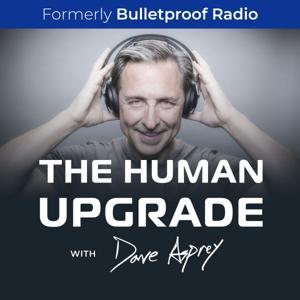
7,175 Listeners

4,999 Listeners

1,527 Listeners

2,313 Listeners

1,926 Listeners

1,706 Listeners

1,091 Listeners

1,775 Listeners

846 Listeners

906 Listeners

243 Listeners

367 Listeners