
Sign up to save your podcasts
Or



Based on Podcast App listening data
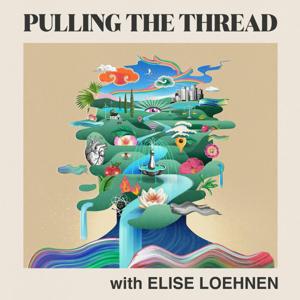
Hi, it’s Elise Loehnen, host of PULLING THE THREAD. Today, it’s just me. I’m sharing five things I’ve been thinking about a lot—from understanding how to quantify and charge for one’s time, what to consider before starting a new creative project, and the art of a gentle no. I’m also answering some of your questions—about judgment, sanity, and the etymology of “should.”
THINGS I REFERENCE:
MORE FROM ME:
On Our Best Behavior: The Seven Deadly Sins and the Price Women Pay to Be Good
My Substack Newsletter
My Instagram
Solo Episode 1: What We’re After
Solo Episode 2: Five Things I’ve Learned This Year
Learn more about your ad choices. Visit podcastchoices.com/adchoices
See omnystudio.com/listener for privacy information.
Learn more about your ad choices. Visit megaphone.fm/adchoices
“Turquoise is looking for how do we bring back the village? How do we live in community again? Why are we living in these separate houses? We're not sharing resources. Everyone on the street has a snowblower, a lawnmower, you know, like the design isn't elegant, it's not an elegant design. And so I think the mind of yellow joins into turquoise and as it has studied systems, it contributes to that and we are looking for more holistic, elegant solutions to give birth to a new culture. It's like we can no longer continue down the path. And at turquoise, we are going to have to sacrifice for the whole.”
For those of you who follow me on Instagram or read my newsletter on Substack, you’ll know that I’ve been quite obsessed with Spiral Dynamics of late, and see it as one way to explain our current cultural and political dilemmas, along with so much of our internalized anxiety. It was first developed by the late professor Clare Graves, who was a contemporary and colleague of Abraham Maslow, and then advanced by professor Don Beck, who worked on post-Apartheid South Africa with Nelson Mandela and F.W. de Klerk, and then further pushed by integral philosopher Ken Wilber. Spiral Dynamics can be heady stuff, and so I was thrilled when Nicole Churchill, a wonderfully grounded therapist and expert in Spiral Dynamics, offered to talk through the system with me for the podcast. Nicole and her husband John Churchill, who has also been a guest on Pulling the Thread, studied with Ken Wilber, and both apply it in their therapy work with both individuals and organizations.
If you all end up loving Spiral Dynamics as much as I do, Nicole has offered to come back and explore how she uses it in therapy—please pass this episode on to any friends who you think might enjoy. I’m convinced that there are some keys here that can help us see the world and ourselves more clearly. In the show notes, you’ll find ways to go deeper as well.
MORE FROM NICOLE CHURCHILL:
Nicole’s websites: Samadhi Institute and Karuna Mandela
John Churchill’s episode on Pulling the Thread: “Our Collective Psychological Development”
MORE ON SPIRAL DYNAMICS:
My Substack Newsletter: “Finding Ourselves on the Spiral”
Spiral Dynamics Integral, by Don Beck
Integral Psychology: Consciousness, Spirit, Psychology, Therapy, by Ken Wilber
Spiral Dynamics, by Don Beck and Chris Cowan
Trump and a Post-Truth World, by Ken Wilber
Learn more about your ad choices. Visit podcastchoices.com/adchoices
See omnystudio.com/listener for privacy information.
Learn more about your ad choices. Visit megaphone.fm/adchoices
“When I went back and looked at some of these shows that I loved, I noticed that the writer's room was all adult men with the exception of one or two episodes in Saved by the Bell's case. And I just thought, wow, it is so interesting that we talk about diversity and representation, like yes, of course, who's on the screen matters, but who's in the writer's room and who's telling the stories really matters too, because that's where stereotypes abound. Because those men were not writing Jesse Spano as an example of an actual feminist. She was written as a character from an adult male's response to like second wave feminist stereotypes. And they found that type of woman irritating, so they wrote Jessie as an irritating character. And it just was an interesting thing for me to explore the way I internalized themes from pop culture thinking about who was writing this and when did it contribute to a stereotype versus when did it communicate an authentic experience.”
So says Kate Kennedy, a brilliantly astute historian of millennial culture, which she explores, in depth in One in a Millenial: On Friendship, Feelings, Fangirls, and Fitting in, a bestselling book that’s part memoir, but really a love letter and a critique of the culture so many of us grew up in.
As part of my book tour I went on Kate’s podcast, Be There in Five, where I was immediately taken by her intelligence and deep, deep knowledge of the programming that shaped our consciousness, from Jessie Spano’s feminism in Saved by the Bell—and the laugh track it inspired—to the way so many women and girls were taught that our interests were dumb, shallow, and silly. Or, to use the parlance of the day: Basic. In One in a Millenial, Kennedy points to this long tradition of the veneration of action figures, Marvel, and football—and the deprecation of pretty much anything that girls and women value, whether it’s romance novels, the Spice Girls, or American Girl Dolls. While her point is not new—and certainly aligned with our summer of the Barbie movie, Taylor Swift, and Beyoncé—her exploration of how it shaped her own mind in childhood, and the way she experiences herself now as a result of it, is revelatory, and something we explore in today’s conversation.
MORE FROM KATE KENNEDY:
One in a Millenial: On Friendship, Feelings, Fangirls, and Fitting in
Be There in Five Podcast
Kate’s Website
Instagram: Follow Kate and Be there in Five
Learn more about your ad choices. Visit podcastchoices.com/adchoices
See omnystudio.com/listener for privacy information.
Learn more about your ad choices. Visit megaphone.fm/adchoices
“The deal is your bodies are going to change over time and people can stay attracted to somebody's body over time, even though it is unrecognizable from what it was like when they first met because that body is the home of a human they adore our attraction to a person's body can be just like superficial something like your toenails are gross, or it can be here is the human whose life I have shared in our home for all these years and like their belly and their bum and their varicose veins and their scar from the surgery that saved their life all of it is so fucking hot because this is my person.”
So says Emily Nagoski, one of the most exceptional minds at work today on the science—and she would add, art—of sexual connection, intimacy, and arousal. Emily is brilliant and she’s also deeply human, using her own experiences in the world as the foundational ground for exploring relationship: This means that she’s not full of heady theory and diagnoses, but focused on what actually works to fuel desire—and bring it to fruition.
She’s the author of the mega bestselling Come as You Are, as well as a book called Burnout about the stress cycle that she co-authored with her twin sister, and now she brings us Come Together: The Science (and Art!) of Creating Lasting Sexual Connections, which is the natural evolution. While Come as You Are is a primer on how we all function as sexual creatures, Come Together explores what happens when you bring that into relationship—and try to establish and maintain a connection that can endure through seasons of, well, low interest.
She is full of ideas, principles, and methods for getting it going—including a core blueprint for determining what rooms are adjacent to your desire. I loved this book, I love Emily, and I loved our conversation.
MORE FROM THE EMILY NAGOSKI:
Come Together: The Science (and Art!) of Creating Lasting Sexual Connections
Burnout: The Secret to Unlocking the Stress Cycle
Come as You Are: The Surprising New Science that Will Transform Your Sex Life
Watch Emily’s TED Talk
Emily’s Website
Follow Emily on Instagram
Learn more about your ad choices. Visit podcastchoices.com/adchoices
See omnystudio.com/listener for privacy information.
Learn more about your ad choices. Visit megaphone.fm/adchoices
“Every single human being is a pack animal. That's what we are biologically. We would die if we didn't depend on each other. Saying what you need is a form of connecting with your partner and saying, let's be a team. Can you serve me in this way? Can I trust you to have my back? Because I've got yours. And I want to be there for you. The other thing that people don't realize is that when they ask their partner for something they need, what they're doing is saying to the partner, you are my chosen one. You are my confidant. You are the person I trust more than anybody to be there for me. And the other person may feel very honored by that, actually. What that person is saying is you are trustworthy. You are the person that I know has the strength and the resources to be there for me.”
Doctors John and Julie Gottman are two of the most famous and popular couples therapists in the world—not only because of their ability to impart relationship-saving and relationship-strengthening advice, but because of John Gottman’s decades of reearch in the so called “Love Lab,” where he observed couples over time and could predict—with a dizzying level of success—who was destined to divorce.
In short, the Gottmans are the world’s leading relationship scientists, having gathered data on thousands of couples—they then use those findings to train clinicians and create simple principles for couples around the world.
In their latest book, Fight Right, they explore conflict—something we’re all trained to avoid at all costs. Their point though, which their research supports, is that conflict is essential for healthy relationships, clearing out the brush of stagnant resentments and deepening bonds.
In today’s conversation, we explore everything from fighting styles—there’s avoiders, validators, and volatiles—along with our tendency to start conflict harshly because we feel like we need a lot of ammo to justify the rupture and make our point. And then we move to modes and paths of repair, along with what their latest research can tell us about infidelity and its root cause. I loved this conversation, which we’ll turn to now.
MORE FROM JOHN & JULIE GOTTMAN:
Fight Right: How Successful Couples Turn Conflict into Connection
The Love Prescription: Seven Days to More Intimacy, Connection, and Joy
The Seven Principles for Making Marriage Work
The Gottman Institute: A Research-Based Approach to Relationships
Gottman Relationship Quiz: How Well Do You Know Your Partner?
Find a Gottman Trained Therapist
Follow the Gottman Institute on Twitter and Instagram
Learn more about your ad choices. Visit podcastchoices.com/adchoices
See omnystudio.com/listener for privacy information.
Learn more about your ad choices. Visit megaphone.fm/adchoices
“I think there's a lot of assumptions in play here that a good body is a thin one, a thin body is achievable, a thin body is achievable for everyone, and that you will be fully in control of your health and your mortality if you're thin, which is also just of course a myth. There are plenty of fat, healthy, happy people, and there are plenty of sadly unhealthy, thin people who should not be regarded as any more or less worthy than a fat person who suffers from a similar health condition. These people should be receiving, in most cases, just the same treatment. And yet, for the fat person who suffers from the same health condition, the prescription is weight loss, whereas for the thin person, they're given often closer to adequate medical care.”
So says, moral philosopher and Cornell professor Kate Manne, one of those brilliant and insightful observers of culture working today. She’s the author of two incredible books about misogyny—Entitled: How Male Privilege Hurts Women and Down Girl: The Logic of Misogyny—and has coined mainstream terms like “himpathy,” her word for the way we afford our sympathy to the male aggressor rather than the female victim. The example she uses is the trial of Brock Turner, the Stanford swimmer who sexually assaulted Chanel Miller, and the way the judge and the media seemed more concerned about Turner’s sullied future than Miller’s experience and recovery.
Her newest book is just as essential: It’s called Unshrinking: How to Face Fatphobia and it explores Manne’s own experience of being a fat woman in our unabiding culture. If you read the Gluttony chapter of On Our Best Behavior, some of the material she explores will be familiar—but in Kate Manne style, she drives it all the way home. I love this conversation, which we’ll turn to now.
MORE FROM KATE MANNE:
Unshrinking: How to Face Fatphobia
Entitled: How Male Privilege Hurts Women
Down Girl: The Logic of Misogyny
Follow Kate Manne on Twitter
Kate Website
Kate’s Newsletter
Learn more about your ad choices. Visit podcastchoices.com/adchoices
See omnystudio.com/listener for privacy information.
Learn more about your ad choices. Visit megaphone.fm/adchoices
“I think that with regulation, the funny thing is that it's either I want to control the weather around my children, or I want to control my children, but regulation is very much a self thing for adults and a co regulation thing between you and other, especially you and a young person whose brain isn't fully able to self regulate. But if you're so focused on controlling all these outside things that you can't, like the weather, then you get to let yourself off the hook of getting into the much harder, but more possible work of self regulation and of figuring out your own stuff. And all of that has much bigger benefits to your kids, of course, than making the weather perfect around them, but it just is harder. Even though it shouldn't be so easy to change the weather, but it does appear that is what happens, right?”
So says Aliza Pressman, development psychologist and Assistant Clinical Professor in the Division of Behavioral Health Department of Pediatrics at the Icahn School of Medicine at Mount Sinai Hospital where she is co-founding director of The Mount Sinai Parenting Center. Aliza is also the host of the hit podcast, Raising Good Humans, and the author of The Five Principles of Parenting: Your Essential Guide to Raising Good Humans.
I love Aliza for many reasons: Yes, we all want friends who are developmental psychologists on speed-dial, but she’s also different in the way she delivers advice. For one, she cuts right to the point, reminding and reaffirming that while yes, every family has its own complicating factors, the basic tenets of raising good humans are simple. You don’t need your own PhD in parenting to do the job, nor do you need a PhD to re-parent yourself, you need to focus on the elements she outlines in The Five Principles of Parenting: Your Essential Guide to Raising Good Humans: Relationship, Reflection, Regulation, Rules, and Repair. As she explains, through practice and normalizing imperfection, along the way you’ll discover the person you’re ultimately raising is yourself. By becoming more intentional people, we become better parents. By becoming better parents, we become better people.
In today’s conversation, we touch on these tenets while also exploring the particular social world we find ourselves in, one in which there seems to be an expectation that we can and should control the weather for our kids.
MORE FROM ALIZA PRESSMAN, PhD:
The Five Principles of Parenting: Your Essential Guide to Raising Good Humans
Raising Good Humans Podcast
Aliza’s Website
Follow Aliza on Instagram
Aliza’s Newsletter
Learn more about your ad choices. Visit podcastchoices.com/adchoices
See omnystudio.com/listener for privacy information.
Learn more about your ad choices. Visit megaphone.fm/adchoices
"How do we center the voices that traditionally and historically we know existed, but were only marginalized in the tradition? And that does feel like holy work. And for me, in part, when I encountered a tradition that was so driven by male stories and male voices, I felt so alienated by it when I first began to encounter it. And I had this moment, which I think lots of women faith leaders have, which is maybe this just isn't for me. I mean, I'm not intended to ever even read these texts, let alone teach these texts. And then I had an awakening where I realized, not only is it meant for me, but I have an obligation. It was waiting for me. It's waiting for me and for so many more people because there's a void until our voices enter this space."
So says Rabbi Sharon Brous, a wise and wonderful friend, and the founder and senior rabbi of IKAR, a Jewish community founded to attend to critical questions. As Rabbi Brous writes in her beautiful new book The Amen Effect: Ancient Wisdom to Mend Our Broken Hearts and World , “How can our Jewish tradition help us live lives of meaning and purpose? And: Given our faith and history, who are we called to be in this time of moral crisis? We launched IKAR—our best attempt to address those questions—on a hope and a prayer, with no funding, no space, and no business plan. What we had was a shared conviction that faith communities needed to be spiritually alive and morally courageous at the same time.”
I read Sharon’s beautiful book last summer, and could not wait to talk to her about it. So we recorded our conversation early, before the Jewish High Holidays, at the beginning of August, months before October 7th. Rabbi Brous’s work in general is highly prophetic and brave—she has been a fierce and vocal critic of the increasingly right wing Israeli government, even as many Rabbis try to steer clear of politics. This conversation, which is not about Israel, is also highly prophetic and brave: It’s about the dire need for interfaith conversation, for chipping away at the calcified belief structures of religions that don’t fully serve our broken world, and for being with each other, particularly on our most painful days. This, in fact, is the theme of The Amen Effect, which is about an ancient mishnah, or overlooked piece of Jewish law that instructs us on the sacred act of circling—and tending, face-to-face, to each other’s agony and grief. In today’s conversation Sharon and I also talk about social justice and responsibility, a conversation that I’m hoping to pick back up with her in the new year, as so many of us feel a little lost and confused. While Rabbi Brous and I thought about doing a second episode as a fast follow, we decided to wait a beat—if you want to hear her talk about Israel and Gaza, I highly recommend you listen to her conversation with Ezra Klein, where the two talk about how some of Israel’s actions are indefensible even as Israel itself must be defended. Her sermons are also stunning, and available on the IKAR website.
I think Rabbi Brous is incredible, and I’m not alone. She offered the blessing at both Biden and Obama’s inaugurations, and led Hannukah at the White House this year. She manages to teach and model what so many of us need to learn how to do: We must learn how to hold each other close even through disagreement, disappointment, and despair. The Amen Effect offers some ideas for how this work might begin.
MORE FROM RABBI SHARON BROUS:
The Amen Effect: Ancient Wisdom to Mend Our Broken Hearts and World
IKAR’s Website
Learn more about your ad choices. Visit podcastchoices.com/adchoices
See omnystudio.com/listener for privacy information.
Learn more about your ad choices. Visit megaphone.fm/adchoices
“If you have a reaction to a stranger or someone in the media or someone in politics or someone who's just providing this kind of blank slate because you don't really know him or her, then it's a projection. And yes, there's often a sensation in the body that's negative. It could be fear, it could be distrust, it could be disgust, right? And then there's the flip side. There's positive projection, which happens in the spiritual universe a lot. When someone is looking for a charismatic leader, then they're going to project their own awakening, their own compassion, their own wisdom onto the leader, the clergy person. So the content of the projection can be anything, what we view as negative, what we view as positive.”
So says Connie Zweig, a Jungian therapist and author who has focused much of her career exploring and teasing out the implications of the shadow, which is how Carl Jung referred to the unconscious. Chances are that you’ve been hearing more and more about shadow work—it’s having a moment—in part, I’m convinced, because it’s a concept whose time has come. As I’ve written about a lot in my Substack newsletter, we are swimming in collective shadow, unable and unwilling to process our share of it. When we don’t take on this unconscious material, or darkness, our tendency is to project it onto other people and groups, to get away from it as quickly as possible. But, of course, it doesn’t work like that—our shadow is ours. It’s our blind spot. When we’re willing to face our shadow, to access it, to allow it to emerge, we often find that it’s full of gold. In fact, Jung believed that the shadow is the source of all of our energy, the main mechanism for growth—ask anyone who has gone through hard or dark times and they will likely tell you that the experience propelled them forward in unexpected ways, often for the better.
Connie and I explore all of these concepts and then some, as she’s one of the most prodigious writers in the space. She co-authored Meeting the Shadow and Romancing the Shadow, which are essential anthologies and texts, and then more recently wrote Meeting the Shadow on the Spiritual Path, which explores what happens when the shadow, or darkness, is unresolved in spiritual and religious communities. She’s also the author of The Inner Work of Age: Shifting from Role to Soul, which is an exploration of the shadow of aging in our ageist culture. I’m hoping she comes back to the podcast soon so we can discuss that book at length.
MORE FROM CONNIE ZWEIG, PHD:
The Inner Work of Age: Shifting from Role to Soul
Meeting the Shadow on the Spiritual Path: The Dance of Darkness and Light in Our Search for Awakening
Romancing the Shadow: A Guide to Soul Work for a Vital, Authentic Life
Meeting the Shadow: The Hidden Power of the Dark Side of Human Nature
A Moth to the Flame: The Life of the Sufi Poet Rumi
Connie Zweig’s Website
Learn more about your ad choices. Visit podcastchoices.com/adchoices
See omnystudio.com/listener for privacy information.
Learn more about your ad choices. Visit megaphone.fm/adchoices
Today, it’s just me. I thought I’d round out the year by trying something different, and offering five big things I’ve learned this year.
THINGS I REFERENCE:
Learn more about your ad choices. Visit podcastchoices.com/adchoices
See omnystudio.com/listener for privacy information.
Learn more about your ad choices. Visit megaphone.fm/adchoices
From the publisher's feed
Ranked by our users in the last 21 days

2,581 Listeners

10,534 Listeners
815 Listeners

3,332 Listeners

1,851 Listeners

10,199 Listeners

12,682 Listeners

2,519 Listeners

5,090 Listeners

6,603 Listeners

1,661 Listeners

3,301 Listeners

320 Listeners

1,257 Listeners

5,110 Listeners

749 Listeners

596 Listeners
674 Listeners

3,480 Listeners

41,316 Listeners

387 Listeners

244 Listeners

88 Listeners

118 Listeners

1,889 Listeners

1,188 Listeners

611 Listeners

87 Listeners

479 Listeners

46 Listeners

144 Listeners
76 Listeners

24 Listeners

188 Listeners