
Sign up to save your podcasts
Or

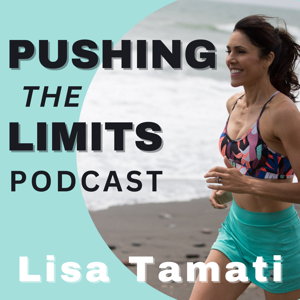


We are all facing scary and uncertain times right now and learning ways to mitigate fear and anxiety and tools to help reduce stress and help you make better decisions are really important right now.
Mental toughness coach Lisa Tamati shares her insights on how to thrive in the tough times and how to keep control over your physiology.
We would like to thank our sponsors for this show: For more information on Lisa Tamati's programs, books and documentaries please visit www.lisatamati.com For Lisa's online run training coaching go to https://www.lisatamati.com/page/runni... Join hundreds of athletes from all over the world and all levels smashing their running goals while staying healthy in mind and body. Lisa's Epigenetics Testing Program https://www.lisatamati.com/page/epige... measurement and lifestyle stress data, that can all be captured from the comfort of your own home For Lisa's Mental Toughness online course visit: https://www.lisatamati.com/page/minds...
Lisa's third book has just been released. It's titled "Relentless - How A Mother And Daughter Defied The Odds"
Visit: https://relentlessbook.lisatamati.com/ for more Information
ABOUT THE BOOK:
When extreme endurance athlete, Lisa Tamati, was confronted with the hardest challenge of her life, she fought with everything she had. Her beloved mother, Isobel, had suffered a huge aneurysm and stroke and was left with massive brain damage; she was like a baby in a woman's body. The prognosis was dire. There was very little hope that she would ever have any quality of life again. But Lisa is a fighter and stubborn.
She absolutely refused to accept the words of the medical fraternity and instead decided that she was going to get her mother back or die trying.
This book tells of the horrors, despair, hope, love, and incredible experiences and insights of that journey. It shares the difficulties of going against a medical system that has major problems and limitations. Amongst the darkest times were moments of great laughter and joy.
Relentless will not only take the reader on a journey from despair to hope and joy, but it also provides information on the treatments used, expert advice and key principles to overcoming obstacles and winning in all of life's challenges. It will inspire and guide anyone who wants to achieve their goals in life, overcome massive obstacles or limiting beliefs. It's for those who are facing terrible odds, for those who can't see light at the end of the tunnel. It's about courage, self-belief, and mental toughness. And it's also about vulnerability... it's real, raw, and genuine.
This is not just a story about the love and dedication between a mother and a daughter. It is about beating the odds, never giving up hope, doing whatever it takes, and what it means to go 'all in'. Isobel's miraculous recovery is a true tale of what can be accomplished when love is the motivating factor and when being relentless is the only option.
Here's What NY Times Best Selling author and Nobel Prize Winner Author says of The Book:
"There is nothing more powerful than overcoming physical illness when doctors don't have answers and the odds are stacked against you. This is a fiercely inspiring journey of a mother and daughter that never give up. It's a powerful example for all of us."
—Dr. Bill Andrews, Nobel Prize Winner, author of Curing Aging and Telomere Lengthening.
"A hero is someone that refuses to let anything stand in her way, and Lisa Tamati is such an individual. Faced with the insurmountable challenge of bringing her ailing mother back to health, Lisa harnessed a deeper strength to overcome impossible odds. Her story is gritty, genuine and raw, but ultimately uplifting and endearing. If you want to harness the power of hope and conviction to overcome the obstacles in your life, Lisa's inspiring story will show you the path." —Dean Karnazes, New York Times best selling author and Extreme Endurance Athlete.
Transcript of the Podcast:
Speaker 1: (00:01) Welcome to pushing the limits, the show that helps you reach your full potential with your host, Lisa Tamati, brought to you by LisaTamati.com. Speaker 2: (00:13) Lisa Tamati here at pushing the limits. Welcome back again, I hope you guys are okay during this coronavirus crisis. That's certainly a big change for us. And today because of that, I wanted to do a session on how to not meet fear, get the better of you all my tips and tricks for helping stay focused at this tough time and how you can stay on track. Um, before I go over to the actual interview, I wanted to, um, remind you that I've just released my book relentless. It is available on my website. Um, you can, I'll put it in the show notes, but you can just hit on over to lisatamati.com and under the shop button you'll find it, the F I'd love you to check it out. And it's actually really good book for this type of crisis because it's all about mindset and it's all about how to keep focus and how to deal with, you know, going up against great odds and really difficult and uncertain times. Speaker 2: (01:02) So you want to check that out. That's relentless how a mother and daughter defied the odds. Go over to my website and check that out. Also at running hot coaching, we've got a special going on at the moment for 12 weeks during this whole lockdown time and in the whole coronavirus wanted to be able to offer extra value and to make it, you know, really affordable for people because we have a whole, not only the running programs now we have a full live workout program that you can do and it's only $49 US dollars to join for the 12 weeks. So if we'd been sitting on the fence for awhile thinking about joining us now would be a perfect time to do that. Especially if you're in lockdown and you want your running training programs and at home workouts. All of it's in there right over to the show. Speaker 2: (01:46) Hi guys, just want me to do a session on not letting fear get the better of you. So about the mix of crosses with the coronavirus, we're probably feeling a lot of fear right now. There's a lot of uncertainty there. Jobs are in dangerous and some of us are incomes and so on. So I wanted to do some practical tips that you can do to control the fear response in your body. Because number one, if you have a fear response going on right now, your immune system is going to be compromised and that's not going to be good as if you're going to be fighting this far as which we hope you won't be. But if you are, you want to make sure your immune system is, is up and running. So the first thing that I want you to look into is done for medic breathing, deep dogmatic breathing. Speaker 2: (02:30) Every time you start to feel out of control, feel triggered, feel stress is to do some deep breathing in through the nose, holding for about four seconds out for four seconds and hold for four seconds. Now that is called box breathing. Now you can do it in a different rhythm. If you've got a really good set of lungs, you might get to seven or eight holding it for that long and doing this just I do this 10, 11 times a day. It's, it's my go to as soon as I'm feeling triggered, as soon as I'm starting to feel upset. Now what does deep do? Well, it stimulates your parasympathetic nervous system. You have to submit two nervous systems, your parasympathetic and sympathetic. You want to be stimulating it this time. And there's a lot of fear around a lot of anxiety. The parasympathetic. Now when you stimulate the parasympathetic nervous system, you are lowering the levels of cortisol and adrenaline that are being produced. Speaker 2: (03:23) Now these are hormones that are really for fight or flight. So back in the caveman days, which our body is still, you know, back there, we haven't evolved to being really where we are in our current world. So we still react to, uh, outside simulates some, you know, I was fear. So back in the day we might've been running away from a tiger, right? And so we needed this fight or flight response. So the amygdala, which is a part of your brain, deep in your brain, that's your limbic brain, that reptilian brain and its mediate responses to put up your heart, a heart rate, increase your breathing rate, uh, make you shit shallow breathe. It causes in your vision so that you have tunnel vision. Uh, it takes away blood from your prefrontal cortex and gives it all the blood into your muscles and so that you're ready to either fight off or run away. Speaker 2: (04:13) One of the two, the final fight syndrome, you'll know the SES. So that's all control where the medulla, now when you do this, you are taking away energy from your immune system, from your rest and recovery system. And you know, this was a great thing back in the day when we were had periodic stress was situations where we needed to run away from the line really fast. But in our day and age we are constantly bombarded with things like emails or problems with work or a phone call from your shitty boss or something that causes the same response. And it can get to the level where it's chronically your chronic amount of stress and you are constantly in this fight or flight state. So at this time when the coronavirus is here and you've got all this uncertainty, it's really, really important that we start to calm down the parasympathetic nervous system or stimulate, sorry, the parasympathetic nervous system and get things quiet and down. Speaker 2: (05:10) Stop the release of that cortisol and that adrenaline going full bore. And now you want those things at certain times but not constantly because you want your immune system to be operating well and you want to be thinking really clearly and there is a break in your decision making ability when you are in the stressed out state. So going back to the deep breathing now, this deep breathing technique will instantly, and I made really, really quickly start to calm the body down. Another great technique of course is meditation. And this doesn't have to be, you know, sitting on the floor, cross legged in an absolute silence that works for a lot of people and it's fantastic if you can quiet your brain down that way. But it also could just be going for a walk outside and we're all a little bit limited in what we're still at the moment allowed to go outside into get some fresh air. Speaker 2: (06:01) And that brings me to the next point. It's taking, you know, um, control of, of some of the things that you can and not focusing on the things that you can't control right now. Taking control of the basics, good hydration, good nutrition, good sleep habits. All of these things are going to help you to stay in control and make good decisions. Okay. And not focusing just on the negative. The next technique that I wanted to give you is visualization. Now I use this a lot with my athletes and I've certainly used it in my career as an athlete. Visualizing a positive outcome. Visualizing yourself as if it's in a, if it's an a running race, obviously envisaging the whole race and the more real you can make this visualization, the bidder in the cause that we are facing, visualize yourself being in control and being healthy. Speaker 2: (06:51) Visualize yourself and being able to adapt really quickly to this, to the situations at hand and you're getting on top of it and your business is going to be okay and your job is going to be all right. And when you visualize, your brain doesn't differentiate between what is real and what is imagined and okay, you can't control whether you're going to lose your job next week. You can't control movies outside variables, but you can stop your body going into this panic state because that isn't going to help anybody. What you want is your decision making ability on fire. So these visualization techniques can help you to start to regulate that into see a positive outcome. The next thing I want you to think about is the challenge versus threat scenario. So if we see something is a threat, and let's be honest, the crime viruses a bloody big threat right now to everything, to our health, to our loved ones, health to our society. Speaker 2: (07:50) But if we can start to really position they in their minds to see it more as an opportunity or a challenge, then that changes the way we perceive it and we are able to then coat a whole lot better. I'll give you an example from a noncurrent divorce situation, but again from my aesthetic Korea, okay, so if I'm looking at this massive race that I'm doing, it might be in death Valley, it might be in the [inaudible] and the Gobi desert or a Niger. Now, as I'm saying that as a threat and it's going to be terrifying and it's gonna be horrific, then guess what's going to happen? My body's going to shut down. I'm going to be in the fight or flight mode. I'm not going to be reacting really well. I'm not going to be coping when you, well, if I can reframe it in my mind to being an amazing opportunity to have this wonderful adventure and to have to turn it into a challenge in an a, an ability to be able to see this in a positive light. Speaker 2: (08:48) And I want you to think about this. Cisco rhino virus is going to give us some benefits. There are some good things that are going to come out of it for each and every one of us. It might be a complete pervert in your lives and you're going to end up doing another job and get out of that dead end job that you've been stuck in but too scared to leave and now you have to leave. So you're going to have to think and learn and redirect. Maybe that's going to be a good thing at the end of the day, none of us actually know. So they're good. They could be real positive things. Going back to a situation like with my mum and I've, you know, I've got my books here in the background. This the story is a really powerful one for the situation that we're going through. Speaker 2: (09:28) When I was faced with mom's aneurysm and that's the fact that she was probably not going to survive and if she did, she was going to have massive brain damage, which she did have and that she was never going to do anything again and I could've taken that prognosis. And just accepted it and taking no action and stayed on decided, no, I'm going to use this. These people telling me that there's no chance and there's no way I'm going to use that as motivation to prove them wrong and I'm going to make this the greatest comeback story and I'm going to get my mum back. And those were the thoughts that I feed into my mind so that I was able to take big, strong action and so that I was able to cope with the stresses that were come at us and it's been, you know, a four year long battle, don't get me wrong. Speaker 2: (10:12) There were times when I was on the ground balling my eyes out and not knowing which way to go forward. The thing is I did keep moving forward and I did keep looking for the next decision. I hate to make the next situation. The next opportunity and that attitude of going all in is one is lead to him miraculous recovery. This is a one in a million recovery, but it's not a one in a million because she was anything special or because I'm anything special. It was a one in a million recovery because we never even gave up and we kept fighting and we looked for the opportunities and we saw the beauty in this process, and this is why I've written the book, is because I want other people to have a blueprint for your mindset and what it takes to go all in on a challenge. Speaker 2: (10:57) And in this Corrado bar situation, we're going to have to go all in. Some of us, this is gonna be, you know, a threat to our incomes and our lifestyles and a massive of change. And we can either crawl up into a facial ball and start crying our eyes out and go, well I can't take any action or we could be warriors and we can stand up and go. Not a lot. I'm not going to take this line down. I'm going to go down sliding if I'm going to go down in going all in with this, with a situation with mum, I know that I could have done all of that and still failed and still lost here. That wasn't the point though. I had no option but to go all that because the alternative was certain days in certain loss. So I had a tiny chance and I took that tiny chance and when everybody told me it was impossible, I just kicked all moving and kept ignoring the people that told me it was bad. Speaker 2: (11:49) So right now what you also want to be doing is surrounding yourself with positive people. If you're listening to this, but you know this video, then you probably want of those people that is looking for a positive input and good messages. And that's fantastic because you are the sum total of the five people you spend the most time with. So if you are around positive people who have a direction, who are saying, right guys, this is the way we're going and this is why we're going to think this is the way forward. And you start listening to positive messages instead of the ones who are, Oh my God, the world is ending. It's apocalypse now and it's all going to be horrific. And you know, like we all have moments like there, don't get me wrong that I don't have those moments, but I keep them in check. Speaker 2: (12:34) And then I turned my mind around again and I tune it again and I tune it again. Every time those negative thoughts come up, I start to turn them around. So I wanted to now talk about, uh, exposure therapy. Now this is another therapy that can be really, really helpful if you are feeling a lot of fear. Now this is not exposure to the virus. We don't want that. But this is like when you are feeling fear for a certain situation or a certain thing that you have to do. And it might be like having to change your profession because you know someone's going to has to. Um, I want you to understand that the more you do something, the more it's going to be, the less you're going to be reacting to it. So I'll just give you a simple example of getting on phone calls. Speaker 2: (13:19) If you hate sales calls, which I used to hate doing sales calls. Now I've changed my perception of what that call is about in term repetition and doing it over and over and over again. It becomes actually a conversation with a friend if the coms nothing to be scared of and most of the things that we face in our life that we are scared of are actually not physical threats. Okay. The coronavirus could be a physical threat to you or your loved ones. I'm not mitigating them, but a lot of the fee is that we have running around in their tummy and then their minds at the moment that it's just going around and around like a hamster wheel is things that I'm never ever going to happen. I even say that the thoughts that we have in our head, the disasters scenarios that we're playing out are not going to happen, so why focus on it? Speaker 2: (14:07) Why not put your energies into focusing on how can I make this the best opportunity for me, for my business, for my profession? How can I help other people? How can I turn this into something that is good for me and my world and my business? I am using this as an opportunity to pivot, to change very quickly, to be adaptable. And I've lost my income. I'll be honest with you, at least six months, I don't have any income. Now I'm a speaker. That's what I do. I go around to conferences, well there are not conferences going on, but I'm not going to sit here and start crying about it. I'm gonna change my perception of what I can do. And then I'm going to pivot really quickly into doing other things and focusing on the positive and they don't get to be prepared also for when life comes back to normal. Speaker 2: (14:52) And we'll we go again. So it's your perception of things is controlling your thoughts. Now I want you, I'm also studying at the moment the functional genomics and this is the study of DNA and genes and how they affect the way everything in your body from methylation to mood and behavior to cardiovascular health, to um, detoxification. All of these areas. Okay. But I wanted to talk to you briefly about a couple of the genes that are in your head and I won't go on to the specifics. I'm going to be writing a couple of blog posts, uh, over the next few weeks and I'm still studying this area of science, but it's absolutely fascinating. There are a couple of genes that really, um, control or give you a predisposition to thinking a certain way and you can get yourself tested and DNA and all that sort of stuff later on when all this crosses over and you find out what you have a predisposition for, um, your edge or to being a gene for example, sample, which is y our adrenal, uh, Jane, if you like, the pains are which variation of the gene as to how long that adrenal and is going to be active on your sip as in your body. Speaker 2: (16:03) And if it's, if you've got the gene where it's going to be attached it to the recipients for a long time and active, you're going to have a harder time meeting golf things. You're going to have a harder time, you're going to have a stronger emotional and printer reaction to things. Um, then another person, another saying is that the brain derived neurotrophic neurotrophic factor, which I'm writing a blog post on now because this has to do with brain rehabilitation, but it also has to do with your mood and your behavior and the how, how susceptible you are to depression and a negative frame of mind. And if you have that, the hamster wheel brain that goes over and over and over. So what I want you to take away from this, without getting into the specifics of which Jane is to realize that every single person is different. Speaker 2: (16:49) Hey, do have a different set of genes. And so we all do experience things in a different way. So if you have someone in your most ho is very prone to panic, is very prone to having neurotic thoughts or the hamster wheel going over and over and getting stuck in a thought pattern and not being able to shift at least understanding some of the factors that are in play here and that their genes just may be predisposing them to doing that. And I'm going to share this blog post that I'm writing at the moment on BDNF, brain derived neurotrophic factor and what you can do to increase set, uh, in order to help elevate your mood. One of those things for example, is to uh, for the baby and is a example. This is to go and do exercise. Now if you're doing at least 30 to 45 minutes of exercise at 70 to 75% of your heart rate, you're going to increase the production of brain derived neurotrophic and that's going to elevate your mood. Speaker 2: (17:51) And this is why I run, let's get the run is high and I know all of us just enjoy running for the running site. Sometimes we don't even feel like going out there, but after half an hour out there, what happens? You mood elevates. What's that? There's some brain derived neurotrophic factor, inaction, other things that also stimulate that and what elevates your mode. Things like having a hot shower or hot bath or being in a hot warm environment or getting more sunlight to make more vitamin D, which will also help you produce more brain derived neurotrophic factor. All of these things are really important also in the brain rehab side, but I won't go into that right now, but just to understand, genetically speaking, we all have different ways of processing things in our brain and having some love and care and empathy for people who've, who don't see them. Speaker 2: (18:39) Some things the same way as you do, who react very differently and some people will have more a deeper emotional imprint. Then other people, some people will be able to get over things much easier because they have the right combination of genes and another person doesn't have that. That is not to be fatalistic and say, well, those people are babied, is to find out the what can you do? Like the saunas and the hot bows and the exercise and the right supplementation and all of that sort of stuff to help you if you are one of those people affected, increase or head of HIPAA. What resilience when it comes to your emotional wellbeing. So more about that later, but for today's podcast it just wants you to think about some of those things that I've covered off. So I want you to be stimulating your parasympathetic nervous system. Speaker 2: (19:31) That means calming your body down. That means stopping the stress and the adrenaline, the cortisol from pouring out all day, all day long. How are you going to do that? You're going to do that through meditation to that true connection to nature, which I've forgotten to mention. You know, like going outside, listening to the birds, looking at the beauty in the trees, looking at the flowers, standing and staring at the beach. If you're still allowed to do that, anything that will connect you and ground you to mother nature will calm your system down. Doing a exercise of course is also going to do there anything that's going to calm the system down. However one portion, don't go and do extremes, amounts of exercise because that will have the opposite effect. Don't overreach at this time. Firstly for your immune system and also for your, you don't want to upset your whole minds and get everything out of balance. Speaker 2: (20:23) Okay, so you want to be, um, a little bit conservative with your training at the moment. Just nice chain tool and doing things like working in and state of just working out. So not just the, you know, running and breathing and hard, hard work, but also aiding and the stretching, the, the yoga, the plankung. So things that are going to calm the body down, especially in the evening when you're wanting to get that slate. Because remember, sleep is absolute King, so doing these basics right and getting good sleep, if you can get it. I was sleep right now would be really gold. It'll help you emotionally cope with the situation and not fall off the DPN and be short tempered and doing all those crazy things. Now, just before I go, you have this thing in the, in the Brian like I said, called the amygdala, which is a very formative part of the brain that controls a lot of these trigger responses. Speaker 2: (21:16) And you know, in the past, I'll be honest with you, I've had a lot of problems with anger management. So I think I've got some warrior dreams from my, my Maori side, either that or the German or Irish sort of data. Um, and I've been triggered in the past and reacted in ways that I, you know, was not proud of afterwards. Um, and also learning to, to manage these reactions. Now a lot better. I wouldn't sound perfect, but I'm a lot bitter. The amygdala reacts before your, uh, your prefrontal cortex kicks into gear. It's very primitive. It's very lightning fast. So if you're feeling triggered right now, you know one of the things that I'm worried about in this crosses is the mystic piece going up is people doing things that they wouldn't normally do because they are stressed out and they're frightened and they're doing all these things and they were make deliver, starting to take control. Speaker 2: (22:07) So I want you to learn just a couple of trucks to keep it under control. One of them is that deep breathing, if you're feeling triggered, if you started to have fights in the family cause you're in close quarters, you've got the kid screaming, you don't know how you're going to pay the bills, your businesses going on the and you're fighting and you know this, this is all us. I think we are all feeling this type of stress right now. Then getting a controlling amygdala and not acting in a triggered state. You know, walking away, going to the other end of the house, doing some deep breathing, starting to tune your logical brain on the way I do this. And getting blood back to the logical brain. Cause the amygdala takes it away from the and helps you, makes you make bad decisions. The rang, I get a controller that as I start to do some logical problem solving things in my brain, like counting backwards from a hundred and lots of seven and I have to go, Oh, how much is that 193 and so on. Speaker 2: (23:04) And I have to actually think about it. And that makes me calm down again and gives me a chance to get on top of that adrenaline and cortisol that's come out and makes me want to have a scratch. Um, cause that's not good. And what you're doing when you get into this triggered state also in, in the anger response is you, uh, releasing the cortisol, which is, which is pumping out your blood sugars. So remember those begin angry and you're going to weight problems. You making things worse. You're going to put on more weight because you've increased your cortisol, you're going to leave the four have, have more, a whole warfare. Okay. So there's one, there's a really good reason not to get angry and to stay cool and calm. And this is one of the reasons why doing yoga and [inaudible] and all of those debriefing and all that actually helps you lose weight, which is not the topic of today's conversation, but it does say it because it's actually lowering the cortisol, the stress levels in the body. Speaker 2: (24:01) Interesting, isn't it? How we, uh, such complex characters and if we understand more about our physiology and our biology and how things actually interplay, then they can really, really help us in overcoming all these challenges that we're facing. So that's makes us very, guys, I hope this has been helpful to you or please decide that the, or if you want to reach out to me, please do. I'm, you know, this is what I, I'm begging to the mental game. I'm big into the mindset and mental toughness and leadership in, you know, um, some of the lessons that I've learned along in my now quite long nights, um, and sharing those insights with you. Not from a place of I know better because God knows I still have a hell of a lot of things to learn. But from applied, so via I've, I've experienced a few things, bring around the block a few times and wanting to share some of these insights. Speaker 2: (24:53) I do that also on my podcast, which is called pushing the limits. I would love you to go and subscribe to pushing the limits because I have some of the greatest minds. I don't know how I get some of these amazing people on the air, but I do, if you look back over the episodes that I've managed to record in the last four years, you've got Nobel prize winning scientists. You've got, you know, some of the top scientists actually in the world, some of the top doctors in the world, some of the top athletes in the world. And I'm not exaggerating, there's been some absolute legends on my show. Say, you know, I be a good way to spend a few of those nails we stuck at home. Um, uh, listening to the podcast is called pushing the limits. You can find it on iTunes, on Lipson, on Stitcher, or via my website, at least at [inaudible] dot com and while you're the gone grab one of my books, one of my friends, uh, especially running this right now is a super book for you to be reading, to strengthen your mind. And, um, really thank you for your time today. And we'll see you again soon. Speaker 1: (25:49) that's it this week for pushing the limits. Be sure to write, review and share with your friends and head over and visit Lisa and her team at lisatamati.com
The information contained in this show is not medical advice it is for educational purposes only and the opinions of guests are not the views of the show. Please seed your own medical advice from a registered medical professional.We would like to thank our sponsors for this show: For more information on Lisa Tamati's programs, books and documentaries please visit www.lisatamati.com For Lisa's online run training coaching go to https://www.lisatamati.com/page/runni... Join hundreds of athletes from all over the world and all levels smashing their running goals while staying healthy in mind and body. Lisa's Epigenetics Testing Program https://www.lisatamati.com/page/epige... measurement and lifestyle stress data, that can all be captured from the comfort of your own home For Lisa's Mental Toughness online course visit: https://www.lisatamati.com/page/minds...
Lisa's third book has just been released. It's titled "Relentless - How A Mother And Daughter Defied The Odds"
Visit: https://relentlessbook.lisatamati.com/ for more Information
ABOUT THE BOOK:
When extreme endurance athlete, Lisa Tamati, was confronted with the hardest challenge of her life, she fought with everything she had. Her beloved mother, Isobel, had suffered a huge aneurysm and stroke and was left with massive brain damage; she was like a baby in a woman's body. The prognosis was dire. There was very little hope that she would ever have any quality of life again. But Lisa is a fighter and stubborn.
She absolutely refused to accept the words of the medical fraternity and instead decided that she was going to get her mother back or die trying.
This book tells of the horrors, despair, hope, love, and incredible experiences and insights of that journey. It shares the difficulties of going against a medical system that has major problems and limitations. Amongst the darkest times were moments of great laughter and joy.
Relentless will not only take the reader on a journey from despair to hope and joy, but it also provides information on the treatments used, expert advice and key principles to overcoming obstacles and winning in all of life's challenges. It will inspire and guide anyone who wants to achieve their goals in life, overcome massive obstacles or limiting beliefs. It's for those who are facing terrible odds, for those who can't see light at the end of the tunnel. It's about courage, self-belief, and mental toughness. And it's also about vulnerability... it's real, raw, and genuine.
This is not just a story about the love and dedication between a mother and a daughter. It is about beating the odds, never giving up hope, doing whatever it takes, and what it means to go 'all in'. Isobel's miraculous recovery is a true tale of what can be accomplished when love is the motivating factor and when being relentless is the only option.
Here's What NY Times Best Selling author and Nobel Prize Winner Author says of The Book:
"There is nothing more powerful than overcoming physical illness when doctors don't have answers and the odds are stacked against you. This is a fiercely inspiring journey of a mother and daughter that never give up. It's a powerful example for all of us."
—Dr. Bill Andrews, Nobel Prize Winner, author of Curing Aging and Telomere Lengthening.
"A hero is someone that refuses to let anything stand in her way, and Lisa Tamati is such an individual. Faced with the insurmountable challenge of bringing her ailing mother back to health, Lisa harnessed a deeper strength to overcome impossible odds. Her story is gritty, genuine and raw, but ultimately uplifting and endearing. If you want to harness the power of hope and conviction to overcome the obstacles in your life, Lisa's inspiring story will show you the path." —Dean Karnazes, New York Times best selling author and Extreme Endurance Athlete.
Transcript of the Podcast:
Speaker 1: (00:01) Welcome to pushing the limits, the show that helps you reach your full potential with your host. Lisa Tamati brought to you by Lisatamati.com Speaker 2: (00:11) Hi everyone. Welcome back this week. I hope you are doing all fine in your bubbles, wherever you are in the world and staying safe this week. I have a very interesting interview with a couple of very experienced ultra marathon runners guy and Krista odor dice from Vermont in the USA and they are going to share a few of their stories and they're also writers and founders of the website, bluecollarruners.com where they share everyday running stories with, with the audience. Now they also write for outdoor running magazine and I've done the Vermont 100 a famous race in the United States. Oh, I think seven, eight, nine times. And it's a really, really interesting interview about what makes them tick and about why ultra marathoning isn't just for the super athletes of the world, but for everyday people. And I hope you enjoy the show. Before I hand you over to Krista and guy, I just want to remind you my book relentless is now available. You can go to relentlessbook.lisatamati.com that's relentlessbook.lisatamati.com to grab your copy. It's available right around the world. It's available in paperback, on audio and Kindle and Amazon. You name it. It's a net version. So check that out. I hope you enjoy the book. If you do get it. And I would love a review if you've read it already. So without further ado, over to Krista & Guy Alderdice. Speaker 2: (01:44) Well, hi everyone. Lisa here pushing the limits. Thank you once again for joining me on the show today. I've got a little treat for you. I've got some lovely, lovely, amazing runners with me all the way from USA. I've got Krista & Guy Alderdice. How are you guys doing? You guys are sitting in Vermont. Many Ultra runners will know about the Vermont 100, which is a really worldwide famous, you know, ultra Mo ultra marathon in the States. And you guys walk past your doorstep, guys, right? Yeah, we're a mile 80, 87 passes right by our driveway. Oh, you were right in the corner, right where it gets tough. It gets real tough. Speaker 2: (02:32) Says it today. You guys at the listing, I wanted to introduce you to Krista & Guy. These dear friends of my dear friend Ben from Yulara who's really our key man in our company at running hot coaching and he is in Connecticut and he's introduced me to these lovely people. So they're going to share a little bit these stories today around ultra marathon running and Krista & Guy, I have a website which has blue collar runners. So just www.bluecollarruners.com isn't it goes which is telling the stories from everyday runners. Is that right? Yeah, we're just spotlighting the everyday runner who just kind of inspires us people all over the U S we've spotlighted. So yeah, says entered pretty cold. So I want to dive into the background and we've been talking before we started recording and I, and I'm getting a bit of background and we're gonna have to repeat a lot of it guys. Speaker 2: (03:33) So you two are married, you've been together since your like high school sweethearts, is that right? Yes. Yeah, we had, we had our first date in 1991. Wow. And you've got two young boys, 15 and 17 years old. And you were finding it to a printer guy and what do you do Christopher, for a day to day job? Where are you at home or are you working? Yeah, I work for him. So kind of do the business side of it, the admin side, and then I'm helping with the writing. Oh, the hard stuff by the chef. Well, the real stuff is that it seems to be like in my household, I do all the, the, the public facing stuff and then behind me, Neil, Ben and my husband has the trying to pick up all the basics and actually do the hard yards. So so you guys are ultra marathon runners and you've been doing this now for a decade now and you super talented runners or how did you get him? Speaker 2: (04:42) Well, actually Krista was much more accomplished. I mean, she was a, she was a great cross country runner back in high school and, and did real well. I on the other hand, was, was not a gifted runner by any means. I played, played basketball and did very short distances in my twenties and into my mid thirties didn't run. We're more than a couple of miles over 15 years. So yeah, no, not a gifted, no gifted background for us at all. But of course if you were, you had to go to spades. I crossed it. So you had see back in high school? Probably. that's, that's since gone away and now it's run long. Yeah. I was more of an endurance rider. So I did the a hundred mile and 50 mile races on horseback. Wow. And I would see all these crazy ultra runners at the Vermont 100 when I was riding it back in the early two thousands. Speaker 2: (05:39) Just wondering what the heck are they doing? Like is this run simultaneously that the horse race and the the running race? Yes. It's like one of the only ones left that you are on the same course at the same time with ours in the runners. So it's pretty fascinating. Yeah, it's neat. Yeah. Huge background as an endurance horse rider. But what sort of changed that for you? I know you, you know, you had an event. Yeah. And 2015 I was badly kicked by a friend's horse, so it was a pretty bad shatter of my elbow shattered in about 10 places. So I had three surgeries and about a year. And I just needed to take a break from that side of my life and I was wondering, you know, what, what am I going to do? Like I need that kind of physical push. And luckily guy was in the midst of, you know, doing his ultra stuff, I had kind of dabbled a little bit. I had done a couple of 50 K's just more socially. Honestly just to kind of be in the community, but it was much happier on horseback. But once that was kind of shifted, then running really became kind of my, I love how you say, I just set up a couple of things. Speaker 2: (07:03) They were not fast. I was just kind of getting around with friends. And as far as you know, our community, we have the Vermont 50 and the Vermont 100, like right in our backyard. So it was kind of a, what do you always call them? Speaker 3: (07:18) Yeah, our, our town. We've also just said that this town is kind of an outlier because we're a switch, only about a thousand people in this town and, but there's the per capita ultra runners are pretty crazy because it's, you know, it's right in our backyard. All these big, big events, Speaker 2: (07:32) Easy entry. It's kind of easy to get sucked in. Yeah. You sort of saw it happening in going past your doorstep literally everyday. So you sort of sucked into that world. And it's a beautiful part of America, isn't it? It's a beautiful place. It's gorgeous. It's quiet. It's a beautiful place to raise kids. And I think in, in our oldest son Justin's class, I would say out of the 20 parents, didn't we figure if Dean had done like the Vermont 50? I mean it's pretty, pretty fascinating. Like I think everybody is outdoors a lot. It's Speaker 3: (08:11) Yeah, I mean you can, you can literally walk out, you know, you walk out of your back door and you're on dirt roads, trails. The amount of Scott is, is a mile two miles away. So there's a playground right outside of our door that we, you know, so we're really lucky. Speaker 2: (08:24) You're very lucky. You were definitely very lucky. So I mean that's quite interesting. When you say like so many of the parents that you could saw with a ultra marathon runners, do you think, cause a lot of people think that ultra marathon running is only for the elite and only for the super gifted and the super tough. What do you, what do you say to that? What do you think about that? Speaker 3: (08:47) Oh yeah. We, we know from experience that nothing could be further from the truth. Then the first year I ran my first 100 I ran it with two friends, lived in town, Speaker 2: (08:56) A guy named Fred and a guy named Jim and myself. The three of us were, I mean, we had no special skills. We had, we weren't great planners and we all went out and tackle this a hundred mile run. You know, despite people telling us we were crazy and family members, you know, no one can be, most people never heard of it. You know, this wasn't even an event. So, but over the next few years, the three of us went out. We all, at one point, we all got to finish all of us. And so, and we just, it was just what I learned is, I mean, 90% of this I think is mental, you know, just that mental toughness. Yeah. And along the way isn't it? Yeah. so I know you said back in 2011 when you guys sort of started or you know, you got underway and that you did have no idea. Speaker 2: (09:48) You would just, like you said, you turned up on the format socks and, and we had, we, our gear was, was I ran, I was running in just like 86 basic road shoes. I had a Socks from Walmart. I had no special foods. I mean I hadn't done any research and, but we just went out there and you know, my aid station to aid station and we just, what we've found over the years is we just, it really became about being outside and just, you know, seeing how far you could, you know, how far you can push yourself. And, and honestly, I think we, all of us pushed each other, you know, and it was just that social part of it was a big thing. I think I was starting to wind down and then Krista, you know, got into it and then I kind of rejuvenated me because some of my friends were moving on and doing other things. And so when Krista came in 2015 and then we kind of just, you know, if it started doing more, I know it is the famous just one more. That's right. That's right. So yeah, there's a lot of things always sound good on paper. You know, when you come up with these ideas on runs with friends and you're like, what did I agree to? And you know, I can do that. I definitely know that problem when you're reading something on a website. Speaker 2: (11:20) I've had a few, I've had a few times where I opened my email and I've been, and I get an email saying, you know, thanks for signing up for this race. And I'm like, I didn't, I have no idea. Come to find out. Krista's signed us up for a race and I guess now I just get used to it. That's right. I hacked into his ultra sign up to how many things that you do? Oh, you running together? You know, hadn't you find it as a couple? Like I met with my husband, I can't, we did do runs together, but we don't run much anymore together because we're a different paces now. He's got better. I've also slowed down and got up, gotten older and been doing it for too long in the tooth, I think. And he w w we, we end up arguing. Speaker 2: (12:16) How do you guys find that as a couple? I think, I think for us it's like really therapeutic. Like we figured a lot of things out in the runs, like whether it's, you know, things we talk about, about the kids, like any issues they're having or I don't know, I don't really know how to explain it, but it's a time that we can just be really free of anything. So like it just, everything comes out. Mmm. And, and literally like, like I said before, before the podcast, like we do everything together. So like I said, if anyone sees one, it's usually the other. And he's way faster than me. Yeah. There's, if we're doing any sort of speed work, like he'll just go ahead and then come back or any sort of like speed work, which we're not the greatest staff. He'll just kind of go, go a little bit ahead and I'll just, it gives me a push to try to keep up with them. Speaker 2: (13:10) As far as, yeah. And then I think, and then when in terms of like race day, we're kind of both on the same page, is that we're, we're not really that worried about, you know, how great our time is. We're, we're, we're definitely finishers. You know, first we wanna we want to finish and, and know, we know we're never gonna be elite, you know, we're never going to be in that cream of the crop. I mean, some of the times these, these are the athletes put up or just they blow my mind. Unbelievable. So yeah, we're pretty happy being just kind of, you know, we just chug along and, you know, crank the miles out. So yeah. So that, so usually we just, you know, we run one of the hundred miles we ran the whole thing together. That was a special start and finish the whole thing together. Pretty magical. That was 2000. Yeah. Yeah. Y'all have to be on the same page as far as, you know, Asha or, yeah, yeah, yeah. Feeling good when well occasionally, you know, on a, on a, on a long run, in, in a, in a event, if one of us is feeling junky, the other one would say just go ahead. And, you know, cause I'm usually when you're feeling, you know, you feel junky, you want to be alone anyways. Yeah. You're a grumpy, horrible person. Speaker 2: (14:29) I'm nauseous and I hear like a little rapper opening on like, Oh, I can't eat, eat. So just go ahead. Don't eat around me. But how many of the promote 100 if you've got a son, a hundred miler. So I've done three and I've done eight on horseback. So three on foot. Speaker 3: (14:53) Yeah. And I, and I'm the CEO and this, let's see, I've, I ran in I ran nine of them and I've finished seven at a nine. Wow, that's amazing. And we always tell people it's such a family thing for us because yeah, since 2001, I think we've been to every single year except for, well, 2002, she had our our son, Justin Christie given birth a couple of weeks before. So we missed that year. Other than that, other than she was a slacker, slacker that year. But yeah, we've been, that we've been to and seen since our kids were babies. They've been to every single, because when they were babies, she was riding, I was crewing and so I'd be changing diapers and you know, strollers at aid stations and then now our kids and that's come full circle where the kids are crewing us. And now last year our oldest son ran the last like 13 or 14 miles in with Krista. Yeah. So we've seen it, you know, from little infants to now, you know, they're taller, taller than us. Speaker 2: (15:59) So the future is bright. We want, we want to see some more. So now I want to talk to you, a rotting guy in the blue, calmer that we call a Rana's website and the stories that you tell and you write for ultra running magazine, which is a very prestigious ultra marathon running naked scene. What sort of stories do you tell guys? What, what's sort of you know, the background into that? Speaker 3: (16:30) Yeah. So, so we always were fascinated. I mean, my whole life I've always been fascinated me reading memoirs and curious about people's stories. So this was kind of a natural thing for us. We've met a lot of nice people in town through the sport and in, in, in races. So we just said what we were out for a run about a year and a half ago and we just had this idea, you know, we've always called ourselves blue collar runners cause we're always just kinda like, did we always felt like we were just, you know, scraping by and getting through it. So yeah, he just started. We just say, well, and what we've found is with law as we've, we said, well, every once a month we just interview, we interview someone. And then we, we write their story and ultra running magazine and their online column. Well, we just found that people that are doing these crazy, you know, feats and challenges generally, there's a really good story. You know, why they're doing it. And we've, we've talked to people that have been through addiction of I tried to commit suicide too. Health issues to family issues to, and you realize some of the people that we knew in town pretty well once we interviewed and we found out things we never knew. And so we just, we bunked you've just met really cool people and now it's, we have this neat platform to tell their story, you know, tell it does again, average runners, Speaker 2: (17:50) You know, have jobs and have families or, and, and running is kind of a side thing. It's not the way they make their living, but they're doing just incredible things. And then any, they all have really big hearts like theirs. You know what I mean? There, there's just this neat push to do something big. Mmm. But they're just, yeah. I mean, this is, this is a couple of themes running through those stories by the sounds of it. And this is my experience too in dealing with lots of, you know, ultra runner, crazy people and myself as well. I know that, you know, running, saved my life. Literally. I, you know, I'm going through some terrible things and, and again, and again that's picked me up and given me my life back and my confidence back and my self esteem and channeled my Oh, I've got a bit of an addictive personality and if I don't do, if it didn't do running or working, I think stupid. So I it is a way of channeling my energies and so on. And I think a lot of people can, can understand that who are ultra marathon miners said it and it helps you deal with issues and helps you rebuild your life. And, and these are sort of byproducts that, that people outside of the running or the ultra running community especially, but even the running community don't, don't see as a benefit of running, but it's actually a mental health based mental health thing I've ever done. Speaker 2: (19:23) Yeah. And that seems to be a same that that does run, you know, you do get some deep stories when you're interact with people and some people have been through some terrible things and running his saved them and help them out of the muck, you know? Yeah, a lot of them weren't runners per se, you know, they didn't grow up, you know, running cross country or they didn't grow up. Having someone that they ran with it, it's how running kind of came into their life at that perfect time and they really needed to lean on it. So you know, and I know for me personally, it came back, you know, after I got injured and I, I did, I leaned on it big time and outside and to, you know, feel your heart pounding and feel that wind in your hair. Speaker 2: (20:10) And you know, it doesn't matter how far you go or how long you go or how fast you go, but it's just there and I feel lucky for that. Yeah. Yeah. I think it's like they've primal, there's a primal instinct that is missing in our everyday lives, mostly now in our modern day world. And it answers a lot of those biological and instinctive and ancestral sort of needs for us. So that need to push our bodies to, to survive and the in the outdoors and to be able to overcome and to actually, you know, like expel all this energy that we have which is sometimes a negative and or an anger or a grief or, you know, I I often come back from long runs, especially where you've given your role or rices and you just, you, you, you, it's so fantastic. The pain that you go through physically sometimes is, is it's a mean tool release part of the draw card and it's not what like I don't think you and I would sit here and say we like pain cause a lot of people, you're a masochist or something. Speaker 2: (21:31) Not at all. I don't like, I do see the benefits on pushing through pain or through suffering or had moments in a, in an event or training because it does teach you so, so much about who the heck you are. And that's something that my listeners hear me preach a lot, but I think that is, that is a very true thing. And he'd agree with it. Yeah. More. And when we always talk about it, we'll be doing something, whether it's work related or life w we, we always say we lean back on those ultra lessons that we learn because we're just, you just some of the things you're doing out there, you does, it converts over to, to real life situations and mental toughness kind of, you know, pushing through hard times. Yeah. And then the metaphors are there all over the place, but yeah, yeah, absolutely. Speaker 2: (22:25) Yeah. Yeah. I mean, I mean, you know, people hit me to have my story with mom and that's definitely like a Humvee, 100% of all of that, that, that resilience, that consistent, that real manelessness come from being an athlete and doing this sort of stuff. And so, so many benefits of people. And that's why, you know, I love encouraging people to get into running or any sport. But running is a, is a, is it, I think it's one that, again, going back to our ancestral ways, this is how we used to communicate this and how we used to get from one village to the next, the one, you know, we didn't have cars and everything else and, and it's the most instinctive, natural form of movement that we don't. And even in thing, you know, walking, running, you know, whatever in doing ultra-marathons there's a heck of a lot of walking isn't there? Oh my gosh. Oh yeah. Speaker 2: (23:21) Race. The race is a loosely defined term, you know, death shuffle, shuffle. So you know, I love to share some of your stories like I've asked you guys, you know, hopefully we can share some of your stories within the hour, you know, running hot coaching out online club and also on our websites and stuff. And you know, what I love about this is a being connected through our frame vendors that we've disconnecting. You know, the USA with new Zealanders, with Australians who listen to this podcast. It's mostly my audience, New Zealand and Australia. We have got other people in other places as well, but at say international illness, you know, but we all have the shared love of, of running and ultra marathon running and Beecher and nature and you know, for one side of the road to the other with these stories. And I think that that's, that's pretty damn cool. Speaker 2: (24:16) I just love that. You know, I think it's exciting. I think that's really neat. Yeah. It makes us feel more together and it's not in this crosses right now. We need to feel together. You know, like you guys are facing some really, really tough times in America. I think way worse than what we are experiencing. And if we can, you know, again, in this Karina time, we need to pull together, we need to focus, we need the strengths that are run as heavy, you know, push through these tough times and not give up. Tom's, he gotta to get tough for a lot of people. And you being a financial advisor guy would probably know, you know, lots of horror stories coming your way. And, and being able to help people through this sort of a crisis, I think you know, in having good stories always does that. Speaker 2: (25:07) So, you know, I just wanted to say thanks for coming on today and for sharing your, your stories and for connecting with us down at the other end of the ears. And I hope one day that I'm actually going to be able to come and poverty won't run for malts anymore. I'm retired now, but I might come and know what you guys do. One that would be so cold. You never know. What would be your, like if you had a couple of messages for people listening out there who have never run in their lives and think that this is only for the super Tufts super cold, super amazing athletes, they want me to say to that? Yeah, I think I would say aye. I think we, I think as, as humans we just, we always are putting limits on what we can do. Speaker 2: (26:00) And we're always kind of, you know, it's almost like I hear so many people say, well, I have bad knees or I can't, I just can't do it. Right. There's, you know, and Jen, obviously some people probably can't do it, you know, not everyone can. And we're lucky to have you know, I've, I've run the show I'm with, with, with farmers and carpenters and Marines and every, every segment of life out there. I've seen people doing these things and I mean age. Yeah. I mean just people in their, in their seventies doing, doing a hundred miles. So we see the whole spectrum. I think the biggest thing is, you know, just get out there and do it. Just start with something, you know, even if it's a couple of him and if it's walk a half mile, walk a mile and just get out there. And if it's something, I think you'd be amazed what you can, what you can do. And then, and again, we're, we're here to tell you we are, I'm Todd, we are his averages. Again, there's nothing special about Austin. Speaker 2: (26:59) I mean you can, you can do a lot more than you than you think is possible. I think that's my, and I think to have the courage to try and then, and not worry about failing and running for me, like a little tidbit is I don't care if you, if you run a hundred miles a week or one mile a week, that first mile is the hardest every, every day, every night. So I think sometimes he will get to that mile and they're like, it's just too hard. But if you know that it's hard for everybody, no matter how often you run or how long you run. I mean, I think that's my biggest take is have her smile. But after you get past that first mile, yeah, yeah, yeah, yeah, it is. But that first 20 minutes of everybody's run and was even sitting, but it's for some people, right? Speaker 2: (27:46) For me can be worst part. And most people give up and before that, like, you know, the runners and they think that the whole time is going to be like that. And you're like, she's just getting to the good stuff. Guys. You're just warming up. Cause man, when you get to that warm up part, everything was clear on the fog goes away. Yeah. And that's why the warmups bloody important people listen for you even by writing. And then I'm preaching to myself here because I'm still, I know that I should be warming up every time and I have a much better one when I do warm up properly, we all have a tendency, I've got, I've got an hour, half an hour or an hour, I've got to go straight out the door and I'm fixing my miles and I've got to see it on Strava, you know, warm up doesn't count, so I'm not doing it. And that's dumb. That's a good way to look guys. I really appreciate you coming on today and I want to hear more. I want to she's some of the stories that you've already written and I'd love to do some more connections, you know, have some more discussions with you and the heavier now running hot sharing in being involved with us. Cause I love what you're doing and I think it's pretty cool. Yeah. We love what you're doing. That's awesome. Speaker 1: (29:19) That's it this week for pushing the limits. Be sure to write, review, and share with your friends and head over. Visit Lisa and her team at lisatamati.com
The information contained in this show is not medical advice it is for educational purposes only and the opinions of guests are not the views of the show. Please seed your own medical advice from a registered medical professional.
We would like to thank our sponsors for this show: www.vielight.com Makers of Photobiomodulation devices that stimulate the brains mitocondria, the power houses of your brains energy, through infrared light to optimise your brain function. To get 10% off your order use the code: TAMATI at https://www.vielight.com For more information on Lisa Tamati's programs, books and documentaries please visit www.lisatamati.com For Lisa's online run training coaching go to https://www.lisatamati.com/page/runni... Join hundreds of athletes from all over the world and all levels smashing their running goals while staying healthy in mind and body. Lisa's Epigenetics Testing Program https://www.lisatamati.com/page/epige... measurement and lifestyle stress data, that can all be captured from the comfort of your own home For Lisa's Mental Toughness online course visit: https://www.lisatamati.com/page/minds...
Lisa's third book has just been released. It's titled "Relentless - How A Mother And Daughter Defied The Odds"
Visit: https://relentlessbook.lisatamati.com/ for more Information
ABOUT THE BOOK:
When extreme endurance athlete, Lisa Tamati, was confronted with the hardest challenge of her life, she fought with everything she had. Her beloved mother, Isobel, had suffered a huge aneurysm and stroke and was left with massive brain damage; she was like a baby in a woman's body. The prognosis was dire. There was very little hope that she would ever have any quality of life again. But Lisa is a fighter and stubborn.
She absolutely refused to accept the words of the medical fraternity and instead decided that she was going to get her mother back or die trying.
This book tells of the horrors, despair, hope, love, and incredible experiences and insights of that journey. It shares the difficulties of going against a medical system that has major problems and limitations. Amongst the darkest times were moments of great laughter and joy.
Relentless will not only take the reader on a journey from despair to hope and joy, but it also provides information on the treatments used, expert advice and key principles to overcoming obstacles and winning in all of life's challenges. It will inspire and guide anyone who wants to achieve their goals in life, overcome massive obstacles or limiting beliefs. It's for those who are facing terrible odds, for those who can't see light at the end of the tunnel. It's about courage, self-belief, and mental toughness. And it's also about vulnerability... it's real, raw, and genuine.
This is not just a story about the love and dedication between a mother and a daughter. It is about beating the odds, never giving up hope, doing whatever it takes, and what it means to go 'all in'. Isobel's miraculous recovery is a true tale of what can be accomplished when love is the motivating factor and when being relentless is the only option.
Here's What NY Times Best Selling author and Nobel Prize Winner Author says of The Book:
"There is nothing more powerful than overcoming physical illness when doctors don't have answers and the odds are stacked against you. This is a fiercely inspiring journey of a mother and daughter that never give up. It's a powerful example for all of us."
—Dr. Bill Andrews, Nobel Prize Winner, author of Curing Aging and Telomere Lengthening.
"A hero is someone that refuses to let anything stand in her way, and Lisa Tamati is such an individual. Faced with the insurmountable challenge of bringing her ailing mother back to health, Lisa harnessed a deeper strength to overcome impossible odds. Her story is gritty, genuine and raw, but ultimately uplifting and endearing. If you want to harness the power of hope and conviction to overcome the obstacles in your life, Lisa's inspiring story will show you the path." —Dean Karnazes, New York Times best selling author and Extreme Endurance Athlete.
Transcript of the Podcast:
Speaker 1: (00:01) Welcome to pushing the limits, the show that helps you reach your full potential with your host, Lisa Tamati, brought to you by LisaTamati.com. Speaker 2: (00:11) Hi everyone and welcome to pushing the limits today. I have a fantastic episode with the amazing Craig Johns now Craig Johns is originally from my hometown from Taranaki, but living now in Canberra, in Australia. Now. Craig is the CEO and founder of energy to perform. He's a CEO himself. Uh, he has a background in 25 years global experience working in the sport health, mind, education and hospitality industries and he loves to help him become high performing leaders. He's also coached at the elite level Olympians, triathletes, world champion athletes, um, across a number of areas. And he is really at the top of his game as far as, uh, human performance. And I was really privileged to be on his show last weekend. He's agreed to become, come onto my show this week. So you're in for a really interesting session. If you want to know about being a high performance leader. Speaker 2: (01:07) If you want to know about high performance and sport, then this is the man you need to listen to. Um, just before I hand over to Craig now, just want to remind you my book relentless is now available and still seeing now copies. So if you hop over to relentlessbook.lisatamati.com you can order there and you can order audio books, eBooks, Kindle, Amazon, you name it, all the options are there for you to see, uh, to, to purchase that book. Um, I had the privilege of having a wonderful online book launch just a couple of nights ago and we're going to be doing, uh, a weekly one of these. So if you want to join me on one of those sessions or live session with me talking about the book, of course my mum will also be there. Um, then please reach out to me and I'd love to let you know when the next one is happening. Um, you can reach out to me at Lisa, at lisatamati.com and if you enjoy the show, please don't forget to rate and review this podcast. It really, really helps us get more exposure and we have some brilliant people sharing their incredible knowledge. Right. Without further ado, over to Craig Johns . Speaker 2: (02:19) Well, how everyone Lisa Tamati here at pushing the limits. It's fantastic to have you with me again. I hope you guys are all staying safe out there as best as you can in this crazy time. Yeah, I'm sitting today with the lovely Craig John's from Canberra and Craig is the CEO and founder of energy, uh, the energy to perform. So welcome to the show, Craig. Thanks for coming on board. No, Lisa, it's great to be on your show after we had a great interview the other day. Yeah, it was fantastic. So I had the privilege of being on Craig show as well. Um, active CEO, if anyone wants to go and check that out. Active CEO. Now, Craig, can you give us a little bit of background about your life and your story and what you do these Speaker 3: (03:00) days? Yeah, so I grew up in Taranaki as well. So from the same region, grew up on a farm, you know, a families were pretty simple. Yeah. And dad, you know, worked on a farm since he was 14 years old. He, it went through kind of the school of hard knocks and it was around our pretty rough crowd. And the teachers would say to him, look, you know, you're not going to make it in life. And when he was 14, him and his mate, they like to mess and like pee and light eating their lunch. And so they went to the principal and say, look, you know, we're wasting your time, us being here and you're wasting our time. So how about we build the furniture for your school? And so they're great to it. So they get access to the woodwork room and middleweight room and started building furniture. Speaker 3: (03:47) And then at the age of 14 he lifts school, went farming and retaught at 45. So I think the, uh, sort of prove them wrong in that sense. I'm a mum also came from a farming and hospitality background, her banana under a famous pub and pop Tia and you know, they, it's a lot of time spent on the farm and I think that grounding from both of them, very simple. I appreciate the small things. You work really hard and then the benefits will come and uh, from uh, an also from a sporting side. So I had a, had a fortunate too, both sides of the family have coaches, so dad's side where all around field hockey and my mom's side were all around cricket. So I had this great grounding from a sport point of view and also from coaching and leading people, which was just fantastic. Speaker 3: (04:42) I moved to Oakland to study, no sports science at university. I went on to do things around masters and biomechanics before hitting overseas. Uh, so my work in Auckland during that time was around sports science with some of the Olympic teams, some of the professional sports and was always coaching from the age of 15. So I love coaching swimming. So fly saving and triathlon in was working with some pretty amazing athletes during that time when I was 24 I got this call too. We've got a swimming coach opportunity for you in Taiwan. And that's kind, kinda like, well, I'm living at middle wide. I've got a beautiful view over the middle wide beach in Oakland and I've got these amazing opportunities. But I just thought, you know what, hi, I'm 24 years old, is this incredible world out there. I know nothing about Taiwan. All I think of as these, this big tall buildings. And my friend was like, no, it's really cool. There's like massive mountains. There's beautiful beaches. Amazing people. And so I thought, you know why not? So I packed up my bags at 24 and that started my worldwide adventure and have now lived in five places and wow. Currently based in Canberra. And you've done a of work in Speaker 2: (05:58) the triathalon space, is that correct? So tell us a little bit about some of the sort of work you've been involved with there. Speaker 3: (06:05) Okay. Yeah. So I've been a triathlon since I was nine years old, was my first triathlon. Wow. And so it was in my blood from quite an early space, and I naturally transitioned into triathlon where overseas I was coaching the Taiwan national team and went through to work at one of the Oh sort of most famous and beautiful splices and [inaudible] Peru kit called Tonya Perro, which is the only vice where they have, or mind how education, hospitality as an integrative approach. And so we're working with a lot of the world's top triathletes there. And then the last five and a half years I've been in Australia as a CEO of, the sport of triathlon in Canberra, and then working with the national team. So quite a, quite a big involvement. And it's just a beautiful sport with a great community. Speaker 2: (06:55) Yup. Okay. So what have you learned as a, as a person from being an athlete that you've taken over into your corporate world, if you like, into your business and you know what you're doing now? Speaker 3: (07:07) I think when you're very young and you're in sport, you learn some great basics for Speaker 2: (07:11) Mmm. Speaker 3: (07:12) Succeeding in life. So you have time management, discipline, hard work, um, overcoming adversity. You know, resilience. If we look at what's happening right now in the world around COVID-19 and coronavirus, Speaker 3: (07:25) it really sets you up to handle those situations well. You've experienced loss before, you've experienced hurt and pain before. You've experienced the unknown and I'm overwhelmed many times and you've always made a way out of it. Yeah. You just don't give up. You, yeah, it could be out on a, I know I bike ride and you're stuck three hours from home and you've run out of energy and battling a IDK in our headwind in it's five degrees in. You just don't want to go on any longer, but you stop playing mind games. You think positive thoughts and Speaker 3: (08:02) Nixon it and you just go from lampposts or lamppost or town to town. And then next minute you're like, Oh, I'm ready 20 minutes from home and you get home and it kind of feels a bit tiring and then you kind of wake up the next day and go, huh, what's next? Where's the big Nick's big talent? So I think those aspects are really good. And a sport like triathlon you, you wouldn't less than you loose. So you know, in a team sport you've got a 50% chance of winning every single time. And I was fortunate to be in a field hockey team where we never lost the game. The Stratford hockey team in the Taranaki league, they went something like 270 games straight without losing a game. So it's a record in New Zealand for any sport. And it was a phenomenal time to be part of that because I learned how to win end this awesome, great listens winning all the time. Speaker 3: (08:56) However, in triathlon there's also potentially a bit of side where you are learning so much because it is so difficult to win when you might have, you know, a couple of thousand people. On a start line or even if it's 50 on the start line, your chances of winning are not that high. No, you have to [inaudible] learn to deal with winning isn't everything, but what is the winning? So it may not be first across the line, but it might be okay, I've improved my swim or I was able to stay with that pack longer or I felt better on the run. So there's always ways that you can be winning, but it's might not just be that gold medal around your neck. Speaker 2: (09:36) Then Neva comes instantly. Th th that actually standing at the top of the podium as always a progression of years to get there. And many, many Speaker 3: (09:43) in the, in the, in the individual sports, Speaker 2: (09:45) um, you know, and lots of semifinalists and problems along the way and overcoming it. And then when you get to the top, you don't stay there either. So it's learning to manage that whole system and keep going. Um, so the biggest, listen, they would be, yeah, definitely. Keep, keep working towards your goals. Would that be right? Speaker 3: (10:03) Yeah, just small steps and appreciate the small things. I think in times like these where you need to have a bit of gratitude for yourself. Yes, you need a lot of gratitude for other people and acknowledge and sank and be kind to them. But a lot of people forget to do that with themselves. Worst predict. So it is so important to be, you know, looking everyday what is something I did really well today, well done. Yeah, that's great. Boy I'm off the couch this morning and I'm out running and no one else's. And, and there are lots of little things that you can just look after yourself a lot more effectively and you can do that in day to day life. And I think people, as much as this is going to be a very challenging time, I think people have the opportunity to learn, to appreciate the small things in life and be around their families and yeah, maybe Potter in the garden or whatever it may be and realize how important that is to success in life over a long period of time. Speaker 2: (11:01) Yeah. In taking the long view on this one now, Craig, and now you have a bit of a story yourself, um, a story of, of going home, you know, working so hard and burning out and um, coming into a bit of a drastic situation. Can you share that sort of background story, because you know, these are the stories that really teach us. Speaker 3: (11:20) Yeah, they are. I think from a very young age, I've always, you know, push the limits. For me it was, I'm trying to find that new space, um, where can I take my body? How much can it handle? And you know, I, it wasn't the most talented person out there, but I had, damn, I had some grit and hard work if they can be. And I think that comes from there from my mother. Yeah. I think we both the same there. And you know, a lot of people go, Whoa, you know, you did really well, you succeed into world champs. And I said, yeah, there was a lot of hard work in that. And you know, there are a lot more talented people, but I managed to get ahead of quite a few of them just because I was more determined and dominant approach to say, you know what, I'm going to prove people wrong. Speaker 3: (12:02) I'm going to prove science or medicine wrong and I want to see if I can get there. I love it. So I triggered hot problems and probably stress and burn out to a certain extent, not always burnout, but pushing that limit three key times in my life. So the first one was, who knows, uh, 15 and I'd come off a week long swim camp at Christmas time. I had done some things I've never done before. I had people stopping in the lines watching me do a set and which is absolutely flying and this felt amazing. And the next day was new year's day. I got out of bed at six o'clock in the morning when to go to the bathroom and find and went out for very long time. Um, my dad, who had just had a hip replacement was on crutches and sort of come along and tap me. Speaker 3: (12:54) And he thought I was, could have been dead because he, he couldn't been over at time and he said my eyes were in a state that he'd never seen before. And being knocked out for over five minutes is, um, yeah, fairly scary for a lot of people. Hmm. You know, that opportunity. I spent some time in intensive care, uh, and, and word was spreading around the community that I'd had heart attacks and all sorts of things that happened to me. Um, and it took a little while for, um, the cardiologist to try and make sense of what was going on at that time. And they initially, he said, look, you know, you have to give up sport. That's it. Your resting heart rate is too low. Um, it's, it's still 32 right now and I get down to 24 at night. My next spot right is still over 210. Wow. And I've always had an extremely low blood pressure of 90, over 60. Yeah. So all those things with their, and if I stressed too much, there was a recipe for disaster in a way. Speaker 3: (13:58) so they, but they couldn't find an actual reason to why I was having these heart problems at that time. And while I was really struggling. And so in the end, they just say, look, you can go back to sport, but you need to monitor and listen to yourselves. And I made two New Zealand teams within a year, um, and, and obviously had a very successful career after that. The second time I did it was I was working in Taiwan. I was qualified for world half iron man champ. So I was pushing the limit about six weeks out from the event. We had a big period of work where I'll be working around 60 hours a week plus those training 30 hours a week. Um, and just, I mean I was always some to try and find where is that balance on the high performance edge and I just pushed it too far. Speaker 3: (14:46) And so I had the same thing happen there, not to the, I wasn't feinting, uh, so much because I had a pacemaker and by then it was stopping me from doing that. Ah, so that was the second time. And then the third time I in Thailand, I was working, uh, 70 to 80 hours a week. Loved every single minute of what I was doing. I was worth 302 days straight. Yup. And woke up and did the big find to gain and um, you know, obviously this time I'm married and my wife's freaking out. She, I had never been in a hospital apart from being born pretty much. And you know, this took a big toll on her and I spent quite a bit of time in hospital again and Thailand and was during that time I realized that wasn't right about me anymore. And it was more too, you know what? Speaker 3: (15:37) Hey look, yeah, my heart's struggling a bit here and I'm not feeling well, but you know what, I'll, I've got the resilience, I'll bounce back from it. Right. You do it all the time and training, you know, you work hard, you smash yourself to bits it and you'd get a better recovery and your bounce back and away you go again pretty quick. But in this instance there was a lot more to it and I could see the effects on the staff. You know, we had 500 stops, so you could see how that affected them and especially my wife. And at that point I was like, you know what, I need to change. I'm, I put on 14kgs, I'd stopped exercising. Aye wasn't eating well even though I was at the healthiest place in the world. Mmm. And I was only getting four to five hours sleep a night. Speaker 3: (16:17) So I wasn't allowing my body to, to recover. Right. So I wasn't giving it a chance whatsoever. And what was really, and, and, and obviously at that time I decided the term breaking the CEO came up for me at that time, breaking the CEO code and [inaudible] that concept is now sort of really developed out in working with CEO's and executives around that and also building out programs for corporates. Exits are as well. So that's where that came from. But one of the real interesting things is when you're in athletes, you base everything. Everything's based around recovery. Yes. You've got the hard work. It's based around recovery because that's when the gains happen. That's when the high performance gains actually occur. And you have really strong trees. So when you push the limit in training or at a rice, your body tells you, you know, your times aren't as good. Speaker 3: (17:15) Your heart rate might be up, your sleep patterns go off. Um, appetite can change. And so there's a lot of really strong triggers that you're aware of. And generally you're recording a lot of data, so you, or you've got a coach that can see things as well when you're in the working world, [inaudible] have that. It's not a physical fatigue unless you're in certain [inaudible] industries. Yeah. So it's a real psychological fatigue. And unless there's a catastrophic event, yeah. Don't realize what's happening. So, excuse me to interrupt. But when you're an athlete, you only value breaking yourself physically. Speaker 2: (17:50) So you think any mental stress, it's just like, Oh, you know, grit. You haven't run 200 cases today. You know, like it's not that bad. You underestimate how much that they can put on the actual your system when your brain is stressed and when you're, when you're pushing the limits. Mean to me it takes a lot of energy. I mean, 20% of our energy goes just into our brain. 20% of our calories, for example. Yeah. Which is, you know, and part of it. So what's happening when you're in psychological fatigue or in your work spaces, the change in fatigue and energy levels is so gradual and our bodies so clever at adapting, you don't understand what's going on, you don't feel it. And it keeps dropping and dropping and dropping and dropping until it's too late. You don't realize it. And generally it's either you take a couple of days off or you go on a planned holiday and you get sick quite often. Speaker 2: (18:45) Well, you get to a point where I did where I had just worked at 302 days straight, full on 100% the whole time there was, it was go, go, you know, 24 seven never stopped thinking and the body does soon. You know what, okay, I'm going to have to put the brakes on here. I'm going to put the handbrake on it and we're going to hit real hard and you're probably going to hit a lamppost at the same time. And yeah, that's what happened. [inaudible] it a big lesson. The body is a very clever thing when it, you know, even in the, in the athletic world like, um, when you're running specific boat, you know, when I ran through New Zealand, my body was like shattering my body down in your mind is so strong that you pushed through the pain and you carry on and then my body actually pick up, carry on till the end of it run. Speaker 2: (19:32) But I paid the price for the next, but he is, well actually I'm still lost if I'm honest. I mean I think cause she pushed through those, you pushed through that, that survival limit. Okay. And you do do damage. It reminds me of a really funny story. Um, I was racing autumn in Austria back in 2005, so would have been my first right man. Oh uh, yeah. First Imam. So week before I had, um, Oh go, this is going in my head, uh, not boil. Um, and then fiction, uh, [inaudible] on my head anyway, so I had, I had a, had a medical problem and yeah. Um, so from that they said, Oh look, you know, you may not be able to race. And so during the rice, like I felt good beforehand and I said, okay, look, yep, you've got the clearance, go for it. And I felt amazing. I swam really well up with the front packs out onto the bike and feeling good. Got 50 K, and then I just started vomiting from 50 K right through to the a hundred into the 190 K ride. And I'm sitting here going, I don't know how I'm going to get through this rice if I can't get food. [inaudible] Speaker 3: (20:46) got onto the felt good, Speaker 3: (20:48) you know, I felt pretty crappy near the end of the bike and then got on the run and felt good for the first 10 K and going along nicely. And then I'm like sitting there going, I need to eat and I need to drink because I'm kidding. Anything down all day, you know, we're a six, seven hours into the rice by them. And I remember, I remember sitting down at the 21K Mark it was a loop, a double loop course. You come back past the finish line a couple of times and I could hear on the loudspeaker, a friend of mine ran out to sink being called out and saying, I went to our champion for today, ran out two sinks about to cross the line. And so I remember that and that's the last thing I remember. And, and I woke up in the medical tent [inaudible] I was like, how do I do? And they're like, what do you mean? I said, where did I finish? And they're like, Oh, we found you at the 22 K Mark or running down the wrong road and we were trying to stop you. And you're like, no, leave me. I'm about to catch the widow completely out of it. Just lost it. You know, body wanted to keep going. But I had, isn't it amazing how strong the mind is though, that you can push yourself to almost killing yourself? Yeah. Yup, yup. [inaudible] Speaker 3: (22:02) and like you, you know, through all this, these, you know, the cycle if you like, of of going had crashing, growing, had crashing, going hog crashing. It just started to learn something that you've actually like used today and you are in your world today. Okay. Yeah. So when, so when I was sitting there and I talked about, you know, being in that position, hospital, yeah. A couple of years ago and okay, I realized I needed to break the CEO code. And the big thing for me was I have all this amazing knowledge and lessons learned from the athlete world, from coaching, from being a sports science in that high performance space. And I was using none of it, none of it. And here's a lesson for everyone in life. There are four basic fundamentals to performance. Anyone, no matter what you do, it's exercise, nutrition, freeing your mind and recovering with purpose. Speaker 3: (22:57) Now all of those have effects on your ability to perform mentally, physically, emotionally. Okay. [inaudible] they have huge effects on things like your mood on your ability, your cognitive function, your ability to, to actually process information [inaudible] okay. Don't have those imbalance, then you will limit your performance potential. So I was, look at it this way, your talent sits, your minimum performance ceiling, your exercise, your nutrition, you're freeing your mind and you're covering with purpose determines how high you can lift the ceiling. All right? So that is what controls that your talent controls just your minimum height. So you could be the most talented person in the world, but if you don't look after yourself, you're not going to get anywhere near your potential. Hmm. And so obviously we say that quite often they get lazy and know everything's too easy for them when they're younger. And then finally, some people who actually really look after themselves come through and Sean above them, and that works in whatever space it is, whether it be a musician or a speaker, a coach, an athlete, a parents, whatever it may be, that will determine it. Speaker 3: (24:16) And then the second aspect is, uh, that are really thrived on and tested and tried many times is paradise nation and of the term that CEO paradise relation. Now puritization initially comes from cataloging in the library system and it was cataloging on periods of time. Then the sporting world took it, especially in endurance and used it to paradise. There they work in stress loads and balance it with recovery periods so that they can get jumps in performance over time. So as they recovered, their performance would go to a high level. I would stress it, they dropped down their performance, but then when they recovered it would go higher again. So I applied that to work. Um, and as we talked about before, you don't recognize the fatigue that's going on and you push and push and push. And because it's the stimulus is that the change is so small and it's a catastrophic event, then you don't, you, your body is adapting to it. [inaudible] Speaker 3: (25:12) so important to actually plan the recovery and, and that can be on a daily basis, weekly, monthly, yearly or career basis. Now, the Korea one is fascinating because I've only met two people so far who do this extremely well. One is Anne gripper, who used to be CEO of triathlon Australia and she's now working at new South Wales office of sport as their CEO. And she is into a fourth cycle of five years in a job, one year off, five years on, one year off. And she planned that, you know, uh, what are we looking at about seven, eight, nine years ago now? Nearly 20 years ago. Yeah. Each of her breaks, she's done something completely different. Yeah. And some might think of it as a sabbatical, but no, this is actually planned. It's not seven or more years. It's, it's every or five years on, one year off. Speaker 3: (26:03) And so she cycled the world for one of them. She set up a philanthropy, uh, in another one and the other one, she has gone off and done her masters at one of the prestigious Mmm postgraduate schools in Switzerland for school, the lighting. So I'm looking forward to what's next. I don't know. I haven't actually spoken to her. What's next? The other one is Del Beaumont. Del Bowman is a bit of a legend in the personal development and kind of marketing spice and has a huge following in Australia and around the world. And he's been working for 17 years and kind of that personal development space for the last 10 years. He works two months on, one month off. Wow. Three months on, one month off. And so during that one month off, he generally goes to a new country around the world. He takes his, his wife has young children and he's been, I think he's over a hundred countries now. Speaker 3: (26:58) He's been to, and so that's the approach he's taken now. He has a, he's built a team behind him. He's put trust in them. I'm sure he will really hard during the two months, but then he has a full one month off where it's completely off work. Yeah. Extremely good. Uh, if we took a look at it from a year point of view, most people will go, all right, I've got four weeks holiday. I'll take them off inside the Southern hemisphere. They'll take them off for Christmas and they'll spend time with the children. I've a summer, a Northern hemisphere would obviously be July, August period. So what they do is they work 11 months and then they just have this recovery there. So it's a long time to be staying on and performing at a high level. Exactly. Yeah. And so what's more effective is if, how do we look at, can we put things in every three months or every four months and actually scheduling those [inaudible] your diaries before the start of the year, like an athlete would. Speaker 3: (27:52) They plan the recovery periods at Welland avant, sometimes up to four years if they're into an Olympic cycle. [inaudible] and you sit there with your family and you plan that so that you're both offered the same time, if that's what you want to do. If you're married, if you're not, then obviously you just need to look after yourself. It's a bit easier. Um, but as you plan that time away from the work that you're doing away from the passion that you're in, get out in night, go see some new places, change your environment and allow that mind to refresh and the body to recover and that as well. Uh, and then obviously we can type that down to even into a WIC space where, how do we cycle those periods? What has been fascinating through the research with Don [inaudible] pretty much in, in endurance athletes and also in anything that's done in business, it works out to be about a three to one work to rest ratio. Speaker 3: (28:43) Yeah, three, two, one. So say an athlete will generally go three weeks on one week off, three weeks on, one week off. Now if sometimes they may do a longer period up to five or six weeks and then, but then they need a longer recovery period to balance that back. But it's still equal somewhere around three to one, unless they're doing something really extreme. And in the, it might need to be a lot more recovery in the working world. They do stuff, uh, say on a daily basis where they look at how long can a, a high performer achieve high levels of performance and productivity over period of time. Now there's some that say 52 minutes, um, of work at that level and before they start to lose the, the performance and lose the productivity and it takes about 70 minutes to get that back. Speaker 3: (29:33) There are others who say 45 minutes, 15 but most of the studies are still based around a three to one where it's risk ratio. So it's a great place to stop. Now if you go through what a lot of CEOs and a lot of businesses and a lot of families are going through right now, which is a massive stress load with dealing with [inaudible], you actually go into needs more recovery in there. Yup. Or a longer piece of recovery coming up. Now we're pretty much going to be forced to doing that because you're working from home. Yup. There might be some stresses, yes. But you're pretty much going to be forced to do that, which will be really good for you. Really good for you to take that time out to recover [inaudible] and we're using it to recover, right? Yeah. Yeah. And so the key message is here that it's all around proactively planning recovery so you can sustain high levels of performance and productivity all the time. Speaker 3: (30:27) And that's what I've been able to do since then. I don't drink coffee, I don't have sugar, I don't um, touch soft drinks. I don't have any caffeine whatsoever. I can't cause my heart anyway, but I have consistent energy all day. I don't get to a point where I fall over. I don't get to a point where I feel it declining. If that happens. It's extremely rare because I plan my recovery, I've got my exercise, nutrition, freeing my mind and recovering with purpose embedded every single day. And if I do need to do a period of how to work, then I will, I will plan a longer period of recovery in there. So I will look at it and go, okay, this project is going to take quite a bit of time. So I know I need to have some recovery in it. Yeah. At the moment, I am having to stop pretty early in the morning because of dealing with some stuff with covert 19 from a local, national, international level in multiple areas. Speaker 3: (31:21) So I have to start at five Oh six in the morning and I might not finish till nine at night, but I'll go out in the middle of the day and I go for a two three hour bike ride and have some recovery. So I'm in the middle of the dice. So I ensure that I can perform at a high level. Yeah. And it's, it's, it's, it's really about planning in doing the very basic things. Well, you sleep, you know, when you were doing in Taiwan and you hit that four to five hours a night's sleep, it's a disaster. Well, your hormones now, when do you put on my, you know, I don't order those sort of things. Uh, really those sort of things are really crucial. But their sleep, the hydration, the nutrition in the meantime breaks. If we all would agree on that and they exercise. Oh, absolutely. No, we are, we're singing from the same song shake Theo thing. Yeah. And it's certainly important. I like it. There's been a whole thing of the last sort of 10 years around that the hype before or that the people can go without slave and they'd be performing a massively. Now there's something trying to me what the statistic is. Speaker 3: (32:27) Oh yeah. I think it's something like 7%. It may even be less than that of people that can survive, that can function at the highest level off around five to six hours. Yeah, it's very few, Speaker 2: (32:40) but most people, it's around eight to nine hours. And every time you reduce that, like say if you reduce it by half an hour, you probably won't notice it too much because your body's adapting to it. But it does have quite a big effect [inaudible] on your IQ. Obviously your intelligence, your emotional intelligence, as you said, your hormones, which you fix, uh, things such as energy to fix, such as things as your mood. It affects your ability to cope under pressure. Alright. Really important things that you need to have firing in all cylinders. So the people that are thrived, Oh, sorry. Yeah. People that are thriving at the moment rather than just surviving the coven 19 and coronavirus people that actually [inaudible] sitting quite healthy and are able to make decisions rationally. I will too go through thought processes and um, ensure that they have the cognitive function, deal with things effectively. Speaker 2: (33:37) Those that have come into it a little tired that don't, don't have a healthy body are the ones that are struggling the most. Yeah, yup. Mean to the end physically and [inaudible] sleep deprivation one, um, that really over time leads to cognitive decline, you know, which I'm, you know, specialized in learning about brain rehabilitation and, and the correlation between Alzheimer's and dementia and lack of sleep over many years is it's a very strong one. Mmm. So for that reason alone, you know, you need to, if you want to have a brain that is performing into, you know, like the stats already in your thirties and your forties, you know, this is already a map to climb. Okay. And you, you know, optimizing every area of your life so that you can cope. What's the [inaudible] you know, I like, I've got a [inaudible] well it shouldn't be healthy fit. [inaudible] and I can face this courses with a beta lot of energy [inaudible] to focus on, you know, like I've got more to, to, to more resilience. Speaker 2: (34:47) And at the moment we're all going a little bit, well some of us are going and sign the hat, um, and we have to for this short period of time and that's okay. As long as we're the planning and as soon as this one's down that you've got some recovery in there somewhere. Otherwise you will. Hello. I mean, I know this, like with my mum, I'm having that aneurism and you know, the book that I've just [inaudible] for that relentless, the first three years were seven days a week, you know, operating two companies working with her all day and not a day off. Never a day off. Yeah. Oh, you know, in the first six months it was round the clock and there was hardly any time for sleep. It was, yeah, four to five hours of sleep. And you know, I paid, I paid a massive price, but I had to, to survive. And now I have to, my body isn't quite as as it should be. Speaker 3: (35:38) And I have to rebuild those resources again. And that is an extreme, you know, situations that you had to, you know, and we know as athletes how to do that for a period of time. The thing is [inaudible] don't, don't mistake mental toughness with, you know, you're, you're, you're still a human, you're not Bulletproof. I would like to think we are as athletes, we're not, and we will have limitations and we need to respect their bodies and gives them time to come back sooner or later and hopefully sooner. Mmm. So Craig, I now need to ramp up shortly and I know that you've got lots of things to get onward. So the periodization, the three two one is a really important factor adhering to the basics. Uh, got you. What else did you like? What would ask, would you like to leave as parting words for people to think about and we can they find you and reach out to you if they wanna work with you? Speaker 3: (36:36) Yeah. Brilliant. I think one of the best [inaudible] the most important things is here is it. It's about the basics. You know, if we look at the most effective sports teams in the world are most effective athletes, they focused a lot on the basics and getting them right. What we're seeing a lot now in say the sporting world as we're seeing a lot of people going for the shiny things, they want to mimic the plays that the all blacks do. They want to be trying to do the same sessions as and the Olympic. A runner. Yeah, Stitcher, and so they want to go for the shiny things first. It is or about the basics and that's the same thing when it comes to looking after your body. [inaudible] no matter whether you're a mum or your a CEO or you're someone going to work or you look after the [inaudible], the [inaudible], the community bridge club. Speaker 3: (37:23) It's about the bicycles. If you want to [inaudible] high performing person, I think that's really, really important. [inaudible] the second thing is that you need to obviously make sure that you're preparing to perform every day. If we look at athletes, singers, dances, songwriters, artists in what people would term is the performing areas. Um, and what they don't realize everything is performing. But I would consider those as performance ones. They spend over 95% of their time training, preparing, planning, and less than 5% of their time actually competing. Now when it comes to the business world, corporate world, it's the complete opposite. So they actually spend more than around 95% of their time actually competing. Yeah. And very little time planning, preparing training to be better, to improve their performance and to get the best out of their team. So I have the second phase of breaking the CEO code is performance is the three P's of leadership performance touched on CEO paradise [inaudible]. Speaker 3: (38:31) The second one is CUI prisons. Now CEO prisons is around, how do you turn up? Oh, sorry. How do you show up and turn it up? So it is how do you prepare for a meeting or an interaction or for a project? Cause most people just roll in. Yeah. We see quite often in the corporate world where people will go back to back to back meetings. Um, and even if they don't, they'll just rock into a meeting. They'll pull out their diary and go, Oh, we're talking about this today. Can someone brief me what's happening? Yeah, absolutely. Zero preparation. There's no preparation to right. Sometimes. Ah, yeah. And we all get caught in it sometimes, but wouldn't it be more effective if you actually plan for it? You thought about what you were going to say and what impact you are going to have on people. Uh, and, and you speak. So generally as a speaker, one of the key things you focus on before you get on stages, you visualize how you want the audience to react and feel afterwards. How do you want them to react and fill afterwards? So [inaudible] you've got to bring the performance, bring the energy, and you've got to evoke the emotions that are required. So that's in any meeting, in any discussion, any sales. Yeah. Any relationship that's so important. Evoke the new bright emotions, not any emotion. The right emotion. Speaker 3: (39:56) Okay. And then once you evoke the emotions, you then need to make sure that you leave them with a message and something to do next. So what, what is the action that is going to occur? So prisons is all about your nonverbal communication. It's around your communication as well. Content you are going to say. So go back to nonverbal. It's around your body language. It's the way you bring your energy to the room. Mmm. [inaudible] the most important aspect because people feed a lot more off the nonverbals than they do the verbals. So we actually react. And so 97% of the message comes from the nonverbals, not the actual verbal content. Well, not what you're saying. Yep. That's how you say it. Yep. And how you deliver it. Yeah. Yeah. So that prison is so important. So a lot of the time we start, we talk with our, with the say CEOs executives to go, alright, let's cut yours, schedule your meetings in half. Speaker 3: (40:53) And it freaks them out. And we know we have to get the pay on the to do it and it teaches him to delegate the low and medium priorities to other people to look after. And so they just focus on the high priorities. And this is so important right now during covert 19 and coronavirus. You need to identify what are the high priorities and then determine what is going to have the greatest impact with the least amount of effort. And you move the medium and low, um, priorities and delegate them and empower your staff to look after those and given some responsibility. Don't take all the responsibility yourself. Hmm. So that's a really powerful thing right now. Mmm [inaudible] then obviously once we've reduced the number of meetings, we, we then go, okay, we need to put some time in beforehand. So you plan not just understand the content and maybe your outcome, but how you're going to deliver. Speaker 3: (41:47) And then after the meeting you need to make sure you've got a debrief and some time to recover because we need to make sure that you're performing at three, two, one work to rest ratio throughout the day. [inaudible] come four or five o'clock when you might need to be making some really key decisions. You still have the energy, you still able to perform [inaudible] best to bring the best out of the people you've got. So powerful. The third phase is CEO performance and CEO performance is around developing high performing habits and high-performing habits. Uh, [inaudible] around making sure that you have your and your [inaudible] mental state that you're removing any obstacles, any, uh, things that are cluttering your mind, anything that is preventing you from being your best. So it does integrate. So that first one, that first phase of your foundations of exercise, nutrition fraying and modern recovery does include those. Speaker 3: (42:45) But there are also other things. It's around ensuring that you don't contaminate the home space with workspace. Yeah. This is really, really important right now I working at home. So maybe I think for this, uh, I would just go into what's really important right now for those that haven't worked at home before. You need to set some boundaries, create a space where you do work only and only work. Do we need to make sure that it's, you can keep the children away if possible, unless they're really young. You may need to adjust this, that drinks can't be spilled, etc. That distractions are put to the side. You need to make sure that when you step out of that room, you go from being in work. So now being in home life, yup. Or release life, you put the new hat on, you need to make sure when you get up in the morning, you keep your routine as consistent as possible to what you would do from a normal working day. Speaker 3: (43:41) Keep that routine because then your body's not reacting to stuff. Your body reacts when it's [inaudible] doesn't, it's unfamiliar. Yeah. It would be proactive. So get up, have a shower hugely out of your pajamas. Cause I'm sure there's a lot of you that are sitting in your pajamas and your boxer shorts, et cetera right now or your underwear doing your work at home. No, you've got to step out and get into the right mental state and you know, I have breakfast stopped the day as you would [inaudible] then you need to make sure that you've actually got planned time in there to step out and get some exercise, recharge the batteries, clear them on freedom mind, um, and, and have a break from things cause it's so easy to get caught up, especially when you're at home. And for those that are normally used to being in a really busy office with lots of calls and emails going on, now I'm going to find you actually probably not this week, but in the next couple of weeks you'll find you have a lot more time for yourself and you'd be able to get in the zone and standard zone a lot longer. Speaker 3: (44:42) So when you're in that space, it is still important because if you want great performance throughout the whole day, through the whole week, through over the next few months, [inaudible] got to proactively put in the recovery now otherwise you will struggle later on. Yup. Mmm. And that is so important. Now there might be some if you're like, um, let's see how, so if, if you've heard of the five love languages. No. So there are Gary Chapman, check it out. [inaudible] fascinating, fascinating stuff. And it talks about one of the five love languages and how if you can understand what your love languages and you understand what someone else's is and then you know how to work with them. So my love language is acts of service. So I like it when people do things and I do things, that's my love language. Whereas my wife is physical touch and quality time, so she likes to be close to me. Speaker 3: (45:33) We don't need to speak, don't need to talk much. And she dislikes to be close to me. So there might be an instance where say [inaudible] because they might be a bit more work to do right now is I might go out in the lounge, but we know clearly that I'm still working. We're, we're aware of that if we want to. And so it can be close to each other. If we want to have a discussion, I close the laptop, take it back, put it in the office, and then we sit down and have our discussion and talk through things or discuss whatever we want to. That's a good tip for me actually. Cause I'm, yeah. Tend to just be 24, seven hovering around the computer and sometimes the husband, it doesn't get detention in dates when he needs it. Yeah, because you were always, that delineation is really, really, yup. Speaker 3: (46:19) And relationships are absolutely number one priority. It's so easy for us to brush them off to the side and get busy with work in the end. The people that are always going to be there when things are struggling, uh, when, when times are tough, when overwhelmed sitting are your family and your friends. And so if you [inaudible] [inaudible] them right anytime of the year, you can do it for a little bit. But if you do it over a long period of time, that relationship will deteriorate. So make sure if you've got healthy relationships, you have a healthy life and you have healthy work, um, and productivity and performance. Excellent. All right. It gives it a nice wrap I think for that. Perfect. Wrap up. So Craig, we can people reach out to you. I know you have a whole bunch of things that you offer in courses and a work that you do with [inaudible] CEO isn't so on as a speaker is a drug. Speaker 3: (47:10) Can you just give us where they can find you and we can put that in the show notes? So, yeah. Brilliant. So we have WW dot [inaudible] uh, J, the number two, the form.com and that's where we have everything around coaching these details there. On the speaking that I do workshops, I have yet to see your on there. And also a range of videos that I'm doing at the moment. So at the moment I'm doing a daily video [inaudible]. It brings the breaking the CEO code principles and relates them directly to coven 19 and coronavirus. So there's a three to seven minute video coming out every day you can get on social media, YouTube, um, and also on the website and that's around leadership, wellbeing and performance in the business space and for home life in that as well. So there's some great opportunities there. I also have a brand new website, which is still in construction, but [inaudible] you can view it at the moment. Speaker 3: (48:05) And that is Craig, John, speaker.com. So Craig, John speaker.com and that just focuses more around speaking that I do an emceeing as well. Sorry. [inaudible] yeah, great. So you can grab me on LinkedIn. Ah, always got stuff happening every day on LinkedIn, Facebook and Instagram and Twitter sort of not so much do stuff there, but my main focus is around LinkedIn, Facebook, Instagram. Fantastic. Craig, thank you so much for your insights, your wisdom, your knowledge today and sharing it in this difficult time. I know that some of these practical w tips and in life tips and help and support, um, well be well received and are going to help people during this crisis. And you know, right now more than anything, I think that the work that you do and what we do as well as is very passionate and very relevant to today's crisis and keeping people safe and healthy, uh, immediately healthy to get through this, this horrible crisis that we're all facing. [inaudible] Speaker 3: (49:04) Craig, thank you very much for your time and your energy today and thanks for having me on your show. I really appreciate that. Yeah, we'll be, um, anything else you want to say? We've got Lisa, thank you very much. It's absolute pleasure. A lot of speaking and connecting with you. Bring out some really interesting questions and some great, uh, topics to discuss and really there to help people, you know, it's pushing the boundaries to go, you know, what, let's do things better or even different to what we'd done before because it's so important that we have more people out there being high performing leaders and high performing people who are having are really positive and calming and effective influence on the people around them right now. So thank you very much. Thanks, Craig. Speaker 1: (49:48) That's it this week for pushing the limits. Be sure to write, review, and share with your friends and head over and visit Lisa and her team at lisatamati.com.
The information contained in this show is not medical advice it is for educational purposes only and the opinions of guests are not the views of the show. Please seed your own medical advice from a registered medical professional.As part of our commitment to our community, my coach/business partner at Running Hot Coaching Neil Wagstaff and I are going to be releasing a whole raft of new content aimed at getting you through this coronavirus crisis.
Information aimed at boosting your immunity, keeping you fit despite the movement restrictions we are facing, and mindset and motivation advice to keep you on track and focussed and ready to take on the challenges this time will bring.
First up we have done a session immunity-boosting and doing a wellness check. Steps you can take to make sure your mind and body are ready to cope and there you will be strong to help others in your care.
If you want help with personalizing your nutrition, fitness training or help with your mindset during this time please reach out to us at [email protected] and check out our programs at www.lisatamati.com
For our free 8 weeks at home, strength training program go to https://strength.lisatamati.com/
Check out our free weekly podcast "Pushing the Limits" - a show all about everything health, fitness, biohacking, the latest breakthroughs in science, elevating human performance. https://www.lisatamati.com/page/podcast/
We would like to thank our sponsors for this show: www.vielight.com Makers of Photobiomodulation devices that stimulate the brains mitocondria, the power houses of your brains energy, through infrared light to optimise your brain function. To get 10% off your order use the code: TAMATI at https://www.vielight.com For more information on Lisa Tamati's programs, books and documentaries please visit www.lisatamati.com For Lisa's online run training coaching go to https://www.lisatamati.com/page/runni... Join hundreds of athletes from all over the world and all levels smashing their running goals while staying healthy in mind and body. Lisa's Epigenetics Testing Program https://www.lisatamati.com/page/epige... measurement and lifestyle stress data, that can all be captured from the comfort of your own home For Lisa's Mental Toughness online course visit: https://www.lisatamati.com/page/minds...
Lisa's third book has just been released. It's titled "Relentless - How A Mother And Daughter Defied The Odds"
Visit: https://relentlessbook.lisatamati.com/ for more Information
ABOUT THE BOOK:
When extreme endurance athlete, Lisa Tamati, was confronted with the hardest challenge of her life, she fought with everything she had. Her beloved mother, Isobel, had suffered a huge aneurysm and stroke and was left with massive brain damage; she was like a baby in a woman's body. The prognosis was dire. There was very little hope that she would ever have any quality of life again. But Lisa is a fighter and stubborn.
She absolutely refused to accept the words of the medical fraternity and instead decided that she was going to get her mother back or die trying.
This book tells of the horrors, despair, hope, love, and incredible experiences and insights of that journey. It shares the difficulties of going against a medical system that has major problems and limitations. Amongst the darkest times were moments of great laughter and joy.
Relentless will not only take the reader on a journey from despair to hope and joy, but it also provides information on the treatments used, expert advice and key principles to overcoming obstacles and winning in all of life's challenges. It will inspire and guide anyone who wants to achieve their goals in life, overcome massive obstacles or limiting beliefs. It's for those who are facing terrible odds, for those who can't see light at the end of the tunnel. It's about courage, self-belief, and mental toughness. And it's also about vulnerability... it's real, raw, and genuine.
This is not just a story about the love and dedication between a mother and a daughter. It is about beating the odds, never giving up hope, doing whatever it takes, and what it means to go 'all in'. Isobel's miraculous recovery is a true tale of what can be accomplished when love is the motivating factor and when being relentless is the only option.
Here's What NY Times Best Selling author and Nobel Prize Winner Author says of The Book:
"There is nothing more powerful than overcoming physical illness when doctors don't have answers and the odds are stacked against you. This is a fiercely inspiring journey of a mother and daughter that never give up. It's a powerful example for all of us."
—Dr. Bill Andrews, Nobel Prize Winner, author of Curing Aging and Telomere Lengthening.
"A hero is someone that refuses to let anything stand in her way, and Lisa Tamati is such an individual. Faced with the insurmountable challenge of bringing her ailing mother back to health, Lisa harnessed a deeper strength to overcome impossible odds. Her story is gritty, genuine and raw, but ultimately uplifting and endearing. If you want to harness the power of hope and conviction to overcome the obstacles in your life, Lisa's inspiring story will show you the path." —Dean Karnazes, New York Times best selling author and Extreme Endurance Athlete.
Transcript of the Podcast:
Speaker 1: (00:01) Welcome to pushing the limits, the show that helps you reach your full potential with your host, Lisa Tamati brought to you by Lisatamati.com Speaker 2: (00:12) This week I have my wingman, Neil Wagstaff, who's been my coach and my business partner for well over a decade now. Today of course we're living in some pretty unusual times with the Corona virus hitting hard. It's very, very frightening and we're not sure what to expect. And last week we had a fantastic episode with dr Manson Mohamad on that subject. If you want to find out all those details about everything that you need to be aware with, with coronavirus, they make sure you check out last week's episode. But this week we turning our focus now to in positive responses to the crisis that we're facing. So immunity, boosting our immunity, lowering stress levels, and learning how to take care of yourself through the crisis is the focus of today's session. We're going to be doing a wellness checklist. We're going to be talking you through the different areas and what they will mean for you and how you can implement some easy wins into your life. Speaker 2: (01:09) So I will now going to pass over to my mate Neil Wagstaff who sitting over and have lot North. But before I do, just a reminder, I do have my book just out. It's March last week, literally in the middle of the pandemic. Don't match a book in the middle of a pandemic. It's not a good idea, notes herself. But relentless is now available. You can get it on my website. You can also get it in bookstores throughout New Zealand and you can also get it on audio and on Amazon and it's available worldwide by the printer on demand services pretty much everywhere that you can possibly think of. So if you want to check that out, head over to my website, lisatamati.com And you can grab it there or I will put the link to my international sales page in the show notes so you can click on it if you are overseas. Right. Without further ado then over to the show. Hi guys. Lisa Tamati here and I'm here with my wingman and Neil Wagstaff and today we're going to be talking a wellness check in how to increase in boost your immunity. So if you're listening via my podcast, pushing the limits, welcome. And if you're on video or you're on Facebook listening to this, welcome again to the show. I'm Neil. How you're doing over and have a lot lighters. We had times, isn't it Speaker 3: (02:26) In a strange way, in a strange way, Chi personally off a lot of, been part of a science fiction movie. Very bizarre. It's a weird, it's a way week. But what has worked for me this week? I'm not going to lie. There's been some anxious moments, there's been some stressful moments. But what works for me again, again is just coming back to the, the easy wins and low hanging fruit. The bits I can control and if I'm focusing on the bits I can control on feeling, I'm feeling a whole lot better. Speaker 2: (02:53) Absolutely. And this is what we want to do with you guys. We're going to start putting out a whole lot more content online to help you cope with the stress and being stuck at home and what you can do to, to optimize your health over the this corona virus time that we are all going through as a, as a, you know, the whole humanity basically. And to keep yourself well. So Neil yeah, we'll give you a quick introduction. My name is Lisa Tamati. I'm an ultra endurance athlete for 25 years. I'm now retired and Neil was my coach for over a decade and saved my career and we've since gone into business and we have a company called running hot coaching together that helps train people and athletes, both has health coaches in as running coaches and epigenetics coaches. We try and have a 700 people all around the world. So we love what we do. We're very passionate about sharing our knowledge and we're going to share a little bit today with you. We didn't want to start new. Speaker 3: (03:54) Let's start with a, a wellness check. My, so this is something that we use with our members at the gym, at peak fitness and health. We also use it with our athletes through running hot as well. And I was thinking of how we could, we could share some, some stuff that'd be useful to some people at this time. And I kept coming back to this lady so I just kept coming back again and again, it's simple, it's straightforward and a lot of people look at these things and think they're too simple. But if we can get control of these things through these tough times, then it's going to make a real difference to our to our bodies, our health, most importantly on mental health and wellness as well. So looking at what we want you guys and girls do at home is write these things down and we can send you a copy as well if you want. Speaker 3: (04:37) So just let us know afterwards. We're going to write ourselves on a scale of one to 10. You can do this each day, but I suggest you do check in on a regular basis because it's going to be easy at the moment for these things to get carried away. So we're going to rate ourselves on a scale of one to ten one being that we're, we're feeling like we're in the toilet and nothing's going well. 10 being rock and roll, we're ready to part a. We are all guns blazing. Now if all of us, we want to be all guns blazing. Okay. What we're going to want to do is that's going to vary throughout the day, so I'm throughout the week as well. So if we can see where we're at, then it makes it easy for us to identify which areas we can work on. Some weeks we might be low in just a couple of things, some weeks just one, some weeks you might be loading more things, but what allows us then to do is take control and make decisions on where we're at with our own personal health and wellness. And more importantly, if we get these things up and get all schools up, guess what's going to call them as well, which is so, so important at the moment is their immunity. If we can get the community out that is so important for us as well, but also our loved ones around us. And especially our parents or grandparents as well. Speaker 2: (05:35) Yes, very much so. They're elderly so we want you to scale one to 10 for each of these sleep, nutrition, hydration, movement, energy, body in stress and give yourself a writing a one to 10 and if you're coming out with some pretty low scores, you've got lot ones and twos and threes and pores. Then you need to sort of understand your body is not in a good place and you need to be adding in some more teaching to the areas that you've got deficit on. Now we use this, where are isolates when they're judging how hard they should be training. Because if they've got poor sleep, poor nutrition, and they were really dehydrated, used to then maybe they had five beers, then we're probably not going to go out and put them into the really hardest transition of the wake. And the reason is because we're not going to get the effect that we're after and we're actually going to cause the body more stress. Speaker 2: (06:19) So this is a tool that we use with our isolates, but this works also with just general people going through the population and just knowing where you are on all of these neighborhoods so that you don't end up, you know, with too much stress and putting your body on to too much load at a time when we're all naturally going to be under a lot of stress. So that's the wellness check. We can seen that out to anybody who wants to reach out to us from seeing you a little spreadsheet with us on. Yeah. So make sure you've taken, you know, take note of this and actually use it. Speaker 3: (06:49) So where I'm from there, what we're going to do guys is just take you through some of our really easy wins or low hanging fruit for each of these. So you've got some takeaways to actually work with and do. So looking at sleep, sleep is essential as we all know for ultimate recovery of the body and the mind. So it's not just the body is going to be the mind as well. If we sacrifice sleep, we are going to be putting yourself at higher risk and we begin to put in those around us and looking at how we organize our jobs, our day routine and structure, we're going to be key moving forward. We think a lot more clearly when we're well rested. So some easy tips of sleep because you are, the more stressed you are, the more stress you feel, the more important the need is to rest and recover. So our message to our athletes and our message to those that are training hard in the gym is if you are working hard, then rest hard. Okay, rude and Paul and you're gonna work hard, rest hard, even more important. Now. So if we are going hard, putting more time and effort into things, make sure we allow time for the rest. Then we're going to split rest down into three different things. I'll total rest reduced workloads and then meet on important that we've got all three of those types of rests in our lives Speaker 3: (07:51) To ask before. Midnight is worth four hours of sleep after midnight. It's your adrenals. So if we're out of the stress load then gets a better like 10 o'clock should be the cut off. Real simply speaking, that can vary from person to person. But simple low hanging fruit is think about winding down nine o'clock and then being out lights out by 10 o'clock make a big difference to how your body's responding. Our body will follow the natural rhythm to life. So slow down, relaxes the sunsets and wa and get up. I'm ready for the days of sunrises. Speaker 2: (08:23) We have very much Heidi and based something we Neo, we need the natural rhythms and within, you know, artificial light. One of the tricks that I've got for you there is the blue blocking glasses. I use those at nighttime. If I'm watching telly, if I'm on, have to be on the computer or anything like that, I've got my blue blocking glasses so that I don't affect the melatonin that has been produced, which is inhibited when I've got the blue light exposure at nighttime. And that can stop me going to sleep. So that's a really good quick and simple tip. They're easy to get online for 20 odd bucks. So grab those blue blocking glasses and dim your lights and try to follow the natural rhythm of the world because that's what our body developed from. And your adrenals are just so important right now and your stress levels and your hormones and getting that sleep is when your hormones are know doing their thing is when your adrenals are doing the thing. So if you're, if you're, you're burning the midnight oil and you know, a lot of us are going to have to be because we're, we're you know, stressed out with work, we're losing our jobs and that, but just don't underestimate the power of sleep is very, very important. Speaker 3: (09:29) So physical repair journey happens between 10:00 AM I'm sorry, 10:00 PM that should be in and 2:00 AM psychological repairs will happen between 2:00 AM and 6:00 AM. So simply speaking, if you've got a high physical stress load, same him to bed at the latest. That's when you're getting your bodies recover. You've got high psychological stress and stay in bed a little bit longer in the morning. If you can't do every day, pick some days where you can, again, low hanging fruit if it doesn't work every day, pick some days where you can so you can let your voice, your body and your mind recover. Again, simple things. Look at that. It's based on good science and good facts and you all know and when you've had a good night's sleep, how much better you feel? Don't let it accumulate, so don't let the low sleep. If you've been nailing happily I L sleep and you've started letting it drop to six and a half or seven, just don't let it accumulate. Speaker 3: (10:17) You can control it. Take this as one of the things you can control in your life and put it to the top of the priority list and reduce work load, allow you your body to take some risks, empty your bucket. We'll move on and talk about that later on the stress bucket and a bit more detail, but allow yourself some, some options to reduce and have a lower workload. Okay? Yup. So what we mean by that is sort of going, some still say that. And what we mean by that is should you a lie a lot a week of exercise, you're training hard to refreeze four weeks, you should have a lot a week of exercise as well. Okay. So is period bicep periodization. But more important now that you do LA cell, some weeks they just have an off week. I have a week where you reduce intensity, reduce loads and that applies not just to exercise to the other bits in your life as well. Speaker 2: (11:04) Yeah. So what about the rhythms again? And of course we could break this down and go into a lot more detail for different body types and epigenetic genetic types. And all that sort of thing, but just keeping it simple for you to at the moment. It's a nice rhythm of things. Speaker 3: (11:19) You're talking about lists. Speaker 2: (11:20) Yeah. So growing up my we were back to the number one. Speaker 3: (11:25) You got that there? Speaker 2: (11:26) Yeah, we were on the fifth grade. Now we're on the first grade. So next one should be all about while you're trying to fix that, Neil, I'll go on to the you know, the title, the title, race one. If you can pull that one up. Number six. Speaker 3: (11:40) it's Speaker 2: (11:42) Sorry guys, this one's a soul about having a little bit of me time. Now this is not being selfish. I want you guys to understand that having time for yourself, if you're a mother and you've got kids and you think, Oh, I just need to give, give, give, give, taking a little bit of time for yourself. We'll give the kids more than online because you'll be less irritated, irritable. You'll be laced short with the kids. You'll have more energy to actually cope with the whole stuff. So taking this a little bit of may, Tom isn't weakness and isn't being selfish. It's being sensible, just sensible. You need the time to heal and repair and to have time out and you need to just do things that will lower your stress levels. Now, I mean this is a sound very simple like going and having a boss, but like going and having a boss before going to sleep. Speaker 2: (12:33) For example, changing your body temperature signals to your body that you are really getting ready for bed and actually helps you fall into a sleep. Meditation is a wonderful toe. It doesn't actually have to be just a sitting meditation or aligned meditation. Some people can do like meditating. Like I really made a tight end movement really well. But it's giving you the time away from the problems of the world, from the bloody computer, from the, the kids screaming at you. Just getting some time at, you know, like I love reading books too and I have a, usually a pile of science books this big on my, on my table. But actually just before I got asleep, I tune off all of the sciency stuff and I actually got on read a stupid novel, some crazy adventure novel because I actually don't want to be continuing the work mode at 11 at night. Speaker 2: (13:22) I need a little bit of just some, you know me time and I need that before I power down. Now sunshine is another very important aspect here. Getting a sunshine means getting your vitamin D precursor. A new vitamin D is really, really essential for so many functions in the body. You wouldn't believe how many things that vitamin D is responsible for. Things like your calcium absorption, the strength of your muscles and your bones your mood. Of course everything is is related. A lot of it is related to vitamin D and that comes from having enough sunshine on your skin every day. So really, really important things. Anything dad they knew Speaker 3: (14:04) Nice, but again, keep it simple guys. It's looking at low hanging fruit or some little things that you can add in and just keep just checking is the whole point of this, this discussion is, is is checking in with you yourself so that you know that if things are not feeling good, that you can add these things back in and sometimes as simple as reading a bit what Lisa said is enough to just allow your body to go, ah, thank you. Thank you very much. Okay. Yup. Right, and nutrition. Now, the reason we've added this thing, guys and girls, this can put a big load on your body if it's the wrong stuff, and it really jumps out to me when I went into the supermarket yesterday to get some stuff that dinner and I saw how much of the processed food had been emptied off the shelves. Speaker 3: (14:43) Now what worries Lisa and I about that massively as if the processed food has been emptied off the shelves and it's not actually needed. Then what lot of people were worried about we'll be doing is then using that because it's in the cupboard. So all of a sudden a good diet changes so bad though, which then adds more load and pressure on the body and creates more inflammation. So simple way, just simple advice and very basic care. But the standard diet or the standard diet, the where we're seeing with the amount of food that's been taken off the shelves is, is crap. So much crap is in your diet is more than 20% or two out of 10 foods and we need to change that. So removing poor choices from your diet, what would you say? Additional stress on your body and and start to take out the information which is going to be better for your immunity. Speaker 3: (15:27) So don't fall into the trap of thinking, I'll stock up on a couple of extra bass, a packet food or some what pastor, what bread and things like that and go, Oh cause it's in the cupboards. I'm going to use that instead of what I'd normally, sorry, the correct carbohydrates. I'll, what breads or what flowers are what sugars? The white devils refined foods packet foods versus closer to the source. EG Apple versus Apple juice. So, and then looking at what's in the food. So read your packets, how many items are listed on it. If there's a long list of items on the foods and there's, you've bought something for just in case you need it. If there's full, the numbers, if there's a long list of stuff, don't put it in your body unless you really, really have to all this stuff. We'll just put more load on your body, which then in the, in, in the current world is gonna make a stressful situation feel even worse, cause your body's now full of stuff that is not used to. Speaker 3: (16:19) So make, continue to make sensible choices around your, around your food. So making the change. If you're gonna want to stock up with foods and you're doing that, that's fine. Don't, there's a need. We've already been given the information. There's no need to, you know, start ordering stuff. But if you want to get some extra stuff and then make some choices that are healthier. Okay. one of our favorite books by Paul Check, how to eat, move and be healthy as a great resource and a great ones. Put them on a list and we'll take you through this information in a little bit or a lot more, a lot more detail. Okay. Yeah. And if you want to add there, Speaker 2: (16:54) Yeah, it's just very high level stuff. But you know, when we're under stress, when we facing the coronavirus, we want our immune system in tip top condition of course that, you know, our supplements and their vitamins and all that. But we are, most of our vitamins going to be coming from and now minerals and so on. It's going to be coming from my phone. So if we're eating too much processed food, data's royally or crappy food with bad fats and so on, that's really going to put a drain on our resources and our body needs everything. It doesn't. If we do get the Corona Vos, you need everything to be able to flush it. Or if you want to stop it actually getting, then the more your immune system is working, the better you're going to have, a bit of chance you're going to have. So we could go into all the details of all of the different types of people and what you need for all of that. And if anyone wants to find out about that, you can reach out to us. We have an epigenetic program which looks at your genes and how you do it, but just as a general thing, keep away from less processed foods, cut deep fried stuff that's crappy. Vegetable oils and so on and cut the sugar. You know, if you just do that eight times out of team, you know, no one's perfect and he was not perfect. I'm not perfect, but it's all about what you do on the regular basis, Speaker 3: (18:05) Not be the case. Remember, because Gail's food is designed to fool your body, so after you eat, you should feel satisfied. You shouldn't be craving sugar, sugary foods. Food should restore energy and improve our wellbeing and mental clarity. So if we're feeling sluggish, tired, jittery, or hyper, it's a strong song. The food we're putting in is not agreeing with us. So listen to what your body's saying. All point in the wellness check when you think about your nutrition is has it done the job? It shouldn't for me. So these again are an easy win. If we're putting stuff in that's going to make us feel sides, Cheerio hopper, then replace it. Try something else and see how it makes you feel. Because often then that it's going to cloud our judgment. It's going cloud our thought process and make things feel, feel worse than they are. Speaker 2: (18:47) Yeah. And that decision making process, you know, when, you know, they've proven that when you have a crappy foods, you make worse decisions in life in general. So you know, like it's a really good thing to stay away from. And one of the biggest culprits I see is all the sugary soft drinks that we, you know what you see kids just pouring them down. It's like, Oh my gosh, you know, like data's really the easiest way to get into trouble really in a hurry. So the next home we've got is a, you know, hydration and water. So not so much soothing in it as drinking it Speaker 3: (19:17) So I can, it's fun as well though. It was funny. Good point. So I didn't lace you to talk about a little bit of the exercise, but it's made me smile. Just thinking about that. So stuff you enjoy as well. Big, important part of your health with the hydration is one thing, but still doing things, the reason that you can do and you eat and then working out. Why is that? If you, if you can't do something that you really love, what's, so what's the plan B, they're still there and we still need to laugh and get those good hormones flying through our system as well. So at least go for it. Speaker 2: (19:47) Now we'll go into that. On the exercise thing, you know, if you ask doc in isolation at the moment with a virus overview, you know, being on lockdown because you've got loved ones who need protecting. And there is lots of stuff that we can still do at home and we'll get to that in a minute. But this is some recommendations for hydrating yourself and keeping yourself really in a good tip top condition. Now why is, why is water so important, Neil, you explain it. Speaker 3: (20:07) So it's basically the morphine is a big part of our life and keeps us, keeps us, it keeps us, keeps us moving, keeps going. It's a clean name for a porous is important. Straight in the right amount each day based on the weights. Simple guidelines there in front of you. So the simple way to work this out for those you are listening and can't see the slides is North point North three three times your kg body weight. Okay, so that will give you a rough liters. So for 60 kgs it'd be roughly two liters, 75 two and a half liters, nine kg, three liters, 105 3.5 kgs. Sorry, 3.5 liters. So you should plan to increase that if you're exercising for about around 500 meal for every hour of exercise and then an additional glass for every tea or coffee you had. So most people are walking around the hydrated. Speaker 3: (20:56) Yeah. Most people are walking around, they hydrated. And we need to make sure that our hydration is good and that we've got what we what we need in our body. Again, use good quality water and drink regularly throughout the day between meals to treat the required amount. We shouldn't need too too much more with meals if we're chewing properly and eating properly for a digestion and not rushing off food. If you're paying those, which we see with a lot of our, our clients and athletes is that they come back and go, I've got my waters and what you recommended and now I'm paying loads. That's an indication that the water's mineral content is not high enough. So a simple win for that is adding a pinch of good quality sea salt, Himalayan pink salt, perfect into the into the water. And that will make a big big difference to how you hold onto the water as well. Yeah, Speaker 2: (21:46) Yeah. Sorry. It's electrolytes versus water. You need that right combination. So if you're just having water and you're diluting your potassium and magnesium, you know you know, it would have your mineral content, then you're going to end up with an imbalance in your electrolytes and that can cause trouble. So you need to up both of them and keep them in balance. And this is what we see, you know, during, you know, as a, as an ultra marathon runner, this is always the biggest game that you're playing when you're running, you know, a hundred K, 200 K races is, is getting that balance right and get it wrong. And you know, I've gotten the wrong with you times and nearly kicked the bucket even from a potassium deficiency for example, cause you just not holding onto the, the, the fluids let you should be or if you don't have enough sodium. So just being aware of that. If you are paying loads and not replacing the mineral content, then yeah, you need to be aware of that. If you have any specific medical conditions, same place obviously can help your doctor because that can, but this is for the general population. Okay. Speaker 3: (22:44) Instruction and your Walter will will help as well. So not just so lemon will help. Using essential oils is good as well. So structure in the water will allow the body to hold onto it that little bit more.Looking at exercise and as we work our way down, the wellness checks the right type of movement. Exercise is important. So we still need, we know that the, the evidence is there for exercise and immunity and exercise and resilience and mental strength makes a huge, huge difference. So, but what is important to understand the exercise is still a physical stressor. So if we've already got high stress levels, will exercise help? Yes it will. As long as it's the right type of activity. So we want to encourage you to definitely be moving and exercising. But if your body, some weeks or some days it's got a high level of stress, which we'll know from your wellness check, then just change the type of activity you're doing. So we'll look at our work and university on working out, working in should create energy. So this is a type of session that you should create an injury with getting the mix of working and working out, right? That's what we want to, we want to do. So an example Speaker 2: (23:46) Of working in session, you could perform it on a full stomach. So he's telling you already it's going to be lower intensity. It would involve some good breast control. No, my just sparks in heart rate or breathing. You'll be able to move with your breath and you should find it relaxing as well and feel light at the end. The more energized. Where are all our festivals over the years with this is feeling like it's not really a session. Yeah, me too. I have, I know you definitely have many times, but once you get the feel the benefits, then you realize that some days it's fine. If you're having to do a working in session every single day, then you know you're putting these some real risks. But you should find the a few times a week if you are switching incentive session for working in session, your overall energy throughout the week, your wellbeing, your mindset will be a whole lot better because you've allowed your body a little bit more time to recover while still doing some movement. Speaker 2: (24:38) So what, so the types of things that we've spoken about here are things like or yoga or some just scheme stretching, some myofacial release, maybe some foam rolling. Keeping the body mobile and in the all your joints lubricated but not, you know, going for a high intensity interval training that wouldn't count as working in session. Even like meditation and deep breathing exercises as a part of this process. And the reason this is really important and this is so counter intuitive and this why I argue with new for many a year in my mind a workout was where you're sweating your asset and you puffing your ass off and you are out of brace and you are gone. You know, I mean, I was happy with myself. And, and there was a time and a place for that. Absolutely. You know, we want to get stronger and fitter and all the rest of it and get all the brain derived neurotrophic factor and all these other things that are really, really good in hunting. Speaker 2: (25:31) It's fantastic how Eva, you need to balance that with this working in. And the more stressed you are and the more trouble you're having with your, with your body, the more uniquely leaning towards this way and not overdoing the other stuff because your hormones are involved here. And this is a very important one for ladies, right? Especially, you know, we've got some very complicated hormone sessions and you know, later on we'll, we'll get into more complicated stuff like that. But you don't want to be smashing your hormones every day. You, you won't want to be sending your cortisol through the roof because that's what you are doing. That short term when you're doing the high intensity and you need to be controlling that. If you're having a stressful life, you don't want to add more to the mix and end up with adrenal burnout and cortisol problems and that sort of thing, which will lead to more information and so on and so on and to decrease in your immune system. Speaker 2: (26:22) So any surfing these sessions are gold for reducing inflammation. So we get, we send you some gums besides, we will post them some videos over the next week and some examples of a working session because they are just, they're really all game changers. Oh, you type channel or winning? Actually Neil, so yeah, we've got a huge YouTube channel. I'm just on the Lisa tamari. If you go on YouTube, you'll find over 500 videos on everything like this from full full documentaries right through to, you know, working in and working out and all sorts of injury prevention. And more Speaker 3: (26:59) So I'm looking at the working out so we are designed to move and when not designed and equipped to sit in front of a computer in a car or on the couch. Okay. We're really not designed to hunt and gather, not to sit so real. Simply speaking, when you're putting together and this is what we're going to help you with over the coming weeks as well. If you can't use the gym, if you having to try and go home and exercise at home, then this is where we can help massively, but a real simple way to look at it, to start with is if you're doing some exercise that involves a squat, lunge, bend, push, pull, twist, and some sort of walking or running and you were covering. A lot of the primal movement patterns that we used to use when we were in were Hunter-gatherers. Now if you're covering those as well and you're moving through different ranges of movement, you'll be moving in this three dimensional movement. You'll be moving through all planes of motion, which means your body is going to get a good workout. It's going to get a good a good amount of exercise and also you're going to be looking after your your, every part of the body should do that so you're not just moving in one place. That makes sense. Speaker 2: (27:58) Absolutely. Like working, having worked with my mum and people might know my story. Mom had an aneurysm and I've just released a book called relatedness about your journey back. But one of the things like, because she was a basically Bader and from for almost two years, you know, emotionally she's lost all the ability to do all these various things and getting them back. I'll tell you, as I had had, you know, I was trying to treat you the other day to do the twist, you know, the twist that's hit the music going on. She couldn't, she didn't know how the body, the hips go one way. The upper body goes the other way. So I had to teach her or these things. Again, these, we on the other hand, my dad who's 81 and doesn't have the healthiest lifestyle and try arguing with him. But anyway, but he does have a healthy lunch. He's a hot, he's a hot cool. He does have a healthy last start on that. He's gotten in old day pretty much every day. So he's been doing squatting, Pauling lifting heavy loads. He's in funny awkward positions and that makes them extremely mobile, extremely strong for an 81 year old. So even though he doesn't go to the gym and he doesn't do any of those athletes things, he is working his body and all those planes and that's what keeps him strong at 81. Speaker 3: (29:10) Yeah, that's a perfect example when he's looking bloody good as well. So energy, it's on the wellness check as well. It's there for a reason. One of my continuous goals on a daily basis is to get out of bed like a kid on Christmas day. And you'll all know what that feeling feels like, that excitement that, that just that high energy that, Ooh, I can't wait to get up. That's what we should be. And I'd encourage all of you to strive for, strive for that as well. A lot of, a lot of us, even if we get half of that where we're going to be failing a whole lot better than we and we currently are. So check each day how much energy you got, how should you feel? Where's your expectation? Where do you want to be failing because you, with all the things we've been talking about on today's session, you can change that and then put some expectations around yourself that it doesn't have to be the norm, that that's how you feel when you get up in the morning. Speaker 3: (30:01) It really, really doesn't set a standard and work through it. And then I know that if I lose a bit of sleep, but I'm not gonna feel like a kid on Christmas morning over. If I do focus on my sleep flux and all the things we've been talking about, good foods, good exercise and the hydration, then I'm a lot closer to running out of bed. So I'm right in the presence and that's what it should be like every day. So keep the energy tanks full and don't feel one of the best bits of advice I was given. By it's actually by a client I was working with as I was talking to him about these things and he said, do you know what makes sense to me now is that this, the building up your energy stores should be like a bank account. So don't fool. You've got to spend it all at once. What a lot of us do and go w you just go, well I'll feel great today. I'm going to go and use all this energy out and so we'll have to save a bit so that we're keeping to increasing our savings up. And then we had a bit more energy and we use a bit but always, always got surface there. So think of it like that rather than MC in the MTV account all at once. Speaker 2: (30:56) And the way we think in the positivity and we'll be going into this in the, in the near future without they'll call producing is very much around mindset and the way you approach big challenges. We are all facing, you know, an unprecedented time. We've all got huge challenges to deal with both financially from a business perspective, from a health perspective of our loved ones. We were feeling a lot of fear and you know, none of us are immune to that but it's how we then deal and this is why this sort of information is super, super crucial. Cause if you're doing all the physical stuff then you'll be able to cope with the medial stuff a hell of a lot better. If you're going out and you're drinking a lot of alcohol misuse, praised, and if you're not exercising and you're just, you're giving up on each other's nerves cause you're trapped in the house together and all of those sorts of things and you haven't done the exercise and you're not getting the right stimulus at the right times, then that's going to access abate. Speaker 2: (31:45) This whole process that we're all being forced into. So try and change the direction of the way your thoughts are going. Try look for the positive things from this experience that we're going, it's gonna make us reflect on who we are, the direction we're going and they will be good things that come out of this if the do right now is to protect the vulnerable in our society and that means our elderly are immune compromised. People who have had cancers or transplants or have for some reason got an immune system problem that is the ones that we are doing this for. We are not just staying home and protecting, you know like ourselves. We are doing that to protect the people on the front lines cause more we stay home the more we're going to be protecting them and also our L vulnerable hourly and so on. Speaker 2: (32:36) Those are the ones that we had staying home for. So if we can look after ourselves and make this as a time of reflection and a time to change direction and to make us a more caring society, things of value, then something good will come out of it. And I'm really big on always finding the silver lining and every damn cloud that's come, you know, like I've just released a book called relentless and it's about the story of bringing my mum back after her aneurism. And we were left in a state where she was like hardly any how I function. And it was, I couldn't find anything in the silver lining for status. But after working with her for four years, after bringing her back after this, the discoveries that I might have along the way, and now having written the spoken, helping hundreds of other people on their journeys, they was the silver lining. Speaker 2: (33:20) You don't always see it on day one. Okay, we're on day one right now, but there will be some silver lining things. It will be some benefits that we'll get out of this. But what we have to do right now is consolidate as a society and to protect the vulnerable that is that as absolute. So stay safe, I think that's all we've got for the day. We're going to be producing much more content. Please subscribe to our podcast. We have a poll, Costco pushing the limits and I put out a container every week home. Nia, we'll be hearing some of these episodes on there and we've also got, you know, our YouTube channel where you can reach out to us on Facebook. We're pretty easy to find at least the time of or near Wagstaff. You know, anything you want to add to before we wrap up for today? Speaker 3: (34:03) One thing, just a, an easy one. Just to really kick in your cause. The other one, the other things you've got on the, on the list is just around stress. So really spending some time activating your parasympathetic nervous system. One of the easy ways to do that is to is to just focus on a simple box breathing technique. And one of our favorites, which we'll leave you with is, is I'm just simply doing a simple count of four where you breathe in for a count of four, you can hold for a count of four, slowly breathe out for a count of four. Speaker 3: (34:41) Then you hold it again before you breathe in. So you're literally going through count a full and a breath in a hold, a breath out, breathe hold. Try and do that through the nose. Be much better for your personal clinic system as well. Once you get comfortable with it, you can then look at it. Increasing that up to five seconds, six seconds, go with where you're comfortable. But bringing that in as a simple way just to flip yourself into your parasympathetic system each day, which will take more stress and load off your body. A lot of us will be very sympathetic or the moments are high heart rates, high sweat rates, high breathing rates. And we need to just spend some time bringing that, bringing back back, back down. Speaker 2: (35:17) It stops the, the cortisol and the adrenaline production and I can, you know, cause I do this many, many times that I throughout the day, as soon as I can, you know, and I'm a very adrenaline dominant person. I know from my epigenetic type that I am. So I have to like stop every, every half an hour, a couple of hours, especially when I'm doing a lot and sit there. And just do three breaks and that box pattern and immediately I can feel the cortisol drop. It really it has a benefit. So just keep practicing that and use it to your advantage to lower those stress levels so your immune system stays on fire because when those cortisol and adrenaline are high, what happens? It takes energy from your immune system running and we need that Speaker 3: (36:00) Simple breathing. But guys, girls, thanks ladies. There's great is always talking to you. And the other thing they'll say that was, there was nothing else, but I'm going to, I've got one more thing is, is is great at all, just even connecting with you today. That social connection, it really is nice to spend some time talking with ya, with you mate. And even having these conversations today, I can feel from our body now smart a bit more. I've lost a bit more. That's good. So make sure whether that's done in person via face-time, via messenger, over it's done. Just keep it there because the social aspect as well as so important for our health, Speaker 2: (36:33) Social distancing does not mean social disconnection. Speaker 3: (36:37) Well said my faith. All right, let's talk soon. Speaker 2: (36:43) If your brain is not functioning at its best and check out what the team at the light dotcom do now being like producers, photo biomodulation devices, the your brain function depends largely on the health of the energy sources of the brain cells. In other words, the mitochondria and research has shown that stimulating your brain with near infrared light, revitalizes mitochondria. I use these devices daily for both my own optimal brain function and also for other age related to time issues and also for my mom's brain rehabilitation after her aneurism and stroke. So check out what the team do at www.vielight.com that's V I E L I G H T .com and use the code T A M A T I at checkout to get 10% off any of their devices. Speaker 1: (37:33) That's it this week for pushing the limits. Be sure to write, review, and share with your friends and head over and visit Lisa and her team at lisatamati.com
The information contained in this show is not medical advice it is for educational purposes only and the opinions of guests are not the views of the show. Please seed your own medical advice from a registered medical professional.
Please note The DNA Company is based in Canada and this price is in Canadian dollars. It may take up to 6 weeks depending on where you are located in the world for your results to get back to you.
For any questions, please email [email protected].
We would like to thank our sponsors for this show: www.vielight.com Makers of Photobiomodulation devices that stimulate the brains mitocondria, the power houses of your brains energy, through infrared light to optimise your brain function. To get 10% off your order use the code: TAMATI at www.vielight.com For Lisa's New Book Relentless visit the website below to order https://shop.lisatamati.com/products/relentless When extreme endurance athlete, Lisa Tamati, was confronted with the hardest challenge of her life, she fought with everything she had. Her beloved mother, Isobel, had suffered a huge aneurysm and stroke and was left with massive brain damage; she was like a baby in a woman's body. The prognosis was dire. There was very little hope that she would ever have any quality of life again. But Lisa is a fighter and stubborn.She absolutely refused to accept the words of the medical fraternity and instead decided that she was going to get her mother back or die trying.
For more information on Lisa Tamati's programs, books and documentaries please visit www.lisatamati.com For Lisa's online run training coaching go to https://www.lisatamati.com/page/runningpage/ Join hundreds of athletes from all over the world and all levels smashing their running goals while staying healthy in mind and body. Lisa's Epigenetics Testing Program https://www.lisatamati.com/page/epigenetics/ Get The User Manual For Your Specific Genes Which foods should you eat, and which ones should you avoid? When, and how often should you be eating? What type of exercise does your body respond best to, and when is it best to exercise? Discover the social interactions that will energize you and uncover your natural gifts and talents. These are just some of the questions you'll uncover the answers to in the Lisa Tamati Epigenetics Testing Program along with many others. There's a good reason why epigenetics is being hailed as the "future of personalized health", as it unlocks the user manual you'll wish you'd been born with! No more guesswork. The program, developed by an international team of independent doctors, researchers, and technology programmers for over 15 years, uses a powerful epigenetics analysis platform informed by 100% evidenced-based medical research. The platform uses over 500 algorithms and 10,000 data points per user, to analyze body measurement and lifestyle stress data, that can all be captured from the comfort of your own home For Lisa's Mental Toughness online course visit: https://www.lisatamati.com/page/mindsetuniversity/ Developmental strength, emotional resilience, leadership skills and a never quit mentality - Helping you to reach your full potential and break free of those limiting beliefs. For Lisa's free weekly Podcast "Pushing the Limits" subscribe on iTunes or your favorite podcast app or visit the website https://www.lisatamati.com/page/podcast/ Transcript of the Podcast Speaker 1: (00:01) Welcome to pushing the limits, the show that helps you reach your full potential with your host, Lisa Tamati, brought to you by Lisatamati.com Speaker 2: (00:14) Well, hi everybody. Welcome back to pushing the limits. This is Lisa Tamati again. And once again I have the fantastic doctor mental all the way from Canada who has sacrificed and I mean sacrifice in time to give you guys the, the rundown on what the Corona virus is all about from a scientist point of view, point of view from an immunologist point of view. Dr main soar is not only a leading functional genomic specialist and you heard him on the show just last week, but he is also a immunologist. So welcome to the show again, dr. Mansoor, it's, I'm so pleased to see you. I just, Speaker 3: (00:50) Well thank you so much for having me back Speaker 2: (00:53) Then. This no, it's fantastic. So Dr Mansoor, you've written a couple of articles that I've also had up on my blog and sharing it with my, my audience. It certainly gave me pause and it was very much the facts and not the hype. But still very, very concerning. Can you give us a rundown on the history of a coronavirus for staff and you know, how do we get, Speaker 3: (01:21) Well I think not to trivialize or make light of a serious situation, but to start off at a point that highlights something and that is the more of these podcasts and video custody I'm doing in the coming weeks. I am pretty much self isolate and not pretty much I am and I don't have access to a Barbara anymore. So as these videos go on, I'm looking grapher and you know, sort of scrub your, as each video goes on. So that's a good place to start that you know, we are taking this seriously, but to make something of, you know, to, to lighten the mood for the audience members yet this is what documents are, looks like, what he does not have access for the company. Speaker 3: (02:10) So coronaviruses the first thing I think as a community, we've got to understand, we've been exposed. So the SARS cough too, which causes, which causes the covered 19, this, this pandemic. So this pandemic is caused by a virus, by bacteria, by a virus, number one. Number two, the pandemic, the disease, the infection to the degree that someone gets it, it's called the covet 19 pandemic. The covered 19 disease as it might be infection and it's caused by the SARS called to a virus. Now, it's not by chance that the the agencies that had to come up with a name for this, they used that SARS as a prefix to that. This virus comes from the same species of the virus that we dealt with almost two decades ago. I saw ours acute respiratory syndrome, which of course at the end of the day, that will be likely the clinical concern for anyone who gets a clinically concerning infection. Speaker 3: (03:18) It typically is manifesting itself as acute respiratory syndrome. I E difficulty breathing up to an including needing to be hospitalized. We'll talk a little bit about that a bit later on. But the point of this then is this, this is a virus. It's a virus that we've seen the, the, the family of this virus, the Corona viruses, humans have been interacting. In fact to deal with infections for coronaviruses for several decades now. So to the population out there listening to this know that this is not some sort of, you know, came out of the blue monster virus. Have no ever, no one ever knew about? No, not at all. It's the same family of viruses that do tend to crop up. They tend to come from animals, specific animals that tend to, you know, they act as vectors. They act as carriers and ever so often these viruses that we're evolved to live or to reproduce an animals ever. Speaker 3: (04:16) So often as they mutate, they develop the ability to leave an animal host and come to human host. Okay, so this, this is what we're dealing with. We're also dealing, this is this virus, this thing that we've seen before. It's not actually that much more virulent. In other words, the, not to some too cold, but the mortality rate of this virus, the number of people that will ultimately die from this virus is actually, it is more than the common flu. The common flu tends to have a mortality rate of about a 1% give or take, depending on the ethnicity, the country's health factors and so on and so forth. SARS, for example, that virus that we dealt with a couple of decades ago had a mortality rate closer to 10% Merz, same family. The middle Eastern respiratory central virus had a mortality rate that was even higher than that. Speaker 3: (05:13) The current virus has what we, based on the current epidemiologic studies and the data, which is still young, we're still collecting data. It looks like the mortality rate is about three to 4%. So it's not something to Scott that, but in the big picture, it's not something that human beings haven't had to deal with in the past. Okay. Now on the note of that, mortality rates, so there's a virus that we can be infected by. We'll talk about some of the factors of infection that for the most part, and for many individuals, the symptomology, what they're going to deal with is going to be nothing more than the common fruit for the vast majority of individuals. But for that smaller percent individuals, it can and it will develop into something more serious. We've got to understand this. Three to 4% on percentages are averages. Okay? Speaker 3: (06:07) So we take a hundred people, we take a thousand people that we knew that were infected and then we follow the course of their disease. How many people didn't even know, they didn't even know they were infected, they went above luck and they will never know that they were infected because it just never got to the point where it was serious. And by the way, a large percentage of people will fall into that category, which is what is unique about this virus. And it creates a dichotomy. On the one hand, the virus for so many people, the symptoms are so mild, so as took for the person not even know they've got the virus or think that it's just another just passing flu. And on the other hand it can and will kill a small percentage of individuals. This duality is what makes this virus so concerning in reality, because what is happening is many, many people are asymptomatic, they're traveling. Speaker 3: (07:01) And of course until and unless the countries that's countries are now starting to seriously the spread rate. And this is what is concerning. The spread rate of this virus is higher than previous strains. So I'm going to start divvying up these points and we'll address each one of them with a little bit more care coming back to those. So we've got this virus, we've got this percent. I need individuals to understand that when we talk about percentages, there are averages. So the mortality rate on average is three to 4% but when we isolate the at risk group and who are the actress group individuals that are elder, okay so we say 65 70 years old and above that there's no hard line there. But basically those are the folks that we're seeing that can be at significantly greater risk. Individuals that are there does seem to be Lisa, a male preponderance and there are some, there's some reasons for that. Speaker 3: (08:02) We're still sorting through the data without getting into that, which we know without getting into that, which we're uncertain of and we have to be so careful in these times. So only represent what we know. Okay. So it is not absolutely clear when the data is all looked at, whether we will see a greater number of males versus females. Currently it seems that way and currently there does seem to be some indicators as to why that might be the case. Okay. Regardless, 65 17 older individuals with existing all motor, all form, all community cardiovascular disease, so hyper hypertension, bonafide beyond hypertension, bonafide cardiovascular disease, individuals who've had strokes before, individuals who've had cardiovascular events before. Okay. Second to that risk factor seems to be a diabetic individuals and again there's a reason why these things are clustering as such. So if we were to put the highest based on the thin data we have, we would say men above the age of 70 who are hypertensive, who who've had cardiovascular events in their life are at the highest risk. Speaker 3: (09:20) Then we would say like age men who may be diabetic. Then we would say like aged woman in either of the categories and then we fall into a broader category that seems to transcend age. So other than above 65 70 and that is anyone who has been a greater risk. And of course this now expands the population for asthma, bronchitis, people that may have had pneumonia in the past and they find themselves more susceptible to it, I. E. these are individuals that you know from the basis of their physiology, there are greater risk of what hyper inflow inflammatory responses in the respiratory track. And that's a no, that's independent of the age two genes independent of the race to gene if, and this is age a, this is not age limited, independent of age independent if the a sturgeon and very quickly for the audience, the ACE two gene is the gene that makes a enzyme receptor on the surface of your cells. Speaker 3: (10:31) And this receptor has been found to be the doorway. The thing, the door through which the saws called to virus enters the human cell and it's always important for viral ologists epidemiologists to know how the virus is getting into the human cell. Keep in mind that viruses, unlike most micro organisms or other living organisms, viruses can also exist independent of a host. So a virus needs to enter a cell and animal cell or human cells in order to survive. And what do they do? And, and I, I made reference to this to be, you know, if you actually looked at what happens when a virus enters a cell, it's something out of an alien movie. You know, literally the virus co-ops it, it sabotages the, the human cell. It hijacks all of the machinery of the human soul and directs it towards reproducing that virus. Speaker 3: (11:33) And then when the virus has basically usurped, it has basically used up all of the resources of the human cell. It releases itself from the human cell and now you have one human cell bringing forth from it, many, many copies of that virus. Okay, so the virulence of the virus, just how dangerous it can be are in pots. How easily kind of enter the human body. You know, is it something that you've got to go, you know, lick the floor before you get infected? Is that something that you just have to breathe it from a ma, you know, from meters away. So that's the first couple. The second component is often it enters the human body, which cells of the human body is the virus getting in six different viruses can enter an infect different cells and depending on the organ system of the body, you might imagine that a virus that is able to get across the blood brain barrier and affect the brain, the neural cells or virus that can get into, you know, the liver of ours. Speaker 3: (12:38) There are certain organs that depending on if those cells were being ruptured and being taken over, you can imagine correctly that the impact of the health impact on the human being is going to be more severe than other organs. Now, for the most part, the coronaviruses, when they infect the human being and they get it, they're entering into cells involved in the pulmonary cardiovascular system. They're basically infecting the lining of the lung and other cells. Mind you. Okay. Now. So the other components that makes up when we look at how dangerous are viruses, we want to see how easily can it be contracted when it gets sensitive body, which cells are going, are they going into, how quickly are they usurping? How quickly are they using up the resources of the cell? Okay. Compared to how quickly can the immune system of the body attack and get rid of the virus. Speaker 3: (13:37) Right. So there's a game being played here, awarded as being waged. The virus gets into ourselves using a PA cells to multiply. At the same time, our immune system is trying to respond and decorative those microorganisms from the body. Okay. And for the vast majority of people that come in contact with coronal viruses, including the SARS to our immune system is beautifully equipped to stop it from going beyond that, which is tolerable. Okay. No, any infection, it will be beneficial. And this is something that we might touch upon. Lisa. So many scientists, so many health professionals, we are looking at the immediacy as we should be the acute infection. But what we're not considering is this because of the ramifications of this infection. What do we see happening? People are having to stay indoors. People are stucking up in food. They're there. They're afraid to go out and shop, so we're stucking up a non-perishables which happen to be processed foods Laden with sugar Laden with salts. Speaker 3: (14:48) We're not getting the type of activity that keeps us healthy, that sleep cycles are disrupted. Our stress levels are up when we're stressed out because we've got to go and we've got a lineup for two hours in order to get, because of frankly hysterical buying patterns that should not be in our communities. We are doing a disservice to ourselves, to our loved ones, to the actress population. By that uncalled for hoarding and rushing out and buying. Why you creating stressful environments, these stressful environments elevates your cortisol levels. That elevated cortisol suppresses the immune system. Okay. Then we're going, what are we buying? Are we buying fresh fruits and vegetables and no, we're buying canned foods. We're buying pasta, we're buying processors because those are the non-perishables and then we're thinking of a journey where for the next four months or however long we're cooped up, think of what this is going to do to not just the immediacy effect on health of the infection but the longitudinal effect of people not exercising for months and then being cooped up eating horrible foods, stress levels up. Speaker 2: (16:08) Yup, and I mean this is one of like I'm an oil company, obviously we're a health and fitness company and we, we look at all the health suicides we are pivoting is you are with your company into providing online training programs online, you know, lives passes to people in their living room in, in making them think about lowering their stress levels, getting into meditation and deep breathing and all those things that are going to be great. Speaker 3: (16:32) I cannot stress enough from a scientific perspective, from a medical perspective and unfortunately our medical communities because we're swamped and having to deal with the immediacy of the acute care. Few people are speaking about the radically important component that you're dealing with, the service that you're providing. The, the lesions of individuals for whom they don't have to be worried, even if they were infected about it being an overly dangerous infection, it will be, they'll have a flu and there'll be down for the count for a few days. But what they're not looking at is the transients. And yes, it may be transient, but the, the, the impact on our cardiovascular system, the longitudinal impact on our immune system, the impact on our mood, mental behavior, wellbeing. Right. I just read an article just before coming onto this, onto this podcast that in one of the, in one of the provinces that here in Canada, their, their, their, their assault domestic abuse, sorry. So they're, they're domestic abuse hotlines are ringing off the clock now because what you're getting is this ripple effect. Now you're getting people having to be locked up in homes exacerbating latent behavioral, you know, misgivings and tendencies, these repercussions. Lisa, I'm going to have greater societal impacts than the repercussion of the virus. Speaker 4: (18:05) Okay. Speaker 2: (18:07) I'm so glad you brought that up. I mean, I know with myself like, you know we got some financial impacts from this for their business. Is you know, most people at this time and that is creating stress. You know, and this is just an, you know, not too much of we have people. And what, what I've been trying to put in, in, in my social media and in my videos and things is the importance of having honest, calm discussions with each other and being positive about finding the opportunities because every horrible, you know, cloud that comes upon us all side brings benefits and it's like, okay, what, what, what is the benefit of this? Instead of just looking at the threat and changing it into this is a challenge. This is an interesting time we're living we have a chance to pivot and you have a chance to have more time with our loved ones to reflect on our direction of our lives. And we have this world is going and the will be benefits and not to just go into a panic state. And it's very easy to do when you are losing your income and when you're stressed about your elderly loved ones Speaker 3: (19:17) And you know, God forbid and horrible and me to say that I can sit and be a pundit when you know, if I'm not entirely concerned about next months, you know, rental income over paying the bills and that there are individuals for whom because their store was closed or because their day job was affected and they can't. So please to the audience out there, I cannot, it would be utter hypocrisy of me to say that I can understand the stresses that that will bring. But what I can say is this, that regardless of what you're facing, no, that those stresses are in and of themselves further exacerbating your own health, number one. Number two, two, two, two, two do have in the, the sooner and the greater portion of the society that takes up a positive outlook of this is the sooner that the society is going to get back to the operationality that we need to get back to. Speaker 3: (20:17) And of course that that operationality we will find that there are different things. Ingenuity, often sprouts from times of hardship. And again, I'm not trying to publicize from a lofty position. I know that there are people out there, I can't imagine, I can't, I can only empathize the struggles some individuals are facing. But you know, the incredible thing of the human condition is that when we band together, when we, when we show the care that is needed, the and we step out of ourselves, that we suppress that narcissism and we watch out for the greater community, we will find that there will be things. When this is over, we will have inventions, we will have things, we will have a way of going about business that is now more resilient to the next thing that we will face. I will always face these things as human beings. Speaker 3: (21:12) So coming back to I, I really want to emphasize that yes, we must look out at the virulence level, the virus and the, the direct causation, all things we need to look at. But it is so important and Lisa, what you're doing. And in fact, where your business can grow with this, this is not the point of this podcast is to say people more and more individuals, the individuals that are reading books, because there's, what are you going to do? Your home, you're reading, educating yourself, picking something that you see. You know what? I know have some time. Let me use that time and, and let me pursue something that I otherwise didn't have because I was stuck in traffic two hours every day going back and forth. So in gender, that, and then nothing can be better purpose, nothing can be better positioned than in gender and helping individuals. Speaker 3: (22:01) Here's something that's going to happen, Lisa. So when this event has passed, a much greater percentage of our society will recognize, I need to take my health seriously. I need to, you know, I need to, I need to recognize that. You know, what if I were entirely dependent on my governmental institution that are doing amazing jobs on my medical institutions to take care of me, you know, I'm putting myself at some risk. Okay? So, so let me take the steps to improve my wellbeing. So here's the point. Absolutely. Regardless of whether it's Corona, viruses, SARS, Cabi two specifically. If we are healthier as human beings, just in all of the definitions of healthier, we are better equipped to deal with infections and that's a very generic statement but it's a very accurate statement. So now let's get into a little bit of more of the specifics and we can tie them back. Speaker 3: (23:00) We got to the point that when the virus, this particular sauce copy to enters the body, here's the two things that are making this virus. Three things that are making this virus a bit more despite the lower rates of mortality, a bit more concern. Before we get to those three things, let me finish the point on the percentages. As much as the average mortality percentage is about three to 4% that number significantly rises. When we look at the population, it's closer to eight to 10% of people in the actress elder population as we defined. And so of course at that point now we are getting to a number that is concerning our loved ones who yes, they're 70, but that, you know, they've got beautiful long lives. I've lived them, but certain factors can make them quite at risk for this virus. Now other than what we've mentioned in terms of age possible sex, dimorphism hypertension, cardiovascular disease, diabetes of obviously we have to be super careful these smaller percentage of our population that are recipients of organ transplants and therefore they are immunosuppressive medications. Speaker 3: (24:18) These individuals, their caregivers, their families. We've got to be so concerned about making sure we do not expose this segment of the society patients that aren't chemotherapies. And therefore because of the, you know, the real pounding the chemotherapy does to the human body, cancer patients and patients on chemotherapy should also a need to also be added to that ultra protective part of the population. Okay. Now let's the, there there was, and so I would be hypocritical to say that the data is clear to the degree of making a final comment. It appears actually, and by God's grace, it appears that the youth are much less affected by the virus, much less effected. Okay. And, and what's that timeline is a toddlerhood our baby's back in the risk category. But, but then from two years to 15, we don't have those ages. But what we know is that when we look at the broad epidemiologic data, we're not seeing much comorbidities or mortalities in the youthful pay population with the exception of obviously any children, you know, gosh, that are dealing with cancers or that are dealing with you know, individual increased predispositions to asthma new pneumatic pneumo pneumonia. Speaker 3: (25:52) If you are that person, regardless of age, what are these symptoms? A person who when they get the cold or to get a flu, you know, we all tend to have different responses. You know, some of us will get a sore throat, we'll get a stiffly nose, we'll get a headache, we'll get maybe some achy joints. And that's it. And then there's some individuals, the first thing that happens is, you know, they'll say, it's my lungs. I, I get that. You know, I'm, I'm at risk for the upper respiratory bronc bronchial infections and I get the lung pump, okay. If you fall into that category, what it means is individually, physiologically, and actually very often genetically the lining of your, the alveoli, the little sacks, the little air sacks of your lung, the lining is at risk for what we'd the hyper inflammatory reaction. Okay. Speaker 3: (26:48) And so I, and, and this is where, this is where we have to be a bit more careful. Okay? So, so if you know, you fall into that category, then anything that causes inflammation of the lining, the luminal linage, which could be, for example, these individuals would have known never be the person locked in a close back through using harsh chemicals. That alone can bring on a really bad episode of shortness of breath and something worse than that. In the case of the virus. Well, of course this particular virus coming back to where we started, these viruses are entering these cells because this H2 gene happens to be expressed. The doorways, the cells with the doorways through which this virus enters happens to be expressed in the lower respiratory tract and it happens to be expressed in different parts of the cardiovascular system, which is why it's unsurprising that the deleterious symptoms of the virus are exactly in those parts of the body. Speaker 3: (27:49) Okay. Now let's come back to the virus. We said there are three things that are that are making these, this virus and this pandemic dangerous, not because of what you would think it to be, not because it's killing high percentages of individuals, but for the following reason. Number one, ironically, this virus is dangerous because when it does enter the human body and we said viruses have to enter the human body, co-opt the cells and then reproduce it can be so mild, Lisa, every governmental agency knows for a fact and it's not to create a steric hysteria. Many more people than are being tested positive, have the virus. Actually have it. Okay. But that's okay. In some ways they're not, they're not going to have any deleterious health outcome for themselves, but they are going to be the transmitters without knowing they're the transmitters. So this is where a degree of maturity and a degree of ownership and a degree of responsibility comes in where you've got to be able to say as far as humanly possible, did you travel recently? Speaker 3: (29:04) Do you fee how you know? And of course using how you feel only goes so far because you may be feeling Sosa really hold yourself to account. Have you been traveling while you in hot zones? And keep this in mind because the first of the three things that make this virus so dangerous is actually it is so mild, but mildness does not equal the the, just because you're mild does not mean you're not emitting the virus. Okay? So a person who can be asymptomatic next to a person in bed with a fever, with a sore throat, symptomatic and they both cough or they both just happen to Excel too much. The virus in the sputum, which of course is the saliva. And the mucus that comes out of the mouth of the nose. Both individuals can have as many viral particles. The person that is asymptomatic and the person that is symptomatic, so lumps is there in fact. Speaker 3: (30:06) So this is the first thing that makes this virus a bit more dangerous. And it's actually the thing that we're not even talking about, number one. Number two, the second thing that makes this virus quite dangerous is so one of virus enters the cell as we said, and it, it, it has, it hijacks that. So for its own, its own reproductive, you know and goal, we, there are these metrics, what these metrics are, we say for every one human cell that the virus enters, how many red, how many baby viruses, how many offspring viruses are leaving that, you know, when it's used up the human cell, this is where the saws Covey to virus is showing a little bit. If it's dangerous colors, again, not because it was causing really harmful symptoms, but it is emitting what appears to be, no, this is early data. Okay. But it's, it's emitting per ruptured per, per human cell that, that it tie jacks up to a thousand times more viral particles than, than previous. Coronaviruses Speaker 2: (31:19) That means in your Spotium when you're breathing, when you're coughing is Speaker 3: (31:24) Yeah, you have, it doesn't mean that it's any more serious of virus, but it means that it's transmitted ability. How many people? This is huge. Okay. And this is why we're seeing that classical exponential doubling. Now this is what we call the row of a virus R O. So for example, influence a row might be around, let's say about one also the row numbers, just a number is that estimates for every person that has the virus that has it and that is reproducing it and that is transmitting it. How many people do they stand to infect the current SaaS? Coby two seems to be about two to three times as much infect ability than the common flu, for example. Okay. Speaker 2: (32:21) Wow. So, so for Everage and I know get it early data, but so for one person who has a bar, Speaker 3: (32:29) Well of course that absolute number just has to do with how many people they're coming into contact with. But what the point is, is mano a mano, the person with the comes. So here's how you want to at it. The person who has the common flu versus the person who has the saws copy two virus, both of these individuals walk into a supermarket and they're going about their own daily business because they didn't think anything was also ultimately wrong. The saws Cabi two individual will infect almost three times as many people as the common flu person. Okay. That's the way you want to look at it. And again, these numbers may seem a three. No, you have to look at what this happens with doubling criteria. Exactly. So the other, it's 100% 100% all we need to look at is we need to look at the data that came out of Italy in one day, one day only. Speaker 3: (33:26) I think it was March 15th on March 15th alone. The number of infected people jumped by 50% 50% in other words on a document. And then we had 10,000 people infected and then on the next day we had 15,000 people that were infected within one day. Okay. When you take these factors, again, not fear mongering, keep in mind most of those people infected are not going to have any really, you know, trouble some health concerns. But we're getting there. Now the third thing that is concerning about this virus, so we spoke about the actually the fact that it's so asymptomatic but doesn't mean that you're not transmitting it, that you are transmitting are lot more viral particles than previous coronaviruses or other viruses. The third thing is this, that yes, because of the symptomology, and this is really now putting aside the ripple health effects that you and I addressed a little early in the conversation on the acute side, on the direct viral concerning side of things. Speaker 3: (34:39) Here is the thing that I highlighted in my first message because when you add up the transmitted bility of this virus as per what we've said, it's just a numbers game and I'll, I'll tell you how this plays in the U S we have X number of beds per per thousand individually per thousand population. So it means that at any given point in time in any healthcare system, your system in New Zealand at any given point in time, God forbid, X number of human beings can go to the hospital and receive care and we'll host the hospital to receive care from a broken limb because they fell off a bicycle to, you know, needing to give birth to a child, to something more serious than that at any given, all of these requirements in our hospital system are fixed. They're only X number of ventilators, X number of anesthesiologists, X number of respiratory and so on and so forth. Speaker 3: (35:41) Now when you take the rapidity of spread of this particular SARS COVID 2, and you take the percentage that will ultimately develop concerning enough breathing concerns concerning enough short breathlessness, not mortality, just enough. You know, and for anyone who's ever had an episode where you can't breathe, it's a horrible thing. It's a very visceral response. You need care. You need to be, when we look at the capacity of the healthcare system and we look at what these numbers, even if they're non life threatening going into the medical facilities, this is what is breaking the system. Okay. And that's what's, that's the part that I, that's the part that every intelligence scientist researcher, biologist, epidemiologist has said this is the concern, not the concern of ultimate Lee, the severity of the viral infection. Ultimately the percentage of the mortalities, but the ripple effect of when more and more people are infected. Speaker 3: (36:50) It just becomes a numbers game that more and more people will show up at hospital facilities requiring care. And of course at those facilities we have acute trauma care patients that are there. We have cancer patients that are receiving, we have expecting mothers that are giving birth. We have all of these things that our healthcare system on a daily basis has to handle. And this is exactly what Northern Italy experienced. It's what Spain is experiencing right now is what the British government has had to try to say, we know this is going to happen. So we just have to figure out, you know, and they, some of the press releases from the British government seemed very stock that they just said, look, we can tell you this is going to happen and we're going to tell you you're going to lose loved ones. And now it's a matter of mitigating as much of that as possible. Okay. Speaker 5: (37:43) Okay Speaker 2: (37:43) So the, the, the pandemic paradox, the the flattening of the curve as what we want to achieve. We know I watched a video from an epidemiologist who was saying if, if it all happens very quickly, we're going to hit this. We can have a long tail and, and the S. So that's why the self isolation and the that can containment nations as so important. The total number of people going to be infected is going to be similar. But it's from the right at which the heading, the hospitals and the Speaker 3: (38:19) That's that is the critical, that's the break points. And so the only way that we can do this with any degree of in the, and I'm going to say this carefully in the best case scenarios, which of course are often hard come about. You know, we, if you look at how Singapore has addressed this issue, it was a best case scenario. You know, and now mind you, that has a lot to do with the history. They were better prepared than most countries. They took the threat of it. The moment they heard rumblings from China before it even became a news, you know, they acted. Of course not every country has the control population that they do and the resources that they do. But what I'm trying to say is that we can learn from both what happens when the system was broken as well as from when the system works. Speaker 3: (39:07) And what we can draw from this is exactly what you pointed out. There has to be a balance. You know people who have been talking, and in fact I'm so sad that some people have been talking a bit uneducated about the concept of herd immunity for herd immunity to work. When you enter into the realm of saying that, okay, let's quote unquote that herd immunity take taking space. The first thing is you've got to know is you've got to be willing to lose a certain percent of your community. Okay? And you've got to make a value proposition of what is that percentage, number one. Number two, all right? Okay. All these things flippantly, if it doesn't impact you. Number two, for her to unity to work, and this is again from a core scientific perspective, there's several provinces that people are so uneducated, Lee, not talk, but one of the promises of herd immunity is it cannot be a transient population. Speaker 3: (40:00) A herd immunity has to be a closed population. If you've ever population where people actively coming and going, you don't have a herd. What you're doing is you. It's the opposite of a herd immunity number two and number three that you assume there's homogeneity in the response to the infection, but we know there isn't homogeneity in the response. We know that there is a relatively benign response in about 80 to 85% of the population. That's a good thing, but in that 15% there's the individuals with whom they are preexisting conditions and then there's that 10% 5% 7% that is a not really, really high risk category. Then the fourth component of herd immunity is those individuals are not somehow excluded from the herd. They're embedded in the herd. They're there. There are parents that are living in our homes. They are, you know, God forbid, but for the families that have to deal with patients that are dealing with organ transplants and cancer, our myths, so the parameters of herd immunity do not match in the way that people are talking about it. Speaker 3: (41:17) So ideally what you do want to have that curve flatten. You do want to the 85% of the population that can get the infection so that they are been immune after a period of time so that they're longer emitting the viruses. This is what matters so that we can have 85% of the population walking around going back into communal businesses and communal discourse, not emitting the viruses so that sooner rather than later that that that curve starts to flatten flat. But we do our best for the 15% of the population to shield them. They cannot be included or be thought to have the means safely to address the infection. So we need the infection to die off before they can. Again, I'm speaking here in utopia. I'm not saying this is easy, but the sooner we do this is the sooner that we can reintegrate this actress part of the population back to normal activity and not be concerned about them then being infected. And of course not having the means to successfully deal with this infection. Speaker 2: (42:39) So anybody who is in that at risk category, whether it be through having asthma or being elderly or having cardiovascular disease or diabetes or any of those talks of things Speaker 3: (42:50) As best as possible. But then being an absolute isolation is a very little value unless the community around them are taking the steps to flatten the curve. Right? So, so what we need this almost a dichotomous response to what needs to happen. We need to be one can even say a triad response. We need to ultra protect that actress population as best as we can. Recognizing that they will be the ones that if infected can quickly cascade into an unhealthy outcome or mortal outcome for the individuals that are, that are conclusively infected. We need to have, you know, proper isolation so that they can healthily, cause you know, they're not in that office, they'll go through their infection. It's just, you know, it's going to be a few days, sometimes very little, sometimes three to five days I prefer. And we allow them to get through without being properly isolated so that they're not passing it on. Speaker 3: (43:57) And of course then the other part of the society that will never come into contact or hope not comes into contact and as the viral load, think of the space that we're in as the sum total of where that viral load can be. And what we need to do is we need to keep reducing the viral load. How do you reduce the viral load by reusing that which is emitted? How do you reduce that which is emitted by reducing and secluding the individuals that need to deal with their infection and let it go away so that once you're, once you went to immune system has dealt with the virus that is in you. Then once you're over the infectious phase, what happens is once you go back out, you're not spewing it, number one and number two, even if you were exposed to it, you no longer go back into the cycle and then now we have to really a little careful here. Speaker 3: (44:51) We don't yet know the full immunity curve. We don't yet know the full immunity behavior to this virus. Okay? So we have to be careful there. Okay. And this brings up, wow. So, so you know, all things equal for the most, for the most part, when the human body, when the immune system both the, what we call the humoral and the innate. So both these for, for viral infections, we need both antibody response, but we also need our innate T cell response as well. We need, we need all aspects of the human immunity. When we deal with a viral infection for the most part, as we recover, we are immune to that virus such that, and here comes such that if the same virus we were exposed to it, we are now able to deal with the virus. Potter comes into the body, but we're all immune system snuffs it out before it starts to replicate. And before we become spewing engines again, right? Speaker 3: (46:01) We develop antibodies and we develop your immune system is not just for example in viral infections, IGA, one of the major subgroups that are involved in viral protection, but also innate. There are your T cells, there are natural killer cells. There are cells that bring about the inflammatory response. And here we speak of inflammation as a good thing. All right, so, so we were bringing about the, the, the, the alarm bell response to deal with the infection. Now not every virus has such a clean cycle in the human body. Some viruses, the, there are ripple effects, the immune system, we were able to get rid of the first wave and you know, you've got better, but you may not be completely immune to the virus such that if you are re exposed to it, you do, the virus can enter yourselves, can reproduce for a period of time, often shorter, often not as vigorously before we snuff it out again. Speaker 3: (47:04) So of course during that little period of time, again, you become a spewing engine, right? You're spewing out. So we've got gotta be careful about that, but there's something else we have to be careful about. And that is one of the things that is a little bit noxious about the coronaviruses is they have a fairly high rate of mutation. Okay? And so, so the evolution of the virus means that you may become immune to one virus, but then the second or third or fourth iteration of the virus is a beast. All F all on its own and your immune system is not equipped to handle that one. Okay. Speaker 2: (47:47) Nope. Is this like, why are we being exposed to these viruses? Is it, are bad animal husbandry processes? Has, is always affected humankind since time and Memorial. We just don't not aware of it. How are we going to see this happen? Speaker 3: (48:04) It's a question that I am not entirely equipped to answer. I know what, what I know where my strong points are and these are people far more intelligent than me and broader topics. But here's what I can add. Here's what I can give to that question. We've always been exposed to these things. Viruses are there viruses that fine as the original hosts, the animals that we either interact with through animal husband read through food sources. We've always, as a human species been exposed to these. But the one of the ways that it's controlled is, well, depending on the virulence of the virus and those that are affected die off much faster. All the populations were not as dense. And so these things leave animal sources, get into humans and then whittle out from the sharp curve and then they flatten. And then we move on several factors that as you does have to human population how much more we're interacting with animals and what is the context within which we're interacting with those animals from Dame that was simply wild game to now animals that are on them through animal husbandry closed through simply because of our expanding populations. Speaker 3: (49:20) We were encroaching into areas and interacting with the animals or the ripple effect of animals such as one of the major transmitters are carriers of the coronaviruses or bats for example. I mean, you know, there's very few societies do bats play a role of some active interaction with human life. And you know, we're not few societies, we're not eating it, we don't keep them as pets. We are not, you know, and so on and so forth. But as we do encroach upon areas, you know, we're going to start being in greater interaction with animals that we previously weren't as interacted with or we interacted with offshoots, whether it'd be the feces, if those animals, whether it be those animals infecting bats that are infecting the animals that we do live from and so on and so forth. So there is a bit of that going on. Speaker 3: (50:12) A radically important thing here and it's just our new world. We are much more mobile world than we've ever been, right? That's, that's, you know, we're a much more mobile world. On any given day you could have someone literally on one half of the globe and within 24 hours, that person's on the other half of the globe. And this is not to be hysterical or hysteria causing. This is just a reality of life. And it is something that we have to be cognizant of. Does this mean that we close our borders and definitely does this mean that we're suspicious? These viruses have no ethnic bias? None whatsoever. None whatsoever. Speaker 2: (50:51) Okay. This is the danger that I see too happening is as becoming fearful of people from other you know, from overseas or from other ethnicities and stuff. And I hope that the, the society is mature enough, Speaker 3: (51:07) Did not, Speaker 2: (51:08) You know develop developer are bias Speaker 3: (51:11) Any human being or simply a matter on it and really are their hygienists use that can contribute to this. Yes. But at the end of the day, hygiene or all the hygiene in the world, if you're in contact with you, if you, unfortunately, second, you know, through direct means or secondary means are in contact with this virus, especially viruses that can transmit at such alarming rates, you will be infected. Okay. And so coming now, let's, let's take all of this and package this into something that is, as I keep saying, moderated of the first of the things and if the first of the statements, our population, our societies, we need to look beyond the fear mongering and we need to recognize this is not in the big picture an overly deadly virus speaking in plain terms, just in plain terms. You know, it's kind of he or she had, you know, it's, it's, it's, it's, it's a violence money. Speaker 3: (52:10) Many more people than think they know have this virus already or have had this virus and they've gotten over it and they don't even know what they had. They thought they had the regular January flu. Okay. So, so number one, put that into perspective number two. Having said that, recognize that if this virus does make it two segments of the population that are at risk, it is a killer or it can be a killer. And then beyond the segments of the population for which it can have rapid unfortunate health outcomes, there is that buffer eight to 10% of the population that if they get this infection, it will not be a mortal infection, but it will be an infection that causes them to require hospital care. And eight to 10% of any society needing hospital care is more than the usual machinery of our healthcare system at any given point in time. Absolutely. Usually it's about we can handle change 3% you know, in terms of times of peril. Okay. All right. Speaker 2: (53:21) Not 10% okay. Can I ask one question? The flu vaccine, the normal flu vaccine at a time like New Zealand, it's going into winter. And I'm dividing with myself. Do I take my parents to get a normal flu vaccine because we don't want a double whammy, you know? It will, it won't have any effect on the Coronavirus, but for, Speaker 3: (53:45) I must admit again, for the audience listening, this is, this is more than I am capable of answering. So what I will give now has to be colored from the perspective that it is beyond my, my knowledge base. But what I would say is this, I would say of course the regular flu vaccine is precisely a vaccine against a strain that is not the size, at least not as yet the SARS cognitive strengths. So the immunity that that flu vaccine will bring about or could bring about will not benefit them if they're in contact. Now having said that, the two more considerations, of course, what you don't want is what you have highlighted or what you hinted at is absolutely a person can be infected with multiple strains, can get infected with the regular flu, be dealing with the health consequences of the regular flu and then get the size coffee too. Speaker 3: (54:42) And of course the simultaneous or additive impact on the human body to the degree of additional inflammatory responses. We have what is called the cytokine storm response, which by the way is what is causing the real, it's one of the real killers for this particular this particular strain. It's the cytokine storm syndrome where because of the inflammatory response, because it came about so quickly, you go from not breathing to not being able to breathe or you have a vascular event because of rapid inflammation of the vascular lining. Okay. So I think what you were hinting at, and that is what I would concur with, if we could at least bring down the potential risks of co-infections during this period, I might say it's a reasonably enough objective that you should consider. That being said, recognize that when a person, especially some segments of the population, when you get certain vaccines, including the common flu vaccine, you do go through a period of inflammation and you do get a micro inflammatory response, which really then becomes a throw of the dice. You do not want elevated inflammatory responses coupled with, from what we can tell, you just don't. And that's why things, you know, something is why were type two diabetes via co-morbidity? Well, diabetics are dealing with an increased risk of what inflammatory responses. So the name of the game here is we've got to be careful about the inflammatory, an acute and uncontrolled, and that storm response is what we've got to be careful with. It makes sense. Okay. So, yes, absolutely. Absolutely. Speaker 2: (56:40) It's a, is a, is a funnel, and I know you've probably got other interviews to get to documents or in you explain the contagiousness of the virus outside of the human body. How long is it sounds, surfaces. Speaker 3: (56:52) Oh, this is, this is, this is, this is where we and others have put you know, some degree of effort in, in, in looking at these things. So once the virus leaves the body, so in the body, it co-ops to cells, it multiplies, it erupts in the body and of course it rubs in the body, but then it can leave the body via what we understand. Obviously sputum is the major source, those little microdroplets that leave the body, whether it's leaving the body via blood, it's a question. And whether it's leaving the body via feces are fecal contamination is another question that let's leave that alone for the time being. So sputum. Now, once it leaves, we have to know that these sputum droplets are exceedingly small. And when a person is speaking, just as I'm speaking to, if I'm not, I tend to be passionate about certain things, you know, and I've got, I've got my computer screen in front of me. Speaker 3: (57:54) If I, if I given, you know, and one hour podcast at the end of the podcast, when I look at my computer screen, right? It's a little bit gross. It needs some cleaning, but it shows how much leaves the mouth. Okay. For the general person. So we're to warning and we'll get to this, these little things. Horrible transmitters, horrible transmitters. We'll get to that shortly now. So when the spirits and leaves, what were the simulation of studies that are going on? These droplets can actually survive in the air for several hours. They just, they're like little dust particles, you know, being carried along by the waves of here. Several hours. Your sputum can exist in the air. That period the virus in the sputum that's been emitted appears to be able to live in the air before it settles for about three hours. Speaker 2: (58:59) Wow. So you can just walk into someone else's cloud of, of spirit that they were talking to you. They Speaker 3: (59:05) And you are breathing. And that's what we can talk about this containment area. Now, having said that, obviously there's a big difference walking by someone in a park that you are walking open air versus someone in a building of which there's, you know, industrial air flow versus versus versus a, now you get to a closed, you know, I don't know, being a room full of people poor ventilated and of course going into the winter times, all your windows are closed. Your, you know, your ventilation may not be as good as you otherwise wanted or plain, you know, and you know, these times or, or a, and this is why governments are correctly attending a conference that might otherwise not be a concern, but you packed 500 people into a room, you know, and the air circulation wasn't the best design for that. So, so we've got to be careful three hours once in the air, the virus can exist and stay, stay animated, I. Speaker 3: (01:00:05) E infectious for up to three hours. Now once they settle, once they settle on different surfaces, they can survive for different periods of time. And it's, it's a whole field of study as to why viruses exist in the air versus surfaces. Let's leave that alone. Here are some important ones. It seems to be able to survive on cardboard surfaces for up to 24 hours. Now you might ask why in God's green earth that someone studied viruses, COVID 2 on Cabo? Well, all of our food supply and all of the things that were in 24 hours, 24 hours, it seems to be able to survive on harder surfaces. Wooden surfaces steel surfaces for up to three to five days. Okay. This is, if I were to add a fourth characteristic when we said three that make this virus pretty naughty, the fourth would be this. Speaker 3: (01:01:09) It's surviving outside of the host for longer periods than others. Some, some other viruses, which of course simply adds to why it's rule value. It's contagion. Value is about double some of the previous viruses we've seen because of these attributes of this particular virus. Again, that's survivability doesn't mean that it's more or less deadly. No, it just means that it survives and then you can pick it up and then you'll have a mild flu, but then you are transmitting. All right. So, so we've got to understand the transmitter ability. This is the thing we've got to keep coming back to. And of course the more that we can do to avoid being in those areas, the more that we can do to practice the hygiene. There was an intelligent article it went a little too much in one direction and w w what the medical expert was highlighting was of advising that people not wear mass. Speaker 3: (01:02:09) Okay. That's no, we've got to understand this wearing a mask, assuming that it is a mass that has the filtration properties that can withstand to five micrometers, because those spits those, those sputum three to five micrometers. Not all mass can filter for that. So you've gotta be, if you're going to wear a mask, make sure you're wearing one. That ma that meets the filtration characteristics associated with this, number one. Number two, what the, what the medical proof, what, what the, what the expert was trying to convey is don't think that that mass, which is, which is an important protection or certainly by the way if you think you, if you think you have the infection and you have no choice but to have to deal with and take care of, you do wear the mess so that you're not putting those spirituals out into the environment that you're in now, but for your own protection. On the other hand, what we're noticing is people when mess and then they think that, okay, that's it. And then they're no longer aware of their touching, rubbing of the eyes, rubbing of the nose. They're constantly shifting the mass, which of course is constantly putting that and what they're not realizing is the mask is protecting you from something of a three hour circulation. The mask is not protecting you for the two, three, five days of the surfaces that you're in contact with. Speaker 6: (01:03:36) Okay. Speaker 3: (01:03:39) So it is a good thing to be doing, but don't, don't forget the hand washing. You know, I am never, ever, ever, ever a fan of those, you know, Senator re, you know, this time, you know what, no, you do. No, you do. You know, there's a time and place for everything. Right. so let's, let's just, let's just track now and maybe we'll close the miss Lisa, just the average person, if you have to go out, you have to go and get your groceries. Okay. Be mindful of your environment. Try, try, if possible to not go during high traffic times. And I realize how silly that might sound. Thankfully, certain chains, certainly here in Canada, they're actually establishing hours for the elderly, so they're actually parceling out the hours of open store to account so that they can vow and keep the environment and the store as healthy as possible. Speaker 3: (01:04:42) Okay. When you go into such environments, any mindful of your environment, it's not to be schizophrenia, but be mindful, you know, on a, on an average day you were pushing your cart. Maybe you're eating while you're pushing your cart or drinking your coffee, rubbing your, this is not an average day. So still, you know, don't be drinking your coffee and have an open lidded something as you're going about your daily affairs right now. That's, that's, that's not for now. Okay? So avoid those things. Be purposeful. You want to go shop, you say, I'm going, you know what you need. You know where it, you get in, you get out, you try to touch as few surfaces as possible. It doesn't mean, did you call me pleasant? You're not shaking hands, you're, you know, hi Mrs. Jones. Nice to see you and you get about your business and everyone just knows that we're here to protect each other. Speaker 3: (01:05:33) Okay. When you come home, make it a habit. We don't quite know. It's seems that the fabric, the poorest fabrics, you know, cotton jacket or whatever have you. They seem to be a shorter half life for the virus, but, but not zero shorter. Okay. So you come in, dedicate a closet, you know, whether it's in the garage or whether it's at the opiate or at the entry of the home where you come in and you take your outer garments and you hang it up there. For example. Okay. And that you don't enter into the rest of the home. You know what your outer garments and sorts of take your tip, take your jacket out, hang it up on that closet out, nothing else in there. The next time that you're gonna use it, all things equal. That seems that the virus isn't gonna survive that long. Speaker 3: (01:06:21) Getting yourself to a washroom, wash your hands. Ideally, you know, just you'll know to what extent you've been exposed to the environment. And ideally, ideally, again, not trying to increase wastage here and water load. Ideally to the extent that you are out there, to the extent of what environment that you out there. You may be take your clothes and you put it into the washer, right? But, but, but you know, if you knew, do you in and out, you had an outer garment. That's the only thing you need to hung up. That should be perfectly fine. What is the end point of this? The end point of this is we do not need to be hysterical. We do need to be more purposeful. We do need to be more aware of our environment and just aware the things that we wouldn't have thought of walking around with an open lidded coffee as we're shopping or you know, whatever it might be. Speaker 3: (01:07:10) Not now, not, no. Okay. You know, you know, and I'm so just being are these things may seem as, Oh my gosh, but life can go on doing these things. Right? So, so in other words, taking these steps do not mean that we stop living. We're just going to be a bit more careful. Okay. We're a bit more mindful, I'm sure by now it goes without saying gyms and recreational facilities are not the place that you're going to be in this period. And that is not to put an onerous you know, to, to, to snakes stifle these businesses. It's to say that, look, when you go to an enclosed environment, what are you doing more? If when you're exercising, you, you're, you're, you're, you're emitting a lot more spirituals and you know, and there's only so much we can do to keep surfaces clean just for this period of time. And this is where you come and Lisa and people like you helping individuals know what can you do at home, you know, what can you do to, to, to still maintain some activity. You can control your surfaces a little bit more than, you know, in a commercial setting. These are the practical things. I underline, I on the line, do not make this something that it's not, it's not something that is a killer virus for the vast majority of individuals. It is for a small segment. We need to protect. Speaker 2: (01:08:36) Yes, we need to protect the bat. Indeed, it's about protecting vulnerable. That's a massive systemic approach that we have to have is it's all of that. But people who are vulnerable and not so much about ourselves and the economic pressures are definitely there. But we need to, we need to prioritize health over economy right now. We can survive economic downturns. They won't be nice. It won't be pretty, but we can survive them. Can you tell me in, in China the AP seem to have where the status because they're weeks ahead of us. Most certainly. Speaker 3: (01:09:15) I think there is an absolute positive, again, the positivity and we, we, we diverged, we didn't get too much into the more basal health things like reducing one stress, trying as best as possible to eat healthfully and so forth. Because what I'm trying to say here is another part of this that we need to be positive. We're not, part of the benefits of the global connected community is that we're not in silos with an unknown of what's going on. We can see the examples, both the good of them and the bad of them. Okay. And even from the bad of them, we can see what this curve looks like. In Wuhan in China, you know, where the epicenter appears to have started from with mind you, some fairly draconian steps. Mind you. Okay. They have been able to dramatically flatten that curve dramatically. Okay. And also all things equal. Speaker 3: (01:10:16) It was, you know, by the time they were really in gear, it's been about a month and a half. Okay. So in a highly populated area at the epicenter of the virus, but with pretty, you know, severe or strong steps strong. The potato has the, the, the, the, the, the peak has been plateaued. We've, as we call it, we flattened that viral spread rate. Okay. So, so we know, and this is, this is about as worst case scenario. Unfortunately, several other high populous countries did not take the warning the way it should have been taken, have not taken steps. And then the steps they're taking seem to be sort of two steps behind. And then each day there they're catching up. And so what that means, it doesn't mean that it's a wall. It just means that what they've done is they have pushed the ability to flatten that curve. They pushed it out. So we're now not only looking at a peak, we're looking at a broader period of time to bring this, to heal, to bring this to heal. Speaker 6: (01:11:25) Yeah. Speaker 2: (01:11:27) So China is actually done pretty well. And places like Italy and I run a Speaker 3: (01:11:33) There's certain places, another Italy have also done through some fairly draconian measures. A brilliant job of bringing it to halt by the way. But what they're dealing with is they're dealing with the rip, the ripple effect in Italy, what really crippled ruefully Italy was the ripple effect of all of the pressure on the healthcare system. It broke the system. And then so what is happening in Italy and what happened in Italy was you broke the system. So this is no longer just about the virus. This is about every other doctors and now you know, just literally at wit's end, you know, physiologically they can't even stand nurses. You know, if we want to see heroes, Lisa, look at these medical professionals, look at these young women, these nurses, these doctors. Those are your true heroes. Speaker 2: (01:12:26) Yes, absolutely. Absolutely. We must be totally grateful to our first responders, their doctors and nurses, the people who are putting themselves on the line. While we can go into isolation, they can't. Speaker 6: (01:12:38) Yeah. Speaker 2: (01:12:38) And we need . Speaker 3: (01:12:39) Yeah. I guess the complete the clarity. The last question you've asked. So if we find ourselves as in a society and within the governmental framework that are taking the proper steps and that we contribute to that by playing the part in the occur, we could see ourselves walking out of this worst case scenarios. No, no, no. I have to be very careful. Remember I'm saying if we do everything that we should do and if that is happening at a societal level and if that is happening with the government taking the Jew precautions, we can see this being something that two months from now we, you know, we come out on the other end as we have had data from, from Singapore, from Taiwan. If we don't do those things, we get into that bit of a bullish fortune. You know, in terms of the, the, the folks that are painting pictures that we don't want to see. Speaker 3: (01:13:43) That could be real, but I would urge your community, I would urge audience to be positive. Not, I'm not trying to sugar coat anything. I don't sugar coat anything that we can, we will and can get through this. The sooner we adopt the measures is the sooner we flatten. That curve creates enough immunity in the health and to return society to it to get over the the financial hub. The longer we spread, this is the great opportunity. We cripple our medical system and of course all of the ripple effects. So it starts with the individual Lisa. It starts with that individual through the incidence they have in their families, educating their children, their spouses, their, you know. And if we do that, we can build the societies that will get over this as we've gotten over as a human race. Many of the challenges in the past, Speaker 2: (01:14:43) We are very, very lucky that we have people like you and educated people who can tell us what is to expect. People in past generations did not have that knowledge. So we, we've got, we got a chance to make the best of this very bad situation and to turn it around into new positive directions as a society and to take personal care and to really take this seriously not being on, and I have to admit, even a week ago myself, I was not aware of the acute ness of the situation because we are a little bit removed and New Zealand and we haven't been hit to bam. We've got 20 cases also as obvious today. And we've been a bit, you know, and now we're not being glassy and, and it's more information and in, you know your colleagues that are getting this information out to us is absolutely crucial and will save lives. Speaker 3: (01:15:38) Well, it's a pleasure, Lisa. What you do, the passion, the care, the concern comes across from halfway across the world. Keep doing what you're doing. I wish you the absolute best to you. Your family, your elder mom, that book that was written, the love that is there. And so of course, you know, what's going to come out of this, Lisa, one of the most beautiful things is we are going to have no choice but to bring back that sense of community caring, the empathy and some of that Mimi narcissism one way or the other. It's going to get squashed one way or the other. Speaker 2: (01:16:16) Yes, absolutely. And you know, wealth and material things mean to nothing at the end of the day if you're not well and if you're not looking after your loved ones and, and, and a change of priorities can do us all good I think in that respect, you know, but thank you documents or I really Speaker 3: (01:16:35) There we go. And likewise Speaker 2: (01:16:39) To get to know you and your company, the DNI company, if anyone wants to find out more about dr mentor's work, you can go to the DNA company.com doctor mentor is one of the leading what world's leading functioning genomic specialists. And then she appeared today also immunologist and he's, you know, sacrifice a lot to be here and is doing back to back interviews as I can imagine. So thank you very much for your time. Speaker 3: (01:17:07) One day. Still do hope sooner rather than later Speaker 2: (01:17:10) To be able to come visit you guys when it's safe to do when it's safe to do so. We wait. We're definitely still working on that plan document. It's going to be a down there. Speaker 7: (01:17:24) Yeah. Speaker 2: (01:17:26) If your brain is not functioning at its best checkout what the team at www.vielight.com do now being like producers, photo biomodulation devices. Now your brain function depends largely on the health of the energy sources of the brain cells. In other words, the mitochondria and research has shown that stimulating your brain with near infrared light, revitalizes mitochondria. I use these devices daily for both my own optimal brain function and also for other age related decline issues and also for my mom's brain rehabilitation after her aneurism and stroke. So check out what the team do at www.vielight.com that's V I E L I G H T .com and use the code T A M A T I checkout to get 10% of any of their devices. Speaker 1: (01:18:18) That's it this week for pushing the limits. Be sure to write, review, and share with your friends and head over and visit Lisa and her team at Lisatamati.com. The information contained in this show is not medical advice it is for educational purposes only and the opinions of guests are not the views of the show. Please seed your own medical advice from a registered medical professional.Please note The DNA Company is based in Canada and this price is in Canadian dollars. It may take up to 6 weeks depending on where you are located in the world for your results to get back to you.
For any questions, please email [email protected].
We would like to thank our sponsors for this show: www.vielight.com Makers of Photobiomodulation devices that stimulate the brains mitocondria, the power houses of your brains energy, through infrared light to optimise your brain function. To get 10% off your order use the code: TAMATI at www.vielight.com For Lisa's New Book Relentless visit the website below to order https://shop.lisatamati.com/products/relentless When extreme endurance athlete, Lisa Tamati, was confronted with the hardest challenge of her life, she fought with everything she had. Her beloved mother, Isobel, had suffered a huge aneurysm and stroke and was left with massive brain damage; she was like a baby in a woman's body. The prognosis was dire. There was very little hope that she would ever have any quality of life again. But Lisa is a fighter and stubborn.She absolutely refused to accept the words of the medical fraternity and instead decided that she was going to get her mother back or die trying.
For more information on Lisa Tamati's programs, books and documentaries please visit www.lisatamati.com For Lisa's online run training coaching go to https://www.lisatamati.com/page/runningpage/ Join hundreds of athletes from all over the world and all levels smashing their running goals while staying healthy in mind and body. Lisa's Epigenetics Testing Program https://www.lisatamati.com/page/epigenetics/ Get The User Manual For Your Specific Genes Which foods should you eat, and which ones should you avoid? When, and how often should you be eating? What type of exercise does your body respond best to, and when is it best to exercise? Discover the social interactions that will energize you and uncover your natural gifts and talents. These are just some of the questions you'll uncover the answers to in the Lisa Tamati Epigenetics Testing Program along with many others. There's a good reason why epigenetics is being hailed as the "future of personalized health", as it unlocks the user manual you'll wish you'd been born with! No more guesswork. The program, developed by an international team of independent doctors, researchers, and technology programmers for over 15 years, uses a powerful epigenetics analysis platform informed by 100% evidenced-based medical research. The platform uses over 500 algorithms and 10,000 data points per user, to analyze body measurement and lifestyle stress data, that can all be captured from the comfort of your own home For Lisa's Mental Toughness online course visit: https://www.lisatamati.com/page/mindsetuniversity/ Developmental strength, emotional resilience, leadership skills and a never quit mentality - Helping you to reach your full potential and break free of those limiting beliefs. For Lisa's free weekly Podcast "Pushing the Limits" subscribe on iTunes or your favorite podcast app or visit the website https://www.lisatamati.com/page/podcast/ Transcript of the Podcast Speaker 1: (00:01) Welcome to pushing the limits, the show that helps you reach your full potential with your host, Lisa Tamati, brought to you by Lisatamati.com Speaker 2: (00:13) Hey team. We're this week I have an absolutely superstar, the world's number one leading functional genomic specialists, Dr. Mohammed from Toronto and Canada. Dr Mansoor, Mohammed has two guests now. He is a scientist and entrepreneur in the field of genomics and is regarded as one of the most innovative leaders in the emerging personalized medicine and lifestyle genomic space. Dr Mohammed is a PhD and president and scientific officer at the DNA company and is really considered to be a pioneer medical genomics. He's a classically trained molecular immunologist who has received academic and industry awards, published numerous papers and holds patients in the general fields of molecular diagnostics in genomics. Now functional genomics is about understanding the DNA and how it behaves in every definition and this Dr. Mentor was very different than many of the other DNA companies that I've looked at recently and that he doesn't just look at the single litters, if you like, of the DNA, but it looks in combinations of genes. Speaker 2: (01:22) And how they're playing out. And this makes him very, very different. This, he sees DNA like a language rather than a vocabulary and language that has grammar, sentence structure, Syntex and nuances. And you've got to be able to read genetic structure at the holistic level. Now I'm super excited about document's all his work and I'm studying functional genomics at the moment and it is the next level in personalized health. I'm really, really excited to bring this interview to you. It's taken me months to get documents or on this podcast and I'm hoping later on the year to get Dr. Mansoor Down to New Zealand for a lecture tour to speak to functional medicine practitioners down here as well as the public. So if you'd like to know more about that, please reach out to me and let me know. I'm just like to remind you before I hand over to Dr. Mansoor that my book launch is happening just next week over the time of this recording is the 6th of March and on the 11th of March. Speaker 2: (02:26) So by the time this recording actually comes out, my book will be live. It's called relentless and it tells the story of bringing my mum back after a major aneurism myth. You're fighting for a life and lift her in and basically not much over a vegetative state. Massive brain damage at the age of 64 and what I did to beat all the odds and bringing my mum back to health, all of the CRPS I used, the protocols, the attitude, the mindset, the obstacles that we had to overcome, the problems that I've discovered in our medical system in on it goes. So this book is really, I'm, I'm so pleased to be able to bring it out. It's taken me two years to get this together and to bring it to the public, but I really want to pay it forward and I want to help thousands and thousands of other people facing difficult challenges to take them are hit on with the right mindset to overcome great obstacles. Speaker 2: (03:18) So if you'd like to check that out, we can head over to my website. I have Lisatamati.com Hit the shop button and you'll see all of my books there and my jewelry collections. But make sure you check out the neatness. It's really going to be worth a read for anyone who has major medical problems at the moment. Or of course anyone who has a stroke aneurysm Alzheimer's dementia, and wants to know about brain rehabilitation or optimizing your brain function and who isn't interested in that as well as the whole mental attitude and mindset that it takes to do all this. So without further ado, over to Dr. Mansoor Mohammed. Well, hi everybody. Lisa Tamati here at pushing the limits. It's fantastic to have you back again. Now I am just grinning from ear to ear. I can't stop smiling because I've been waiting for this interview for weeks. I have a very, very special guest, Dr. Mansoor Mohammed, all the way from Toronto in Canada. Dr. Mansoor How are you going? Speaker 3: (04:17) I am great, Lisa. And likewise, it's been something that I've been looking forward to, to the audience. Please forgive me. I'm a little bit sleepy from Jeff blog from last night, but Lisa has been pumping me up and so we're going to have some fun of this Speaker 2: (04:31) Now. I know what it's like when you're a little bit jetlagged and you have a main very much in demand. So I'm just so excited to have a little bit of time with you now. Dr Mansoor, I do the whole introduction on a separate recording, but dr Mansoor, can you give us a little bit of background about your what you did your PhD in your, your, a little bit of a brief history of your back. Speaker 3: (04:55) Sure. genes. Genetics has always have always been my love. The study of how this operating manual, just just thinking, just, just dialing it back and thinking that the human being, we've got this operating manual that by every definition of the word it behaves like an operating manual. And to think that it's there and to think that one date might be accessible and that we could read this and we could read it intelligently and just simply understand myself much less, much less. Anyone else has always been my love. And so I started, my PhD is in applied molecular genetics and immunology. So I was looking at the genetics of the immune system. I was very, very fortunate to have an awesome mentor. She was then the chair of molecular biology at UCLA invited me to UCLA. So I had an awesome couple of postdocs there where I got deeper and deeper involved in eugenics. Speaker 3: (05:47) But a real pivotal point happened when I was done, invited to come to Baylor college of medicine and Houston, Texas. And it was that heavy time just about the human genome project, its, you know, sort of pinnacle. And I was asked because of the work that I had been doing with UCLA to come over to Baylor and start a company, the goal of this company was to begin looking at multiplex genomics. In other words, to really do the, you know, the barrage searches into the human genome. Not one gene at a time, but looking at the entire genome in pathway type manners. Now initially we applied this knowledge to cancers. We apply this knowledge to developmental disorders syndromes, Prader, Willi syndrome, autistic spectrum disorders and so on and so forth. And about 15 years ago, after many years of doing what I call disease genomics, looking at the operating manual, looking at when the operating money was broken out of what happens from a disease perspective. Speaker 3: (06:45) Then I sort of thought, okay, well that was fun. That was good. That was, but why should I not look at the operating manual? But nothing is purportedly broken, but just the operating manual. So then still we can tell presumptively healthy individuals how to stay healthy or how to get over the type of chronic illnesses. So this is what I've been doing for the last 15 years, studying, researching and applying the knowledge of the human genomic operating manual. So we've been, we can just simply understand it. How does the body work, which clearly there's an individuality to that, obviously. I mean, we are human beings. We all, our cells, our organs, our bodies, all have to accomplish the same jobs that we do. These jobs with nuance differences, some of us less optimal, more optimal, more efficient, less efficient. And when we can zone into that, when we can read this operating manual from that perspective, really Lisa miracles happened with the sort of insights that you get, the nuances that you can tease out. It really has transformed the clinicians. We train the patients, we work with the transforms, it empowers the individual to understand how their body works and what they might do to obtain that optimal health. Speaker 2: (07:59) This is, and this is a super exciting and I can feel your passion coming through despite the jet lag for this area and it's now mind you, passion is of the last maybe two months or six weeks or however long it is now that I've been diving into this world and just going, Oh my gosh. Oh my gosh, this is just, this is just the next level and the information that I've been searching for to try to understand because everything seems so generic. And this a personalized house and yeah, doctor man saw you the president and founder of the DNA company, which is offering direct to public and in conjunction with conditions. A couple of reports. So our full genomic report in a hormone report and I want to tease apart a little bit today, why should people even consider having a look at these, the sort of testing what benefits they can get out of it. Speaker 2: (08:58) And I'd like to also tease a little bit about looking at other, like I've, I've looked at a lot of gene companies and that do gene DNA testing. And you had an analogy on a Bulletproof radio that I heard you on the same show who's amazing Dave and his work that was about the most people are looking at it DNA as a vocabulary and not a language. And that just seems them light bulb up in my head where I realized, okay, so it's not the siloed genes looking at them individually, but looking at cascades and pathways and combinations of genes as we are then interpretation has been missing today. Speaker 3: (09:43) Oh, 100%. So I always say, you know, Lisa, anyone that is in the data business, regardless of whatever data you're collecting, data is really quite dumb. Data in and of itself doesn't mean anything unless you know what to ask of the data unless you know how to triage, how to approach the data. So when we use the analogy as DNA, the operating manual, the genome, it really meets all the classifications and descriptions of a language. Thus far we've been looking at DNA and genetics from a language perspective purely as a vocabulary exercise. The more words we know, the better we presume to think we know the language. And as much as that is important as per the analogy that I drew with on Dave, show a person simply knowing more vocabulary by no means mean they understand the language. And so when it comes to DNA, when it comes to genetics, when it comes to how this awesome operating manual, the architecture of it, it's not just about vocabulary, it's not just about the individual genes. Speaker 3: (10:51) So here are the two layers implicit in your question that we do a bit differently and why we need to do that differently and why it's important that it's done this way. The first is this. When you're looking at the DNA, if the person are either genetic makeup, the vast, vast majority of companies right now, they're looking at things called snips, single nucleotide polymorphisms. In other words, they're looking at places which is absolutely important. They're looking at spelling variations in this operating manual. And of course these spelling variations, these single nucleotide polymorphisms will impart to you mean Jane, Paul, Peter, the same cellular job that we all want to do. These spelling differences can impact the efficiency with which we do that job and that is important to know, but while we're at that point of spelling, you see per any language, if I wrote a paragraph, I might have spelling errors in that paragraph, but there are examples where I may have inadvertently deleted a sentence or deleted a couple of sentences in that paragraph. Speaker 3: (12:00) Now, if the analogy here is that the gene is the paragraph, so your operating manual are these 23 volumes. Think of it. Think of a 23 volume and psychopathic set these awesome, huge volumes. Now we're going to inherit two of these 23 volumes. One from mom, one from dad, and these volumes are properly arranged and when we open up any page, let's say we go to volume three from mum volume three from dad, we open up page four on each of those volumes and we look at paragraph five page four, volume three we, I see the same paragraph. We're going to see the same information from dad's gene paragraphs of genes and mom's gene. We're going to see the same information, but when we look really carefully, when we look at those paragraphs, really collect carefully, we might find that there's some spelling differences. Those are the snips. Speaker 3: (12:57) We may also find that on either dad or mom's paragraph, a sentence was missing and I just taught this over the weekend. So I was in the auditorium and I said, okay, here's an instruction that was waiting for me coming to this auditorium to give this lecture, Dr Mansoor, go to auditorium B and to the left door approach to podium from the right side, press the enter button, begin your lecture. That's an instruction. That's a paragraph. That's an instruction and that's the equivalent of a gene. Now in that paragraph they make has been a few spelling errors or changes that may have confused me a little as to what the instructions are. But when I look at it carefully, I could sort of still figure it out. Okay. But if in that paragraph, the sentence that says go to auditorium B was missing at, of course there are multiple auditoriums, all of the other parts of the instructions are there. Speaker 3: (14:03) But I can really be confused as to what is the ultimate thing that I'm supposed to do. It's called an indel. So in our genes, not only do our genes have slips, many important genes actually have places within them that I'm missing. So until we test for those type of changes, we're by no means getting the full picture of what is happening. The third thing is this, not only do we have slips, not only do we have in Dells, there are occasions where the entire gene is missing is show I'm supposed to show up. I got to the hotel where the conferences are and the instruction just telling me what it's just not even there. So here I'm in the lobby going, I don't know what I'm supposed to do. This example is a genetic phenomenon keeping the analogy, this is called this C and V copy number variation. Speaker 3: (15:03) We see because we were supposed to have two copies of that. Paragraph five page four, volume three. Sometimes believe it or not, when we go to page four we've opened up mum's volume three dad's volume three. There they are. We're going to read both of the instructions cause that's what yourself has to do at any given moment. When there's a job to be done, your cell goes and pulls the volume that has that instruction, takes down a mum's copy, takes down, dad's copy, opens up and reads the instruction. Now in the case of a CMV copying of the variation, we can open up mum's volume three page four there is paragraph one, paragraph two, paragraph three paragraph four paragraph six. Oops, wait a minute. Where's part of our five? It's gone. There's part of four. There's part of six. I look over a dad. He's got all of the paragraphs or vice versa. Speaker 3: (16:02) Sometimes Lisa, both paragraph fives are gone. Okay. So the point of the first answer to your question, why we do things a bit differently is we're not just in the business of collecting data for data's sake. We're collecting data. Are you were doing gene testing to understand a process. When we designed genetic tests, we don't begin with genes. We begin in a whiteboard saying, what is the thing in the human body that we want to study? What is the thing that we want to study? Genetics, just good old fashioned medical textbook, human physiology. Do we want to study the way the newer chemicals are produced and bonding and response? Do we want to study how the human body makes sex hormones? Something we should talk about when it comes to human performance. So how does the male and female body makes progesterones androgens Astros? And then we mapped that out. Speaker 3: (16:56) Forget genetics, which is not about how does the human body do that? No, of course, if the human body's having to do something, then it means there are genetic instructions for that film. So only when we map out the cellular, the cellular biology, the cascade, only when we met that out, then we come in and we pencil it. This gene is responsible for here. This gene is responsible for there such that at the end of the exercise, we've got a genetic test that already tells a story. The result from that genetic test is telling you the entire cascade. Step one, step two. We look at each of those genes that are telling us the story and we ask are these snips that are important? Are there entails that are important? Are the CNVs that are important because all three make a wow. And so the first part to the answer to your question is if you've been looking at genetic tests that are only reporting snips, you are dramatically limiting the variations that you and I and every other person have within our genome. So you're missing the nuances that are in your language to clarify the job to be done. Does that make sense? Speaker 2: (18:16) Absolutely. So that actually puts them together in my head because I've been starting this, I don't know, like for example, the GSTT one gene and the detox and antioxidant pathway, one of those types of genes that can be completely done. Speaker 3: (18:31) Completely. Totally said, absolutely. And of course it belongs to super family. So there are multiple G S T genes, but two minutes on that. If you're going to design the human body and you're going to say, listen, one day we're going to make this thing called human being and we're going to put him or her in this wonderful world, but mind you, he or she is going to have to deal with some toxic insults, both from without and from within. Where would you, and you know that, where would you put your detox defenses? Well, they're about four places. If you're an intelligent designer, you would put your detox, different defenses at least in four places. You would say, how and where do things get into the human body, dermal skin, the nose, nasal Bronxville lung, the GI track. Okay. So those are how things get it. Speaker 3: (19:23) And unsurprisingly you would want to make sure your detox genes and the things that you'd want to make sure there's super active in those places. And then you, you'd also say, well look, at the end of the day, things are always going to get past borders inside of the body, their waste products. So then I'm also going to put a detox organ. The liver, when we go to the human body, this is where we find these detox genes expressing themselves. And each of the GST is have sub specialties. Some of them are more important in the nasal bronchial track, some of them more important in the GI track and so on and so forth. So when you know the story that you want to read about the body, you know how to read the manual and interpret, is the GST T one gene deleted or not? This is a massive implication to the human body. Speaker 3: (20:16) Can you imagine the GSTT one gene is one of, if not the most important bio transforming antioxidizing enzymes in the body per its name and its gene and its enzyme. And if a person doesn't have it, literally it's not in mere manual. The GSTT one gene is on volume 22 and if that paragraph you have not inherited it from either mum or dad, you are missing an enzyme in your body. That is one of the most important detox. Now doesn't mean that you're not compatible with life, but it most certainly means you could not be the person who says, well you know what do you have a metals mean after all they're not that bad. Oh you know what, my uncle smoked until he was 80 years old. I'm going to smoke as well. Well you can't compare yourself to that person cause you don't have one of the most awesome detox genes. Speaker 2: (21:13) You don't have a good defense mechanism. And so like the detox is actually the first port of call before the immune system even does this job. So I'm, I'm excited to get my tests back cause I haven't gotten gotten through the reports yet. I'm, I'm suspecting that I have a problem in my GC jeans because I'm a very young age. For example, I've been the next medic as a, as a severe asthmatic, as a child, and I'm very hypersensitive to smells and anything. So I'm like a Canary one C one, which is theta. Yes, Speaker 3: (21:54) Very important in the liver. Key one PI GSTP one is the one that's really important in your nasal bronchiolar lung cavity. Individuals with a suboptimal P one are at extreme risk of early ectopic asthmas. They're the ones that if they go into the shopping mall, you know, the perfume resection, they've got to avoid the perfume resection. Right? Those are the GSTP ones. Speaker 2: (22:21) Wow. I'm obey. Fascinating to see if that's what comes back. And so if you want it deleted into them, we'll get onto hormones next because I really want to dive into there, but just to, to to look at the GST genes. If you don't have, you either have only one inherited GST, one gene, your mother or your father and you're missing the other ones or you're missing both altogether, are you more likely to have you're more likely to have toxins coming in that you can't deal with as well. And then your immune system is this way or auto-immune or part of the Speaker 3: (22:57) Brilliant, brilliant question. Just before we answer that, I had mentioned there were two layers to differentiate yourself, so just so that we close the chapter on what we do differently. So I'm going to come back and, and so now we will take it forward. We just mentioned that there you have to be mindful of the three different layers of variations, snips in Dalles with pieces of the genome missing and CNVs where the whole gene may be missing. The other quick differentiator, bringing back the analogy of a language, bringing back the story of the human body, it's this, and I told the audience this, there was an audience of clinicians in Phoenix this weekend. I said, have you ever read a really good, you know, suspense novel and not suspense novel, the novel that the author's painting the character and you're thinking he's the bad guy, you know, and he's falling around the heroin and he knows he looks a bit shady. Speaker 3: (23:51) And then until or unless you've read the entire book, you only find out that he was a protector or he was something. He was a guardian and words. He wasn't about that guy. Now what the heck does this have to do with genes? The second player, when we mentioned that we do things differently, we said that DNA is really a language by all of its definitions, with its nuances is this, there are many genes, Lisa, where if you were to look at that gene as a standalone and if you was to look at the genotype of that gene, in other words, what version do you have? You think you have either the best version or the worst version depending, and you may think you have the best version for example, but it is not until you look at a completely independent gene that has nothing to do with this gene, that the version of that independent gene wow colors, whether your actual optimal version of gene a will stay optimal or not. Speaker 3: (24:52) Or conversely, whether you thought you had the suboptimal version of a bad guy, you read the full story, something else tells you what you fought was the bad guy was not the bad guy. Wow. And this is what it's called at peace basis. You see we're all concerned about epigenetics, which is important. FP genetics. How are we reading? Are we actually going to read that paragraph on the page or are we not going to read? That's at the genetics, but nobody's talking about epi. Stacy, this is Stacy. This is often, we've read the page after we've read the paragraph. We cannot yet make a conclusion until we read 10 pages later, 15 pages later, something there. We'll bring it to life. We'll color what we read on page three. Speaker 2: (25:48) Yeah, so, so for example, if you're, if you're looking at a specific gene and it has an, that is say the faster for the sip, 79A1 gene and the hormone a kiss guide. If it's a fast one that's not in and of itself a good or a bad thing. It depends on the other things. It depends on the, so that's what you're meaning. So one of Speaker 3: (26:14) The best examples of that is this, the BDNF gene, the BDNF gene, brain derived neurotrophic factor. What are the most important genes in the brain? Well, in the whole human genome that tells the brain how to secrete this awesome thing that heals the brain. You and I were having a conversation about a loved one, so that loved ones B, D and F was going to be hugely important. And how that loved one recuperated from the challenge that she had met BDNF. Now the beating of gene has an important variation. A snip this time, which is either a G version or a version. Okay. TheG version, Jews and George as in guanine is the optimal version of BDNF, the optimal version. So if you're a GG blessed, that's good. You are naturally predisposed. You have the in Harrods, the innate ability to make more BDNF. Speaker 3: (27:13) And let me tell you that's a good thing. Any which way you slice it. Wow. An independent gene, the TPH to gene the trip to five hydroxylase gene to TPH, two gene, which is involved in how the body deals with serotonin. K two has a sip. It comes in a G version and a T version G as in George T as in Thomas. The G version is considered optimal but hold on. If you happen to be GG fatigue, pH two and GG for BDNF ostensively both those genotypes for each affair genes are optimal, but if you were GG for both, it creates a haplotype. It creates a combination that is an act risk combination and it is, it is the negative combination. It is the, it is the deleterious combination when it comes to certain aspects of human behavior. These individuals, when you're GGGG, they exhibit poor inhibition of negative emotional stimuli. Speaker 3: (28:28) In other words, when something negatively emotionally affects them, their ability to kinship, the ability to say, you know what, I'm not going to focus. I'm not going to hamster wheel constantly play that over and over over again. They haven't, they have a hard time giving up that when something gets under their skin. So to speak emotionally, they have a really hard time getting over it so they have a strong imprint. The memory imprint, very strong EMI, emotional memory imprint and of course the stronger you EMI emotionally memory imprints, the easier you emotional memory recall EMR is because the deeper something is imprinted then the smallest cue. You have a love, you have a partner and you know you love each other to bits, but like human beings, you're going to have your ups and downs. I mean it's where human beings after all, and on one particular evening you were both getting on each other's nerves and she was wearing that beautiful red dress and that was the evening that you both said things you shouldn't have said and it hurts the person who has this phenomena. Speaker 3: (29:36) Whenever he sees his wife, would that red dress down the road, everything's perfect. You, you're going up for a birthday party, you're both happy, it rises back up. He remembers that evening more than he should. It brings back to the surface and vice versa. This is that Paul, inhibition of negative emotional stimuli that lead to profound memory imprinting and therefore profound memory. Recall. The point of all of this and the reason I mentioned this is, and we're going to come back to the GSTT one, was to clarify, you see Lisa, it's not just about even the type of things you're looking for. What matters is the interpretation we sell the combination, we are reading the manual, not just flipping, picking words out. Speaker 2: (30:24) This is we have a calmer is well we are the, the apostrophes are this is someone that is what they would be more prone to PTSD Speaker 3: (30:36) 100 that's the point actually and that is further exacerbated based on the no adrenergic pathway which dramatically increases the risk of PTSD. It is exacerbated based on how quickly they are removing their dopamine and noradrenaline via content. So what happens is you begin to pixelate a picture and you've got a low resolution picture and then the more intelligence information you put in, you start to increase the resolution of that picture. You start to get a clearer picture of the person that you're looking at. But to do so, you've got to know where to pick slate. If I'm trying to get a better look at what Lisa's face look like, I don't really be pixelating your toes. I need to pick slick your face and this, this ability to read intelligently. Lisa, I stress intelligently. Riyadh, human genome. Yeah, that's what we do. We do Speaker 2: (31:35) That is absolutely insane. And they've vacations because yeah, I would have seen, Oh, you've got a G G G is good, but I've just understood that nuance, that combination of things. And now I can't wait to get my reports and my family reports so I could because this helps us also understand like the speed in which you are dopamine is processed and gotten rid off or the speed of which we're saratonin tone and all of these things have a fixed on your personality and that we're not 100% to blame for some of our differences. Speaker 3: (32:12) Oh gosh, no. Gosh, no. In fact, what this needs to do on the one hand, it creates the empathy of appreciating, look, this is how some of this is their predisposition. Now, on the other hand, it is not to create a sense of fatalism. While that's the way I am, I know I have found and I have done. The only thing that I've done, probably somewhat unique and special Lisa, is I have reviewed thousands upon thousands of profiles. In terms of my in the world, most of my peers that work at the level I do would say Dr. Mansoor Probably reviewed the most genomic profiles in the world. I don't know if that's true or not, but I certainly have reviewed several thousand meaning meeting the patient, speaking with their doctor, looking at their health profiles and looking at underlining genetic phenomena to see if we can understand what's going on. Speaker 3: (33:00) You know what I found, at least as a fellow, when you empower a person to understand a predisposition, you, you might think that leads to fatalism, but when you explain the functional reality, it actually does the opposite. It gives the person a sense of ownership and then they can finally say, you know, I have dumped with my entire life, I've been this way and I just, I didn't even know why it was that way. Now that I can even understand what's going on, it gives me some closure. Yes, but it now gives me something to appreciate. I can, I can envision how this is working, how my emotions are working. I can now go, you know what? As soon as I see that stimulus that would have got me on that slippery slope, I'm going to stop. I'm not going to go down that slippery slope because I know if I do, there's no coming back for the next two weeks. Speaker 3: (33:52) So what we've found is that this crew all around it just creates empowerment. Which brings me now to the question that you asked about GSTT one and you are, your connections are on point, Lisa, the connection between the detox mechanism of the body. Here's the threefold, and of course it's a bit more complicated, but it's also remarkable. You can take complex systems, break them down to building blocks and keep the acuity. So there are three building blocks we need to look at when we connect detoxification pathways in the body and the immune system. And the, the only thing missing is the inflammatory system. So the triangulation between toxins and immune responses goes like this. The human body's insulted with whatever. It's insulted with the intentional, the unintentional of our daily lives, those toxins enter the body or they try to enter the body. Step number one, how individually efficient is that person at negating bio transforming, neutralizing those toxins either before they can enter the body, such as in the mucosa of the lung, the alveoli lumen, the the lining of the lung, such as the GI mucosa and so on. Speaker 3: (35:16) And so what can we, can we neutralize it so the toxin doesn't even get into the bloodstream? And of course to the degree that it gets into the bloodstream, can we live a hepatic re detoxified so that at least it does not by you accumulate in the body so that at least it does not reach levels that are unsafe. First step number one now too, there are genes, there are whole gene families, their whole cellular processes, GSTs, glutathione, ionization, UGI, Ts, glucuronidation, methylation, self, phonation and acetylation. These are the major enzymatic steps linked to genetic genes that are responsible for bio transforming neutralizing things in our body, okay? So what we need to do is we say, what is the lifestyle environmental context of the person? What are they getting exposed to? I'll be living in a home that has written with mold, are they living and so on and so forth. Speaker 3: (36:17) Okay, step number one, step number two, how good are they at individually neutralizing those toxins so as to not bio accumulate them to the degree that those, whatever. The answer to that question is we're going to have an individualization and with some individuals are better at getting rid of toxins and others are not. If a person is not genetically, innately efficient, optimal at getting rid of their toxins, then what happens? Well, what do toxins do? Toxins cause cellular inflammation, okay? And they cause inflammation via any number of methodologies. They can inflame cell surface receptors, they can get into the cell and create overproduction of oxidants as they can hamper the energy modules, the mitochondria. That's one of the places you'd never want toxins getting to. And of course they can get into the nuclear eye. They can get into the libraries of the operating manual and they can start to change gene expression. Speaker 3: (37:23) So toxins do all of these things. Ultimately, you see Lisa 15 not even 15 years ago, 10 years ago, if you told that a medical conference, there's this concept of inflammation. You'd have a lot of professionals. Well, come on, you gotta be more specific than that. We actually now know that there is a phenomena called chronic inflammation, and regardless of what stimulated that inflammation, bat bacterial toxin B, it's an inorganic chemical. It be it a physical inflammation. It does not matter the way the sun looks, the way the cell begins to behave when it has been insulted with toxins, with exposures, remarkably is the same regardless of the stimulus. Because chronic inflammation has hallmarks that are similar regardless of the stimulus. Now at that juncture, when the cell is inflamed, when the machinery in the cell isn't doing the job that it's meant to do properly, that cell now starts to be like this pulsing red thing just by analogy. Speaker 3: (38:35) In other words, the body is looking at it going, something's happening in there. It's not behaving the way it should. Okay, so now we're going to have two steps. The body now has an anti inflammatory set of steps to quiet us, to bring the cell back into line cause they Whoa, Whoa, hold on. You're starting to misbehave. There's too much inflammation. This is where it's selling the process known as methylation comes in. Cellular methylation can be viewed. It's a detox reaction by the way, but it is a cellular cascade that is radically responsible for bringing your soul from that humming, inflamed, you know, ticking bomb type of modality back down to acquire essence behavior. That's cellular methylation. Now, to the degree that you're able to do that, because suddenly methylation is a multigene cascade, multiple places where things could be not as optimal as we would like. Speaker 3: (39:36) So to the degree that we then triage, we stratify the patients based on their detox potential. We then stratify them based on their anti inflammatory potential. Now, to the degree that we are not quite yessing that chronic inflammation, this is where the immune system can be activated. Immune system was meant to be activated in acute episodes, not chronic episodes. The more you ask the cell to produce antibodies, IgG, IGA is IGMs, particularly IgGs. The more you keep telling that the body pump out IgG, something's not working right, something is there, which is why chronic infections are now very well understood to be linked to autoimmune diseases. The infection did, did not go away, constantly demanded of the body to produce antibodies. And somewhere along the line those antibodies begin to forget what was the bacteria or what and what was the self. And now we just start shooting friend and foe alike. Wow. This is the triangulation that has become now a focal point of so many diseases. Some diseases being more relevant to the whole, you know, things like lying disease. Do you guys have lung disease down in New Zealand? Speaker 2: (41:05) I think, yes, we do. And I think you know we have a massive problem with like thyroid, Hashimoto's sort of autoimmune diseases, crones, IVs. So this is, this is where the body is actually going in overdrive. So the, the original detox genes haven't been able to do their job because combination. Speaker 3: (41:26) There's that one. Exactly. There's inflammation. Yup. Speaker 2: (41:33) Yes. Speaker 3: (41:33) Methylation didn't do the job that was supposed to do and now we're triggering. So there are meta-analyses meta-analyses that show the deletion of the GSTT one gene or overall poor Ghouta finalization has been strongly linked with ulcerative colitis, Crohn's disease, IBD, strongly linked with ectopic asthma, particularly GSTP one in early childhood asthma. Then of course, if you, if you double down on poor math on poor detoxification with poor methylation, you really start seeing Speaker 2: (42:10) Clinical outcome. Yes. Yeah. So, so if we then we, we, we find out all this about ourselves. We find out we've got either the good or the bad and the ugly. And these combinations are not ideal. Then how, you know, we've got this information now, now we want to know what the heck do I do about this? I can't change my DNA. Of course, all things that these reports that your company does, for example, where it can actually lead to some successful outcomes. Obviously avoiding cigarette smoke or exhaust folk tunes and things your GPS deleted. But, but beyond that, nutraceuticals, new nutrients what can be done to help people. Speaker 3: (42:52) So it starts with, so the first thing I would have to say is we take our reports only so far. So the actual report, we take it to the point of explanation of what's happening. And there are certain recommendations, but the real magic must still come from a trained population, you know? So what, so what we do is through also training a certain class of healthcare providers. We might call them the, the new modern day biohackers. The healthcare providers who are really sniff, they're no longer just, you know, pill pushers. They're looking. So I just wanted to clarify. We take the reports, we explain the systems, we explain what's happening, but we also have to be careful so that people aren't jumping to conclusions and self-treating based. So you still want to have someone who understands the bigger picture. And by the way, that's the second part of what our company does. Speaker 3: (43:47) As per my travel schedule, I'm constantly traveling, teaching people, teaching auditoriums full of doctors who are now saying, listen, if I keep practicing medicine the way that I'm practicing, I'm just dealing with a disease population. I'm not healing people. Okay, so with that minor clarification, now we come to, let me paint a picture, paints a thousand words not to be, you know, blahzay here's what I like people to picture and here's what you would want to picture for yourself. Lisa. Picture slide. Okay, so there's a slide your screen, okay, and a circle. And then picture a circle on that screen somewhere on your screen. There's a circle. Now because you're a human being, your circle is going be on the screen. In other words, this is the screen of all human beings and your circle, you, your circle is somewhere on the screen or what does the circle represents? It represents your genetic makeup, which represents a part of your genetic makeup for whatever biochemical process we were studying. So this circle is Lisa's genomic pathway. Okay. Speaker 3: (44:56) I want you to then think of an equilateral triangle that equal three sided triangle that just perfectly encompasses your circle just perfectly. Your circle is perfectly encompassed just right in that triangle. And the emphases of this triangle are labeled environment, lifestyle and nutrition. Yes. What we're learning and what we're recognizing more and more is other than extreme cases, other than extreme cases, and there are mind you extreme cases where a particular genetic combination was really just a real doozy. And in other words, we're going to see some, you know, with the best of efforts, we're going to see some probably deleterious outcomes. Fair enough. But other than those extreme cases, for the vast majority of us, the spite, any inefficiencies we might have if we find the right triangulation of lifestyle, nutrition and lifestyle, nutrition and environment. If we could figure that out and it perfectly matches, I would circle. Speaker 3: (46:08) This is optimal health. So image, the image of optimal health is when you can find your genomic makeup, your circle for whatever you're studying and contextualize it perfectly within the right for you. For Lisa Laughlin, sir, not for Joanne Felisa. What is leases? Optimal lifestyle, nutrition and environment. Now the problem is, Lisa, when we begin working with a patient, obviously and clinicians with their patients, the vast majority of individuals, they do not know their circle. They don't know what's the economic influence. So they don't, and if you don't know your circle, your triangulation, choices of lifestyle choices, nutrition choices, and environmental choices offers skewed and they are not synergistic with your circle. So first objective of this, did you get that picture? Do you know when people say, well, it depends on your genes, your genes. It depends on how you're using your body. If you are, if you took, if you took five identical individuals, they were, you know, quintuplets identical, contemplative. Speaker 3: (47:27) If such a thing exists in today, the same genes and you give those five people at 35 years old, the exact diet. But if those five, one of them was an ultra marathon runner and extreme sports enthusiasts, the other was a couch potato, I don't know, doing whatever the other was a, you know, an accountant who had a nine to five job. We can exercise worrier, but from Monday through Friday really just goes to work, comes home, eats, goes to that and so on and so forth. Even with the same jeans, you can put the nutrition and an obviously not expect the same outcome because they got to know the genomic legacy. You've got to know what is the lifestyle context, what is the nutritional context, what is the environment or context? If one of the things quintuplets moved from your gorgeous country and move to massive metropolis with, you know, air quality, that breathing for one day is the equivalent of smoking a pack of cigarettes in your beautiful country. Speaker 3: (48:36) He or she may have gotten away with a GSTT one or GSTP, one suboptimal ability. He's living in those, you know, that wonderful country views. He's practicing otherwise good, not eating foods with pesticides and herbicides and so on and so forth. And he was going about life actually, not really realizing there was any suboptimal ability until one day his job took him to a big metropolis somewhere. He lost track of the quality of his foods. He's just so busy. He's day in, day out breathing the equivalent of a pack of cigarettes and then six months into this, all things ELLs as equal, his jeans are equal, but he now starts to show symptomologies that he would never have had any different environment and a nice clean environment. Right? So this triangulation is so important. Now coming back to the specifics, once we understand the pathways, we begin first with the dose. Speaker 3: (49:31) It may seem simple, but it actually enters Lisa into, it's not just about the obvious things that you might imagine. I give the example, Lisa, and by the way, it's relevant to the GSTT one gene. Now, juice, TT. Let's focus on the T one. It's the big sister in the glue, the fine fabric. So GSTT one no, it's what's called a phase two detox pathway. Phase two detox. Because when it talks and enters the human body, we typically go through two steps. We take toxin a, we converted into an intermediate B. Yup. We take B further, convert that to C. C is what leaves the body, the B to C part of the transformation. That's where the GSTs come in. The a to B. This is where your cytochrome P four 50s come in. That's the phase one. Bio transforming enzymes. Now if I were to ask you something, when you say fiber to say, would it be a good practice for person to start drinking a nice cup of green juice? Speaker 3: (50:38) You know, like some juice, juice, broccoli and some maybe put a little bit of a baby spinach in there. A bit of ginger, maybe some cute, cute curcumin at the end of it. Would that be a really healthy drink? Yes. Something I do every day. Beautiful, beautiful. And it is healthy generally speaking. So now someone puts a blog together giving this recipe of something that's ostensibly so healthy and there's this mechanic who works in a shop all day with fuse and so on and so forth. He read this blog, she read this blog and she decides that before she goes to work, she's going to have this beautiful juice. This green juice that they read was so healthy and it was a detox juice and they feel good about themselves. Hold on, hold on. Many of the ingredients and not green juice. Many of the ingredients in that green shoes turn on certain phase one sip four 50 enzymes so as to accelerate the conversion of a to B. Speaker 3: (51:54) Now some of the toxins a that this mechanic was facing in her shop, in the, in the, in the mechanic shop that she was working at, when she converts a to B, we know that the B, the intermediate is truly more toxic than wow. And by the way, she did not know she was a GST one deleted individual. Oh, so what did we do to this young woman? We encourage the things that is that we're getting into her body. When she drove that beautiful healthy green juice, she more rapidly converted her A's into B and then ups B's and to CS very well. Wow. Even something that would ostensibly be really healthy by normal standards. Do you see that's a healthy nutrition on the triangle, but we did not ask what was the environment on the triangle and so now we have skewed her triangle away because her genetics circle, she does not have the GSTT one. Do you get that picture? This is a little bit frightening for people who are listening to this or who might be going well, what's the point being? Speaker 3: (53:16) This is weird. The reports have the super value, isn't it? That's the point. It's, it's actually not discouraging. It's, it's finally, and this is all gold. It's finally meant to unravel those nuances that there is such a thing. Have you been? How many of us, you know, we do something that 20 or the coworkers swore was the best thing since sliced bread and then we tried it and not only did it not work, we actually felt like crap or less healthy, and we, we're all aware of this until it's what is it led? It's led for most of us to become numb. We're just kind of get to that point where we're like, well, I don't know what's right for me or run for me. Plus today it says one thing tomorrow it says another thing. So creating some sanity from this confusion is what this goal is about and it can be done. Speaker 3: (54:11) Lisa, when you take your time to read things, intelligent meals, explain things. That's why we've got these epiphany moments that constantly, I like my consults with patients because I feed off of the energy. When a patient just, you see that epiphany admission and they light up and they go, Oh, that's why this hasn't been working with. That's why that was better for me. That's why I took methyl B12 because everyone's telling me methyl B12 is the best version. But every time I take methyl B is it just in my head. I get a headache every time I take micro B12 I get a, and then I go, no, actually I got one too. I can't take methyl before. That's an actual thing. I can't take methyl B12 because my methylation cascade is inconsistent with me taking methyl Beto when I take a dental Sobe 12. Oh, completely different. Speaker 2: (55:07) Wow. So this is getting really granular for each individual. And this is what makes me so excited. And, but before we go on, we have to go and cover off the hormone report. This is something that I and, and this is, you know, for me and any woman, but I wanted to focus a little bit more in on the woman. We've got very complicated hormones, households, but this was the cascade for men and women is very, very similar, isn't it? Yes Speaker 3: (55:33) It is. It's just remarkably, this is what we taught at the cost on the weekend after introducing genomics, it was the first open to eyes that the cascade, the circadian rhythm with which the human body converts progesterones into androgens, androgens to estrogens, men, we do not have a monopoly over androgens. Women, you do not have a monopoly over estrogens. In fact, your estrogens come from androgens. Men, we have estrogens. It's just a matter of the circadian rhythm. When is it happening? How quickly is it happening? And of course, ultimately how much of any of these hormones are produced. And then the final component is how responsive are you, the the woman's body, all things equal. She's designed with the estrogen receptors to be more responsive to estrogen. She responds to androgens as well. Conversely, for men. Now keep in mind something as simple as, I can't believe how many clinicians do not realize how an androgen or estrogen receptors. Speaker 3: (56:32) Now let's stop there for this cascade. We can talk about all of the things about how hormones are produced and how they're metabolized and so on and so forth. But ultimately, how is estrogen affecting your body? Lisa, you're a young woman. You're making estrogen as if you're menstruating or if you want hormone replacement, there's likely some estrogens in your body, one way or the other when estrogen binds to your estrogen receptor. And to the degree that that can happen, mind you, because there are variations to that fidelity, this complex estrogen. So the estrogen receptor androgen to Stastrom, DHT to the androgen receptor. These complexes are some of the most potent DNA transcribing complex. They go into the nucleus and the churn on genes. This is how estrogen and testosterone impacts the human body. They live. They're not just, I don't know, causing breast development or, or, or, or Andrew demise in the book. Speaker 3: (57:39) They do that by churning on the genes that cause the cells to behave in a more underutilized manner or more estrogen. So the first thing I want, our audience needs, our clinicians, we need to re re climatize reacquaint ourselves with that. These hormones potently DNA transcribing, they go into the nucleus and they turn on and off genes. That is why they are not to be dealt with trivially. Number one. Number two, in a menstruating woman. Now I just told you when estrogen enters a cell, I did binds its receptor. It's not just staying in the, in the Maloo of the South, it's going in to the volts, the nuclear volts and churning on and turning off genes. Wow. When you look at the ministerial cycle of, of a, of a relatively normal, repeatable menstrual cycle, you will notice something radically important over the course of 28 days. Speaker 3: (58:43) The human female body isn't exposed to estrogen at the same amount every day, not at all. The human female body in 20 days only has about a six day or so window in which your estrogens that are really elevated and then it comes down. In other words, what is this telling us from a human biology perspective? It's saying that the type of gene expression changes the epigenetic phenomena that estrogens cause on your operating manual. You don't want that to be consistent and constant across the month, and this is very frightening when you look at contraceptive pill or hormone replacement therapy. So it's most certainly very frightening. That is not, let me be clear. That is not to say that there isn't a place or a time for these things. You know they are absolutely a young woman has to have the right to how she treats her body and what she does. Speaker 3: (59:47) But there is a place in time you at least be equipped, at least be empowered before you make this decision as to a knowing what it's doing for you. Say, okay, look for these few months of my life, for these couple of years of my life, this is going to be a bit more important that I take these precautions, for example, but you should know that to do so indefinitely, month after month, year after year. Now they've got clinicians encouraging young woman not to even have a bleed through. There's no point for even the bleed. So just stay on the, you know, constant level, 24 seven three 65 15 years. How is this compatible with normal human physiology? When you understood what I just said? Yep. Now let's go a step further than that. You see estrogens do what we just said. They bind their receptors, they go into the cell so they go into the nucleus. Speaker 3: (01:00:47) They change gene expression as they're meant to for brief periods during the month. Fair enough. Now, once those estrogens have done what they've done for those days, then the point of it is there's a circadian rhythm. The body breaks down those estrogens metabolizes them by a transforms them so that they're no longer active. They've been neutralized, and then we hit repeat, rinse and repeat, and we start a new cycle. But here's the point. Every a woman, Lisa, every a woman, a man for that matter, but let's focus on the ladies when she made her estrogens or she took her estrogens, because even whether you take it or whether you make it innately or you take it, it doesn't matter. You've got to metabolize the estrogen. Now, every young woman can metabolize estrogens into three byproducts. I estrogen 400 Z estrogen, 16 hours for hydroxy estrogen. Every human being does this, and this is a crucial point. Speaker 3: (01:01:49) Absolutely. But these three metabolites do not impact yourselves in the same way you say. If you thought of it, you've made the estrogen small window. Now you want to neutralize it so that the body isn't under its constant influence. So you want this metabolite, this estrogen, this hub light to have lost bind to the receptor. You want it to last. It's estrogen Ising properties. Lo and behold, four estrogen, one of those three metabolites retains the ability to bind the estrogen receptor. In fact, some studies show it might be an even more potent comm when it, when it binds and it creates this, this common, a tutorial, Leiden and receptor, it's DNA. Transcribing effects are even more potent, much like the analogy between DHT and the androgen receptor versus testosterone. DHT dihydrotestosterone, which is a metabolite of testosterone, has a higher potency binding affinity to the androgen receptor. Speaker 3: (01:03:00) Four hydroxy estrogen is to the estrogen receptor as DHT is to the androgen receptor. Wow. The ability innate tendency of a young woman when she's faced with estrogens to make either the two hydroxy which is considered protective because has lost or the four hydroxy that inmate differentiation is radically genetically determinable. Now, if something as simple as that, Lisa, when you stitch these things together, when you understand, look, estrogen should be my body needs security and rhythm. I do not want estrogen is constant. When I break down those estrogens, I want my body to have had a break from them. And you did not know whether you were four hydroxy dominant or not. If you had a tendency to make more of the four hydroxy than the two and why is four hydroxy so naughty? Three reasons. A, it binds the estrogen receptor, not giving your body a break from the estrogen ization one to four hydroxy estrogen if you are not flushing it out of the body and how do you flush out for drugs, the estrogen through methylation, the comp gene, which is catechal methyl transfers an oops. Speaker 3: (01:04:29) Can you imagine if you were innately genetic info, hydroxy dominant and have the slow comps because now you're making too much four hydroxyestrone you have a tendency to do so. You do not have the enzymatic ability to get rid of it. Now you buy your stagnate, your four hydroxy Astrid. Do you know what full hydroxy estrogen does other than binding the estrogen receptor and Quinones? Quinones? Listen, my God, you're speaking more than some of the best medical biologists that I've spoken to. So the, the decompose into Quinones and do you know what Quinones do? They get into your DNA. They stick to, they are mutagens. They stick to your DNA, causing the DNA to not be able to unravel and repair itself and by the Quinones then cause accidents. So here's what you don't want to be. You don't want to be the young woman who is genetically predisposed to overly produce four hydroxy estrogen simultaneously, have a poor comp, simultaneously, have a low GSTT one GSTP one, which was the thing, Quinones, and then have a poor mitochondrial superoxide dismutase or antioxidation to get rid of the oxidants Speaker 2: (01:05:52) And add to that. You're in your forties or your 50s and you're making more EstroZen, Speaker 3: (01:05:57) Which is a breast tissue because it's not in the liver anymore. The liver organ, at least it was designed for that type of metabolism. You're doing this in the breasts, you know, God forbid. Okay, Speaker 2: (01:06:10) This is where the cancers can come in Speaker 3: (01:06:13) This is weird and just why we have the the epidemiologic rise during that shift where the woman's body shifts from doing that grunt work in her liver, which was designed for it to doing that grunt work in such as breast tissue, cervical tissue, an ovarian tissue and so on and so forth. Which of course the human body, the female body does not express estrogen receptors, the same level for every cell type. You know, when you were, we lobby at nine years old and you could have gone outside, you know, flat chested like any other boy and you know, and then when, when men awe kits and the body changed your elbows and forms didn't change, it was suitable zone. Those are the zones that have more estrogen receptors. Speaker 2: (01:07:03) And this is so this is how we can see like when you're looking at the phenotype, if we can go look like the the the hormone cascade just for people that are listening, it's going from producer owns and pregnenolone's into testosterone's which can sometimes go into DHT and which then go into the estrogen. Is thrown in your estradiol if you're pregnant when you're older you have more strokes coming in which are, that's coming from the the other top of testosterone isn't it? One on one and then it's means a lighter than these three path rates into the two hydroxy four hydroxy and 16 alpha hydroxy, two hydroxy being the good pathway and anti inflammatory. The four hydroxy being the dangerous one and this is where you've got a lot of PMs symptoms. If you've got your breast tissues like talking person on the end, this is probably too much information, but month like I've been on hormone replacement therapy and this is why I'm so excited about the hormone situation because obviously I've been put on a standard dose all the way through. It's DHT. Speaker 3: (01:08:16) Now all of those can turn into, other than the DHT, the progesterones testosterone, even D H E A to the estrogens. The DHT will have gone past a pathway that it's not going to come back to estrogen. It can, by the way, reverse pathway affects certain things. They send signals back up the chain, the body. Oh yes, absolutely. The body is always looking for, you know, but I mean that's the whole way in which the hormone in which the pill, the contraceptive pill works, that when you give estrogens to the female body, the female body says, well, hold on. If I'm getting it from somewhere, I no longer need to make it internally because it's just showing up. We don't know where it's showing up from the body speaking to itself, which by the way is why when a lot of women, when they take the, they go on the pill, they find certain degrees of waking, loss of libido. Speaker 3: (01:09:12) Why? Because when you took this premade us, of course, this is not for all women because it depends on the genetic cascade, but for some women you give them estrogen premade and the body goes, well, I know mama need to make estrogens. If you don't, if you no longer need to make estrogens, what were you making? Estradiol from testosterone. And so if I go give the female body just extra dial and she goes, well, I no longer need to make my own Estradal do you know what? Ellis is not going to be made very efficiently. You have to start strong. That's why so many young women, they go on the pill, they find not all. They find the libido tanks on them. They find that they gain weight, they find that their body goes into an estrogen dominance and of course they OBG or they go, Oh no, that's, don't worry. Speaker 3: (01:09:58) No, that's just normal occurrence. Well, it's not a normal occurrence on this. You know what your pathway is. Are you shutting it down permanently? Like if you're on the pill box, these are, these are epigenetic feedback phenomena, right? Because remember when that extra dial enters the gene expression profile. So think of a think of a Rubik's cube, okay. And think of a Rubik's cube that has been mixed up. Okay. And it's, you know, it's been, it's been altered in whatever way, all of the combinations of the colors of that Rubik's cue in that time and that mode that's representative of the genes that are on and off at a given period of time. And so think of a particular Rubik's cube and that particular mix is what happens when there's estrogen izing going on. Okay. Now the Rubik's cube needs to go back to its pre solved mode where everything is nice and set, okay. Speaker 3: (01:11:02) The time with which the gene expression, the time with which it can revert. This is a critical phenomena. It does revert, but it tends what the storylines, so for example, the gene expression, the pro inflammatory gene expression changes caused by the insulin insulin receptor complex, almost an identical phenomena. When insulin binds to the insulin receptor, it leaves the cytoplasmic membrane, goes into the nucleus, just like the AR testosterone, ER estrogen receptor and causes gene expression, the insulin insulin receptor motif. The gene expression that it causes is very pro inflammatory, very proinflammatory. Now the body can return to its non-interest inflammatory status within hours to days for the estrogens and the hormone cycle. It takes longer. Speaker 2: (01:12:06) So you can this will be affecting woman's fertility. I mean, I've had fertility issues and I was ill from the age of 13 because I had issues. So they put me on the pill to mask these issues. Now what I'm expecting to see in my reports when they come back, and I don't know that I have a dominance of four hydroxy because I've had fibroids and so on and infertility and, and all of these sort of concomitant sort of problems. Now I just want to go in a little bit deeper into this. What is your take then? Is it possible to have hormone replacement therapy? Because obviously there are benefits to having these hormones in our body. The aging, can I, will I be able to, you know, and not just me, but will I be able to tweak it so that I can get the right amounts on the right days of the produced around the insurgence and the DHI and be able to do that safely without causing cancers and so on. Speaker 3: (01:13:07) So it's a brilliant question. Now we've must answer that question is, and so let me just say this, and this is not just to be a blanket disclaimer. I am absolutely emphasizing being on a birth control, whether it's a pill or not being on hormone replacement, BHRT or versions of it. Not only is it appropriate in certain separate circumstances, it's lifesaving. It's life transformative in a positive way. In many circumstances, we were by no means saying, or even trying to hint that it should, that women, young women meant menopausal, but should be deprived of this by God. No first to begin with, despite any evidence of the O the other. That's a young woman's body. She makes the decision what's happening to her body. So no two ways. We're not tenting of that. What we're saying is everyone and the scientific literature, we understand that the outcomes of these things, the outcomes of a hundred young woman going on the same birth control pill, a hundred young, middle aged woman going and home and replacement, we absolutely know that there are differential outcomes visiting risks for certain deleterious outcomes, be the strokes on the pill, be the country effects or others on hormone replacement. Speaker 3: (01:14:25) We know this happens. So what we're trying to say is do we just leave it as a statistic? Do we just say there's a 10% risk increase? Or do we say, look, you fall in the bucket where we can really tease out, are you specifically the person that is at risk or conversely beautifully, you're not the person that is at risk. So if you do choose to be in BHRT, you can do so now without necessarily that ghostly whisper, a fear that many young women have even when they choose to go. So it works both ways. Now. Now to answer your question, when you understand that these hormones are causing gene expression changes and these gene expression changes are what bolters cell behavior to any number of outcomes, we need to stop looking at hormone replacement. If we're going to do it intelligently, we've got to start to understand that the human body is a cicadas Ian creature. Speaker 3: (01:15:29) Yeah, we are. We are circadian within our 24 hours. We have circadian within monthly. It's why ancient wisdom talks about the moon cycles and so forth. There's actually wisdom in these things that the human body is a sick Cajun creature. Even the foods we eat, the different seasons. Often when you look really carefully, they, they and the people who were indigenous to that religion, it's speaks to certain nutrients that the body needs more at certain times versus other times. It's one of the reasons when we coach people, when we talk to people about taking micronutrients, we are by no means a four. In fact, we are against the one-ton, you know, 50 million things. If micronutrients every morning at 7:00 AM gobble, gobble, gobble. Because that's not how the human body was designed. You know, even if I told you you needed these 15 ingredients at these different concentrations within 24 hours that you need your body needs, that it doesn't mean that I can give you the 15 things all at once at 7:00 AM no, these nutrients, the body, because neutrals do what they get into the cells. Speaker 3: (01:16:42) They act as building blocks, but they also act to change gene expression. And again, I want you to to, to focus on the fact coming back to the hormones that these hormones are causing gene expression changes. So the first thing we have to do is we need to become better acquainted with what are the healthy changes that hormone replacement is accomplishing. Not just what is healthy, but when is it healthy and the amplitude of the changes. All three things are different, but yet correlated the what, the when, and the how much of the change. Okay? Now secondly, we have to understand that when we take hormones as part of an anti aging or or rejuvenating or simply actually therapeutic, forget auntie, just simply therapeutic. For this, for this menopausal young woman to be able to sleep, for heaven's sakes, and to be able to know these are things you can't tell this young woman, she shouldn't try a healthy BHRT protocol, but when did we realize what the home ones are doing? Speaker 3: (01:17:53) Think about it. Are we supporting the mitochondria? Are we changing gene expression causing the cells to behave differently? But we've paid no attention to other mitochondria. The energy power plants keeping up with the changes that we're bringing about because of the gene expression, because of the hormone replacement. Are we doing that? Are we are we accomplishing based on nutrient protocol that which was better suited for these changes? So the, that's the long lens. The short answer is this. Therefore most certainly can. We come to a genomic to a hormone replacement protocol, but we need to look at the individuality. You see, quick granularity. A woman converts her pregnant alone into her androgens via the gene sub 1781 CYP 17 alpha one. This gene and its associated enzyme comes in a faster version and a slow version. Slow here is not bad. Slow is actually desirable. Speaker 3: (01:19:01) It's the beneficial version. So in other words, by comparison to the fast version of the enzyme, the slow version of pregnant loaned to androgen is universally considered all things equal, healthier. No, just that one. This one piece of information a young woman has the fast sub 1781 a young woman has the slow sub 1781 I choose to put them on hormone replacement. She chooses to go home with a bracelet with pregnant alone progesterone. But by giving these two women the same progesterone dose, the potential that is brought about in the young woman who had the fast sub 1781 is more than the Andrew divinization potential than the young woman that had the slows, etc. And then of course I made my androgens, but then of course my sip 19 a one aromatase is going to take that to Stastrom and converted into extra dialogue or that understand beyond and converted into a strong, and by the way, the aromatase, 1981 comes in a faster medium and a slow version. Speaker 3: (01:20:10) Did I know which version this young woman has? So should she be on a protocol that is progesterone to SaaStr and the estrogen is she was, she had the fast 17 I'm fascinating. A woman that has a fuss sip 1981 and the fast sub 1781 and this put on a triad hormone replacement. She's going to be a young woman that quite likely we are all over estrogen [inaudible] because everything in that cascade, the progesterones are going to androgens. The androgens are going to estrogens, the estrogens. We're giving our estrogen problems, God forbid, and there will be a disaster for that. When a woman says she would be at risk for both, this is what we've clearly shown and repeatedly shown in the data at least I can't tell you how many young women fall into the buckets that they were four hydroxy dominant with poor content or poor detox and they should. Speaker 3: (01:21:19) Again, we're talking about we see thousands of patients, not tens or hundreds, thousands. And I can't tell you how many young woman, if that category came to the clinic thinking they had Lyme disease because it's a phenomena and it's a problem here in South Ontario, Northeast America. Why? Because four hydroxy estrogen and Quinones cause the same neuro inflammatory effects as newer Berlioz's you don't, I just had to ask them one question and they were convinced they had chronic Lyme disease and by the way, the tests were coming back negative, are you for Lyme testing at the most sensitive levels. And I said, have you been pregnant in the last six years that you taught? You had lying? And then the young woman said, yes. And I said, did you notice that while you were pregnant, your symptoms went away? And her eyes opened up and she began to cry and she goes, [inaudible], I actually told my husband, I wish I could just stay pregnant because when I'm pregnant I get a relief from all of my symptoms. Speaker 3: (01:22:21) And then I had to point out to her, when you're pregnant, you as trial dominance and your body isn't making the four hydroxy estrogen, what are you getting when you're pregnant? Is you getting a relief from extra toxicity if you had Lyme disease, Lyme disease, this doesn't take a holiday during pregnancy. Right? And so the estrogen dominance and estrogen toxicity, I was a two different, two different, absolutely. A woman can be estrogen dominant and be perfectly nontoxic. She, you know, she, she has a certain physiology that's consistent with her estrogen dominance. She lives her life perfectly healthy because when she makes those estrogens maybe a bit more, you know, body type, but she's breaking them down efficiently. She's methylating the two hydroxy efficiently and a little bit of four hydroxy. She's detoxifying the GSTs and the soup and she's as healthy as can we being all things equal her how her diet or lifestyle environment. Speaker 3: (01:23:26) So you first should determine what we call the androgen estrogen balance. So where are you on the, on on the spectrum from androgen dominance to estrogen dominance? Rubin, this is relevant to men and women. Okay. So where are you then off to that you go, depending particularly for the woman, depending on your estrogen dominance or not. Where are you with extra toxicity? See how many young woman Lisa, they were extra toxic, extra toxic, meaning they, they had the predisposition, there's sip one B, one surgical P for 51 B one which is the enzyme pathway to go to the full Hydrox agent that was dominant in them. They may or may not have had the low comp and other features. They will extra toxic, but they will, I'm sure dominant. Then we go. So that as a, as a teenager, these young women, they were more athletic, leaner. They did have some irregularities with their menstrual cycle. Mind you often times, but they were lean or they were able to put on, you know, not very, not much wisdom development, leaner cut, muscle strain and so on. And so they were Andrew dominance. Speaker 3: (01:24:46) But then because of wanting to normalize their menstrual cycles, sometimes they get, now during this period of time they were underdominance blessing, which was come a flashing, the extra toxicity. Now you put this young woman and you go and you give her premade estrogen, which her body had not been doing in an almost self preserve in this, in this beautiful, miraculous way in which things tend to occur in the right combinations. But now you go there for estrogens, what have you done? You have literally pulled the Komodo open and exposed her extra toxicity and then all the things that you start seeing happening. And by the way, we've had ideal thanks to brilliant young scientists, dr Dan Turner and his mentor before him and the Walsh at the red bull high-performance division. So of course you certainly know, but the red bull, high performance athletes, we, Dr. Turner and I, we have screened many of the most elite Redbull high performance athletes in a, in a, an amazing program, but that the chairman has put together, including the genetics and the genomics that we do. Speaker 3: (01:26:06) And along the way we met these, you know, goober, athletic young movement that works so high-performing, but at a certain point, you know, early twenties for other personal reasons, stuff went on the pill and all hell broke loose in terms of health body weight metrics and you know, per per performance that is only to very classically observe that she was the very fact that she was such a really good triathlon. Try athletic young woman per the body type was, she was a very unsure Dominic JIA woman. She was antra dominant but didn't realize she was extra toxic and that extra toxicity only showed its ugly head once she went on the birth control pill. Wow. Speaker 2: (01:26:52) And then does the sporting performance change? Do they get more hip FLIR brace development and new light? You know, Speaker 3: (01:27:03) I mean I'm somewhat embarrassed by the degree of accuracy. If I see a young woman's genomic profile without ever having seen them, I could actually predict body type. I can predict proclivity to Southern lights. These are not by the, these are not Lucy goosey. This is real post inflammation, vascular events, propensity for adipose tissue development. And that position, they're all driven to a large degree Speaker 2: (01:27:33) Awesome pathway. And this is where it's so frustrating, you know, when you're dealing with we, you know, we coach 700 athletes and we've got a lot of women who are athletes and who are striving with the weight despite perfect diet, what you would consider a very good diet, exercising crazily. And then they, they, they still putting on weight. They still got cellulite, they're still got, and they're like, what do I need to do? Why don't I look like that girl down the road? Who's exercise one iota? Like, you know, Elle McPherson? What is the difference? You know, it's very, there's a really Speaker 3: (01:28:10) Personal things that, that can really needle away, can really erode away at yourself. Confidence. Not because of not being body encompassing and being proud of yourself. No, that's not the point here. The point is to the degree of what you, a young woman or young man thinks they're putting in and they're not seeing what they perceive to be the outcome, you know, they begin to go, Speaker 2: (01:28:34) One, am I doing it? Speaker 3: (01:28:35) Why am I doing it for right? And so to help them a have that epiphany, the epiphany moment it says, by the way, when I asked a young woman and I say, look, have you started noticing, well do you notice per your Pernod looking at their profile? So they're like, why are you asking me this? When I say, have you noticed the three to five days prior to your menstrual cycle, you really get a bit more breast tenderness and you know, nipple tenderness. Yes. So those three to five days prior to menstruation are the days that your body is particularly to the degree of your, the, the, the hydroxy, the four hydroxy two hydroxy, that's when those things are accumulating in the body. And if you happen to be more four hydroxy dominant, you're going to show profoundly more signs of inflammation. And of course as you get closer and closer to that pre perimenopause period when you become more estrogen dominant, and hence the four hydroxyl Strohn is showing up in the breast to Seymour and hence the symptomology, right? Speaker 3: (01:29:36) So once you can show these young woman that thought was that they just fought, were, you know, just a narrow personal, crazy perception, they just never could understand it. And you join the dots for them. What you've done here, Lisa, is you've empowered them and it's not fatalistic. And then brings to the last point to the degree that you see the pathway is to the degree that you might then often, not always, I want to be clear there, they're still phones. You know, when I teach Lisa, the first slide that I put up says humility have to have the humility that by no means do we understand everything far from it far from it. But should that leave us feeling and capable to act? No. Because of the things that we do know. And as we're continuing this, this has been the way that any type of health and medicine is practiced. Speaker 3: (01:30:33) You practice what you know to the best of your ability and the more you understand, you bring it in without choking on it. You bring it in bit by bit until you find that happy place where your body and, and the other thing, Lisa, is once you understand these gene expression changes, keep in mind the diet, the lifestyle that was potentially the work for those things that were potentially optimal few in your 20s you might often the not copies sitting in your forties going, well that's what worked for me in my twenties well the way in which your genomic manual was being used in the 20s is not the same. It's the same genomic millennial, but it's not being used in the same way 20 years later or 25 years later. Speaker 2: (01:31:22) Oh this is just absolutely mind. Like talk to me. So I could honestly, I'd love to just sit for days like this, learning from you. Speaker 3: (01:31:33) I've, I learned, I learned more honestly and I don't, I'm not just saying that because these are the conversations that you know, as you digest these things and this is what's going to happen, Lisa, God willing when you and you will, we will do your profile together. You are the N of one, right? So when you learn about these things, what happens is you, the person who then starts to sit in soup a minute, hold on, is this related to this is this symptomology, is this? And that's where the data comes from. That's the only that cause no one collects N of one data points. In fact, it's the variant of a meta analysis. It's the antithesis of that analysis. But data is at the end of one. That's where your data is out, you know. So for example, you know, this is a coolant and maybe as we wrap up with this I know ask individuals, I say, you know, do you happen to be one of those individuals? Speaker 3: (01:32:32) And when you get an insect by just, just a regular regular insect, like are you the person for whom that insect bite stays flared up? You know, it, she and ERC's some much longer than the average person as we know, some of us that have. And if you say yes, it's an awesome predictor that your methylation cycle is suboptimal. Oh wow. And not just that. It is almost always associated with the suboptimal SHMT one. And MTR suing hydroxy methyltransferase and methionine synthase. Those two genes when suboptimal in the methylation cascade is extremely closely correlated by asking a completely benign, completely mundane question, what insect bites you would be amazed by the acuity of the association. Because the inset back inflammation we said very early in the Columbus, inflammation is inflammation. It doesn't matter what initiates the inflammation. If you are unable to douse the fire of your inflammation, whatever caused it, be repetitive joint injury, be it surgery, be it bacteria, infection, viral infection, toxic inflammation, your methylation isn't working properly. Speaker 2: (01:33:50) Wow. So these, Oh man, these insights have just absolutely this, this is gonna change the entire one. I'm hoping it will. The entire medical model, you know, w drugs that we're taking, the hormone stuff that were taking [inaudible], I mean T S Wiley and the cyclic nature of the hormones. Going back to the hormones. I'm in the middle of her book at the moment and the whole cycle. And joining the dots. And then, you know, we, we do also epi epigenetics, which is again, another important piece of the puzzle. Speaker 3: (01:34:25) Hugely important, hugely important. Lisa in New Zealand. What's the first new one for fatiguing, baby teething and, and fevers. What's the first drug? What's the first do you guys use baby Panadol baby Tylenol? Speaker 2: (01:34:40) Yeah, Panadol. Panadol I think. Yup. Speaker 3: (01:34:43) So in, in North America more so. It's acetaminophen. BBC. You Tylenol. Okay. So here's a drug, Lisa, to this point, when you talk about honestly changing a mindset, so if you take as human beings, literally the first and most used drug in the human population is often a set of manifests from an Crawler is acetaminophen Tylenol is that pain? Is that analgesic thick? Antipyretic that we use from the earliest from BBT, they and fevers vaccination posts factors into adulthood. Okay, fair enough. Acetaminophen, what it is metabolized by sip to E one to Edward, one is converted into a noxious, it's in the same family as the Quinones, not Q. So acetaminophen, which is the analgesic when it is first metabolized from a to B by cytochrome P four 50 to Edward, one to Epsilon one gets converted into a potent liver toxin, not Q. Q remove from the body via GSTT one. Speaker 3: (01:36:02) Now, if he knew that you had the fast sip to E1 and the deleted GSTT one, do you really think you one Tylenol is your go to medication from the time you were four months old onto do you just just stop? One thing that one thing that when we open our medicine cabinets in developed countries or in any country, you open that cabinet, everyone's giving their children. Again, I am not saying don't treat a fever. I'm by no means say don't use Tylenol if you're in pain and it happens to be what's appropriate for you. But I am saying, can you imagine? We said we're not more intelligent about these things. Ibuprofen does not go through that pathway. So if you have this potential combo, consider using ibuprofen as your pain killer, not acetaminophen and so on and so forth. So these are all parts of the same puzzle. What is the puzzle? The human genome, what is the solution? Intelligent, non superficial, meaningful reading of the manual. That's what has to happen. That's what we've committed our lives to. And that's what I hope God willing to leave as my legacy. Speaker 2: (01:37:24) You're definitely doing that Dr. Mansoor I'm just a comic. So excited for that. What this will bring in the future, the suffering that this is gonna save the the people's lives. This is going to say and you know, I'm, as I'm as passionate and my way about this as well now and I'm, I'm going to be a part of this. I'm bringing this out to the world. So I'm super excited. We're going to try to get dr mentor those listening. We're trying to bring dr mentor down later on this year to New Zealand. My big goal, I've got to go and work out how the heck we make this happen. But you know, with oil there's a way, Speaker 3: (01:38:01) If you, if you invite me, I'll, you know, just it just, it's just I'm, I'm, I'm beyond honored. I'm, I'm tickled pink. I will find my way down there and, and to whomever would want to listen and, and just, you know, we're just, we're trying to create something that is based on good knowledge that is created on by flow of information and by flow energy. Just people that want to make a change and not, not make a change because, you know, there's sometimes we change just for change sake. No, we want to make a change where it matters and, and empower people and this is where it comes to. It ultimately comes down to empowerment. It comes down to your energy leases. Just awesome. It's such an honor speaking with you. Please. Whenever, if ever you need something from me or you feel like there's something else that I might be able to help with, it would be my single on her to help you. Speaker 2: (01:38:53) Oh, documents and what you just absolute gold. I can see like your passion comes through in your words and the abs. Talk to Sanjay, one of your colleagues that you have on your team and he just says, Dr. Mansoor Does not have any hobbies. This is his life. He is timesing the world and I totally get this guy and you have a, a massive vision and I can see that vision and I can see that this is going to help so, so many people. So thank you so much for your time today. Document or it's just been Speaker 3: (01:39:26) Absolute honor and to, to all of the, what do we call New Zealand is the Kiwi. There we go. So to all of the Kiwis and beyond the Kiwis, I have actually a different story, a different time. I have a, and I'm not saying this to be a locating or to be in, you know, self engendering to your community. I have a particular love. Someone that is exceedingly dear to me is from New Zealand and as a whole, it's that this love the people there. You got your governance there. It's just a different modality. And so if I ever come down though, if I have the honor to come in September, October, September, I think Speaker 2: (01:40:02) Maybe he's more, we're hoping for September. That's what we're aiming for. So I'd be the one that would be grinning from ear to ear to mid. So thank you so much for your time. I know you've been because Austin and you're still stuck on here for an hour. This is, I'm sorry my apologies. Fucking carried on too much. Speaker 4: (01:40:23) If your brain is not functioning at its best and check out what the team do at www.vielight.com Do now vielight producers, photo biomodulation devices. Now your brain function depends largely on the health of the energy sources of the brain cells. In other words, the mitochondria and research has shown that stimulating your brain with near infrared light, revitalizes mitochondria. I use these devices daily for both my own optimal brain function and for other age related decline issues and also for my mom's brain rehabilitation after her aneurism and stroke. So check out what the team do at that's V I E L I G H t.com and use the code T A M A T I at checkout to get 10% off any of the devices. Speaker 1: (01:41:13) That's it this week for pushing the limits. Be sure to write, review, and share with your friends and head over and visit Lisa and her team at Lisatamati.com The information contained in this show is not medical advice it is for educational purposes only and the opinions of guests are not the views of the show. Please seed your own medical advice from a registered medical professional.She absolutely refused to accept the words of the medical fraternity and instead decided that she was going to get her mother back or die trying.
For more information on Lisa Tamati's programs, books and documentaries please visit www.lisatamati.com For Lisa's online run training coaching go to https://www.lisatamati.com/page/runningpage/ Join hundreds of athletes from all over the world and all levels smashing their running goals while staying healthy in mind and body. Lisa's Epigenetics Testing Program https://www.lisatamati.com/page/epigenetics/ Get The User Manual For Your Specific Genes Which foods should you eat, and which ones should you avoid? When, and how often should you be eating? What type of exercise does your body respond best to, and when is it best to exercise? Discover the social interactions that will energize you and uncover your natural gifts and talents. These are just some of the questions you'll uncover the answers to in the Lisa Tamati Epigenetics Testing Program along with many others. There's a good reason why epigenetics is being hailed as the "future of personalized health", as it unlocks the user manual you'll wish you'd been born with! No more guesswork. The program, developed by an international team of independent doctors, researchers, and technology programmers for over 15 years, uses a powerful epigenetics analysis platform informed by 100% evidenced-based medical research. The platform uses over 500 algorithms and 10,000 data points per user, to analyze body measurement and lifestyle stress data, that can all be captured from the comfort of your own home For Lisa's Mental Toughness online course visit: https://www.lisatamati.com/page/mindsetuniversity/ Developmental strength, emotional resilience, leadership skills and a never quit mentality - Helping you to reach your full potential and break free of those limiting beliefs. For Lisa's free weekly Podcast "Pushing the Limits" subscribe on iTunes or your favorite podcast app or visit the website https://www.lisatamati.com/page/podcast/ Transcript of the PodcastSpeaker 1: (00:01) Welcome to pushing the limits, the show that helps you reach your full potential with your host, Lisa Tamati, brought to you by Lisatamati.com Speaker 2: (00:13) If your brain is not functioning at its best checkout what the team at vielight.com do now be like producers, photo biomodulation devices. Your brain function depends largely on the health of the energy sources of the brain cells. In other words, the mitochondria and research has shown that stimulating your brain with near infrared light revitalizes mitochondria. I use these devices daily for both my own optimal brain function and also for other age related decline issues and also for my mom's brain rehabilitation after her aneurism and stroke. So check out what the team do at vielight.com that's V I E L I G H t .com and use the code Tommasi at checkout to get 10% off any of their devices. Now this week I have running physiotherapists, Brodie sharpe, two guest from Melbourne. Now, Brody has been on the podcast earlier talking about prevention of running injuries, but today we delve a little bit deeper into the science of pain, how much our brain influences and the way we frame a pain in our minds and our perceptions of it and how that actually affects our healing process. Speaker 2: (01:28) So it's a really, really interesting topic. We also get into a relative energy deficit which is looking at overtraining in the problems associated with pushing your body too hard, too fast when you don't have enough nutrients going in. So make sure you check this out. Now before I go and hit over to Brody, just want to remind you my book relentless is coming out next week. So the time of this podcast is the beginning of March and it's going to be out on the 11th of March. So if you're listening to this after that date, it will already be published. We are going to be launching starting a new Plymouth and we have a launch tour going right through New Zealand. So if you're keen to come and meet me, if you want to find out more about the book you can come and meet me at one of the launch events. Speaker 2: (02:14) Head on over to Lisa Tamati And you'll see the book launch tour and you can also already preorder the book now at my show in my shop. So Lisatamati.com Push the shop button and it will take you over to the box and the shop. Okay, so now over to Brodie sharpe in Melbourne. Well, hi everybody. Welcome back to pushing the limits with Lisa Tamati today. I have Brodie sharpie with me, Brodie is in Australia and he is a physiotherapist with a bent for running people by putting an eyebrow Barney. And Barney has been already a guest on the show. We don't have many repeat these solar shy, but Brody's knowledge is just insane. He has really some specialized areas that he's working in that and I want Speaker 3: (03:00) It to Shay with you guys, his latest insights and also he's got a brand new podcast themselves. So he's going to tell you a little bit about that. But for only welcome to the show. Thanks Lisa. Thanks for having me. And congratulations with the new book as well. Oh, thanks. It's not a Coke maybe know two weeks and I can at least get this baby out, but it's been a rough road now Brodie, just because people haven't heard your first interview that we did, can you give them a quick sort of synopsis of who you are and what you do? Yeah, sure. So I'm from Melbourne, Australia and I've been a physiotherapist for about seven years. This go into my it and now, and it was about two years into my physio career that I started running and becoming a runner and just realized as soon as I started running and went through my own running injuries myself, that I just became a lot more passionate seeing Ramez. Speaker 3: (03:59) And as soon as the Ronald would come in the door, I'd have this like and passion and just want to talk about all things running all like, do you measure your cadence, what are you training for, what shoes you're wearing, all that sort of thing. And yeah, I just was really passionate about ah, getting them back onto the track and seeing them achieve their running goals and just overcoming the injuries, getting back to whatever goals I have and sort of bound a need and wanted to just address that more. I want to say more runners. I want to say more people getting back to the running goals. And so started a couple of things. I started everyday running legends podcast, which was like a passion project of mine. Trying to inspire a lot of people. And now I've just transitioned to a bit more on the business side of things. Speaker 3: (04:49) Starting my new company, it's called the breakthrough running clinic and I'm offering a online physio for runners. Yeah, yeah. Has taken me into then the last couple of months starting another podcast called the run smarter podcast. Wow. That's a whole lot for a to be doing one at once. Cause I know what it's like to start a new company in online especially. So congratulations on that. And you know, the last time we did speak gosh, it must be a year and a half or something like that ago. Yeah, you were thinking about the sentence. It's really nice to see that you've actually taken the leap in starting to transition out and onto your own and then into your own employer and you know, in your editing all the time to your knowledge base. And that's what I really love about you, is that you're, you're constantly on the search for the next and the, you know, constant learning. So we've, we've got a lot to talk about today. So Brodie, I wanted to start and yeah, everybody go and check out the run smarter podcast. So make sure you do subscribe to that and, you know, take advantage of meeting these core people by the forecasts Speaker 2: (05:57) And get more knowledge from Bryony. But probably let's talk about now going into pain and what is pain? And we've all experienced it. Well, none of us like it. Well, most of us don't. There's a few myths that's around, but what does Brian, and why is the brain what does pain and what does the brain have to do with it and why is it so important to be looking at deeper levels of pain and what, what's going on? Speaker 3: (06:23) Yeah. Cool. I should start with like, I'm no expert on the actual pain science, but I have delved into a lot of the books in a, all of the research and I've put together a little bit of a mini series a, my new podcast about this. It's the pain science explaining the pain science and it's hard for people to kind of wrap their mind around because a lot of people get really defensive when a health professional or doctor talk to someone about their chronic pain and say, it's all in your head. And, Hmm. I've had clients in my clinic come in with years and years of low back pain or knee pain and they sit down, they're a bit frustrated and they say, the doctor says it's all in my head, but it's not all in my head. I can feel it and I kind of associate it all being in their head, like they're making it up. Yeah. But that's not the case at all. And we have known for a long time now that 100% of the pain that you experience is from your brain. That's where the science lies and saying it's all in your head is kind of poor. Mmm. Well it can be misinterpreted really. Yeah. Really quickly and well they're trying to say is it's from your brain and it's how your brain perceives a threat. That's when all the pain signals arise. Like you could have,uyou could have someone who Speaker 3: (07:51) Believes has certain beliefs that increases a threat. Well, certain beliefs that day crisis, that threat and the pain signals generated signify that. And a couple of examples I use on my podcast is, Mmm. Like you hear a lot of stories of people of not knowing like that been mugged and yeah. Adrenaline is pumping and I don't really know that they've actually been stabbed in the back or it's just like, Oh, go on too quickly. They don't realize and yeah, I have no idea. It's not until later on when they realized that's when the pain starts. There's also a could go the other way where someone has some really, really Manet pain Speaker 3: (08:32) And okay. The, the level of damage is really, really low. But the brain starts to think, ah, had knee pain in the past. My mom had knee pain and she was limping for three years and she was on crutches for two months. And what about if I can never run again? I've got this marathon in two weeks. What about if I can never run again? And old days messages that you send yourself fades that Brian and the brain starts to assess the level of threat and we'll produce that adequate level of okay. Depending on what, yeah, not necessary what the thread is. Yeah. So to paraphrase it that it's reinforcing. So yes, there's a, there's a small tissue damage, but it's reinforcing the fact when you, when you focus in on it in a negative way with negative stress towards state of being, and sometimes it can be blown out of proportion. Speaker 3: (09:25) And I love the analogy with the, you know, you've been stamped in the back, but you don't feel that because you're so adrenalized. So that's, yeah, it's actually, you know, a neuro transmitter actually dampening down the pain responses. So just a question that pops to mind. They're like, I know when I've had a huge, horrendous blusters for example, right? And you'd stop for a break and then you get back out there and the pine isn't signed for the first 10 minutes and mean it, it's a really possess sort of, I don't know if people have had that experience where every time you stop and have a break and then restart, that's when you notice the does a hundred times more. You know, it's more extreme and then after 10 minutes or so it's like the endorphins or something kicks back in and the pain level becomes manageable. Speaker 3: (10:15) So what's going on in that sort of a case? Can you, do you know what's happening? Oh, I could try to answer it the best I can. The first, the first concept I talk about in the podcast is a context. What, what sort of context do you give? The scenario and I played a clip on the podcast, this guy called Lorimer Moseley. He has the, is the author of this explained pine book. And he uses the example of he's walking in the Bush and he trips over a twig and scratches his legs. Nothing really happens. He's like, Oh, it's this used to watch your legs all the time. You used to scratch your legs on twigs when you were a kid. This is not a big deal. And it turns out he was bitten by a snake and he was in hospital and his a life threatening scenario. Speaker 3: (11:05) Yeah. But he didn't experience any pain until he realized he was bitten by the snake. A couple of years later on that same track and he finds that he clips his foot on something and he's in extreme pain because the Brian things hang on you a, he, he is a guy I knew almost died. Level of threat goes up. And uho he's in extreme levels of pain, but then realized it was only a twig. And so it's what the, the Brian tends to interpret. So going back to your blister question, as you can stop running, the Brian can say, Oh look, I'm running and I'm not dying. I'm okay. There's no real threat. Yes, it hurts, but I'm not limping. I'm not. Um'm still continuing. Like it's not the, the level of threat isn't as bad as like another injury per se. And so the, ah, Speaker 2: (11:54) I guess you could say the level of threats starts the day, Christ and then nice and really say it as much of a priority. I wonder if there's some neurotransmitters involved here. You don't like endorphins and stuff that was 200 or something that it actually dampens down the pain response or whether it is your cause. Another, another example I'll give was around, you know, when I ran through New Zealand and we're doing 2,250 and 42 days at two now. Mmm. And at the beginning, the first two weeks it was just getting worse and worse. And like the pain was horrific in my body was falling to pieces and noon system was going up. And watching all the rays. And it got to a point where I just had absolute rock bottom and I didn't think I could continue, but I did continue. When I did continue, I actually, we back up the other side. Speaker 2: (12:39) I actually got stronger and stronger and it was almost like the body's way of going, stop, stop, stop, stop, stop. You're over. You know your apps that you're going to kill us, so I'm going to throw everything at you to stop. And then you didn't stop. So it went like, shit, we've got to get on with it. And we've been dealing with it and you actually got better and stronger. And I've heard that phenomenon from other ultra runners who've done thousands of kilometer races that that's what happens. And actually gets, goes really down to the rock bottom. And then if you don't stop at sea, it comes back up. And you see it even an ultra marathons where you think you're at the end and then you, you keep pushing on somehow slowly, you know, groveling your way forward and then all of a sudden you back, you know, and you don't know why or how or, or, and that's not just a pain thing, but it's more of a,uan energy thing as well. Speaker 2: (13:31) But it is bizarre. Had a body like we, when it perceives a threat, sorry, I say an example when I'll stop. I promise I'll stop giving examples, but let's say an example is every, almost every major race that I've done where it's been a big steering horrifying, these threatening rice if you liked, you know, 200 K or something like that. The days ahead of the race, I, I seem to always end up with either an injury, a cold or something happens in the end up not being in good shape. I think it's the body's knowing this battle is coming in. It's trying to stop you from actually standing on the start line, if that makes sense. Do any way you it teams to be a nonevent. It's like the body is faking it. Just try and stop you actually taking on this because it sees it as a threat and knows a threat is coming. Speaker 2: (14:32) Yeah. I think when I was talking about the pain science side of things, I tended to stay, I guess I didn't cover the endorphin side, like in the heat of the moment type of pain because that's definitely a science that is proven and shown that if you have these endorphins they can get you through these like a really intense moments. Insurance athletes. I just have another mindset that is far beyond what anyone else can experience. But it's funny that you have that story because if it's a really long endurance rice and you're doing month's wakes, so like days and days of these intense exercise, your body's going to think, not ready for this. Let's start. Yeah. Giving out signals for the body to slow down because this is a threat, right? As soon as you go through that dip and you sort of see the other side has gone through its shock and it's almost like you're convincing it, yeah, we can do this. Speaker 2: (15:36) Let's, let's go do this. Then there's definitely these peaks and troughs in those troughs usually come at like the halfway point where you lock audits, don't know if I can do this, but then when your mind is so strong, yeah, you're like, no, I don't care how bad we're feeling. We're doing this. The body's like, okay, let's do it. And so, Mmm. Stop prioritize other things rather than pain and say, okay, let's do what we can to get through this. Yes, I really believe that. So I mean, this is transgressing from just purely a painting, but also, you know, and that whole mindset thing and when you go in it, you know, same with the story with my mom. When you go all in and when you have an open mind to the possibilities of therapies outside of what you know, you were told as possible. Speaker 2: (16:22) And this is the issue that I have with doctors taking away people's hope or giving people terminal Tim prognosis. You know, you've got terminal cancer and you're going to die in three months. Well, you've just bloody he and did before by sick late because you, you, you've seen that seed in the, in the brain in and that becomes a reality. You're like, it's a self fulfilling prophecy often. And there've been examples of this where people, you know, subsequently died within the time frame they've done the autopsy and there's nice no cancer misdiagnosis off that or something. And people go, well, why did they die in that timeframe? Because you've set your mind onto something and whatever you believe. And so one of the things that, with this book is that I want people to understand that either even when the doctors is telling you there is no way you have to, if you want to chance it, success, you have to go all in and ignore the naysayers completely. Speaker 2: (17:23) Whether they have a scientific point or not, you know whether they're actually correct or not. If you want a chance at beating the odds, then you have to go in with an attitude of not, not listening to that. Absolutely rejecting that I'm doing it my way and this is why we going because only thing do you have a tiny chance of actually making it. That's not the same. You will make it but then is to say that you have a chance because your mind is at least going on that road and you'll see things, you will learn things, you will find things that you wouldn't otherwise find. And one of the problems that I've, you know, cause I work now with a lot of people with brain injuries of nature or Alzheimer's or things that it's icing pretty major going nicely in. The problem they have with a lot of people is they don't in to what I'm saying 100% and they don't have an open mind and they have that. Speaker 2: (18:16) I'll try it attitude and then try it. Attitude is never ever going to get you there. Not with something as major as what, you know, when you're dealing with a mess of running a vein or a mess of healthy, you have to be, I'm going all in and my mind is open and I'm taking all this information and I'm going to price this as that and I'm going to actually be proactive. And if you go on, you know with a halfhearted attitude towards it, you don't have a show, you know, because we are talking about beliefs as well, like whatever you believe is what the brain is going to perceive. And so if you go in half-heartedly, that's not shifting your belief at all. It's I'll still believe my old thing. Yes, this one a try. It's not shifting any of that belief and you won't be successful. Speaker 2: (19:07) And I, and I've seen this time and the time of the game with the people and I can almost predict who are the ones that are going to have at least some level of success because they're all then that, you know, if you tell me to jump and put a Karen up on eyes, I'll do it because they are all in on the process in. And it's not about even what therapies are you doing or what are you, what are you achieving? It's the mindset first, go in with an approach into any challenge that you're facing in pain. And the hard thing with pain is that it's so intense, you know, and it's so immediate. I've been in situations, you know, I've had incredible create a big bad pain with a few of the health issues that I've dealt with. Without going into the details where I was, you know, trying to mobilize all my mental power to control the pain and was still unable to, you know, I was still unable head to get morphine shot or whatever for it to go. Speaker 2: (20:06) But the mass boy to get in there, like when you've got an acute pain happening and you're trying to breathe through it and you're trying to, you know, you see the ladies and giving birth and they're told to just breathe and relax and it sounds so ridiculous. But the more you fight it worse it actually is. And that's what they're trying to portray. But it isn't as easy as just, Oh well, you know, I'll take myself off to a happy place and it'll go away. I wish it was that easy, but it isn't quite that easy with intense, really intense finds at least. So what else can you tell us about the pain? You said fear plays a part, you previous experience plays apart. The context that you associate around this pain by a major Norman most Mosely or Mosely. Was it hard to say? I know I saw his Ted talk on that and actually I've seen it to my brother who was dealing with some back injury issues. And I think that was, that was really gold, you know? Yeah. And you thought that the snake was like, so it is already good. Thing. Okay. So anything else you want to add onto the painful session? Speaker 3: (21:24) Yes. If we're talking about beliefs and if someone does have a running injury, I ask people to have a, a good self reflection of what beliefs you have held onto. Because I say a lot of injured runners and especially those ones who have multiple running injuries or really chronic running injury, they have certain beliefs. They'll say, ah my health professional in the past has said that I have one leg longer than the other and my glutes on the left side doesn't fire right. And my hips go out of line. If I run 10 Ks and I just need to readjust that and stop firing up my glutes again, I don't know how, I don't know how to activate my glutes, but they're just not working right now. And my fate collapse and all this sort of stuff. And it's this extremely disempowering belief that they have. Speaker 3: (22:19) And how are they meant to thrive if they keep fading that Brian with these beliefs? As soon as I go for run, the Brian's going to be like, but why you have a one leg longer than the other? And those messages will stop fading the body and they will start arising as like I said, it's really, really disempowering. And if you play yourself victim to those beliefs, you just going to continuously have these injuries and it's not until you shift your focus and all those things I mentioned these leg length discrepancies and hips out align, there's no, you like science around that. If you have a one centimeter leg length discrepancy, it's not going to affect you by mechanics or what's firing or anything. There is science. Once you get beyond 20 mil leg length discrepancy, that's when it comes Flowly start to yeah, change of biomechanics. But it's extremely rare that someone has that level of discrepancy. It's like usually a couple of mail here and there. And so really what those beliefs, you give yourself a, has some self reflection and say if, what if the beliefs you have, if they really, really serving you or if they're hitting in the other direction. Speaker 2: (23:30) They definitely are. And then I kind of agree with you more and things like, you know, I'm an aesthetic need for our current run. You know, the amount of times that I've heard that. And it's like, do you want to seek an ominous meadow? I know lots of other rest medics who run and we, you know, like as a child with severe asthmatics, when you, when you, when you program that, that means I cannot do this. That's when you're going to limit yourself as into your potential. And on the other, the other extreme, you know, I've seen people with crazy injuries doing crazy things like, you know there's one league running for Steve's belly or a blind person running across the Sahara and Morocco or a person with model's crisis going across the desert on crutches cause they couldn't run anymore. You know, like it is up to you as to what you believe and how you think that they can be dealt with. Speaker 2: (24:21) And you know, one of the, the areas of study that I'm that we do an air company called epigenetic testing and it looks at the different phenotypes and health types of people. And there are certain people and within the, you know, the, the differences of human con isn't like a, there's six different health types and these are a broad overview and there are a couple that have a heightened sensitivity to neuro pain and sensitivity to the environments and seminars. So these are what they call people who are st sores, which are usually very a lot of the development we know are an embryo went into the nervous system development. So they're very brain and nervous system focused and they're very sensitive to the environment into they feel pain more intensely. They are reactive more than they are environment. Speaker 2: (25:19) They usually very slim eco, more body types. And they've usually very much in the O'Brien, very cognitive, like very big thinkers. And, and they have a tendency more to be, to feel the pain than say someone who is like an activator, which is another of the types in there. The short, muscular body types, very good coordination, very athletic, and they are dominant hormone is adrenaline in the adrenal and means that they can withstand more pain because they have more adrenaline going through the system. Now it has other disadvantages by having so much adrenaline. But they don't, they're not as sensitive to the pain. Well, they don't experiences it as intensely in someone over have a sense or makeup who's you know, more a similar but hard to explain but limit the sensory overload very quickly. So I think there's some gene genetic reasons why people, some people feel it more than other people as well. Speaker 2: (26:24) And again, this comes down to the whole chemical makeup and the dominant hormones and the dominant neurotransmitters that we have running through our bodies to how much we will experience pain and other, other areas as well. So it really, really fascinating talk next time. Yeah, absolutely. Another thing on the fee on the injury side, you know, like again, working with someone who has a back injury and they definitely have a mechanical back injury lessons, couple of disks that are, that are than a bulging and so on. But I'm convinced that the pain is not only from the back injury because I've had that for years that it's suddenly intensified. And I think there's a lot to do with other health issues going on and that's exacerbating it. Things like the gut health is affecting the, the pain levels in the body and the inflammation in the body. Speaker 2: (27:22) That put on weight a little bit around the middle, which is pulling me back in a different way. They mop and you probably dehydrated and not doing enough a aerobic exercise. So then stagnant in the periphery. Circulation is stagnant. What are these things contribute to the back pain? And so you can't just go and take an antiinflammatory and think you know, you'll be right or even have surgery and think you'll be alright because you're not addressing the system. And he can eat. We can have a tissue related mechanical reason that you have an injury, but it's not the only part of the equation that you need to be addressing. I mean, I've got four disks that are completely, but there's nothing in between my destiny. I don't have any pain because, but I did, but I spent a lot of time working on, on things like hydration, my immune system, my gut health my core strength in all of these aspects to it and not focusing just on I've got to go and get surgery to fuse the back, which was what was recommended. And I now don't have any touch word time, which I used to have on an absolute, you know, debilitating Speaker 3: (28:41) Navel. I'll quickly add, like when we're talking about mechanical pine and a law of back in discs and things like that we need to be really careful with how we explain these to patients and how people interpret their scan findings. And there's, if you're beyond 40 years old and into the 50 sixties, there's going to be date generation, there's going to be disclosures, there's going to be all these findings. Which can lay like which can be asymptomatic. And if you have, if you scan a hundred healthy paper with no pain whatsoever, you scan their backs up to, well, depending on the age, let's say if they're about 50 up to 80% of them are going to have some disc bulges. They're going to have some degeneration, they're going to show some findings and they're all healthy. They're showing no pain. So with back pain comes in and they're like, I want to get a scan and I scan that show these disc bulges. Speaker 3: (29:33) Okay, is this related to their pain? Who knows because they're you know, you've got all these studies of all these healthy people that have these findings. How can we correlate the two? There are very, very low percentage people that will have like a really significant disc protrusion that's obstructing one of the nerves or impinging one of the nerves, which usually causes like weakness and like permanent numbness down the leg. That's a very serious condition. But when I have someone come into my clinic and they've had years of back pain, they like, well, could all this look at all these scans. I like shelve these results into my face. And they're like, look, look at this level, this level, this level. And you have to really peg them back a little bit and show them, okay. You need to give them a little bit of reassurance as well because they are panicking and it doesn't really serve them with their rehabilitation. So you need to be really careful with how you deal with these sort of clients. Speaker 2: (30:26) Yes. And, and then actually, you know, doing proactive things before you grow up to surgery. You know, like, let's try strengthening the core. Let's try sorting your gut bacteria out. Let's try re reducing the inflammation load in your body through other means. You know, cutting out the bad stuff and doing more, more aerobic exercise and, and doing these things in more sleep. And you know, all of these basic things, they, a lot of people neglect because they, they want the more complicated answer they want. The more the surgery, the pill though, whatever that might, it's going to make it this magically go away and see the taking a systems approach and it, everything that we don't, we always looking at the whole system as best as we can with our knowledge. You know, it's understanding what could be possibly contributing it before we go and get code under the knife, which is addressed at thing for anybody to do. Speaker 2: (31:18) So like it's worth my opinion trying everything else before we try that route, you know. And you know, if I hadn't done what I'd done, I wouldn't, I wouldn't be speaking from experience, but yeah, it was either get four discs fuse, which would be a huge, I'd never be as mobile again or I'd probably never be able to do a lot of things if I'd done it. And now just spending a huge amount of time in the core. There's a lot of exercise and work that goes into keeping my core and my, you know, my back and all that happen or these areas strong but on pain-free. And I know this is only one anecdotally example of this, but it's not an isolated case and same. Sure. But, okay. So now let's, let's leave the pain conversation now. Read one of your blogs on read East. Can you explain that and what the heck you mean by by that? Speaker 3: (32:18) Yeah. Relative energy deficiency in sport is a recognized condition. It used to be the female triad which I'll explain in a second, but now it's applied to males also cause they say this and it's a condition where you have like your body. The best I can explain it is like your body has a certain amount of energy that it can dissipate when you exercise. And if you, you need to replace that energy with things like nutrition, like proper diet. If you really exceed the app, put your energy output and your input doesn't make that level. Your body is going to stop producing, I guess you could call it output energy by extracting minerals from your muscles, from your bones and just try, they have to get the energy from some way. It can't be just created out of thin air. Speaker 3: (33:15) And so if you're starting to do more and more work, if you're starting to really push yourself and get into ultras and all that stuff and you're not feeding yourself the right energy, then you're going to get into this energy deficit. And so the energy deficit, if it's over a longer period of time it can take enough minerals out of the bone and stop causing things like stress fractures. It can redirect the energy from say your internal organs and you can start having gut issues and all they sort of things. And it can just be a really downward spiral into a lot of injuries, a lot of stress, a lot of chronic issues and it can get really, really dangerous and can start to lay to a lot of real health complications. And so it used to be very common in females who were in adolescents who were very like had a lot of body image issues and was like under a lot of pressure to perform as well. Speaker 3: (34:20) And so they would really work hard but also not feed themselves enough because they wanted to have a better image of themselves. And if they were told that any to lose a few kilos or whatever have you. So they're working hard on the track and they're also not feeding their body and they would start having like an altered menstrual cycle or because their body is redirecting preferences away from the internal organs and they started having gut issues because we're redirecting that we need to prioritize the, the energy output like the running and the body's always going to give your energy to the the physical activity that you're giving yourself. Because if you think evolutionary, you need to run away from a predator. That is the highest priority that the body's going to give is the physical output. And so then the internal guts and the, the minerals from all the other stuff that is gathering all those resources and putting it into that energy output and can lead to really, really serious consequences over training syndrome or adrenal adrenal burnout would also play into this. So I'm full of today Speaker 2: (35:38) As a young girl was a gymnast. And of course we would tell we had to lose weight all the time cause we had to be tiny, tiny, tiny and I was way too heavy. And that lead to a whole lot of complications. And that's very common thing with young pubescent girls, especially when they, you know, chatting the body shapes changing as well. So they hope, you know, self-image just changing. And then you're told you're fat all the time. It's brought in taught senior girls to gymnastics or something. I can say old ballet unless they're really, really tiny and don't have an issue with us. And then looking at even things like I'm studying DNA at the moment in looking at the hormone cascade and which which costs you, your body type. So if you're an anger dominant female, a female who produces quickly from your progesterone into testosterone, but very slowly into estrogens, then you're very likely, if you overtrain you, you're very likely to lose your mutual stock cycle, which is a very big red flag. Speaker 2: (36:38) If anybody is experiencing that. It's not something to go, well let's describe it on you have a period every month. No, this is a serious health events. You need to be looking at why that's happening. So if you yeah, if you and your dominant and you, you know, usually you have this small embrace and you're very likely to lose your, your cycle very quickly so you can go into over-training quite quickly. And if your Easter dominant, then you can, it depends on which way you cross this in the estrogens and that's another conversation. But what, what is really important at known here is that you are running the rest when you over train, you're not actually improving when you're actually training to the optimum levels. So when you overtrain all that hardware that you're putting into it is then being wasted because you're not recovering and not giving it the nutrients. Speaker 2: (37:34) And when, like you said, when you are under stress and your body will prioritize the physical energy because of the fight or flight syndrome. So you then you're producing your cortisol and your adrenaline constantly, which a lot of us in dealing with, not on the athletes but just with the lifestyle that we have constant demands from computers and emails and bosses and sewn bows. So we are in this constant cycle fodder flight and that takes energy away from your immune system, takes energy away from, excuse me, mum's ringing energy away from your immune system, from your ability to fight diseases and infections, your hormonal cycle, everything, your digestive processes, your recovery processes are all in deficit. And this is why optimizing your nutrition on top of, of your training is really important in prioritizing the right amount of recovery. And this is very difficult territory for marathoners, especially if you had the mentality, I'm tough, I can handle it, I can just push her and push her and push Sheree. Speaker 3: (38:42) And that can be really problematic, you know because it's a, it's a problem that I've dealt with definitely. Because you, you on the one side you want to be tough Speaker 2: (38:53) And push through and you can, and that has great benefits. Speaker 3: (38:57) But on the other side, you're actually doing yourself health, the service and you can be fit but unhealthy. Which is a really important point. You might also be interested, I've got a an a podcast episode on this interwoven relationship between sleep and stress and recovery. And I do mention this cortisol that gets released through the body and the importance of that and it's this really interwoven relationship that all those concepts have and the impact it has on your running and your injury risk and performance. It's, it's a really interesting concept that not a lot of people would take into consideration. Like you were saying, people just care about Apple, they just care about running. If I run faster, if I run further, if I do it more frequently, that's how I'm going to get stronger. But it's not really the case. You get stronger, faster when you actually go and sleep better and eat properly. Good. Yeah. To try and hydrogenate a Islay pod. I've been told that a couple of times and it rings for absolutely. So yeah, we have a like a thing like a check list that we get our athletes to do. And you can do this with your HIV apps as well. They, they measure your heart rate variability. But then you can see if you're actually going in. Speaker 2: (40:14) So over training, you know, if you're just writing on a scan of one to 10, your hydration is today. Your sleep, your stress levels, your injury levels, your mood, all of these things will give you an indication are you getting in the wrong direction? If you're coming back with low scores and you've got a big training day to day, it might be what do I do? You not to do their training and then leave a love responsibility and not feeling guilty and understanding your body is really something that you have to learn and grow with over time. Or if you've got a great coach, you can say, your numbers aren't looking good on your HIV or whatever you need to call back today. I want you to have a day off. And that's scary for athletes. You know when you're training for some great huge beat and you've got to have a day off, you don't want to go, ah, it's all going to go to custard, but I can tell you if you can, if you start to this and then read your body better, you have a bit of performance on lists on this training. Speaker 2: (41:07) Then if you're pushing it to the absolute Instagram and you see this like with athletes in the last three weeks, I haven't done enough training throughout the program and then the last three weeks they're trying to cram in what they didn't do because Oh my God, the rice is around the corner Speaker 3: (41:21) And that's the worst thing you can do. Yeah, not going to recover enough to be, I want to run. I'm glad you're talking about this because this is the idea of the podcast. It's called the run smarter podcast because you could train hard, but you actually need to base Mott, and I say this all the time, like Ron says, don't make the best decisions. They really, really don't. And they come into my clinic and they're injured and they tell me about their story. And you feel like you just want to slap people ahead with your hand because they're just talking through their story and you're like, why are you making these decisions? Like why? It just seems that it's Ava, just their drive, their personality and they dislike their perfectionist and I want to perform and they just have to do it. Sometimes it's a bit of an addiction, but sometimes it's this lack of knowledge and they just don't understand the consequences certain things can have and the importance of sleep and recovery and having rest days and having the slow recovery days and, yeah. So it's all about training smarter and being a smarter runoff that's going to lead you to be a better runner. Speaker 2: (42:21) Yup. And then that then is, and this is just runners, but for everybody in learning and understanding and having that maturity and you know, having, having done everything wrong in the early years of my career or even in 11 years of my Korea. But now that I'm talking about, I mean, not going back to the release syndrome or would he be Kona? I'm even doing the rice in the Himalaya's. It's 222 K rice and I came back the next week and three, three teeth fell out, you know. See something doesn't it? That the minerals in your body, it just getting smashed the hell XY even in loose to lose teeth means sure. I shit, that's crazy. Yeah. it was pretty extreme. Three tastes and awakens, it speaks of wait for failure. A lot of implants. I mean this is a, you know, I like, I have the speed, an absolute fortune of my mouth as a mortgage in my mouth in a lot of that is because I just over trying to overtrain for years and lost TAFE. Yeah. So and you can imagine what that's doing to your bones and all the other things you cycle and everything else. So sometimes being, being tough and having a strong drive and having a willpower in it and having a mainstream toughness and all that is right. But not at the expense of your health. And you have to sort of have a little bit of experience and wisdom and listen to these sorts of things to try to understand when am I just being an idiot and when am I, you know, really being sensible. Speaker 3: (43:54) I think it's like, well, when you talk about that, like how do I know if I'm being sensible? Take her like a birds eye view of your performance in your training over the last six months, 12 months, couple of years. Like have you been battling injuries constantly? Have you been increasing your performance? Have you been increasing your running times? Have you do you feel like you can jump out of bed? Do you feel like you can like stop the day? It's really like, I don't know if it's just a running thing. I think it's like a human thing. We really struggle to like get a mental image of what it's been like the last 12 months. We see in this like little one though and say like I need to perform, I need to get better and to get better and you need to really, really take a step back to analyze all of that thing. Speaker 3: (44:41) Like, you know, I know for myself, I haven't really, like I say, if I stopped performing now, I'm going to in one year's time I'm going to be at this level from a two years time. I'm going to be at that level and you can just say it happening. But in the last three years I've got no idea that, so it's taking a, a good bird's eye view of how you're tracking. It could really be a good helpful tool to, like you were talking about saying am I making smarter decisions? Am I you know, taking the goals I want to NMR making the right decisions. Speaker 2: (45:12) And, and that's so true. And you know, we are, we are also individuals and this hap spec to the epigenetic stuff, like not everybody's going to respond the same to each training regime like that. We can have a, an athlete that we're training and two of them, they've got the same dog, they've got the same, maybe the same age, the same, seeks the same goals and they'll get completely different results because one has different set of genes and the other one in understanding that they will, and being able to personalize it to the genes. Well that's, you know, just next level information that we can add into the conversation and change the way the times of the day that you do it and the foods that you are eating and all of that sort of information. So it's exciting times that we're living in because we never had insights into this sort of nation area. Speaker 2: (46:00) So now, you know, you see people making new records in, in things being broken all the time and even the average person getting much more good results. But I think from this whole conversation and we'll wrap up now, Brodie you know, you've given people a lot of food for thought, a lot of food for thought about the brain, the limitations in your, you know, are you limiting yourself with your pain, the way you're experiencing it, with the way you're experiencing your belief systems and how it's influencing your injuries. Also the release, the what does it, the energy and relative energy deficit and overtraining and just wisdom. Like, you know, for a young guy you've got a great mature outlook and obviously your education, your ongoing education has enabled that. So once again, where can people find you, your podcasts, your links, how can they reach out to you if they need help? Speaker 3: (47:00) Okay. So on Instagram it's bertie.shop is my handle. I've got a Facebook group called become a smarter runner and it kind of backs off like links in with the podcast. If you want to follow the podcast, it's called the run smarter podcast and it's available on all the platforms, wherever you listen to your podcasts. My website is breakthrough running.physio and that has my blogs Speaker 2: (47:30) And as well as like my Facebook groups and stuff like that, I'll just post my blogs, I post to evidence and couple little tips, couple of exercises here and there. So I think that's all the links will penalize links in the show notes. Alrighty. So thank you very much for your time today and your expertise and your insights and it just makes me smile because you know, a lot of the stuff I can actually relate to, obviously with my crazy anecdotes, but also it reinforces the learning that I have is that you have another, another, another means in another way of bringing it across. So really, really appreciate your time today and look forward to doing some stuff with you in the future. You're very welcome. It was a lot of fun. Good luck for the next two weeks of just grinding out this book. Thanks night. Speaker 1: (48:16) That's it this week for pushing the limits. We showed her write, review, and share with your friends and head over and visit Lisa and her team, at Lisatamati.com.
The information contained in this show is not medical advice it is for educational purposes only and the opinions of guests are not the views of the show. Please seed your own medical advice from a registered medical professional.
Keith Booher received his PhD from the University of California, Irvine in 2011 where he conducted research in the field of cancer cell metabolism. He then began work at Zymo Research Corporation developing methods and assays for the investigation of epigenetics. Along with colleagues, he contributed to a high impact study evaluating methods for DNA methylation validation in 2016.
Keith continues to study epigenetics in his current position as Application Scientist at The myDNAge company or Epimorphy, LLC, in Southern California where his research is focused on healthy aging and longevity.
In his free time, you can find Keith either on the dance floor, at the local library, or spending time with his family.
"The world population is aging, especially in the West and the industrialized countries of Asia. In fact, the percentage of the population over the age of 65 is expected to more than double by the year 2050. An aging population presents many societal challenges as advanced age is the number one contributor to chronic ailments such as heart disease, cancer, neurological disorders, and more. It is imperative that meaningful and effective anti-aging interventions are identified and deployed in order to ease the transition from a younger to a gradually older population. Epigenetics involves the modification of gene expression without changing the underlying DNA sequence. Importantly, many recent scientific studies demonstrate the connection between epigenetics, especially DNA methylation, and aging. To date, analyzing changing DNA methylation patterns at key genes is the most accurate way to quantify the aging process. Understanding the connection between epigenetics and the aging process allows us to gain deeper insight into the mechanisms that cause aging, with the ultimate hope of devising interventions that will potentially lead to better health and longevity. Dr. Booher highlights the use cases for this new type of testing and it's used for those individuals or teams wanting to understand what protocols, training regimes, food plans, supplement regimes etc impact their own aging and how you can maybe even turn back the clock ticking on us all. Get yourself tested and find out your biological age at: https://www.mydnage.com/ Use the code 'LISA15" to get a 15% discount on the cost of the test Watch Dr. Keith's Ted Talk https://www.youtube.com/watch?v=PeT1RcwsDMc We would like to thank our sponsors for this show: www.vielight.com Makers of Photobiomodulation devices that stimulate the brains mitocondria, the power houses of your brains energy, through infrared light to optimise your brain function. To get 10% off your order use the code: TAMATI at www.vielight.com For more information on Lisa Tamati's programs, books and documentaries please visit www.lisatamati.com For Lisa's online run training coaching go to https://www.lisatamati.com/page/runningpage/ Join hundreds of athletes from all over the world and all levels smashing their running goals while staying healthy in mind and body. Lisa's Epigenetics Testing Program https://www.lisatamati.com/page/epigenetics/ Get The User Manual For Your Specific Genes Which foods should you eat, and which ones should you avoid? When, and how often should you be eating? What type of exercise does your body respond best to, and when is it best to exercise? Discover the social interactions that will energize you and uncover your natural gifts and talents. These are just some of the questions you'll uncover the answers to in the Lisa Tamati Epigenetics Testing Program along with many others. There's a good reason why epigenetics is being hailed as the "future of personalized health", as it unlocks the user manual you'll wish you'd been born with! No more guesswork. The program, developed by an international team of independent doctors, researchers, and technology programmers for over 15 years, uses a powerful epigenetics analysis platform informed by 100% evidenced-based medical research. The platform uses over 500 algorithms and 10,000 data points per user, to analyze body measurement and lifestyle stress data, that can all be captured from the comfort of your own home For Lisa's Mental Toughness online course visit: https://www.lisatamati.com/page/mindsetuniversity/ Develop mental strength, emotional resilience, leadership skills and a never quit mentality - Helping you to reach your full potential and break free of those limiting beliefs. For Lisa's free weekly Podcast "Pushing the Limits" subscribe on iTunes or your favorite podcast app or visit the website https://www.lisatamati.com/page/podcast/ Transcript of the Podcast: Speaker 1: (00:01) Welcome to pushing the limits, the show that helps you reach your full potential with your host, Lisa Tamati, brought to you by Lisatamati.com welcome to pushing the limits. Speaker 2: (00:12) Let's see everyone. Thanks for joining me again today. I have a scientist to guest on the show, Dr. Keith Booher. Now, Dr. Keith is a molecular biologist and he works for a company called mydnage.com. Now this is a company that uses Dr. Steve Horvath's epigenetic clock. This tells us our biological age. So we have a very interesting conversation around the difference between your biological age your, your chronological age, and also the method of telling how old you are based on your DNA. So we're looking at DNA methylation as opposed to some of the other processes that look at biological aging from other factors. And we get to into a deep dive about looking at your biological age. Now this is really interesting from a perspective from coaching, from I'm trying to draw a line in the sand to see where you are now. Speaker 2: (01:08) And I can see this having benefits. We are looking at it for our mastermind program where we're thinking about having this as our baseline to start from where we can actually see what your biological age is at one point in time when you start. And then using that as we go through our program to see how you come out at the other end. And hopefully you would have lost a number of years off your life as far as your biological ages going. So this was a very interesting deep dive into this topic. So I hope you enjoy the show. And just before we go over to Dr Keith just like to remind you that I have my book relentless coming out in just a couple of weeks time or four weeks time and it's on the 11th of March and launches, it's available for preorder now you can jump on my website, hit the shop button and preorder it. Speaker 2: (01:57) And at moment you'll get access to my mindset Academy mindsetu for free. If you join or buy the book in the preorder stage, you'll also get a discount. It'll normally be retailing for $35. You'll get it for $29 plus you get access to mindset, you a value of $275. So really good idea to go on and jump and now and get it. And that helps me get the book rolling, get it out into the world. It's been a two year long process. So really excited to see that baby launch. As always, reach out to me if you've got any questions on this episode or on any of the other episodes that we've recorded. And I really appreciate your help with ratings and reviews on iTunes that really helps the show get exposure and of course sharing it with your friends and family if you got value out of it. So thanks and now over to Dr. Keith Booher from mydnage.com. Speaker 3: (02:49) Well, hello everyone. Lisa Tamati speaking and here I'm pushing the limits. I thank you once again for joining me today. I have a wonderful guest, Dr. Keith Booher who is a biochemist. Is that correct case? Speaker 4: (03:02) Yes, that's correctly. So thank you for having me. Speaker 3: (03:04) Yeah, it's wonderful to have you. So Keith is going to talk to us today about the biological clock. He works for a company called mydnage which does testing of the biological age as opposed to your chronological age. And this is a very interesting area we in our company through it continued existing without athletes and clients. So this is something that I'm very interested in finding out more about in cases coined the agreed to come on the show and talk to us about it. So. Okay. Can you give us a little bit of background about who you are and where you come from and, and the work that you're doing? Speaker 4: (03:46) Yes, certainly. So, so my name is Keith Booher. I'm a scientist. I worked for the company epi Morphe that offers the mydnage test. This isn't a epigenetic, a base test to quantify aging or biological age. And my background I got a PhD in biological chemistry. I'm from the university of California, Irvine here in Southern California right now. They've worked and where the company's headquartered. I then joined a research companies. I'm a research, Oh, also in California when I started doing epigenetics research in an industrial setting and then transitioned to a, working with the epi Murphy and offering the mydnage test. Speaker 3: (04:28) Wonderful. So can you tell us a little bit, well, for the listener, what is epigenetics and the area of study of epigenetics and what is on those a biological clock? Speaker 4: (04:39) Yeah, so I think, so the scientific, no definition of epi genetics, so it's a biological term. So simply refers to any changes in gene expression that occur without altering the primary DNA sequence. So what that sort of means in lay context is any, any instance where our genetics interacts with the environment. So sort of nature versus nurture a concept. So what epigenetics then does at the molecular level is to help control gene expression or to help turn genes on or off, or how strongly genes are expressed in the cell. I think an analogy that I've heard before, which is it's not perfect, but I think gives you the idea would be that our genes, our genetics, it'd be the hardware with which we operate. And epigenetics would be the software or instructions that tells that hardware what to do. Speaker 3: (05:33) Wow. Okay. So, so in other words, our environment, what we eat they, the, the, the, the toxins in our environment. Eric's the size, whether we do any or not, all of these things will have an effect on how our genes express themselves. So we've gone as sort of DNA code, which we can't really change. Yeah. What genes are turned on and off can be affected by environment. That, correct. Speaker 4: (05:58) Yeah, that's absolutely correct. So there's lots of studies looking at how epigenetics change in response to environment. So this, you know, in the past decade, decade and a half, there's been a lot of progress made by the scientific community. So we know that you know, people that go on a controlled exercise regimen you know, when they start versus a, when they stop after six months and compared to control group. So there are genetic changes that, that occur in a skeletal muscle. So we know that people have also looked at adipose or the fat tissue and also seeing epigenetic changes in response to certain exercise programs. We also know that smokers have a different epigenetic, I'm marks highly correlative with smoking. Mmm. That these epigenetic marks behind people in certain occupations where they're exposed to a lot of environmental pollutants such as coal miners, a certain factory workers also have pronounced epigenetic changes compared to those that aren't occupied in such fields. Speaker 4: (07:04) I think another, sorry, maybe another example just to really, it would be easy to understand is if you look at twins. So twins are genetically identical individuals. However, through the course of their lives. So we know what, you know, when they're young, we can take it classmates in grade school with some twins. I mean, you couldn't tell them apart. Right. But if we think of older twins, you know, throw the course of their lives, you know, they maybe move to different places there obviously the families that they no start you know, they have different sort of traditions, different diets perhaps they like to eat, you know, brought in from their own partners and all these different influences impact their epigenetics. Right? So these still genetically identical individuals but the epigenetics change based on their environment and their lifestyle and when they're older, they actually don't resemble each other as much as they did when they were. Yeah, sure. Speaker 3: (07:59) That's really good example of, of, of the, the power of epigenetics isn't it? I saw a photo of a pair of twins that I think were on the Oprah Winfrey show years ago. And two ladies, one very, very overweight one, one not and the identical twins. It's a really, it's an easy way to understand how much your environment fix your epigenetics of fakes your and how you end up. So in other words, we can't just blame mum and dad and our ancestors for what we've got. We have some responsibility for how we tune out. Is that right? Speaker 4: (08:37) Yeah, that's right. And I think it's it's actually allows us to take control and you know, kind of dictate where we want to be so we can, we're not destined for some, you know, fate just based on our, our genetics. We, we can actually influence what those genetics do. Speaker 3: (08:55) Yeah. So is this so I'm, I, I've read a lot of Dr. Bruce Lipton's work and books. And you know, I have found this whole area really, really fascinating and it's pretty new, isn't it? In the scientific world, like we're talking what the last 30, 40 years or Mmm. Oh, that, that scientists have really understood that the, it's not just your DNA that makes you who you are. Is it pretty new field? Speaker 4: (09:22) Yes and no. So I think we're all familiar with the Charles Darwin and in his theories on evolution. He's one of the preeminent scientists, the modern world. Actually before Darwin, there's a French, a scientist and philosopher, a Lamarck who, you know, he actually predicted that the, you know, wow. What are our, our parents or the mother and father the type of lifestyle they live. Okay. Their environment will impact. Mmm. The children. So it's actually a heritable trait passed on just based on, so he said that if you were, if your parents, did you follow with a blacksmith, you know, all the hard work that makes them strong will then be passed onto to his children. Mmm. And like a giraffe that you know, needs to a stretch to reach the the leaves from on the tallest branches of the tree will, you'll get a longer neck and then that'll be passed down for the next generation. Speaker 4: (10:17) And this is, this is a way that, okay. Drafts have evolved. Mmm. Once Darwin's theories came out and were tested you know, Mendell then proved how genes, I kind of demonstrated how James can, can, can behave. A lot of the marks, theories were just you know, kind of put in the, the dustbin of history and he was sort of left off, you know, these were, these were sort of thought as ridiculous principles, but a sure enough, as you, as you just mentioned, Lisa, in the past several decades, actually, the Mark's original theories have been proven to be a, have a lot of Yeah. He was before his time. And we know this to be true. I mean, the, the biology is clear that and then we're learning more about it all the time. And even in I think 2014 as these studies were coming out more and more showing the power epigenetics you know, a portrait of what Mark was on the cover of nature magazine and they kind of featured and, you know, paid homage to his, his original theories. Speaker 3: (11:15) Wow. What a shame. He wasn't around to say that a bit. That would have been the kinds of a lot of things. So in other words, so when we're talking evolution here or intergenerational . I, I read some way that, for example, when a mother smokes and the baby's in the, in the womb, that that can affect the baby's DNA and then it can affect also who children's DNA. Is that correct? The intergenerational nature, or is that a Zeta? It's not, is it epigenetics or is that more genetic changes? Speaker 4: (11:54) Oh, well, so any genetic change that's altered in a, what we call the germline. Oh, you know, the the male gametes are the chemo sites. That's certainly genetically heritable changes that occur in our you know, the scan for example, know if we know examples that give rise to cancer or something don't. So those wouldn't be heritable. Right. So like if something like skin cancer epigenetics, then, so, so for it to be heritable, it has to occur in the germline so that that would be the same for genetics or, right. Yeah. So we, so certainly genetic change is hard. I mean, that's, that's very clear. Epigenetic is it seems to also be true. There's lots of circumstantial evidence. It's very difficult to do these studies in humans for obvious reasons. Hmm. Other studies and other types of model organisms, the biologists often used to study different phenomenon indicates that indeed epigenetic inheritance inheritance is, is a observed phenomenon. I think it's very strong evidence in plants. I mean, these, these, these traits are, I mean, they persist for it. Dozens of generations in mammals, you know, maybe more temporal. So two to three or even four generations, but not not, not that stable, but it appears that they are here. Speaker 3: (13:16) Wow. Okay. So so we can affect our whole, yeah, the intergenerational aspect of it is quite interesting, but if we, if we just back up a little bit now and go into the dr Steve Horvath's work in the Horvath clock and I believe that is the basis of the work that has his work is the basis of, of the testing that you do. Can you explain what dr Horvath discovered and what that means for biological age and what, you know, how, how, how we can use it perhaps? Speaker 4: (13:50) Yeah. So this biological aging or epigenetic aging clock. So dr Horvath I think is the worldwide leader in this research. So he originally published a study in 2013. There was actually another study that came out actually a little before his that did something very similar. So I should mention too, it, he's, dr Horvath is a professor at UCLA. Oh. Petitioning biologists, computational biologists. So what both these research groups did, so her about that UCLA and then another group led by Hannah at a UC San Diego. So both in Southern California. So what they did was they looked at the epigenetic, a data for thousands of individuals and the applied some complex statistical mathematical algorithms. And what they found was that there were patterns of a change, epigenetic change that occurs with age. And so by of tapping into these different patterns, they could develop a model that would predict [inaudible] predict age based on epigenetic information. So, so that's where the clock came from. So basically, depending on what your epi genetics show, you can then assign a biological age Speaker 3: (15:05) Without any information. On the individual yourself. If you can take just a drop of blood, you can actually say with, with pretty, hi Jackness call it 98, the single thing. How well would that individual is based on the work from dr Hova? So most people fall into this, this Linea Patton that would say, well, this person has these markers on the DNA before that person is the Savage, is that how it works? Speaker 4: (15:42) That's correct. That's correct. So I think there's one. So it's not, it's not just that you want to predict an age, but it's actually a signing up biological age. Yes. So I think that's a key kind of thing to keep in mind. So no, we talked about the twins earlier, you know, a few moments ago and we can see that some based on, you know, one was overweight and the other was more fit based on their lifestyle choices. So the did the choices that we make in our lives. So whether we exercise or eat a healthy diet other things, Mmm. Influencer epigenetics, which can turn in turn influence our aging. So we can actually have and accelerated aging compared to an average person or actually a slower rate of aging compared to someone else. So the Horvath clock measures that, that biology based on the epigenetics. So, you know, you may be 10 years younger biologically than your chronological age, which would be indicative of, you know, good health or good cause I've stopped choices you've made. Speaker 3: (16:45) Do you see big swings in the like, you know, 10 years or is it mostly that most people are in the, you know, within a year or two off via at their actual chronological age. Speaker 4: (16:56) So most people will be within a year or two. That's, that's Mmm, that's what you know, Horvath and others have shown. And that's what we see in our data. However you do see outliers. And I think every time we see a case where someone is okay, we do see 10 or, or greater years difference. Wow. It, it seems to be associated with, I mean, it almost in every case, there's some reason why. So some known this person may be suffering from a genetic disease or I think one thing common in, and you know, people we've looked at is, Oh, they've been treated with chemotherapy. So these are very powerful drugs that you know, obviously to, to treat cancer, but I have very strong side effects. I mean, this is very well known. These, you know, some are just not tolerated well at all. And we know these, these type of people have actually accelerated aging, very rapid aging compared to an average person. Mmm. Speaker 3: (17:53) Do you see the other way like, people who have lived a, you know, extremely good, healthy lifestyle with good food, good exercise not too much stress you know, 18 or more years younger than there a chronological edge. Speaker 4: (18:08) So I don't think just for lifestyle choices, I don't think we've seen a huge effect in that regard. But there we have seen some strong effect. I think for certain people are doing certain targeted interventions, it's a little more and just trying to eat more vegetables or run a little further. These are taking drugs. So I think Metformin Speaker 3: (18:32) hmmm Speaker 4: (18:33) There's one that's looked at very seriously for some of these anti-aging effects and we do see a pretty consistent, strong effect towards a slower aging. Yeah. Speaker 3: (18:44) [Inaudible] Is a, is an interesting one because it doesn't let up think though negatively the, the mitochondria. And, but, but it was a little bit confusing when I looked into just some surface level research on Metformin thinking, gosh, this sounds interesting. I want to have that. It, it produces more longevity, but it can damage the mitochondria. How would that work? Because your mitochondria, your rap part of this whole metabolic pertussis, I mean, it's probably too deeper questions to ask you, you know, but do you know why? Speaker 4: (19:20) Well, that's, that's a very good question, huh? The short answer is no one knows why. So, so yeah, there's sort of a antagonistic effects on or seemingly that would, that would associated with adverse health outcomes. But the data showed, we know it has been prescribed for type two diabetics years and has very good outcomes. And it seems to be off target prescribed for other melodies as well. You know, that the side effects are, are small. I mean, that's just based on you know, lots of people taking the drug. It seems that small side effects and clearly the benefits in most cases outweigh the whatever side effects may occur. Mmm. As to the reason why, I mean, it may be that the positive affects to regulate glucose metabolism, insulin, Speaker 3: (20:16) Yup. Speaker 4: (20:18) Maybe more important than the damage it causes or we have you know, just backup systems to deal with mitochondrial damage or stress that we don't have as robust. I mean, just as you know, living human beings that we don't have for when our glucose metabolism goes awry. Speaker 3: (20:35) So you know, that would be especially the case for, you know, people with diabetes or prediabetes. It has the same effect then on the healthy, you know the healthy person who doesn't have insulin resistance or any glucose Speaker 4: (20:49) Problems. So, yeah. So we get this, I get this question a lot. I would be very careful about just taking any drugs, you know, getting home from certain websites for example, I would, I would consult a physician for that. Yeah. Yeah. Cause I know your listeners are probably very interested on what types of things they can do to, to help them. Speaker 3: (21:15) Nobody don't go out there and do anything solid, not advocating this. We definitely won't. But, but it's interesting to look at the data. I know that there was a study done just a couple of years ago, I think by dr Horvath where they were able to reverse the, the epigenetics Speaker 4: (21:33) Clock Speaker 3: (21:34) In a small clinical study by giving people growth hormone and to diabetic medications, I believe. One. Mmm. And they took two and a half years off the year. Speaker 4: (21:49) Mmm. Speaker 3: (21:49) I'll say biological Speaker 4: (21:51) Age. Speaker 3: (21:53) That's, that's pretty exciting to actually be able to reverse. I mean, I know this was a small clinical trial and, and certainly not a big one. And obviously it's a very difficult area to do big blocks studies end, but a w would suggest that we're going to be able to in future reverse the aging process, which is super exciting rather than just slowing it down. Speaker 4: (22:17) Yeah. So this was the study you mentioned was a, that was a big one. So there's a lot of I don't know a lot, but there's a, there's a decent amount of studies you know, the Horvath and others have been involved in showing on ways to slow the rate of aging. But I was at a, a, a conference actually I gave a presentation along with the, dr Horvath was a keynote speaker and there was another, a surgeon Jim Watson. No. And Jim Watson said, you know, we think that we will be able to reverse actually reverse the clock. And Horvath was, this was January, 2018. He was pretty, he pushed back pretty hard on that idea. He said, you know, there's, there's nothing we found that can actually reverse aging clock. I, there's nothing in the data that shows that, you know, Jim Watson, he's a, he's a prominent Sergeant, you know, he works with patients and you know, from his medical person, he's like, well, I respectfully disagree. Yeah. And if you look at the authors on the paper, you mentioned Steve Horvath, but actually Jim Watson is, I think he's a senior author on that. Mmm. They ended up collaborating after this, you know, and [inaudible] looking into ideas from the medical side and then from, you know, dr horvath, you know, using this, these, these epigenetic aging clocks. And sure enough just as you mentioned, the study showed it was small, but it showed clearly that the aging was reversed to these individuals Speaker 3: (23:39) In a, in a very short space of time too, which is exciting to think what would happen if these interventions were, you know, extrapolated over a longer period of time. Mmm. Speaker 4: (23:52) Yeah. That's, that's right. I, you know, if you look at the, the intervention in that case, it was a drug cocktail. It was a two, two hormones, DTA I think human growth Speaker 3: (24:05) Yeah. Speaker 4: (24:06) And then I met foreman again was a drug they use to kind of help regulate some of the hormonal side effects of those drugs. And it was this three drug cocktail. Mmm. The the original goal of that study was to help reverse some of the immune decline. It had been well documented. We know our immune system starts to decline and as we grow older and the famous of course this organ that it functions in immune, you know, healthy immune function tends to get weaker and shrink. And so that's what the, the study was originally designed to just boost thymus function in the immune system. And okay. The authors showed clearly with, yeah, with, with clinical measurements, famous enemy and functions were restored and it was then shown, that's when Horvath came in and looked at the the epigenetics to show that actually reversed in these people who had responded well to the treatment. So Speaker 3: (25:04) Yeah, that's a short time frame as you mentioned. Yeah. Yeah. Very exciting. There's hope for us who are aging that we bought. So hurry up. You guys get started in so with the, the Magii and H test which people, you know, the public can go and get the SKUs. So if you wanting to actually, after listening to this episode want to go and just what your biological ages, I'll give you the address. It's just my, my DNA h.com. So DNA G a.com and you can order a test the and have the stun, which I, I'm, I'm finding fascinating from a coaching perspective and from an athlete's perspective to be able to draw a line in the sand and say, well, this is where we started from. And then we, you know, instigate L a epigenetic program for example, and our training regimes and nutrition and so on. Speaker 3: (26:00) And then perhaps in six to 12 months time retest to see what the I need a fake was. So I'm, I'm excited to be able to hopefully incorporate this into some of our, of our programs. And one of the reasons I reached out you today when we, let me go to the, look at the the testing that you do. So you're looking at the DNA methylation, is that right? Mmm. Can you explain what the United w what exactly that you're looking there with the, when you're looking at the methylation marks on DNA? Speaker 4: (26:36) Yeah, yeah, that's right. So we're looking at DNA methylation. So know anyone who wants to use our test, I might, do you need Speaker 3: (26:44) To test? Speaker 4: (26:45) We would send them a kit. Mmm. We would it comes with you know, slow land so we can take a blood drop. Mmm. That's put into a, you know, a special preservation stage or buffer solution. Speaker 3: (26:57) [Inaudible] Speaker 4: (26:57) Your preserve the integrity of the sample and then it can just be mailed back at room temperature. So it doesn't need to be frozen or cold or anything. I think also send a urine sample as well. So it's, it's, it's up to the it's each individual if they feel comfortable with, Mmm. That's sent back to us from the blood or urine sample. We will extract the DNA and then perform some fancy chemistry to quantify DNA methylation levels at a panel of genes that are known to be highly associated or highly informative of aging. Speaker 3: (27:32) Huh. Speaker 4: (27:33) Based on those values, we can then plug it into a mathematical model to predict the biological age. And again, this is, this is based off of a, you know, Horvath and others of the based on original publications. We sort of make it a economic one available too. And Speaker 3: (27:54) Sorry, Carry on. Speaker 4: (27:58) So we can make that that technology, which would otherwise not be accessible to non scientists. The general public, we can make it accessible to them. So they can, they can get their own biological age assessment. Speaker 3: (28:10) Yeah. It's really, really exciting. So, so you're looking at around 2000 different James. Mmm how do you, how do you express it? He was signs on there. They had assigned basically there was damage here. So you're looking at damage, Marcus. Speaker 4: (28:30) It's not, it's not famous markers per se. So specifically it's, it's DNA methylation. So a methyl group is a, you know, if you think from your organic chemistry, this is the most the oxidized form of carbon. A ch three is added to DNA and basis known as cytosines any basis on the cytosines. And when it's added biologically, what's going on at the molecular level is it's influencing gene expression. So helping genes turn on or off, on or off. Mmm. And these levels change over the course of our lives and it's this change that can then be related to, to, to the Speaker 3: (29:12) Marcus. Okay. I get that. Yeah. So does it take into consideration things like inflammation or cardiovascular health or kidney and liver function or metabolic metabolic state as well? Or is that readable from the DNA? Speaker 4: (29:32) Not with, not with the mighty age test. So if there's something specific like that, again, I'm in consultation with a physician. If you're worried about your Speaker 5: (29:41) Kidney health, metabolic health, Mmm. Then, right. You know, there's more specific tests to directly look at. Right, right. I think as a pan health indicator it gives you some information. Right. Cause I know that there is you know, other companies that do biological age tests that are based not on the Horvath clock, but on, I'm looking at these are the tops of biomarkers, like your inflammation, inflammation, they've always been your, your cardiovascular health. And I was trying to understand what is the difference in the, in the approach, you know, in the approaches and which one is, Mmm. Well going to give us some more exact calculation if you like. Do you know of the other ones and the difference between, well I mean, so there's, there's a lot, you know, people have been using like in a doctor's office, just a grip, the grip test, your vape. Speaker 5: (30:39) How will you walk? Yeah. The way you walk. But you know, there's a really broad era for those, for people you know, between the ages of teen until some point in your, your older years. Mmm. It's just not very, not very good. It's very precise, very precise. There's other molecular tests. Even if you look at DNA methylation or epigenetic tests, they may focus on a single gene or just a few genes having a, a more focused, you lose a lot of robustness so they can be more susceptible to small changes or small, Mmm. Environmental insults that may actually not have a big impact. So by incorporating thousands of sites into the tests, which, or my teenage test does, it's more robust to small changes. So overall picture. Yeah, that would be it. You know, cause when I heard about things like grip strength and stuff, I was like, well, if I got into the gym a lot, obviously I'm going to have a lot more grip strength. Speaker 5: (31:39) It doesn't necessarily, I'm biologically younger. Right, right. Yeah. Basically you say, I have a normal or we're better than average. Right. Or it's not good. Right? I mean that's, you get kind of a yes or no kind of a yes, yes. But it's not, it's difficult to say, you know, you know, you're looking at the also your body type, you know, like, and with your, you're a muscular person or you're a someone who is more of a flexible person, you know, there's, there's just too much. Okay. Wavering in the air. I mean things like inflammation markers of course. Can you look at the state of your health but perhaps notch the actual, you know, whether it's having damage, you mean you can have inflammation markers because you've got a cold as well, which would be skew the data satisfied. and a bad week. Speaker 5: (32:35) Yeah. And this wouldn't happen with the, with us taste. So how w I know you've done a Ted talk that I listened to that was very interesting thing and wants to look that up. We can put that in the show notes as well. We've got an aging world population and we have huge problems all around the world without, but their health care system. I think we probably can all agree with that. We're heading into times where chronic disease is going to be costing economically, governments in, in, in, you know, a lot of suffering around the world and a lot of resources. Mmm. So increasing health span is, is a very important piece of being able to lower the costs involved with chronic disease. Would you see that as being one of the areas where this this theory or science is really, really key and an important from a, from an economic standpoint as well as from the personal suffering standpoint? Speaker 5: (33:39) Right. Yeah, absolutely. Yeah. Right, right. I think the potential to benefit society is really there's a, there's a lot a DNA aging test, epigenetic aging tests can, can provide. So it is clearly the best tool, two, assess, aging accurate and precise way. Mmm. And so by using this tool, I mean, whether it's, you know, our company and our researchers doing, you know, in their own labs are their own ways. Mmm. Those interventions which will have the greatest benefit can be more rapidly identified and no, very okay track to be very cheap. I'm an actress. So this, I think this is, you know, beyond just individual testing, which I think is important. And, you know, very interesting people empower themselves by getting some information here, but broader for the broader impact it can have on society. It can be really profound. Yeah. And I know you've, you've done a little bit of work with you mentioned the, in your, in your talk you know, looking at things like sporting H, you know, like how if kids are really in the right age group or people who don't have documents working out how old they are. Speaker 5: (34:56) When they coming into countries perhaps as, as refugees without, without any paperwork and things like that. There's a, there's a, there's a whole lot of areas that this could be utilized and couldn't it. Yeah, absolutely. Yeah. So the the youth age testing I think that's, there's sort of a, the, the, the consequences are not as, as grave as like, you know, that aging population in Europe, you know, to some extent, North America and Asia. But but I, it just goes to show the potential applications for something like that. And I actually just learned that, you know, I did some work with [inaudible] law enforcement in Germany a couple of years ago for some for forensics application of using this aging. You can sort of the gauge person of interest in different law enforcement investigations. And in part thanks that work actually I just found out that lie in Germany changed December Oh about 2019. Speaker 5: (36:01) Sort of allow this scientific approach, you too well know wow. To work out someone's is being adopted in a lot of different areas. And I mean, Oh yeah. And, and for me I think in working in the, in the health as a health professional and, and training people and so on, it's just going to give us another, I'm wiping the Nantucket toolkit to get people motivated and moving and having a benchmark is really important I think for us to, well, this is where we started from and hopefully through different health interventions, we can see other results. Is there any way that we can, is there any of those things that are quantified, like what, what people are, you know, that are doing your tests perhaps and then doing different interventions, obviously not as a clinical study, but are you gathering any of the data of the interventions that people are undertaking to change the biological age? Speaker 5: (37:01) Let's see. What has it effect? So I mean, we have to be sort of careful about this, right? So that, I mean, the personal information of ours customers is yes. Obviously I can only do so much, right? I mean we're not, we're not trying to but so what I can say, we work with clinics, certain clinics doctors. So the doctors are incorporating this test into part of their medical practice and whether they're advising certain, you know, dietary interventions or different exercise programs or they can use this for their medical practically, I mentioned Metformin earlier. We are working with the group by testing this. So that's something that we, yeah, we can say has had a, yeah, a two. The rate of aging in these, in the samples, the subjects that we've examined. Mmm, yeah. Mmm. Yeah. Yeah. So that's got an interesting future too. I mean, what, what are you think, so are there any interventions which have been proven besides a Metformin and growth hormone? Mmm. To actually slow down the aging or to pervasive stop the aging process? Mmm, well that have been proven to be beneficial as it, you know, like lifestyle interventions. So yes, yes, there are. So, but I, I needed qualify that. So this has been clearly shown to occur in laboratory animals, so model research organisms and a lot of these, Speaker 4: (38:34) These pathways a Speaker 4: (38:35) Evolutionarily shared all the way from, you know, simple East to or complex organisms like fruit flies and more recently into mammals like mice lab, mice rats or even nonhuman primates. So there's clearly potential. Mmm. You know some of these interventions are related to altering metabolic pathways, insulin response. Mmm. Mmm. I think one that's gained a lot of interest in you know, the broader news media is this compound resveratrol. Yes. Resveratrol found in a grapes in higher concentrations, in certain nuts. I'm certain it's been shown to activate certain pathways related to protecting our DNA or protecting our genes and genomes and also influencing that metabolism in certain ways. So in laboratory animals, there's clear evidence to show that aging can be slow to reverse. In humans it's not as clear. So again, it's more difficult to do these types of studies. Speaker 4: (39:39) Okay. Ethical and logistical reasons. Yeah. But the Metformin is a hot candidate drug especially because it is well tolerated. So, so this may be something that can be easily prescribed. And individuals we mentioned the study that came out last last fall where the the growth hormone and Metformin combination reverse the aging in this was in a small court of men from the ages of 52 late sixties, I think. Years of age. Mmm. In terms of those are for reversing the aging clock. There's also evidence showing that the clock can be slowed from simple lifestyle changes. So if you think about diet, so it appears that, you know eating more plants plant based foods, so fruits and vegetables. So right carotinoids levels in the blood. You know, indicators of the. Speaker 4: (40:37) Okay. Metabolism are associated with slower rates of aging. Interestingly, a fish, actually, those who consume more fish, it seems to have the greatest impact on a slowing the rate of aging. Well, okay. That's interesting, huh? Yeah. Even greater than the vegetarian diets. That's what the data indicates at this time, at least. Right. Also you know, we can look at things that accelerate the aging clock. Mmm. So certain corn oil certain insulin levels a triglyceride levels you know, elevated or, or, or levels that are out of whack or associated with an accelerated aging. So these are indicators of a poor diet. Yup. I think one that's a, everyone's sort of interested to hear or happy to hear is that actually moderate alcohol consumption. It's associated with a slower Speaker 3: (41:34) Rate of eating. So, so we have an all glass of red wine with berry in it, Speaker 4: (41:40) I think. I think so. Yeah. Yeah. But this has been a also shown to have beneficial effects on heart health. So it's interesting to see that the studies our agreement, you know, coming back, coming at it from different angles, but, you know, finding beneficial health, mental health. Speaker 3: (41:55) So the, the things that we sort of intuitively know that exercise lots of fruit and veggies and you know, that type of thing. It can definitely slow down the aging clock. It's an exercise aspect of it as Sierra, any sort of data or omit, it's how much and what types of exercise or anything like that. Speaker 4: (42:22) So not that I'm aware of. So not that I'm aware of. But that's, but that's interesting. What you say is, you know, people hear this and they say, okay, great, eat more vegetables. You know, I already knew that. Right. But it's interesting the study, but I think you can see, right. So, okay, yes, vegetables are associated with slow rates of aging. So increase that. So it gives, we can show that in the data, but but what's really interesting about the clock of the state, but if you want, if there was one thing you could pick to slow your rate of aging, actually it's fish, right? So it's, it's a it kinda shows you you know, we can kind of rank these. So what's the most important thing? So, you know, vegetables are important, but actually according to the data fishes is even more important. Mmm. And you knew, and also people that die. While I've been doing vegetables, I've been actively trying to do better in, and so I've already incorporated that, but, well, what else is there that that might be, it might be missing. Oh, so a olive oil seems to be also beneficial. A dietary component. It can be incorporated absolute rate of aging. So, so what the clock does is it's able to quantify these and really pinpoint with some precision what, Speaker 3: (43:33) Yeah, yeah. Rather than just one out a feeling as and what we've, you know, at the top, some studies have seen what about ketones and the key she turned on us. Any, any data there on MCT oils or ketone esters or anything like that? Speaker 4: (43:52) Again, I'm not familiar with those studies. We haven't conducted any and we're not working with anyone specifically looking at this sort of thing that I'm aware of some. Again, you know, a lot of institutes and clinics are incorporating different things. We don't necessarily know what they're doing. I mean, it could be very well be that, you know, some of these changes are being prescribed or administered in certain way. I simply don't know the answer to that. Speaker 3: (44:16) Yeah, yeah, yeah. No, fair enough. So this is, you know, to actually get the data to get some concrete data is actually really, really helpful. And strengthening the arguments for reaching the goals and cutting out the, the donuts and the, the the biscuits in the sugar and so on. And, and the more data we have behind that, the beta what I had dr Andrew go Andrews on, on the podcast. We all would go, I'm looking at telling me and like something and NTA aging. Is there any sort of crossover between those sort of areas, like in the anti aging sciences in do you look at it telling me length is or anything like that in these biological tests or are they completely different area of science? Speaker 4: (45:11) It is different. It is different. So Tila mirrors have been I think before Horvath and Hanham's studies a few years ago came out showing the power of epigenetic aging assessments tumors were probably the most popular, well, I color test to look at this since then. You know, clearly that these DNA methylation clocks are by far the most accurate, most precise and robust to measure biological aging. Horvath and others tried to kind of assess how this interaction between Tealium or Lang and you know, epigenetic change and they found that they're not measuring the same thing. So they in the biology is they're looking at different things. And you know, I, I think for, you know, telomeres, you know, I just, in my opinion, I, I think they've been Sur surpassed by the power of the, you know, yeah. Speaker 4: (46:07) Inherent robustness of looking at epigenetics to assess aging. I think, you know, concrete example of this is so the telomere length, so the longer the telomeres, sort of the slower aging or more youthful, that's, that's the basic idea. And as those shrink, it indicates increased age or advanced age. That's, that's the basic idea. We find that this, you know, completely breaks down. When you look at something like cancer where a hallmark is the ability to increase the length of telomeres to kind of okay. You know, maintain the integrity of cancer cells or tumor size. And if you knew, if you look at it from that perspective, they would look biologically young. If you look at the same type. Okay. Tissue cancer tissue according to the epigenetic clock. I mean, these show very accelerated aging. So it's, it's clear indication of it for health. The telomere tests wouldn't be able to show that at all. You were so good. Sorry. Okay. Speaker 3: (46:59) Thats Really you know, emerging area of science that that's, I'm going to be interesting in the next few years to watch. Mmm. Keith, thank you so much for your time today. Is it, I, I think we've, we've, we've covered quite a lot of ground. Do you think there's anything we've missed out that, that people should hear about? In regards to doing, you know, like doing mydnage test can you actually, because we're sitting in New Zealand and obviously a lot of my lessons are in Zealand and Australia. Can you do the test from that far away when you're going to be seeding it in the post? Speaker 4: (47:33) Yes. So the test, so I think we're just trying to get the but just logistics, business-wise, just the paperwork in order too. We've gotten a lot of demand in Australia, New Zealand, you know, it should be a broadly. Yeah. Currently we're only offering and North America, Mmm. In Europe. Mmm. Canada, U S and . But we're trying to get to a New Zealand, Austria. That should be soon. So any listeners in New Zealand or thereabouts, that should be available very soon. Technically there's no issue. So the once the kids arrive the blood or urine sample can be mixed with the preservative solution. This is preservation. Yeah. Shipped back to our labs in California at room temperature with no problems. Speaker 3: (48:22) Nice. So we should be through that. Still already the tastes, even though you haven't got the laboratories and stuff down here, we came can already, you know, through that and seen it. But look, thank you so much for your time today. I think this is a really interesting area of science. And I'm encouraged people to think about doing these tastes because, you know, I will give you a line in the same tree to motivate you. I think a lot of 'em, you know motivation is a big key to being successful in your, in demons to be better and stronger and be there and plaster and normalize going to good things and tuning the, we're slowing down the clock with tuning back even. So having tastes like this that are available to the public, the weekly is exciting. You know, I think it gives us another thing that we can do that we can then use to help better our lives, you know, as we, as we move forward. Speaker 4: (49:20) Yeah. That's the mission of you know, making this test available to the broader, the broader public, Speaker 3: (49:25) The more things that are available direct to the public, the there or my opinion, it's not dangerous and you know, but being a bit of a biohacker, obviously I have a bit of a, a boss towards having your own power and making your own decisions. But I think this one is a, you know, it's a no brainer. It costs so obviously, but apart from that, if you you want to try this out I'll have the links in the show notes and case thank you so much for your time today. I wish you well with all your studies and with loved side contact and yeah, very, very interesting conversation today. Speaker 4: (50:03) Oh my pleasure. Lisa. It was great to, to speak with you. Thank you very much. Speaker 2: (50:07) If your brain is not functioning at its best in checkout, what the team at vielight.com Do now being like producers, photo biomodulation devices, your brain function, the pin's largely on the health of the energy sources of the brain cells. In other words, the mitochondria and research has shown that your brain with near infrared light revitalizes mitochondria. I use these devices daily for both my own optimal brain function and also for other age-related decline issues and also for my mom's brain rehabilitation after her aneurism and stroke. So check out what the team do vielight.com. That's V I E L I G H T .com. And use the code "TAMATI" and checkout to get 10% of any of their devices. Speaker 1: (50:58) That's it this week for pushing the limits. Be sure to write, review, and share with your friends and head over and visit Lisa and her team at Lisatamati.com. The information contained in this show is not medical advice it is for educational purposes only and the opinions of guests are not the views of the show. Please seed your own medical advice from a registered medical professional.From the publisher's feed
3,927 Listeners

7,179 Listeners

4,979 Listeners

1,075 Listeners
715 Listeners

1,691 Listeners

3,416 Listeners

9,138 Listeners

333 Listeners

129 Listeners
124 Listeners

116 Listeners
291 Listeners
243 Listeners

1,221 Listeners