
Sign up to save your podcasts
Or

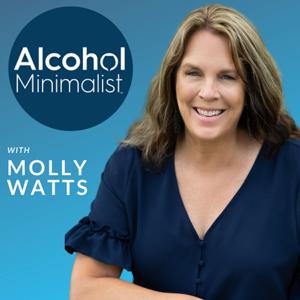

In this episode, Molly explores one of the most emotionally charged moments in any behavior change journey: going off plan. Whether you're trying to drink less, eat healthier, or shift any long-standing habit, that moment of “I said I wouldn’t, but I did” can feel like failure.
But what if it’s not?
Molly shares how deeply rooted perfectionist narratives — especially around alcohol — make us believe that if we slip, we must be broken, or incapable of moderation. Drawing from neuroscience and psychology, she explains how our brains create conditioned responses and how off-plan drinking isn't a diagnosis, it’s data.
You'll learn why changing your relationship with alcohol (or any habit) doesn’t require perfection — it requires compassion, curiosity, and a willingness to keep going. And you'll be introduced to the Off-Plan Plan, which is a tool she teaches in her programs.
What You’ll Learn
Key Quote from the Episode
“Off-plan drinking is not a diagnosis. It’s not proof that you can’t do it. It’s information. It’s data. It’s your brain telling you that something about that moment overwhelmed the tools you had available.”Weekly Reflection
When I drink off plan, what story do I immediately tell myself about who I am?And what would change if I treated that moment as information instead of evidence?Resources & Mentions
Low risk drinking guidelines from the NIAAA:
Healthy men under 65:
No more than 4 drinks in one day and no more than 14 drinks per week.
Healthy women (all ages) and healthy men 65 and older:
No more than 3 drinks in one day and no more than 7 drinks per week.
One drink is defined as 12 ounces of beer, 5 ounces of wine, or 1.5 ounces of 80-proof liquor. So remember that a mixed drink or full glass of wine are probably more than one drink.
Abstinence from alcohol
Abstinence from alcohol is the best choice for people who take medication(s) that interact with alcohol, have health conditions that could be exacerbated by alcohol (e.g. liver disease), are pregnant or may become pregnant or have had a problem with alcohol or another substance in the past.
Benefits of “low-risk” drinking
Following these guidelines reduces the risk of health problems such as cancer, liver disease, reduced immunity, ulcers, sleep problems, complications of existing conditions, and more. It also reduces the risk of depression, social problems, and difficulties at school or work.
 View all episodes
 By Molly Watts, Mindful Drinking & Behavior Change Coach

4.8
156156 ratings
In this episode, Molly explores one of the most emotionally charged moments in any behavior change journey: going off plan. Whether you're trying to drink less, eat healthier, or shift any long-standing habit, that moment of “I said I wouldn’t, but I did” can feel like failure.
But what if it’s not?
Molly shares how deeply rooted perfectionist narratives — especially around alcohol — make us believe that if we slip, we must be broken, or incapable of moderation. Drawing from neuroscience and psychology, she explains how our brains create conditioned responses and how off-plan drinking isn't a diagnosis, it’s data.
You'll learn why changing your relationship with alcohol (or any habit) doesn’t require perfection — it requires compassion, curiosity, and a willingness to keep going. And you'll be introduced to the Off-Plan Plan, which is a tool she teaches in her programs.
What You’ll Learn
Key Quote from the Episode
“Off-plan drinking is not a diagnosis. It’s not proof that you can’t do it. It’s information. It’s data. It’s your brain telling you that something about that moment overwhelmed the tools you had available.”Weekly Reflection
When I drink off plan, what story do I immediately tell myself about who I am?And what would change if I treated that moment as information instead of evidence?Resources & Mentions
Low risk drinking guidelines from the NIAAA:
Healthy men under 65:
No more than 4 drinks in one day and no more than 14 drinks per week.
Healthy women (all ages) and healthy men 65 and older:
No more than 3 drinks in one day and no more than 7 drinks per week.
One drink is defined as 12 ounces of beer, 5 ounces of wine, or 1.5 ounces of 80-proof liquor. So remember that a mixed drink or full glass of wine are probably more than one drink.
Abstinence from alcohol
Abstinence from alcohol is the best choice for people who take medication(s) that interact with alcohol, have health conditions that could be exacerbated by alcohol (e.g. liver disease), are pregnant or may become pregnant or have had a problem with alcohol or another substance in the past.
Benefits of “low-risk” drinking
Following these guidelines reduces the risk of health problems such as cancer, liver disease, reduced immunity, ulcers, sleep problems, complications of existing conditions, and more. It also reduces the risk of depression, social problems, and difficulties at school or work.
1,713 Listeners

1,082 Listeners
2,558 Listeners
27,775 Listeners

142 Listeners
1,372 Listeners
719 Listeners
1,245 Listeners
187 Listeners
563 Listeners
1,087 Listeners

19,524 Listeners

1,794 Listeners
472 Listeners
1,211 Listeners