
Sign up to save your podcasts
Or


You think of “physical therapy” and the words itself indicate that PTs must “physically” treat patients. When it isn’t safe to make direct contact due to COVID-19, what happens then? Dr. Rami Said, the Director of the Columbia University Physical Therapy Faculty Practice & Instructor of Rehabilitation and Regenerative Medicine at Columbia University, joins us today to discuss the shift that took place within PT academics and his clinical practice.
When New York City shut down in March 2020, PT graduate schools like Columbia University were deeply affected. Students and faculty had to reshape their entire curriculum to optimize learning in the safest way possible. Clinics still needed to treat their patients without compromising their care. Dr. Said dives into the steps his clinical facility and academic department took to overcome these challenges. He emphasizes that telehealth and virtual platforms surprisingly work very well and have given rise to a whole new future within academics and healthcare.
As a Board-Certified Orthopedic Clinical Specialist, Dr. Said specializes in delivering individualized physical therapy treatment to patients of all ages with a wide range of musculoskeletal, sports, and spine injuries in order to maximize function, improve quality of life, and restore the participation of recreational, functional, or professional activities. As an Instructor of Rehabilitation and Regenerative Medicine for the Doctoral Program in Physical Therapy, he participates in the instruction of Gross Anatomy, Kinesiology, Biomechanics, Orthopedics, and Sports Rehabilitation. His areas of interests include creating a movement-based injury risk profile for athletes of different sports, the utilization of technology to assess biomechanical forces and stress applied to the body during therapeutic exercise, and the delivery of physical therapy education.
Book an appointment with Dr. Said at Columbia University’s Faculty Practice Website.
 View all episodes
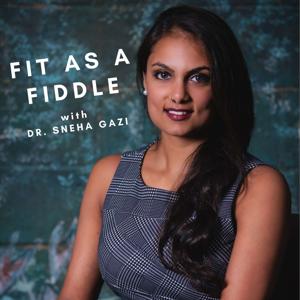
 By Dr. Sneha Gazi

4.9
1111 ratings
You think of “physical therapy” and the words itself indicate that PTs must “physically” treat patients. When it isn’t safe to make direct contact due to COVID-19, what happens then? Dr. Rami Said, the Director of the Columbia University Physical Therapy Faculty Practice & Instructor of Rehabilitation and Regenerative Medicine at Columbia University, joins us today to discuss the shift that took place within PT academics and his clinical practice.
When New York City shut down in March 2020, PT graduate schools like Columbia University were deeply affected. Students and faculty had to reshape their entire curriculum to optimize learning in the safest way possible. Clinics still needed to treat their patients without compromising their care. Dr. Said dives into the steps his clinical facility and academic department took to overcome these challenges. He emphasizes that telehealth and virtual platforms surprisingly work very well and have given rise to a whole new future within academics and healthcare.
As a Board-Certified Orthopedic Clinical Specialist, Dr. Said specializes in delivering individualized physical therapy treatment to patients of all ages with a wide range of musculoskeletal, sports, and spine injuries in order to maximize function, improve quality of life, and restore the participation of recreational, functional, or professional activities. As an Instructor of Rehabilitation and Regenerative Medicine for the Doctoral Program in Physical Therapy, he participates in the instruction of Gross Anatomy, Kinesiology, Biomechanics, Orthopedics, and Sports Rehabilitation. His areas of interests include creating a movement-based injury risk profile for athletes of different sports, the utilization of technology to assess biomechanical forces and stress applied to the body during therapeutic exercise, and the delivery of physical therapy education.
Book an appointment with Dr. Said at Columbia University’s Faculty Practice Website.
777 Listeners

1,086 Listeners
12,162 Listeners

3,889 Listeners
9,302 Listeners
1,816 Listeners

27,748 Listeners
838 Listeners

29,328 Listeners
1,468 Listeners

21,307 Listeners
1,224 Listeners
1,398 Listeners
12 Listeners
1,089 Listeners