
Sign up to save your podcasts
Or



Richard Poplak is an author, investigative journalist, and filmmaker based in Johannesburg, South Africa, and a regular Rhyming Chaos guest.
In this episode, we catch up after half a year of Trump 2.0 and of this podcast. Topics include:
* State capture in South Africa and the U.S.
* Trump’s bullying of the tiny and crushingly poor nation of Lesotho.
* Science denialism in South Africa and America.
* How the middle class suffers and survives in South Africa and the future of the American middle class.
* The scapegoating and persecution of immigrants in South Africa and the U.S.
* Why the U.S. is looking like a developing country.
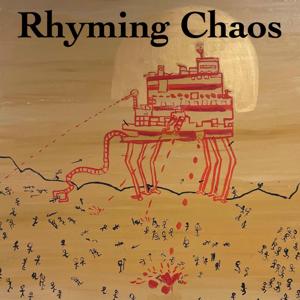
The Rhyming Chaos podcast is produced by Jeremy Goldkorn and Maria Repnikova, and edited by Cadre Scripts. The theme music is Paper Boy, composed and performed on the guzheng by Wu Fei. Our closing music is Erik Satie’s Gymnopédie No. 1, arranged and performed by Wu Fei. Our cover art is by Li Yunfei.
Please subscribe wherever you get your podcasts, leave us a review, and if you like what we’re doing, please take out a paid subscription at rhymingchaos.com.
Misha Glenny reported on the 1989 revolutions and the wars in the former Yugoslavia for the BBC. He has written a number of bestselling books on Eastern European history, the Balkan wars, and organized crime, and is regularly consulted by governments and law enforcement agencies on the Balkans and Eastern Europe and on transnational organized crime.
In this wide-ranging episode we discuss:
* The fragmentation of Yugoslavia and the political and cultural factors behind the Balkan wars
* Slobodan Milošević's rise to power and his control of the media
* Scapegoating as a political tool
* The current political climate in the U.S. and historical patterns of authoritarianism and populism.
* Organized crime and state capture
* Cybercrime and cryptocurrencies
* The prognosis for America
The Rhyming Chaos podcast is produced by Jeremy Goldkorn and Maria Repnikova, and edited by Cadre Scripts. The theme music is Paper Boy, composed and performed on the guzheng by Wu Fei. Our closing music is Erik Satie’s Gymnopédie No. 1, arranged and performed by Wu Fei. Our cover art is by Li Yunfei.
Please subscribe wherever you get your podcasts, leave us a review, and if you like what we’re doing, please take out a paid subscription at rhymingchaos.com.
Megan K. Stack has been a foreign correspondent in China, Russia, Egypt, and Israel, and covered the post-9/11 wars in Pakistan and Afghanistan, after which she wrote the book, Every Man in This Village is a Liar: An Education in War. Her second book is Women's Work: A Personal Reckoning with Labor, Motherhood, and Privilege.
Megan is a contributing opinion writer to the New York Times, and recently published a piece there: Can we see our future in China’s cameras?
In this podcast, we discuss:
* Living under state surveillance in Moscow and Beijing
* Being a foreign correspondent in Beijing from 2010 to 2013
* Traveling in the Chinese panopticon in 2025
* Algorithmic policing in China
* The perils of data centralization
* DOGE and U.S. government surveillance and AI policy
* How to cope
The Rhyming Chaos podcast is produced by Jeremy Goldkorn and Maria Repnikova, and edited by Cadre Scripts. The theme music is Paper Boy, composed and performed on the guzheng by Wu Fei. Our closing music is Erik Satie’s Gymnopédie No. 1, arranged and performed by Wu Fei. Our cover art is by Li Yunfei.
Please subscribe wherever you get your podcasts, leave us a review, and if you like what we’re doing, please take out a paid subscription at rhymingchaos.com.
In the Soviet Union in the 1970s, “nobody gave a damn” about the official ideology, although “people with higher education were expected to pledge allegiance to it,” says Maria Lipman. She began her career as a medical translator at that time, a job that allowed her to work from home and have as little to do with the state as possible.
She became a translator, researcher, and contributor to the Washington Post in the years immediately after the fall of the Soviet Union, and from 2001 to 2011 a columnist for the newspaper. She has been a fellow at the Carnegie Moscow Center, editor of the Pro et Contra journal, contributor to Foreign Affairs and many other publications, and held a number of prestigious academic positions. Maria continued to live in Moscow until 2022, closely observing Russian society and politics under Gorbachev, Yeltsin, and Putin.
She is currently a visiting scholar at George Washington University.
In this conversation, we cover:
* Life in the Soviet Union during the Era of Stagnation—not all grim
* The post-Soviet era: Journalism under a weakened state
* The rise of Putin and the recentralization of power
* The emergence of political activism and Alexei Navalny
* A shift from hope to repression
* Can Russian journalism thrive in exile?
* Reflections on authoritarianism in the U.S.
The Rhyming Chaos podcast is produced by Jeremy Goldkorn and Maria Repnikova, and edited by Cadre Scripts. The theme music is Paper Boy, composed and performed on the guzheng by Wu Fei. Our closing music is Erik Satie’s Gymnopédie No. 1, arranged and performed by Wu Fei. Our cover art is by Li Yunfei.
Please subscribe wherever you get your podcasts, leave us a review, and if you like what we’re doing, please take out a paid subscription at rhymingchaos.com.
Rohit Chopra is a professor in the Department of Communication at Santa Clara University and the author of Technology and Nationalism in India: Cultural Negotiations from Colonialism to Cyberspace, The Gita for a Global World: Ethical Action in an Age of Flux, and other books.
His research centers on global media and cultural identity, new media, and media and memory, with a focus on global Hindu nationalist and far-right online communities.
We discussed Narendra Modi’s rise to power, his use of Hindu nationalism as a political tool, and India’s lessons for America.
Glossary
The discussion goes into some detail about people, places, and political parties that may sound unfamiliar to some listeners, so below we include a brief glossary if you need a little more context:
The CongressThe Indian National Congress, colloquially the Congress Party, or simply the Congress, was founded in 1885 and became the leading movement organizing for independence from the British Empire under the leadership of Mahatma Gandhi. After independence in 1947, Congress dominated Indian politics for the next half century, initially led by India's first Prime Minister Jawaharlal Nehru. His daughter, Indira Gandhi—the surname is from her husband Feroze Gandhi, not related to Mahatma—was prime minister of India from 1966 to 1977, and again from 1980 until her assassination in 1984. Her son Rajiv Gandhi was prime minister from 1984 to 1989. He was assassinated in 1991.
The BJP and the RSSThe Bharatiya Janata Party (BJP) has been the ruling political party in India since 2014 under the incumbent Prime Minister Narendra Modi. The BJP is aligned with right-wing, Hindu nationalist politics and has links to the Rashtriya Swayamsevak Sangh (RSS), a far-right paramilitary organization that began life as a Hindu cultural organization in 1925.
The EmergencyThe Emergency in India was a 21-month period from 1975 to 1977 when Prime Minister Indira Gandhi declared a state of emergency across the country after a court found her guilty of electoral malpractices, invalidating her election win. Citing imminent internal and external threats to the Indian state, the government suspended elections, imprisoned political opponents, censored the press, banned worker strikes, and imposed wage freezes.
The Babri Mosque and the Ram TempleThe Babri Mosque (or Babri Masjid) was built in 1528 in the city of Ayodhya, in the northern Indian state of Uttar Pradesh (where the Taj Mahal is located, a few hundred miles away).
A Hindu nationalist mob destroyed it in 1992, claiming it had been built on the birthplace of Lord Rama, an important god of the Hindu pantheon, and that it had been a sacred Hindu site before the mosque’s construction. In 2019 (after Modi was entrenched as prime minister), the Supreme Court of India decided to give the disputed land to Hindus for construction of a temple, while Muslims were given land nearby.
Shah Bano caseShah Bano Begum, a Muslim woman, was divorced by her husband under customary Muslim law in 1978. In India, “personal laws” govern matters of marriage, divorce, and inheritance, and may be decided by different religious communities, and under personal law, the husband would not need to pay alimony. She sued, and in 1985, won the right to alimony in a case heard by India’s Supreme Court. Protests by Muslims against the judgment broke out across India. A group of Muslim politicians also tried to get the verdict nullified.
Amit ShahIndia’s current Minister of Home Affairs who has been accused of crimes including arranging an extrajudicial killing, but has never been found guilty.
Umar KhalidA student activist who has been accused of sedition and later of being a “key conspirator” in ethnic clashes and has been in jail since 2020 without being formally charged or having a trial.
The Rhyming Chaos podcast is produced by Jeremy Goldkorn and Maria Repnikova, and edited by Cadre Scripts. The theme music is Paper Boy, composed and performed on the guzheng by Wu Fei. Our closing music is Erik Satie’s Gymnopédie No. 1, arranged and performed by Wu Fei. Our cover art is by Li Yunfei.
Please subscribe wherever you get your podcasts, leave us a review, and if you like what we’re doing, please take out a paid subscription at rhymingchaos.com.
From Sarah Palin to the Dreyfus Affair to Stalinist torture rooms, from World War II to the Russian invasion of Ukraine, this conversation with Marci Shore covers a lot of ground.
Marci is a Professor and Chair of intellectual history at the University of Toronto. She is the translator of Michał Głowiński’s The Black Seasons, and the author of Caviar and Ashes: A Warsaw Generation’s Life and Death in Marxism, The Taste of Ashes: The Afterlife of Totalitarianism in Eastern Europe, and The Ukrainian Night: An Intimate History of Revolution.
Towards the end of the podcast, she mentions the website Small Acts of Democratic Resistance. This site is meant to be a platform for solidarity and moral support, but also a resource for journalists, especially those outside of the U.S.
If you’re in the U.S. and are taking part in any acts of democratic resistance, large or small, you can write to [email protected] to get in touch with the website.
The Rhyming Chaos podcast is produced by Jeremy Goldkorn and Maria Repnikova, and edited by Cadre Scripts. The theme music is Paper Boy, composed and performed on the guzheng by Wu Fei. Our closing music is Erik Satie’s Gymnopédie No. 1, arranged and performed by Wu Fei. Our cover art is by Li Yunfei.
Please subscribe wherever you get your podcasts, leave us a review, and if you like what we’re doing, please take out a paid subscription at rhymingchaos.com.
Historian and sinologist Jeffrey Wasserstrom is the Chancellor's Professor of History at the University of California, Irvine, and the author of many books, including The Oxford Illustrated History of Modern China, China in the 21st Century: What Everyone Needs to Know, and most recently, The Milk Tea Alliance: Inside Asia's Struggle Against Autocracy and Beijing.
We chatted to him about the Milk Tea Alliance, and America. This was recorded on the resonant date of June 4, 2025, before the No Kings protests in the U.S. of June 14.
The Rhyming Chaos podcast is produced by Jeremy Goldkorn and Maria Repnikova, and edited by Cadre Scripts. The theme music is Paper Boy, composed and performed on the guzheng by Wu Fei. Our closing music is Erik Satie’s Gymnopédie No. 1, arranged and performed by Wu Fei. Our cover art is by Li Yunfei.
Please subscribe wherever you get your podcasts, leave us a review, and if you like what we’re doing, please take out a paid subscription at rhymingchaos.com.
We can learn a lot about Trump and Musk from studying other strongmen in other countries and at other times, especially those who have entered politics after careers in media and business.
This interview, recorded on the afternoon of June 6 as the terrible two of the Oval Office were feuding online, is an amazing crash course in the Italian strongmen Mussolini and Berlusconi, with Professor Ruth Ben-Ghiat.
She is a leading scholar of fascism, authoritarianism, propaganda, and how democracies can stay resilient, Professor of History and Italian Studies at New York University, and the author of numerous books in English and Italian.
Her most recent book, Strongmen: Mussolini to the Present, examines how how illiberal leaders use propaganda, corruption, the persecution of scapegoats, and machismo. As the author of the first book to look at how Trump compares to other authoritarians of the last 100 years, Ruth is the perfect guest for Rhyming Chaos to help us understand how Musk and Trump function. And how we might defeat them.
The Rhyming Chaos podcast is produced by Jeremy Goldkorn and Maria Repnikova, and edited by Cadre Scripts. The theme music is Paper Boy, composed and performed on the guzheng by Wu Fei. Our closing music is Erik Satie’s Gymnopédie No. 1, arranged and performed by Wu Fei. Our cover art is by Li Yunfei.
Please subscribe wherever you get your podcasts, leave us a review, and if you like what we’re doing, please take out a paid subscription at rhymingchaos.com.
Michela Wrong has reported from many African countries for the BBC, Reuters, and the Financial Times since the 1980s. Her books include In the Footsteps of Mr. Kurtz: The Rise and Fall of Mobutu Sese Seko and the Destruction of Zaire (now called the Democratic Republic of Congo); I Didn’t Do It For You, a history of Eritrea; It’s Our Turn to Eat, about the Kenyan corruption whistleblower John Githongo; and Do Not Disturb: The Story of a Political Murder and an African Regime Gone Bad on President Paul Kagame’s Rwanda.
In this show, we focus on Rwanda, Kagame, and the chilling tale of a hit squad murdering one of Kagame’s oldest friends.
The Rhyming Chaos podcast is produced by Jeremy Goldkorn and Maria Repnikova, and edited by Cadre Scripts. The theme music is Paper Boy, composed and performed on the guzheng by Wu Fei. Our closing music is Erik Satie’s Gymnopédie No. 1, arranged and performed by Wu Fei. Our cover art is by Li Yunfei.
Please subscribe wherever you get your podcasts, leave us a review, and if you like what we’re doing, please take out a paid subscription at rhymingchaos.com.
Stacy Torres is an assistant professor of sociology at the University of California, San Francisco, and author of At Home in the City: Growing Old in Urban America. She recently wrote an essay for The Guardian newspaper, titled “I used to laugh at my Chilean father’s paranoia about life in the U.S.—not any more.”
We talked to her about her father, intergenerational paranoia, life at an American university right now, how to cope in an authoritarian regime, fingerspitzengefühl, and more.
The Rhyming Chaos podcast is produced by Jeremy Goldkorn and Maria Repnikova, and edited by Cadre Scripts. The theme music is Paper Boy, composed and performed on the guzheng by Wu Fei. Our closing music is Erik Satie’s Gymnopédie No. 1, arranged and performed by Wu Fei. Our cover art is by Li Yunfei.
Please subscribe wherever you get your podcasts, leave us a review, and if you like what we’re doing, please take out a paid subscription at rhymingchaos.com.
Related: A short photo essay about hats
From the publisher's feed
123 Listeners
603 Listeners

87,142 Listeners
1,451 Listeners

21 Listeners
7,118 Listeners

2,079 Listeners

3,137 Listeners
141 Listeners

15,872 Listeners

355 Listeners
474 Listeners
331 Listeners

579 Listeners

157 Listeners