
Sign up to save your podcasts
Or

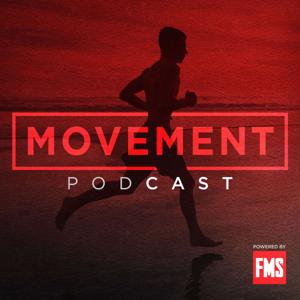

In this episode of the Movement Podcast, Gray Cook and Lee Burton are joined by Dr. Todd Arnold, a board-certified sports medicine physician with more than two decades of experience caring for athletes at every level — from high school and collegiate sports to NCAA Championships, World Championships, and elite international competition.
Dr. Arnold serves as the medical officer for elite athlete healthcare for USA Track & Field, where his role is not simply to react to injuries, but to help athletes stay healthy enough to train, compete, and perform when it matters most.
This conversation explores how movement assessment fits into modern sports medicine and why runners need more than mileage, strength, or biomechanics alone. Dr. Arnold shares how he uses movement screening, Y Balance, table exams, biomechanics, recovery conversations, and individual baselines to better understand each athlete’s state of readiness.
The discussion covers:
Why sports medicine needs to move from reactive to proactive care
How Dr. Arnold applies movement systems with elite runners
Why every runner needs an individual baseline
The three things Dr. Arnold does not want to miss in runners
Ankle dorsiflexion asymmetry
Glute sequencing and timing
Thoracic extension
Why running is repetitive, predictable, and demanding
How movement screens help create athlete buy-in
Why table exams still matter
How Faber and Thomas testing relate to running mechanics
The relationship between movement readiness and wearable data
Why recovery may be the biggest mistake many runners make
How coaches, clinicians, sports psychologists, dietitians, and biomechanics teams can use movement as a shared language
The key takeaway: running performance is not just about training harder. It is about understanding whether the athlete is ready to absorb, adapt, and repeat the work.
Learn more about Functional Movement Systems:
https://www.functionalmovement.com/
Functional Movement Systems
YouTube
X (Twitter)
Subscribe to the FMS Newsletter
 View all episodes
 By Gray Cook and Dr. Lee Burton

4.7
123123 ratings
In this episode of the Movement Podcast, Gray Cook and Lee Burton are joined by Dr. Todd Arnold, a board-certified sports medicine physician with more than two decades of experience caring for athletes at every level — from high school and collegiate sports to NCAA Championships, World Championships, and elite international competition.
Dr. Arnold serves as the medical officer for elite athlete healthcare for USA Track & Field, where his role is not simply to react to injuries, but to help athletes stay healthy enough to train, compete, and perform when it matters most.
This conversation explores how movement assessment fits into modern sports medicine and why runners need more than mileage, strength, or biomechanics alone. Dr. Arnold shares how he uses movement screening, Y Balance, table exams, biomechanics, recovery conversations, and individual baselines to better understand each athlete’s state of readiness.
The discussion covers:
Why sports medicine needs to move from reactive to proactive care
How Dr. Arnold applies movement systems with elite runners
Why every runner needs an individual baseline
The three things Dr. Arnold does not want to miss in runners
Ankle dorsiflexion asymmetry
Glute sequencing and timing
Thoracic extension
Why running is repetitive, predictable, and demanding
How movement screens help create athlete buy-in
Why table exams still matter
How Faber and Thomas testing relate to running mechanics
The relationship between movement readiness and wearable data
Why recovery may be the biggest mistake many runners make
How coaches, clinicians, sports psychologists, dietitians, and biomechanics teams can use movement as a shared language
The key takeaway: running performance is not just about training harder. It is about understanding whether the athlete is ready to absorb, adapt, and repeat the work.
Learn more about Functional Movement Systems:
https://www.functionalmovement.com/
Functional Movement Systems
YouTube
X (Twitter)
Subscribe to the FMS Newsletter
611 Listeners
1,863 Listeners
7,279 Listeners
5,440 Listeners
895 Listeners

3,670 Listeners
717 Listeners

496 Listeners

9,231 Listeners

7,995 Listeners

1,829 Listeners

657 Listeners

840 Listeners

29,207 Listeners
216 Listeners