
Sign up to save your podcasts
Or

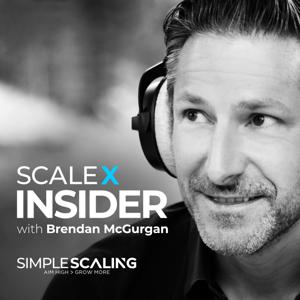


SME leadership lessons become useful when you can put them into practice.
In this clip from the ScaleX Insider Season 21 wrap-up, Brendan McGurgan and Claire Colvin revisit Guy Kawasaki's framework for creating a product or service that is both unique and valuable, Stephen Rogelberg's advice on better meetings, and JL Holdsworth's insights on how we respond to pressure.
Claire also shares what she wants to bring into Simple Scaling's own team, from turning meeting agendas into questions to agreeing which business problems AI could help solve.
Practical reflections for SME leaders looking to strengthen their proposition, make meetings more productive and lead with greater calm.
Scaling your business brings plenty of questions. Are your meetings helping people move forward? Where could AI make a useful difference? And how do you keep learning while managing the demands of leadership?
In this Season 21 wrap-up of ScaleX Insider, Brendan McGurgan and his business partner, Claire Colvin, revisit the guests, conversations and practical insights that stood out across the season.
For SME leaders with full diaries and ambitious plans, there is plenty to take back into the business. From Stephen Rogelberg's insights on better meetings to Paul Cheek's guidance on exploring and implementing AI, Brendan and Claire reflect on ideas that can help leaders rethink how they spend their time and approach growth.
They also look back on Brendan's conversation with Silicon Valley legend Guy Kawasaki—a guest whose work first influenced him 26 years ago, while he was helping to scale a software company. Getting Guy onto the podcast took 18 months, several reschedules and one memorable misunderstanding about "PT".
In this episode:
Brendan and Claire share their reflections on Season 21 and its variety of guests.
They revisit practical lessons on meetings, AI and leadership.
Claire explains why the season's actionable advice stood out to her.
Brendan shares the personal significance of interviewing Guy Kawasaki.
They introduce two ways SME leaders can build the clarity, capability and community to scale with purpose.
Whether you have followed the whole season or are looking for a place to start, join Brendan and Claire for a look back at conversations worth revisiting.
Ready to take the next step in scaling your business?
ScaleX / Simple Scaling📊 Free Diagnostic – Score Your Business Across the 10 Principles of Scaling https://scalexaccelerator.simplescaling.com/scalex-10p-scaling-diagnostic
⚡ ScaleX Accelerator (over £3M revenue) – Register Here https://scalexaccelerator.simplescaling.com/sx-programme-application
🚀 ScaleX Elevate (under £3M revenue) – Register Here https://simplescaling.com/solutions/scalexelevate-scale-up-coaching/
📘 Book: Simple Scaling: 10 Proven Principles to 10x Your Business
🌐 Website https://simplescaling.com
✉️ Email [email protected]
💼 LinkedIn https://www.linkedin.com/company/simple-scaling
📸 Instagram https://www.instagram.com/simple_scaling
▶️ YouTube https://www.youtube.com/@simplescaling
Host: Brendan McGurgan Guest: Claire Colvin
If you enjoyed this episode, please subscribe, leave a review and share it with another business leader.
AI for SMEs starts with a clear question: what problem are you trying to solve?
In this clip from the ScaleX Insider Season 21 wrap-up, Brendan McGurgan and Claire Colvin reflect on Paul Cheek's advice on adopting AI. Claire shares how her own frustrations with technology have shaped her approach, and why identifying three to five business challenges with the team could give AI experimentation a useful focus.
A practical conversation for SME leaders looking to reduce operational friction, improve customer experience and give their teams a clear place to start with AI.
Scaling your business brings plenty of questions. Are your meetings helping people move forward? Where could AI make a useful difference? And how do you keep learning while managing the demands of leadership?
In this Season 21 wrap-up of ScaleX Insider, Brendan McGurgan and his business partner, Claire Colvin, revisit the guests, conversations and practical insights that stood out across the season.
For SME leaders with full diaries and ambitious plans, there is plenty to take back into the business. From Stephen Rogelberg's insights on better meetings to Paul Cheek's guidance on exploring and implementing AI, Brendan and Claire reflect on ideas that can help leaders rethink how they spend their time and approach growth.
They also look back on Brendan's conversation with Silicon Valley legend Guy Kawasaki—a guest whose work first influenced him 26 years ago, while he was helping to scale a software company. Getting Guy onto the podcast took 18 months, several reschedules and one memorable misunderstanding about "PT".
In this episode:
Brendan and Claire share their reflections on Season 21 and its variety of guests.
They revisit practical lessons on meetings, AI and leadership.
Claire explains why the season's actionable advice stood out to her.
Brendan shares the personal significance of interviewing Guy Kawasaki.
They introduce two ways SME leaders can build the clarity, capability and community to scale with purpose.
Whether you have followed the whole season or are looking for a place to start, join Brendan and Claire for a look back at conversations worth revisiting.
Ready to take the next step in scaling your business?
ScaleX / Simple Scaling📊 Free Diagnostic – Score Your Business Across the 10 Principles of Scaling https://scalexaccelerator.simplescaling.com/scalex-10p-scaling-diagnostic
⚡ ScaleX Accelerator (over £3M revenue) – Register Here https://scalexaccelerator.simplescaling.com/sx-programme-application
🚀 ScaleX Elevate (under £3M revenue) – Register Here https://simplescaling.com/solutions/scalexelevate-scale-up-coaching/
📘 Book: Simple Scaling: 10 Proven Principles to 10x Your Business
🌐 Website https://simplescaling.com
✉️ Email [email protected]
💼 LinkedIn https://www.linkedin.com/company/simple-scaling
📸 Instagram https://www.instagram.com/simple_scaling
▶️ YouTube https://www.youtube.com/@simplescaling
Host: Brendan McGurgan Guest: Claire Colvin
If you enjoyed this episode, please subscribe, leave a review and share it with another business leader.
Scaling your business brings plenty of questions.
Are your meetings helping people move forward? Where could AI make a useful difference? And how do you keep learning while managing the demands of leadership?
In this Season 21 wrap-up of ScaleX Insider, Brendan McGurgan and his business partner, Claire Colvin, revisit the guests, conversations and practical insights that stood out across the season.
For SME leaders with full diaries and ambitious plans, there is plenty to take back into the business. From Stephen Rogelberg's insights on better meetings to Paul Cheek's guidance on exploring and implementing AI, Brendan and Claire reflect on ideas that can help leaders rethink how they spend their time and approach growth.
They also look back on Brendan's conversation with Silicon Valley legend Guy Kawasaki—a guest whose work first influenced him 26 years ago, while he was helping to scale a software company. Getting Guy onto the podcast took 18 months, several reschedules and one memorable misunderstanding about "PT".
In this episode:
Brendan and Claire share their reflections on Season 21 and its variety of guests.
They revisit practical lessons on meetings, AI and leadership.
Claire explains why the season's actionable advice stood out to her.
Brendan shares the personal significance of interviewing Guy Kawasaki.
They introduce two ways SME leaders can build the clarity, capability and community to scale with purpose.
Whether you have followed the whole season or are looking for a place to start, join Brendan and Claire for a look back at conversations worth revisiting.
Ready to take the next step in scaling your business?
ScaleX / Simple Scaling📊 Free Diagnostic – Score Your Business Across the 10 Principles of Scaling https://scalexaccelerator.simplescaling.com/scalex-10p-scaling-diagnostic
⚡ ScaleX Accelerator (over £3M revenue) – Register Here https://scalexaccelerator.simplescaling.com/sx-programme-application
🚀 ScaleX Elevate (under £3M revenue) – Register Here https://simplescaling.com/solutions/scalexelevate-scale-up-coaching/
📘 Book: Simple Scaling: 10 Proven Principles to 10x Your Business
🌐 Website https://simplescaling.com
✉️ Email [email protected]
💼 LinkedIn https://www.linkedin.com/company/simple-scaling
📸 Instagram https://www.instagram.com/simple_scaling
▶️ YouTube https://www.youtube.com/@simplescaling
Host: Brendan McGurgan, Co-Founder Simple Scaling Guest: Claire Colvin
If you enjoyed this episode, please subscribe, leave a review and share it with another business leader.
What makes someone truly remarkable? Is it their success, their personality, or the impact they leave behind?
In this 5-minute clip from ScaleX Insider, Brendan McGurgan speaks with Guy Kawasaki about his experience working with Steve Jobs and what separates remarkable leaders from the rest.
Guy shares his candid perspective on Jobs' brilliance and difficult personality, explains why Canva founder Melanie Perkins proves that success doesn't require being difficult to work with, and challenges the idea that remarkability can be judged by a single moment.
His message? Being remarkable isn't about copying successful people. It's about the body of work you build over time.
Listen to the clip for a fascinating perspective on Steve Jobs, leadership and what it really means to be remarkable.
00:00 – What makes someone truly remarkable?
00:30 – Steve Jobs and Jane Goodall: Two remarkable individuals
01:05 – Steve Jobs: Brilliant genius or difficult leader?
02:00 – Melanie Perkins and why success doesn't require being difficult
02:45 – Why copying Steve Jobs won't make you successful
03:45 – Can you recognise remarkable leadership in a single moment?
04:40 – Why remarkability is measured by a lifetime of work
About Guy KawasakiGuy Kawasaki is the chief evangelist of Canva and a former chief evangelist of Apple, where he played an influential role in the marketing of the Macintosh. He is the author of 19 books, including Think Remarkable, The Art of the Start and Rules for Revolutionaries, and hosts the Remarkable People podcast.
Through his writing, speaking and podcasting, Guy shares insights on innovation, entrepreneurship, leadership and making a meaningful difference.
Connect with Guy Kawasaki:
Website: https://guykawasaki.com/
Substack: https://guykawasaki.substack.com/
ScaleX / Simple Scaling📊 Free Diagnostic – Score Your Business Across the 10 Principles of Scaling https://scalexaccelerator.simplescaling.com/scalex-10p-scaling-diagnostic
⚡ ScaleX Accelerator (over £3M revenue) – Register Here https://scalexaccelerator.simplescaling.com/sx-programme-application
🚀 ScaleX Elevate (under £3M revenue) – Register Here https://simplescaling.com/solutions/scalexelevate-scale-up-coaching/
📘 Book: Simple Scaling: 10 Proven Principles to 10x Your Business
🌐 Website https://simplescaling.com
✉️ Email [email protected]
💼 LinkedIn https://www.linkedin.com/company/simple-scaling
📸 Instagram https://www.instagram.com/simple_scaling
▶️ YouTube https://www.youtube.com/@simplescaling
Guest: Guy Kawasaki
If you enjoyed this episode, please subscribe, leave a review and share it with another business leader.
What if the secret to scaling your business is to stop worrying about scaling?
In this 7-minute clip from ScaleX Insider, Brendan McGurgan speaks with Guy Kawasaki, former Apple chief evangelist and current Canva chief evangelist, about what businesses should focus on before pursuing growth.
Guy explains why doing things that don't scale is often essential to winning your first customers, why smaller businesses have an advantage when experimenting with new ideas, and how his simple two-by-two framework can help entrepreneurs create something both unique and valuable.
Using Apple's iPod as an example, he reveals why differentiation alone isn't enough. Your product or service must also deliver something customers genuinely value.
The key message? Before figuring out how to scale, make sure you've built something worth scaling.
Timestamps00:00 – Why great products and word of mouth come first
00:45 – The importance of doing things that don't scale
01:50 – Why gaining customers is harder than scaling
02:35 – How small businesses can experiment with new ideas
03:30 – Guy's unique and valuable two-by-two framework
04:35 – Why businesses end up competing on price
05:15 – How Apple's iPod combined uniqueness with value
06:15 – Finding your competitive advantage in any market
📊 Free Diagnostic – Score Your Business Across the 10 Principles of Scaling https://scalexaccelerator.simplescaling.com/scalex-10p-scaling-diagnostic
⚡ ScaleX Accelerator (over £3M revenue) – Register Here https://scalexaccelerator.simplescaling.com/sx-programme-application
🚀 ScaleX Elevate (under £3M revenue) – Register Here https://simplescaling.com/solutions/scalexelevate-scale-up-coaching/
📘 Book: Simple Scaling: 10 Proven Principles to 10x Your Business
🌐 Website https://simplescaling.com
✉️ Email [email protected]
💼 LinkedIn https://www.linkedin.com/company/simple-scaling
📸 Instagram https://www.instagram.com/simple_scaling
▶️ YouTube https://www.youtube.com/@simplescaling
Guest: Guy Kawasaki
If you enjoyed this episode, please subscribe, leave a review and share it with another business leader.
What does it really take to build a business worth scaling?
Guy Kawasaki on scaling, entrepreneurship and what makes a business truly remarkable. In this episode of ScaleX Insider, Brendan McGurgan sits down with Guy Kawasaki, former Apple chief evangelist, current Canva chief evangelist, bestselling author and host of the Remarkable People podcast.
Drawing on decades of experience working alongside some of the world's most influential entrepreneurs, Guy challenges conventional thinking about business growth. His message is simple: before worrying about how to scale, focus on creating something people genuinely want.
From Apple's early days and the iconic Think Different campaign to Melanie Perkins' journey building Canva, Guy shares the lessons that have shaped his approach to innovation, marketing and entrepreneurship.
He explains why businesses should be willing to do things that don't scale, why word of mouth still matters in an increasingly noisy digital world, and how creating something both unique and valuable gives businesses their strongest foundation for growth.
Brendan and Guy also explore the importance of understanding customer pain, the role of luck and hard work in entrepreneurial success, and what it really means to lead and build a business with purpose.
In this episode, you'll discover:
Why getting your first customers is often harder than scaling your business.
How doing things that don't scale can create the foundations for long-term growth.
What Guy learned from Apple's Think Different campaign and working with Steve Jobs.
Why Guy believes word of mouth and credibility matter more than ever.
How to use the unique and valuable framework to differentiate your business.
What Melanie Perkins and Canva can teach entrepreneurs about solving real customer problems.
Why businesses experiencing a growth plateau need to rethink the problems they solve.
How luck, hard work and persistence contribute to entrepreneurial success.
Why great leaders should never ask customers or employees to do something they wouldn't do themselves.
Guy's three timeless principles for living and leading with purpose.
Timestamps:
00:00 – Introduction: Guy Kawasaki on scaling with purpose
03:00 – Why getting your first customers is harder than scaling
07:00 – The Silicon Valley mindset and building businesses that matter
12:00 – Behind Apple's iconic Think Different campaign
16:00 – Why word of mouth still matters more than social media
22:00 – Doing things that don't scale to build lasting growth
26:00 – Guy's unique and valuable framework for business success
31:00 – Steve Jobs, remarkable leadership and the importance of character
38:00 – Melanie Perkins, Canva and solving real customer problems
44:00 – Why Kodak failed to adapt and how businesses can avoid stagnation
49:00 – Building a meaningful legacy through entrepreneurship
55:00 – The role of luck, hard work and persistence in success
59:00 – Purpose, evangelism and empowering others
1:04:00 – Guy's three timeless lessons: learn, earn and return
About Guy KawasakiGuy Kawasaki is the chief evangelist of Canva and a former chief evangelist of Apple, where he played an influential role in the marketing of the Macintosh. He is the author of 19 books, including Think Remarkable, The Art of the Start and Rules for Revolutionaries, and hosts the Remarkable People podcast.
Through his writing, speaking and podcasting, Guy shares insights on innovation, entrepreneurship, leadership and making a meaningful difference.
Connect with Guy Kawasaki:
Website: https://guykawasaki.com/
Substack: https://guykawasaki.substack.com/
ScaleX / Simple ScalingBook: Simple Scaling: 10 Proven Principles to 10x Your Business Website: Simple Scaling Email: [email protected] Host: Brendan McGurgan, Co-Founder Simple Scaling Guest: Guy Kawasaki
If you enjoyed this episode, please subscribe, leave a review and share it with another business leader.
Becoming a scaling leader starts with how you see yourself and the habits you build. In this clip from ScaleX Insider, Brendan McGurgan and JL Holdsworth explore the connection between identity, consistent action and leading a growing business.
Drawing on his experience as a powerlifter, JL shares his perspective on why new leadership practices can feel uncomfortable at first. They discuss how habits and meaningful coaching conversations can help leaders build confidence in their ability to scale.
Timestamps
00:00 Do you see yourself as a scaling leader? 00:40 How practices and habits shape leadership identity 01:10 JL's perspective on resistance to change 01:50 How a coaching conversation can shift confidence 03:15 Looking beneath the labels we give ourselves 04:00 Connecting your internal state with your ability to scale
Connect with JL Holdsworth
🌐 Website: jlholdsworth.com💼 LinkedIn: JL Holdsworth
ScaleX / Simple Scaling📊 Free Diagnostic – Score Your Business Across the 10 Principles of Scaling https://scalexaccelerator.simplescaling.com/scalex-10p-scaling-diagnostic
⚡ ScaleX Accelerator (over £3M revenue) – Register Here https://scalexaccelerator.simplescaling.com/sx-programme-application
🚀 ScaleX Elevate (under £3M revenue) – Register Here https://simplescaling.com/solutions/scalexelevate-scale-up-coaching/
📘 Book: Simple Scaling: 10 Proven Principles to 10x Your Business
🌐 Website https://simplescaling.com
✉️ Email [email protected]
💼 LinkedIn https://www.linkedin.com/company/simple-scaling
📸 Instagram https://www.instagram.com/simple_scaling
▶️ YouTube https://www.youtube.com/@simplescaling
Host: Brendan McGurgan Guest: JL Holdsworth
Staying calm once felt unfamiliar to JL Holdsworth. In this clip from ScaleX Insider, he tells Brendan McGurgan how a four-day workshop in South Africa led to an unexpected change that his wife noticed in just four words.
JL had travelled there to improve his performance. Instead, he describes finding himself responding calmly to a conversation that would previously have triggered anger. That experience began an 11-year exploration of the relationship between his nervous system, internal state and behaviour.
For business leaders, his story raises a relatable question: how does the state you bring into a conversation affect the people around you?
Timestamps
00:00 The four-day workshop in South Africa
00:15 The phone call that revealed something had changed
00:50 Staying calm instead of reacting with anger
01:25 "My wife could feel the difference in four words"
01:55 The beginning of an 11-year exploration
02:40 Reflecting on his past violence and behaviour
03:30 JL's perspective on internal state and behaviour
04:00 "I haven't even thought about being in a fight in 11 years"
Connect with JL Holdsworth
🌐 Website: jlholdsworth.com💼 LinkedIn: JL Holdsworth ScaleX / Simple Scaling
📊 Free Diagnostic – Score Your Business Across the 10 Principles of Scaling https://scalexaccelerator.simplescaling.com/scalex-10p-scaling-diagnostic
⚡ ScaleX Accelerator (over £3M revenue) – Register Here https://scalexaccelerator.simplescaling.com/sx-programme-application
🚀 ScaleX Elevate (under £3M revenue) – Register Here https://simplescaling.com/solutions/scalexelevate-scale-up-coaching/
📘 Book: Simple Scaling: 10 Proven Principles to 10x Your Business
🌐 Website https://simplescaling.com
✉️ Email [email protected]
💼 LinkedIn https://www.linkedin.com/company/simple-scaling
📸 Instagram https://www.instagram.com/simple_scaling
▶️ YouTube https://www.youtube.com/@simplescaling
Leadership under pressure can mean dealing with a key employee leaving, a difficult customer or an unexpected setback. In this episode of ScaleX Insider, JL Holdsworth joins Brendan McGurgan to explore how leaders can stay calm, think clearly and lead through uncertainty.
A world champion powerlifter, entrepreneur and performance coach, JL shares how a serious back injury led him to explore human performance beyond physical strength. He describes how a four-day experience in South Africa changed his behaviour, relationships and approach to life.
Brendan and JL discuss why lasting habits matter more than willpower, how our internal state affects the decisions we make and why working harder can only take us so far. JL introduces his approach, internal state calibration, and its three pillars: mind state, neuro state and state shift.
Through everyday business examples and a live breathing demonstration, they explore leadership under pressure and what it could mean to approach challenging situations with greater calm and clarity.
Timestamps
00:00 Introduction to JL Holdsworth 01:15 What it means to scale with purpose 04:00 Why habits matter more than discipline 10:00 Why knowing what to do isn't always enough 16:15 A serious back injury and the return to competition 24:00 Seeking better performance and finding unexpected change 29:00 The four-day experience that changed JL's approach to life 34:20 How personal change affects relationships 38:10 Understanding the internal state you lead from 44:20 Rethinking how we experience stress and anxiety 48:00 Staying grounded when difficult news arrives 54:20 How JL assesses a leader's response to pressure 61:00 The three pillars of internal state calibration 62:00 JL's perspective on how the nervous system operates 66:00 Preparing for challenging situations before they happen 71:25 Navigating the pressures of entrepreneurship 75:45 JL's approach to bodywork and breathing 79:00 A live breathing demonstration with Brendan 87:15 Exploring tension mapping 91:35 Connecting with JL and learning more about his work 95:25 Three timeless takeaways
About JL Holdsworth
JL Holdsworth is a world champion powerlifter, entrepreneur, performance coach and founder of The Spot Athletics. He is also the co-founder of Reflexive Performance Reset. His work explores the relationship between physical performance, internal state and how people handle pressure. In this conversation, he introduces his internal state calibration framework and shares the personal experiences behind it.
Connect with JL Holdsworth
🌐 Website: jlholdsworth.com💼 LinkedIn: JL Holdsworth
ScaleX / Simple Scaling📊 Free Diagnostic – Score Your Business Across the 10 Principles of Scaling https://scalexaccelerator.simplescaling.com/scalex-10p-scaling-diagnostic
⚡ ScaleX Accelerator (over £3M revenue) – Register Here https://scalexaccelerator.simplescaling.com/sx-programme-application
🚀 ScaleX Elevate (under £3M revenue) – Register Here https://simplescaling.com/solutions/scalexelevate-scale-up-coaching/
📘 Book: Simple Scaling: 10 Proven Principles to 10x Your Business
🌐 Website https://simplescaling.com
✉️ Email [email protected]
💼 LinkedIn https://www.linkedin.com/company/simple-scaling
📸 Instagram https://www.instagram.com/simple_scaling
▶️ YouTube https://www.youtube.com/@simplescaling
Host: Brendan McGurgan Guest: JL Holdsworth
If you enjoyed this episode, please subscribe, leave a review and share it with another business leader.
Will AI replace the people currently providing remote support to businesses?
In this clip from ScaleX Insider, Brendan McGurgan asks Anne Lackey, Co-Founder and CEO of HireSmart Virtual Employees, how she sees AI and remote work evolving as digital agents become more capable.
Anne isn't ignoring the potential disruption. But she also believes businesses need to look beyond the hype and consider the real cost, reliability and risk of replacing people with AI.
For many tasks, having a trusted person who can make decisions, respond and take ownership still provides significant value.
But that doesn't mean avoiding AI.
Anne believes businesses should empower their people to use it responsibly. At HireSmart, she has introduced AI leadership training focused not simply on prompting, but on understanding when AI should be used, where the risks are and how to use it appropriately.
And that requires something many businesses still don't have: a clear AI policy.
For Anne, the future isn't simply AI versus people.
It's about understanding where technology adds value, where people add value and giving teams clear boundaries for using both effectively.
Timestamps00:00 – Will AI Disrupt Remote Staffing? 01:05 – The Cost and Risk of AI Agents 02:00 – Why Human Support Still Matters 02:45 – Teaching Employees to Use AI Responsibly 03:35 – Why Every Business Needs an AI Policy 04:25 – AI vs Human Remote Support 05:15 – Scaling Impact Through People
Connect with Anne LackeyWebsite: HireSmart Virtual Employees LinkedIn: Anne Lackey
ScaleX / Simple ScalingBook: Simple Scaling: 10 Proven Principles to 10x Your Business Website: Simple Scaling Email: [email protected] Host: Brendan McGurgan, Co-Founder Simple Scaling Guest: Anne Lackey
From the publisher's feed
Ranked by our users in the last 21 days

2,702 Listeners
13,467 Listeners
2,199 Listeners
13,965 Listeners

4,452 Listeners

8,306 Listeners
4,055 Listeners

27,898 Listeners

590 Listeners
2,202 Listeners

29,138 Listeners

18,916 Listeners

99 Listeners
26 Listeners

0 Listeners