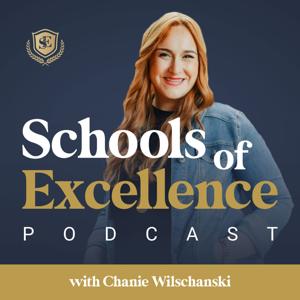
Schools of Excellence: The No. 1 ECE & Private School Leadership Podcast

Schools of Excellence: The No. 1 ECE & Private School Leadership Podcast

Download on the App Store

Schools of Excellence: The No. 1 ECE & Private School Leadership Podcast episodes

  • 260. The Invisible Weight of Memory: How Systems and Rhythms Protect School Leaders from Burnout

    If your brain feels like a filing cabinet that never closes, you’re not alone.

    For many school leaders, memory becomes the hidden system — the thing holding birthdays, licensing dates, parent notes, staff needs, and the million invisible details that make your school run. But here’s the truth: your brain was never meant to be the system.

    In this powerful, personal episode, Chanie shares how her once-reliable memory began to fail — and how that moment became the turning point for her leadership. Forgetting wasn’t a crisis; it was clarity. It revealed that her business had outgrown her brain and was ready for real systems and rhythms that could carry the weight sustainably.

    If you’ve ever said, “I just have to remember to…” — this episode will help you see why forgetting is not failure. It’s a signal that your leadership is evolving.

    You’ll Learn

    • Why memory-based leadership leads to burnout and anxiety
    • How your brain becomes a false “system” when trust in processes is low
    • Why stress pokes holes in memory — and what to build instead
    • How rhythms create psychological safety and operational stability
    • How to shift from mental management to systemized leadership
    • Practical examples of where you may be leading from memory (and how to stop)
    • How to trust your systems and rhythms — even when it feels uncomfortable

    Key Insights

    • “Your brain and your memory are not the system. Systems and rhythms hold excellence at scale.”
    • “The brain is for having ideas, not holding them.”
    • “Forgetting isn’t failure — it’s feedback that your leadership is ready to evolve.”
    • “When you lead from rhythm instead of recall, you build peace into your operations.”

    Memorable Quotes

    “My memory made me feel safe. But safety doesn’t come from remembering — it comes from trusting the rhythm.”

    “Your leadership isn’t breaking down. It’s breaking open — to a simpler, more sustainable way to lead.”

    “Forgetting wasn’t the problem. It was the most generous wake-up call from God.”

    “The brain is for having ideas, not holding them. Systems are what keep those ideas alive.”

    Reflection Prompts

    1. Where in your leadership are you still using your memory as a safety net?
    2. What’s one area where you could install a rhythm to replace recall?
    3. How does over-reliance on your brain create invisible weight in your day?
    4. What would it look like to trust your systems — even when your instinct is to double-check?

    Episode Resources

    • Learn more about Chanie’s upcoming book This Can’t Be Normal, where she unpacks how rhythms replace over-functioning and burnout.
    • Take the 5 Gear Diagnostic to identify which area of your leadership carries the most invisible weight — Enrollment, Staff Culture, Parent Engagement, Financial Health, or Strategic Growth. schoolsofexcellence.com/diagnostic

    15 min
  • 259. Timeless Marketing Strategies for Childcare Leaders: What Still Works (and What to Leave Behind)

    In early childhood education, it’s easy to feel like marketing changes faster than you can keep up. But the truth is, while tactics evolve, the fundamentals of trust, rhythm, and authenticity never go out of style.

    In this episode, Chanie sits down with longtime friend and industry leader Nick Williams, CEO of Childcare Business Growth, to discuss the timeless marketing strategies that stand the test of time.

    They explore how to create authentic content, follow up with confidence, and use AI and systems to reclaim your time — all while staying true to your school’s values and mission.

    If you’ve ever felt like your marketing is a moving target, this episode will help you return to the anchors that actually drive enrollment.

    You’ll Learn

    • Why authenticity always outperforms the latest trend
    • How to position yourself as the local expert families trust
    • The power of consistent follow-up rhythms in enrollment
    • How to centralize communication without losing personal connection
    • The role of AI in buying back time and simplifying marketing systems
    • How to track baselines and lead sources to make smarter decisions
    • Why clarity on your values attracts your ideal families
    • How to stay ahead of change without losing your focus

    Key Insights

    • “Sales is service. You’re not pushing — you’re inviting families into something that matters.”
    • “If you want consistent enrollment, follow up on the platforms your parents actually use.”
    • “There’s no money in being neutral. Your values are your magnet.”
    • “AI should help you work smarter, not harder. Use it to reclaim time for leadership.”

    Memorable Quotes

    “Marketing doesn’t need to be frantic — it needs to be rhythmic.” — Chanie Wilschanski

    “Be authentic. Be visible. Be the local expert. That’s timeless marketing.” — Nick Williams

    “The best marketing strategy isn’t about chasing trends — it’s about building systems that keep working while you lead.” — Chanie Wilschanski

    Reflection Prompts

    1. Which part of your marketing is built on rhythm — and which still feels reactive?
    2. Are your systems making your brand more human or more complicated?
    3. What would it look like to be known as the trusted local expert in your community?

    Episode Resources

    • Explore Nick’s work at childcarebusinessgrowthlive.com

    Take the Schools of Excellence 5 Gear Diagnostic to identify your biggest growth opportunity in:

    Enrollment, Staff Culture, Parent Engagement, Financial Health, or Strategic Growth 👉 schoolsofexcellence.com/diagnostic

    33 min
  • 258. The Invisible Weight of School Leadership

    Leadership is heavy in ways no one talks about.

    We expect long hours, enrollment pressure, staff turnover, and parent demands — but the invisible weight of leadership isn’t in the spreadsheets. It’s in the emotions, expectations, and energy you absorb every day.

    In this powerful conversation, Chanie redefines burnout and exposes why the “fix-it-fast” advice doesn’t work. Because burnout doesn’t come from working too hard, it comes from becoming the system.

    If you’ve been the leader who holds everyone else’s fear, absorbs everyone’s disappointment, and smiles while suffocating inside, this episode is your permission to stop.

    Learn how to trade survival for sustainability by building rhythms that distribute the weight, not systems that keep you holding it all.

    Join the live workshop, Delegation Isn’t the Finish Line: Ownership Is to learn how to build rhythms that hold you steady.

    Register at: schoolsofexcellence.com/delegation

    What You’ll Learn

    • Why traditional definitions of burnout miss the real cause
    • The difference between working hard and becoming the system
    • Why “fix-it-fast” solutions (like pizza parties) don’t actually work
    • How to identify invisible labor,  and stop carrying what’s not yours
    • The power of rhythms to distribute emotional and operational weight
    • What it means to be an “all-seasons leader” — not just calm-weather leadership

    Key Insights

    • Burnout doesn’t chase weakness — it preys on competence.
    • The body keeps score when you carry what’s not yours to hold.
    • You don’t need to get stronger — you need to be held.
    • Systems alone can’t save you; rhythms sustain you.
    • Calm isn’t forever. Leadership is who you are under pressure.

    Memorable Quotes

    “Burnout isn’t working too hard, it’s becoming the system.”

    “If burnout can find you because you’re extraordinary, then rhythms can hold you because you’re extraordinary.”

    “You don’t need to get stronger. You need to be held.”

    “Leadership isn’t what happens in the calm. It’s who you are when the pressure knocks.”

    Reflection Prompts

    1. Where are you holding what isn’t yours to hold?
    2. What invisible weight are you carrying for your team or school?
    3. What would change if your leadership wasn’t a solo sport?

    Next Step

    Take the Schools of Excellence 5 Gear Diagnostic to identify your biggest growth opportunity in: Enrollment, Staff Culture, Parent Engagement, Financial Health, or Strategic Growth 👉 schoolsofexcellence.com/diagnostic

    12 min
  • 257. From Hyper-Responsibility to Healthy Leadership: A School Leader’s Journey Beyond People-Pleasing

    When Irene Gomez stepped into her role as director at the J Center for Early Learning in El Paso, Texas, she carried what so many new leaders do: hyper-responsibility, people-pleasing, and the pressure to be the “hero” in every situation.

    In this episode, Irene shares her journey inside the Schools of Excellence coaching program and the transformation that followed—from chasing fires and working late nights, to leading with clarity, boundaries, and trust.

    You’ll hear how a calendar became her leadership lifeline, how gratitude reshaped her staff culture, and how self-trust shifted her from over-functioning into a confident leader who now builds sustainable rhythms for her team and balance for her family.

    This isn’t just a story of better systems. It’s a story of reclaiming identity, building trust, and choosing to lead without sacrificing health or home.

    What You’ll Learn in This Episode:

    • Why boundaries start with the leader, not with the staff
    • How shifting from “hero” to CEO changes your school culture
    • The role of one-on-one meetings in building trust and career growth for teachers
    • Why specific gratitude builds safety and resilience in teams
    • How leadership growth impacts marriage, parenting, and personal life
    • Why coaching is never “one more thing”—it’s the foundation of sustainable leadership

    Key Insights

    • Boundaries are for you first. Without them, you’ll always default to rescuing instead of leading.
    • Culture starts with trust. One-on-ones and specific gratitude create safety for real conversations.
    • You can’t hustle your way to sustainability. Systems and rhythms—not over-functioning—are what hold schools together.
    • Personal growth multiplies. When leaders evolve, staff mirror that same growth in respect, empowerment, and culture.

    Memorable Quotes

    • “The boundaries weren’t just for others—they were for me.” – Irene Gomez
    • “True success is having a strong team that wants to stay forever.” – Irene Gomez
    • “Enough isn’t about getting ahead. It’s about trusting that what you did today was enough.” – Chanie Wilschanski

    Why This Matters for School Leaders

    • Ends the cycle of firefighting and hyper-responsibility
    • Builds cultures of trust where staff thrive and turnover decreases
    • Protects leaders’ health, marriage, and family time
    • Shows how leadership coaching transforms not just schools, but lives

    Resources & Next Steps

    • Reflect: Where in your leadership are you holding on to hyper-responsibility?
    • Audit your staff culture: Are you building trust, or chasing harmony?
    • Share this episode with a fellow leader who feels stuck in people-pleasing

    Ready to stop holding everything together alone? Book your Leadership Reset Consultation—a 90-minute strategy session that gives you a 30-day roadmap to build rhythms your team will actually own. Learn more here.

    31 min
  • 256. The Delegation Dilemma: Escaping the Over-Functioning Trap

    If you’ve ever thought, “It’s just easier if I do it myself,” or found yourself ready to “burn it all down” after one too many hand-holding moments—this episode is for you.

    In this solo episode, Chanie Wilschanski exposes the false binary so many school leaders get trapped in: over-functioning or giving up entirely. Through real client stories, she unpacks how these extremes are both driven by the same craving for instant relief—and how true leadership means learning to live in the messy middle.

    You’ll hear how one owner, “Sarah,” learned to hold her team accountable without lowering standards, what happens when you trade to-do lists for calendars, and why grace never means abandoning expectations.

    This conversation is packed with practical wisdom for leaders who are tired of doing it all, frustrated that delegation still feels heavy, and ready to build rhythms of ownership instead of cycles of exhaustion.

    What You’ll Learn in This Episode:

    • The real reason leaders oscillate between over-functioning and firing everyone
    • Why to-do lists create comfort but calendars create clarity and accountability
    • How to show grace without lowering your standards
    • The difference between outsourcing and ownership
    • Why “getting ahead” is often avoidance disguised as productivity
    • How to right-size the load while keeping standards visible

    Key Insights

    • Comfort isn’t clarity. A private to-do list may feel safe—but a calendar makes priorities visible, reviewable, and real.
    • Grace ≠ lowered standards. True grace adjusts the load, not the expectation.
    • Instant relief leads to instability. Sustainable leadership requires tolerating discomfort while building systems and rhythms.
    • Outsourcing is temporary relief; ownership is transformation.

    Memorable Quotes

    “Comfort over clarity is not leadership—it’s avoidance.” – Chanie Wilschanski

    “Grace never means lowering the standard. You right-size the load while keeping the standard visible.” – Chanie Wilschanski

    “Outsourcing brings relief. Ownership builds leadership.” – Chanie Wilschanski

    “When you complain about doing something, it just means you need more reps.” – Chanie Wilschanski

    Why This Matters for School Leaders

    • Helps leaders recognize and break the over-functioning vs. burnout cycle
    • Teaches practical ways to build accountability without micromanaging
    • Reinforces the connection between standards, systems, and sustainable leadership
    • Empowers leaders to replace chaos with structure—and delegation with ownership

    Resources & Next Steps

    • Audit your leadership rhythms: Where are you over-functioning or lowering standards?
    • Define your school’s standards—what’s visible, measurable, and consistent?
    • Replace your team’s to-do lists with a shared calendar rhythm this week.

    Ready to delegate without burning out? Join Chanie’s Delegation Workshop to learn the exact scripts, standards, and systems that make it work:

    👉 schools of excellence.com/delegation

    20 min
  • 255. The Power of One: Scaling Deep, Not Wide with Latrice Galloway

    Scaling is glorified in our culture. In early childhood education, that often means opening more schools, adding more classrooms, and constantly chasing “what’s next.” But is that the only way to define success?

    In this episode of the Schools of Excellence Podcast, Chanie Wilschanski sits down with Latrice Galloway, known as The Child Care Chick, to talk about the overlooked power of scaling with one location. Latrice shares how she built Kidsville Learning Academy into a multimillion-dollar school that has sustained for 18 years without expanding into multiple sites.

    This conversation dives into the foundation of sustainable leadership: mindset, systems, culture, and defining what’s truly “enough.” You’ll hear Latrice’s powerful story of burnout and breakthrough, how she shifted from operator to CEO, and why her definition of success is rooted in peace, values, and sustainability.

    If you’ve ever felt the pressure to open “just one more” location, or you’re struggling to sustain the school you already have, this episode will show you another path to growth—one rooted in clarity, culture, and deep alignment.

    What You’ll Learn in This Episode:

    • Why scaling doesn’t have to mean opening more schools
    • The foundation school leaders often skip—and why it leads to burnout
    • The mindset shift from operator to CEO
    • How to invest in your team so they sustain without you holding everything
    • Why defining “enough” is critical to long-term success
    • How to filter opportunities through your values and vision

    Key Insights

    • Sustainability is scale. Long-term thriving in one school can build wealth, culture, and community impact.
    • Foundations matter. Hustle and charisma cannot replace systems, rhythms, and leadership infrastructure.
    • Enough is a filter. Defining what is “enough” keeps you aligned when opportunities (and distractions) come knocking.
    • Your health and peace are part of the equation. Burnout is not the price of success.

    Memorable Quotes

    • “Scaling isn’t about adding more schools—it’s about sustaining the one you already have.” – Latrice Galloway
    • “Enough is not a finish line. It’s a feeling of integrity.” – Chanie Wilschanski
    • “Don’t fear if your staff leave after you invest in them. Fear what happens if they stay and you never do.” – Latrice Galloway

    Why This Matters for School Leaders

    • Helps leaders redefine success beyond growth at all costs
    • Protects culture, peace, and sustainability by focusing on depth, not constant expansion
    • Empowers leaders to filter opportunities through values instead of external pressure
    • Provides a model for scaling to millions with one school

    Resources & Next Steps

    • Define your personal and leadership definition of “enough”
    • Audit your school’s foundations: Are you building on systems, or on hustle?
    • Share this episode with a fellow school leader wrestling with pressure to expand

    Ready to stop holding everything together alone? Book your Leadership Reset Consultation—a 90-minute strategy session that gives you a 30-day roadmap to build rhythms your team will actually own. Learn more here.

    28 min
  • 254, Honesty Over Image: Leading Through Grief, Discomfort, and the Messy Middle with Beth Cannon

    Leadership doesn’t pause for grief, betrayal, or personal storms. In this deeply vulnerable conversation, Chanie sits down with Beth Cannon to talk about what it means to lead when life unravels. From walking through the terminal illness of a loved one, to staff exits and leadership mistakes, Beth shares her “discomfort zone” season and the messy middle of showing up for her people while falling apart inside.

    This episode is not about perfection, it’s about presence. It’s about choosing honesty over image, showing up when you don’t have it all together, and finding systems and rhythms that carry your school (and your soul) through seasons of chaos.

    What You’ll Learn in This Episode:
    • Why “waiting until everything is perfect” is leadership avoidance
    • How to keep showing up when grief and business crises collide
    • The difference between accountability and ownership in staff leadership
    • Why leaders must choose honesty over image if they want trust and culture to hold
    • How to find outer-circle people who can lead you through your own fo

    Key Insights
    • Culture isn’t built on polish. It’s built on consistency, clarity, and shared standards.
    • Grief and leadership can coexist. You can hold heartbreak in one hand and still lead with purpose in the other.
    • Leadership is a mirror. Staff accountability gaps often expose where owners haven’t built the right rhythms.
    • You don’t wait for perfect conditions. Growth happens in the middle of the storm, not after it passes.

    Memorable Quotes
    • “I wasn’t replacing a role. I was reacting to a wound.” – Beth Cannon
    • “You have to choose honesty over image, because the day when everything is perfect doesn’t exist.” – Beth Cannon
    • “Schools don’t need leaders who wait for the fog to clear. They need leaders who keep walking.” – Chanie Wilschanski

    Why This Matters for School Leaders
    • Stops the cycle of waiting for perfect conditions before leading
    • Models vulnerability without abdicating responsibility
    • Builds staff trust through honesty and accountability, not polish
    • Anchors leaders in rhythms that hold during grief, betrayal, or transition

    Resources & Next Steps
    • Reflect: Where are you waiting for things to “settle” before you lead?
    • Revisit your staff accountability systems: Are they true ownership, or excuses and follow-up cycles?
    • Connect with Beth Cannon: bethcannonspeaks.com | Instagram & Facebook: @bethcannonspeaks

    32 min
  • 253. Stop the Hidden Drain: Admin & Tech Systems That Protect Your Profit

    Admin & Tech isn’t flashy like enrollment or emotional like staff culture—but it’s one of the biggest hidden profit drains in schools. In this finale of the Money Leaks series, Chanie breaks down how underutilized software, paper-based SOPs, missing automations, and messy file systems quietly torch your time capacity and cash. You’ll get a simple, CEO-level playbook to audit your tech stack, automate the right tasks, assign platform “champions,” and build rhythms that stop dependency and start true scalability.

    👉 Take the free diagnostic mentioned in this episode: schoolsofexcellence.com/moneyleaks

    What You’ll Learn

    • The 5 Admin & Tech pillars that protect profit (workflows, utilization, automation, data & file systems, review rhythms)
    • How to audit your tech stack and cut redundancies without chaos
    • Why automation doesn’t replace people—it gives them back time for what only humans can do
    • The “internal platform champion” model that prevents bottlenecks and builds team capacity
    • A simple naming convention + 10-second file-finding standard that ends “final-final-FINAL-v6” madness
    • How to move from dependency (it only works when Sarah’s here) to system (it works when anyone follows the rhythm)

    SOE Playbook: 5 Concrete Moves

    1. Run a Software Audit (30–45 min): List every tool, owner, cost, and actual use. Cancel redundancies, downgrade unused premium plans, and standardize what stays.
    2. Assign Platform Champions: One trained “owner” per platform. Share quick wins, create 1-page SOPs, and stop knowledge hoarding.
    3. Automate Repetitive Admin: Scheduling, reminders, links, confirmations, form routing, basic onboarding steps. Free people for gratitude, 1:1s, observations, feedback—the work only humans can do.
    4. Lock File Hygiene: Cloud-first, consistent naming, and a structure anyone can understand. Measure success by: “Can someone find any file in ≤10 seconds?”
    5. Quarterly Rhythm Block: Every 90 days: review tools, subscriptions, automations, and workflows. One block. Same calendar slot. Always.

    Case Studies & Wins

    • Sonia’s Tech Tangle → $4,000 Saved: She listed 19 tools; canceled 5–7 redundant platforms, downgraded others, and named champions for the rest—saving nearly $4K/year and loads of time capacity.
    • The $9,000 Surprise: A leader who “couldn’t afford it” did a money leaks audit, canceled 3 subscriptions, and freed up $9,000—just by telling the truth in the tech stack.

    Memorable Lines

    • “If it takes more than 10 seconds to find a file, you have a leak—not a library.”
    • “Dependency isn’t a system. It’s a risk.”
    • “Automation isn’t about replacing people—it’s about returning time to the work only humans can do.”
    • “When someone leaves, the brain of your business shouldn’t walk out with them.”

    Resources

    Free diagnostic: schoolsofexcellence.com/moneyleaks

    16 min
  • 252. How To Avoid Losing Thousands Through Inefficiency Every Month

    Your Amazon bill isn’t proof of overspending, it’s proof of a missing rhythm.

    In this fifth episode of the Six Money Leaks series, Chanie uncovers why supply management is one of the most overlooked operational leaks in schools. From the toner that’s reordered twice in a week to the “just in case” stockpiles that clutter closets, poor systems quietly drain thousands of dollars and create chaos for your team.

    You’ll hear how one school leader cut supply costs by 50%, not by cutting corners, but by building rhythms of accountability, teacher ownership, and smarter purchasing strategies. Chanie explains how strong leaders use systems to bring predictability to supplies, just as they do in staff culture, enrollment, and every other gear of sustainable growth.

    What You’ll Learn in This Episode

    • Why supply challenges aren’t spending issues, they’re system issues
    • The five pillars of supply management: inventory, seasonal planning, equipment lifecycle, vendor strategy, and storage organization
    • How to create baselines that give you real data on usage and costs
    • The role of leadership rhythms in preventing waste and burnout
    • Practical steps to cut costs without sacrificing quality or culture

    Key Insights

    • Leadership is stewardship. Systems, not sticky notes, are what protect your budget and your team’s time.
    • Culture is built in the details. When supplies are predictable, teachers feel supported and operations run smoothly.
    • Growth requires optimization. Scaling isn’t about more—it’s about refining what you already have.

    Why This Matters for School Leaders

    When supply management runs on chaos, leaders end up overspending, overfunctioning, and burning out. When it runs on systems, leaders free capacity for strategy, teams feel supported, and operations hold under pressure.

    Resources & Next Steps

    Download the free Money Leaks Diagnostic and assess your school’s supply systems: schoolsofexcellence.com/moneyleaks

    16 min
  • 251. How to Lower Food Costs in Your Childcare Program

    Pizza at staff meetings. Coffee for PD days. Uber Eats orders that feel small at the moment. These choices come from generosity, but without systems, they quickly become one of the biggest hidden drains on your budget.

    In this fourth episode of the Six Money Leaks series, Chanie Wilschanski explains why leaders don’t have food budget problems, they have food system problems. You’ll learn how to build baselines, create seasonal rhythms, and plan for the actual people you serve, so generosity strengthens culture without draining profit.

    Through real stories from school leaders, Chanie shows how small adjustments in food management save thousands, reduce waste, and create sustainable rhythms of appreciation.

    What You’ll Learn in This Episode
    • Why “spend as little as you can” is not a budget
    • How to calculate your baseline with receipts and real data
    • Why food budgets must shift seasonally with enrollment, staffing, and culture rhythms
    • How to prevent waste by planning for allergies, sensitivities, and actual headcount
    • The difference between indulgent overspending and intentional generosity

    Key Insights
    • Generosity needs guardrails. Without systems, your kindness works against you.
    • Data builds confidence. Leaders negotiate budgets best when they bring baselines, not guesses.
    • Culture thrives on intention. Food can build connection and trust when it’s planned with clarity.
    • Why This Matters for School Leaders

    Your staff and students deserve abundance. But abundance without systems creates chaos, waste, and guilt around spending. Food control isn’t about being stingy—it’s about building rhythms that protect your financial health and your culture.

    Resources & Next Steps

    Download the free Money Leaks Diagnostic and assess your school’s food systems: schoolsofexcellence.com/moneyleaks

    12 min

About Schools of Excellence: The No. 1 ECE & Private School Leadership Podcast

From the publisher's feed

If you are an Early Childhood director or childcare owner, prepare to transform your school and life with the Schools of Excellence podcast. Tune in each week to learn from Chanie Wilschanski, the founder and host of the Schools of Excellence Podcast and a mom of 4 kids.

More shows like Schools of Excellence: The No. 1 ECE & Private School Leadership Podcast

The Amy Porterfield Show by Amy Porterfield

The Amy Porterfield Show

4,585 Listeners

The Kelly Roach Show by Kelly Roach

The Kelly Roach Show

922 Listeners

The Lazy Genius Podcast by Kendra, The Lazy Genius

The Lazy Genius Podcast

6,694 Listeners

On Purpose with Jay Shetty by Perfect Strangers

On Purpose with Jay Shetty

27,851 Listeners

Something For Everybody by Aaron Machbitz

Something For Everybody

145 Listeners

A Bit of Optimism by Simon Sinek

A Bit of Optimism

2,212 Listeners

The Everything ECE Podcast by Carla Ward

The Everything ECE Podcast

16 Listeners

The Dr. Josh Axe Show by Dr. Josh Axe

The Dr. Josh Axe Show

1,410 Listeners

Called and Curious by Ashriel Huber

Called and Curious

13 Listeners