
Sign up to save your podcasts
Or

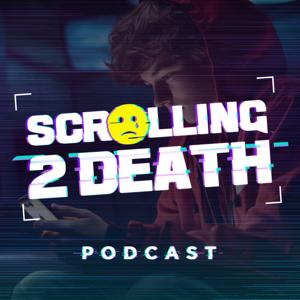


In this mini-episode of Scrolling 2 Death, Nicki brought in Lila Byock to break down a major victory: the Los Angeles Unified School District has unanimously passed a sweeping new technology policy that limits screen use for students. After months of relentless advocacy from parents and teachers, the district is eliminating devices for its youngest learners, restricting platforms like YouTube, and setting clear screen time boundaries. They discuss what passed and how this moment could spark a nationwide shift in how schools use technology—and how you can bring these changes to your own district.
LAUSD's new policy linked here
Sign up at Schools Beyond Screens
So…I’ve sued another EdTech company. Here's a direct link to information on the lawsuit.
This time, it’s Curriculum Associates — the multi-billion-dollar maker of i-Ready, used by more than 14 million children in grades K–8, including my own.
In this episode, I break down why we’ve filed a lawsuit alleging that Curriculum Associates’ core business model depends on harvesting massive amounts of student data, monetizing it, and allegedly sharing children’s personal information with dozens of third parties for commercial purposes. We further allege the company builds deeply invasive psychological and behavioral profiles on students — profiles that can follow them and potentially harm them.
I never consented to this. And neither did millions of parents.
Sending our children to public school is a legal right. We should not have to expose them to commercial data trafficking just to get an education.
With the average school district using thousands of EdTech tools each year — and each child accessing dozens — the question isn’t whether this is happening. The question is whether parents ever gave meaningful, informed consent.
Joining me is Andy Liddell, attorney with the EdTech Law Center, to answer the questions flooding in from parents and teachers:
If you’re a parent, teacher, or school leader, this conversation is one you cannot afford to miss.
If you’re interested in learning more or potentially joining an EdTech-related lawsuit, visit: edtech.law.
Because this isn’t just about i-Ready.
It’s about whether our children’s data belongs to them — or to corporations.
On March 25, 2026, after eight days of deliberation, the jury reached a verdict in the first bellwether trial against Meta and YouTube.
The verdict: The jury ruled in favor of Kaley on all counts. Scroll down to the bottom of this description for the full verdict.
This week, we take you inside the final, nerve-wracking days in the hallway and courtroom — the jury questions about expert testimony, deleted accounts, Instagram usage, punitive damages, and the moment they told the judge they were deadlocked with one defendant.
We walk through what each question meant, what it revealed about the jury’s thinking, and how both sides responded. You’ll hear what happened in real time as families waited, attorneys speculated, and the stakes became crystal clear.
We’re joined by Laura Marquez-Garrett of the Social Media Victims Law Center to break down:
Because this was never just about one family.
It the most powerful tech companies in the world… versus families. And this verdict is the accelerator of justice.
The trials continue. Thousands of families. Dozens of states. School districts. The pressure is building. We’ll continue to be inside the courtroom translating it all for parents everywhere.
The Heat is On...Big Tech on Trial is an investigative mini-series by Scrolling 2 Death, in partnership with Heat Initiative.
Video Editing expertly provided by Jacob Meade.
Are you willing to take action against Big Tech? Join us in D.C.! Fill out this form.
THE VERDICT
META
YOUTUBE
THE DAMAGES
A. What are KGM's damages?
$3,000,000
B. What percentage of responsibility for K.G.M.’s harm do you assign to each of the following?
70% Meta
30% YouTube
C. Do you find that K.G.M. proved by clear and convincing evidence that Meta acted with malice, oppression, or fraud in conduct upon which you base your finding of liability? YES
D. Do you find that K.G.M. proved by clear and convincing evidence that YouTube acted with malice, oppression, or fraud in conduct upon which you base your finding of liability? YES
PUNITIVE DAMAGES: $3,000,000 ($2.1M to Meta, $900K to YouTube)
This week on The Heat is On…Big Tech on Trial, we reached a turning point.
After weeks of testimony, we heard from the final witnesses — including Meta’s paid medical expert, internal researchers, and YouTube leadership. New details emerged about deleted watch history data, internal warnings about teen risk, and what company executives knew about under-13 enforcement.
Then came closing arguments.
Mark Lanier argued that platform design targeted Kaley from a young age. Attorneys for Meta and YouTube pushed back, claiming there is no proven causal link between social media and mental health struggles, for Kaley or anyone else.
Friday morning, the jury began deliberating.
Now nine jurors must decide:
Were these platforms negligently designed in ways that substantially contributed to Kaley’s anxiety, depression, and suicidal thoughts? Or not?
We’re inside the courtroom translating what this case means for parents everywhere — because these trials aren't just about one child. It could shape the future of accountability for TikTok, YouTube, Meta, and Snap Inc..
Verdict watch has begun.
The Heat is On...Big Tech on Trial is an investigative mini-series by Scrolling 2 Death, in partnership with Heat Initiative.
Video Editing expertly provided by Jacob Meade.
This week inside the courtroom, science took center stage — and the stakes were higher than ever.
Dr. Kara Bagot, a psychiatrist and neuroscientist who helped develop the NIH’s landmark ABCD brain study, spent five days on the stand. She testified that to a reasonable degree of medical certainty, Kaley developed social media addiction — and that YouTube acted as the “gateway,” beginning at just six years old. She walked the jury through the platform features that fuel compulsive use: infinite scroll, autoplay, algorithms, notifications, likes, filters, Shorts, Reels, and the lack of meaningful age verification.
Under intense cross-examination from Meta and YouTube’s attorneys, Dr. Bagot held her ground — insisting on context over yes-or-no soundbites. Jurors watched closely. When she was finally excused, there as a quiet applause.
Then came former Meta safety executive and whistleblower Arturo Bejar. He testified that by 2019, Meta researchers had identified addiction as a serious issue — but leadership discouraged even using the word, replacing it with “problematic use.” He described internal knowledge of harmful design choices, ineffective safety tools, and what he called “dark patterns,” including the infamous “blue button” that discouraged user reporting.
Arturo also testified that age verification is not technically difficult — and that Meta could remove millions of under-13 users if it chose to.
Next up was child safety expert and mom, Brooke Istook. Brooke powerfully described the generational tech gap, Instagram's growth team promoting FINSTAs, misleading safety promises, and the no-win position families face trying to supervise platforms designed to outmaneuver them.
By week’s end, the Plaintiffs rested their case and the Defense began calling witnesses in the form of video depositions.
Meanwhile, outside this courtroom, the pressure is mounting. Big tech lobbyists have infiltrated important online safety legislation and 33 new families across 19 states have joined the consolidated JCCP litigation, with Roblox newly added to the complaints.
Thousands of families. Dozens of states. And now jurors — everyday people — watching some of the richest companies in the world fight a single family over what caused a young girl’s harm.
These are the tobacco trials of our generation.
We’re inside the courtroom translating it all in real time — joined this week by Christine Almadjian, legislative consultant and courtroom observer, and Lennon Torres of Heat Initiative — bringing you the moments that mattered, the legal context behind the strategy, and what it means for families everywhere.
Because this fight isn’t abstract.
It’s about the apps in our kids’ pockets.
It’s about truth, justice and accountability.
And it’s about whether these companies will finally be forced to change.
We stand with families.
The Heat is On...Big Tech on Trial is an investigative mini-series by Scrolling 2 Death, in partnership with Heat Initiative.
Video Editing expertly provided by Jacob Meade.
What really happens inside one of the most powerful companies in the world?
This week, we sit down with Brian Boland, a former senior leader at Facebook (pre-Meta), who spent more than a decade helping build and scale Facebook and Instagram's advertising systems — and later testified in court about what he saw.
Brian was in the courtroom for nearly five hours. In this candid conversation, he pulls back the curtain on:
Brian doesn’t call for the end of social media. In fact, he believes these platforms could be built to strengthen communities. But he’s clear: the current incentives — profit, growth, daily active users — drive decisions that put engagement above safety.
He also shares what he told executives, including Mark Zuckerberg, before he left — and the response he received.
If you’ve ever wondered:
This episode is essential listening.
It’s a rare, inside look at how power, profit, algorithms, and accountability collide — and what it might actually take to force change.
The Heat is On...Big Tech on Trial is an investigative mini-series by Scrolling 2 Death, in partnership with Heat Initiative.
Video Editing expertly provided by Jacob Meade.
Research mentioned in the episode: Social media platforms generate billions of dollars in revenue from U.S. youth: Findings from a simulated revenue model (Raffoul article)
This week, we’re joined by Meta whistleblower Brian Boland, who appeared as a witness in this trial, and law student Christine Almadjian, who has spent hours inside the courtroom watching this case unfold. Christine is also a legislative consultant with END OSEAC.
Thousands of families, school districts, and dozens of states have filed consolidated lawsuits against TikTok, YouTube, Meta, and Snap Inc., alleging their platforms were deliberately designed to addict and harm children. Some are calling this “the tobacco trial of our generation.”
The first case centers on Kaley — a child like yours and mine — facing the most powerful companies in the world.
This week, YouTube’s VP of Engineering defended the algorithm as internal documents revealed research linking excessive use to addiction, sleep disruption, anxiety, depression, and body image issues — along with features like autoplay designed to increase watch time. We heard testimony that kids using YouTube while logged out are treated like adults, with no safety features enabled.
A data expert challenged Meta and YouTube’s reported ad revenue from minors, citing “significant errors and contradictions,” followed by testimony from Kaley's therapist.
Then Kaley took the stand.
She described creating multiple accounts to like her own videos and posts, sneaking her phone at night, spending up to 16 hours a day on Instagram, feeling panic without her device — and still, at 20 years old, struggling to stop. When asked whether she had addiction, anxiety, depression, or body dysmorphia before social media, her answer was simple: no.
Meta and YouTube pushed back hard, pointing to family conflict and school bullying. In just a few weeks, the jury will decide if social media was a subsantial factor in her mental heath struggles.
This case isn’t just about one family. It’s about millions of kids — and what happens next affects all of us.
The Heat is On...Big Tech on Trial is an investigative mini-series by Scrolling 2 Death, in partnership with Heat Initiative.
Video Editing expertly provided by Jacob Meade.
This week on The Heat is On…Big Tech on Trial, the spotlight was on Mark Zuckerberg — but it didn’t stay there for long.
Nicki Petrossi and Sarah Gardner take you inside a dramatic week in court as Zuckerberg faced questioning about youth safety, platform design, and internal company practices — followed by testimony from a former insider whose statements directly conflicted with his.
In this episode:
Millions are watching because what happens here will reshape accountability for the most powerful tech companies in the world.
This isn’t just a trial. It’s a turning point.
Thank you to our special guest, Titania Jordan of Bark Technologies. Here's their 2025 Annual Report, referenced in the episode.
The Heat is On...Big Tech on Trial is an investigative mini-series by Scrolling 2 Death, in partnership with Heat Initiative.
Video Editing expertly provided by Jacob Meade.
Week 3 marks a turning point inside the courtroom: opening statements begin, the first witnesses take the stand, and the stakes become unmistakably real. Hosts Nicki Petrossi and Sarah Gardner (of Heat Initiative) bring you inside the proceedings as plaintiffs and defense lay out competing narratives about what happened to Kaley—and what responsibility tech giants bear.
Plaintiff attorney Mark Lanier delivers what attendees call a “masterclass” opening, previewing internal records from YouTube and Meta suggesting early-age targeting and engineering for addiction. Defense attorney Paul Schmidt counters with a starkly different claim: that social platforms can benefit vulnerable teens and that responsibility lies elsewhere - on parents. YouTube counsel Louis Lee insists repeatedly: YouTube is not social media.
The first expert witness, addiction psychiatrist Dr. Anna Lembke of Stanford University, author of Dopamine Nation, walks jurors through the neuroscience of compulsive use—arguing that platform design features can function like addictive stimuli, especially for adolescents. Cross-examinations grow tense as attorneys challenge her comparisons and conclusions.
Midweek brings the highly anticipated testimony of Adam Mosseri, head of Instagram, questioned about past statements on social media addiction, teen safety, and whether growth incentives conflict with child protection. Outside the courthouse, grieving parents—including featured guest John DeMay—camp overnight for seats, hold direct actions targeting Snapchat, and remind the world what this trial is really about: children.
You’ll hear:
Next week’s witnesses raise the stakes even higher, with expected testimony from Mark Zuckerberg and Neal Mohan.
Because this isn’t just a trial. It’s a reckoning. And we’re translating every moment that matters for families everywhere.
This bonus episode of The Heat is On… Big Tech on Trial slows down to hold space for the weight of this moment.
Nicki Petrossi and Sarah Gardner are joined by Brandy and Toney Roberts, parents of 14-year-old Englyn Roberts, whose life was cut short after being exposed to harmful content on Instagram and other social media platforms. What unfolds is not just a conversation about Meta’s technology—but about grief, truth, and what it means to refuse indifference.
The Roberts family shares how Instagram’s algorithms repeatedly recommended suicide-related content to their daughter, how duplicate videos remained online long after being reported, and how easily this material continues to circulate today. Sarah breaks down the technical reality: the tools to prevent and remove this content exist—and always have.
Interwoven with these devastating realities are moments of grounding, connection, and meaning: reflections on community among bereaved parents, a courthouse vigil outside the Los Angeles trial, and the belief that love—never indifference—is what drives this fight.
This episode is raw. It is painful. And it is essential.
As the courtroom doors finally open, this conversation captures what’s truly on trial: corporate choices, accountability, and the lives of children.
Listener discretion advised.
From the publisher's feed
Ranked by our users in the last 21 days

3,640 Listeners

12,710 Listeners

6,696 Listeners

111,865 Listeners

1,420 Listeners

3,604 Listeners

2,211 Listeners
14,362 Listeners

14,750 Listeners

85 Listeners

29,207 Listeners
4,494 Listeners

41,388 Listeners

321 Listeners

378 Listeners