
Sign up to save your podcasts
Or



Based on Podcast App listening data
Episode Summary
What does your gut have to do with osteoporosis? More than you might think.
In this episode, Debi Robinson welcomes functional medicine pharmacist Dennis Wong to explore the critical connection between digestion, nutrient absorption, chronic stress, and bone health. Together, they explain why healthy bones depend on far more than calcium alone and why optimizing digestion may be one of the most important steps in supporting healthy aging.
They also discuss stomach acid, digestive enzymes, elimination, neurotransmitters, and practical lifestyle habits that help your body absorb and use the nutrients needed for strong bones.
What You'll Learn
Action Steps
Debi's Takeaway
Healthy bones begin long before nutrients reach your skeleton. By supporting digestion, reducing stress, and improving nutrient absorption, you create the foundation your entire body—including your bones—needs to thrive.
Resources & Links
Debi's website: https://debirobinson.com
Episode Summary
After performing more than 15,000 joint replacements, orthopedic surgeon Dr. Joshua Schacter realized that many patients needed more than surgery—they needed better health.
In this episode, Debi Robinson and Dr. Schacter explore how regenerative medicine, metabolic health, hormone optimization, nutrition, and movement work together to improve joint function and support healthy aging. They also discuss the importance of preventing falls, preserving independence, and helping people enjoy a better quality of life as they age.
What You'll Learn
Action Steps
Debi's Takeaway
Strong bones and healthy joints are built through consistent daily habits. When we care for our metabolism, muscles, balance, and overall health, we create the foundation for greater independence and a higher quality of life.
Resources & Links
Find Dr Schacter: https://pinnaclesportsmedicine.com/
After performing more than 15,000 joint replacements, orthopedic surgeon Dr. Joshua Schacter realized that surgery alone wasn’t enough to restore long-term health.
In this conversation, Debi Robinson and Dr. Schacter discuss the limitations of today’s healthcare system, why bone health is deeply connected to metabolism, hormones, nutrition, and lifestyle, and how regenerative medicine offers a more comprehensive approach to healthy aging.
Together they explore how women can move beyond a diagnosis and become active participants in building stronger bones.
What You’ll Learn
Debi’s Takeaway: Strong bones are built through healthy metabolism, strong muscles, balanced hormones, and daily lifestyle habits. The more you care for your whole body, the stronger your bones can become.
Resources & Links
Could osteoporosis be more than a calcium deficiency?
In this enlightening conversation, Debi Robinson welcomes Ayurvedic longevity expert Dr. John Douillard to explore how circadian rhythms, sunlight, digestion, sleep, lymphatic health, and daily habits influence bone remodeling and healthy aging.
Together they bridge ancient Ayurvedic wisdom with modern scientific research, offering practical lifestyle strategies that help support stronger bones naturally.
What You’ll Learn
Action Steps
Resources & Links
Debi’s Takeaway
Building stronger bones isn’t only about what you eat—it’s about how you live. When your daily habits align with your body’s natural rhythms, you create an environment where healing and bone remodeling can thrive.
Can you build strong bones while following a vegetarian or vegan lifestyle?
In this episode, Debi Robinson welcomes back Dr. Monisha Bhanote to discuss how whole-food, plant-based nutrition can support healthy bones. Together they explore practical sources of plant-based protein, the importance of gut health, culinary medicine, and why variety matters just as much as protein intake.
Whether you’re fully plant-based or simply trying to eat more plants, this episode offers practical strategies to help nourish your bones naturally.
What You’ll Learn
Action Steps
Resources & Links
Debi’s Takeaway
Bone health isn’t just about eating more protein. It’s about creating an environment where your body can digest, absorb, and use those nutrients to build stronger, more resilient bones for life.
Why are so many women leaving their osteoporosis appointments feeling discouraged and unheard?
In this solo episode, Debi Robinson explains the differences between conventional medicine and functional medicine when it comes to bone health. She discusses why the traditional healthcare model often focuses on diagnosis and medication and why that approach may feel limiting for women who want to take a more natural approach to osteoporosis.
Debi also shares how functional medicine explores the root causes of bone loss, the importance of lifestyle medicine, and why education and support are essential for creating stronger, fracture-resistant bones.
What You’ll Learn
Action Steps
Resources & Links
🔸 Debi's website: https://debirobinson.com
🔸 Healthy Gut Healthy Bones Program: https://debirobinson.com/healthy-gut-healthy-bones-program-v2/
🔸 Join the Community: https://debirobinson.com/the-stronger-bones-lifestyle-community/
🔸 Yoga Therapy MasterClass: https://debirobinson.com/yoga-therapy-for-bones-health-mc/
🔸 28-Day Stronger Bones Method: https://debirobinson.com/28-day-stronger-bonesmorning-method/
🔸 Instagram: https://www.instagram.com/debirobinsonwellness/
🔸 Youtube Channel: https://www.youtube.com/@debirobinsonwellness/
🔸 TikTok: https://www.tiktok.com/@debirobinsonwellness
Debi’s Takeaway
Your bones are living tissue, and you influence them every single day through your choices. You are not powerless, and you have far more control over your bone health than you’ve been told.
When it comes to osteoporosis, many women are told to focus on calcium, vitamin D, medications, or hormone therapy. But what if bone loss is actually a reflection of deeper imbalances throughout the body?
In this episode, Debi Robinson sits down with functional medicine nutritionist Andrea Nakayama to explore a systems-based approach to bone health. Together, they discuss how digestion, blood sugar balance, inflammation, stress, hormones, and lifestyle factors all contribute to bone strength and healthy aging.
Andrea explains why osteoporosis is rarely caused by a single issue and shares practical ways women can begin identifying the root causes that may be impacting their bones.
What You’ll Learn
Action Steps
Resources & Links
Debi’s Takeaway
Your bones are part of a much bigger story. The more you understand how sleep, digestion, hormones, stress, and nutrition work together, the more empowered you become to influence your bone health for years to come.
In this eye-opening conversation, Debi Robinson and Dr. John Neustadt expose a fundamental flaw in how we approach bone health: we've been focusing on bone density instead of actual fracture risk.
Drawing from 20+ years of research and clinical practice, Dr. Neustadt reveals that only four nutrients have been proven in clinical trials to reduce fractures—calcium, vitamin D, vitamin K2 (MK-4 specifically), and magnesium. He challenges the one-size-fits-all approach to supplementation and explains why popular supplements like MK-7 and strontium fall short of their marketing claims.
The episode deep-dives into why bone density tests are poor predictors of fracture risk, how supplement companies mislead consumers with marketing claims that don't align with clinical data, and the critical role of gut health, sleep, hormones, and lifestyle in fracture prevention.
Most importantly, Debi and Dr. Neustadt provide actionable, evidence-based strategies that women can implement immediately to actually protect their bones—without fear-based messaging.
WHAT YOU'LL LEARN
✓ Why bone density scores are not reliable predictors of fracture risk
✓ The 4 nutrients with clinical trial evidence for fracture reduction (and the doses that actually work)
✓ Why MK-7 vitamin K2 doesn't improve bone strength (and why MK-4 does)
✓ How to assess YOUR individual calcium needs (most women are over-supplementing)
✓ The vitamin D target range for optimal fracture protection
✓ Why strontium supplements mislead consumers (and the hidden risks)
✓ The role of melatonin receptors in bone health and sleep deprivation's link to fractures
✓ How gut health directly impacts bone strength
✓ The importance of serotonin, melatonin, and the gut-bone axis
✓ HRT and testosterone replacement as part of a comprehensive bone health strategy
✓ How to evaluate supplement companies and ensure they have fracture outcome data
✓ Red flags when choosing bone health supplements
✓ The gap between conventional medicine's approach (DEXA + medication) and integrative bone health
✓ Why doctors are confused about osteoporosis (and how to advocate for yourself)
ACTION STEPS
Get your vitamin D tested. Aim for 30–44 ng/mL for optimal fracture protection (different from immune health recommendations).
Assess your dietary calcium intake before adding supplements. If you're eating well, you may only need 400 mg as a supplement, not the standard 1,200 mg recommendation.
Switch MK-7 supplements to MK-4. If you're taking a vitamin K2 supplement, verify it's MK-4 at 45 mg per day in divided doses. MK-7 doesn't reduce fractures.
Check your supplement labels for strontium. If it's there, especially if the company markets it as "proven to improve bone density," consider switching to a formula without it.
Prioritize gut health. Work with a practitioner to run stool tests if you have bloating, constipation, postnasal drip, or other GI symptoms. Gut inflammation accelerates bone loss.
Track your sleep quality. Sleep deprivation is linked to 17% of fractures. If you're sleeping less than 6 hours nightly, prioritize this.
Ask supplement companies the right questions:
"Do you have fracture outcome data from clinical trials?"
"Will you provide a certificate of analysis showing purity and potency?"
"What guarantee do you offer?"
Evaluate your medications. Check with your doctor: Are any of your current prescriptions contributing to bone loss? (SSRIs, certain blood pressure meds, proton pump inhibitors, corticosteroids, etc.)
Consider HRT or bioidentical hormone replacement, especially if you're post-menopausal. Research shows a 40% reduction in osteoporotic fracture risk with appropriate hormone therapy.
Build lifestyle foundations: Prioritize whole-food nutrition, strength training, stress management, and community connection. Oxytocin (released through physical contact) supports bone health.
RESOURCES & LINKS
DEBI'S TAKEAWAY
"Fracture-proofing your bones isn't about chasing a higher DEXA score. It's about building the internal biochemical balance that actually prevents fractures. You have the research, you have the tools, and you have the power to take control of your bone health naturally. Use that power."
What does it actually mean to fracture-proof your bones? For most women navigating an osteopenia or osteoporosis diagnosis, the immediate focus is placed entirely on shifting the T-score on a bone density testFor most women navigating an osteopenia or osteoporosis diagnosis, the immediate focus is placed entirely on shifting the T-score on a bone density testFor most women navigating an osteopenia or osteoporosis diagnosis, the immediate focus is placed entirely on shifting the T-score on a bone density test. However, focusing solely on that number ignores the deeper, systemic imbalances that dictate bone quality and fracture riskHowever, focusing solely on that number ignores the deeper, systemic imbalances that dictate bone quality and fracture risk.
In this episode, host Debi Robinson is joined by Dr. John Neustadt, a renowned naturopathic doctor, researcher, and author of Fracture-Proof Your Bones: A Comprehensive Guide to OsteoporosisFracture-Proof Your Bones: A Comprehensive Guide to Osteoporosis. Together, they pull back the curtain on the hidden drivers of bone loss that conventional medicine frequently misses—most notably, medication-induced bone damageTogether, they pull back the curtain on the hidden drivers of bone loss that conventional medicine frequently misses—most notably, medication-induced bone damageTogether, they pull back the curtain on the hidden drivers of bone loss that conventional medicine frequently misses—most notably, medication-induced bone damage. Dr. Neustadt explains the biological mechanisms behind how common acid reflux blockers, antidepressants, and blood pressure medications can compromise your skeleton or increase fall risks.
Debi and Dr. Neustadt transition the conversation into real-world, actionable steps for daily life. They unpack the power of a Mediterranean dietary pattern and detail how simplifying your nutritional focus into specific targets for plant fiber and dietary protein can fundamentally alter your bone physiology. This conversation will leave you feeling deeply reoriented, peaceful, and fully empowered to take charge of your skeletal health naturally.
What You’ll Learn
Action Steps
Resources & Links
Debi’s Takeaway
Your bones are not weak simply because you're getting older or navigating a transition in your hormones. Your skeletal health is a dynamic, living reflection of balance. When you remove the factors that drain your system and feed it the raw materials it needs, your body knows exactly how to build strength. Take a deep breath, look at your lifestyle with curiosity rather than fear, and remember that education is queen!"
In this powerful “Her Story” episode of the Stronger Bones Lifestyle Podcast, Debi Robinson sits down with Heidi Dumas—a member of the Healthy Gut Healthy Bones Program and community leader inside the Stronger Bones Lifestyle Community.
Heidi shares the emotional experience of being unexpectedly diagnosed with osteoporosis at age 65, the fear and confusion that followed, and why she ultimately chose to educate herself and pursue a root-cause, lifestyle-based approach to bone health.
Together, Debi and Heidi unpack the broken “diagnose-and-prescribe” model many women experience, the overlooked connection between gut health and bones, and how lifestyle changes—including reducing inflammation, improving nutrition, managing stress, and strength training—helped Heidi move from feeling fragile to feeling empowered.
This episode is an honest, hopeful conversation for any woman who has felt overwhelmed by an osteoporosis diagnosis and wants to understand what she can actually do to support her bones naturally.
What You’ll Learn
Action Steps
Resources & Links
🔸 Debi's website: https://debirobinson.com
🔸 Healthy Gut Healthy Bones Program: https://debirobinson.com/healthy-gut-healthy-bones-program-v2/
🔸 Join the Community: https://debirobinson.com/the-stronger-bones-lifestyle-community/
🔸 Yoga Therapy MasterClass: https://debirobinson.com/yoga-therapy-for-bones-health-mc/
🔸 28-Day Stronger Bones Method: https://debirobinson.com/28-day-stronger-bonesmorning-method/
🔸 Instagram: https://www.instagram.com/debirobinsonwellness/
🔸 Youtube Channel: https://www.youtube.com/@debirobinsonwellness/
🔸 TikTok: https://www.tiktok.com/@debirobinsonwellness
Debi’s Takeaway
Osteoporosis does not have to become your identity.
You are not fragile, and you are not powerless.
When women understand the connection between gut health, inflammation, movement, stress, nutrition, and bone remodeling, everything changes.
Fear turns into education.
Education turns into action.
And action creates stronger, more resilient bones—and a stronger life.
From the publisher's feed
Are you ready to take control of your osteoporosis, osteopenia, and bone health - and live stronger than ever?
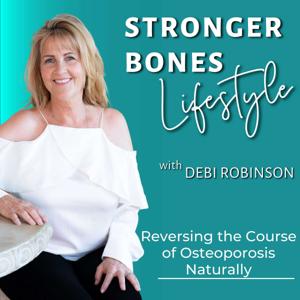
Welcome to The Stronger Bones Lifestyle Podcast, the show designed for…
I’m Debi Robinson, a yoga therapist and functional bone health expert who’s faced my own bone loss challenges. I understand the fear and uncertainty that can come with a diagnosis of osteoporosis or osteopenia — and I’m here to show you there’s another way.
Each episode delivers practical, holistic solutions — from nutrition and mindful movement to lifestyle and mindset — all proven to help you rebuild bone density, prevent fractures, and age with strength and confidence.
Join me each week as we build stronger bones - and a stronger life - together.
Ranked by our users in the last 21 days

765 Listeners
7,181 Listeners
1,073 Listeners
255 Listeners
718 Listeners

4,872 Listeners

3,422 Listeners
9,165 Listeners

332 Listeners
133 Listeners

617 Listeners
1,141 Listeners
845 Listeners
294 Listeners
1,190 Listeners