
Sign up to save your podcasts
Or

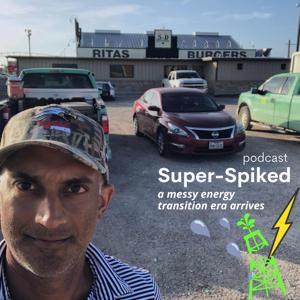


WATCH the video on Substack by clicking the play button above or on YouTube (here).
STREAM audio only on Apple Podcasts (here), Spotify (here), or your favorite podcast player app.
DOWNLOAD a pdf of a moderately edited transcript using the blue Download button below.
A recurring theme from many of our recent meetings and engagements is around the role of China in energy markets going forward. Here are nine China-related thoughts in the context of our Geopolitical Super Vol macro framework.
* China’s massive trade surplus with the rest of the world is not sustainable.
* Industrial diversification away from China is inflationary, and at least in the short-term, higher in energy intensity than the status quo.
* From the perspective of energy, peak trade surplus by China likely coincides with peak energy usage in the country. A plateau in its oil and coal demand seems possible in coming years under the assumption that the rest of the world makes headway diversifying manufacturing away from China.
* Whether China can transition to more of a consumer market from a heavy industry, export oriented economy is a question that is beyond our ability to intelligently comment as an energy specialists and is the key to its long-term energy growth potential.
* We do not believe peak or plateauing oil demand in China means peak global oil demand is here, as the other 6 billion people on Earth outside of China still have massive unmet energy needs.
* China is still building coal plants even as it is meaningfully ramping solar, wind, batteries, and nuclear. This is a real lesson the U.S., Canada, and Europe ought to embrace. Build and definitely don’t close baseload power generation as you are adding renewables and other new technologies.
* Increased volatility in China oil imports likely mutes the extreme ends of the oil price trading range, as we expect the country to add to strategic stocks on pullbacks toward $50/bbl or lower with reduced imports when oil is trading above $90/bbl.
* For companies in the oil value chain in particular, cash is king.
* For the power value chain, higher inflation means higher borrowing costs. All the turmoil in the world creates supply chain risk.
Let us conclude with this takeaway: China did not matter to energy analysis prior to 2004 and may become less relevant within the next few years (to be clear, China will remain important but may no longer be the top driver is our point). The Asia Tigers stopped mattering in 1998. Japan and Western Europe stopped mattering a few years before that. So if we think about macro eras, which countries are the driver evolve as well.
There is only one long-term direction of travel for the world and that is one of more prosperity and progress over time, even as the path can sometimes be rocky. There are still at least 6 billion people ready to move up and to the right economically. The 2030s may well be more about some or all of those other 6 billion people than it will be about China.
📜 Credits
* Intro & Outro music: Wolf Hoffman: Concerto for 2 Cellos in G Minor, Rv 531: I. Allegro Moderato.
* This episode of Super-Spiked Videopods was edited and produced by Veriten Productions.
⚖️Disclaimer
I certify that these are my personal, strongly held views at the time of this post. My views are my own and not attributable to any affiliation, past or present. This is not an investment newsletter and there is no financial advice explicitly or implicitly provided here. My views can and will change in the future as warranted by updated analyses and developments. Some of my comments are made in jest for entertainment purposes; I sincerely mean no offense to anyone that takes issue.
Subscribe to receive all content. Also available at Veriten.com.
WATCH the video on Substack by clicking the play button above or on YouTube (here).
STREAM audio only on Apple Podcasts (here), Spotify (here), or your favorite podcast player app.
DOWNLOAD a pdf of a moderately edited transcript and the slide deck using the blue Download buttons below.
One of our core Super-Spiked themes since inception nearly five years ago has been the idea that companies in deeply cyclical commodity sectors should aim to have a fortress balance sheet, and that you run the business to ensure that you can not only survive but actually thrive through industry downturns. Preparation for bad times is what enables success during the bull markets. It’s what positions companies to keep pace with and beat the broader S&P 500 over the decades through all the ups and downs. From the breakup of Standard Oil in 1911, its largest surviving pieces plus Royal Dutch/Shell not only survived but thrived over the next 100 years until the end of the China/BRICs super-cycle in 2014.
We are currently in an era where oil prices are around $100/bbl and refining margins are over $60/bbl and companies exposed to upstream and downstream oil commodity value chains are increasingly flush with cash. Today’s video adds a corollary to our fortress balance sheet ethos and that is “cash is king.” We have little doubt that Street analysts on upcoming 3Q2026 earnings conference calls will be querying management teams on what they will do with the cash and many will argue some large portion ought to be immediately returned to investors. If we are sticking with our pragmatic approach to energy, some of the surplus will and should go back to investors.
But there are a number of arguments made about returning all or the bulk of cash back to investors that we do no agree with. The strategic value of cash, especially in a deeply cyclical commodity business, is often under appreciated by both investors and management teams. It’s not simply having a fortress balance sheet. It’s about having a degree of balance sheet strength that enables significant counter-cyclical buybacks, M&A, or CAPEX. We would argue there is no such thing as having too much cash on hand, especially given our Geopolitical Super Vol macro framing.
0:00 Introduction
2:42 Cash is King
9:37 Pushbacks On Retaining Cash
15:48 On A Personal Note: In Honor of Malcolm Young
📜 Credits
* Intro & Outro music: Wolf Hoffman: Concerto for 2 Cellos in G Minor, Rv 531: I. Allegro Moderato.
* This episode of Super-Spiked Videopods was edited and produced by Veriten Productions.
⚖️Disclaimer
I certify that these are my personal, strongly held views at the time of this post. My views are my own and not attributable to any affiliation, past or present. This is not an investment newsletter and there is no financial advice explicitly or implicitly provided here. My views can and will change in the future as warranted by updated analyses and developments. Some of my comments are made in jest for entertainment purposes; I sincerely mean no offense to anyone that takes issue.
Subscribe to receive all content. Also available at Veriten.com.
WATCH the video on Substack by clicking the play button above or on YouTube (here).
STREAM audio only on Apple Podcasts (here), Spotify (here), or your favorite podcast player app.
DOWNLOAD a pdf of a moderately edited transcript using the blue Download button below.
This week we have a twist on our Q&A styled commentaries, which we are calling “Good Call or Bad Call.” We focus on oil markets with four topics to go through. The point of the post is to shed light on signal from noise and when to push back on consensus narratives.
(1) About a month ago, U.S. Energy Secretary Chris Wright made headlines stating that oil flows out of the Strait of Hormuz and the Middle East in general were much higher than everyone realized. His comments were broadly dismissed as happy talk from an administration that was desperate to see lower gasoline and diesel prices ahead of upcoming midterm elections. Was it a good call or bad call to doubt Secretary Wright’s comments on Middle East oil flows?
(2) Has it been a good call or bad call to believe in the oil glut narrative?
(3) Is it a good call or bad call to think recent changes to U.S. fuel economy rules announced by the Trump Administration will gut mpg improvements and boost gasoline demand?
(4) Has our Super Vol framework been a good call or a bad call?
📜 Credits
* Intro & Outro music: Wolf Hoffman: Concerto for 2 Cellos in G Minor, Rv 531: I. Allegro Moderato.
* This episode of Super-Spiked Videopods was edited and produced by Veriten Productions.
⚖️Disclaimer
I certify that these are my personal, strongly held views at the time of this post. My views are my own and not attributable to any affiliation, past or present. This is not an investment newsletter and there is no financial advice explicitly or implicitly provided here. My views can and will change in the future as warranted by updated analyses and developments. Some of my comments are made in jest for entertainment purposes; I sincerely mean no offense to anyone that takes issue.
Subscribe to receive all content. Also available at Veriten.com.
WATCH the video on Substack by clicking the play button above or on YouTube (here).
STREAM audio only on Apple Podcasts (here), Spotify (here), or your favorite podcast player app.
DOWNLOAD a pdf of a moderately edited transcript using the blue Download button below.
It’s a heavy travel week so this is going to be a quick audio only commentary. On Veriten’s Close of Business Tuesday podcast this past week, we had oil industry veteran Scott Sheffield on to discuss his new memoir, “From Tehran to the Permian” (here). Scott of course was the long running CEO of oil & gas exploration and production company Pioneer Natural Resources and its predecessor Parker & Parsley spanning over three decades. Scott’s career as CEO covered all four of the oil macro eras we highlighted a few weeks ago in our 20 Years of “A View from Wall Street” at Oxford podcast that discussed how corporate strategy needs to evolve depending on what macro era you are in and how mature a given era is (here).
We give Scott, as a very long serving CEO, a lot of credit that his management style allowed Pioneer to thrive across very different oil macro environments. It is rare for a CEO to last that long and it is even rarer for a leader to be as adaptable as he was. If you pull up PXD’s stock chart, it was not a straight line up, but the low points didn’t break the company and every time they emerged stronger than before, culminating in the sale of the company in 2024 to ExxonMobil at an all-time high that resulted in PXD outperforming the S&P 500 by a good amount over his tenure.
📜 Credits
* Intro & Outro music: Wolf Hoffman: Concerto for 2 Cellos in G Minor, Rv 531: I. Allegro Moderato.
* This episode of Super-Spiked Videopods was edited and produced by Veriten Productions.
⚖️Disclaimer
I certify that these are my personal, strongly held views at the time of this post. My views are my own and not attributable to any affiliation, past or present. This is not an investment newsletter and there is no financial advice explicitly or implicitly provided here. My views can and will change in the future as warranted by updated analyses and developments. Some of my comments are made in jest for entertainment purposes; I sincerely mean no offense to anyone that takes issue.
Subscribe to receive all content. Also available at Veriten.com.
WATCH the video on Substack by clicking the play button above or on YouTube (here).
STREAM audio only on Apple Podcasts (here), Spotify (here), or your favorite podcast player app.
DOWNLOAD a pdf of a moderately edited transcript and the slide deck using the blue Download buttons below.
We provide takeaways following a number of New York City Climate Week events we attended this past week. We are going with an optimistic take directed at those of you that place a high priority on addressing carbon emissions: in my 34 year career, the outlook for new energy technologies has never been brighter. The vast bulk of new energy tech is de facto lower carbon in nature. The favorable outlook is being driven by economic and geopolitical security fundamentals that are consistent with energy’s natural hierarchy of needs along with our Lucky 1 Billion Other 7 Billion person framing. This is and always has been the basis for all energy and economic development.
Notable events we attended were hosted by the US-India Strategic Partnership, ClearPath and API, and the Center On Global Energy Policy—developing world, right of center, left of center were represented and all recognized energy’s natural hierarchy of needs. Pretending carbon emissions is anyone’s organizing principle, mercifully, was not the view at any of the events. Notably, decreased carbon intensity of economic growth was the clear result of the focus of everyone on Earth deserving to be energy rich.
0:00 Introduction
3:07 FAQ on Climate
10:28 On A Personal Note: I ❤️ New York
📜 Credits
* Intro & Outro music: Wolf Hoffman: Concerto for 2 Cellos in G Minor, Rv 531: I. Allegro Moderato.
* This episode of Super-Spiked Videopods was edited and produced by Veriten Productions.
⚖️Disclaimer
I certify that these are my personal, strongly held views at the time of this post. My views are my own and not attributable to any affiliation, past or present. This is not an investment newsletter and there is no financial advice explicitly or implicitly provided here. My views can and will change in the future as warranted by updated analyses and developments. Some of my comments are made in jest for entertainment purposes; I sincerely mean no offense to anyone that takes issue.
Subscribe to receive all content. Also available at Veriten.com.
WATCH the video on Substack by clicking the play button above or on YouTube (here).
STREAM audio only on Apple Podcasts (here), Spotify (here), or your favorite podcast player app.
DOWNLOAD a pdf of a moderately edited transcript and the slide deck using the blue Download buttons below.
We have been presenting “A View From Wall Street” at the annual Oxford Energy Seminar since 2006. The seminar brings together around 50 “next generation” leaders at national oil companies, Western majors, refiners, and various government agencies from around the world. The opportunity to join this esteemed gathering at Oxford each year is a career highlight. The participants, we would note, spend 10 days on campus hearing from a range of speakers such as yours truly while also engaging in group projects/discussions meant to foster networking and diverse perspectives on the outlook and challenges facing the energy sector. It skews “oil” in terms of participant representation and is run by the former CEO of Kuwait Petroleum Company.
This year, one of the participants asked me what common themes and lessons have I learned in over 20 years of speaking? How had the outlook changed? It is a great question. So, what we are going to do this week is take a look back on what we were saying at the time, what we got right, what we got wrong at the time relative to how things ultimately played out.
0:00 Introduction
2:12 1992-2001: $15-$25 Forever
7:29 1st OES: Isn’t The Rise to $60 Just Speculation?
10:04 2014 OES: “Normal” Discussions About Outlook
12:09 2019 OES: Can Shale Endure at $50?
14:03 OES 2023: Energy Transition Doom & Gloom
16:23 OES 2026: “Thank You For An Optimistic Take”
18:32 Alternative Energy to Clean Tech to Geo Security
22:43 Lesson For Traditional Energy
26:59 Lesson For New Energies
33:27 Biggest Surprises or Change In View
40:27 On A Personal Note: Oxford
📜 Credits
* Intro & Outro music: Wolf Hoffman: Concerto for 2 Cellos in G Minor, Rv 531: I. Allegro Moderato.
* This episode of Super-Spiked Videopods was edited and produced by Veriten Productions.
⚖️Disclaimer
I certify that these are my personal, strongly held views at the time of this post. My views are my own and not attributable to any affiliation, past or present. This is not an investment newsletter and there is no financial advice explicitly or implicitly provided here. My views can and will change in the future as warranted by updated analyses and developments. Some of my comments are made in jest for entertainment purposes; I sincerely mean no offense to anyone that takes issue.
Subscribe to receive all content. Also available at Veriten.com.
WATCH the video on Substack by clicking the play button above or on YouTube (here).
STREAM audio only on Apple Podcasts (here), Spotify (here), or your favorite podcast player app.
DOWNLOAD a pdf of a moderately edited transcript and the slide deck using the blue Download buttons below.
We are back after a 2-week end of summer hiatus. We hope everyone had a great summer and is ready for Fall. Our Fall kickoff starts with a look back at our first Super-Spiked post his year titled Big Themes for 2026: Up and To The Right (here). In this week’s post, we will assess how we are doing we the themes we had highlighted in January. Overall, we think we did a generally decent job of identifying the most important themes, but of course have room for improvement which we spend time discussing.
0:00 Introduction
0:43 Mega Themes
2:33 2026 Specific Themes
8:20 Energy Scenario Normalization
11:31 Markets, Technology and M&A
15:58 What We Didn’t Sufficiently Emphasize
23:07 On A Personal Note: 25 Years
📜 Credits
* Intro & Outro music: Wolf Hoffman: Concerto for 2 Cellos in G Minor, Rv 531: I. Allegro Moderato.
* This episode of Super-Spiked Videopods was edited and produced by Veriten Productions.
⚖️Disclaimer
I certify that these are my personal, strongly held views at the time of this post. My views are my own and not attributable to any affiliation, past or present. This is not an investment newsletter and there is no financial advice explicitly or implicitly provided here. My views can and will change in the future as warranted by updated analyses and developments. Some of my comments are made in jest for entertainment purposes; I sincerely mean no offense to anyone that takes issue.
Subscribe to receive all content. Also available at Veriten.com.
WATCH the video on Substack by clicking the play button above or on YouTube (here).
STREAM audio only on Apple Podcasts (here), Spotify (here), or your favorite podcast player app.
DOWNLOAD a pdf of a moderately edited transcript using the blue Download buttons below.
We have another audio only post as we enter the final stretch of summer. Our next episode will most likely be the Saturday following Labor Day. This week we want to share various observations about the energy macro, policy, and corporate strategy—the core topics we focus on with Super-Spiked—that have come up in various events or meetings we’ve attended or in reaction from many of you to prior episodes.
Six points to go through:
* Natural gas as a through theme for all aspects of where we are in energy and power
* Legacy Auto OEMs seem bad at autonomous mobility
* Being in a Peer Group of 1
* Under-appreciated areas of energy
* Geopolitical necessity provides clarity of purpose to energy policy
* How will any country overcome China’s overwhelming manufacturing dominance in numerous areas?
Timestamps:
0:00 Introduction
1:19 Natural gas as a through theme for all aspects of where we are in energy and power.
8:27 Legacy Auto OEMs seem bad at autonomous mobility
13:26 Being in a Peer Group of 1
16:01 Under-appreciated areas of energy
22:58 Geopolitical necessity provides clarity of purpose to energy policy
24:28 How will any country overcome China’s overwhelming manufacturing dominance in numerous areas?
29:20 On A Personal Note
📜 Credits
* Intro & Outro music: Wolf Hoffman: Concerto for 2 Cellos in G Minor, Rv 531: I. Allegro Moderato.
* This episode of Super-Spiked Videopods was edited and produced by Veriten Productions.
⚖️Disclaimer
I certify that these are my personal, strongly held views at the time of this post. My views are my own and not attributable to any affiliation, past or present. This is not an investment newsletter and there is no financial advice explicitly or implicitly provided here. My views can and will change in the future as warranted by updated analyses and developments. Some of my comments are made in jest for entertainment purposes; I sincerely mean no offense to anyone that takes issue.
Subscribe to receive all content. Also available at Veriten.com.
WATCH the video on Substack by clicking the play button above or on YouTube (here).
STREAM audio only on Apple Podcasts (here), Spotify (here), or your favorite podcast player app.
DOWNLOAD a pdf of a moderately edited transcript using the blue Download buttons below.
We have an audio only post due to some travel this week. One of the best parts of not being a covering equity analyst anymore is not having to process the deluge that is quarterly earnings season. But we have kept the discipline of reading transcripts for a wide swath of companies. As always, we want to provide our longer-term perspectives on the sectors and corporate strategy. Here are six areas where we would most push against what we think are consensus narratives.
* Resist pro cyclical capital return narratives, especially in deeply cyclical sectors like we know exists in refining.
* Differentiate companies that might be in need of restructuring, typically exemplified by having sub-scale businesses that are earning sub-par returns on capital, versus believing every non-pure play needs to become one.
* The Strait of Hormuz may never return to pre-war “normal.”
* What are the growth opportunities companies should be leaning into?
* Power sector growth is economic growth. Economic growth is geopolitical security.
* We are concerned about energy policy risk in the United States.
There is no more important sector in the world than those involved in energy and power. It’s a hedge to Tech. It’s an enabler of tech growth. It’s a geopolitical hedge. It’s about as exciting a time as we have experienced in our 34-year career. Even now, reading upwards of 80-90 earnings season transcripts is borderline fun.
📜 Credits
* Intro & Outro music: Wolf Hoffman: Concerto for 2 Cellos in G Minor, Rv 531: I. Allegro Moderato.
* This episode of Super-Spiked Videopods was edited and produced by Veriten Productions.
⚖️Disclaimer
I certify that these are my personal, strongly held views at the time of this post. My views are my own and not attributable to any affiliation, past or present. This is not an investment newsletter and there is no financial advice explicitly or implicitly provided here. My views can and will change in the future as warranted by updated analyses and developments. Some of my comments are made in jest for entertainment purposes; I sincerely mean no offense to anyone that takes issue.
Subscribe to receive all content. Also available at Veriten.com.
WATCH the video on Substack by clicking the play button above or on YouTube (here).
STREAM audio only on Apple Podcasts (here), Spotify (here), or your favorite podcast player app.
DOWNLOAD a pdf of a moderately edited transcript using the blue Download buttons below.
It is now August, the last month of summer, and we are planning a series of shorter “mini-dives” that offer insight into our major themes and in some cases, like this week, push back on some of our own biases and perspectives. By now our disdain is well known for what we have called the European mindset of prioritizing climate and net zero as the de facto primary objective of energy policy. We do not believe in an equal-weighted energy trilemma either to be clear.
But we have been wrong, or perhaps more accurately lazy, in simply saying “we don’t like European energy policy and hope America never goes down that road.” Europe is no more a singular place than is the U.S. From an energy policy standpoint, we regularly differentiate states with favorable energy policy like Texas, North Dakota, Louisiana, and Oklahoma from places with unfavorable policies like California and New York. Pennsylvania is not the same as New Jersey. Florida is different than Connecticut.
Our critique of European economic and energy policy is primarily rooted in its Big-4 economies especially the United Kingdom and Germany. What former Secretary of Defense Don Rumsfeld famously derided as “Old Europe.” This week we take a look at oil demand trends in Old Europe versus New Europe.
Three key messages:
* We often discuss the rising prosperity of the other 7 billion people on Earth and our everyone deserves to be energy rich mega theme. We have never before noticed that 250 million of them live in New Europe and are on an upswing. A special shout out this week to Poland and Türkiye.
* Our Obliterating Peak Oil Demand theme is alive and well in Europe, where growth in New Europe is surprisingly offsetting declines in Old Europe.
* This is positive not just for oil demand but growth in power markets and the fuels that support general economic and industrial growth. As usual, we advise applying our natural hierarchy of energy needs to the energy sources and technologies that will make the most sense for each country—”some of the above,” country specific.
Exhibit 1: European oil demand
Source: Energy Institute, Our World in Data, Veriten.
📜 Credits
* Intro & Outro music: Wolf Hoffman: Concerto for 2 Cellos in G Minor, Rv 531: I. Allegro Moderato.
* This episode of Super-Spiked Videopods was edited and produced by Veriten Productions.
⚖️Disclaimer
I certify that these are my personal, strongly held views at the time of this post. My views are my own and not attributable to any affiliation, past or present. This is not an investment newsletter and there is no financial advice explicitly or implicitly provided here. My views can and will change in the future as warranted by updated analyses and developments. Some of my comments are made in jest for entertainment purposes; I sincerely mean no offense to anyone that takes issue.
Subscribe to receive all content. Also available at Veriten.com.
From the publisher's feed
403 Listeners

797 Listeners
408 Listeners
25 Listeners

358 Listeners
28 Listeners

299 Listeners

90 Listeners
1,339 Listeners

35 Listeners

426 Listeners
107 Listeners
265 Listeners

148 Listeners

20 Listeners