
Sign up to save your podcasts
Or

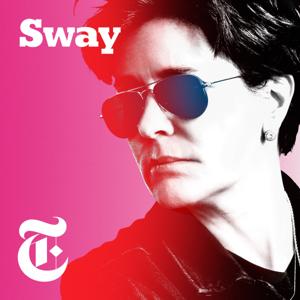


Stocks tumbling, inflation soaring and interest rates climbing — it’s clear America’s economy has hit some turbulence. And yet President Biden says a recession is “not inevitable.” Andrew Ross Sorkin, the founder and editor at large of DealBook at The New York Times, sat down with Kara Swisher to unpack our economic woes, predict what happens next and diagnose what Washington could have done differently.
In this conversation, they discuss how the pandemic highlighted our economic dependence on China and helped pave the way for both a crypto boom and the subsequent bear market. They break down the futures of companies from Netflix and Disney to Coinbase and Twitter, and discuss whether activist employees will continue to wield power with their corporate employers. And Andrew helps explain why airfares are so damn expensive.
You can find transcripts (posted midday) and more information for all episodes at nytimes.com/sway, and you can find Kara on Twitter @karaswisher.
Unlock full access to New York Times podcasts and explore everything from politics to pop culture. Subscribe today at nytimes.com/podcasts or on Apple Podcasts and Spotify.
Instagram, Twitter and TikTok can monopolize all of your time, driven by what the novelist Jennifer Egan calls humankind’s “ongoing hunger for authenticity.” But to Egan, social media is not a winning strategy for discovering what’s real or true: “Looking to the internet for authentic experience is just inherently a loser,” she says. The digital world, after all, offers only an “illusion of authenticity.”
In her newest novel, “The Candy House” — set in the same universe as her Pulitzer Prize-winning “A Visit From the Goon Squad” — Egan paints a picture of a world where the search for authenticity becomes so ubiquitous that people can choose to upload their memories — and entire consciousnesses — to a collective archive, and then share them for the world to see.
In this conversation, Kara Swisher and Egan discuss how far Silicon Valley is from accessing our consciousnesses and introducing this kind of dystopian technology. They debate how social media has changed the world and whether there is still room for optimism. And Kara tries to decipher which tech founder, if any, inspired Egan’s protagonist, whom Kara describes as Mark Zuckerberg with “the soul of Steve Jobs.” (Egan, for the record, denies all comparisons.)
You can find transcripts (posted midday) and more information for all episodes at nytimes.com/sway, and you can find Kara on Twitter @karaswisher.
Unlock full access to New York Times podcasts and explore everything from politics to pop culture. Subscribe today at nytimes.com/podcasts or on Apple Podcasts and Spotify.
Raphael Warnock claims he’s not a politician, though he certainly sounds like one and serves as one. The U.S. senator from Georgia, who has long been the pastor at Martin Luther King Jr.’s former church, says that his “entry into politics is an extension” of his work on a range of what he sees as moral issues, such as health care, criminal-justice reform and voting rights.
Warnock became Georgia’s first Black senator in January 2021, when he narrowly beat the Republican incumbent, Kelly Loeffler, in a special runoff election. And he is set for yet another tough political battle ahead, against Herschel Walker, the former N.F.L. player, who in addition to his celebrity status also has an endorsement from Donald Trump. The stakes are high: “God knows these days, the Senate needs a soul,” Warnock says.
In this conversation, Kara Swisher talks to Warnock about his path from the pulpit to the Senate and the religious journey he traces in his recent memoir, “A Way Out of No Way.” She presses him on whether he can beat his celebrity opponent and asks what shadow Trump casts on this election. And they discuss the contrast between the jubilation he felt on his history-making victory and the horror that unfolded less than 24 hours later, as a mob attacked his “new office,” the Capitol, on Jan. 6.
You can find transcripts (posted midday) and more information for all episodes at nytimes.com/sway, and you can find Kara on Twitter @karaswisher.
Unlock full access to New York Times podcasts and explore everything from politics to pop culture. Subscribe today at nytimes.com/podcasts or on Apple Podcasts and Spotify.
Chris Dixon is one of Silicon Valley’s most ardent crypto-evangelists. A general partner at the venture capital firm Andreessen Horowitz, he leads a16z Crypto, which invests in web3. At the beginning of the year, his proselytizing seemed to be paying off: Bitcoin had doubled in value in the last half of 2021, NFTs were all the rage, and crypto seemed poised for mainstream acceptance. Nowhere was this more evident than the Super Bowl broadcast, crammed with cryptocurrency ads featuring celebrities like LeBron James, Matt Damon and even the curmudgeonly Larry David.
But it’s all come crashing down. This week, Bitcoin reached its lowest point in 18 months — at just above $23,000 — and Ethereum is worth about a quarter of its November peak. The cryptocurrency exchange platform Coinbase announced it was laying off nearly 20 percent of its work force while the crypto-lending platform Celsius paused withdrawals, in a moment that looked a lot like the run on the banks in the film “It’s a Wonderful Life.”
In this conversation, Kara Swisher asks Dixon if we’re watching the beginning of an all-out crash for the industry. They discuss parallels to the 2008 financial crisis, dig into how much of crypto is “scam at scale,” and contemplate what regulation from the government could help. And they talk about whether web3 will really be the decentralized utopia enthusiasts paint it to be, another iteration of an internet that profits too few, or something in between.
This episode contains strong language.
You can find transcripts (posted midday) and more information for all episodes at nytimes.com/sway, and you can find Kara on Twitter @karaswisher.
Unlock full access to New York Times podcasts and explore everything from politics to pop culture. Subscribe today at nytimes.com/podcasts or on Apple Podcasts and Spotify.
What if Silicon Valley’s next big frontier were not web3 but climate change? That’s the bet the venture capitalist John Doerr is making: Doerr, the billionaire author of “Speed and Scale: An Action Plan for Solving Our Climate Crisis Now,” recently donated $1.1 billion to Stanford University to fund a new school focused on climate and sustainability, describing climate science as “the new computer science.” But with the Intergovernmental Panel on Climate Change’s latest assessment noting that the dangers of climate change are building rapidly, piles of cash and a burst of brain power may prove too little, too late.
In this conversation, Kara Swisher asks Doerr whether Silicon Valley can save the planet and what President Biden and all of Washington must do to honor the country’s goal to halve emissions by 2030. She presses him on whether lobbying for a carbon tax, mobilizing voters or even louder naming and shaming of fossil fuel companies may be a better use of Doerr’s dollars. And they discuss Elon Musk’s contribution to a sustainable future — with Doerr noting why he (wrongly) overlooked Tesla in its early days — and whether Apple’s potential moves in the EV market would sit well with the company’s founder, Steve Jobs.
You can find transcripts (posted midday) and more information for all episodes at nytimes.com/sway, and you can find Kara on Twitter @karaswisher.
Unlock full access to New York Times podcasts and explore everything from politics to pop culture. Subscribe today at nytimes.com/podcasts or on Apple Podcasts and Spotify.
The House’s Jan. 6 committee is going prime-time. On Thursday, its members, with Representative Liz Cheney, Republican of Wyoming, serving as vice chair, will present findings in hearings televised throughout June on all major networks (except Fox News). But will Americans watch? Or care?
In this conversation, Kara Swisher breaks down the hearings with the former Obama senior adviser David Axelrod, the Republican strategist Sarah Longwell and the former U.S. attorney Preet Bharara. They discuss the downsides of prime time and the imperative to engage Americans on social media in this landmark moment for democracy. They also talk about what key moments and witnesses to watch for in the hearings and whether any revelations will, as one committee member, Jamie Raskin of Maryland, suggested, “blow the roof off the House.”
You can find transcripts (posted midday) and more information for all episodes at nytimes.com/sway, and you can find Kara on Twitter @karaswisher.
Unlock full access to New York Times podcasts and explore everything from politics to pop culture. Subscribe today at nytimes.com/podcasts or on Apple Podcasts and Spotify.
Tech stocks may be under pressure, but the tentacles of Silicon Valley continue to grow, inching us closer to the dystopian world Dave Eggers paints in “The Every.” The novel imagines a world where the fictional equivalent of Google and Amazon merge to form an all-knowing corporate juggernaut that can program our every moment. Kara is revisiting her conversation with Eggers, which was taped in September.
In this conversation, which first aired in September, Kara and Eggers discuss the inspiration behind his latest Silicon Valley satire. They dig into Eggers’s tech skepticism — the author says he still uses a flip phone. They also discuss the challenges that Amazon’s rapidly growing market share poses for smaller publishing houses like Eggers’s own company, McSweeney’s.
Kara will be back on Thursday with a new episode.
You can find transcripts (posted midday) and more information for all episodes at nytimes.com/sway, and you can find Kara on Twitter @karaswisher.
Unlock full access to New York Times podcasts and explore everything from politics to pop culture. Subscribe today at nytimes.com/podcasts or on Apple Podcasts and Spotify.
Elon Musk swept Twitter off its feet in April, when he put in a bid to buy the company for $44 billion. But the impassioned beginnings of this acquisition have cooled down in the weeks since, as Musk has raised concerns about the inner workings of the company he agreed to buy essentially sight unseen (he did not conduct due diligence before he agreed to buy the social media platform). As the New York Times tech columnist Kevin Roose puts it, the deal is starting to look “like an arranged marriage that’s sort of going sour.” Musk has invoked concerns about spam and fake accounts on the site, as well as privacy considerations. And the billionaire has gone so far as to tweet that the deal is “temporarily on hold” before clarifying that he is “still committed to acquisition.” But a breakup between Musk and Twitter would make for a difficult, costly and very public divorce.
In this conversation, Kara Swisher takes stock of the Twitter-Musk marriage with Roose and William Cohan, a business writer and founding partner at Puck. They break down the balance of power between Musk and Twitter and discuss why Musk even wants the company. And Cohan breaks down how the math clears — after all, even with help from a potpourri of wealthy investors, including Oracle co-founder Larry Ellison and Prince Alwaleed bin Talal of Saudi Arabia, there are still questions about how Musk, the richest person in the world, will find the tens of billions of dollars he needs to close this deal.
This episode contains strong language.
You can find transcripts (posted midday) and more information for all episodes at nytimes.com/sway, and you can find Kara on Twitter @karaswisher.
Unlock full access to New York Times podcasts and explore everything from politics to pop culture. Subscribe today at nytimes.com/podcasts or on Apple Podcasts and Spotify.
“Top Gun: Maverick” is expected to be one of the first blockbusters of the summer. But as streaming platforms proliferate and movie theaters continue to struggle, is a movie that was designed to be seen on the biggest screen possible be able to lure audiences back to theaters? David Ellison thinks so. He’s the founder and C.E.O. of Skydance Media, the company behind the film, as well as other action franchise reboots like “Mission: Impossible” and “Terminator.”
In this conversation, Kara Swisher talks to Ellison about working with Tom Cruise, who flew his own planes for “Top Gun: Maverick.” She digs into how Ellison’s heritage (he’s the son of the billionaire Oracle co-founder Larry Ellison) factored into his future as a filmmaker and the advice he got from his dad’s friend Steve Jobs. And David Ellison responds to Kara’s question about the news that his father joined a November 2020 phone call with Senator Lindsey Graham and Sean Hannity, among others, about contesting Trump’s loss.
You can find transcripts (posted midday) and more information for all episodes at nytimes.com/sway, and you can find Kara on Twitter @karaswisher.
Unlock full access to New York Times podcasts and explore everything from politics to pop culture. Subscribe today at nytimes.com/podcasts or on Apple Podcasts and Spotify.
In the wake of the fatal shooting of 19 schoolchildren and two teachers in Uvalde, Texas, on Tuesday, supporters of gun control are renewing calls for the government to act. But in a bid to negotiate a bipartisan consensus, the Democratic majority leader, Chuck Schumer, has signaled that there will not be an imminent vote on gun control legislation in the Senate. And the journalists Nicholas Kristof and Frank Smyth don’t think this is necessarily a bad thing.
“If anything, this could be a wake-up call — to have a restart of the conversation, to rethink how to approach it,” Smyth says.
In this episode of “Sway,” Kara Swisher talks to Smyth, the author of “The NRA: The Unauthorized History,” and Kristof, a former Times Opinion columnist who has written extensively about the policies needed to end America’s gun violence epidemic. The three dig into how the gun lobby has used ideology to distract America from better policies. They examine potential reforms, from a mandatory national gun registry to an increased minimum age. And they contemplate how liberal proponents of gun control can actually make progress.
You can find transcripts (posted midday) and more information for all episodes at nytimes.com/sway, and you can find Kara on Twitter @karaswisher.
Unlock full access to New York Times podcasts and explore everything from politics to pop culture. Subscribe today at nytimes.com/podcasts or on Apple Podcasts and Spotify.
From the publisher's feed

8,827 Listeners

37,876 Listeners

6,788 Listeners

3,926 Listeners

4,051 Listeners

1,507 Listeners

9,653 Listeners

2,069 Listeners

142 Listeners

111,800 Listeners

1,521 Listeners

12,630 Listeners

309 Listeners

7,125 Listeners

466 Listeners

51 Listeners

2,347 Listeners

380 Listeners

6,678 Listeners

5,558 Listeners

16,033 Listeners

1,500 Listeners

10,703 Listeners

1,644 Listeners

3,597 Listeners

740 Listeners

13 Listeners

612 Listeners
27 Listeners

87 Listeners

0 Listeners