
Sign up to save your podcasts
Or



Based on Podcast App listening data
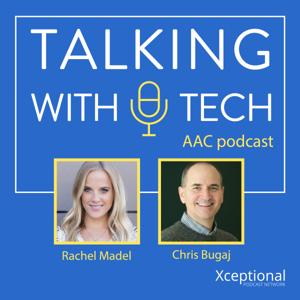
This week, the TWT team presents Chris's interview with Dr. Elena Dukhovny, professor at CSU East Bay! She is a leading researcher on motor planning, AAC training for paraeducators, and more, and she shares some of what she has learned about these two important topics!
Before the interview, Rachel shares a wealth of useful advice on preparing to consult with parents and the circle of support, including 1) asking what gets kids excited to communicate; 2) having parents write down all non-verbal communication, including behaviors; and 3) asking what parents would change about the child’s communication, if they could. Rachel also shares about gently approaching situations where a non-robust language system was already recommended to parents and she wants a robust language system implemented instead.
Key ideas this week:
🔑 Developing a motor plan allows AAC users to have a rate of speech that is closest to verbal speech.
🔑 Elena’s research indicates fluent AAC device users plan and remember words by where their hands move on the device, similar to how speaking people remember words by how they sound and sign-language users remember words by how they are signed.
🔑 Briefly trialing different language systems isn’t always the best way to determine what system will be best for a user in the long term. For example, a system that is simpler or easier to visually scan may be learned quickly, but if motor planning isn’t supported then a user may not become as fluent with that system long term.
Help us develop new content and keep the podcast going strong! Support our podcast at patreon.com/talkingwithtech!
Visit bit.ly/twtpod for access to previous episodes, resources, and CEU credits that you can earn for listening to TWT episodes!
Research
Dukhovny, E., Gahl, S. (2014) Manual motor-plan similarity affects lexical recall on a speech- generating device: Implications for AAC users. Journal of Communication Disorders 48, 52-60.
Thistle, J. J., Holmes, S. A., Horn, M. M., & Reum, A. M. (2018). Consistent symbol location affects motor learning in preschoolers without disabilities: Implications for designing augmentative and alternative communication displays. American journal of speech-language pathology, 27(3), 1010-1017.
Speech Blubs will be giving away a lifetime membership to anyone who signs up to become a Talking with Tech Patreon member by April 2nd, 2020! Just go to patreon.com/talkingwithtech!
In this episode of Teaching with Tech, Chris and Rachel dive into the Speech Blubs speech therapy app. The Speech Blubs app utilizes games, video/peer modeling, and augmented reality to make learning language and improving speech skills fun and engaging! You can use the app to teach emotions & core words, work on wh- questions, improve verbal speech, and more. The app has been used successfully to improve communication for children with speech delay, Autism Spectrum Disorder, Down syndrome, and apraxia!
You can download a free trial of the app by going to speechblubs.com.
Find out more about Speech Blubs on Instagram (@speechblubs) or by emailing them at [email protected]
This week on TWT, Chris interviews Christine Tripoli, an SLP with the Deaf/Blind program at Perkins School for the Blind, and Ellen Maisel, Director of Cortical Visual Impairment project at Perkins. They discuss cortical visual impairment (CVI), including what it is and how to look for it.
Before the interview, Chris shares about his discussion on AAC Certification with Marie Ireland, VP of ASHA. Chris wonders if a slippery slope argument (if we let A happen, then Z will happen) is happening with AAC certification and talks about yourlogicalfallacy.com. Marie talked with Chris about the lack of data to support anyone getting denied services once a certification is put in place.
Key ideas this week:
🔑 CVI is a brain-based visual impairment that affects visual attention and recognition. The cause of visual impairment for people with CVI isn’t their eyes, but their visual brain.
🔑 Just because a child is looking at something, doesn’t mean they understand what they are seeing. This understanding is the primary challenge for children with CVI.
🔑 For brain-based visual impairment, you don’t need to just make it bigger or closer. Its about teaching them to understand what they are looking at.
If you love Talking with Tech, help us develop new content and keep the podcast going! Support our podcast at patreon.com/talkingwithtech!
Visit bit.ly/twtpod for access to previous episodes, resources, and CEU credits that you can earn for listening to TWT episodes!
This week, the TWT team presents Chris’s roundtable discussion on coding, robots, and AAC with Darla Ashton, Brian Franklin, Catherine Brown, Kelly Fonner. They discuss practical strategies for teaching language using the Dash robot, Ozobot, Code.org, the Every Move Counts method, and more!
Before the roundtable, Rachel and Chris share about meeting each other for the first time in PA during the previous winter break. Rachel also describes going to a screening of Uncut Gems and meeting Adam Sandler! Finally, Rachel and Chris talk about the challenges and rewards of networking, and how they have both become more comfortable with criticism!
Key ideas this week:
🔑 It is important to be ourselves when interacting with others, especially when networking. While not everyone will be interested in us when we are ourselves, the connections we do make are stronger when we are authentic!
🔑 Coding and working with robots is a great way to work on core vocabulary (e.g. “go here”)
Robots can be more age appropriate for students in school, especially middle and high school
🔑 Coding can encourage peer interaction, because coding robots is motivating to many students, and it allows robotics teams and students in special education to work side by side.
If you love Talking with Tech, help us develop new content and keep the podcast going! Support our podcast at patreon.com/talkingwithtech!
Visit bit.ly/twtpod for access to previous episodes, resources, and CEU credits that you can earn for listening to TWT episodes!
This week, TWT presents Rachel’s interview with Kathryn Dorney of AAC for the SLP! Before the interview, Rachel shares about a young client she is working with whose family was modeling using Rachel’s free communication board before their first session!
Key ideas this week:
🔑 Kathryn Dorney discusses her recent research with Karen Erickson investigating attributing meaning to behaviors, using aided language input, and core vocabulary for preschool students with ASD.
🔑 For aided language input to be more successful, you need core words so that the communication partners have access to more of the words they use themselves. You can also teach intent better with core words - nouns often don’t indicate the intent of the speaker, but core words do.
🔑 When implementing AAC, we should encourage development, not performance. It can quite a while for some students to learn to communicate, and if we require early success to continue implementation, some students don’t get enough time to learn.
If you love Talking with Tech, help us develop new content and keep the podcast going! Support our podcast at patreon.com/talkingwithtech!
Visit bit.ly/twtpod for access to previous episodes, resources, and CEU credits that you can earn for listening to TWT episodes!
This week on TWT, we present part 2 of Chris’s interviews from ATIA! Before the interviews, Chris shares even more stories from ATIA. There were two “smackdown” sessions which focus on sharing strategies. biy.ly/appsmack20 gives you links to all of the apps at the App Smackdown, and bit.ly/pdsmackdown20 links to all the strategies discussed at the Professional Development Smackdown. Chris also shares about the AAC Certification town hall, poster sessions on AAC camps, using robots to teach language, updates to the AAC Agreements ranking the evidence behind them, and more!
Interviews this week:
🔑 Jeanna Antrim & Maggie Judson from BASSC share about their session on building capacity and supporting staff with implementation, strategies, and supports. Building capacity includes empowering families and increasing the AAC knowledge of educators and administrators. To build capacity, Jeanna and Maggie use the Power:AAC modules to create a learning community, hold monthly AT meetings with administrators, and host family AAC nights. Jeanna and maggie discuss the McNaughton et. al. (2019) article on building capacity, the Nate Network that connects AT specialists in Education, and other great resources!
🔑 Susan Todd & Laura Vaughan discuss why AAC assessment should not be a pass/fail test, but rather a dynamic assessment that occurs over a number of sessions. Family involvement should also be central to the assessment process whenever possible. They also discuss the Dietz et. al. (2012) article that describes seven aspects of AAC assessment for each assessment - Multi-Modal Approaches, Communicative Assessment, Symbol Assessment, Device Trials, Access Method, AAC Instruction, and Personalization. There is no hierarchy of mastery - it is a circle that changes for each individual.
🔑 Marlene Cummings shares about her presentation on breaking through barriers to AAC implementation utilizing the participation model from Beukelman & Mirenda. Barriers discussed include attitude, skill, practice, policy, and knowledge.
If you love Talking with Tech, help us develop new content and keep the podcast going! Support our podcast at patreon.com/talkingwithtech!
Visit bit.ly/twtpod for access to previous episodes, resources, and CEU credits that you can earn for listening to TWT episodes!
If you love Talking with Tech, help us develop new content and keep the podcast going! Support our podcast at patreon.com/talkingwithtech!
This week on TWT, we present part 1 of Chris’s interviews from the Assistive Technology Industry Association Conference 2020! Before the interviews, Chris shares some stories from ATIA, including not wanting to be “Creepy Chris” when he saw someone he thought he recognized, having FOMO over all the sessions he couldn’t attend, and how much everyone was talking about about literacy at the conference. Chris also talks about the super fun “AT Family Feud” he helped produce!
Interviews this week:
🔑 Jennifer Thistle, Professor at Western Washington specializing in AAC, whose research includes the importance of motor planning and the design of Visual Scene Displays. Visual Scene Displays (VSDs) are photographs with vocabulary embedded into the picture. Jennifer is also asking for feedback from current school-based SLPs who have been working for at least three years and have a student who uses AAC. You can fill out this Google Form and contact her at [email protected]
🔑 Karen Fahey - graduate student at California State University, Northridge who is interested in AAC & assistive technology. Karen talks about her experience at ATIA, including her favorite parts of the exhibit hall and how much she enjoyed being around other people who are interested in AAC, and also shares about her experiences in grad school.
🔑 Amanda Hettenhausen - SLP & Saltillo consultant talks about how to use AAC in the classroom and adapt books for reading with an AAC user. She shares tips and tricks she uses, including making simple and natural powerpoint books, printing icons on address labels to label books, and more!
Visit bit.ly/twtpod for access to previous episodes, resources, and CEU credits that you can earn for listening to TWT episodes!
This week, we have the privilege of presenting Rachel’s interview with Hannah Foley, a senior at University of Illinois who is pursuing a career in Assistive Technology & AAC. Hannah has cerebral palsy and is an incredible adult AAC user who works as an ambassador for Saltillo!
Before the interview, Rachel & Chris talk about Christine Derse’s article, A Call for Consistency in AAC Picture Systems. Rachel and Chris discuss their agreement that using different symbols sets can be confusing at times, but note it isn’t clear a universal symbol set would lead to better modeling. For example, adults often use labels, rather than pictures, when modeling, and once a motor plan is in place the pictures become less important.
Key ideas this week:
🔑 Initially, Hannah was against using AAC because she felt her dedicated device was unsightly and it made her feel even more different. Working with Matt Baud, she came to see the importance of communication for her independence and started using an iPad.
🔑 Response time is incredibly important when communicating with an AAC user - it is critical that we give enough time to respond and become comfortable with silence.
🔑 People often assume that Hannah is intellectually impaired, can’t go to college, or manage her care independently because she uses AAC. This is, of course, totally incorrect!
We need help from our listeners to keep Talking with Tech going - please support our podcast at patreon.com/talkingwithtech.
Visit bit.ly/twtpod for access to previous episodes, resources, and CEU credits that you can earn for listening to TWT episodes!
Resources
We need your help to keep Talking with Tech going strong! If you are a loyal listener, please support our podcast at patreon.com/talkingwithtech.
This week, Chris and Rachel talk about Chris’s takeaways from the Future of Education Technology conference, a place for teachers, coaches, and administrations can learn about ed tech, including using tech to increase inclusion.
🔑 E-sports was a big topic of discussion at FETC. E-sports allow for more inclusion because students who cannot participate in traditional sports can still play video games. Students can collaborate and interact in an authentic way with peers in a team environment and participate on twitch.com
🔑 The FETC keynote speaker Daniel Pink who discussed the relationship between timing and performance. You want to do analytical tasks in the morning and the afternoon is the “trough” which is better for more routine tasks. We can help students with low motivation to perform better by scheduling them in the morning.
🔑 Carol Allen talked about early childhood education and introducing students to educational technology at a very early age. Don’t be the “lid on the flea jar”, as seen in this video (https://youtu.be/v-Dn2KEjPuc), by setting low expectations for students.
🔑 Jane Odom talks with Chris about the new “voice control” feature on Apple iOS where you can use a real or synthesized voice to interact with everything on an iOS device. This has opened up opportunities for AAC users to become more independent in exciting ways!
Visit bit.ly/twtpod for access to previous episodes, resources, and CEU credits that you can earn for listening to TWT episodes!
We need your help to keep Talking with Tech going strong! If you are a loyal listener, please support our podcast at patreon.com/talkingwithtech.
This week, Chris interviews Matt Levac of ACCEL and David Reno of Southwest Human Development about making assistive tech and developing the “Makers of Change AT Challenge”. Matt and David discuss why making AT for each child can be so important, how recent technology like 3D printing has changed AT making, and how they leveraged the technical expertise of local students through the “Makers of Change AT Challenge” to solve real problems for people with disabilities.
Before the interview, Rachel and Chris connect about getting clients to communicate with carrier phrases and doing fun and silly activities to engage students. They also discuss their experience finding their creative flow in therapy or writing, and how it can be a powerful way to produce a great deal of creative content.
Key ideas this week:
🔑 The Makers of Change AT Challenge takes advantage of the technical skills of students to work on real-world problems facing people with disabilities. One year, students integrated internet-connected sensors into equipment so therapists could get better data about how equipment is being used.
🔑 The Makers of Change AT Challenge is looking for teams across the country to get involved next fall to work on the challenges independently and send in their solutions remotely. Learn more at Atmakerschallenge.com.
🔑 Access free AT resources and “Open AT” solutions at www.makersmakingchange.com and atmakers.org.
Visit bit.ly/twtpod for access to previous episodes, resources, and CEU credits that you can earn for listening to TWT episodes!
From the publisher's feed
Ranked by our users in the last 21 days

21,780 Listeners

43,352 Listeners

12,187 Listeners

14,907 Listeners

69,495 Listeners

4,754 Listeners
427 Listeners

4,523 Listeners

3,461 Listeners

5,816 Listeners

12,705 Listeners

17,644 Listeners

10,652 Listeners

13,624 Listeners
3,426 Listeners