
Sign up to save your podcasts
Or

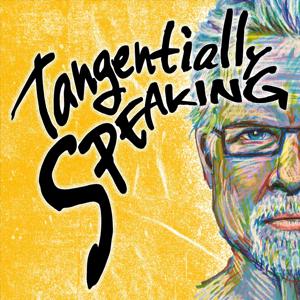


Based on Podcast App listening data
Following up on the previous ROMA where I explore the bird’s-eye view of AI. Is our behavior driven by a parasite? Is AI a self-replicating techno-virus? Is it “speciesist” to lament the demise of Homo sapiens as the next form of life rises from our ashes?
Somehow, my mic never got turned on, so this one is all-guest. The perfect episode! Lloyd is a builder, a writer, a photographer, a publisher, an athlete and a great friend.
We dig into what it feels like to come of age under a permanent sense of "the world could end any moment," comparing Cold War duck-and-cover anxiety to a millennial generation shaped by 9/11, economic collapse, and climate dread. Anya shares thoughts about turning 38. We talk about our past lives, Anya’s formerly unhealthy focus on health, reckoning wit…
Are we like beavers who drown in pools we’re busy building?
I sat down over coffee with Kyle on my recent drive through Santa Cruz. Our spontaneous, far ranging conversation included birding in Manhattan, our differing learning styles, how we share the curse of having been raised by loving parents, One Last Question Before You Go — Kyle’s wonderful book about interviewing our parents, and how to optimize one’s life by opting out.
Richard is one of my favorite writers and one of my favorite people. His books have followed his interests, from chili peppers to the Cuban revolution to eels to homelessness to life after death to cockroaches to the mysteries and intricacies of farming octopus. The phrase “insatiable curiosity” comes to mind. But he’s not just curious, he’s a very fine writer and a compassionate reporter. His books take you places that are fascinating, touching, and totally unexpected. I hope you’ll pick one up.
The world cup, seen through the eyes of an anthropologist. The significance of Barca. Why it’s “more than a club.” Why Argentinians can be so obnoxious. How being alone in Spain can feel less lonely than being among Americans.
Dave has been around. He spent eight years in the navy, lived in Bali for a while, led hundreds of intimacy workshops, explored non-monogamous relationships and intentional communities, been to Burning Man five times, studied with various gurus and legit teachers, and doesn’t take any of it (including himself) too seriously. He writes self-reflective songs and sings them from the heart. He leans into his fears and nurtures vulnerability in himself and others. He’s on a path, in other words. My kinda guy.
Are the vikings cool yet? The importance of distance in historical thinking. Some really shitty, misguided dating advice. My own insecurities around giving advice. Graham Platner and the possibly self-defeating desire to elect nice, healthy, honest people to represent us in the snake pit located in our nation’s capital.
With almost 800 episodes in the archives, new listeners (and old) often ask me for recommendations. In response, I’ll occasionally re-post some of my favorites. This was my first conversation with Rick Beato (Episode 420, 5/18/2020).
Some reasons you might want to listen to this episode.
On what Rick Beato actually does for people who love music:
Chris Ryan: “He is like the Anthony Bourdain of music. He takes you to a place you’ve never been — or you have been, but you just never noticed it the way he does. And you’ll never experience it the same way again after he’s shown you around.”
On how the Beatles wrote Help, Rubber Soul, and Revolver — all in one year:
Rick Beato: “In 1965, they released three records within twelve months. These are all 12, 14-song records. It’s not just writing all those songs — they recorded and released all of them in one calendar year. I believe it was 13 records in 8 years. It’s unfathomable. But one of the things about making records all the time is that you get good at making records. The act of always being in the studio, always writing songs, made them better songwriters because they didn’t want to repeat themselves.”
On the night John Lennon died:
Rick Beato: “I was in my freshman year of college and my roommate was watching Monday Night Football. He said, ‘Oh my god, John Lennon was just shot.’ I said, ‘What?’ And Howard Cosell was doing the play by play. Then five minutes later they announced John Lennon had died. And right then, you could hear it — across the whole campus.”
On the fear of understanding music too well:
Chris Ryan: “I remember talking with my buddy — a musical prodigy, just a total genius — about a piece of music that I found particularly moving. I said that feels so nostalgic to me, it just sounds like an old person looking back on their life, remembering the loves and the loss. And he said, ‘Well yeah, that’s because it’s in G minor. That’s just a trick.’ And it kind of broke my heart a little bit. His sense of music was becoming more and more mechanical.”
Rick Beato: “I never analyze music when I’m listening to it. I just listen. The only time I analyze it is when I need to for a video. And it’s funny — there are songs I’ve heard for 40 years where making the video is the first time I’ve ever even figured out what they’re doing. It never occurred to me. I always listened as a fan.”
Chris Ryan: “You’re like a porn star who has real orgasms, Rick.”
On where the power of music actually comes from:
Rick Beato: “When you play a string, there are natural harmonics that happen because of the atmosphere. If you divide a string in half, it produces the note an octave above. Divide it again — a fifth above. Again — a third above. And all of a sudden you have a major chord. The major triad is literally part of our atmosphere. I think that has something to do with it. Music is one of the great mysteries of human experience. I work with as much music as I’ve studied my entire life, and I still wonder: where do they come up with this stuff?”
On perfect pitch — and what it tells us about how we lose things as we grow up:
Rick Beato: “Every baby is born with the ability to hear all phonemes from all 6,500 languages spoken on earth. But beginning at around nine months, they start to lose this ability. I believe perfect pitch is exactly the same — it’s just another language that’s retained by some babies and not others. My son Dylan can hear a ten-note chord and tell you every pitch in it. But he says he never thinks about it when he’s just listening. It never occurs to him. And that’s how I am with music too.”
From the publisher's feed
Ranked by our users in the last 21 days

16,047 Listeners

3,979 Listeners

2,675 Listeners
10,481 Listeners

26,253 Listeners
1,287 Listeners
13,060 Listeners

4,059 Listeners

4,946 Listeners

547 Listeners

29,160 Listeners
801 Listeners

435 Listeners
251 Listeners

1,100 Listeners