
Sign up to save your podcasts
Or

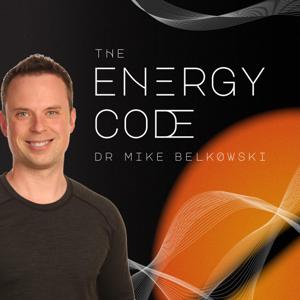

Alzheimer’s isn’t a sudden event. Rather, it’s a slow cascade that begins years (often decades) before symptoms present themselves. This Deep Dive explores a review positioning taurine as an early-phase, disease-modifying candidate — not as a miracle cure, but as a multi-target stabilizer that may support brain resilience upstream of major circuit loss. We break down why “single-target, late-stage” strategies struggle, how taurine may influence amyloid oligomers, mitochondrial stability, oxidative stress, calcium regulation, proteostasis/ER stress, neuroinflammation, and synaptic function, and why the real question is timing: early window vs. late-stage collapse. Promising, not proven.
(Educational content only, not medical advice.)
-
Article Discussed in Episode:
Taurine as an Early-Phase Disease-Modifying Candidate for Alzheimer’s Disease
-
Key Quotes From Dr. Mike:
“Alzheimer’s is not one pathway. It’s converging pathologies that amplify each other.”
“A multi-target molecule (i.e., taurine) isn’t a magic cure; it’s a stabilizer, especially early.”
“Energy failure isn’t a side issue. It’s part of the disease engine.”
“Neuroinflammation isn’t just a response, it can become a driver.”
“The real future is likely combination: early detection plus multi-layer neuroprotection.”
-
Key points
Alzheimer’s begins long before diagnosis; early neuroprotection may be the highest-leverage window.
Taurine is endogenous, brain-concentrated, BBB-transported, and generally well tolerated.
Alzheimer’s is a network failure (energy + inflammation + proteostasis + calcium + synapses), not one pathway.
Taurine may modulate amyloid oligomers (often more toxic than plaques) and aggregation kinetics.
Taurine is framed as a mitochondrial stabilizer (membrane potential, ATP support, less ROS signaling).
It may buffer calcium and reduce excitotoxic load while preserving physiological signaling.
It may tune ER stress / UPR and proteostasis rather than blunt adaptive stress responses.
Anti-inflammatory potential includes taurine chloramine (TauCl) as a resolution-type feedback signal.
Synaptic preservation matters more than plaque count; taurine may support plasticity markers/BDNF–CREB in models.
Clinical Alzheimer’s evidence is still limited → best framing: promising, stage-dependent, needs trials.
-
Episode timeline
0:19–1:06 — Why this approach is “opposite” of mainstream: early-phase neuroprotection
1:06–3:20 — What taurine is + why it’s translationally attractive (BBB transport, safety history)
3:20–5:30 — Alzheimer’s as network collapse; limits of late single-target strategies
5:30–8:49 — Amyloid domain: oligomers vs plaques; taurine’s aggregation/oligomer modulation
8:49–12:59 — Mitochondria/ROS domain: stability, ATP support, less redox overload
12:59–15:28 — Proteostasis/ER stress domain + MAM/cross-talk framing
15:28–17:18 — Calcium/excitotoxicity + excitation/inhibition balance
17:18–19:06 — Neuroinflammation + TauCl as resolution-style mechanism
19:06–21:23 — Synaptic preservation + plasticity signaling (BDNF/CREB)
21:23–23:56 — Evidence breadth (models/organoids) + gaps and clinical limitations
23:56–27:25 — Take-home: stage-dependent strategy, resilience framework, “promising not proven”
Dr. Mike's #1 recommendations:
Deuterium depleted water: Litewater (code: DRMIKE)
-
Stay up-to-date on social media:
Dr. Mike Belkowski:
BioLight:
Website
YouTube
 View all episodes
 By Dr. Mike Belkowski

4.8
124124 ratings
Alzheimer’s isn’t a sudden event. Rather, it’s a slow cascade that begins years (often decades) before symptoms present themselves. This Deep Dive explores a review positioning taurine as an early-phase, disease-modifying candidate — not as a miracle cure, but as a multi-target stabilizer that may support brain resilience upstream of major circuit loss. We break down why “single-target, late-stage” strategies struggle, how taurine may influence amyloid oligomers, mitochondrial stability, oxidative stress, calcium regulation, proteostasis/ER stress, neuroinflammation, and synaptic function, and why the real question is timing: early window vs. late-stage collapse. Promising, not proven.
(Educational content only, not medical advice.)
-
Article Discussed in Episode:
Taurine as an Early-Phase Disease-Modifying Candidate for Alzheimer’s Disease
-
Key Quotes From Dr. Mike:
“Alzheimer’s is not one pathway. It’s converging pathologies that amplify each other.”
“A multi-target molecule (i.e., taurine) isn’t a magic cure; it’s a stabilizer, especially early.”
“Energy failure isn’t a side issue. It’s part of the disease engine.”
“Neuroinflammation isn’t just a response, it can become a driver.”
“The real future is likely combination: early detection plus multi-layer neuroprotection.”
-
Key points
Alzheimer’s begins long before diagnosis; early neuroprotection may be the highest-leverage window.
Taurine is endogenous, brain-concentrated, BBB-transported, and generally well tolerated.
Alzheimer’s is a network failure (energy + inflammation + proteostasis + calcium + synapses), not one pathway.
Taurine may modulate amyloid oligomers (often more toxic than plaques) and aggregation kinetics.
Taurine is framed as a mitochondrial stabilizer (membrane potential, ATP support, less ROS signaling).
It may buffer calcium and reduce excitotoxic load while preserving physiological signaling.
It may tune ER stress / UPR and proteostasis rather than blunt adaptive stress responses.
Anti-inflammatory potential includes taurine chloramine (TauCl) as a resolution-type feedback signal.
Synaptic preservation matters more than plaque count; taurine may support plasticity markers/BDNF–CREB in models.
Clinical Alzheimer’s evidence is still limited → best framing: promising, stage-dependent, needs trials.
-
Episode timeline
0:19–1:06 — Why this approach is “opposite” of mainstream: early-phase neuroprotection
1:06–3:20 — What taurine is + why it’s translationally attractive (BBB transport, safety history)
3:20–5:30 — Alzheimer’s as network collapse; limits of late single-target strategies
5:30–8:49 — Amyloid domain: oligomers vs plaques; taurine’s aggregation/oligomer modulation
8:49–12:59 — Mitochondria/ROS domain: stability, ATP support, less redox overload
12:59–15:28 — Proteostasis/ER stress domain + MAM/cross-talk framing
15:28–17:18 — Calcium/excitotoxicity + excitation/inhibition balance
17:18–19:06 — Neuroinflammation + TauCl as resolution-style mechanism
19:06–21:23 — Synaptic preservation + plasticity signaling (BDNF/CREB)
21:23–23:56 — Evidence breadth (models/organoids) + gaps and clinical limitations
23:56–27:25 — Take-home: stage-dependent strategy, resilience framework, “promising not proven”
Dr. Mike's #1 recommendations:
Deuterium depleted water: Litewater (code: DRMIKE)
-
Stay up-to-date on social media:
Dr. Mike Belkowski:
BioLight:
Website
YouTube

785 Listeners
365 Listeners
7,213 Listeners

4,999 Listeners
722 Listeners

1,723 Listeners

4,900 Listeners

3,466 Listeners

9,254 Listeners

169 Listeners
1,091 Listeners
1,777 Listeners

842 Listeners
525 Listeners
305 Listeners