
Sign up to save your podcasts
Or



At the ASHA conference in Seattle, I had the opportunity to meet Gabriella Cameron and Jennifer Kent, who presented on their Theme-Based Collaborative Groups within the Endeavour Program at Ivymount, a nonpublic, publicly funded special education environment serving students aged 5–21.
Gabriella and Jen’s theme-based groups are embedded within Endeavour, offering structured but flexible learning experiences tailored to each student. Any student who can tolerate working in a group is a candidate, as the focus is on skill exposure rather than mastery, creating opportunities for participation at varying levels.
Each group consists of 5–6 students, each supported by a 1:1 aide, alongside a specialist (SLP, OT, PT) and a group leader. The framework includes:
Looking ahead, Gabriella and Jen are exploring ways to measure skill acquisition, enhance motivation, incorporate high-tech AAC, and share their resources more broadly—paving the way for more inclusive and meaningful learning experiences.
#autism #speechtherapy
What’s Inside:
Mentioned In This Episode:
Membership - ABA Speech
ABA Speech: Home
JD Barker, New York Times bestselling author, was diagnosed with autism at 22—a late discovery that brought long-overdue clarity to challenges he’d faced since childhood. Early in his career, a stint in anger management led a counselor to suggest autism, prompting JD to begin therapy. There, he worked on basics like making eye contact and organizing his thoughts—skills that helped him better navigate both personal life and the demands of his writing career.
He began as a ghostwriter and book doctor, eventually becoming a bestselling author in his own right. JD credits autism for giving him a unique mental edge—he can juggle eight books at once, all meticulously organized in his head. While public speaking remains a challenge—he once went two years without speaking to anyone—he now co-hosts Writers Inc., a podcast where he interviews fellow authors about their creative journeys.
As a therapist who works to make learners successful across the lifespan, it’s interesting and encouraging to hear from autistic adults. You can find more about JD at his website or follow him @JDBarker on all social media.
#autism #speechtherapy
What’s Inside:
Mentioned In This Episode:
J.D. Barker
Membership - ABA Speech
ABA Speech: Home
Dr. Matt Zakreski, PsyD, joins me to explore neurodiversity—a term often used, but not always fully understood. Neurodivergent individuals, including those with autism, ADHD, dyslexia, bipolar disorder, and more, experience measurable differences in how their brains function. It’s not about won’t, but can’t—and that distinction matters.
In classrooms, teachers frequently encounter neurodiverse learners, yet most lack proper training to support their unique needs. Dr. Matt addresses this gap through his conference talks, educator training, and his book, The Neurodiversity Playbook.
Expecting neurodivergent students to thrive without tailored support is like asking a child to ride a bike without training wheels or a helmet. Their brains aren’t wired to naturally absorb social and emotional skills in the same way neurotypical peers do. But research shows that with intentional, structured support, these learners become more social, adaptable, and engaged.
This creates a powerful cycle: when students do better, they feel better—and when they feel better, they do even better.
Dr. Matt offers practical resources for neurodivergent individuals and those who support them, aiming to foster environments where every learner can succeed.
#autism #speechtherapy
What’s Inside:
Mentioned In This Episode:
Dr Matt Zakreski
Dr. Matt Zakreski on Facebook
Matthew Zakreski on LinkedIn
Dr. Matt Zakreski (@drmattzakreski) on Instagram
ABA Speech: Home
As professionals, we inevitably face contentious subjects across the field. Today I am sharing a recent example of disagreement met with collaboration. In this case, an SLP determined that a Gestalt Language Processor (GLP) was not yet in the Natural Language Acquisition stage to answer questions. Meanwhile, the BCBA set a goal for the learner to respond to Personal Safety Questions. The team ultimately collaborated to prioritize safety-related questions as a goal important for this specific learner. This case highlights an essential responsibility: ethical collaboration to support the best possible outcomes for our learners.
I also encourage you to check out the Systematic Review on Gestalt Language Processing published in December 2024. The review summary concluded that there is currently insufficient empirical evidence to support GLP as an effective intervention. As providers, it’s our duty to evaluate emerging practices while ensuring our approaches remain evidence-based.
At ABA Speech, our mission is to equip professionals with the tools they need to help autistic learners communicate with the world. We do this one CEU at a time. If you haven’t taken our ethics course, “Navigating Conflict Ethically,” which focuses on AAC, Verbal Imitation, and Gestalt Language Processing, consider exploring it through the ABA Speech Connection Membership.
By fostering collaboration, prioritizing ethics, and staying informed, we can create meaningful communication opportunities for every learner.
#autism #speechtherapy
What’s Inside:
Mentioned In This Episode:
Take the ethics course by joining the ABA Speech Connection
Read the systematic review
ABA Speech: Home
Are the learners in your class or therapy room engaging in behaviors that create barriers to learning? What can you do?
Bailey Payne, author of Behavior Breakthrough: 12 Skills to Transform Behavior at Home and in the Classroom, offers data-driven, evidence-based strategies to help parents and educators reshape their responses, modify environments, and create lasting change. Her book makes Applied Behavior Analysis (ABA) concepts accessible, empowering caregivers and teachers to foster a more peaceful learning space.
Where to start?
Bailey emphasizes teaching essential skills using a clear framework: Why is it important? What is it? How does it look in practice? Today, we explore descriptive praise—a powerful tool for guiding children toward positive behaviors. Unlike general praise, descriptive praise explicitly recounts a child’s actions, showing them how to access attention appropriately without resorting to behaviors that produce a barrier to learning.
With teachers already overwhelmed, strategies like descriptive praise offer a simple yet proactive way to remove learning barriers. By intentionally reinforcing desired behaviors, educators can create a more structured, supportive environment—one where every child has the opportunity to succeed.
#autism #speechtherapy
What’s Inside:
Mentioned In This Episode:
Behavior Breakthrough: 12 Skills to Transform Behavior at Home and in the Classroom
Bailey Payne
Behavior Breakthrough with Bailey Payne (@behavior_breakthrough) on Instagram
BehaviorBreakthrough (@behaviorbreakthro) on TikTok
ABA Speech: Home
Join the aba speech connection membership
I’m talking with Jessica DeMarco about outside-of-the-box thinking to promote and teach social skills while enriching students’ lives. Project Social Code is a unique program that uses block coding to help children develop teamwork, problem-solving, and communication skills while exploring STEM. Funded by a $2.5 million, five-year grant, it ensures that kids of all abilities, including those with disabilities who are often excluded from traditional STEM programs, have the opportunity to engage, learn, and grow.
Block coding provides a visual, user-friendly way for students to collaborate, think critically, and express creativity. Through structured lesson plans designed for every skill level, students practice parallel play, teamwork, and problem-solving while building confidence in a fun and supportive environment. Teachers receive free resources, professional development, and in-class demos to integrate coding into their classrooms effortlessly.
At the heart of the program is DASH, a special robot (there’s a virtual version too) that students bring to life through their own coding. DASH moves, makes sounds, and responds to their commands, making coding an interactive, hands-on experience that reinforces both technical and social skills.
Project Social Code is more than just a STEM program—it’s an opportunity for every child to develop essential life skills, build new interests, and be part of an inclusive learning experience. And best of all, it’s free. Learn more and access resources at Project Social Code’s website.
#autism #speechtherapy
What’s Inside:
Mentioned In This Episode:
Project Social Code
ABA Speech: Home
Join the aba speech connection membership
Dr. Michael C. Selbst and Dr. Jennifer Cruz from Behavior Therapy Associates joined me to explore Pathological Demand Avoidance (PDA), a subtype of autism spectrum characteristics marked by an anxiety-based drive for control. PDA triggers a fight, flight, or freeze response to both explicit and implied demands, making traditional interventions ineffective. Individuals with PDA often have highly sensitive nervous systems and struggle with the removal of control, leading to heightened anxiety.
While there are no evidence-based strategies yet, emerging approaches emphasize collaboration over compliance. Rather than coercion, effective support comes from building trusting relationships, presenting expectations in a meaningful way, and embedding socio-emotional learning opportunities. The focus is not just on moving away from discomfort but helping individuals experience it with compassion and cooperation. As caregivers and clinicians, we must lend our calm, practice emotional intelligence, and reflect on how we show up in these interactions.
Although research in the U.S. is still developing, Dr. Selbst and Dr. Cruz recommend the UK-based PDA Society as a valuable resource for further information.
#autism #speechtherapy
What’s Inside:
Mentioned In This Episode:
Dr. Selbst and Dr. Cruz have the authority to practice interjurisdictional telepsychology (APIT) from the PSYPACT commission, allowing her to provide telepsychology to clients in many states. To see if your state is included, please click on this link: https://psypact.site-ym.com/page/psypactmap
PDA Society
Behavior Therapy Associates
ABA Speech: Home
Join the aba speech connection membership
Are you supporting students struggling with reading? Marty Schultz introduces an incredible learning resource, Buddy Books, which provides access to over a million books to help students build confidence and improve literacy.
Designed for students in lower socio-economic districts and those with learning differences like ADHD, autism, or selective mutism, Buddy Books offers a structured yet engaging way to develop reading skills. A student reads a line, then the AI reads a line, creating an interactive and supportive experience. With books tailored to student interests, this approach keeps learners engaged while AI software analyzes challenges and tracks progress.
Schools and providers have seen amazing results, particularly in second grade and beyond, as students gain confidence and fluency. There is also a home version too! Marty Schultz shares inspiring stories of Buddy Books at work, showing how struggling readers make measurable progress. The ultimate goal? That learners no longer need Buddy Books—because they’ve become independent, enthusiastic readers.
#autism #speectherapy
What’s Inside:
Mentioned In This Episode:
ObjectiveEd
[email protected]
ABA Speech: Home
Join the ABA Speech Connection membership
At the Marcus Autism Center, Dr. Kathleen Edmier, BCBA, and Karen Guerra, SLP, work together to bridge the gap between their fields, demonstrating the power of collaboration in supporting individuals with autism. Their work showcases how speech-language pathologists (SLPs) and board-certified behavior analysts (BCBAs) can align their approaches to maximize positive outcomes.
For professionals looking to collaborate, the key lies in relationship building and mutual respect. Shifting from a multidisciplinary to an interdisciplinary model allows for deeper integration of tools and strategies, creating a unified approach to intervention. This partnership also enhances the generalization of procedures and plans, ensuring that individuals and their families receive cohesive and effective support.
One of the most impactful areas of collaboration is in addressing complex topics such as verbal imitation and augmentative and alternative communication (AAC). Despite differences in terminology, both disciplines focus on developing essential social skills. Open dialogue between professionals helps them recognize shared goals and complementary strategies, fostering a more effective and comprehensive support system.
For SLPs and BCBAs, embracing collaboration means building a synergistic approach that enhances family support. Prioritizing understanding, flexibility, and mutual respect creates a stronger network of care. By adopting the mindset of "having grace for one another," professionals can work together to drive meaningful progress and improve outcomes for those they serve.
#autism #speectherapy
What’s Inside:
Mentioned In This Episode:
ABA Speech: Home
Join the aba speech connection membership
Dr. Givona Sandiford is a friend, colleague, and speech-language pathologist with nearly 20 years of experience and a passion for innovation. As the founder of Melospeech, Dr. Givona is transforming the field by introducing technology-driven tools that help SLPs streamline their workflows, increase efficiency, and even boost their income. Her forward-thinking approach has made her a trailblazer, inspiring professionals to embrace new ways of working while maintaining balance in their lives.
On the day of this recording, Melospeech released their latest innovation, The Communication Milestone Screening Protocol: Birth to Five (CMSP:B-5). A tech program designed for SLPs and early intervention professionals, this tool simplifies the process of screening communication milestones for children, producing a detailed report in under 10 minutes. It’s a game-changer for those looking to maximize their impact, offering timely support to more children while saving valuable time. Dr. Givona explains how tools like this don’t replace the work of SLPs but act as powerful assistants, allowing professionals to focus on what matters most—providing care.
Throughout the conversation, Dr. Givona reminds us that working harder and longer is not a badge of honor. Instead, the true goal behind her work is to achieve meaningful results while enjoying a balanced life filled with time for family and loved ones. Whether you are highly invested in the latest tech innovations or you haven't even tried public access AI like ChatGPT, you have to hear this chat with Dr. Givona and learn how technology can enhance your practice and bring your work-life balance to the next level!
#autism #speectherapy
What’s Inside:
Mentioned In This Episode:
Melospeech
ABA Speech: Home
Join the aba speech connection membership
From the publisher's feed
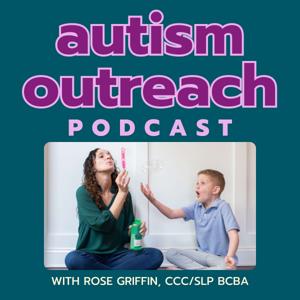
Join Rose Griffin, a dedicated Speech Therapist and BCBA from ABA SPEECH, as she shares her compassionate approach to supporting the communication needs of autistic individuals. With 20 years of…
This podcast is a resource for professionals and parents alike, offering practical strategies that honor each person's unique communication style. Rose covers a wide range of topics, including how to recognize and support autistic communication from an early age, the distinctions between autism and speech differences, and effective, respectful approaches to fostering communication, whether a child is non-speaking, minimally speaking, or verbal.
Through a mix of interviews and solo episodes, Rose explores how to enhance meaningful connections, address challenges with empathy, and celebrate the strengths of autistic individuals. Whether you're a parent, therapist, or educator, you'll find valuable insights and actionable advice to create supportive environments that empower communication and honor neurodiversity.
Hit subscribe and learn more at www.abaspeech.org.

7,655 Listeners

11,936 Listeners

623 Listeners
9,064 Listeners

25,705 Listeners

4,749 Listeners

46,877 Listeners
1,345 Listeners
630 Listeners
427 Listeners

15,412 Listeners

29,160 Listeners
62 Listeners

19,009 Listeners

10,205 Listeners