
Sign up to save your podcasts
Or



Welcome back to part 2 of my interview with Dr. Edythe Strand. If you haven’t listened to part 1, be sure to go back and listen to get the full scoop.
Edythe is a very important leader in her field. In addition to the Dynamic Assessment, she also researched and developed a critical treatment for children with severe apraxia, Dynamic Temporal and Tactile Cueing. DTTC, as it is known, is an innovative treatment in which a hierarchy of cues is used to demonstrate and initiate motor-speech skills in children with apraxia.
In most therapies, we are constantly taking data, every meeting or every session. However, the Dynamic Assessment and DTTC is such an involved, hands-on, and therapist-led treatment data and scoring doesn’t need to take place at every visit. In Edythe’s work at Mayo, they would take data every 3 visits using multidimensional scoring. She notes that the importance of data is not as prevalent during an intensive treatment like this as opposed to when she is doing research.
When working on something as important to communication as language, whether the child is typical or has autism, the type of language, the number of words, and the words that are chosen to work on are so important. Especially in the cases of students with severe apraxia and autism, functional and fundamental words during practice and DTTC are crucial.
In this episode, Dr. Edythe Strand touches on the commonalities between apraxia and other diagnoses and disorders such as autism. She explains all of the research, practice, and genuine desire to help kids with severe apraxia that has gone into her work. She is such a wealth of information and has provided so many great links and references for this episode, so be sure to check them out!
What’s Inside:
Mentioned In This Episode:
ABA Speech: Home
Child Apraxia Treatment
Apraxia-kids: Home
Videos for Parents and Clinicians:
Overview of possible causes and types of problems in speech development
Definitions and Descriptions of Childhood Apraxia of Speech (CAS)
Examples of different levels of severity in Childhood Apraxia of Speech (CAS)
Differentiating Childhood Apraxia of Speech (CAS) from other types of speech sound disorders
Diagnosis of Childhood Apraxia of Speech (CAS)
Treatment of Childhood Apraxia of Speech (CAS)
How parents can help their child with Childhood Apraxia of Speech (CAS)
Childhood Apraxia of Speech (CAS): Other resources
Childhood Apraxia of Speech: Information for Parents
5-hour general course on CAS or the Once Upon a Time Foundation, through the University of Texas, Dallas.
Childhood Apraxia of Speech -- by Dr. Edythe Strand, Ph.d. View video FOR FREE and receive ASHA CEUs! www.utdallas.edu/calliercenter/events/CAS/
Welcome to part one of my interview with Dr. Edythe Strand. Edythe was a professor at Mayo College, former head of Division of Speech Pathology, Department of Neurology at the Mayo Clinic, and a practicing Speech Pathologist and clinician. Her research has focused on developmental, acquired, and progressive Apraxia speech.
What are the characteristics of Apraxia? Edythe noted that Apraxia is not a medical diagnosis but rather a label for a speech sound disorder. Different from other speech disorders, Apraxia affects the movement needed to make a sound. Characteristics might include, difficulty programming and planning, movement gestures, awkward movement through a movement transition, mistiming, blending of manner, distorted sounds, intrusive schwa, inconsistency in the context of repeated production.
Therapy for students with Apraxia looks a lot different than other language disorders. Speech-Language Pathologists typically go straight for phonemes and articulation. However, Edythe further drives home that Apraxia treatment is focused on movement. So instead of enunciating letter sounds and syllables, the clinician is going to emphasize the movement that creates the sound. This is called Dynamic Temporal and Tactile Cueing, or DTTC, treatment.
Dynamic Assessments are the best evaluations for students with Apraxia and are really different from a lot of the typical assessments in speech pathology. It involves a hierarchy of cueing, and scoring is based on response to that cueing. Versus in Static Assessment, typically there is a picture or a question; the child responds once and the clinician notes the response. Edythe Strand developed her own Dynamic Assessment, DEMS (Dynamic Evaluation of Motor-speech Skill). She shares some examples of who and how this assessment would be used. The benefits of Dynamic Assessment include knowledge of a child's preferred cueing and an understanding of the severity of the disorder.
Be sure to check out the amazing resources from Dr. Edythe Strand and stay tuned for part two of this really interesting interview!
#autism #speechtherapy
What’s Inside:
Mentioned In This Episode:
Child Apraxia Treatment
Apraxia-kids: Home
Videos for Parents and Clinicians:
Overview of possible causes and types of problems in speech development
Definitions and Descriptions of Childhood Apraxia of Speech (CAS)
Examples of different levels of severity in Childhood Apraxia of Speech (CAS)
Differentiating Childhood Apraxia of Speech (CAS) from other types of speech sound disorders
Diagnosis of Childhood Apraxia of Speech (CAS)
Treatment of Childhood Apraxia of Speech (CAS)
How parents can help their child with Childhood Apraxia of Speech (CAS)
Childhood Apraxia of Speech (CAS): Other resources
Childhood Apraxia of Speech: Information for Parents
5-hour general course on CAS
Childhood Apraxia of Speech -- by Dr. Edythe Strand, Ph.d. View video FOR FREE and receive ASHA CEUs! www.utdallas.edu/calliercenter/events/CAS/<
In this interview, Dr. Kerry Magro, one of the first speakers who is also autistic, shares his communication journey. Kerry was non-speaking at 2.5 and received an official autism diagnosis at 4. Despite not speaking in full sentences until 7 and facing a variety of sensory challenges, the support of his loving family and over 15 years of a multitude of therapies helped him overcome many of his barriers. All of these paved the way for his achievement in a degree in sports management before he realized his true passion for disability advocacy and received his Ph.D. We discuss how, with the right support in place, anyone can find their voice.
Kerry describes his early speech behavior as non-speaking versus non-verbal because of the sounds he was making. While they weren’t words, these sounds turned into pronunciations and through speech therapy broke ground to start communicating, in any way possible. I work with a lot of students who are not yet spontaneously communicating, and it is always my focus to create budding communication. Kerry describes the two biggest things that helped him grow from non-speaking to a professional speaker were speech therapy and music therapy.
When you receive a diagnosis of autism for your child, sharing this information with them can seem scary or overwhelming, especially when a child is young. Kerry shares how his parents told him after a fun game at school where the teacher told him he was special and wanted to know why. His parents told him that he has autism and that it meant he learned differently, but that he was no less of a person than others. While that may seem simple, Kerry says it was life-changing for him as he grew older and began to understand his disability, sit in on IEP meetings, and become an advocate for himself.
Leaving the support of the elementary, middle, and high school and moving on to college is quite a transition, whether you’re a typical learner or not. Kerry says for him, the best support for him as he entered college was understanding his accommodations, understanding his needs to succeed academically. For him specifically, he needed more time on tests, a private room due to sensory needs, and a note taker due to his dysgraphia. He is actually working on a book about the transition from high school to college with advice and experience from many autistic voices.
As a professional in this field, my goal is always to support my students, but sometimes it can be hard to know what language is preferred. Kerry talks about the importance of letting neurodivergent individuals and self-advocates identify themselves. It’s really not up to a professional to dictate the preferred language of someone else. Many are taught to use the label, a person with autism, but Kerry prefers the language, autistic individual. He also stresses that parents and professionals should stop using functioning labels. The best way to describe your child is to list their strengths and weaknesses. Autism is such a wide spectrum, so person-centered approaches are essential to the autism community. If you’ve met one autistic individual, you’ve met one.
Be on the lookout for Kerry’s contribution to the book Life After the Lockdown: Resetting Perceptions on Autism, just released this September. This fall, he is gearing up for many speeches for National Bullying Prevention Month and National Disability Employment Awareness Month, as well as the spring release of his book Autistics on Autism for World Autism Month, in which 100% of the proceeds will go into his scholarship fund.
#autism #speechtherapy
What’s Inside:
How are you utilizing effective communication with parents? Parents, how are you effectively communicating with the educators in your child's life? Ria Reive from HiMama is a former early childhood educator. She shares actionable tips to improve communication with parents and teachers. As well as the overall benefit from effective communication in a school setting. You may not see how impactful parent engagement can be in the day-to-day, but down the road, there is going to be an immense benefit when both the parent and the educator have the knowledge on both sides.
What are Ria’s three big strategies for effective parent communication?
So what kind of daily information are you providing parents on a day-to-day basis? For Ria in the classroom working with younger kids, that's going to be feeding, naps, diaper changes, etc., and then kind of how their day went, did it go amazing, or maybe they had a rough day and some of that daily info can clue in on that. So when she was in the classroom, that was translated via paper. However, we talk a lot about how parents do not need one more piece of paper, and that's where HiMama comes in. HiMama provides a digital piece of communication for efficient, direct, dissemination of information between teachers and parents.
What happens when there may be a problem or disagreement? Ria and I talk about the benefits of creating an action plan. Decide how you’re going to handle problems with parents and remain professional and supportive. Remember, there is a time and place, during drop-off at the classroom door, probably isn't it.
It takes a team to educate and support students with autism, and all students. Parent engagement and communication from both sides is a skill really integral to the success of the child at hand.
#autism #speechtherapy
What's Inside:
Mentioned In This Episode:
HiMama - The Best Childcare App for Daycare Centers
ABA Speech: Home
Have you ever wondered about how your child should be playing? Today Kayla Chalko, SLP from Walkie Talkie, talks with me today about the importance of play for learning. We talk all about play milestones and the importance of parent-to-child connection in building up to those.
What are the benefits of play? The amount of time that someone could spend doing formal instruction, versus the time spent playing while introducing content, much more information will stick. Shared activities with an adult and child or multiple children also bring impactful connections and social skills.
Parents can get nervous when hearing the word milestones, especially if they find their child isn't measuring up. Milestones are a guideline and a point on which to work from. So what are some basic play milestones?
6 months - 12 months: Engaging in social games such as peek-a-boo or patty cake, usually paired with words and songs. Silly games involving back and forth and imitation.
18 months: Using tools to pretend actions like hammering, pouring and mixing. Playing with sensory items. Developing their imagination with more pretend play, they may pretend to feed dolls or mom.
2 years: Continuing pretend play. They may imitate normal activities from their home. They may play house, clean up, and imitate the caregivers. At this brainstage, they are ready to pretend based on their environment. Beginning to try joint play with other kids.
Change your mindset from working specifically on milestones to genuine connection. Play can be an intimidating word for parents, but make it all about connection. What makes you and your kid feel silly? Start with something like that, loosen up and feel silly. Mindset is the most important piece; this is how you create connection with the child, and that's where those play skills will come through.
Therapy should be fun for the child and for the clinician. Creating an atmosphere that is fun and functional is important. A lot of therapists are eager for a list of toys for their therapy room. Kayla’s go-to toys are her balloon pump, a ball, markers, puppet books, and bubbles. However, she says regardless of toys, it is all about the mindset and connection. Sometimes your best toys are your hands, voice, and facial expressions. It doesn't matter what you’re playing with; it's how you're playing with it.
Kayla’s closing advice is to get rid of the pressure and perfection. Stop worrying about milestones and connections. She says that if parents can focus purely on connection with their child for just a week, she guarantees that they will improve and learn so much more over the course of that time!
#autism #speechtherapy
What’s Inside:
Mentioned In This Episode:
Walkie Talkie Speech Therapy | Speech Therapy in San Diego
Ineffective communication in all humans, will affect how we behave. Children who cannot communicate, do not have the life experience to handle their feelings and situations and that presents in their behavior. Ashley Scott, SLP-BCBA, shares in this episode the ongoing and intentional processes of building expressive language in children.
There is a difference between having vocabulary and functional language skills. A child may be able to count, say their ABCs, or identify color, but they may not be able to communicate. So they may know the color orange, but if they want an orange, can they say “mommy I want an orange”. Functional language is not just talking but using words to request, negotiate, and communicate with their parents and peers.
It is not cut and dry, “a kid can talk so they start talking”. If you are working on getting a child to talk, there are so many things that need to be in place, so it is important to have less focus on words and more focus on foundational skills as simple as learning to sit. Ashley’s advice for parents is to ask fewer questions. Narrating is a key to building language skills and understanding the meaning behind words. Ask less questions and comment and narrate everything as you and your child are doing it. Pair everything you’re doing with real words, to build connections between the activity or item and the word.
We want to expose kids to a rich vocabulary, but when kids aren't communicating, keep words simple. They don’t have to be long sentences, but instead small phrases and keywords. For example, you don’t need to say “you’re putting on your shoes” instead hold and point to the shoes and say “shoes on” or you don’t need to say “let’s open the door now” instead say “open” but say it a few times, clear and exaggerated.
One of Ashley’s big questions for therapists and parents is, “how much are you facilitating?” Wait time is a big piece. It is critical to give children time to process and respond. One thing Ashley said that makes so much sense is working on language is an art form, a unique balance between foundational skills, modeling, narrating, and allowing silent time for processing language.
Another key part of therapy is that the skills a child can perform in therapy should be able to be performed, across all of their environments and with all people they interact with. It's important to create opportunities for communication. This differentiates the difference between can’t do or won’t do. Reinforcement is critical, modeling what it looks like to respond to a request. Repeating a request over and over is not effective. Say it one time, and if they do not comply, physically complete the request with them. For example, you don't need to say come here over and over. If they do not come the first time, show them what coming here looks like.
Building expressive language is about building independence. There are so many teaching opportunities that are missed because as adults we meet the child’s needs that they can do themselves and we do not give them the opportunity to ask for help or demonstrate their knowledge. The biggest takeaway for parents and professionals here is language and communication is more than just talking.
#autism #speechtherapy
What's Inside:
Mentioned In This Episode:
FREE live webinar- Autism Therapy Strategies for Toddlers and
Crystal Sanford is an SLP, Autism Mom, and owner of Sanford Autism consulting. She is sharing her professional and parental journey. Crystal’s focus is on IEP advocacy and parent support.
It's really integral to include parents as part of the team. The whole process can feel daunting for parents. To begin with, parents can feel isolated in dealing, and navigating the special ed process can make it especially hard. Therapists can feel defensive and nervous, but parents can be really overwhelmed and advocates play such an important role. IEPs are really a different language for parents. Advocates go in as a liaison and support person to bridge the gap between school and parent. They will ask some of the parents’ concerns, discuss goals, and make sure the parents’ voice is heard.
One thing about the pandemic was the creation of Zoom IEP conferences. I don’t think we’ll ever go back to 20 sweaty people sitting around a room. The addition of Zoom conferences has allowed the setting to be more flexible and collaborative. In the past, it's been very “us against them” in some cases, now we’re all together and we're focusing on the success of the child.
Parents should always trust their gut and ask questions. For parents that are new to the process, think about your child and what works well for them. Use that information. If things are coming up that you’re not sure about, ask those questions. Be persistent in what you want for your kids, but also be a listener. The law requires special education staff and therapists to provide what is appropriate for your child, not what's best. Crystal works with parents on understanding the difference, and how to find balance.
It is so important for parents, therapists, and other professionals that are involved in the IEP or service process to remember that the key focus is the child. Parents really are the expert on their child. Crystal’s tip to convey this is to develop a “Parent Input Statement”. Every year they should draft a statement to include who their child is, their diagnosis, what works well at home, focus points for the school year, and the best way to contact them. As the child gets older, include them in that process as a segue to self-advocacy.
It is okay to think out-of-the-box for kids. It’s important for therapists to advocate why they are teaching things and how they are working for them. Oftentimes, skills and therapy gets generalized; it's necessary to get therapy into real situations, especially in older grades in middle and high school when you're working on big life skills.
Crystal has such a great perspective on therapy and parent involvement as a professional and parent. I hope that by listening to this episode, you’ve found some tips to put into action in your next IEP meeting or therapy session, whether you’re the parent or the provider! If you have any questions, please reach out to me and be sure to sign up for my free webinar, Autism Strategies for Toddlers and Preschool Aged Students.
#autism #speechtherapy
What’s Inside:
Mentioned In This Episode:
Register for my new FREE live webinar- Autism Therapy Strategies for Toddlers and Preschool Aged Students
Knowledge is power. When you know more, you’re going to understand more. If you are listening in real-time, my brand new toddler course launches this week! I have created the course, Start Communicating Today, for parents and professionals to help their toddlers and preschool-aged students with Autism communicate.
This ASHA-certified course, from the set-up to the material, is parent-friendly. With Covid, there are a lot of families on waitlists or who aren't able to get the service level they need because of safety concerns. This is a great course for anyone with a child with Autism, a struggling communicator, and even those waiting for a diagnosis. By signing up, you gain access to the course AND access to a private Facebook group full of members of both this toddler course and my school-aged course. This page is a place of community, dialogue, and feedback.
Start Communicating Today is a 5-hour course broken up into 7 Modules. This course is full of great information you can actually use in your everyday therapy practices. I was very systematic in the creation of this course. You will see these modules build upon each other in a flow of importance. Every single module comes with a printable, to reference as a resource in everyday therapy.
I created this course to answer the question; what do we work on with students who are early learners and not communicating on their own? These modules provide detailed information, resources, examples, and even video tutorials on implementing these best practice tools.
The Seven Modules:
Assessments: The “Gold Standard” Assessments, what assessments do I find helpful, and all of the points that make up a good assessment.
Goal development: How to set goals that drive the success of intervention for toddler-age students.
Foundational Skills of Communication: Expressive Language, Communication, Play, and Joint Attention.
Materials: The language developing materials I use with preschool and toddler-aged students.
Group skills: How to frame group therapy and resources and ideas for planning.
Training: Creating a cohesive team for parents, paraprofessionals, and therapists.
Data Collection: How to capture and use data while maintaining engagement.
I have been able to connect with amazing parents and therapists who have taken my courses through the Facebook group. I am so excited to be able to share this information with you. Please reach out to me if you have any questions, and be sure to sign up for my free webinar, Autism Strategies for Toddlers and Preschool Aged Students.
What’s Inside:
Mentioned In This Episode:
Free Webinar - Autism Strategies for Toddlers and Preschool Aged Students
Mentioned In This Episode:
ABA Speech - Join the Waitlist!
Jaclynn Bosley is a great friend and colleague who I have worked with across many different settings over the years. She is the owner and operator of Thrive Early Learning Center. We discuss the importance of family involvement, some ideas for parents as they’re seeking the support of ABA therapy, and what early intervention looks like in Jaclynn’s center.
Getting a new diagnosis can be overwhelming for parents. Jaclyn reminds parents to take a deep breath and go to the expert and have them provide you with the road map of where to go next. Also, steer clear of Facebook groups and internet forums, it can often be a scary place if you don’t have the right questions or all the information. Trust your gut with your providers and do your research on the program that's right for your family.
We discuss some things to look for and think about when looking for and starting therapy.
Indicators of a good program:
Funding sources for therapy:
For the Thrive Early Learning Center, Jacylnn starts with the initial intake. This will be in a scheduled block of time when no other students are in the building so that the child can have a full roam of the space. Parents and the clinical director will be present to observe and take down lots of anecdotal information. Assessments will take place once a child starts. At Thrive, they use ABLES or VB-MAPP. ABLES is great for students with more communication needs. VB-MAPP works for students with more language skills.
For group therapy at Thrive, it is typically a small group of 3-5 kids. One person is giving instruction as the students are participating, other therapists will come over and quietly prompt and redirect individuals if they get off task. One-on-one support can be a barrier layer because the therapist becomes the interpreter. Teaching students to cue into their environment by looking around to see what their peers are doing. Fading out prompts. They practice watching and listening to a leader during circle or story time. Then allow for shared activity during literacy centers, craft time, and gross motor play.
Jaclynn’s advice is that navigating therapy is a marathon, not a sprint, you don't have to be perfect coming out of the gate. Give yourself the grace to change and adapt. There is always time to make progress. When you first get a diagnosis, put yourself on narration mode, to keep your child immersed in the language, talk to your kids like you would even if they don't have a disability, and watch the journey unfold! You’ll get there together with your providers, and it will keep that journey happy!
What’s Inside:
From the publisher's feed
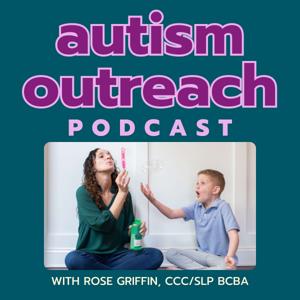
Join Rose Griffin, a dedicated Speech Therapist and BCBA from ABA SPEECH, as she shares her compassionate approach to supporting the communication needs of autistic individuals. With 20 years of…
This podcast is a resource for professionals and parents alike, offering practical strategies that honor each person's unique communication style. Rose covers a wide range of topics, including how to recognize and support autistic communication from an early age, the distinctions between autism and speech differences, and effective, respectful approaches to fostering communication, whether a child is non-speaking, minimally speaking, or verbal.
Through a mix of interviews and solo episodes, Rose explores how to enhance meaningful connections, address challenges with empathy, and celebrate the strengths of autistic individuals. Whether you're a parent, therapist, or educator, you'll find valuable insights and actionable advice to create supportive environments that empower communication and honor neurodiversity.
Hit subscribe and learn more at www.abaspeech.org.

7,683 Listeners

11,950 Listeners

626 Listeners
9,093 Listeners

25,787 Listeners

4,759 Listeners

46,879 Listeners

1,346 Listeners

625 Listeners

422 Listeners

15,404 Listeners

29,200 Listeners
59 Listeners

19,209 Listeners

10,193 Listeners