
Sign up to save your podcasts
Or

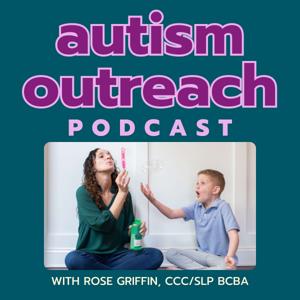


Assessments are extremely necessary for understanding the skill set of your learner, setting goals, and making meaningful progress. As a therapist, administering these assessments can be so overwhelming and frustrating, especially when your students have complex needs and are not able to meet the standardized completion. Today, I am sharing my top 5 tips and strategies for autism assessments to make assessments a positive tool in your goal setting for therapy.
1. The Functional Communication Profile - Revised
A readily available, informal but thorough assessment. I love this assessment because it looks at a student's ability to attend to a task, receptive language, expressive language, and social language. The FCPR gives a great baseline for your student's overall speech skills. Most speech therapists have it right in their therapy office, it’s been around for a while and it is available through a variety of distributors.
2. VB-MAPP
The Verbal Behavior Milestones Assessment and Placement Program really streamlined my process for my students who were autistic or had complex communication needs. The information that a VB-MAPP will give you is so necessary for goal setting. It’s broken into three developmental levels, Level 1: 0-18 months, Level 2: 18-30 months, and Level 3: 38-40 months.
3. Informal Screeners
In my ASHA-approved programs Start Communicating Today and Help Me Find My Voice, I include informal screeners. These have been put together based on my 20 years in the field and what I find helpful to look at. For students with complex needs, these screeners help take a clear look at foundational skills. Also for older students, these screeners can facilitate questions like what have we tried before and how did that go? This is a great supplement for the road map to progress alongside formal assessments.
4. Observation
Observation makes up a gold standard assessment. Spontaneous communication can be notated just on pen and paper. This can be during structured or unstructured time, preferably both, so you can understand the different modes and attempts for the students' communications in different settings. The most valuable information comes from the questions, what does my student look like as a communicator in these different areas?
5. Parent or Team Interview
Talk to the team of teachers working with the student and talk with the parent. Sometimes teachers are the lead on a case and may be sending home forms that include really valuable information. Also, talking to the parents is crucial because it's important to understand where they are coming from and what their concerns may be. Communication with the team will also facilitate understanding progress being made across the students' environment.
#autism #speechtherapy
What’s Inside:
Mentioned In This Episode:
ABA Speech: Home
ABA SPEECH Your Autism Resource
If you’ve been listening for any amount of time, you know that I am all about keeping therapy fun and functional. In this episode, I have some great examples of games for your therapy or at home with your child that you can put into practice right away. These games are all about leisure skills. We spend the majority of our lifespan participating in leisure skills so it is so important to work on these skills with our learners.
Two of the best assessments for identifying and understanding the needs for leisure skills with your students are the Assessment of Functional Life Skills and the Functional Communication Profile Revised. Both of these have direct sections and questions that pertain directly to leisure skills as life skills and clue you into what your learner needs to work on. Observation is also key. My favorite thing to do is take a look at my students' gym classes and see their communication, leisure, and social skills at work in a less structured setting.
When planning for therapy you really have to ask, what skills can we work on in therapy that will help them with their overall engagement, peer interaction, social skills, and most importantly their joy and happiness? Modified leisure skills are so fun to work on and really make a difference beyond therapy and into their shared time with family and for older students when they join the general community.
What we do every single day is important. Not just in therapy but also when they go home with their family. Today I share a few of my favorite modified games for working on leisure skills. I go into how I make them accessible for my students and where to find resources for these games. Many of these games highlight skills like turn-taking, imitation, duration of the task, direction following and so much more.
Activities and Games for Leisure Skills:
These are just some examples of really functional and exciting ways to take on social and leisure skills. I really urge you to take a look at your therapy and the skills you’re working on and ask yourself, why am I working on this? What purpose do the skills and activities you’re currently working on serve? What we are doing every day needs to transcend beyond the classroom and be important across their lifespan!
#autism #speechtherapy
What’s Inside:
—What are modified leisure activities?
— Why are leisure skills important?
— How are your therapy practices transcending the classroom?
— How do skills build across the lifespan?
— Can therapy be fun and functional?
— How can therapy activities be generalized for family time?
Mentioned In This Episode:
Social skills for students with autism - MODIFIED UNO
Social skills for students with autism - Modified Scrabble
Social skills for students with autism- The Grocery Store Game
Social skills game for mixed groups - ABA Speech
Word Generator - The Game Gal
ABA Speech: Home
ABA SPEECH Your Autism Resource
As we close out the year, I wanted to highlight my most popular episode. This week, I’m re-sharing Episode 3, where I break down IEPs and discuss everything that goes into creating goals in speech therapy for autistic learners.
Setting IEP goals for autistic learners can be incredibly difficult, especially when you’re working with emerging communicators. At the beginning of my career, assessment tools were limited and I found out along the way the goals I set for my students were unclear and hard to measure. Assessment, collaboration, and functional goals are all important pieces of the puzzle for setting up your student and the therapy for success.
Standardized tests are commonly used in the classroom, but they are so tricky because they often do not give us the snapshot of skills we need for autistic learners. Assessment tools I recommend if you have access are the VB-MAPP and the Functional Communication Profile. If you don’t yet have access or need to start on a more basic level, I like to look for specific early learner skills. These are those small basic skills that lead to learning bigger skills and tasks. These are measurable communication skills that start in even really young learners such as labeling, verbal imitation, intraverbal skills like filling in the blank, matching, and group listening.
When you have brought all the pieces together, it’s time to set the vision for their communication programming. I have 5 questions for you to ask as a part of my practical and systematic approach to establishing functional goals for your autistic learner.
No matter the skill level, the age, or the context of your therapy practice, this approach will help you consider all the important pieces behind each goal. If you’re a parent, this can help you know what questions to ask your therapist and IEP team to ensure the right goals are being observed and measured for your child. As a part of this episode, I have included a downloadable link for my IEP Goal Bank, be sure to check it out as you work with your team and parents to set specific, actionable IEP goals for your autistic learners.
#autism #speechtherapy
What’s Inside:
Mentioned In This Episode:
IEP Goals for Students with Autism - ABA Speech
Working with toddlers and preschool aged autistic learners- learn more about our Start Communicating Today Autism Course
Working with school aged autistic learners- learn more about our autism course- Help Me Find My Voice
ABA Speech: Home
ABA SPEECH Your Autism Resource
Is autism really different in girls and is that affecting reliable diagnosis? I had the opportunity to chat with Robin Roscigno, founder of AuTEACH, former teacher pursuing her PhD, and autistic mother to her autistic daughter. As she speaks from her education background and personal experiences, Robin gives a really great insight on a deeper look into how we are evaluating and educating autistic students.
The CDC website reads that autism is 4 times as common in boys as it is in girls. Why are we still saying that? Is it more common in boys or are their crucial elements being missed when it comes to diagnosing females? The thing is autism is not different in girls, it just presents itself differently.
When looking at autism in girls, we are talking about internalized experiences vs. externalized behaviors. With girls, a lot of their repetitive thoughts or fixations are happening internally, or they present in somewhat typical female expectations. This could be a little girl playing the exact same scripted play scenario multiple times daily for weeks with no deviation or insensibly organizing and caring for her barbies. At the core, if the behavior is an “expected” or “traditional” female activity within normal gender roles, parents of girls can expect to get push back on an autism diagnosis. Boys and girls are socialized very differently and in fact many of the hallmark signs of autism can be disguised as socialized behavior for women. This makes it easier for girls with autism to hide their symptoms and prevent a reliable diagnosis.
Social skills and navigating social situations can be an area where autistic girls are ill-equipped. Robin highlights the typical socialized behaviors of how girls interact with one another and it can be very difficult for girls with autism to operate within that. Her reminder for parents and teachers is to stop assuming children don’t want to socialize. In fact, it can involve a lot of shame and internal pain, especially when the student has a desire to be a part of the group. To combat this, Robin talks about a whole school approach. This means not only talking to students with disabilities but to students without disabilities as well. It’s not that one group has all the social skills and one none, it’s that they have different skills and they can learn on both sides. It’s an opportunity for double-sided empathy.
Robin shared some great suggestions and potential resources for parents of girls with signs of autism. Taking data at home and finding a reputable doctor are some key points for making an evaluation fair and accessible regardless of gender. Advocate for your child and what you as a parent are seeing that raises concerns is so important.
You can find out more about Robin and AuTEACH on her TikTok, Instagram, YouTube, and on her website. This was an awesome chat, I hope you got something great out of today’s episode!
#autism #speechtherapy
What’s Inside:
Mentioned In This Episode:
AuTeach
AuTeach (@auteachofficial) • Instagram photos and videos
Autism Education (@auteach) TikTok
AuTeach - YouTube
Wow, Episode 050! This is amazing. I want to start by saying thank you for listening, this so far has been an incredible experience. 1 year ago, my own kids had a snow day and I had just finished up my podcasting course. I was super nervous but I came into my little walk-in closet and pressed record. Throughout these last 50 episodes, I have learned so much and I want to share with you these important lessons.
#1 - Nathan Morgan, Episode 16
Nathan taught me that the autism community prefers the term autistic, rather than a person with autism. School for a long time has taught people their first language with all disabilities, but this has really changed and autistic people are letting their voices be heard. It's still important to ask people their preferences, but the majority of the community aligns with that language.
#2 - Chris Wenger, Episode 17
Chris shared the quote, “How you do anything, is how you do everything”. I had never heard this before but it gave me pause, and really taught me to stop rushing through even the little things, and give my best.
#3 - Braxton Baker, Episode 20
Braxton uses a framework of 5 Ps for reflection on IEPs. These are Process, Purpose, Possibilities, Progress, Peace. Focusing on the person at hand and these “Ps” is so important, and I am so glad he shared that!
#4 - Dr. Mary Barbera, Episode 8
Mary shares her personal experience and journey in the autism world beginning with her son’s diagnosis in the 1990s. She has a book, podcast, and some incredible online courses that really help parents be their child’s best advocate and work on so much more than speech. This perspective is so important as a professional, to hear from parents and their stories. She is a great friend and mentor.
#5 - Kate Grandbois, 32
Kate and I discussed The Communication Bill of Rights. This is an incredible resource located on the ASHA website. This is such a powerful tool that anyone can access and it really reinforces the work we do as professionals.
#6 - Crystal Sanford, Episode 39
Crystal shares the importance and supports an advocate provides for parents. It was great to learn as a professional what exactly an advocate does because it can be such an area of contention in the IEP room. Since this episode, I have actually signed up to start doing advocacy work and will be offering it very soon as a service through ABA Speech.
#7 - Kayla Chalko, Episode 41
Kayla is a play-skill expert. In this episode, we discussed play milestones, including pretend to play and at what age that is supposed to happen. One great thing she reminded me of is to take away the need to be perfect. Your lesson or activity does not have to be perfect to be helpful or effective.
#8 - My walk-in closet makes the best recording studio! If you want to see where I am recording, be sure to check out the recording of this episode on YouTube.
#9 - You can’t do it alone. Not as a professional, not as a parent, not with anything. Special thanks to my business mentor, my amazing assistant, all of my wonderful guests, my social and graphic design helpers, as well as the audio production team who makes my show sound amazing!
#10 - There is still so much to share. I have so much planned for the future and episodes that will absolutely blow your mind.
This is a wonderful opportunity to hear a variety of perspectives that are truly so important. I have always loved to talk, so this podcast has been perfect for me. I love people, I love being around them, I love helping them. This show is an extension of what I really love to do personally and professionally. Thank you again so much!
#speechtherapy #autism
What’s Inside:
Dr. Megan Miller is a thought leader in the field of behavior analysis and special education. In this interview, she and I discussed the Early Start Denver Model and its importance to early learners. Play is such a critical piece to communication and this model sets up parents and providers to build joint attention skills.
Imitation is such an important skill, many individuals look to this as a way to learn things and copy skills. However, it is so much more, it is a skill in which communication begins. If we are missing that piece, higher level communication is not going to take place. Where does imitation most naturally occur? Social interaction. Joint attention activities are often child led activities and this is where the most AHA moments occur.
If natural social interaction isn't developing, parents often don’t initiate unintentionally, they instead substitute their interactions with “formal” language practice. It’s really critical that parents learn to be silly and have fun engaging in a social or play format. It can sometimes be difficult, and it definitely requires a certain element or attitude, but when you’re really into it the kid responds.
Many parents may be intimidated by play based social activity. What is great about the Early Start Denver Model, provides a framework for joint activity routines. The first part is to observe the child to find out what they are interested in. The second is developing the routine, early on this involves imitating the child’s play. The third part is creating variety in the routine, so once you're engaged in an activity the child has started, the adult changes it up. This might mean throwing a ball instead of rolling it, or even just rolling it fast instead of slow. Just small little changes in the play the child is already interested in, which opens up so many opportunities for language and communication for the child to direct the activity. The last part is the closing, preparing to end the activity with a child and move on to the next thing.
Whether it's birth-3 or older, professionals and parents alike have to set aside our intentions or vision for the interaction with the kids. Dr. Miller brings up a great point about how aversive it can be if kids are always redirected to play the way the adult wants, because communication really begins with the child’s preference and slowly teaches flexibility. Oftentimes we miss the obscure playful interactions non-neurotypical students may be showing us because we have these ideas of what “fun” should look like, and with that we miss great opportunities for communication with the child.
There is so much information online, as well as providers who practice very differently, which can be a good thing but also has some negatives. Parents have certain ideas about structured, table centered activities and can at times not understand the purpose of play based interactions in therapy. Dr. Miller drives home that research is there for naturalistic communication and that it comes from spontaneous play. The Early Start Denver Model book backs up the need and importance of social activity and this can be used to help parents and even providers understand the need and importance of play.
Dr. Miller’s advice is for more people to understand that students who are not neurotypical do not have to communicate the same way as neurotypical individuals. She says, “We are more comfortable, learn better, and are less stressed when we are accepted”. My wish is that we can all spontaneously communicate in a way that makes sense to us, so I find that so profound! Be sure to check out Dr. Megan Miller and all her work with the Do Better Movement!
#autism #speechtherapy
What's Inside:
Dr. Lisa Audet is an extremely knowledgeable special education teacher, SLP, and professor at Kent State. In fact, over 20 years ago she was my professor! She specializes in communication and independence for autistic adults, works with these individuals on her campus, and has a unique viewpoint for those of us working with younger adults with autism at the middle and high school level.
Because socially and academically the needs are very different from high school to college or work-based settings, it can be hard for parents and professionals to identify the needs of students preparing for transitions. Dr. Audet identifies these needs as learning a sense of self, self-care skills, and understanding their strengths. As therapists, we often focus on students' needs and teach them new skills, but approaching therapy with a strength-based model can help students self-identify and determine jobs and settings that best suit them.
Self-monitoring is so important for everyone. For autistic individuals, this can provide success in a variety of ways. This means understanding when they are uncomfortable, when they have a need, or how to understand and repair a relationship or situation when they’ve missed a boundary. Dr. Audet uses the Stop-Think-Make a Plan method for her students to teach them to assess their situation and determine solutions before a problem arises.
Older autistic students in high school may be preparing for college or for placement in a work setting. Dr. Audet talks about the ways we can not only set up the student for success but educate employers on the individuals in the work environment. Students should be entering work environments that align with their interests, strengths, and desires, not what “makes sense” to the providers they work with. Alternatively, there is work to be done in the education of employers because many times fear of hurt feelings prevents great learning and developmental opportunities from taking place.
As a professor at Kent State, Dr. Audet has a great understanding of what Ohio has to offer its young autistic adults as well as other individuals with other disorders. The Office for Ohioans with Disabilities has a vocational counselor on every state campus. She shares all of the great resources they can provide to students who voluntarily seek their assistance. The Organization for Autism Research has a book that is a great resource for college-bound individuals with autism.
There is a lot to be done to support and initiate success for young autistic adults, especially with their varying places on the spectrum. Every state varies on the resources they provide, so be sure to look into all of the resources and options available locally to you!
#autism #speechtherapy
What’s Inside:
Mentioned In This Episode:
Working with toddlers and preschool-aged autistic learners - Start Communicating Today Autism Course
Working with school-aged autistic learners - Help Me Find My Voice
ABA Speech: Home
One out of four typical children will develop a pediatric feeding disorder. Does that statistic shock you or does it feel extremely relatable? Melanie Potock of Munch Bug is an SLP and Pediatric Feeding Expert. She has written 6 books on feeding, speaks around the world, and is a coach to parents and children struggling with picky eating.
Picky eating is a wide, all-encompassing umbrella term that spans many many feeding issues from babies to school-aged kids. A point Melanie really drives home during this interview is that feeding is developmental. Just as you would be concerned if your child was not hitting their other milestones, feeding issues should receive the same concern. So much goes into feeding including cognitive, motor, and even parenting skills.
How can you start strong? Can feeding be a joyous experience? Feeding when speaking about food variety and solids begin at 6 months old. This is a really crucial time to learn babies' cues; when are they hungry? When are they done? When are they satisfied? This type of communication between baby and parent is called responsive feeding. A topic in which Melanie has devoted an entire book to!
For toddlers and school-aged children who may be showing signs of picky eating are not ruined by good eating habits, remember to shift your mindset. Children grow at an extremely rapid rate from birth to about 18 months when it begins to slow down. A child who may have been eating everything in sight may suddenly not need as much to fuel their body. This is OK. The key at this age is to continuously try new things, in a positive way.
What about the age-old trick of sneaking veggies into dessert? Have you ever made avocado pudding or black bean brownies to get that extra nutrition in for your toddler or young child? Melanie’s advice is to take the words trick or sneak out of your vocabulary when it comes to feeding. Did you sneak the black beans in or did you try a fun new recipe? Let kids know what’s in their food and tell them that you are just as surprised as you are that it tastes so yummy. It is okay to experiment with foods and recipes, it's even normal, and that sets the stage for adventurous eating.
So what are some characteristics of picky eating that need intervention? Look for rigid patterns such as not tolerating new food on their plate, not eating at the table most of the time, and not eating in a new environment (school, classroom, restaurants). Sometimes kids are being kids, but these are things that happen more frequently than not. You may also see irritability before, during, or after each feeding, taking a long time for feeding, coughing and gagging, more frequently, gurgling, or frequent vomiting. Any stall in the development of feeding warrants intervention.
If you are feeling stressed about feeding, get help now. Even if it's just a consult or a few extra tips and slight changes to your existing feeding routine. The longer you wait to get help or make changes, the more unlearning that will need to take place and the chance of extensive feeding therapy in your future. Talk to your pediatrician, reach out to Melanie, or seek out other forms of feeding support.
#autism #speechtherapy
What’s Inside:
Mentioned In This Episode:
Melanie Potock
Melanie Potock on Instagram
TalkTools Virtual Conference Feeding First
Do you ever walk into a new gym class and feel uneasy or nervous? If you do, you're not unlike many kids who hesitate or resist transitions. Not all children with autism experience difficulty with transitions, but it is something many struggles with. In this interview with Dani LoVecchio from Bridge Kids of New York, we discuss tips and advice for making transitions smoother.
Whether it be starting a new school or service, being away from the caregiver for the first time, or smaller transitions throughout your child’s day, there are ways to make it better for the parent, professional, and the child.
Dani’s Tips for Smooth Transitions with Autistic Learners:
Routines and schedules are great for kids, especially kids with autism. They teach the learner what to expect and to trust what will be next. However, we all know there is no such thing as perfect and life happens. As the child gets older, be sure to prepare them for flexibility and what to do when a schedule change or a transition isn’t the same.
Dani and I also touched on communication between providers and parents. This is always so important but even more so when working on new transitions. Be sure to have a clear communication plan in place so as the parent or professional, you’re on the same page and continuing support.
Transitions are part of every single person's day. They aren't always big scary new ones, but they can feel that way to some autistic learners. I loved getting to talk to Dani today and hope you can put some of her great advice to use!
#autism #speechtherapy
What’s Inside:
Mentioned In This Episode:
ABA Speech: Home
Bridge Kids of New York
Bridge Kids NY on Instagram (@bridgekidsny)
Bridge Kids NY on Facebook
Whether you're working with a young child, teen, or adult, executive functioning skills are among the most critical and practical skills we need. In this interview with Sara Ward, an SLP specializing in executive function, she shares the unique background that makes this work so special to her, as well as some really interesting approaches to assessment and intervention.
Many people have different explanations for executive functioning. Sara defines executive functioning for young children in the most basic form, sequencing. As you reach middle and high school, you’re continuing to plan with a window of time and space that is continuously growing. It’s very easy for parents and professionals to be a child’s “prosthetic frontal lobe”, we visualize the students through space and time and we at times over prompt.
So in a neurotypical brain, this is the ability to visualize where you are in a future time or space. 90% of the time, task planning happens in a different place from where you execute the plan. Naturally, as you might plan your day and anticipate the tasks necessary to accomplish your daily routine, you may use gestures to prompt your steps.
An intervention Sara uses that is really successful in young children is teaching them to gesture. So a child with really great executive functioning skills would use very specific verbs to describe the steps necessary for their future plans. With a child who is lacking in executive function, you might prompt them to show you with their hands. Oftentimes, when students are able to feel the steps with their hands, the attached verb comes. So there is this language and movement attached with task execution.
How do you determine the need for executive functioning? Assessments are tricky because SLP’s are not licensed to administer tests related to neuro-capability. Evaluators tend to look at Executive Skills through observation and rating scales. Sara recommends the Barkley Attention Deficit Executive Function Scale, because of the way it differentiates between attention deficits in comparison to executive skills in the individual. CEFI, Clinical Executive Function Inventory, is an online tool that Sara suggests to accurately characterize kids' behaviors related to executive functioning. She also mentions several other tests and scales that can be used, in addition to looking at existing speech and language assessments with an executive functioning lens.
Sara provides so many great suggestions and tools for working with students on executive functioning and the program she developed. As an experienced SLP, I myself found this information so enlightening. I cannot wait to take these tools to my next IEP meeting and to my therapy. I hope you found this just as helpful.
#autism #speechtherapy
What’s Inside:
Mentioned In This Episode:
ABA Speech: Home
Cognitive Connections: Executive Function
From the publisher's feed
Join Rose Griffin, a dedicated Speech Therapist and BCBA from ABA SPEECH, as she shares her compassionate approach to supporting the communication needs of autistic individuals. With 20 years of…
This podcast is a resource for professionals and parents alike, offering practical strategies that honor each person's unique communication style. Rose covers a wide range of topics, including how to recognize and support autistic communication from an early age, the distinctions between autism and speech differences, and effective, respectful approaches to fostering communication, whether a child is non-speaking, minimally speaking, or verbal.
Through a mix of interviews and solo episodes, Rose explores how to enhance meaningful connections, address challenges with empathy, and celebrate the strengths of autistic individuals. Whether you're a parent, therapist, or educator, you'll find valuable insights and actionable advice to create supportive environments that empower communication and honor neurodiversity.
Hit subscribe and learn more at www.abaspeech.org.

7,684 Listeners

11,965 Listeners

625 Listeners
9,089 Listeners

25,789 Listeners

4,763 Listeners

46,901 Listeners

1,346 Listeners

625 Listeners

422 Listeners

15,409 Listeners

29,204 Listeners
59 Listeners

19,254 Listeners

10,179 Listeners